
Electromagnets Core Describe the pattern of the magnetic

Electromagnets Core • Describe the pattern of the magnetic field due to currents in straight wires and in solenoids • Describe applications of the magnetic effect of current, including the action of a relay Supplement • State the qualitative variation of the strength of the magnetic field over salient parts of the pattern • Describe the effect on the magnetic field of changing the magnitude and direction of the current. © Boardworks Ltd 2003
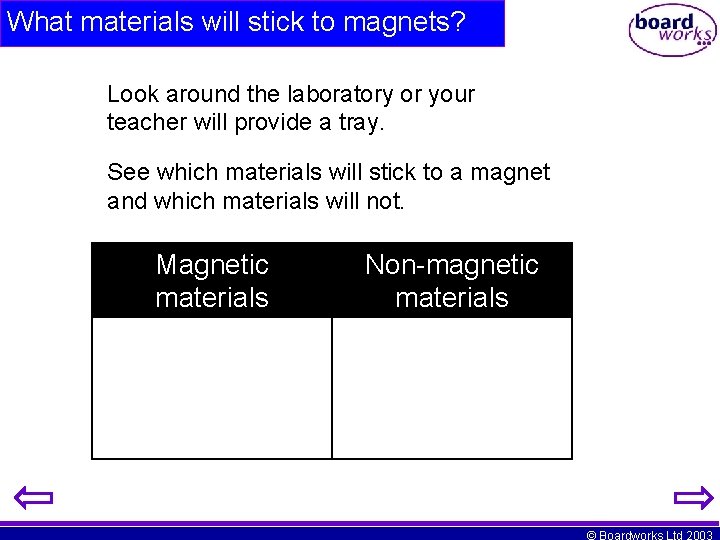
What materials will stick to magnets? Look around the laboratory or your teacher will provide a tray. See which materials will stick to a magnet and which materials will not. Magnetic materials Non-magnetic materials © Boardworks Ltd 2003
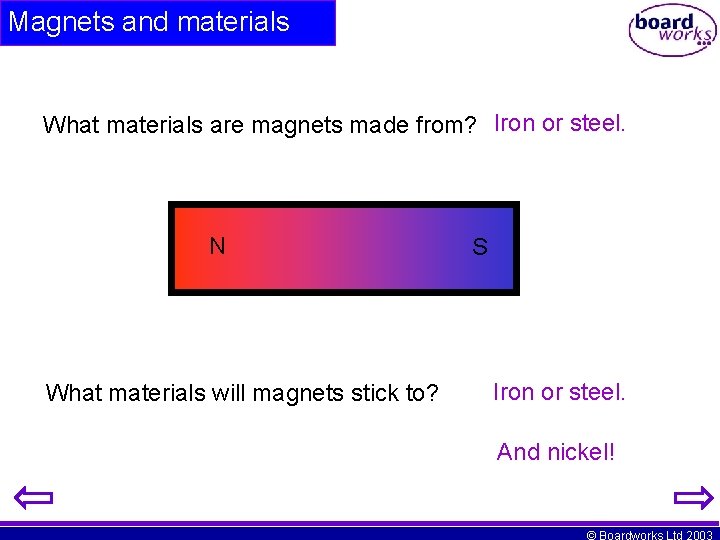
Magnets and materials What materials are magnets made from? Iron or steel. N What materials will magnets stick to? S Iron or steel. And nickel! © Boardworks Ltd 2003
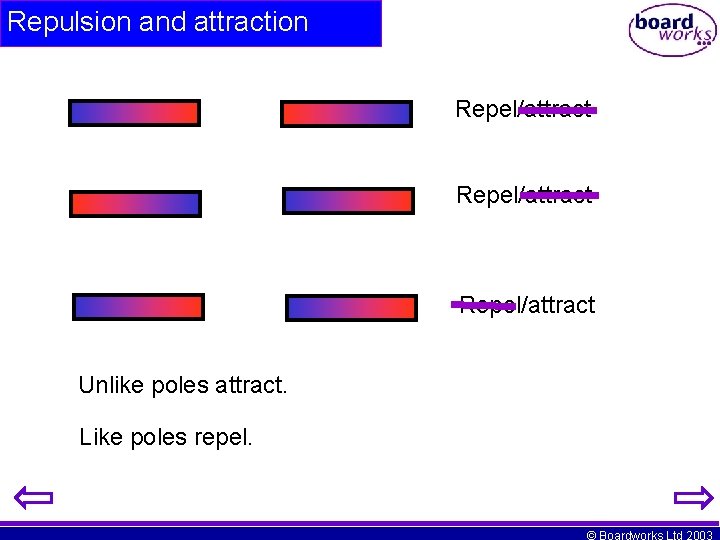
Repulsion and attraction Repel/attract Unlike poles attract. Like poles repel. © Boardworks Ltd 2003
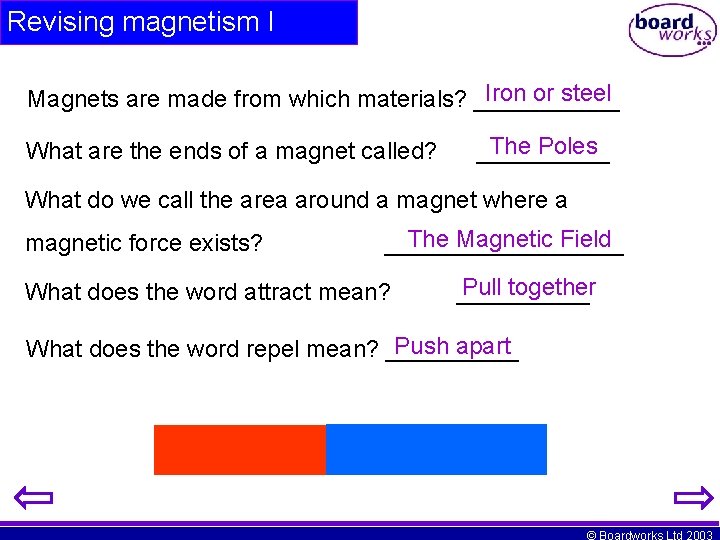
Revising magnetism I Iron or steel Magnets are made from which materials? ______ What are the ends of a magnet called? The Poles _____ What do we call the area around a magnet where a magnetic force exists? The Magnetic Field _________ What does the word attract mean? Pull together _____ Push apart What does the word repel mean? _____ © Boardworks Ltd 2003
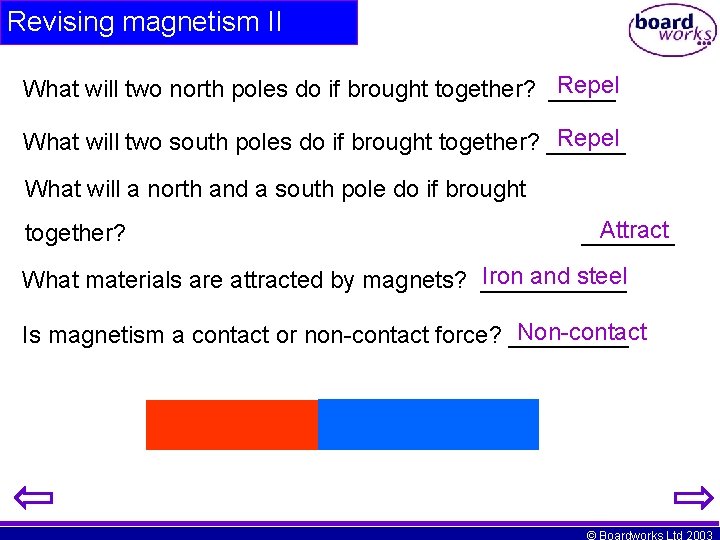
Revising magnetism II Repel What will two north poles do if brought together? _____ Repel What will two south poles do if brought together? ______ What will a north and a south pole do if brought together? Attract _______ Iron and steel What materials are attracted by magnets? ______ Non-contact Is magnetism a contact or non-contact force? _____ © Boardworks Ltd 2003
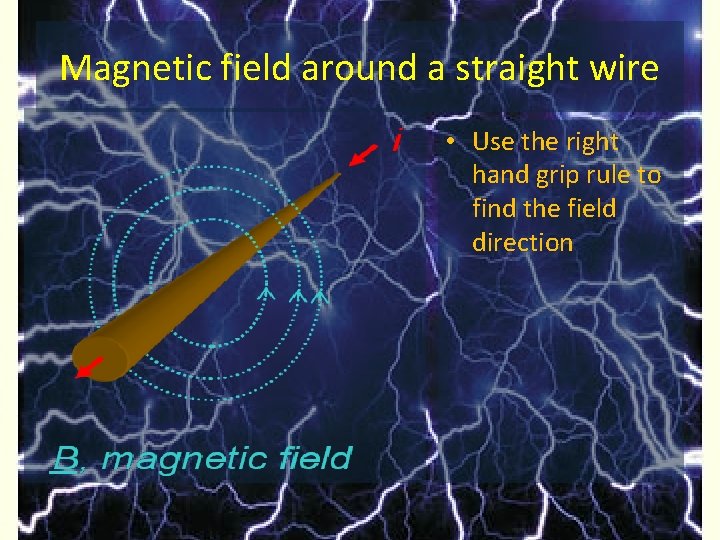
Magnetic field around a straight wire • Use the right hand grip rule to find the field direction
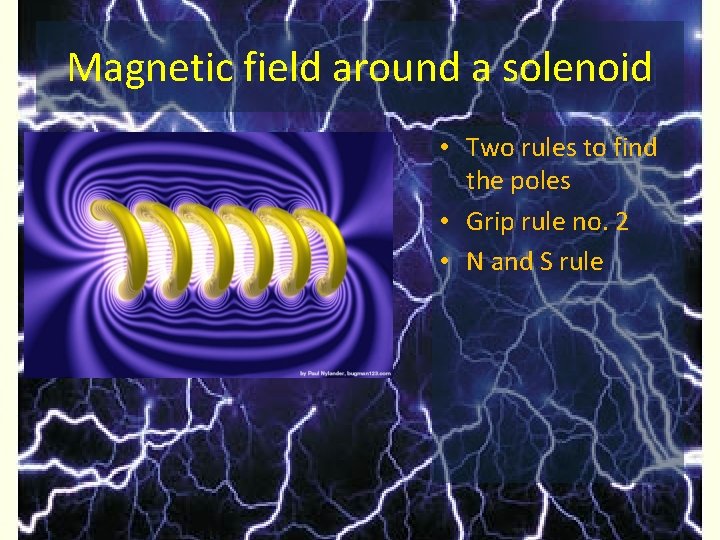
Magnetic field around a solenoid • Two rules to find the poles • Grip rule no. 2 • N and S rule
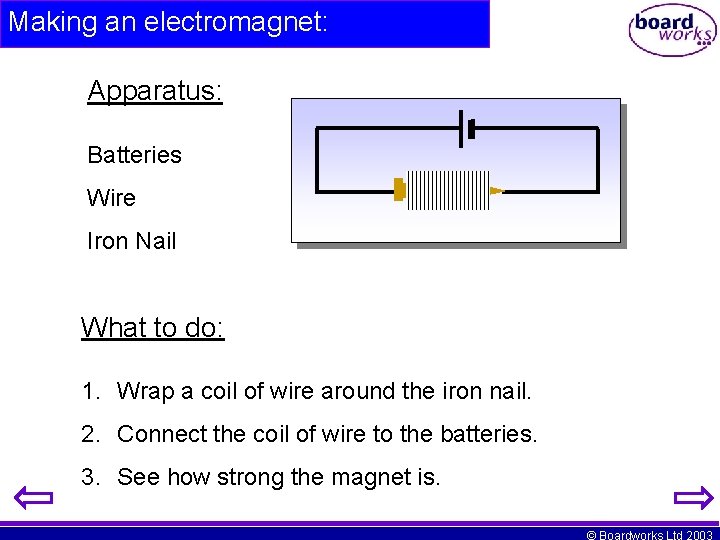
Making an electromagnet: Apparatus: Batteries Wire Iron Nail What to do: 1. Wrap a coil of wire around the iron nail. 2. Connect the coil of wire to the batteries. 3. See how strong the magnet is. © Boardworks Ltd 2003
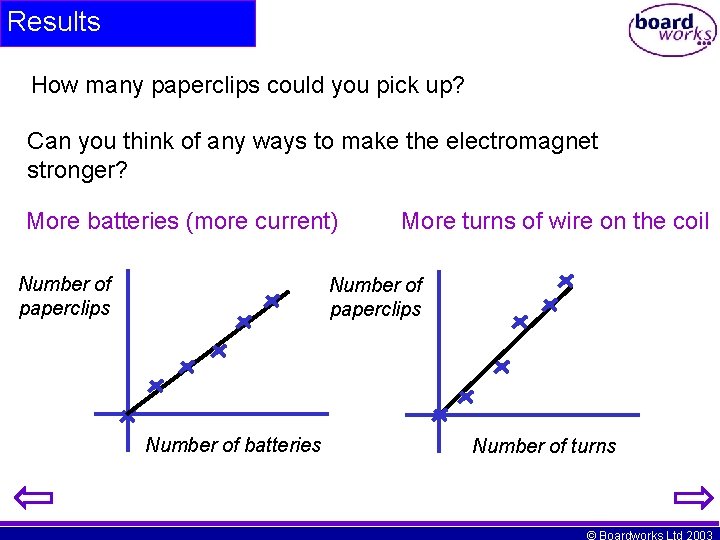
Results How many paperclips could you pick up? Can you think of any ways to make the electromagnet stronger? More batteries (more current) Number of paperclips More turns of wire on the coil Number of paperclips Number of batteries Number of turns © Boardworks Ltd 2003

Ways to make an electromagnet stronger There are three ways to make an electromagnet stronger. Do you know them? More turns on the coil 1. __________ More electrical current 2. __________ 3. __________ Using an iron core S N What happens if you turn the battery around in an electromagnet? The poles on the coil reverse, north becomes south and south becomes north. © Boardworks Ltd 2003
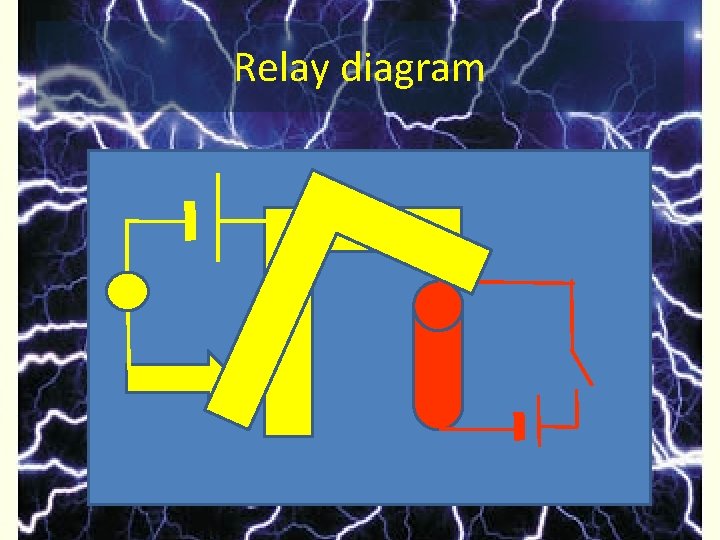
relays • http: //www. explainthatstuff. com/howrelaysw ork. html • A relay uses a small current to turn on a larger current • Eg a car starter motor
Relay diagram
• The power source for both circuits may be the same (the resistance determines the size of the current) • There are several other arrangements that would have the same effect eg a plunger arrangement

What do like poles do? A. Attract and repel B. Attract C. Repel D. Stick together © Boardworks Ltd 2003
Which material below will not stick to a magnet? A. Steel paper clip B. Aluminium can C. Iron nail D. Steel key © Boardworks Ltd 2003
Which of the below will not increase the strength of an electromagnet? A. More coils B. More current C. Less current D. Iron core © Boardworks Ltd 2003
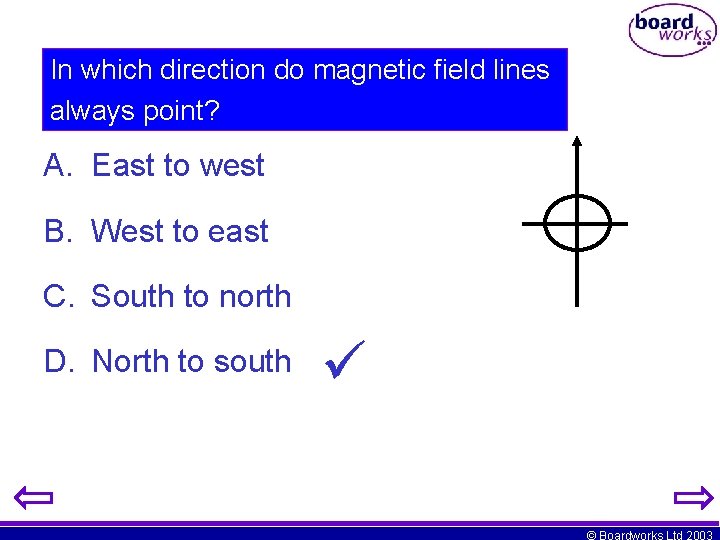
In which direction do magnetic field lines always point? A. East to west B. West to east C. South to north D. North to south © Boardworks Ltd 2003
Which of the following is not a use of electromagnets? A. Fridge magnets B. Loud speakers C. Relays D. Circuit breakers © Boardworks Ltd 2003
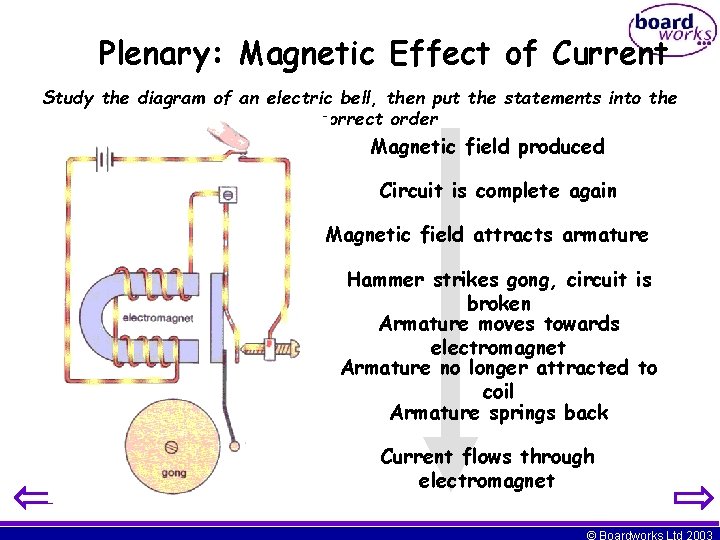
Plenary: Magnetic Effect of Current Study the diagram of an electric bell, then put the statements into the correct order Magnetic field produced Circuit is complete again Magnetic field attracts armature Hammer strikes gong, circuit is broken Armature moves towards electromagnet Armature no longer attracted to coil Armature springs back Current flows through electromagnet © Boardworks Ltd 2003
- Slides: 20