
Electromagnetic Waves Electromagnetic Waves EM Waves are TRANSVERSE
- Slides: 15
Electromagnetic Waves • Electromagnetic Waves (EM Waves) are TRANSVERSE WAVES • EM Waves DO NOT require a medium • EM WAVES are radiated by ALL objects at the SPEED OF LIGHT • Speed of Light in vacuum = c = 3 x 10⁸ m/s
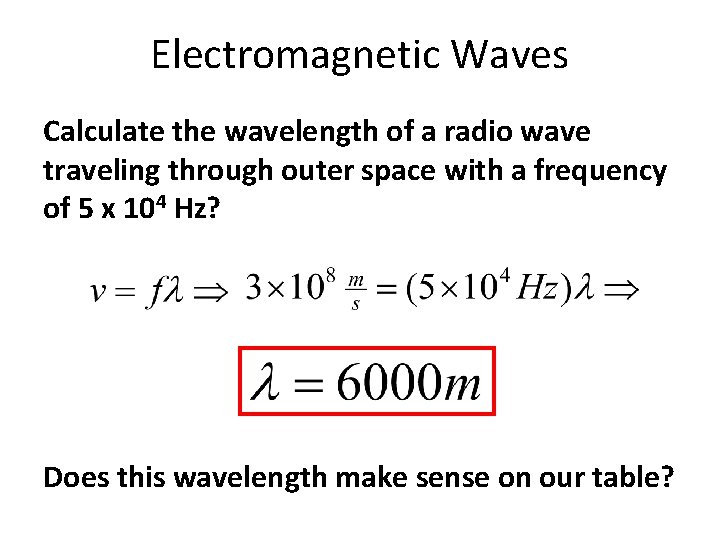
Electromagnetic Waves Calculate the wavelength of a radio wave traveling through outer space with a frequency of 5 x 10⁴ Hz? Does this wavelength make sense on our table?
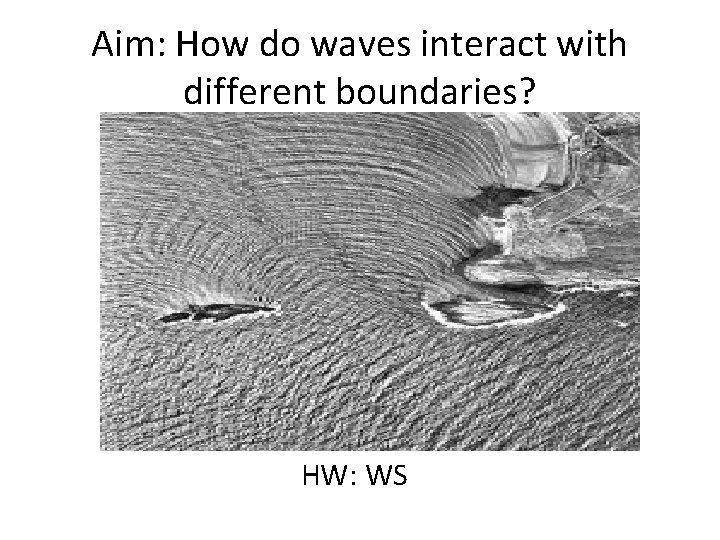
Aim: How do waves interact with different boundaries? HW: WS
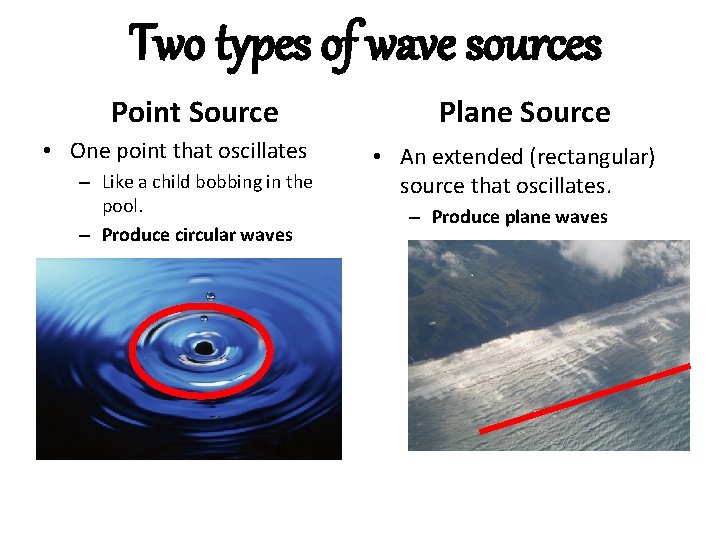
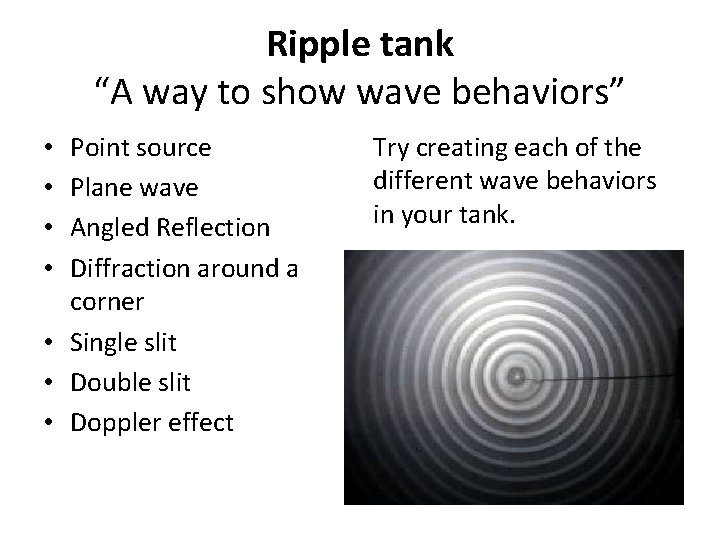
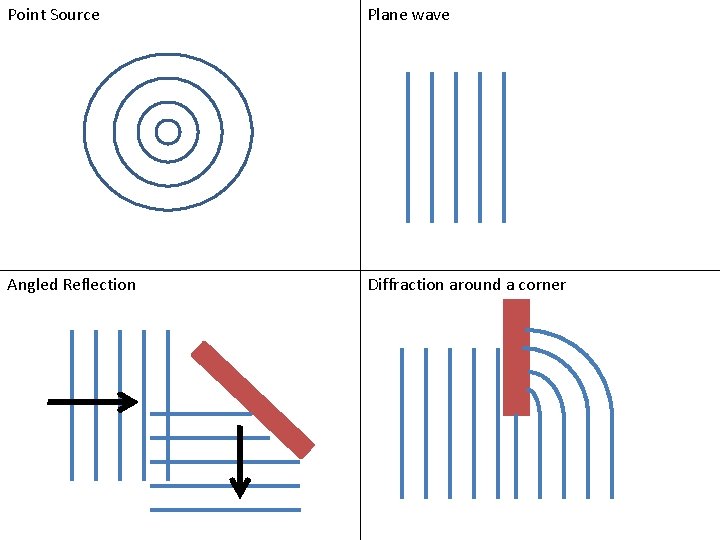
Two types of wave sources Point Source • One point that oscillates – Like a child bobbing in the pool. – Produce circular waves Plane Source • An extended (rectangular) source that oscillates. – Produce plane waves
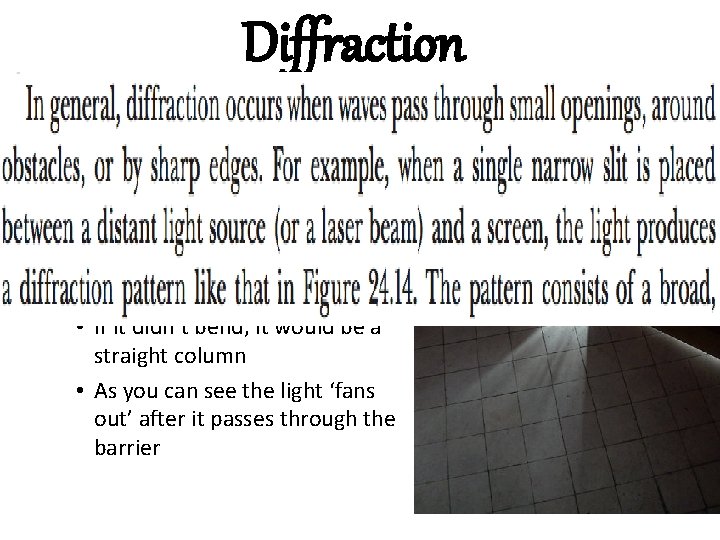
Diffraction • Diffraction is the bending of a wave around a barrier Know any examples? – Consider a door cracked open, what shape does the light make? • If it didn’t bend, it would be a straight column • As you can see the light ‘fans out’ after it passes through the barrier
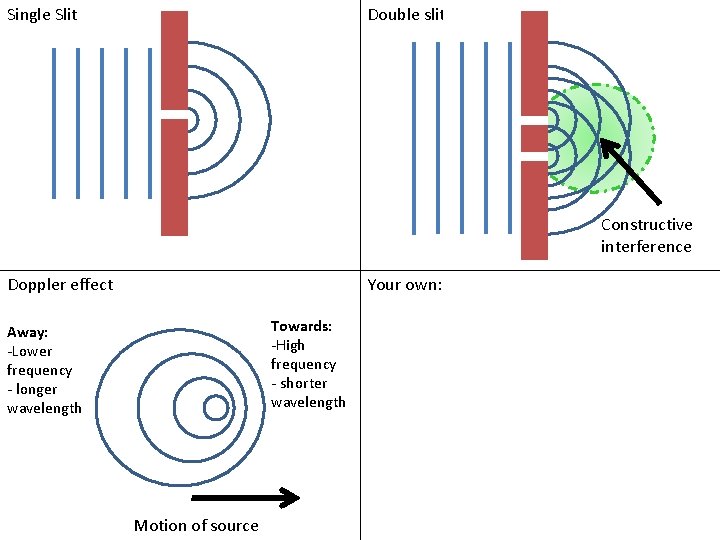
Ripple tank “A way to show wave behaviors” Point source Plane wave Angled Reflection Diffraction around a corner • Single slit • Double slit • Doppler effect • • Try creating each of the different wave behaviors in your tank.
Point Source Plane wave Angled Reflection Diffraction around a corner
Single Slit Double slit Constructive interference Doppler effect Your own: Towards: -High frequency - shorter wavelength Away: -Lower frequency - longer wavelength Motion of source
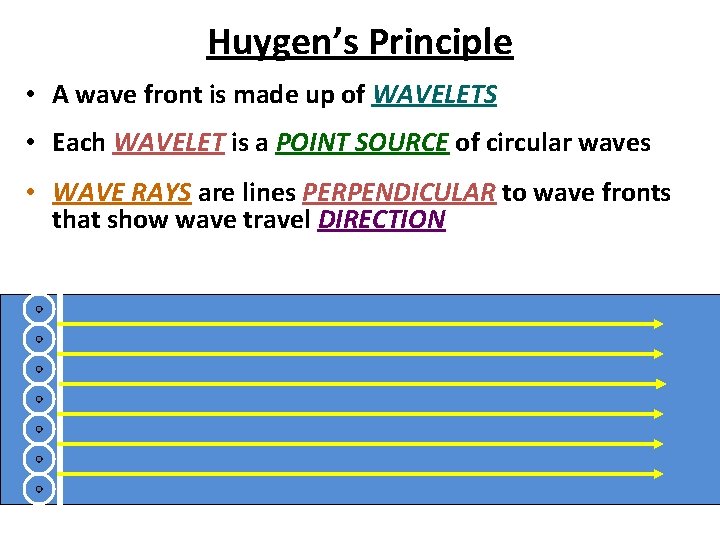
Huygen’s Principle • A wave front is made up of WAVELETS • Each WAVELET is a POINT SOURCE of circular waves • WAVE RAYS are lines PERPENDICULAR to wave fronts that show wave travel DIRECTION
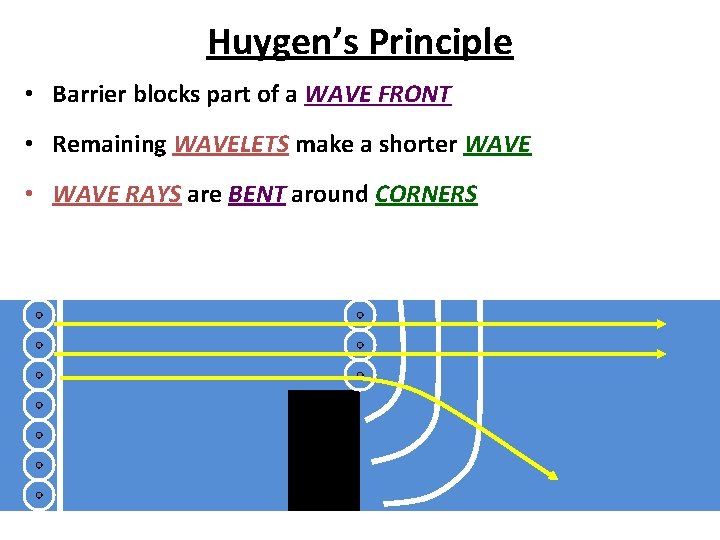
Huygen’s Principle • Barrier blocks part of a WAVE FRONT • Remaining WAVELETS make a shorter WAVE • WAVE RAYS are BENT around CORNERS
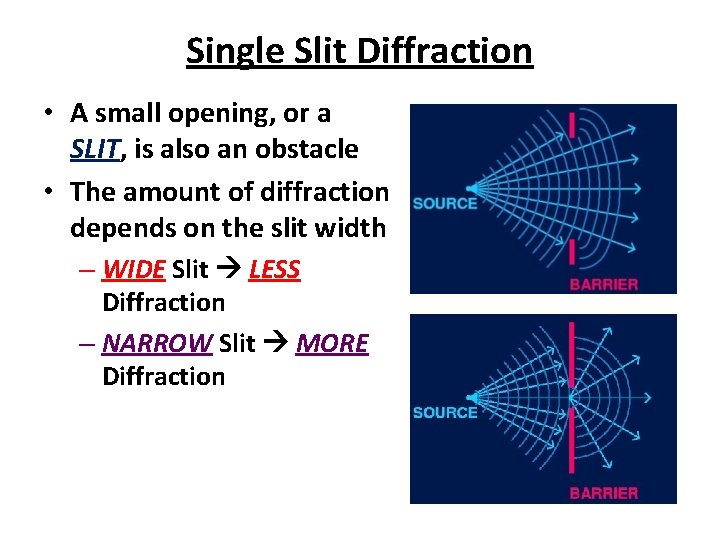
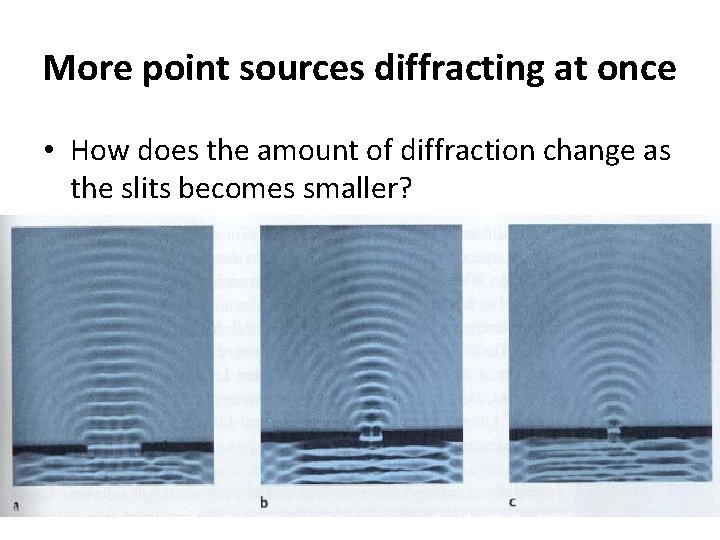
Single Slit Diffraction • A small opening, or a SLIT, is also an obstacle • The amount of diffraction depends on the slit width – WIDE Slit LESS Diffraction – NARROW Slit MORE Diffraction
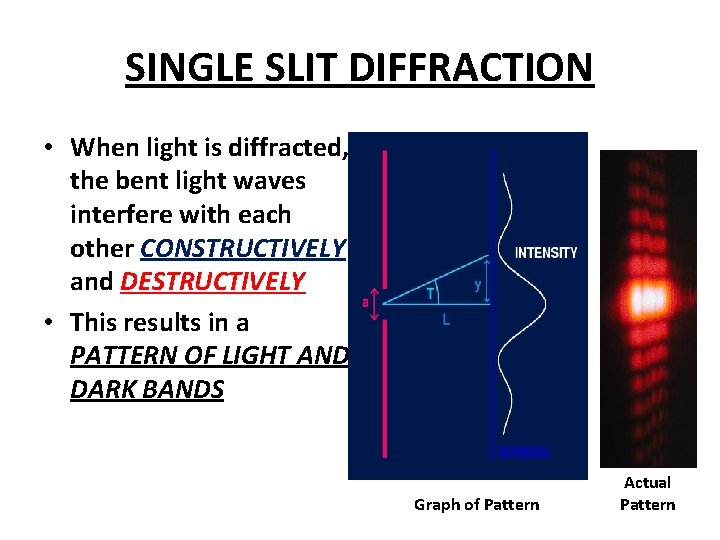
SINGLE SLIT DIFFRACTION • When light is diffracted, the bent light waves interfere with each other CONSTRUCTIVELY and DESTRUCTIVELY • This results in a PATTERN OF LIGHT AND DARK BANDS Graph of Pattern Actual Pattern
More point sources diffracting at once • How does the amount of diffraction change as the slits becomes smaller?
When Waves Meet A Boundary… 1. Reflect 2. Bend Around 3. Refract
SUMMARY • How does light behave when it meets an obstacle? • How does slit width correlate to the amount of diffraction? • If diffracted light were shown on a screen, what would you see? – How is it accomplished?