
Electromagnetic Waves and Color Physics Mrs Coyle Color








- Slides: 29
Electromagnetic Waves and Color Physics Mrs. Coyle
Color • Color is the perceptual quality of light. • The human eye can distinguish almost ten million colors.
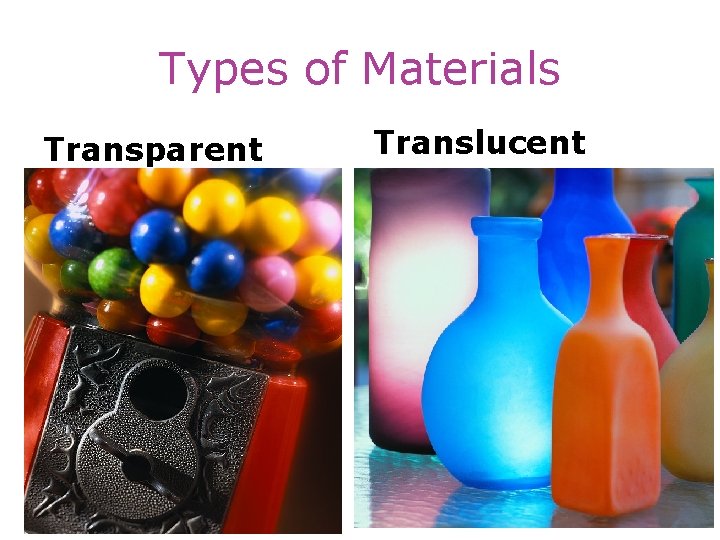
Types of Materials Transparent Translucent
Color comes to our eyes from objects due to: • Emission • Reflection • Transmission • Interference • Dispersion • Scattering
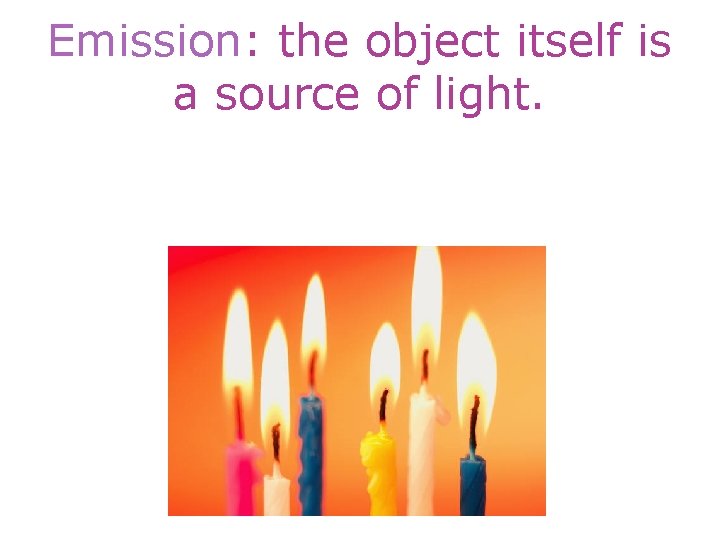
Emission: the object itself is a source of light.
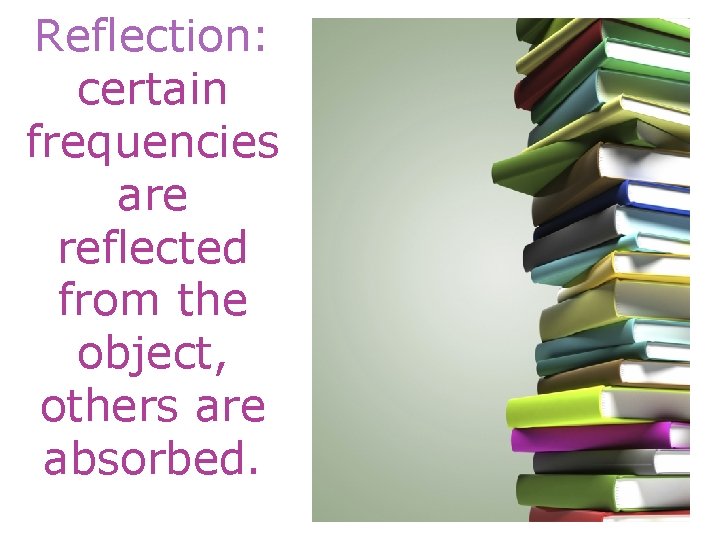
Reflection: certain frequencies are reflected from the object, others are absorbed.
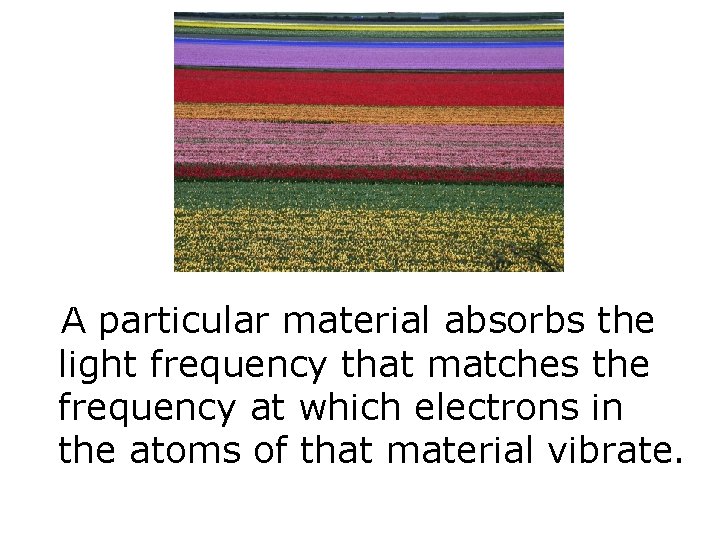
A particular material absorbs the light frequency that matches the frequency at which electrons in the atoms of that material vibrate.
• The energy of the frequency absorbed turns to heat.
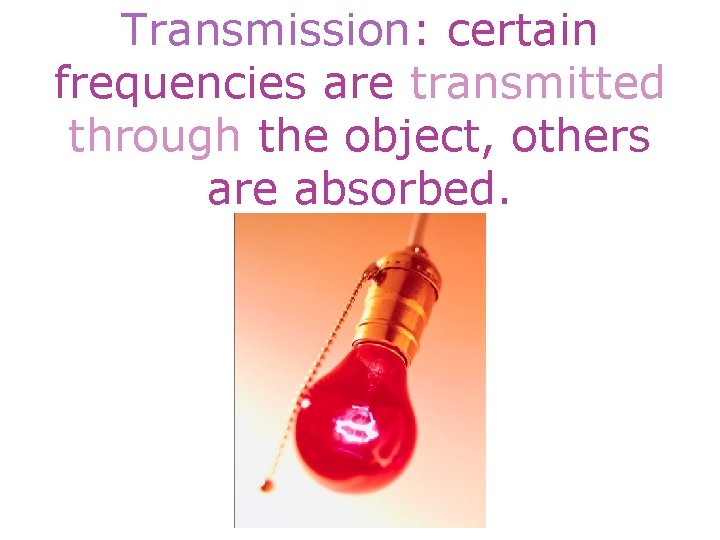
Transmission: certain frequencies are transmitted through the object, others are absorbed.
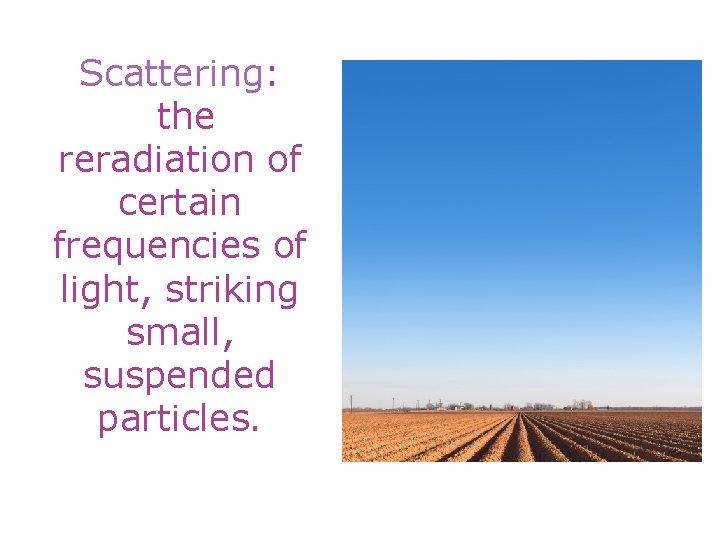
Scattering: the reradiation of certain frequencies of light, striking small, suspended particles.
Interference: constructive and destructive interference.
Dispersion: the angular separation of a light wave during refraction.
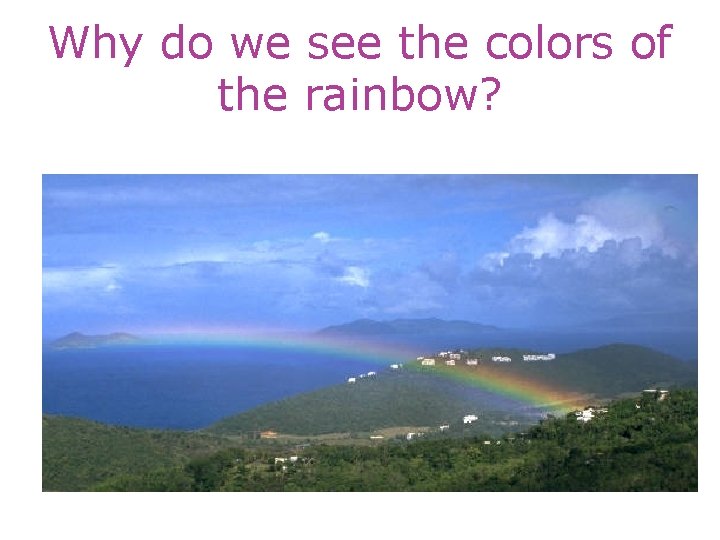
Why do we see the colors of the rainbow?
Why is the sky blue?
Why is the ocean sometimes blue, gray or green?
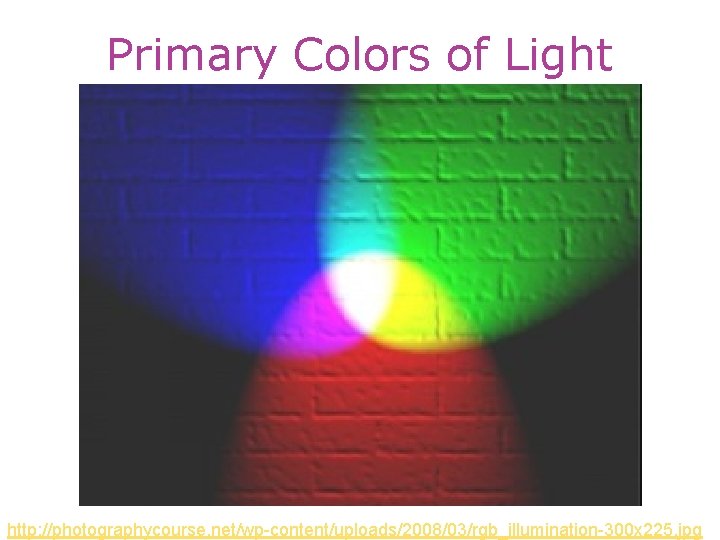
Primary Colors of Light http: //photographycourse. net/wp-content/uploads/2008/03/rgb_illumination-300 x 225. jpg
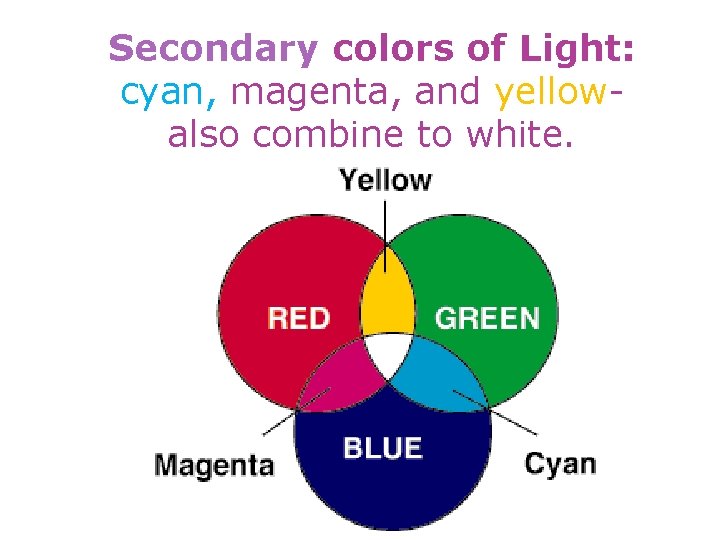
Primary Colors of Light: Red, Green, Blue-combine to white
Secondary colors of Light: cyan, magenta, and yellowalso combine to white.
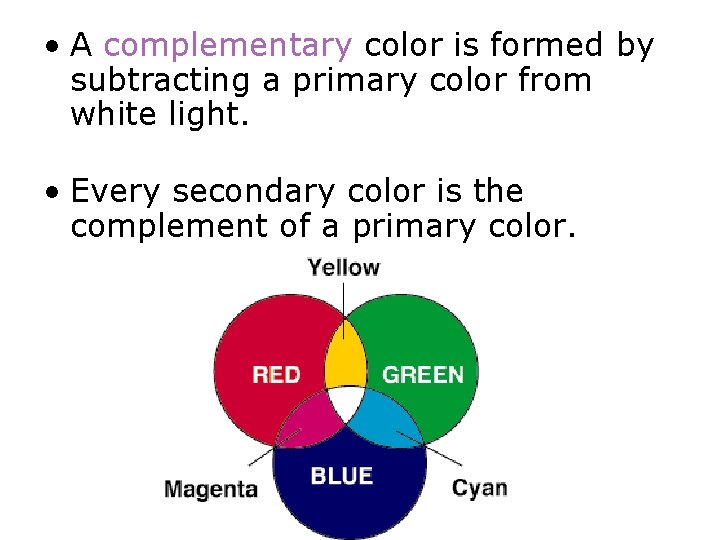
• A complementary color is formed by subtracting a primary color from white light. • Every secondary color is the complement of a primary color.
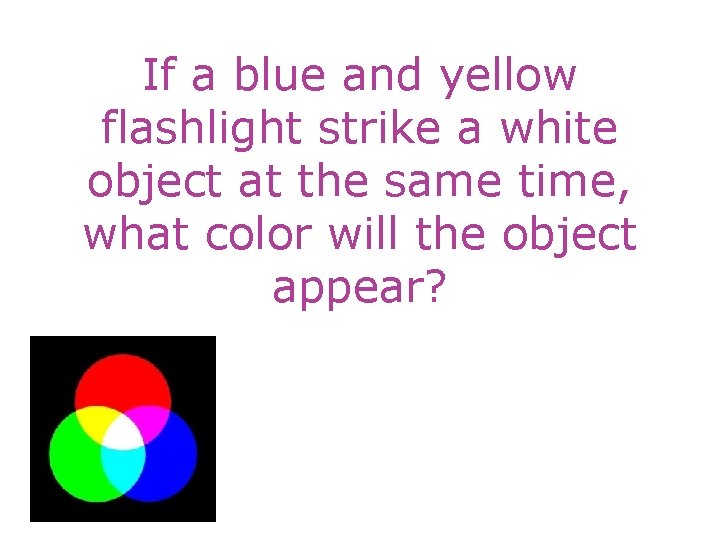
If a blue and yellow flashlight strike a white object at the same time, what color will the object appear?
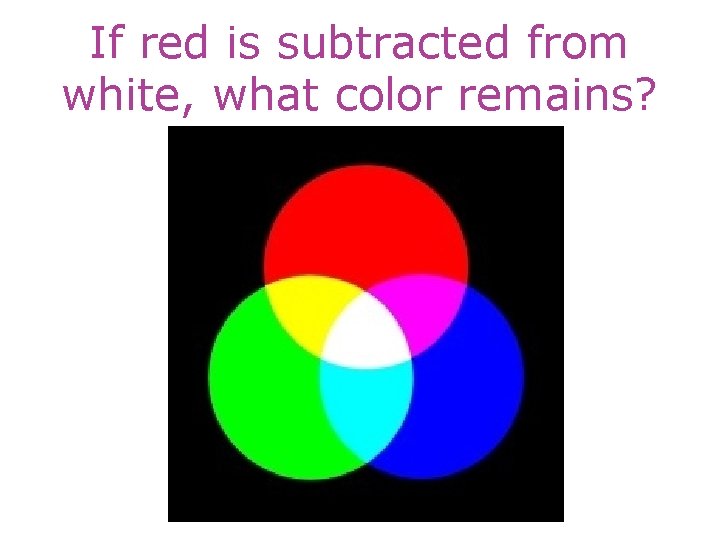
If red is subtracted from white, what color remains?
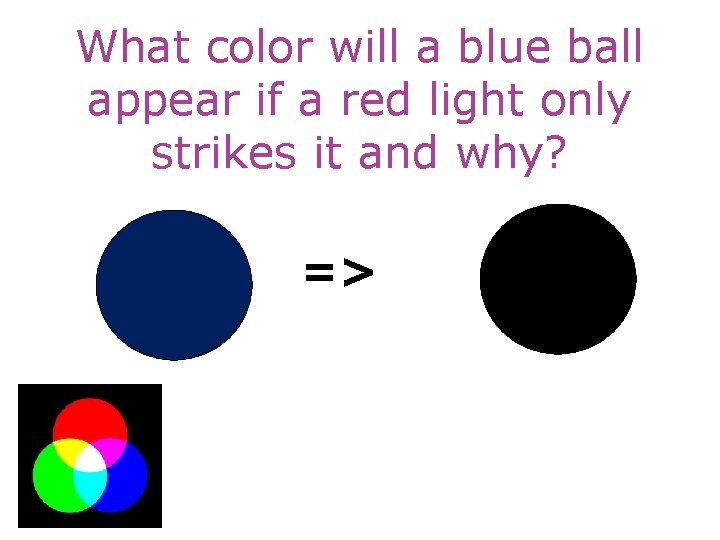
What color will a blue ball appear if a red light only strikes it and why? =>
Color of light is an additive process with respect to frequency. Why? • The primary colors when added together give white light.
Additive Color of Light Mixing Applications • Movie film • Slide projector • Television and computer displays
Primary Colors of Pigment (Cyan, Yellow, Magenta combine to give Black color pigment)
Notes • The primary colors of pigment are the secondary colors of light and vice versa.
When magenta and cyan pigments are mixed what color results?
Pigment is a subtractive color process. Why? • Colors are formed by absorbing (taking away) certain frequencies from white light. • The absence of a reflected light wave appears as black color.
Applications: painting, printing, etc.