
Electromagnetic Spectrum 1 7 Light travels travels in
- Slides: 15
Electromagnetic Spectrum 1 -7
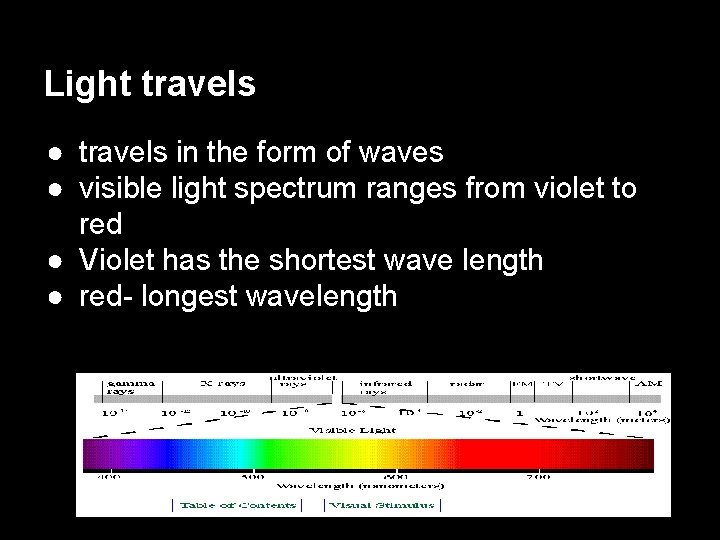
Light travels ● travels in the form of waves ● visible light spectrum ranges from violet to red ● Violet has the shortest wave length ● red- longest wavelength
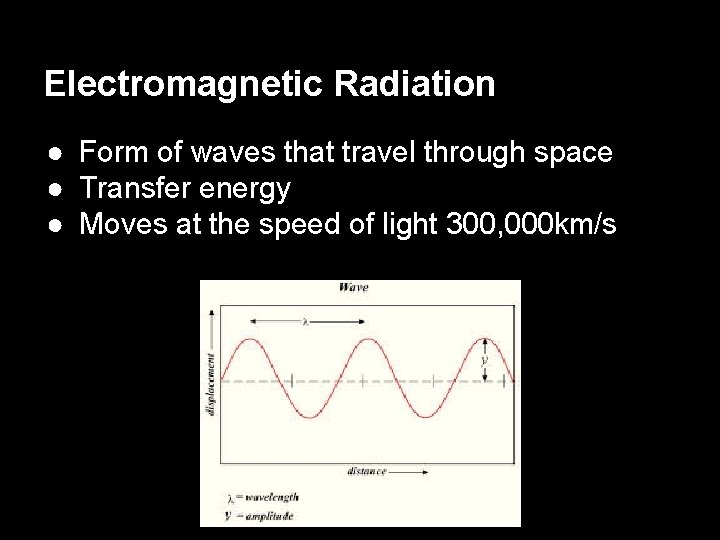
Electromagnetic Radiation ● Form of waves that travel through space ● Transfer energy ● Moves at the speed of light 300, 000 km/s
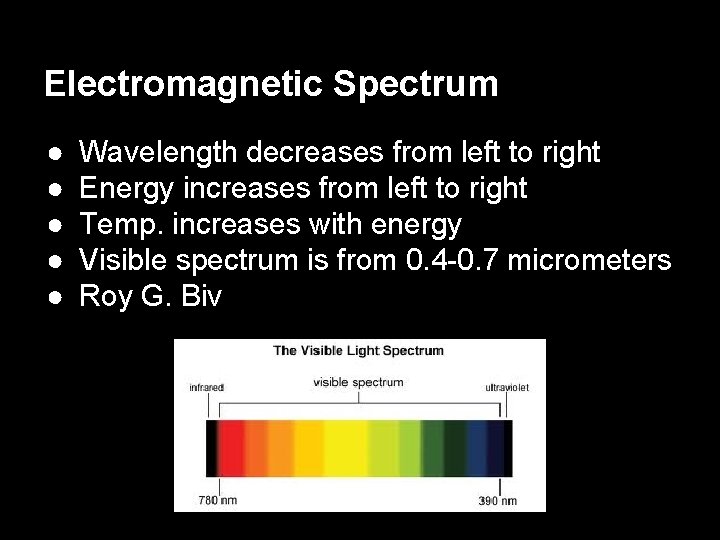
Electromagnetic Spectrum ● ● ● Wavelength decreases from left to right Energy increases from left to right Temp. increases with energy Visible spectrum is from 0. 4 -0. 7 micrometers Roy G. Biv
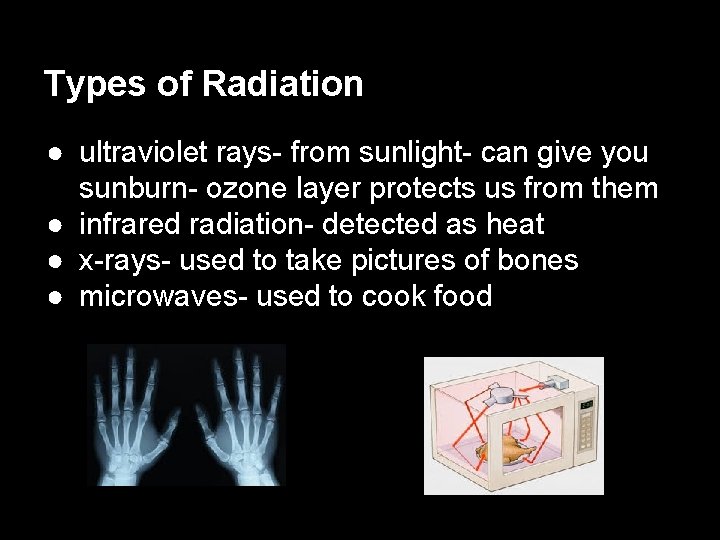
Types of Radiation ● ultraviolet rays- from sunlight- can give you sunburn- ozone layer protects us from them ● infrared radiation- detected as heat ● x-rays- used to take pictures of bones ● microwaves- used to cook food
Electromagnetic Spectrum and Astronomy ● Scientists used different instruments to collect electromagnetic radiation from distant objects ● Each tool is designed for specific part of the spectrum or wavelength
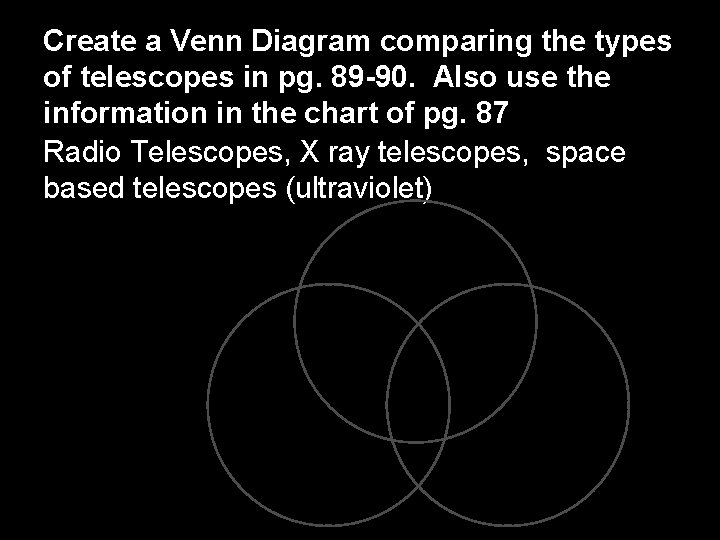
Create a Venn Diagram comparing the types of telescopes in pg. 89 -90. Also use the information in the chart of pg. 87 Radio Telescopes, X ray telescopes, space based telescopes (ultraviolet)
Answer the following questions on your paper. 1. Using figure 1 on pg. 88 a) Describe the relationship between wavelength and energy in the electromagnetic spectrum b. Why do astronomers use x-ray telescopes to study supernovae and black holes? c. What does the hubble telescope provide images of? d. How do gamma rays and radio waves differ? What telescope would be best to look at each?
Light Absorption ● various objects absorb electromagnetic radiation differently ● light can reflect, be absorbed, or pass through objects ● Black bodies- objects that do not allow anything to reflect or pass through them. (only theoretical) ● Although nothing passes through black bodies they do absorb light/energy.
Black Bodies Absorb and emit radiation ● Wavelengths emitted by black bodies depend on temp. ● If there is enough energy temperatures will be high enough to emit visible light ● If temps are low, longer infrared wavelengths are emitted. ● Stars and the sun are considered black bodies- temperature determines how much radiation they emit (very hot stars blue, cooler stars red)
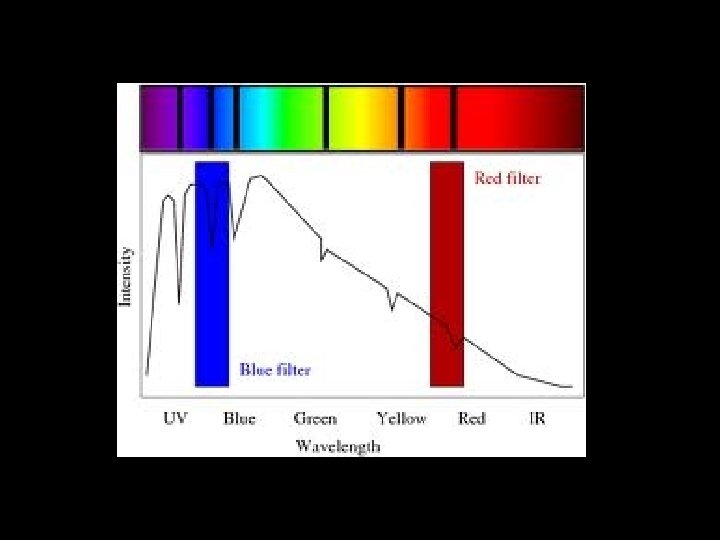
Energy and Wavelengths Peak wavelength- wavelength of light with the most energy produced by any object ● Sun- peak wavelength towards yellow spectrum, which is why the sun looks yellow.
Spectrum- fingerprint of the stars ● Chart of entire range of wavelengths of light from an object ● Can look like a barcode or graph ● Can reveal: ○ chemical composition ○ temperature ○ pressure ○ motion towards or away from earth
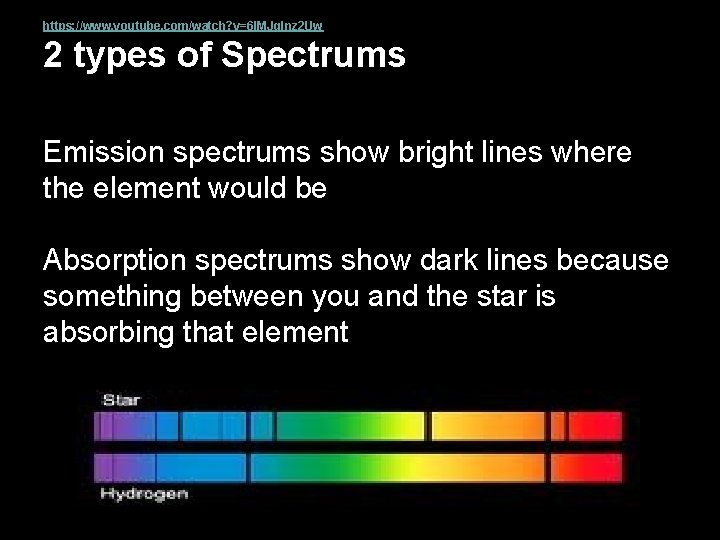
Comparing spectrums To determine what elements a star has you would compare it’s spectrum with the spectrum for that element (do they emit the same wavelengths of light? ) -If the patterns match the star contains that element.
https: //www. youtube. com/watch? v=6 IMJglnz 2 Uw 2 types of Spectrums Emission spectrums show bright lines where the element would be Absorption spectrums show dark lines because something between you and the star is absorbing that element