
Electromagnetic Induction Created for CVCA Physics By Dick
Electromagnetic Induction Created for CVCA Physics By Dick Heckathorn 25 April 2 K + 5 1
Table of Contents 1 8 11 19 25 31 37 46 55 61 19. 1 Electromagnetic Age F on wire in B Insert magnet into a coil I transmitted by iron core 19. 4 Lenz’s Law Examples of Induced direction 19. 5 Electrical Generators 19. 6 The Transformer Energy Transmission Demonstrations 2
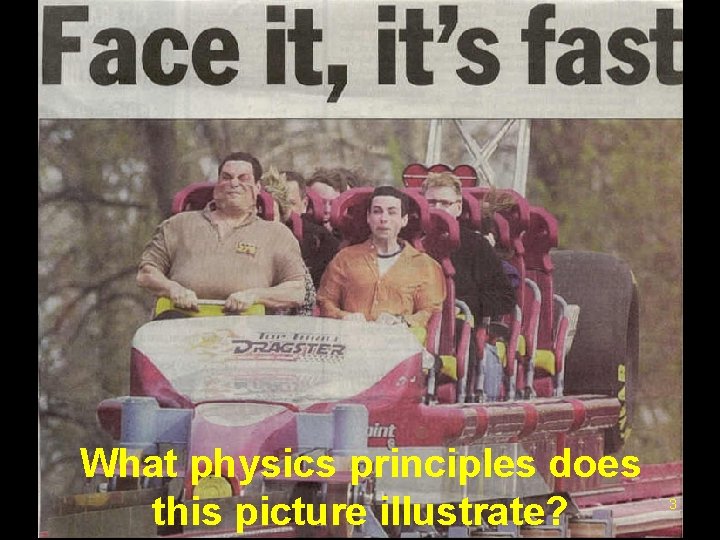
What physics principles does this picture illustrate? 3
Purpose for Chapter 19 1. To investigate how one can generate electrical energy (electricity) 2. 2. Techniques for distribution 4
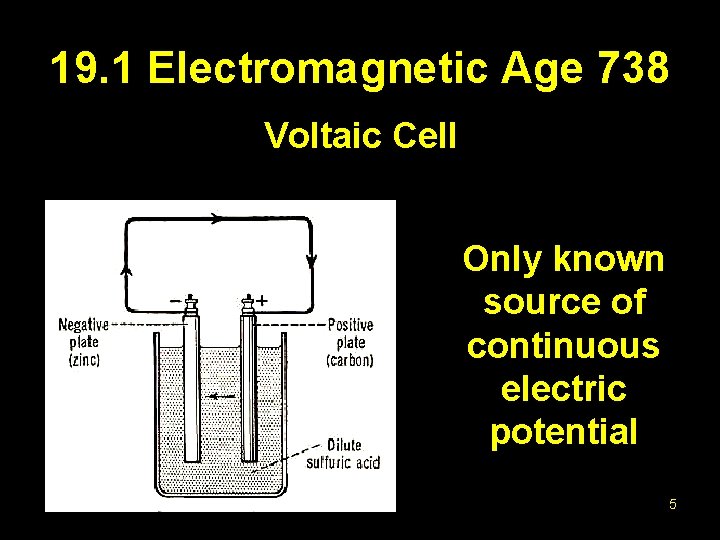
19. 1 Electromagnetic Age 738 Voltaic Cell Only known source of continuous electric potential 5
19. 2 Faraday’s Discovery 738 Question? Can a magnetic field cause electrons to move? 6
Demonstration #1 Move a wire through the jaws of a horseshoe magnet. Results? Large magnet – wire – Galvanometer 7
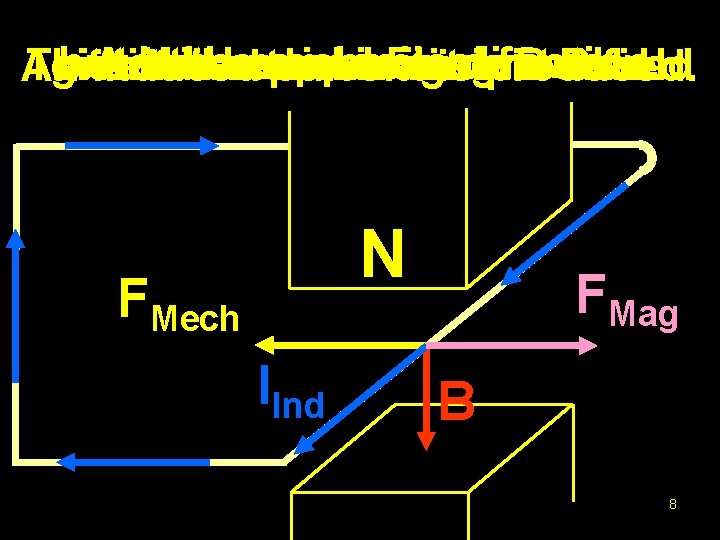
but inthe opposite mechanical force Ato Mechanical is that is equal in. Force magnitude gives rise to awire magnetic force exerted on acurrent in aproduced. B field. This induced in a. B field An induced current isdirection. N FMech IInd FMag B 8
Demonstration #1 Electrons only flowed when the conductor was moving through the magnetic field. They were moving in a direction opposite to the induced current as the induced current was the movement of positive charges. 9
Demonstration #2 Plunge a bar magnet into and out of the core of a coil. Bar magnet – coil – wire – Galvanometer 10
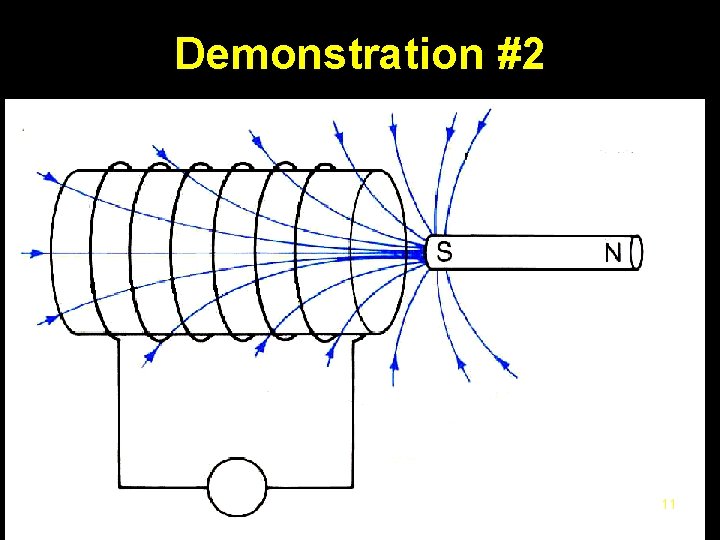
Demonstration #2 FMech I B Or coil moves to right Magnet’s Direction of field blue has Due Thus toinduced mechanical current B field of magnet at Magnet plunge into direction arrows of: force is incoil. direction…. to of right bottom coil is in the what direction? 11
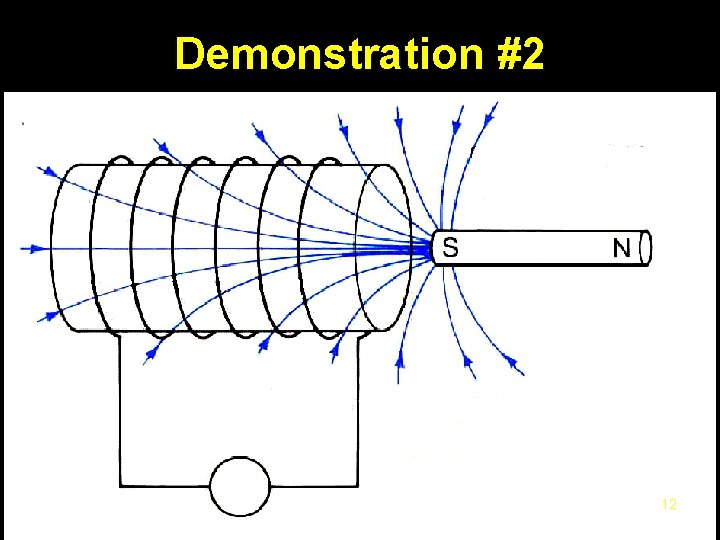
Demonstration #2 FMech I B Thus current Magnet’s field has Magnet pulled outleft B Or field coil of moves magnet to atof Due toinduced mechanical Direction of blue is incoil. direction…. direction of: the bottom coil is what force toof left arrows direction? 12
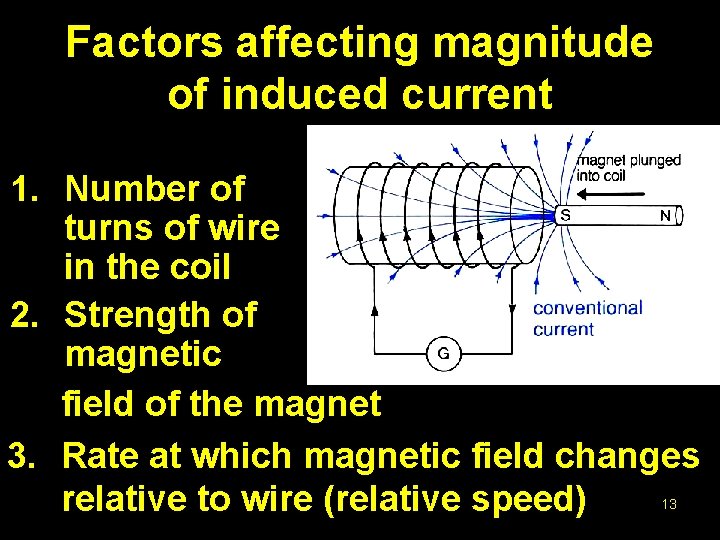
Factors affecting magnitude of induced current 1. Number of turns of wire in the coil 2. Strength of magnetic field of the magnet 3. Rate at which magnetic field changes relative to wire (relative speed) 13
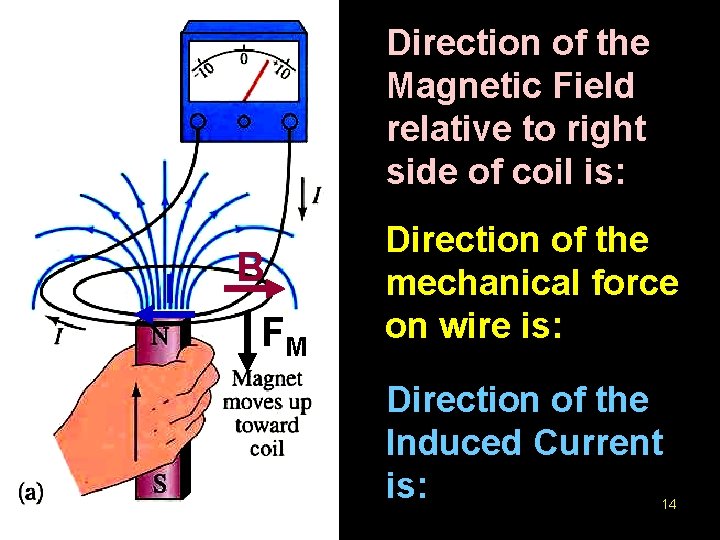
Direction of the Magnetic Field relative to right side of coil is: I B FM Direction of the mechanical force on wire is: Direction of the Induced Current is: 14
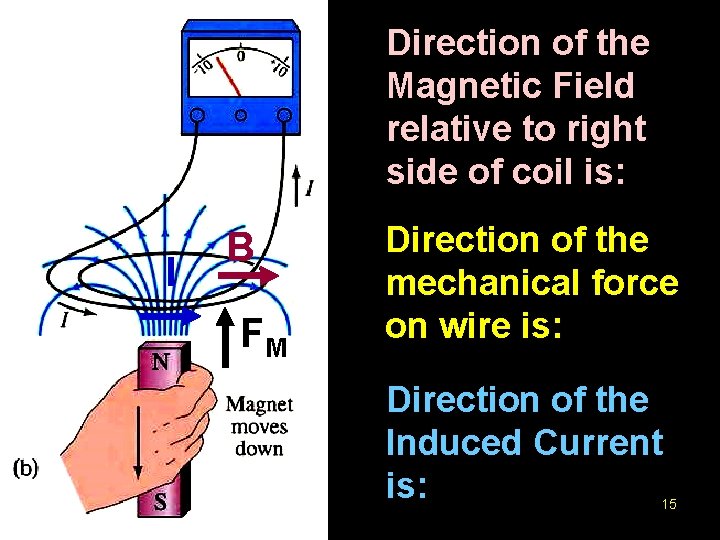
Direction of the Magnetic Field relative to right side of coil is: I B FM Direction of the mechanical force on wire is: Direction of the Induced Current is: 15
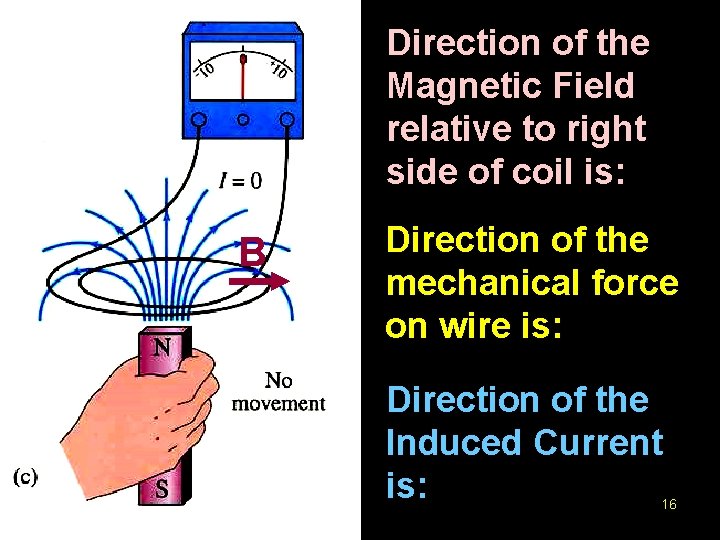
Direction of the Magnetic Field relative to right side of coil is: B Direction of the mechanical force on wire is: none Direction of the Induced Current is: there is none 16
Conclusion Charges flow only when the bar magnet is moving into or out of the coil or when the coil moves relative to the magnet. 17
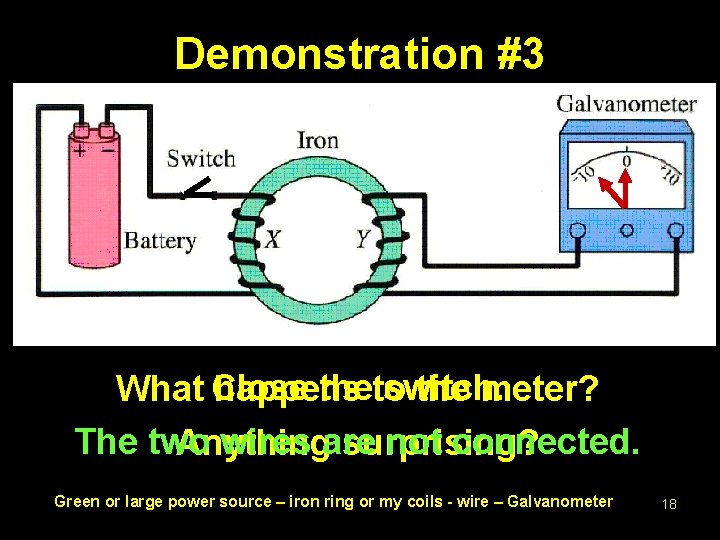
Demonstration #3 theto switch. What Close happens the meter? The two wires are not connected. Anything surprising? Green or large power source – iron ring or my coils - wire – Galvanometer 18
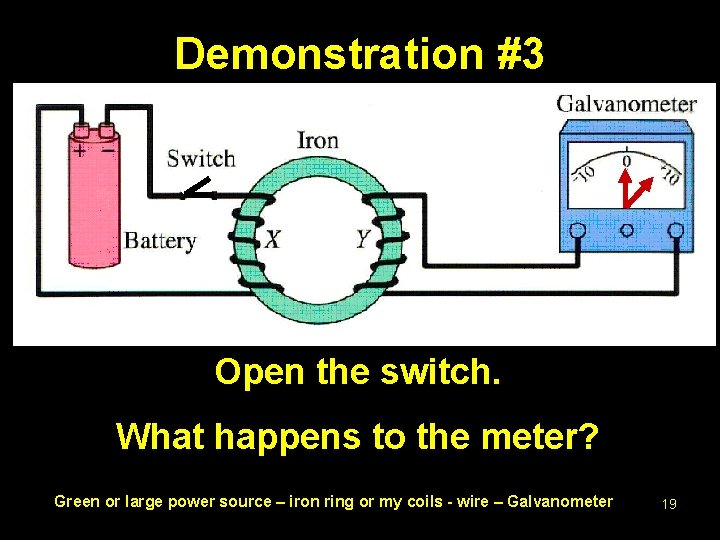
Demonstration #3 Open the switch. What happens to the meter? Green or large power source – iron ring or my coils - wire – Galvanometer 19
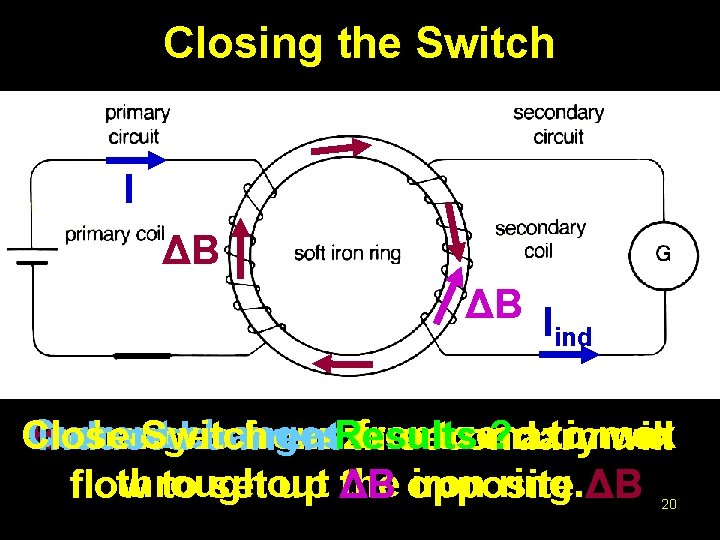
Closing the Switch I ΔB ΔB I ind Current changes from Close Switch BInduced changes from Results zero tozero maximum ? to max current in secondary will throughout the opposite iron ring. ΔB flow to set up ΔB 20
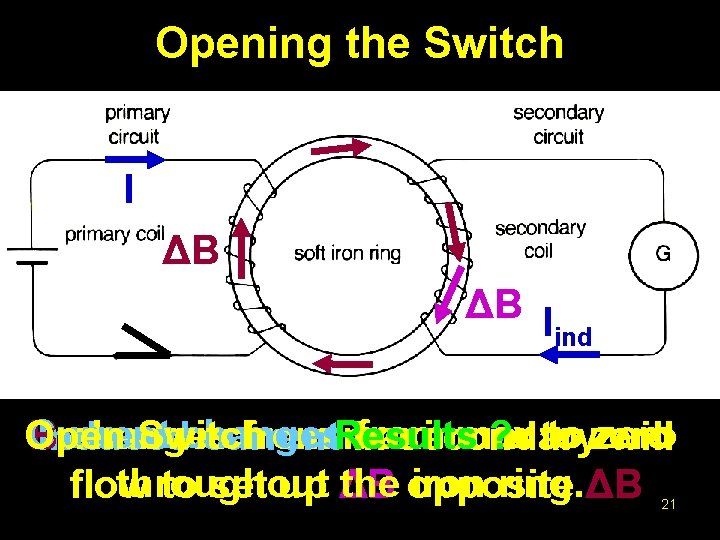
Opening the Switch I ΔB ΔB I ind Current changes from max to zero Open Switch BInduced changes from Results maximum ? to current in secondary will throughout the opposite iron ring. ΔB flow to set up ΔB 21
Conclusion There is an induced current only when the magnetic field is changing in the iron ring. 22
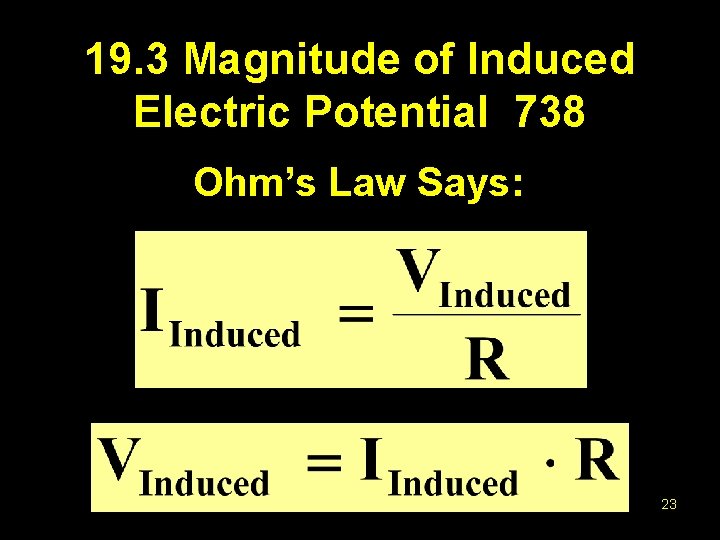
19. 3 Magnitude of Induced Electric Potential 738 Ohm’s Law Says: 23
19. 4 Direction of Induced Current: Lenz’s Law 741 Know so far? S-Pole enters coil Current in one direction Induced current is in a direction S-Pole removed opposite that from whencoil Current in opposite direction N-Pole was involved 24
Lenz Reasoned The induced current sets up an induced magnet field. This induced field interacts with inducing field of the magnet. 25
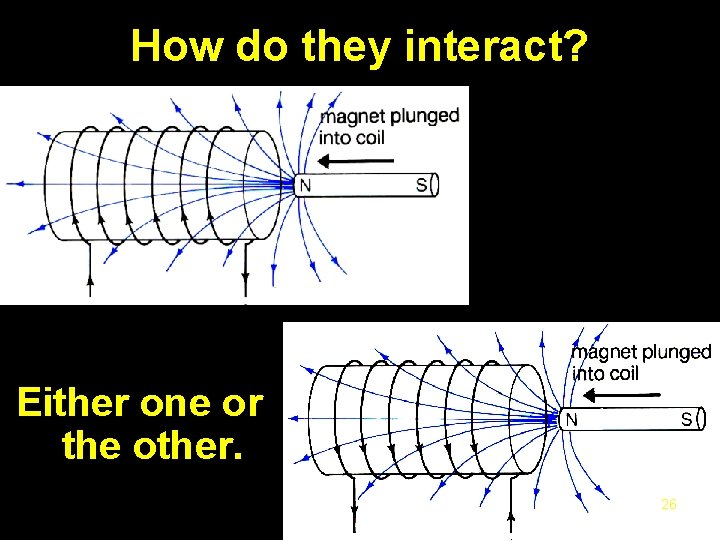
How do they interact? Either one or the other. 26
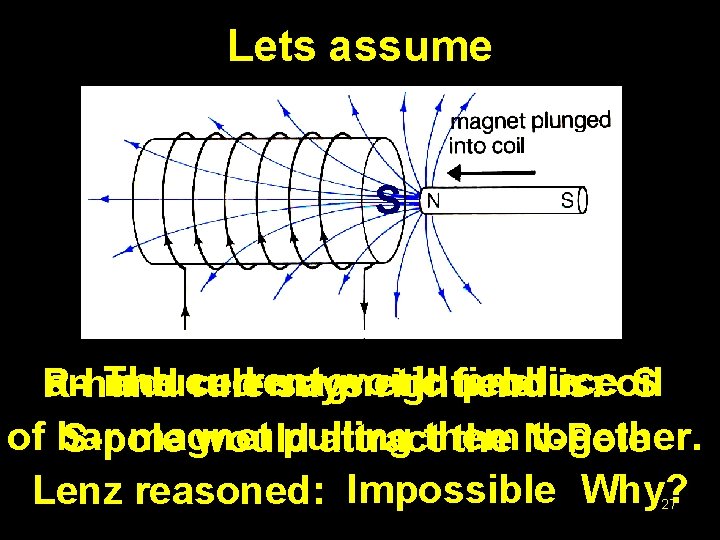
Lets assume S The current would produce an induced R-hand rule magnetic says rightfield end in is: coil S of bar magnet pulling together. S-pole would attractthem the N-Pole Lenz reasoned: Impossible Why? 27
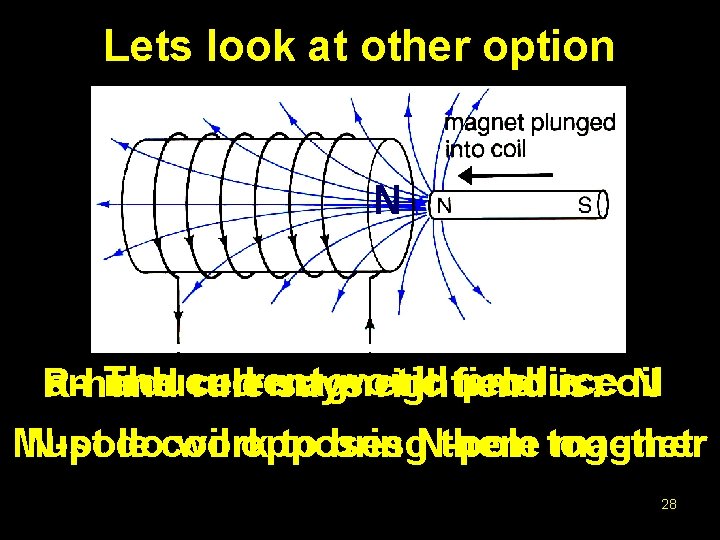
Lets look at other option N The current would produce an induced R-hand rule magnetic says rightfield end in is: coil N Must docoil work to bring. N-pole them together N-pole opposes magnet 28
Conclusion An induced current flows in such a direction that the created induced field opposes the action of the inducing field. 29
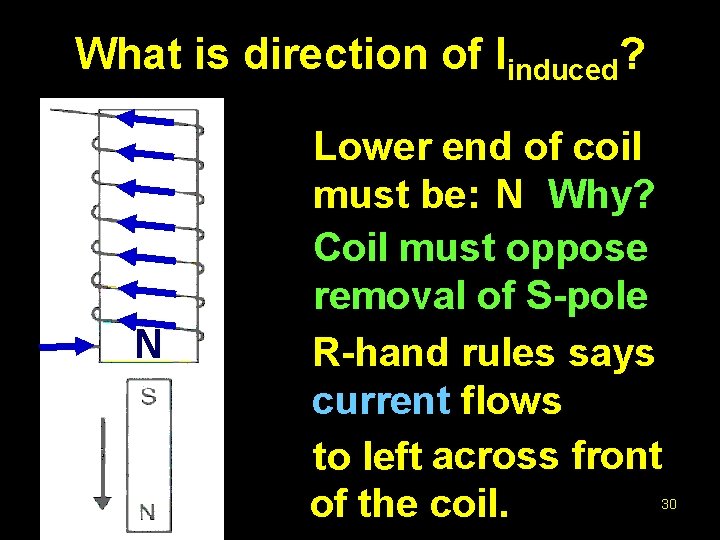
What is direction of Iinduced? N Lower end of coil must be: N Why? Coil must oppose removal of S-pole R-hand rules says current flows to left across front of the coil. 30
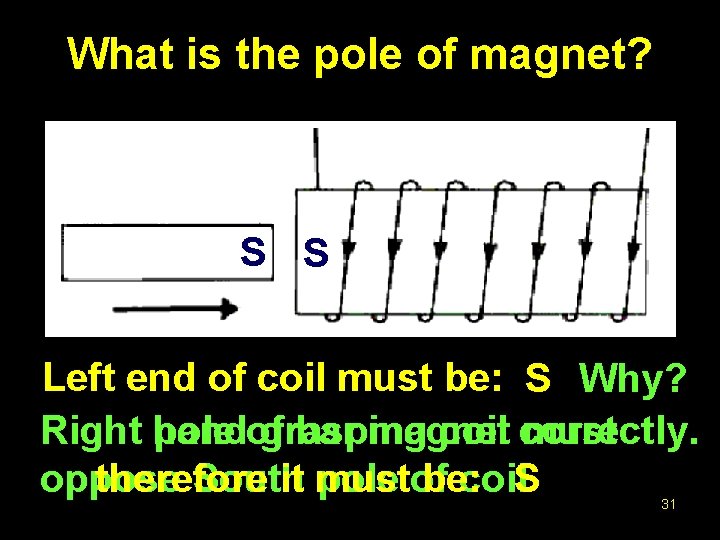
What is the pole of magnet? S S Left end of coil must be: S Why? Right hand grasping coil correctly. pole of bar magnet must oppose South pole of coil. S therefore it must be: 31
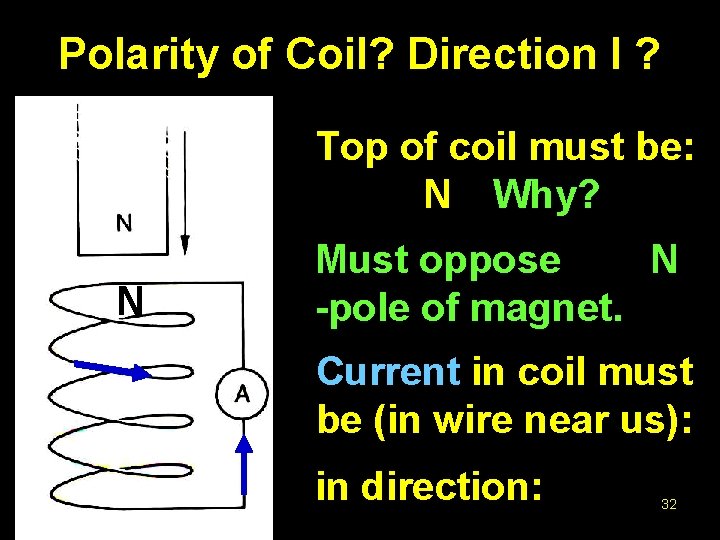
Polarity of Coil? Direction I ? Top of coil must be: N Why? N Must oppose N -pole of magnet. Current in coil must be (in wire near us): in direction: 32
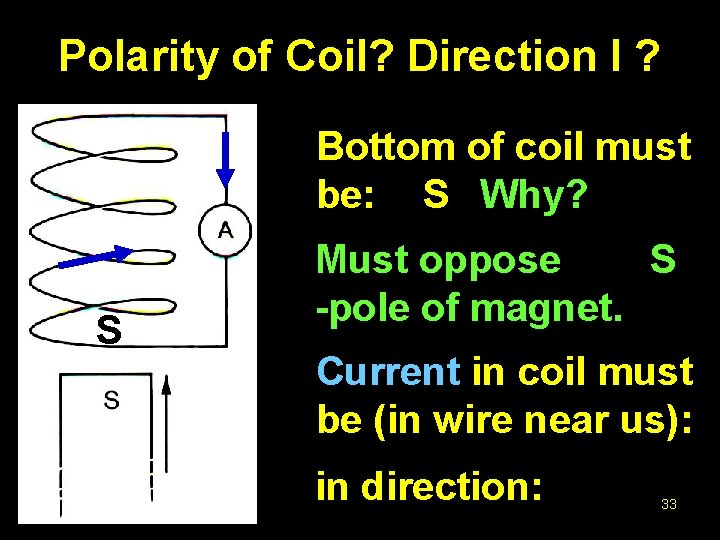
Polarity of Coil? Direction I ? Bottom of coil must be: S Why? S Must oppose S -pole of magnet. Current in coil must be (in wire near us): in direction: 33
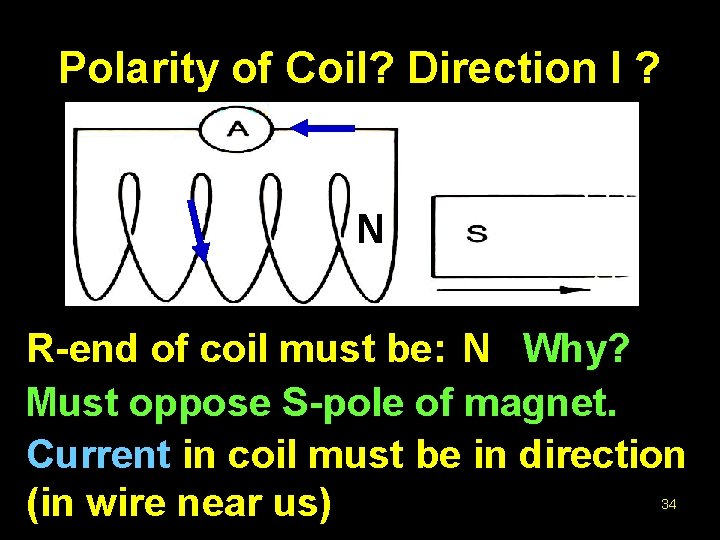
Polarity of Coil? Direction I ? N R-end of coil must be: N Why? Must oppose S-pole of magnet. Current in coil must be in direction (in wire near us) 34
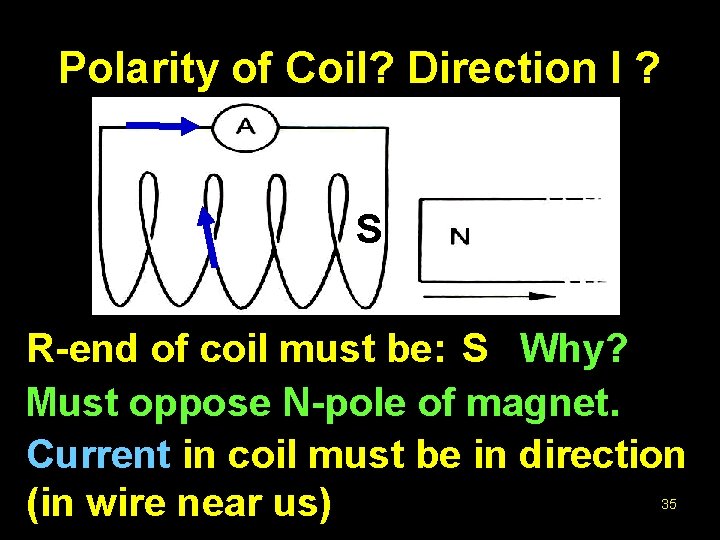
Polarity of Coil? Direction I ? S R-end of coil must be: S Why? Must oppose N-pole of magnet. Current in coil must be in direction (in wire near us) 35
19. 5 Electrical Generators: AC and DC 745 Ready to produce a device capable of producing a continuous electric current and electric potential difference by electromagnetic induction 36
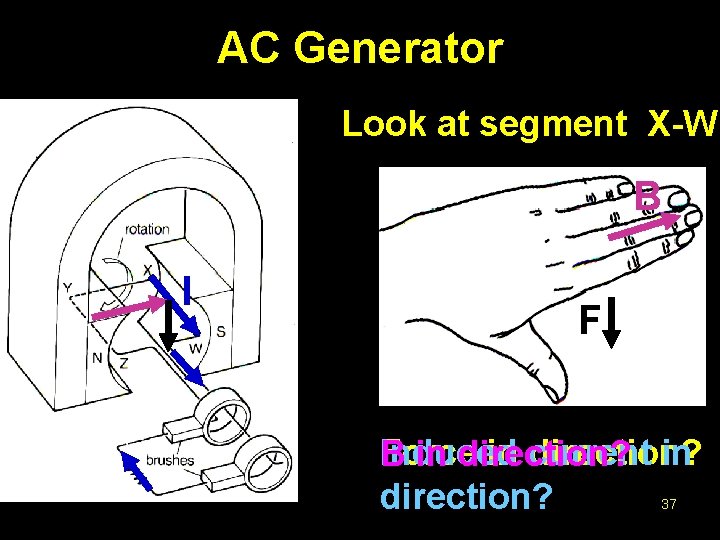
AC Generator Look at segment X-W B I F Force in current direction? Induced in B in direction? 37
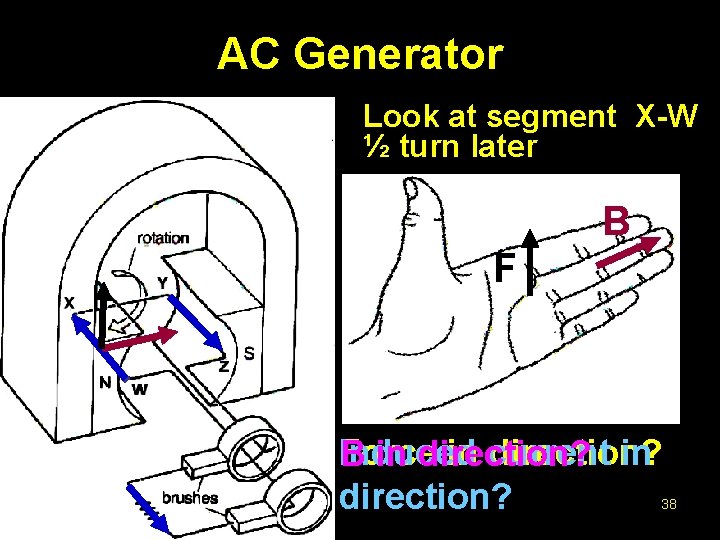
AC Generator Look at segment X-W ½ turn later B F Force in current direction? Induced in B in direction? 38
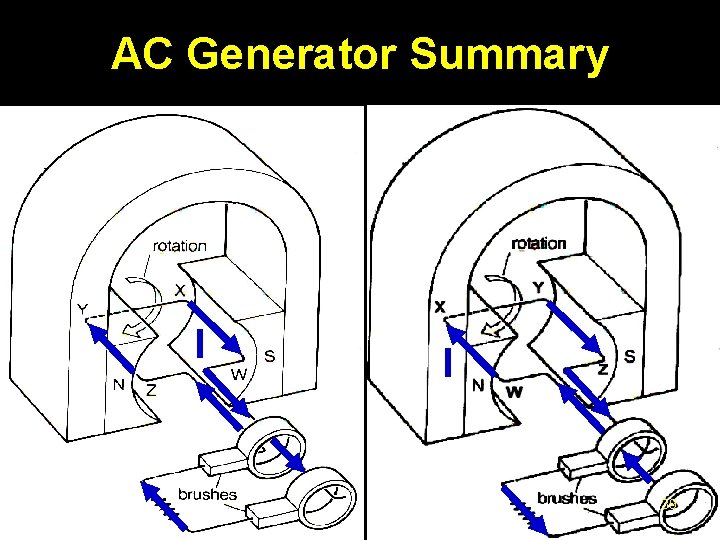
AC Generator Summary I I 39
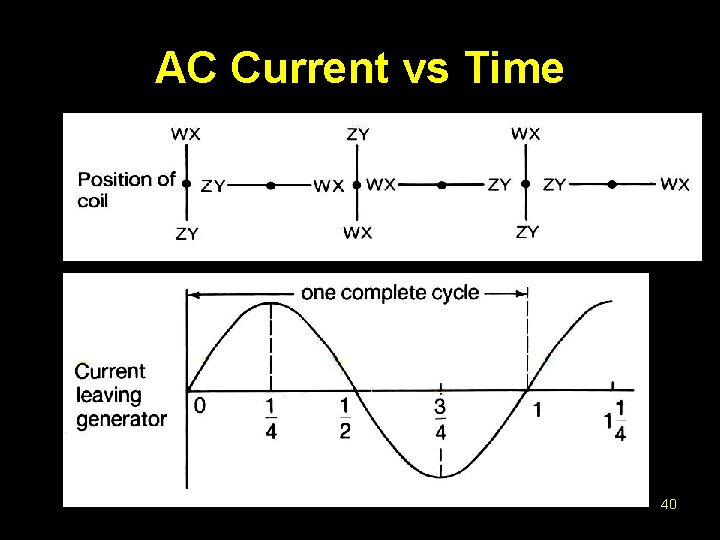
AC Current vs Time 40
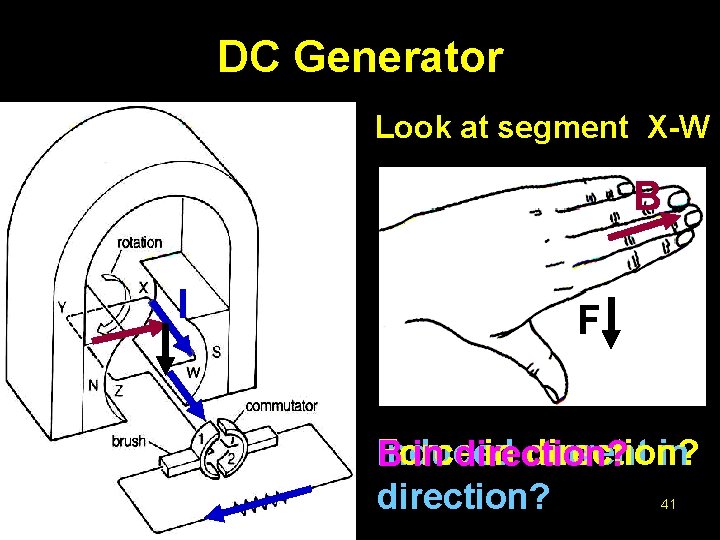
DC Generator Look at segment X-W B I F Force in current direction? Induced in B in direction? 41
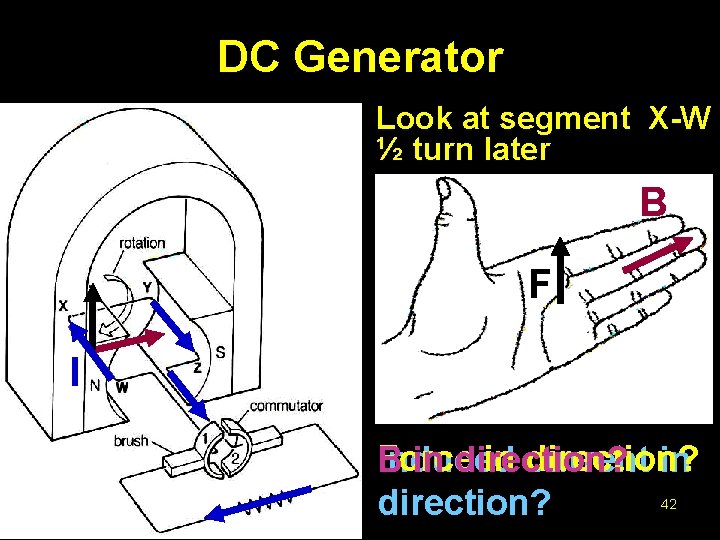
DC Generator Look at segment X-W ½ turn later B F I Force in current direction? B Induced in direction? 42
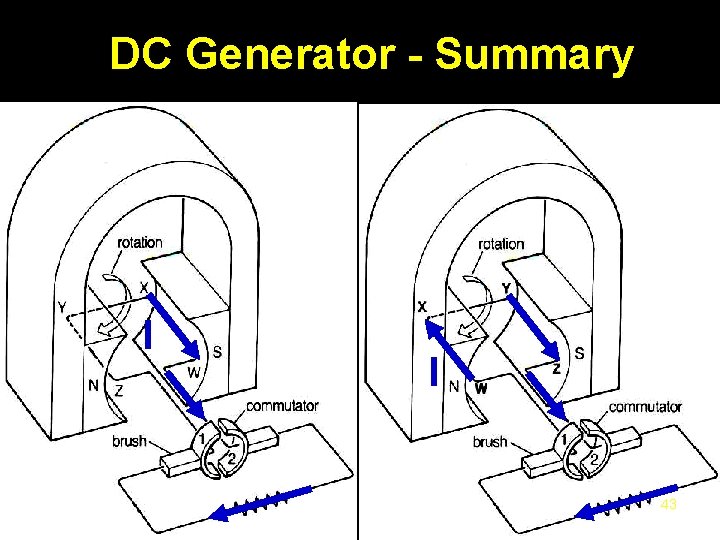
DC Generator - Summary I I 43
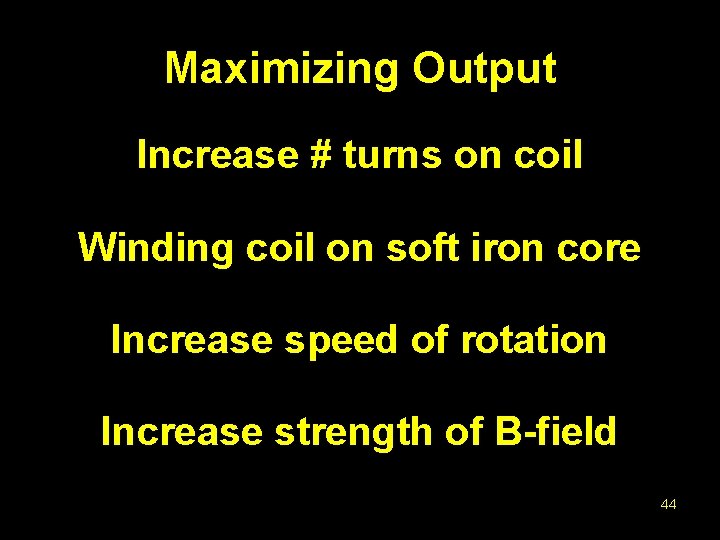
Maximizing Output Increase # turns on coil Winding coil on soft iron core Increase speed of rotation Increase strength of B-field 44
19. 6 The Transformer All large scale electrical generating systems generate electricity using AC generators. 45
The Transformer changes the electric potential difference (V) by varying number of windings of two different coils around a common soft iron core. 46
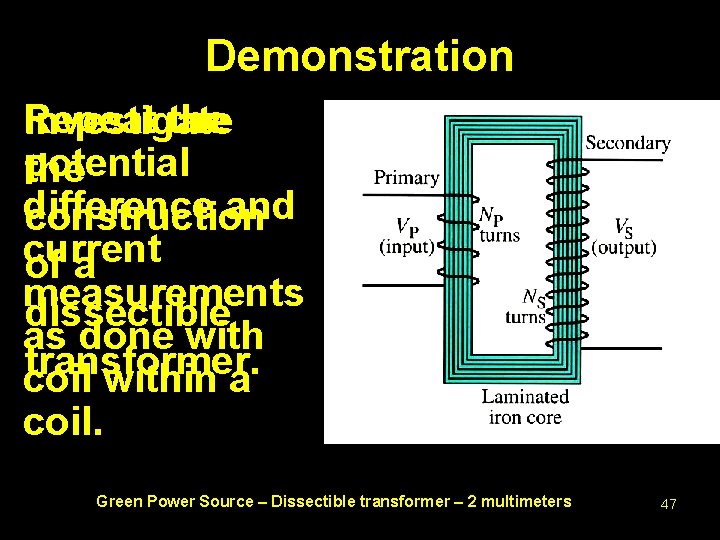
Demonstration Repeat the Investigate potential the difference and construction current of a measurements dissectible as done with transformer. coil within a coil. Green Power Source – Dissectible transformer – 2 multimeters 47
Conclusion If power source is connected to the coil with the smaller number of turns, the output potential difference is greater than the input potential difference. 48
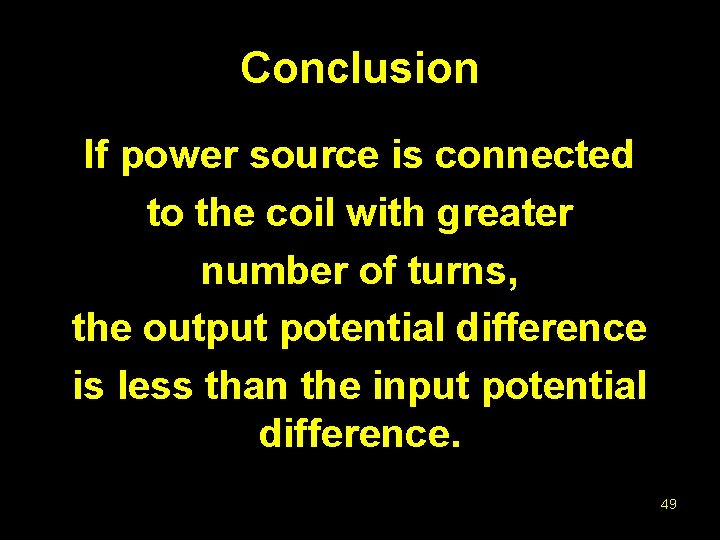
Conclusion If power source is connected to the coil with greater number of turns, the output potential difference is less than the input potential difference. 49
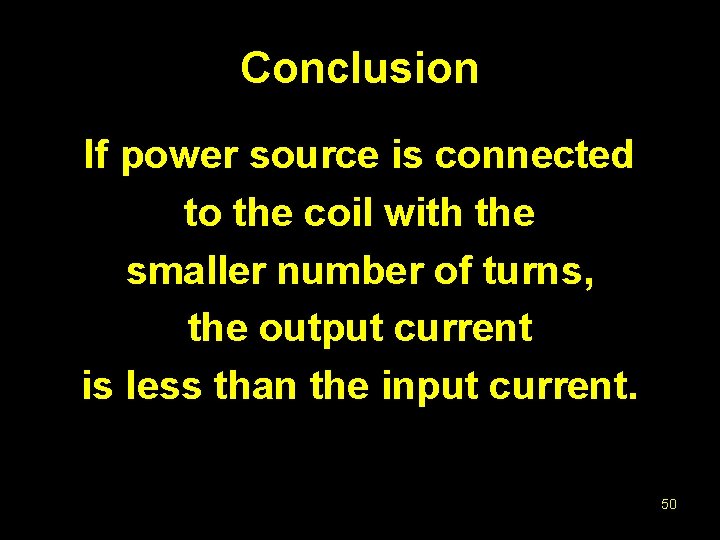
Conclusion If power source is connected to the coil with the smaller number of turns, the output current is less than the input current. 50
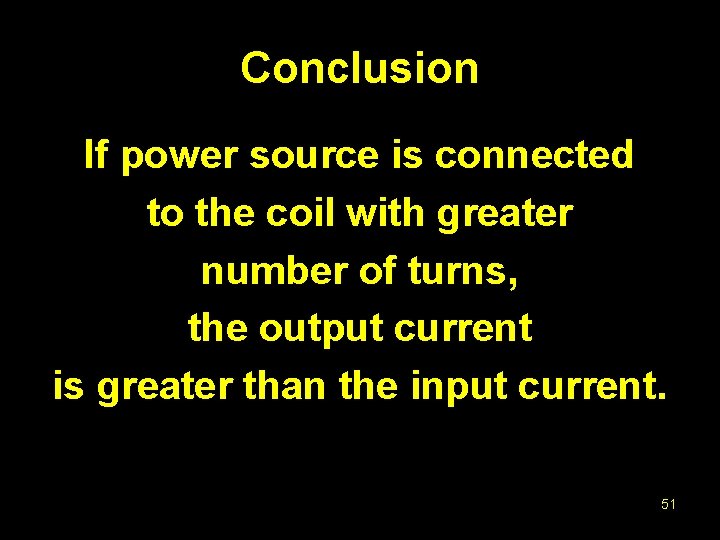
Conclusion If power source is connected to the coil with greater number of turns, the output current is greater than the input current. 51
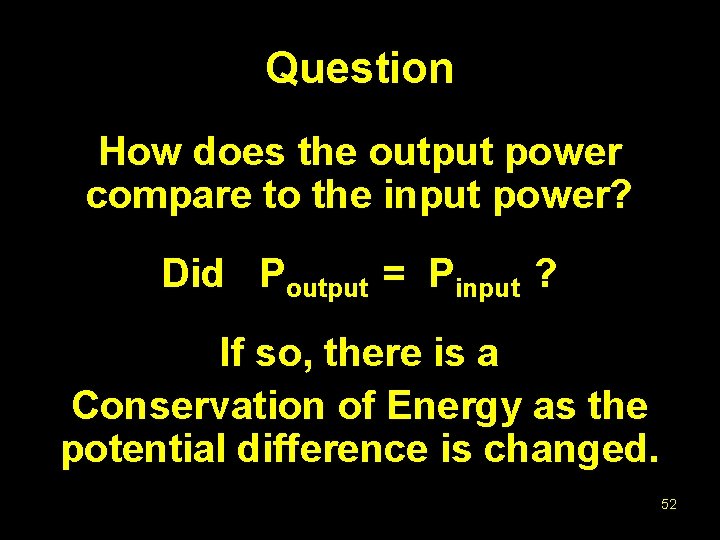
Question How does the output power compare to the input power? Did Poutput = Pinput ? If so, there is a Conservation of Energy as the potential difference is changed. 52
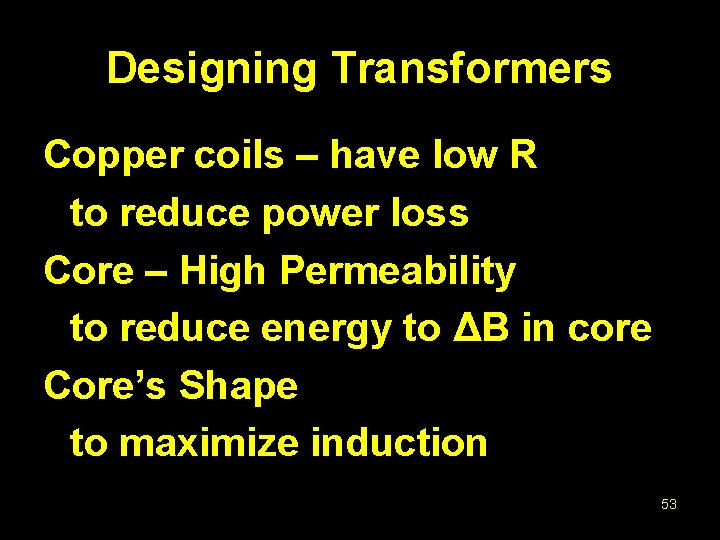
Designing Transformers Copper coils – have low R to reduce power loss Core – High Permeability to reduce energy to ΔB in core Core’s Shape to maximize induction 53
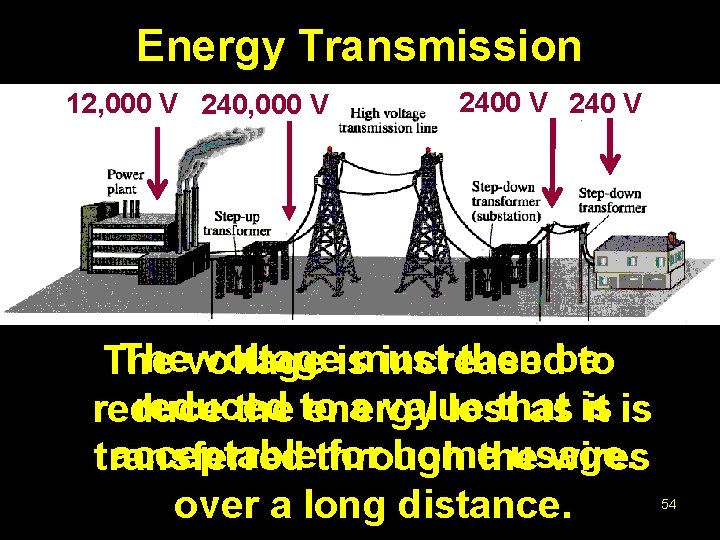
Energy Transmission 12, 000 V 2400 V 240 V Thevoltageismust then be The increased to reduced a value that reduce the to energy lost as is it is acceptablethrough for home usage. transferred the wires over a long distance. 54
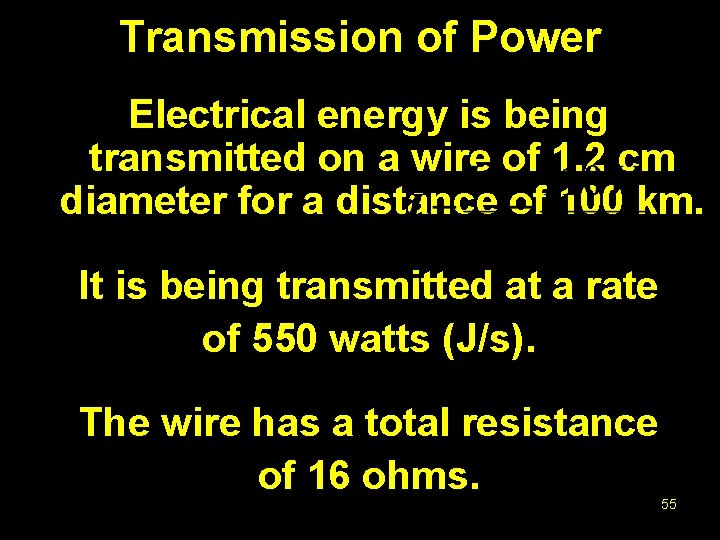
Transmission of Power Electrical energy is being transmitted on a wire of 1. 2 cm diameter for a distance of 100 km. It is being transmitted at a rate of 550 watts (J/s). The wire has a total resistance of 16 ohms. 55
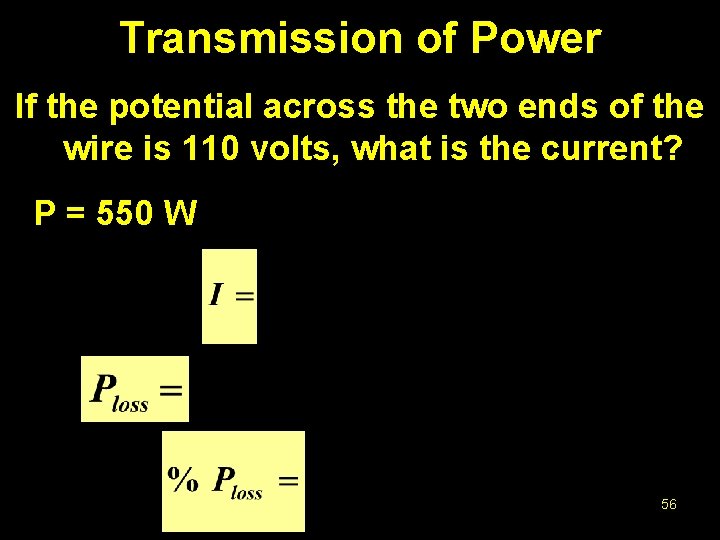
Transmission of Power If the potential across the two ends of the wire is 110 volts, what is the current? P = 550 W R = 16 Ω I=? %Ploss ? 56
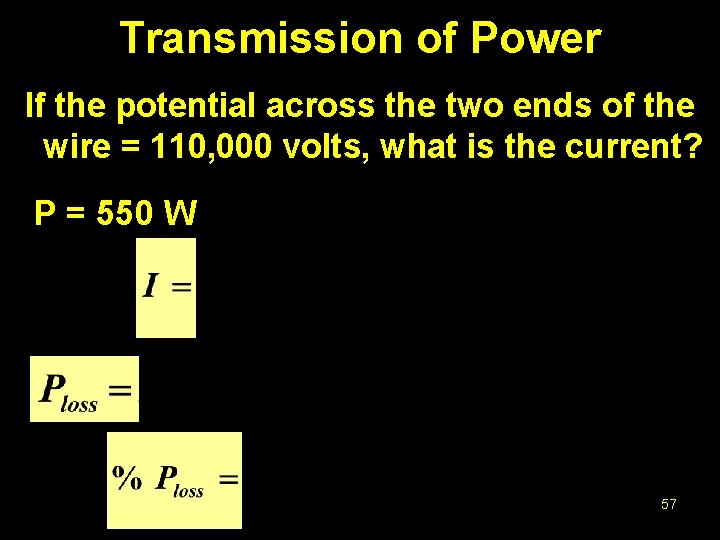
Transmission of Power If the potential across the two ends of the wire = 110, 000 volts, what is the current? P = 550 W R = 16 Ω I=? %Ploss ? 57
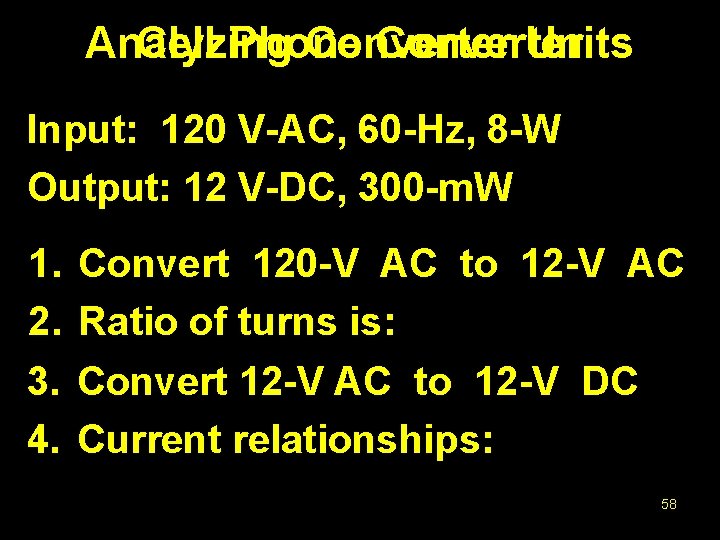
Cell Phone Converter Analyzing Converter Units Input: 120 V-AC, 60 -Hz, 8 -W Output: 12 V-DC, 300 -m. W 1. Convert 120 -V AC to 12 -V AC 2. Ratio of turns is: 10 to 1 3. Convert 12 -V AC to 12 -V DC 4. Current relationships: In: 0. 066 Amp Out: 0. 025 Amp 58
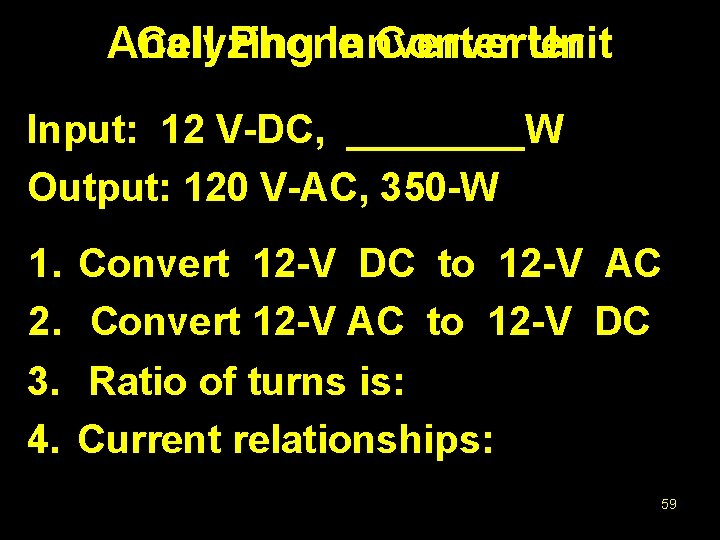
Cell Phone Converter Analyzing Innverter Unit Input: 12 V-DC, ____W Output: 120 V-AC, 350 -W 1. Convert 12 -V DC to 12 -V AC 2. Convert 12 -V AC to 12 -V DC 3. Ratio of turns is: 1 to 10 4. Current relationships: In: ___ Amp Out: ___ Amp 59
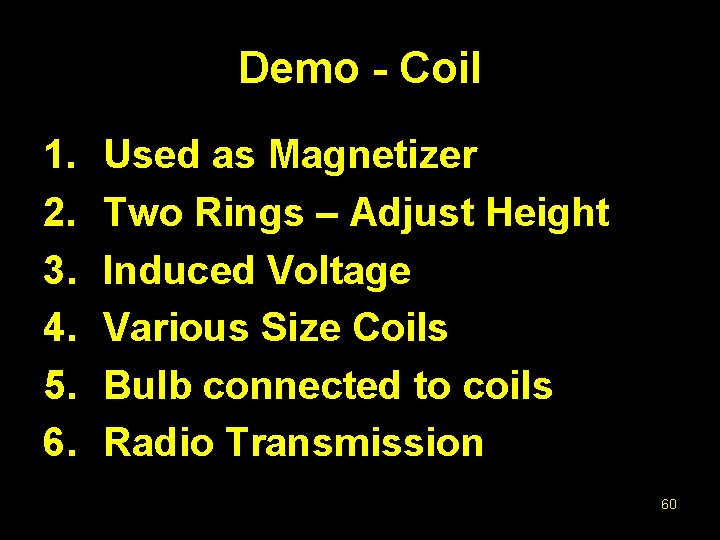
Demo - Coil 1. 2. 3. 4. 5. 6. Used as Magnetizer Two Rings – Adjust Height Induced Voltage Various Size Coils Bulb connected to coils Radio Transmission 60
Demo - Coil 7. Magnetic Braking 8. Dropping Magnet 9. Dropping Copper Tube 10. Ball Magnet 61

That’s all folks! 62
63
64
- Slides: 64