
Electromagnetic Energy Energy Energy The ability to do
Electromagnetic Energy
Energy § Energy: The ability to do work § Earth has two sources of heat energy: a. External source: The energy provided by the sun b. Internal source: The decay of radioactive substances and compression inside the Earth
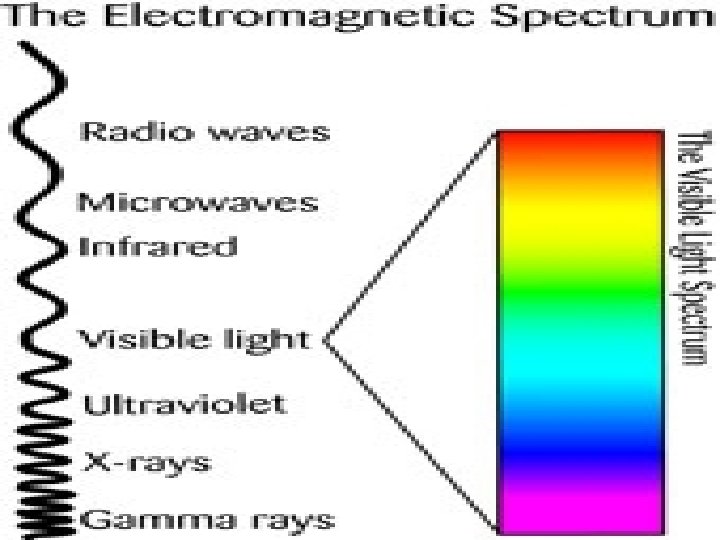
Electromagnetic Energy § Electromagnetic Energy: a type of energy that is given off in the form of transverse waves from all matter not at absolute zero § Transverse waves: vibrate at 90 degree angles to the direction in which they are moving § Visible light is the type of electromagnetic energy that we are most familiar with
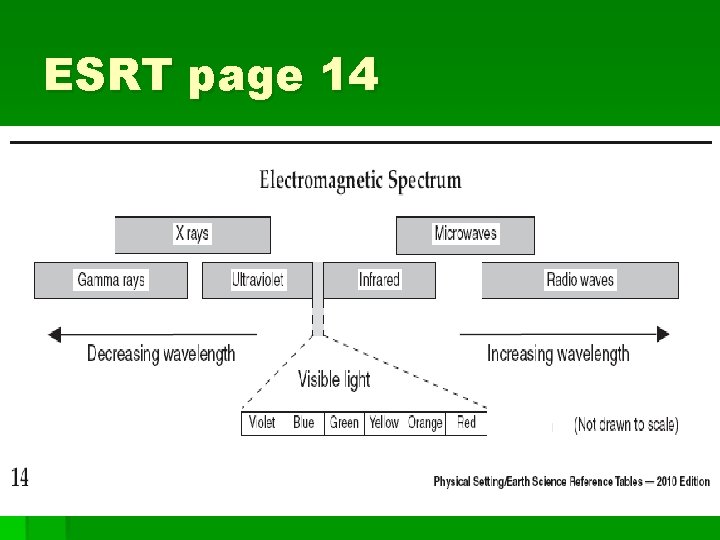
ESRT page 14
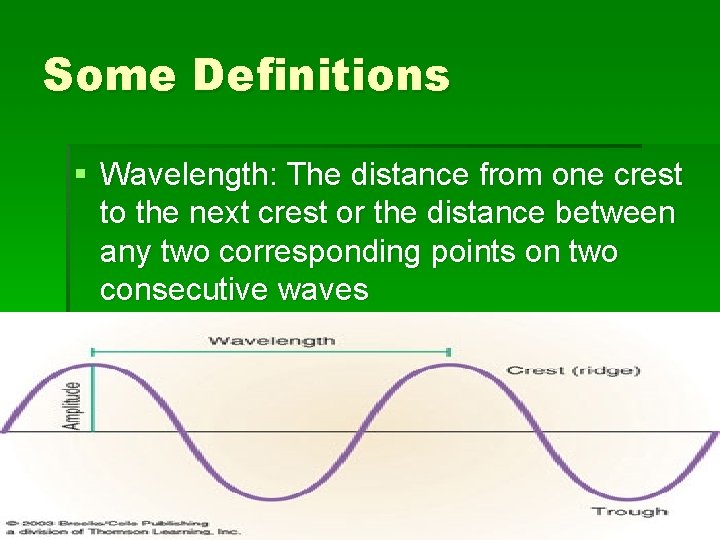
Some Definitions § Wavelength: The distance from one crest to the next crest or the distance between any two corresponding points on two consecutive waves
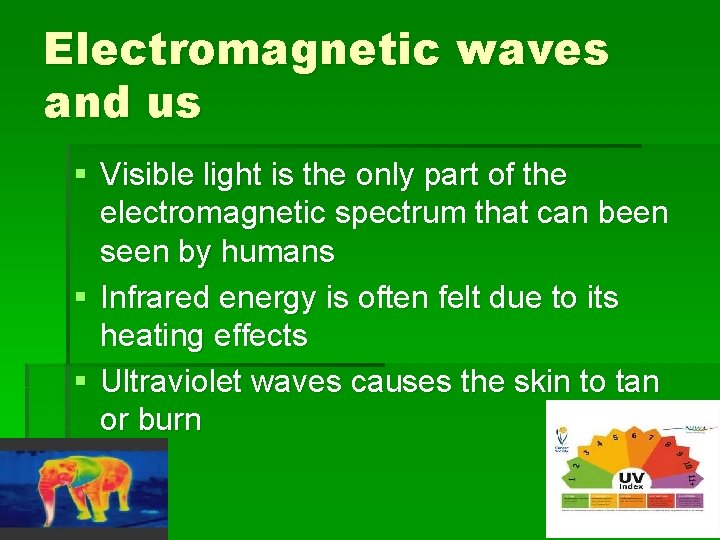
Electromagnetic waves and us § Visible light is the only part of the electromagnetic spectrum that can been seen by humans § Infrared energy is often felt due to its heating effects § Ultraviolet waves causes the skin to tan or burn
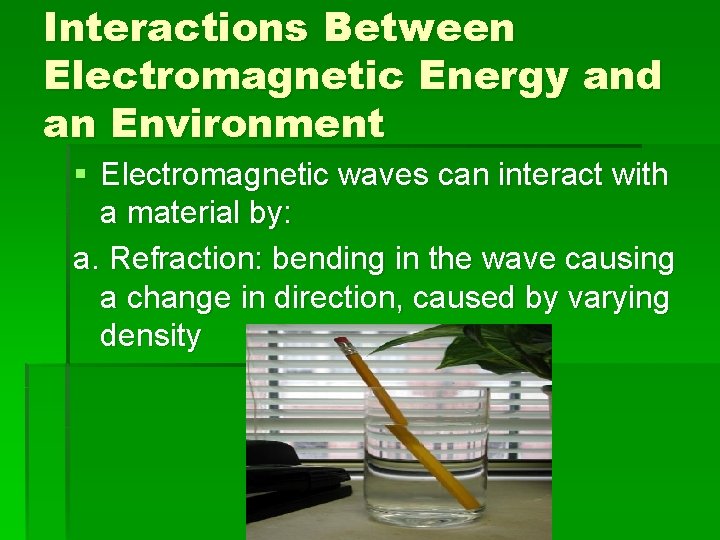
Interactions Between Electromagnetic Energy and an Environment § Electromagnetic waves can interact with a material by: a. Refraction: bending in the wave causing a change in direction, caused by varying density
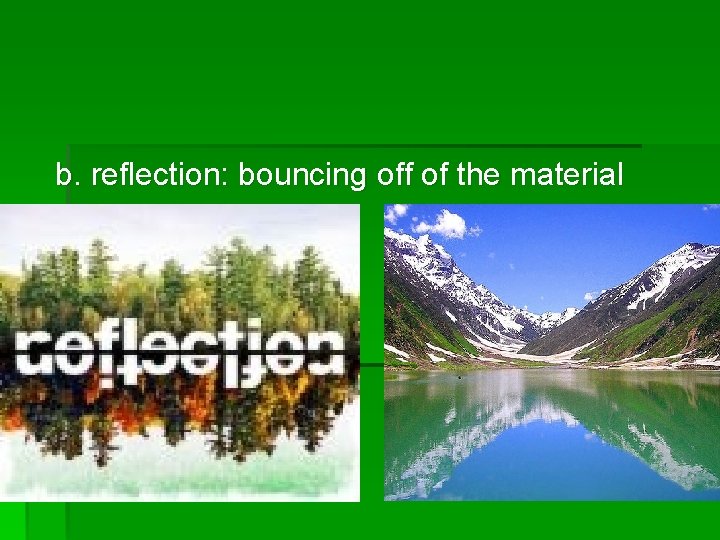
b. reflection: bouncing off of the material
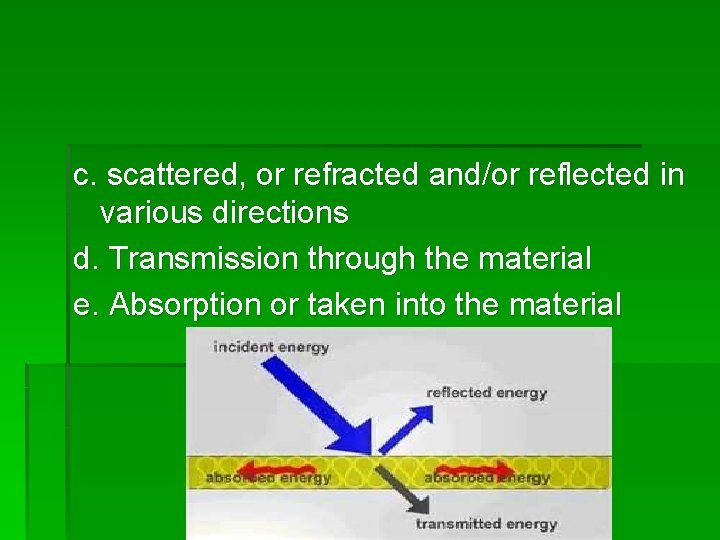
c. scattered, or refracted and/or reflected in various directions d. Transmission through the material e. Absorption or taken into the material
§ Dark-colored, rough surfaces absorb more sunlight than light-colored shiny surfaces § Dark objects are better at radiating heat energy than lighter objects § If 2 nearly identical cups of hot water were left outside at night, the darker one would cool faster
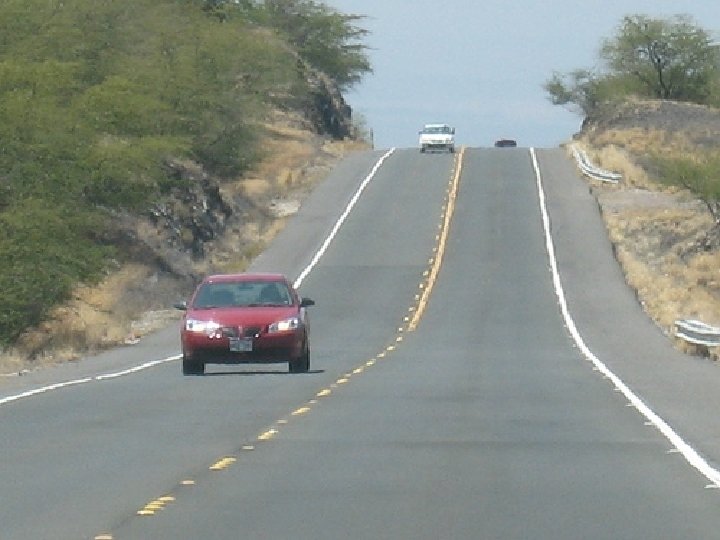
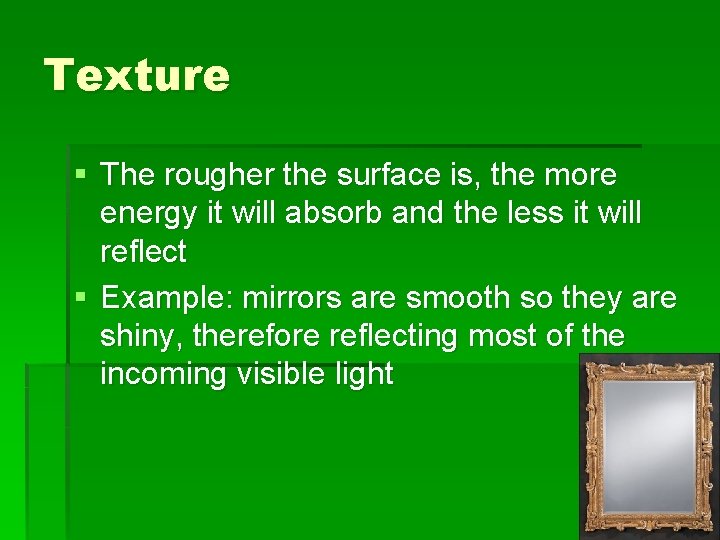
Texture § The rougher the surface is, the more energy it will absorb and the less it will reflect § Example: mirrors are smooth so they are shiny, therefore reflecting most of the incoming visible light
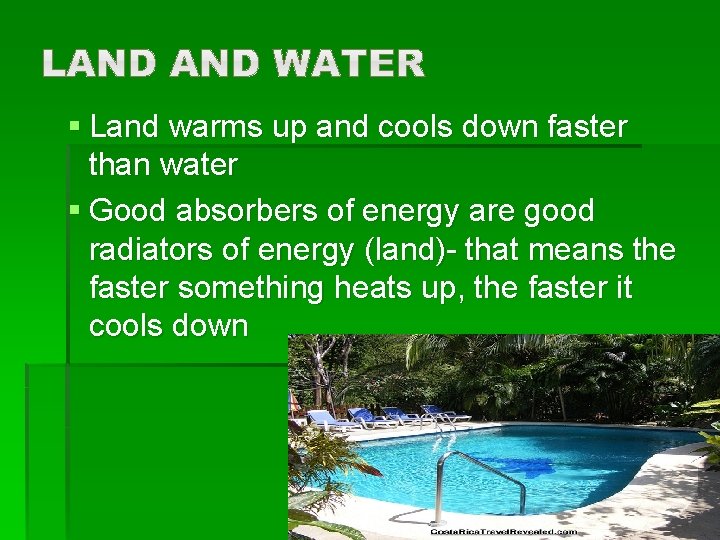
§ Land warms up and cools down faster than water § Good absorbers of energy are good radiators of energy (land)- that means the faster something heats up, the faster it cools down
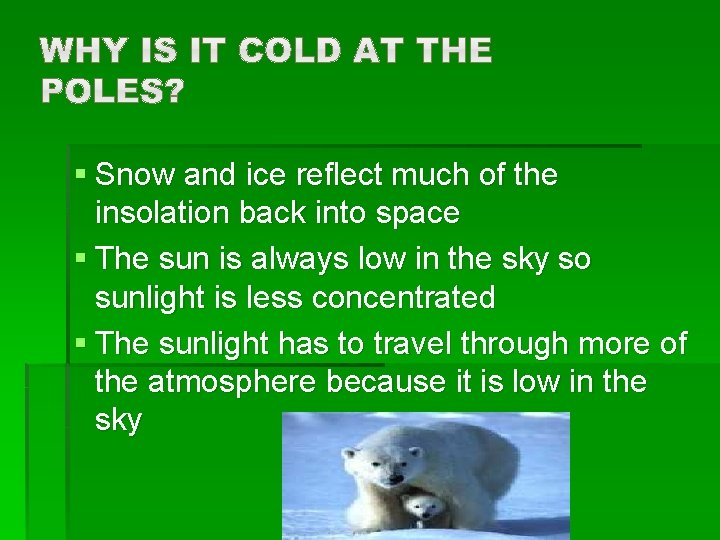
§ Snow and ice reflect much of the insolation back into space § The sun is always low in the sky so sunlight is less concentrated § The sunlight has to travel through more of the atmosphere because it is low in the sky
- Slides: 15