
Electrokinetics of correlated electrolytes and ionic liquids Brian
Electrokinetics of correlated electrolytes and ionic liquids Brian D. Storey Olin College Martin Z. Bazant Departments of Chemical Engineering and Mathematics Massachusetts Institute of Technology
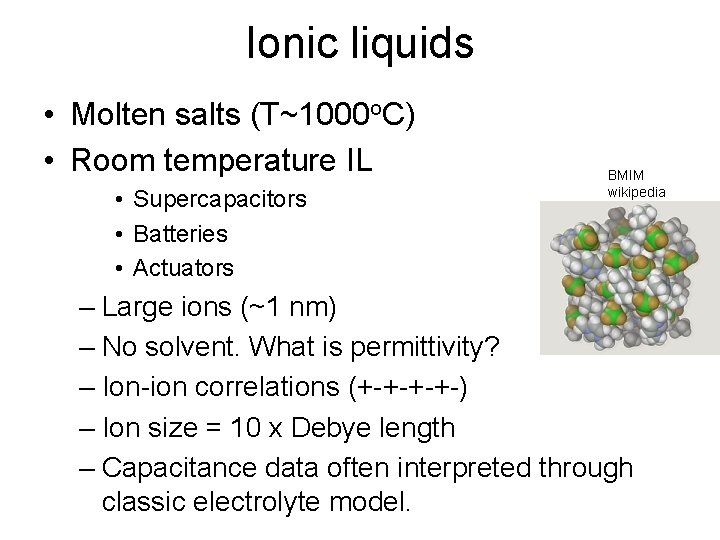
Ionic liquids • Molten salts (T~1000 o. C) • Room temperature IL • Supercapacitors • Batteries • Actuators BMIM wikipedia – Large ions (~1 nm) – No solvent. What is permittivity? – Ion-ion correlations (+-+-) – Ion size = 10 x Debye length – Capacitance data often interpreted through classic electrolyte model.
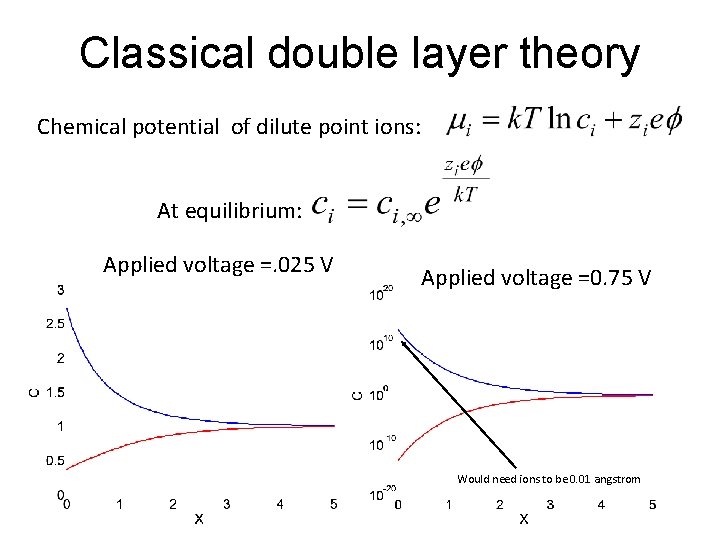
Classical double layer theory Chemical potential of dilute point ions: At equilibrium: Applied voltage =. 025 V Applied voltage =0. 75 V Would need ions to be 0. 01 angstrom
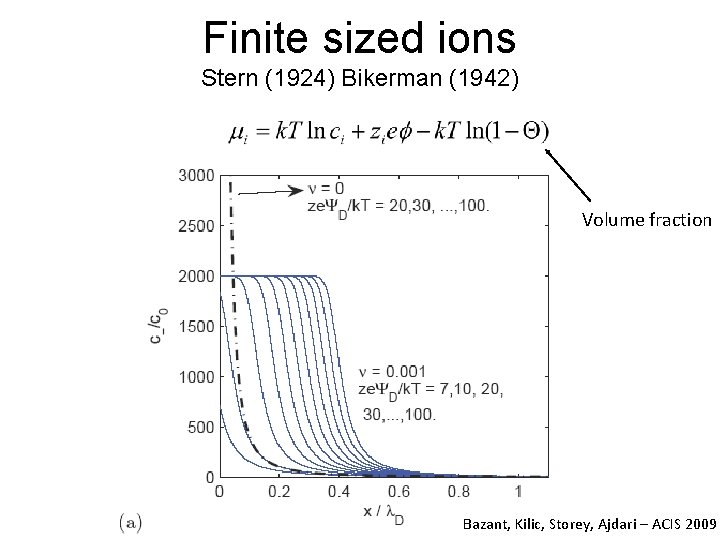
Finite sized ions Stern (1924) Bikerman (1942) Volume fraction Bazant, Kilic, Storey, Ajdari – ACIS 2009
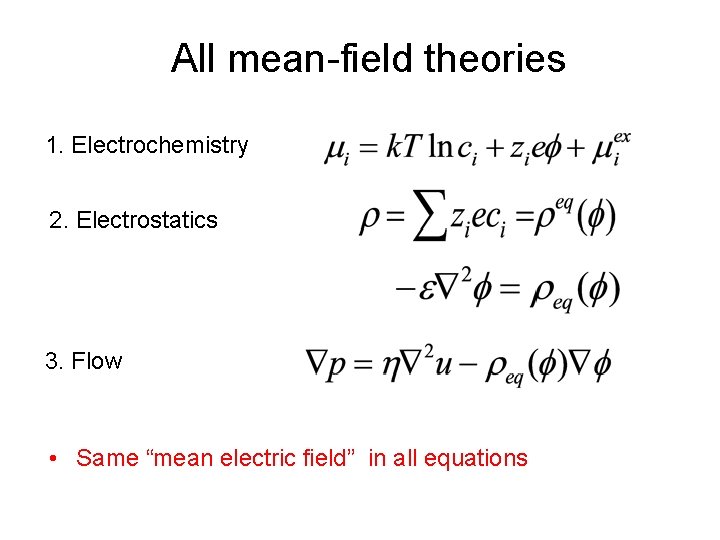
All mean-field theories 1. Electrochemistry 2. Electrostatics 3. Flow • Same “mean electric field” in all equations
“Ginzburg-Landau” theory for ionic liquids
“Ginzburg-Landau” theory for ionic liquids “In physics, Ginzburg–Landau theory, named after Vitaly Lazarevich Ginzburg and Lev Landau, is a mathematical theory used to model superconductivity. It does not purport to explain the microscopic mechanisms giving rise to superconductivity. Instead, it examines the macroscopic properties of a superconductor with the aid of general thermodynamic arguments. ” --- wikipedia
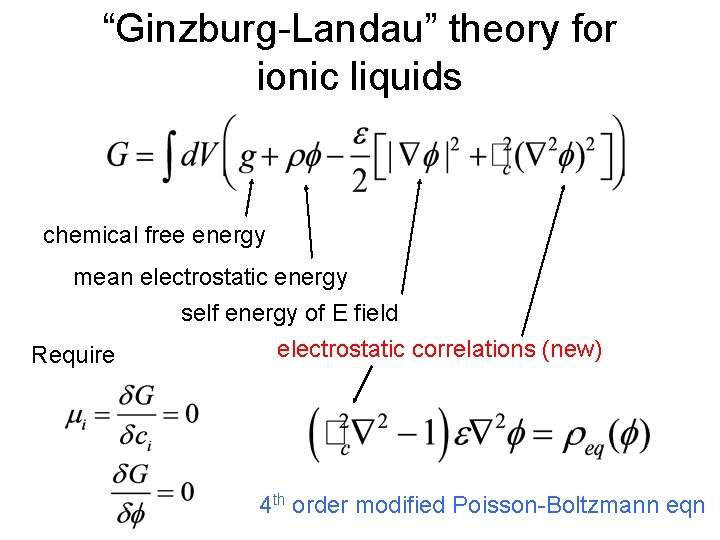
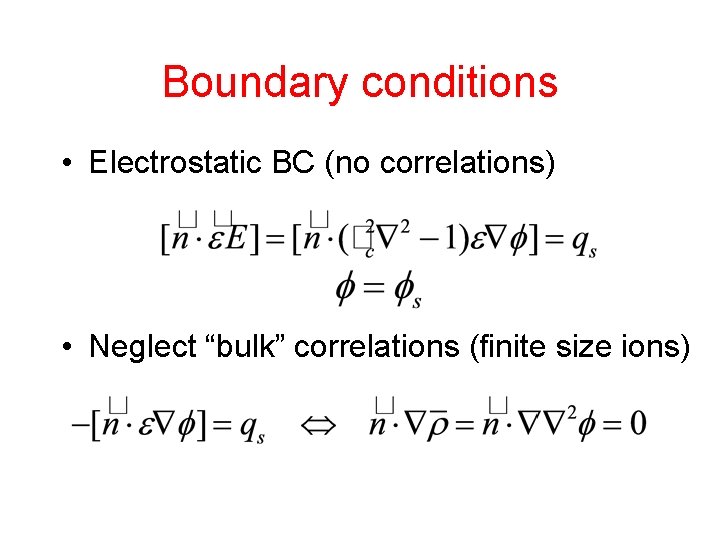
“Ginzburg-Landau” theory for ionic liquids chemical free energy mean electrostatic energy self energy of E field electrostatic correlations (new) Require 4 th order modified Poisson-Boltzmann eqn
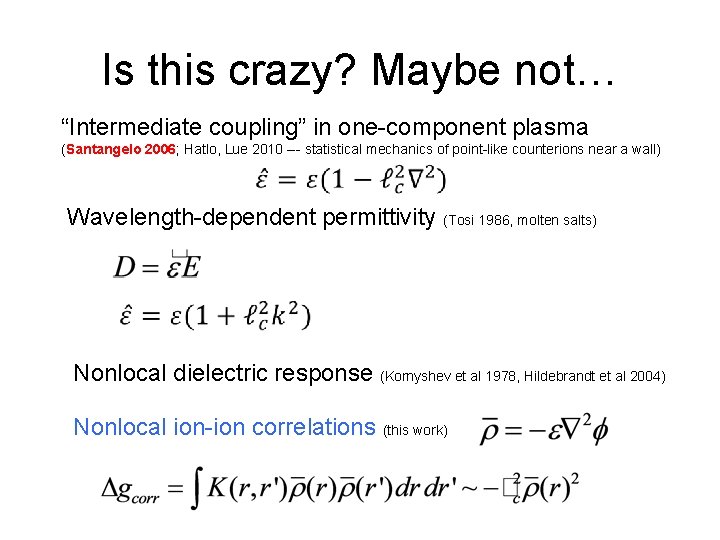
Is this crazy? Maybe not… “Intermediate coupling” in one-component plasma (Santangelo 2006; Hatlo, Lue 2010 --- statistical mechanics of point-like counterions near a wall) Wavelength-dependent permittivity (Tosi 1986, molten salts) Nonlocal dielectric response (Kornyshev et al 1978, Hildebrandt et al 2004) Nonlocal ion-ion correlations (this work)
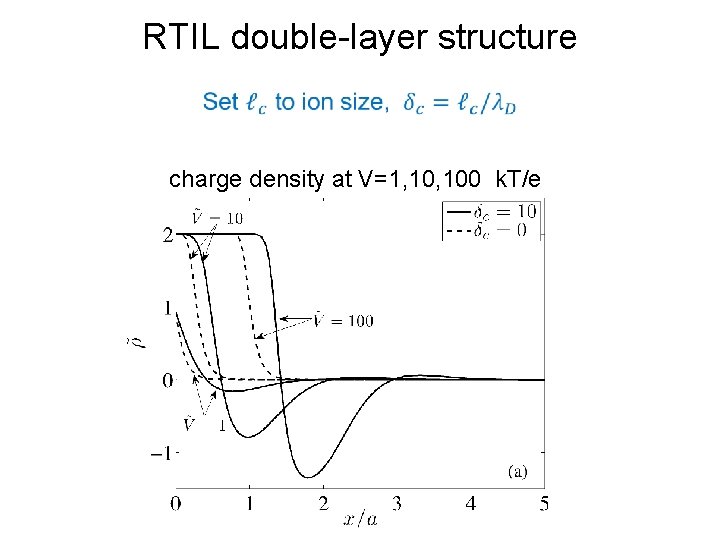
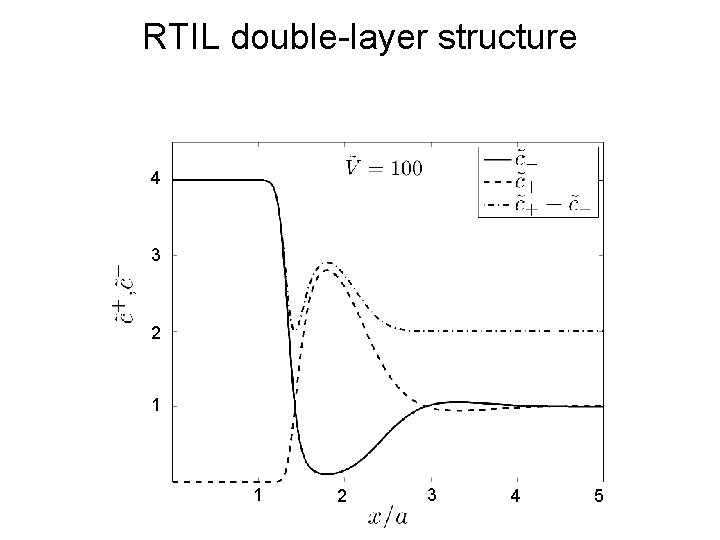
RTIL double-layer structure charge density at V=1, 100 k. T/e
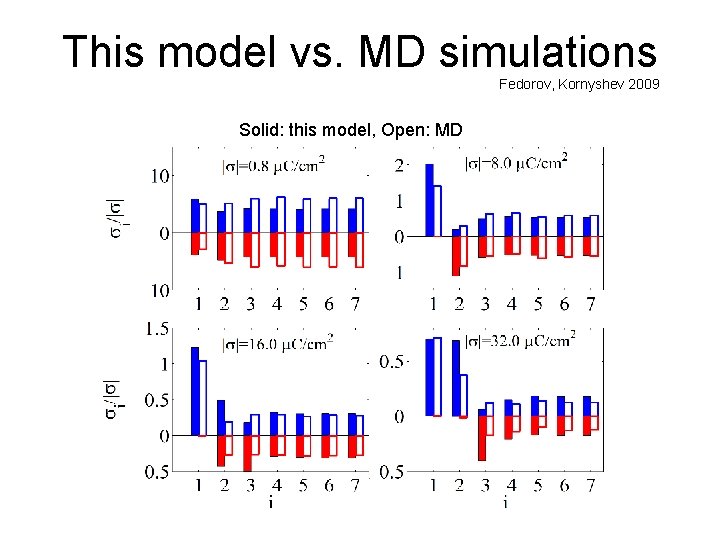
This model vs. MD simulations Fedorov, Kornyshev 2009 Solid: this model, Open: MD
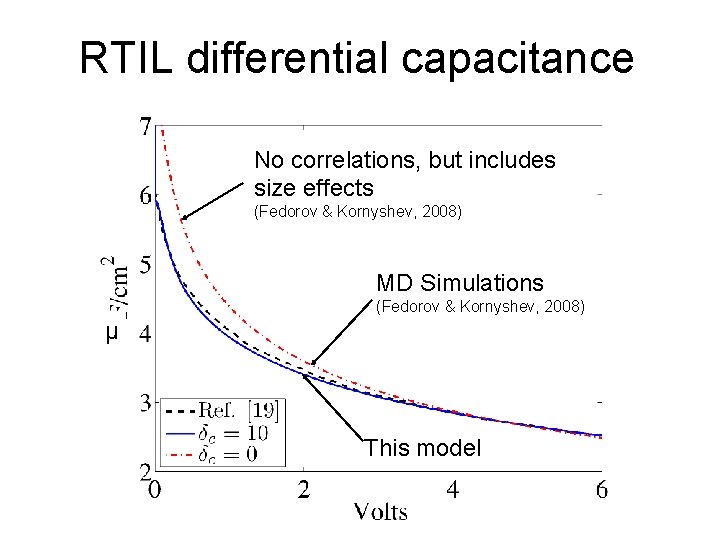
RTIL differential capacitance No correlations, but includes size effects (Fedorov & Kornyshev, 2008) MD Simulations (Fedorov & Kornyshev, 2008) µ This model
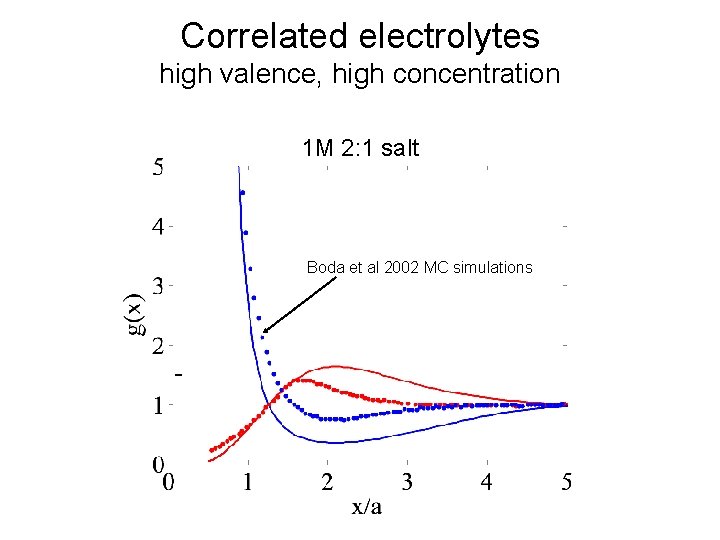
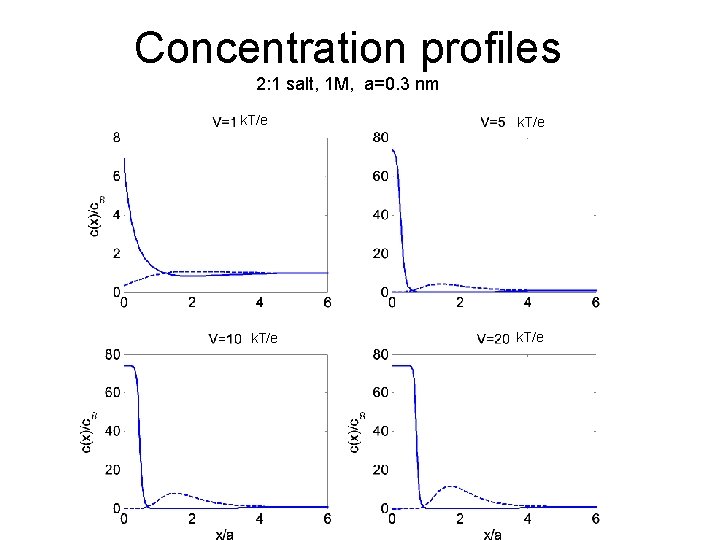
Correlated electrolytes high valence, high concentration 1 M 2: 1 salt Boda et al 2002 MC simulations -
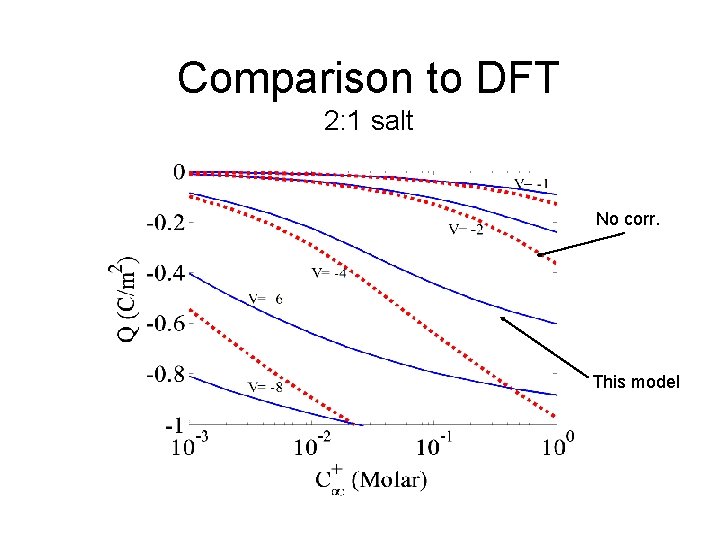
Comparison to DFT 2: 1 salt No corr. This model
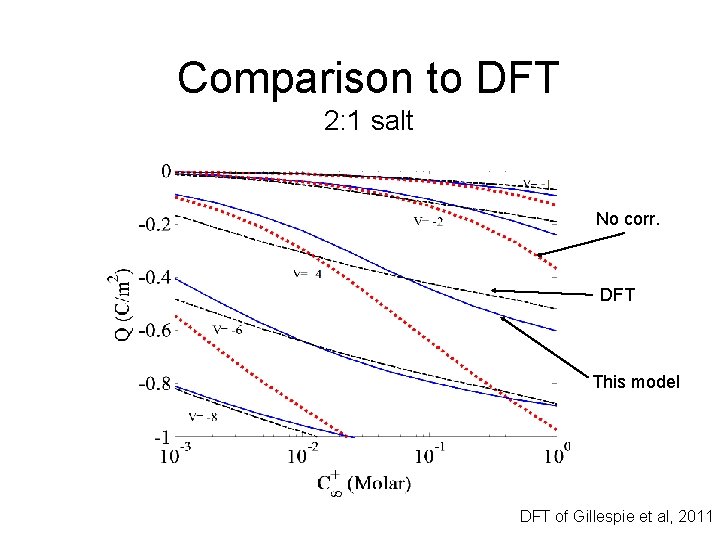
Comparison to DFT 2: 1 salt No corr. DFT This model DFT of Gillespie et al, 2011
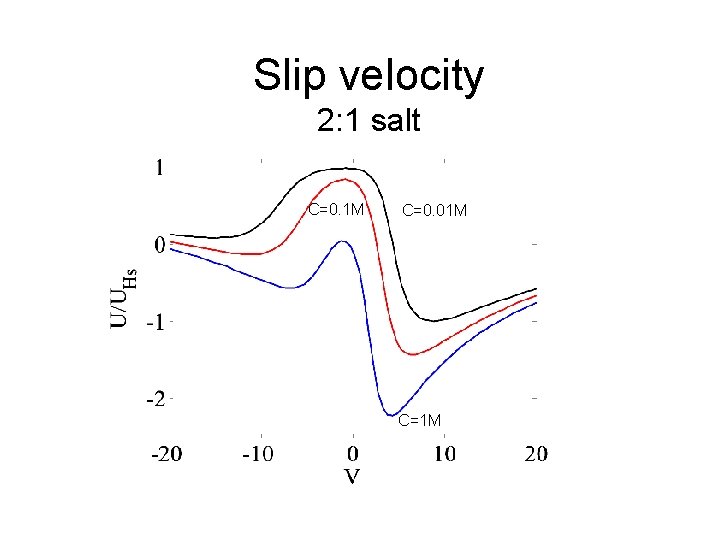
Slip velocity 2: 1 salt C=0. 1 M C=0. 01 M C=1 M
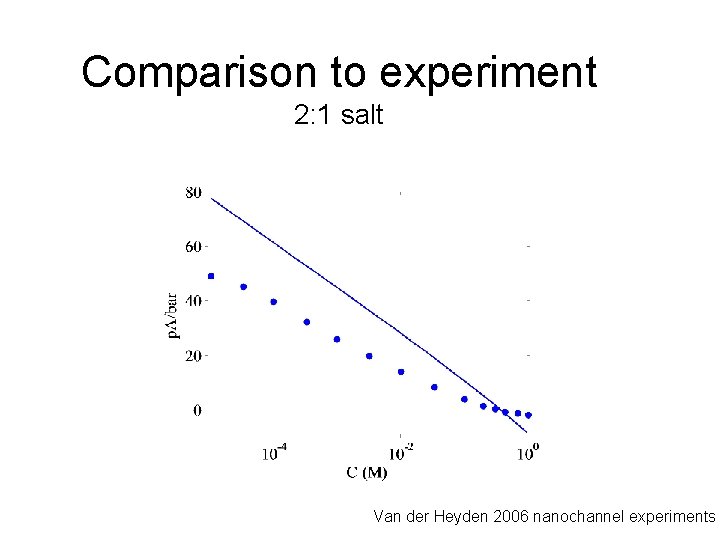
Comparison to experiment 2: 1 salt Van der Heyden 2006 nanochannel experiments
Conclusions • Electrostatic correlations lead to overscreening, which competes with crowding in ionic liquids and concentrated, multivalent electrolytes • Correlations may explain reduced/reversed electro-osmotic flow at high concentration and enhanced capacitance of nanopores • A simple continuum model is proposed

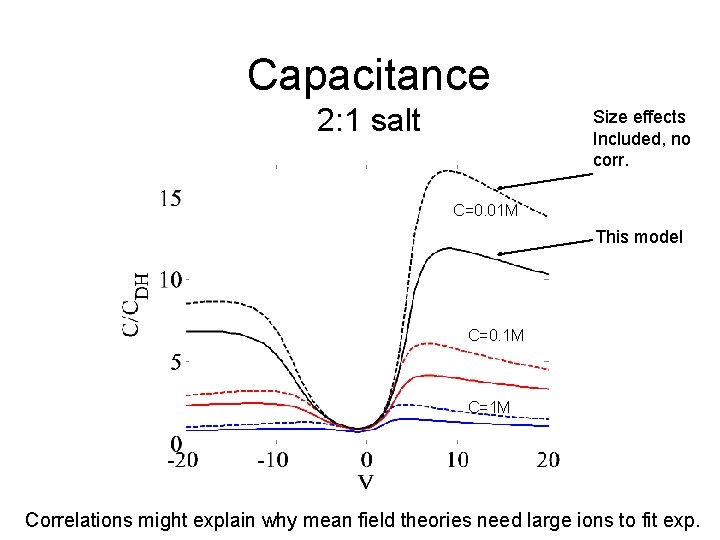
Capacitance 2: 1 salt Size effects Included, no corr. C=0. 01 M This model C=0. 1 M C=1 M Correlations might explain why mean field theories need large ions to fit exp.
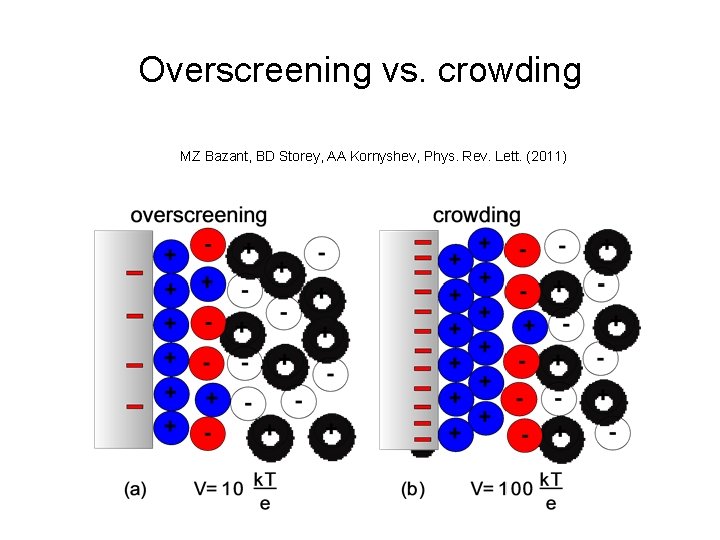
Overscreening vs. crowding MZ Bazant, BD Storey, AA Kornyshev, Phys. Rev. Lett. (2011)
Boundary conditions • Electrostatic BC (no correlations) • Neglect “bulk” correlations (finite size ions)
Concentration profiles 2: 1 salt, 1 M, a=0. 3 nm k. T/e
RTIL double-layer structure 4 3 2 1 1 2 3 4 5
- Slides: 24