
Electrochemical Impulse Resting Membrane Potential Inside of neuron
Electrochemical Impulse
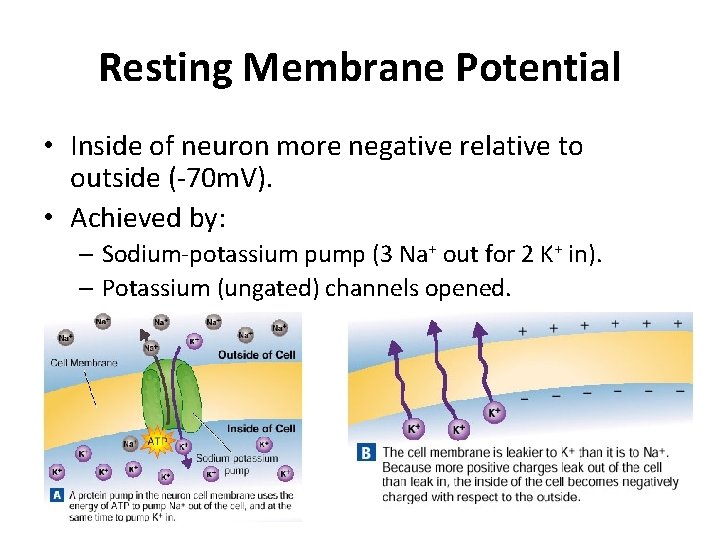
Resting Membrane Potential • Inside of neuron more negative relative to outside (-70 m. V). • Achieved by: – Sodium-potassium pump (3 Na+ out for 2 K+ in). – Potassium (ungated) channels opened.
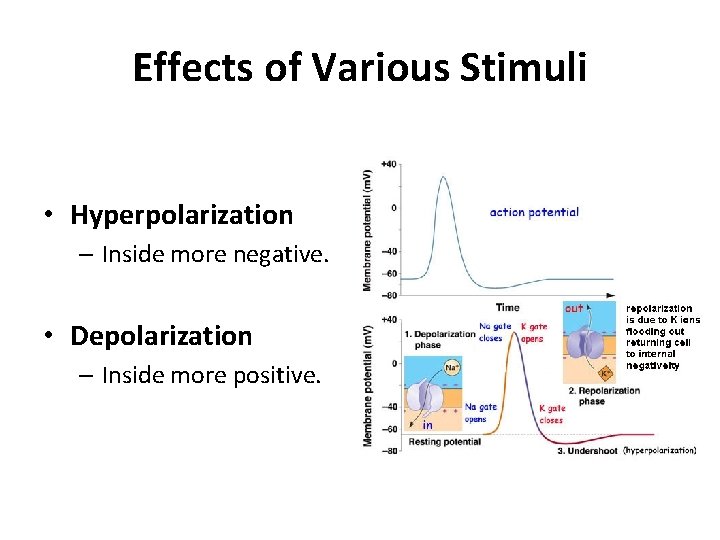
Effects of Various Stimuli • Hyperpolarization – Inside more negative. • Depolarization – Inside more positive.
Gated Ion Channels • Ligand-gated ion channels: – Found at dendrites and open/close when bound to neurotransmitters. • Voltage-gated ion channels: – Found in axons. – Open/close when membrane potential changes.
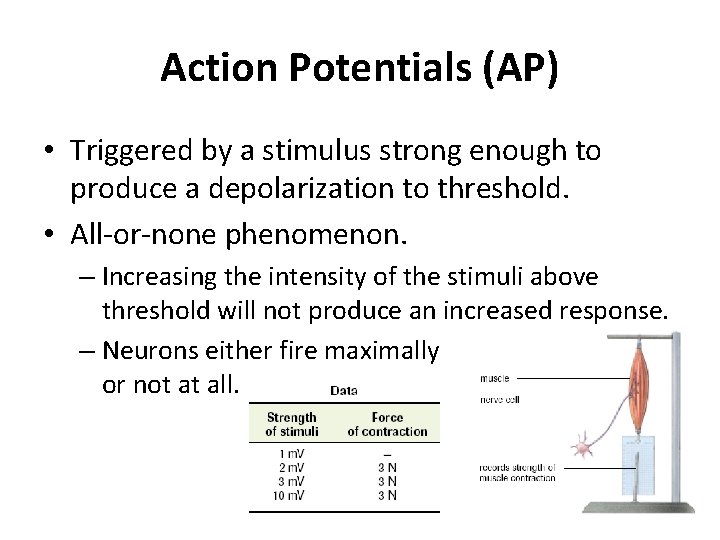
Action Potentials (AP) • Triggered by a stimulus strong enough to produce a depolarization to threshold. • All-or-none phenomenon. – Increasing the intensity of the stimuli above threshold will not produce an increased response. – Neurons either fire maximally or not at all.
Action Potential Generation • When membrane is depolarized, Na+ voltagegated channels open. • Na+ influx causes further depolarization, opening more Na+ voltage-gated channels. • Na+ voltage-gated channels close. • K+ voltage-gated channels open, allowing efflux of K+, known as repolarization.
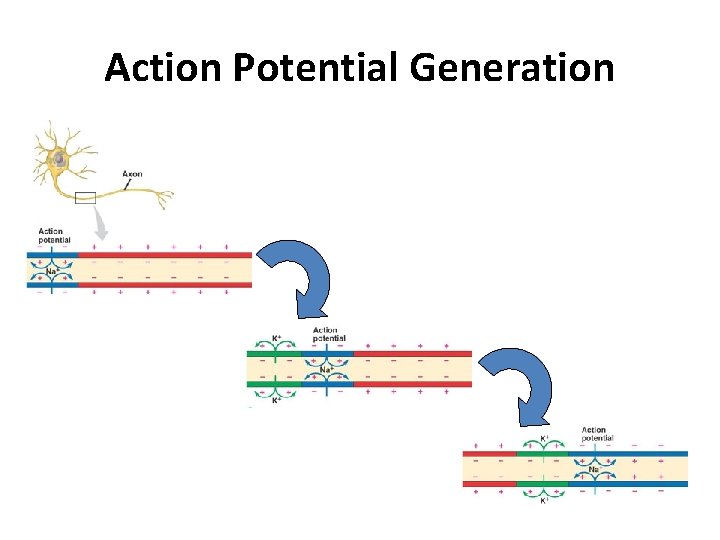
Action Potential Generation
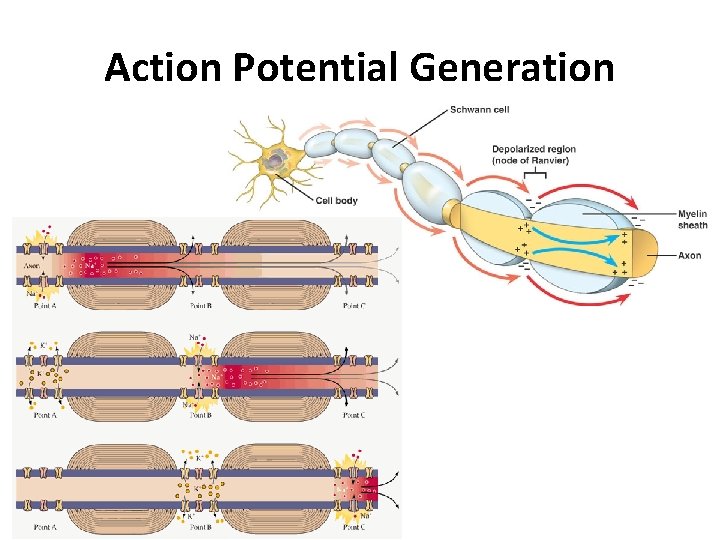
Action Potential Generation
Action Potential Generation • K+ voltage-gated channels open longer than needed, creating an “undershoot”. • Prevents a second stimulus from depolarizing membrane. • This is known as the refractory period. – Limits the maximum frequency at which APs can be generated.
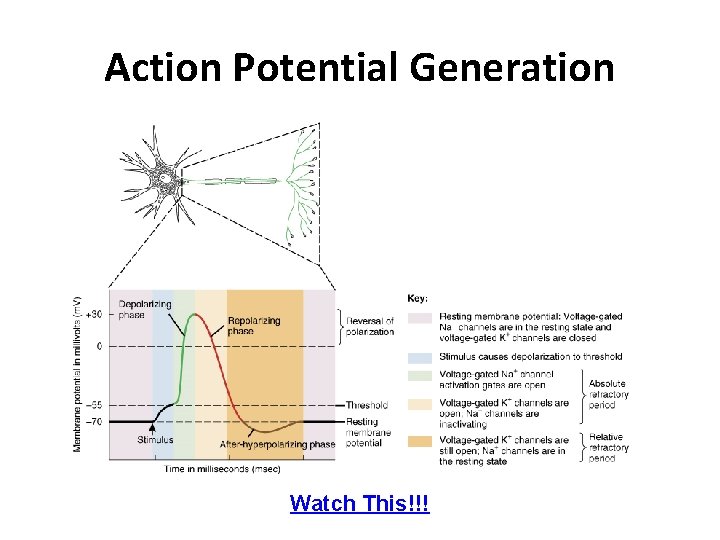
Action Potential Generation Watch This!!!
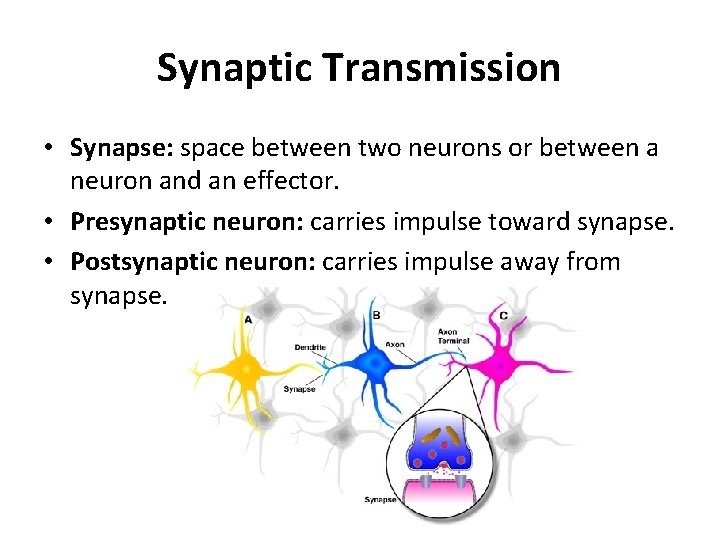
Synaptic Transmission • Synapse: space between two neurons or between a neuron and an effector. • Presynaptic neuron: carries impulse toward synapse. • Postsynaptic neuron: carries impulse away from synapse.
Synaptic Transmission • Synaptic vesicles containing neurotransmitters (NTs) found in axonal end plates. • Impulse down axon NTs released from presynaptic axonal end plates NTs diffuse across synaptic cleft depolarizes postsynaptic dendrite.
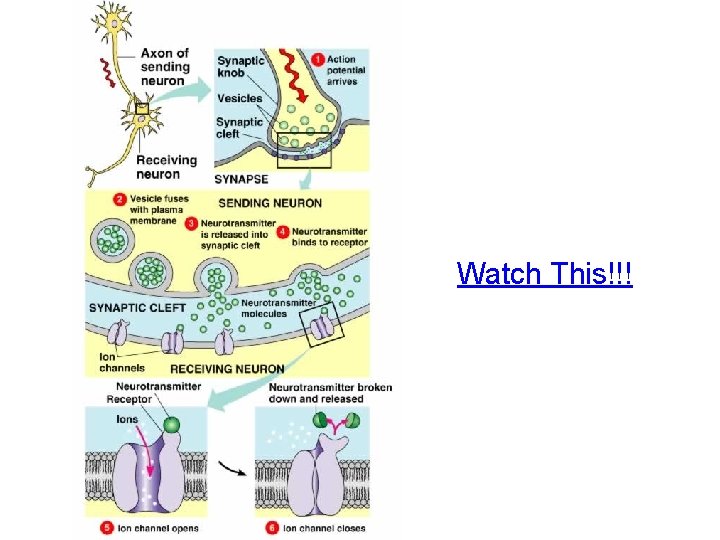
Watch This!!!
Synaptic Transmission • Excitatory NTs on Postsynaptic Membrane – Opens Na+ channels. – Causes depolarization. • Inhibitory NTs on Postsynaptic Membrane – More permeable to K+. – Causes hyperpolarization.
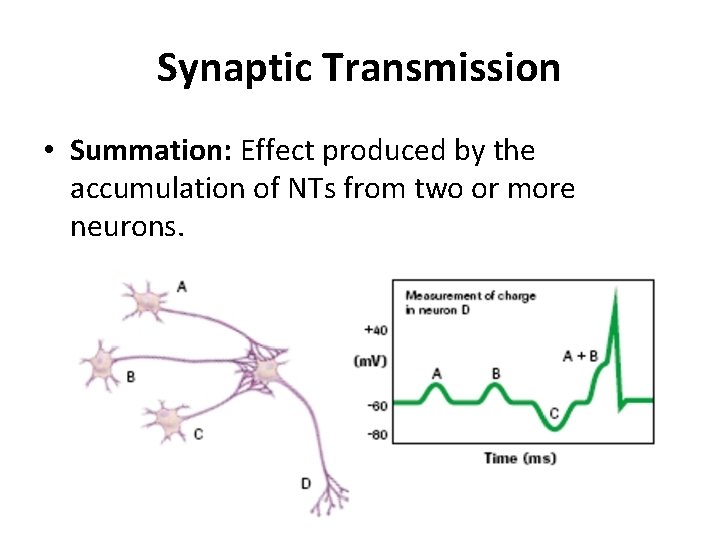
Synaptic Transmission • Summation: Effect produced by the accumulation of NTs from two or more neurons.
- Slides: 15