
Electrochemical Gradient Causing an Action Potential Understand the
- Slides: 14
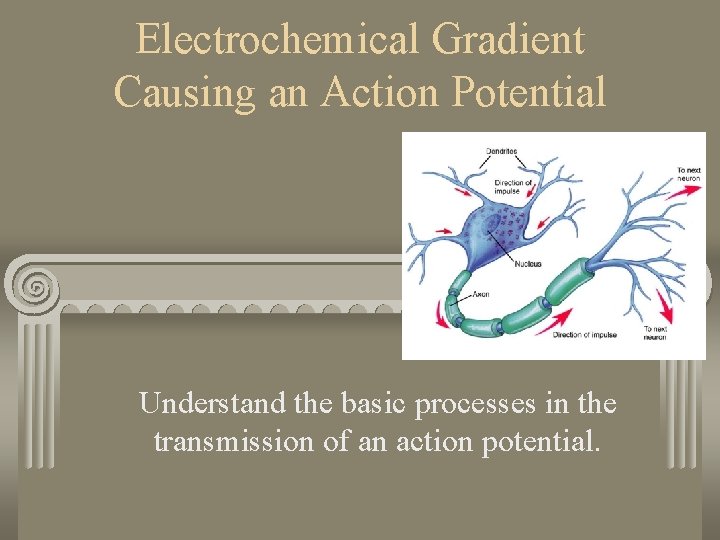
Electrochemical Gradient Causing an Action Potential Understand the basic processes in the transmission of an action potential.
What is an Action Potential? Nerve impulse or “signal” Signal that is passed from one neuron to another
Videos of Action Potential 1. Resources/Movies/vasynapt. mov 2. Resources/Movies/vaaction. mov
Important Ions Cation = positive ion Ex: K+, Na+, Ca++ Anion = negative ion Ex: Cl- K+ = Potassium Na+ = Sodium Ca++ = Calcium Cl- = chloride
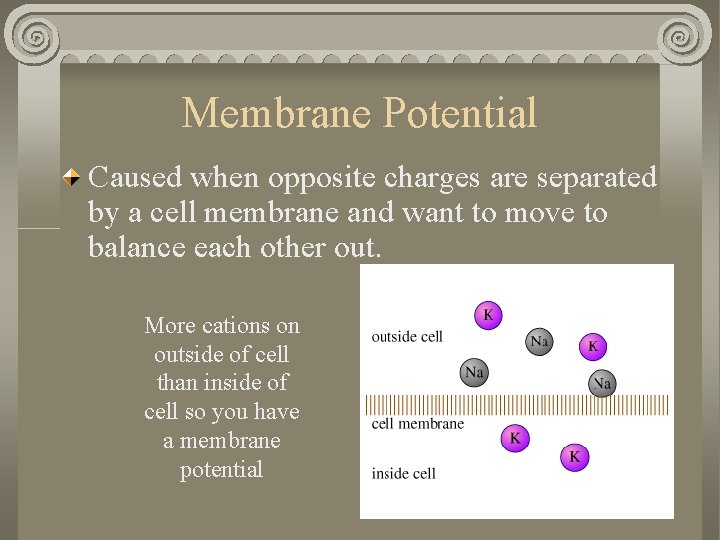
Membrane Potential Caused when opposite charges are separated by a cell membrane and want to move to balance each other out. More cations on outside of cell than inside of cell so you have a membrane potential
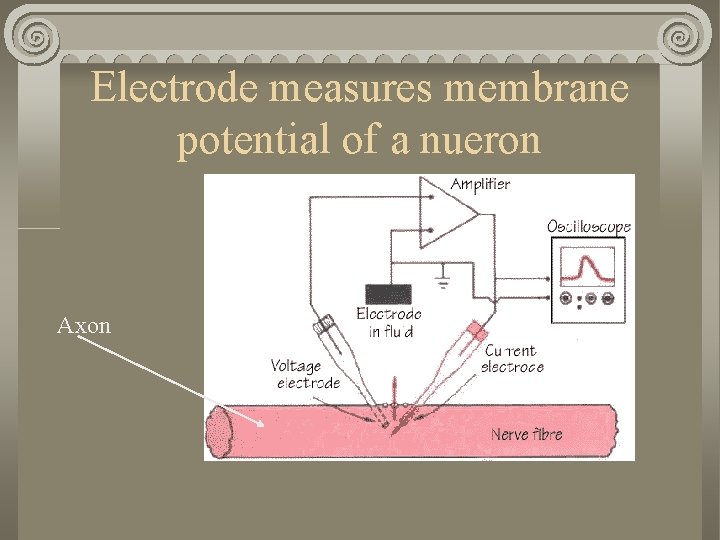
Electrode measures membrane potential of a nueron Axon
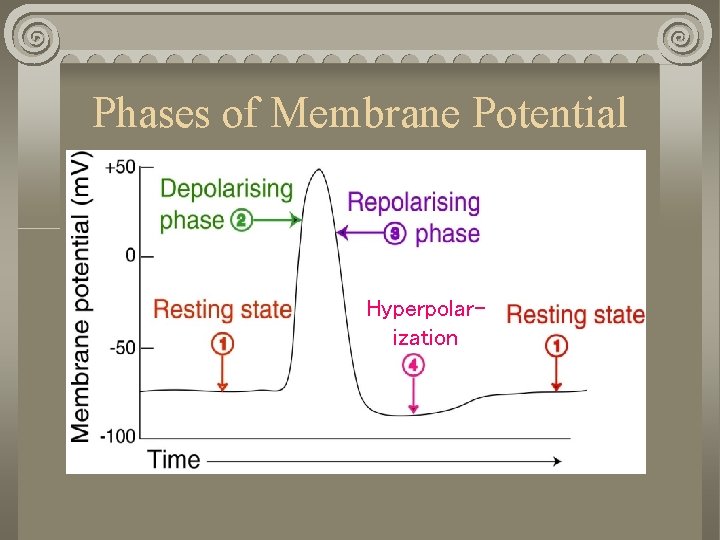
Phases of Membrane Potential 1. Resting potential: – 70 m. V (inside of axon more negative than outside) 2. Depolarization: 0 to +30 m. V (inside of axon more negative than outside) 3. Repolarization: +30 back to – 70 m. V (inside of axon becoming more negative than outside) 4. Hyperpolarization: -70 m. V to – 100 m. V (inside axon way more negative than outside)
Phases of Membrane Potential Hyperpolarization
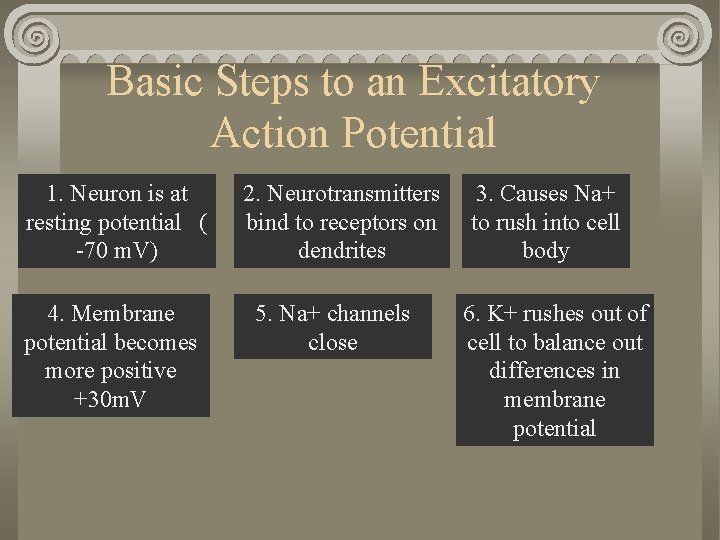
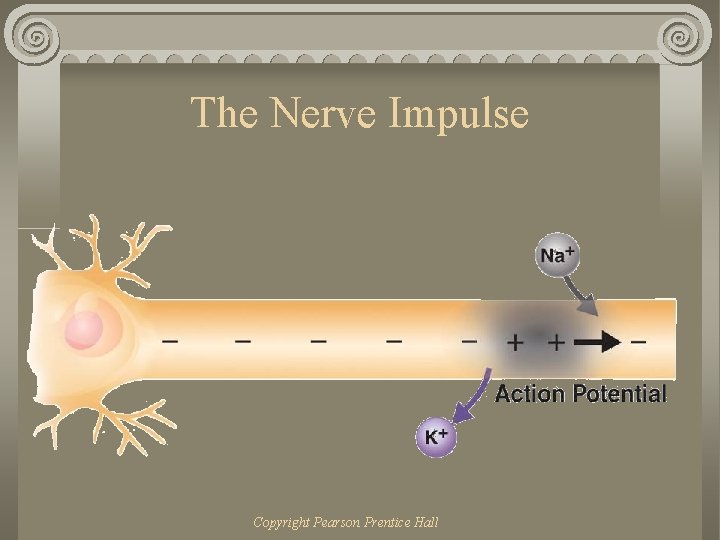
Basic Steps to an Excitatory Action Potential 1. Neuron is at resting potential ( -70 m. V) 4. Membrane potential becomes more positive +30 m. V 2. Neurotransmitters bind to receptors on dendrites 5. Na+ channels close 3. Causes Na+ to rush into cell body 6. K+ rushes out of cell to balance out differences in membrane potential
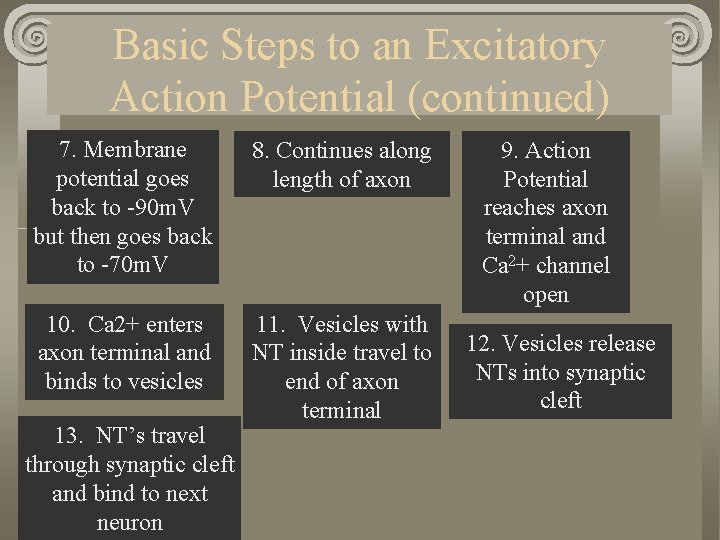
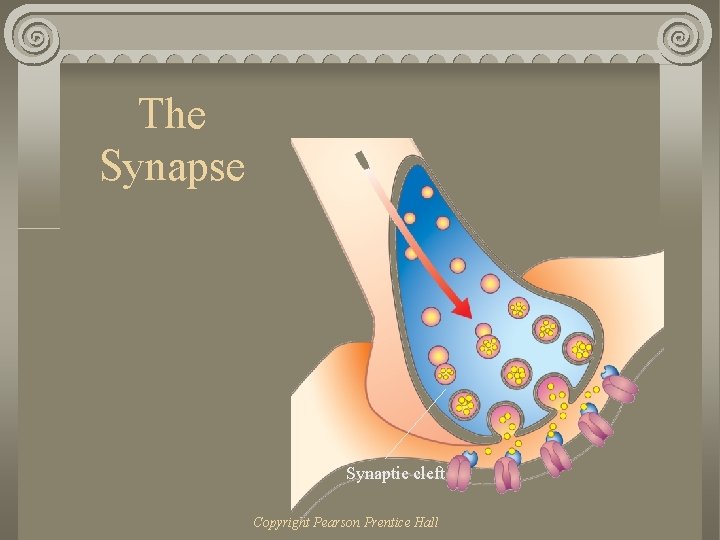
Basic Steps to an Excitatory Action Potential (continued) 7. Membrane potential goes back to -90 m. V but then goes back to -70 m. V 8. Continues along length of axon 10. Ca 2+ enters axon terminal and binds to vesicles 11. Vesicles with NT inside travel to end of axon terminal 13. NT’s travel through synaptic cleft and bind to next neuron 9. Action Potential reaches axon terminal and Ca 2+ channel open 12. Vesicles release NTs into synaptic cleft
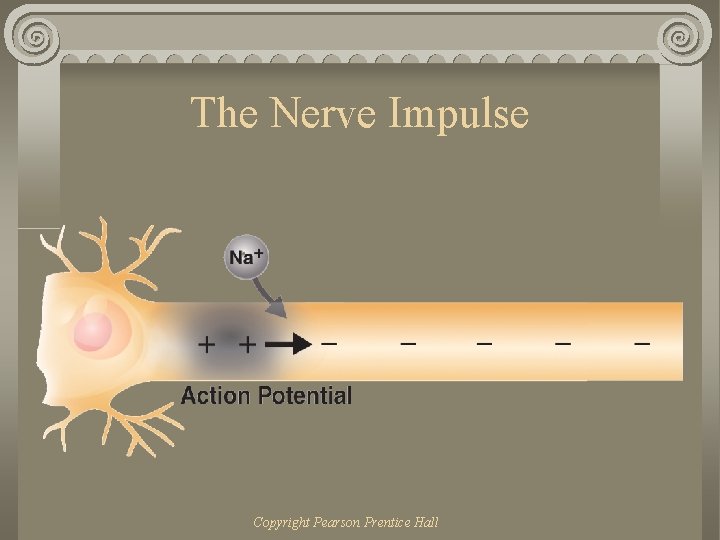
The Nerve Impulse Copyright Pearson Prentice Hall
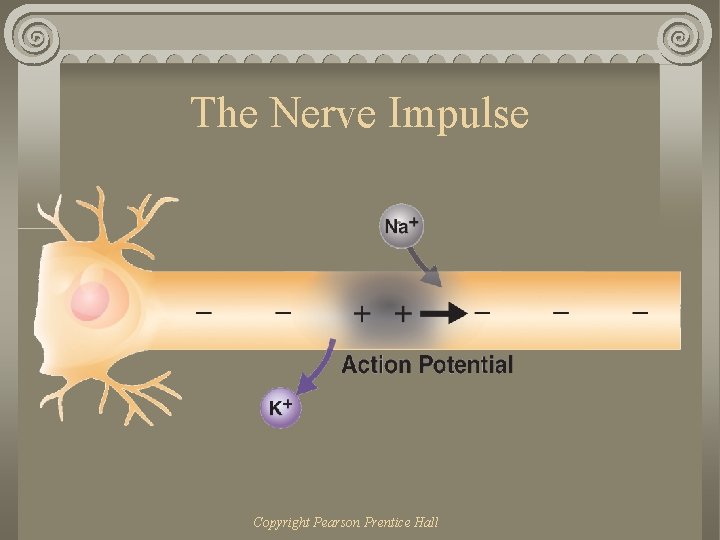
The Nerve Impulse Copyright Pearson Prentice Hall
The Nerve Impulse Copyright Pearson Prentice Hall
The Synapse Synaptic cleft Copyright Pearson Prentice Hall