
Electrochemical Cells Batteries Chemical reaction produces electricity Called
Electrochemical Cells (Batteries) Chemical reaction produces electricity. Called “voltaic cells” Happens SPONTANEOUSLY.
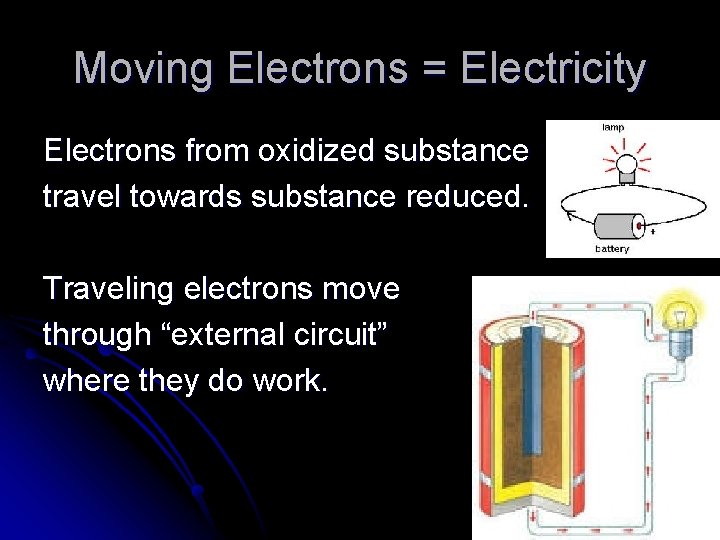
Moving Electrons = Electricity Electrons from oxidized substance travel towards substance reduced. Traveling electrons move through “external circuit” where they do work.
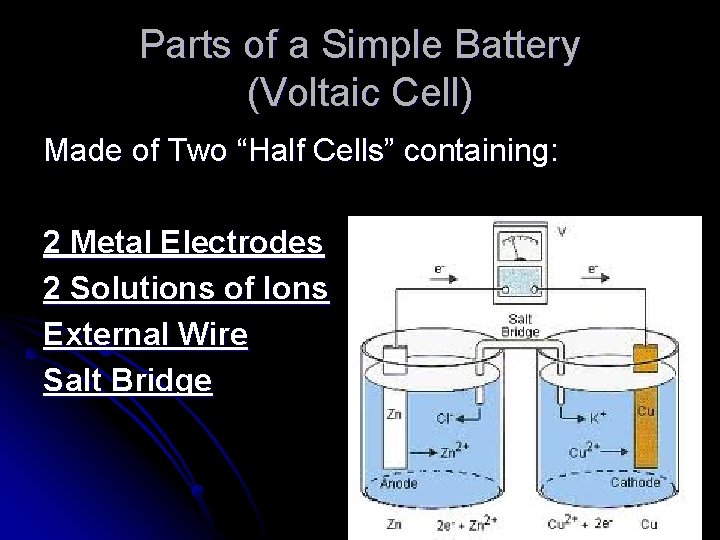
Parts of a Simple Battery (Voltaic Cell) Made of Two “Half Cells” containing: 2 Metal Electrodes 2 Solutions of Ions External Wire Salt Bridge
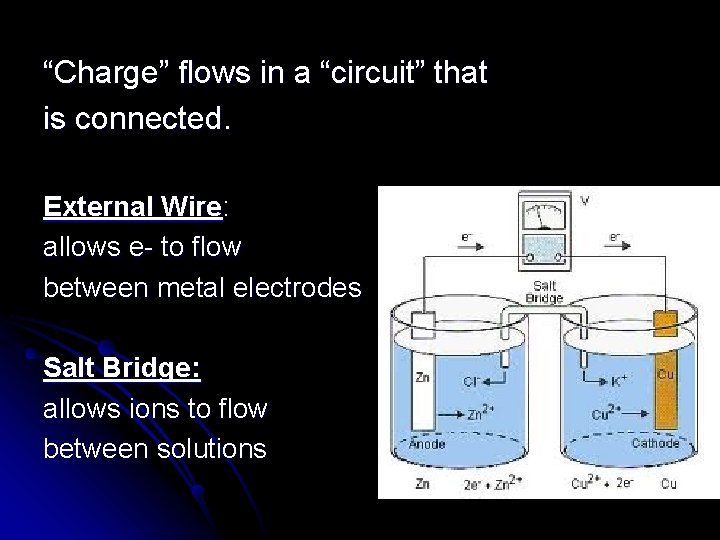
“Charge” flows in a “circuit” that is connected. External Wire: allows e- to flow between metal electrodes Salt Bridge: allows ions to flow between solutions
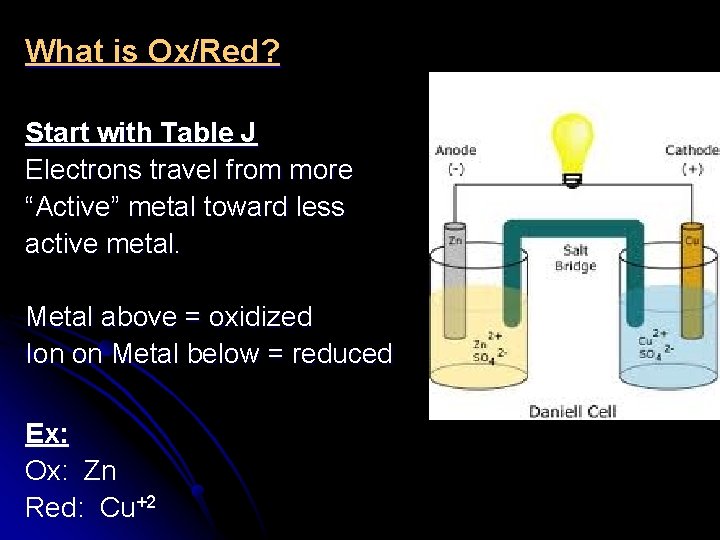
What is Ox/Red? Start with Table J Electrons travel from more “Active” metal toward less active metal. Metal above = oxidized Ion on Metal below = reduced Ex: Ox: Zn Red: Cu+2
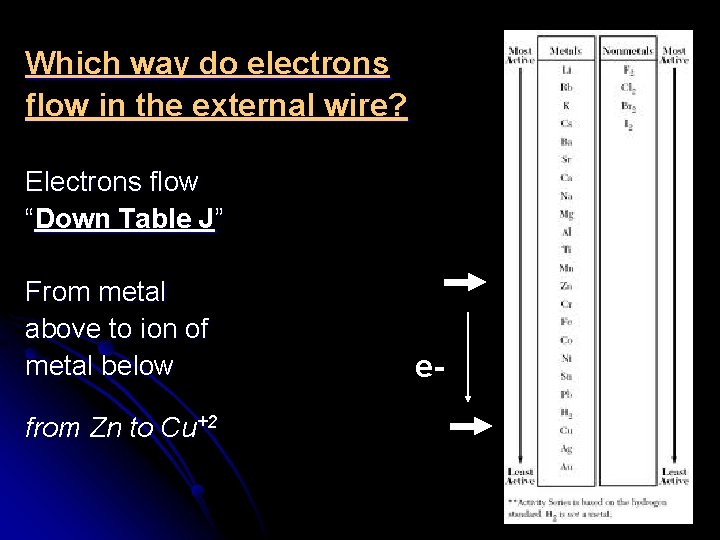
Which way do electrons flow in the external wire? Electrons flow “Down Table J” From metal above to ion of metal below from Zn to Cu+2 e-
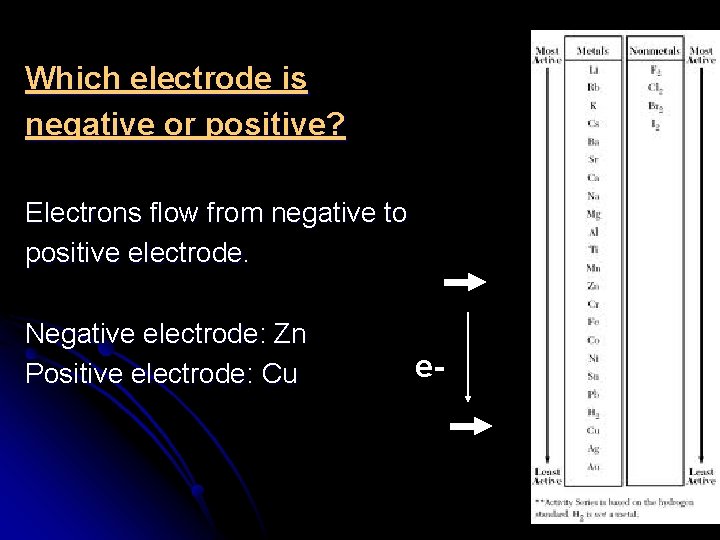
Which electrode is negative or positive? Electrons flow from negative to positive electrode. Negative electrode: Zn Positive electrode: Cu e-
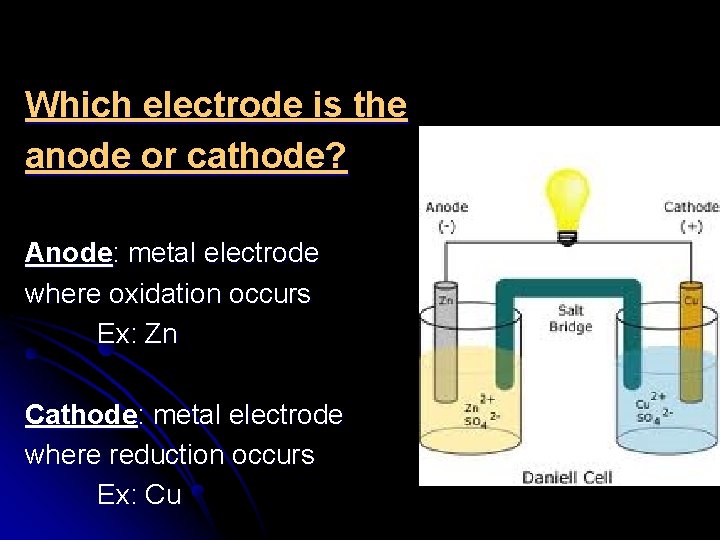
Which electrode is the anode or cathode? Anode: metal electrode where oxidation occurs Ex: Zn Cathode: metal electrode where reduction occurs Ex: Cu
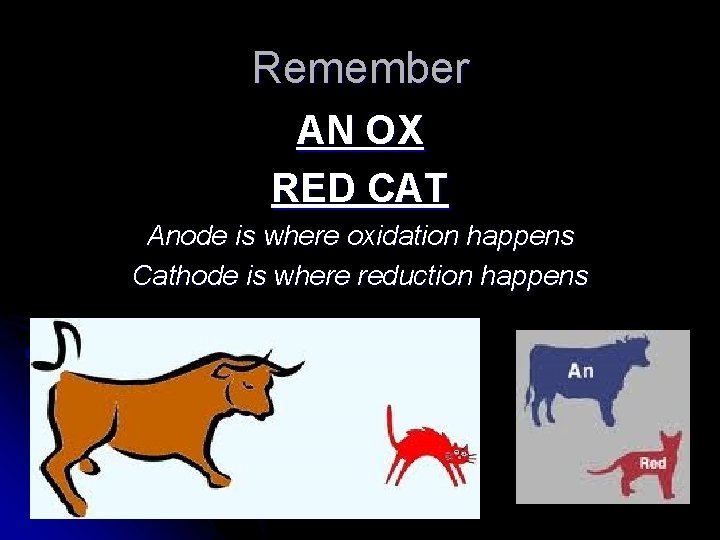
Remember AN OX RED CAT Anode is where oxidation happens Cathode is where reduction happens
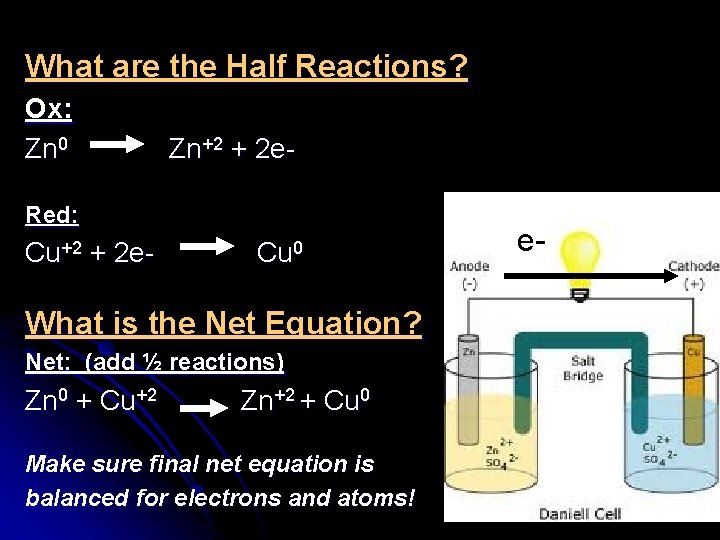
What are the Half Reactions? Ox: Zn 0 Zn+2 + 2 e- Red: Cu+2 + 2 e- Cu 0 What is the Net Equation? Net: (add ½ reactions) Zn 0 + Cu+2 Zn+2 + Cu 0 Make sure final net equation is balanced for electrons and atoms! e-
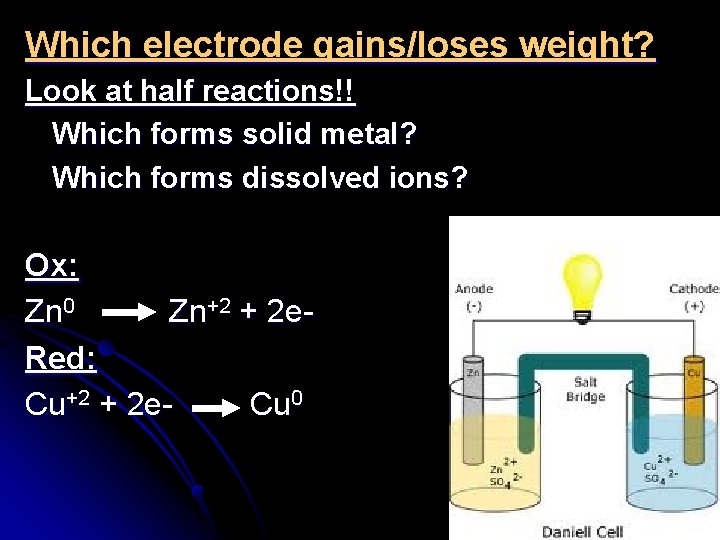
Which electrode gains/loses weight? Look at half reactions!! Which forms solid metal? Which forms dissolved ions? Ox: Zn 0 Zn+2 + 2 e. Red: Cu+2 + 2 e. Cu 0
Which way do the ions in the salt bridge “migrate” or move? Remember: “The negative ions complete the circuit” (The ions actually end up moving towards the solution of opposite charge that forms. )
Dead Battery Voltage = 0 Means the reaction in the battery has reached EQUILIBRIUM.
You try it… Mg/Mg+2//Al+3/Al • • Draw and label Battery What is oxidized/reduced? What are the half reactions and net(balanced)? What is the neg/pos electrode? What is the anode/cathode? Which way do e- flow in wire? Which way do -/+ ions flow in salt bridge? Which electrode gains/loses mass?
l l l Lemon Battery Demo http: //youtu. be/AY 9 qc. DCFe. VI Batteries http: //www. mhhe. com/physsci/chemistry/ess entialchemistry/flash/galvan 5. swf Battery Simulation http: //www. chem. iastate. edu/group/Greenbo we/sections/projectfolder/flashfiles/electro. Ch em/voltic. Cell. html. N Nerst Equation Simulation (HONORS) http: //www. chem. iastate. edu/group/Greenbo we/sections/projectfolder/flashfiles/electro. Ch em/voltaic. Cell. EMF. html
Finding Voltage of a Battery (Honors) Use Voltage Table Find your half reactions and record voltage Note: All ½ reactions shown are reductions. For oxidation, reverse the sign of the voltage
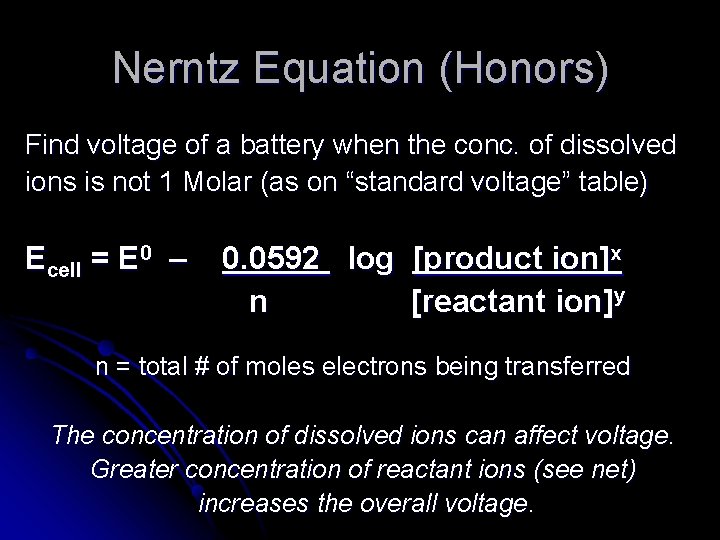
Nerntz Equation (Honors) Find voltage of a battery when the conc. of dissolved ions is not 1 Molar (as on “standard voltage” table) Ecell = E 0 – 0. 0592 log [product ion]x n [reactant ion]y n = total # of moles electrons being transferred The concentration of dissolved ions can affect voltage. Greater concentration of reactant ions (see net) increases the overall voltage.
- Slides: 17