
Electrifying the Royal Navy 3 November 2015 Agenda
Electrifying the Royal Navy 3 November 2015
Agenda • Introduction • Pre 1990 • The 1990 s • The 2000 s • The 2010 s so far. . • Summary
Introduction • Royal Navy 1989 – 2014 − Marine Engineer - Surface Ships − MSc – ‘L’ Option − Electric Ship Office – Technical Manager − MEO HMS SUTHERLAND − Devonport Flotilla – Superintending Engineer − T 45 Project − Navy Headquarters − Electrical Systems Group • BMT Defence Services
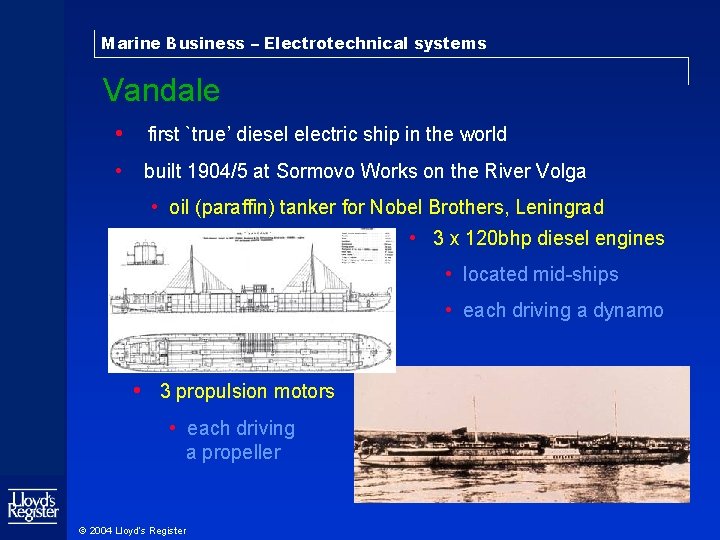
Electrotechnical systems Marine Business – Electrotechnical systems Vandale • first `true’ diesel electric ship in the world • built 1904/5 at Sormovo Works on the River Volga • oil (paraffin) tanker for Nobel Brothers, Leningrad • 3 x 120 bhp diesel engines • located mid-ships • each driving a dynamo • 3 propulsion motors • each driving a propeller © 2004 Lloyd’s Register
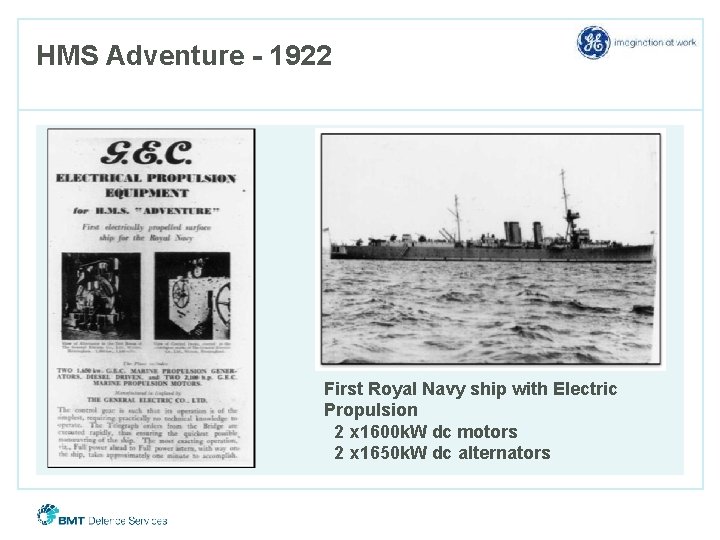
HMS Adventure - 1922 First Royal Navy ship with Electric Propulsion 2 x 1600 k. W dc motors 2 x 1650 k. W dc alternators
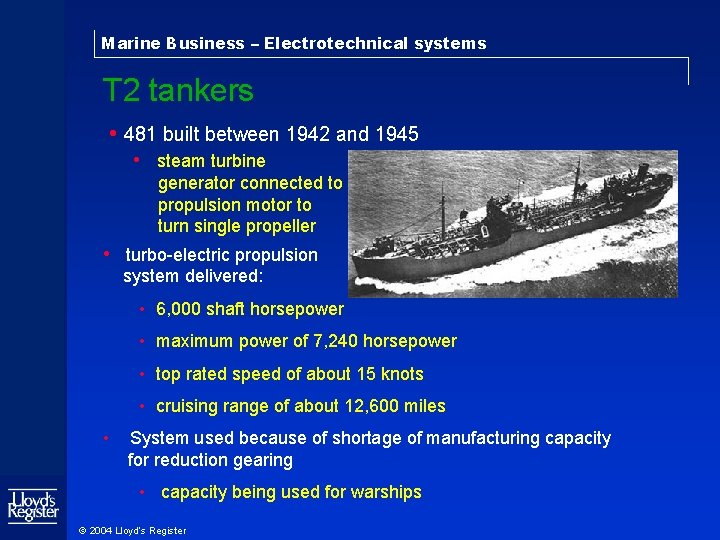
Electrotechnical systems Marine Business – Electrotechnical systems T 2 tankers • 481 built between 1942 and 1945 • steam turbine generator connected to propulsion motor to turn single propeller • turbo-electric propulsion system delivered: • 6, 000 shaft horsepower • maximum power of 7, 240 horsepower • top rated speed of about 15 knots • cruising range of about 12, 600 miles • System used because of shortage of manufacturing capacity for reduction gearing • capacity being used for warships © 2004 Lloyd’s Register
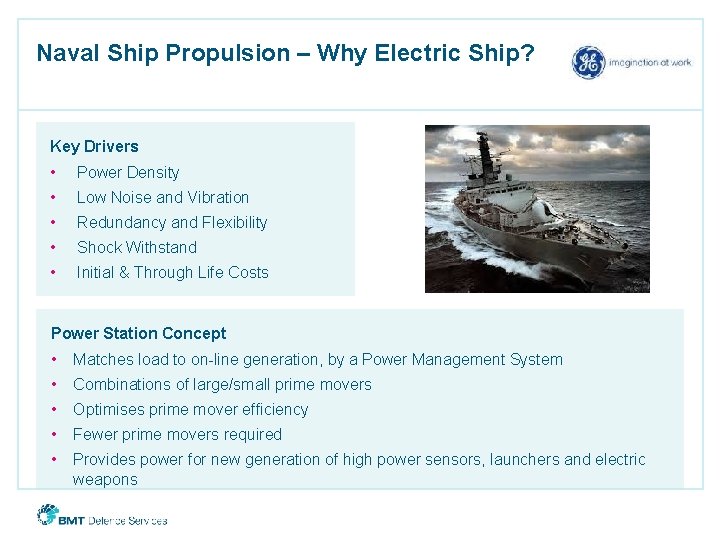
Naval Ship Propulsion – Why Electric Ship? Key Drivers • Power Density • Low Noise and Vibration • Redundancy and Flexibility • Shock Withstand • Initial & Through Life Costs Power Station Concept • Matches load to on-line generation, by a Power Management System • Combinations of large/small prime movers • Optimises prime mover efficiency • Fewer prime movers required • Provides power for new generation of high power sensors, launchers and electric weapons
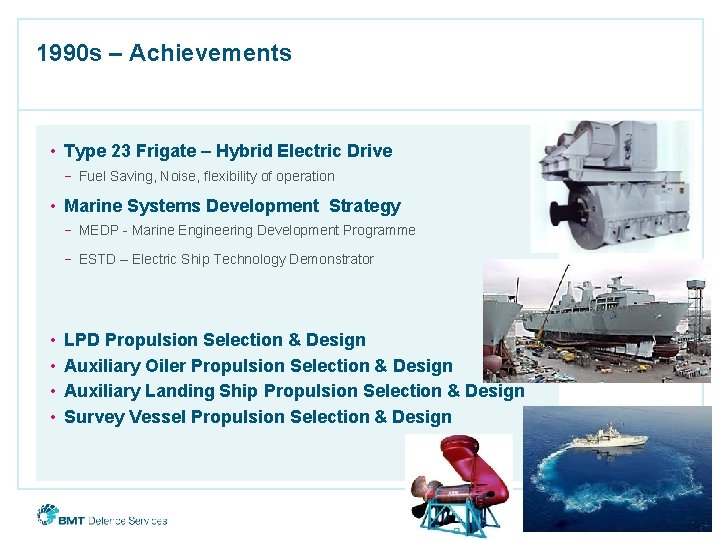
1990 s – Achievements • Type 23 Frigate – Hybrid Electric Drive − Fuel Saving, Noise, flexibility of operation • Marine Systems Development Strategy − MEDP - Marine Engineering Development Programme − ESTD – Electric Ship Technology Demonstrator • • LPD Propulsion Selection & Design Auxiliary Oiler Propulsion Selection & Design Auxiliary Landing Ship Propulsion Selection & Design Survey Vessel Propulsion Selection & Design
The Strategy Marine Systems Development Strategy • Vision – The All Electric Ship • • • Through Life Savings Invest where commercial development will not meet military need Several Future Target Platforms Environmental Compliance Flexibility in design Improved Operability & capability • Slice of Weapon & Sensor funding stream • Corralled existing disparate projects into a programme • Creation of the MEDP
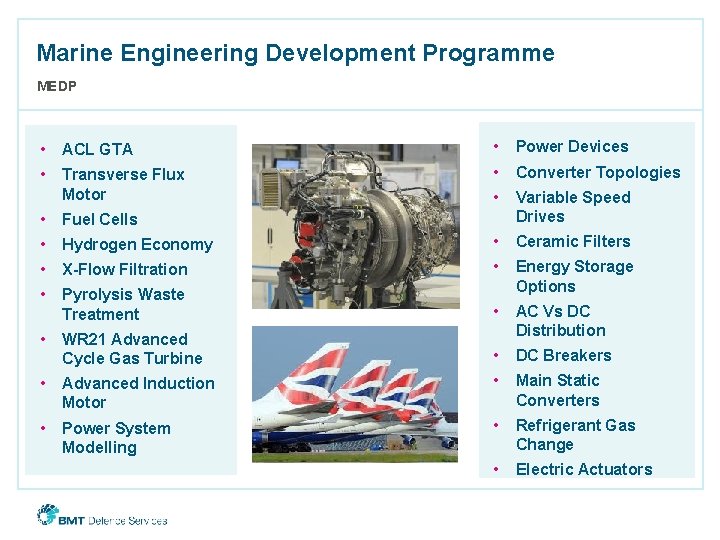
Marine Engineering Development Programme MEDP • ACL GTA • Power Devices • Transverse Flux Motor • Converter Topologies • Variable Speed Drives • Fuel Cells • Hydrogen Economy • Ceramic Filters • X-Flow Filtration • • Pyrolysis Waste Treatment Energy Storage Options • • WR 21 Advanced Cycle Gas Turbine AC Vs DC Distribution • DC Breakers • Advanced Induction Motor • Main Static Converters • Power System Modelling • Refrigerant Gas Change • Electric Actuators
1990 s - Lessons • Type 23 – Training Courses & Estate “update” • Type 23 – Operators • Step changes require investment • Win Some – Lose some • Industrial support essential – business case • Change & Policy Updates take time & investment • • T E P I D O I L 11
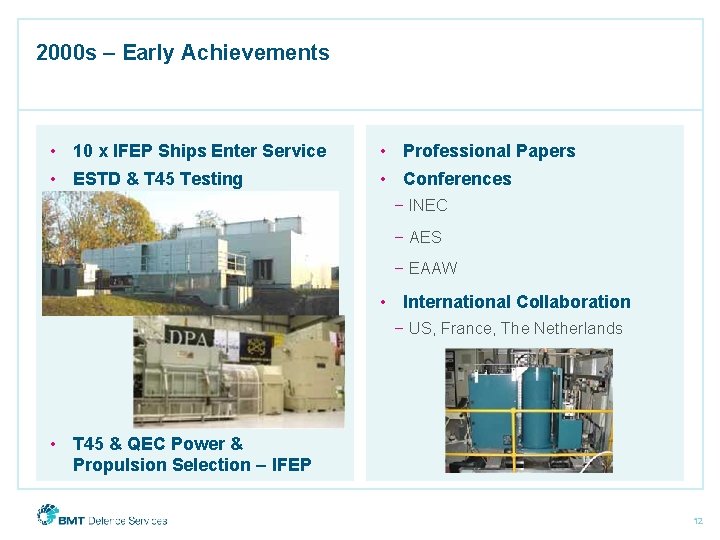
2000 s – Early Achievements • 10 x IFEP Ships Enter Service • ESTD & T 45 Testing • Professional Papers • Conferences − INEC − AES − EAAW • International Collaboration − US, France, The Netherlands • T 45 & QEC Power & Propulsion Selection – IFEP 12

Electric Ship Technology Demonstrator 13
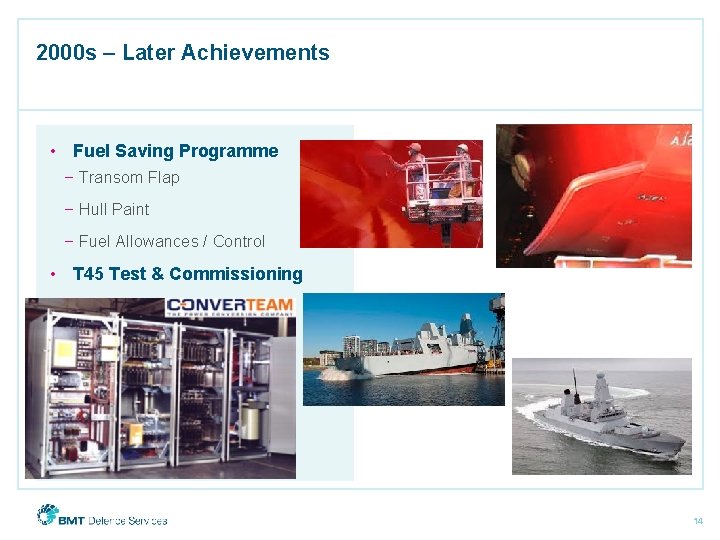
2000 s – Later Achievements • Fuel Saving Programme − Transom Flap − Hull Paint − Fuel Allowances / Control • T 45 Test & Commissioning 14
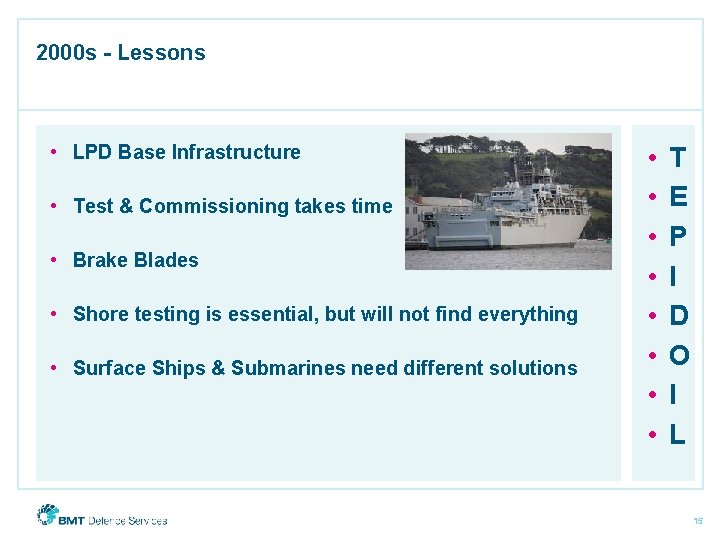
2000 s - Lessons • LPD Base Infrastructure • Test & Commissioning takes time • Brake Blades • Shore testing is essential, but will not find everything • Surface Ships & Submarines need different solutions • • T E P I D O I L 15
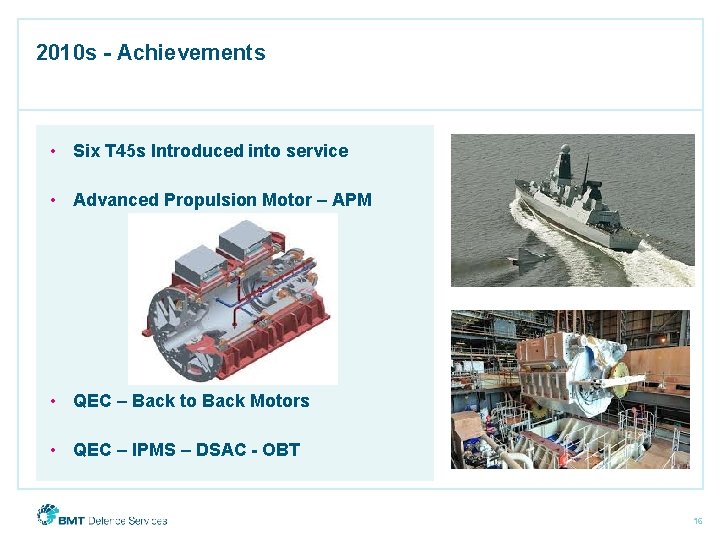
2010 s - Achievements • Six T 45 s Introduced into service • Advanced Propulsion Motor – APM • QEC – Back to Back Motors • QEC – IPMS – DSAC - OBT 16
2010 s - Lessons • LPD Power System – HV Upgrade • Technical Development - Commercial Model • Training Lag − Operate & Maintain – Over reliance on CBT − Diagnose & Repair − Training Infrastructure – Hardware • IETMs – Integrated Electronic Technical Manuals • Operating Doctrine - RASing • Logistics Tail - Contractors • • T E P I D O I L 17
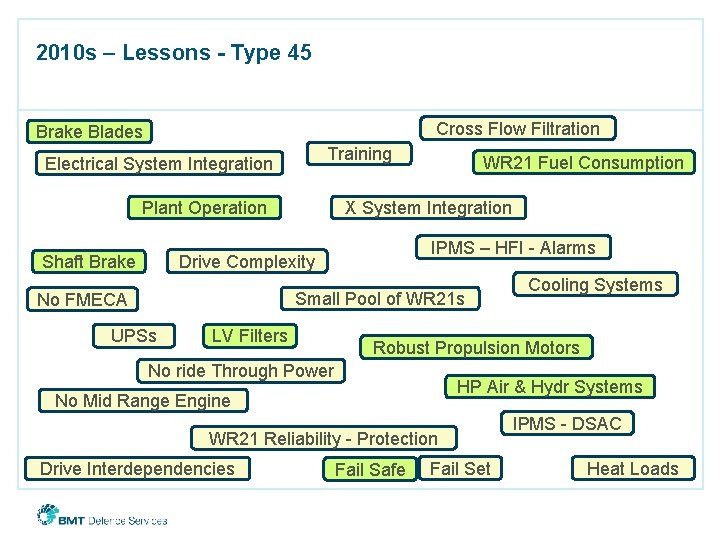
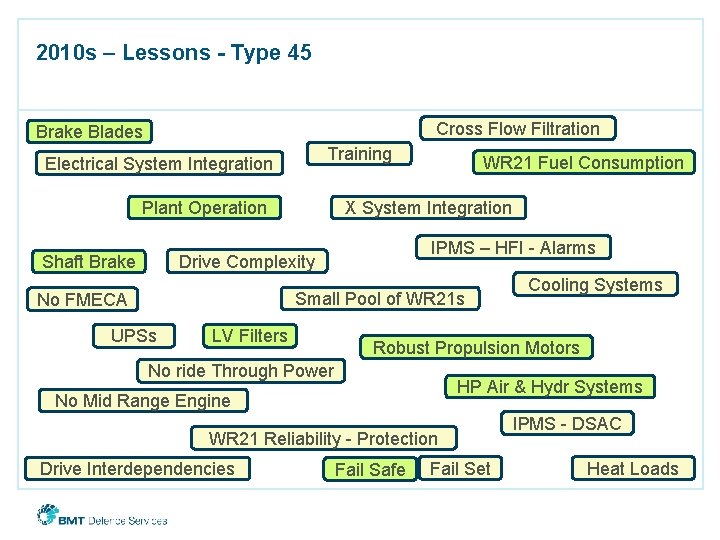
2010 s – Lessons - Type 45 Cross Flow Filtration Brake Blades Training Electrical System Integration Plant Operation X System Integration IPMS – HFI - Alarms Drive Complexity Shaft Brake WR 21 Fuel Consumption Small Pool of WR 21 s No FMECA UPSs LV Filters Robust Propulsion Motors No ride Through Power HP Air & Hydr Systems No Mid Range Engine WR 21 Reliability - Protection Drive Interdependencies Cooling Systems Fail Safe Fail Set IPMS - DSAC Heat Loads
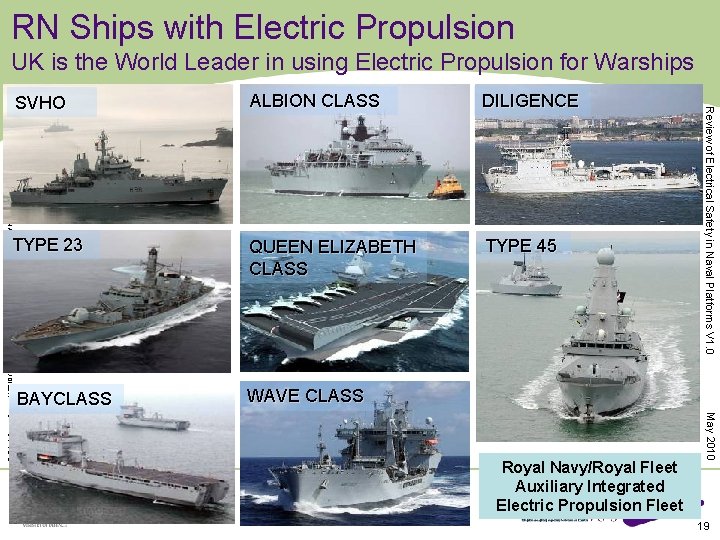
RN Ships with Electric Propulsion UK is the World Leader in using Electric Propulsion for Warships DILIGENCE TYPE 23 QUEEN ELIZABETH CLASS TYPE 45 BAYCLASS WAVE CLASS Royal Navy/Royal Fleet Auxiliary Integrated Electric Propulsion Fleet May 2010 © British Crown Copyright 2010 /MOD Published with the permission of the Controller of Her Britannic Majesty’s Stationery Office. ALBION CLASS Review of Electrical Safety in Naval Platforms V 1. 0 SVHO 19
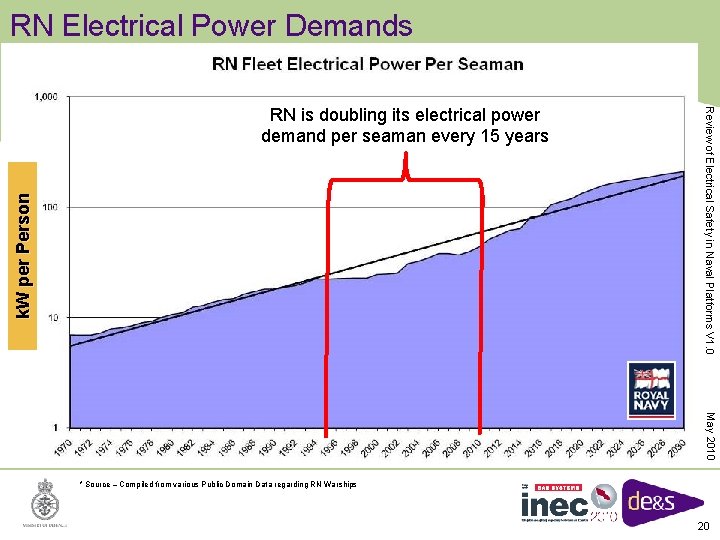
k. W per Person RN is doubling its electrical power demand per seaman every 15 years Review of Electrical Safety in Naval Platforms V 1. 0 © British Crown Copyright 2010 /MOD Published with the permission of the Controller of Her Britannic Majesty’s Stationery Office. RN Electrical Power Demands May 2010 * Source – Compiled from various Public Domain Data regarding RN Warships 20
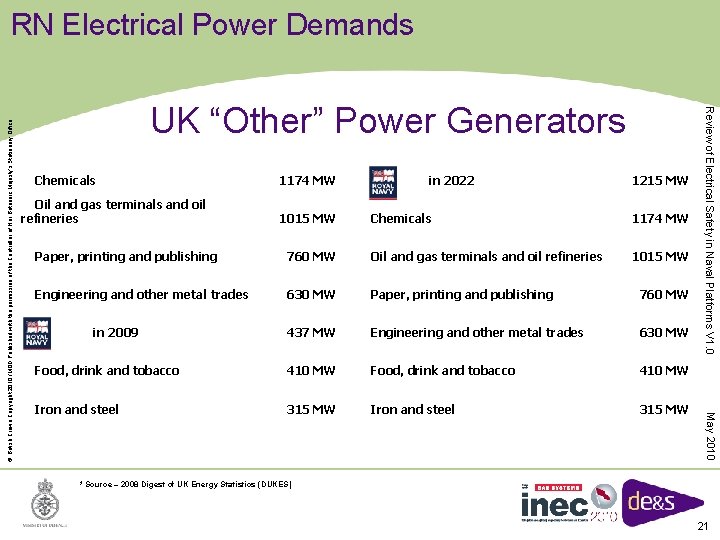
UK “Other” Power Generators Chemicals Oil and gas terminals and oil refineries 1174 MW 1015 MW in 2022 1215 MW Chemicals 1174 MW 1015 MW 760 MW Oil and gas terminals and oil refineries Engineering and other metal trades 630 MW Paper, printing and publishing 760 MW 437 MW Engineering and other metal trades 630 MW Food, drink and tobacco 410 MW Iron and steel 315 MW in 2009 May 2010 Paper, printing and publishing Review of Electrical Safety in Naval Platforms V 1. 0 © British Crown Copyright 2010 /MOD Published with the permission of the Controller of Her Britannic Majesty’s Stationery Office. RN Electrical Power Demands * Source – 2008 Digest of UK Energy Statistics (DUKES) 21
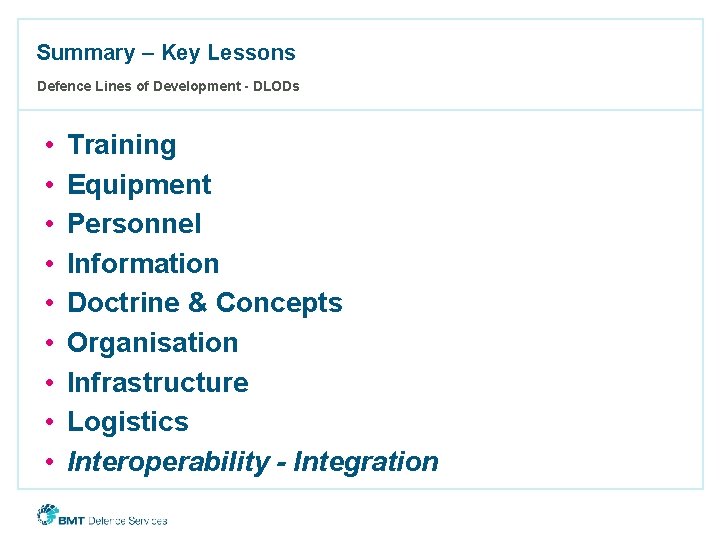
Summary – Key Lessons Defence Lines of Development - DLODs • • • Training Equipment Personnel Information Doctrine & Concepts Organisation Infrastructure Logistics Interoperability - Integration
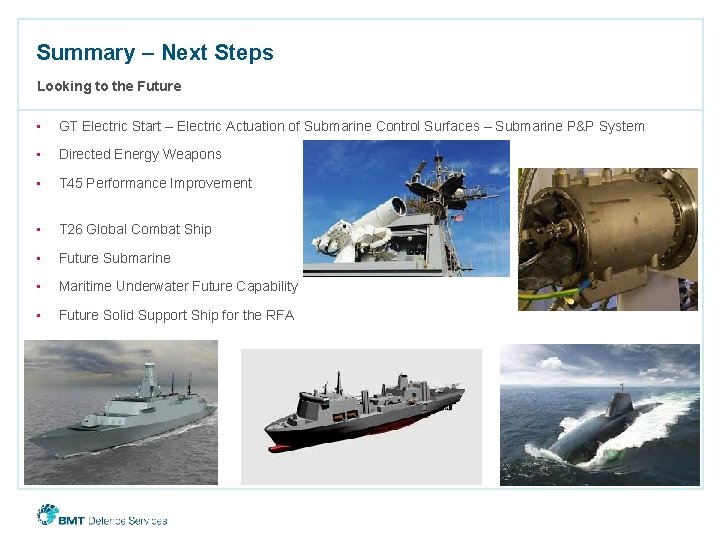
Summary – Next Steps Looking to the Future • GT Electric Start – Electric Actuation of Submarine Control Surfaces – Submarine P&P System • Directed Energy Weapons • T 45 Performance Improvement • T 26 Global Combat Ship • Future Submarine • Maritime Underwater Future Capability • Future Solid Support Ship for the RFA

Any Questions
2010 s – Lessons - Type 45 Cross Flow Filtration Brake Blades Training Electrical System Integration Plant Operation X System Integration IPMS – HFI - Alarms Drive Complexity Shaft Brake WR 21 Fuel Consumption Small Pool of WR 21 s No FMECA UPSs LV Filters Robust Propulsion Motors No ride Through Power HP Air & Hydr Systems No Mid Range Engine WR 21 Reliability - Protection Drive Interdependencies Cooling Systems Fail Safe Fail Set IPMS - DSAC Heat Loads
- Slides: 25