
Electricity Magnetism Putting it all together Electricity and
- Slides: 42
Electricity & Magnetism: Putting it all together
Electricity and Magnetism – objectives 1. Explain the fundamental rules at the base of all electrical phenomena. 2. State and apply Coulomb’s Law. 3. Describe the flow of electric charge. 4. Describe how electron flow depends on electrical resistance. 5. Distinguish between alternating current and direct current. 6. Describe the differences and similarities between magnetic poles and electric charges. 7. Describe the magnetic field in the space around a magnet. 8. Explain how to make a permanent magnet. 9. Explain how electric and magnetic fields are related.
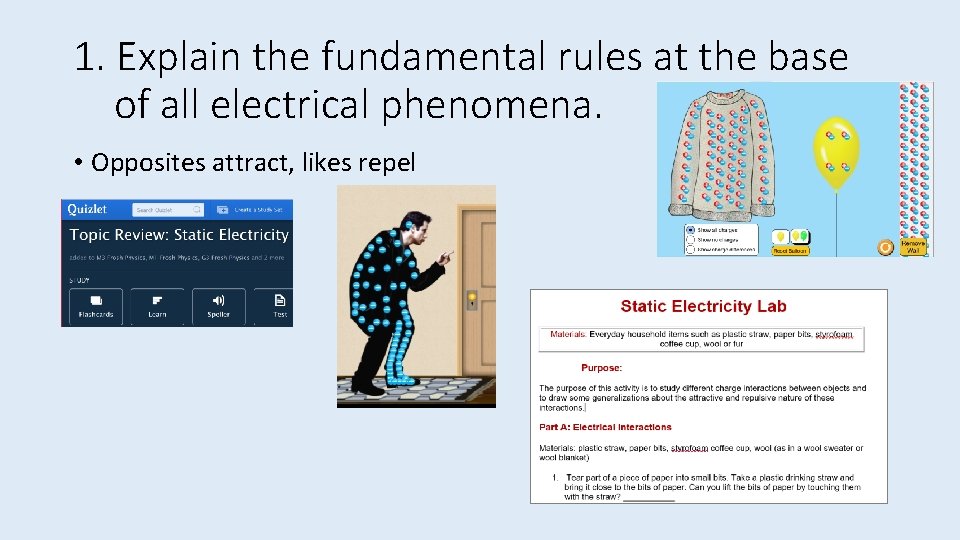
1. Explain the fundamental rules at the base of all electrical phenomena. • Opposites attract, likes repel
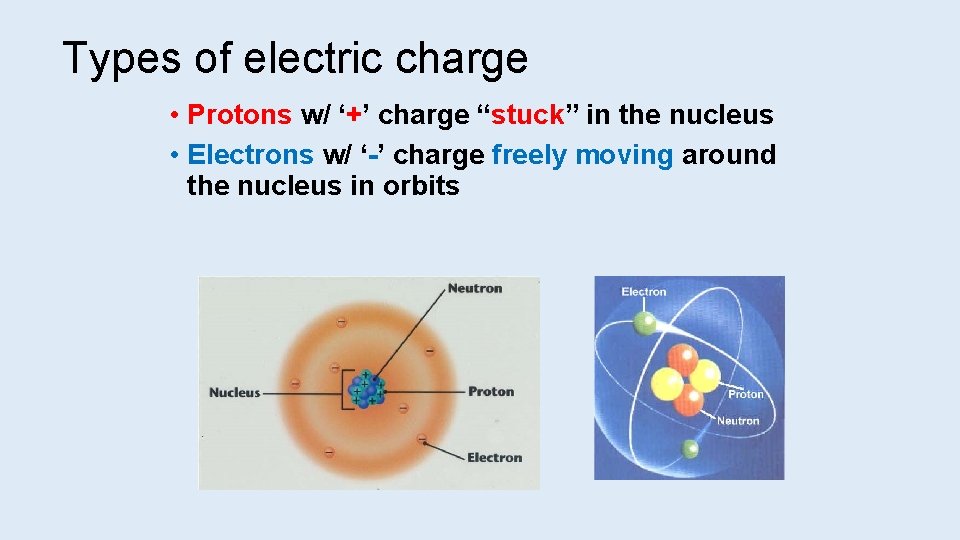
Types of electric charge • Protons w/ ‘+’ charge “stuck” in the nucleus • Electrons w/ ‘-’ charge freely moving around the nucleus in orbits
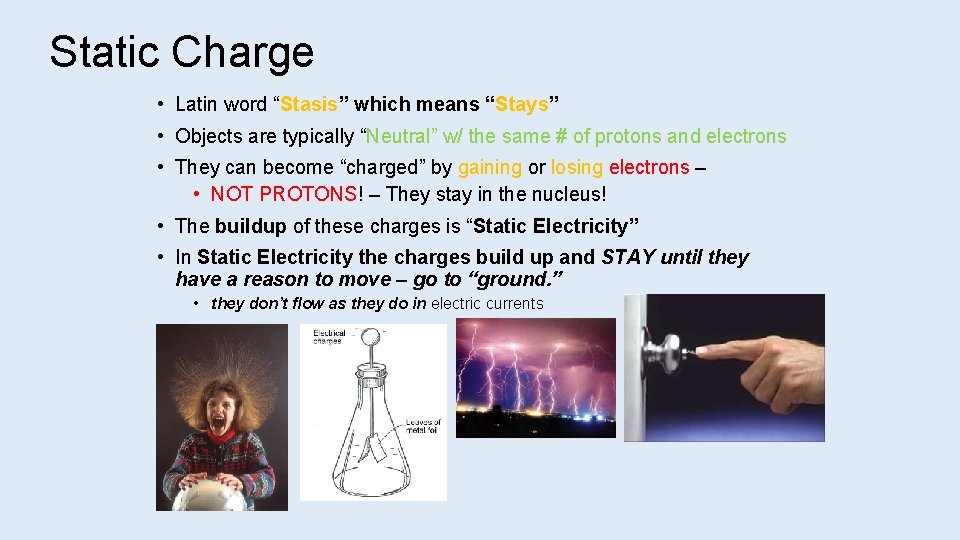
Static Charge • Latin word “Stasis” which means “Stays” • Objects are typically “Neutral” w/ the same # of protons and electrons • They can become “charged” by gaining or losing electrons – • NOT PROTONS! – They stay in the nucleus! • The buildup of these charges is “Static Electricity” • In Static Electricity the charges build up and STAY until they have a reason to move – go to “ground. ” • they don’t flow as they do in electric currents
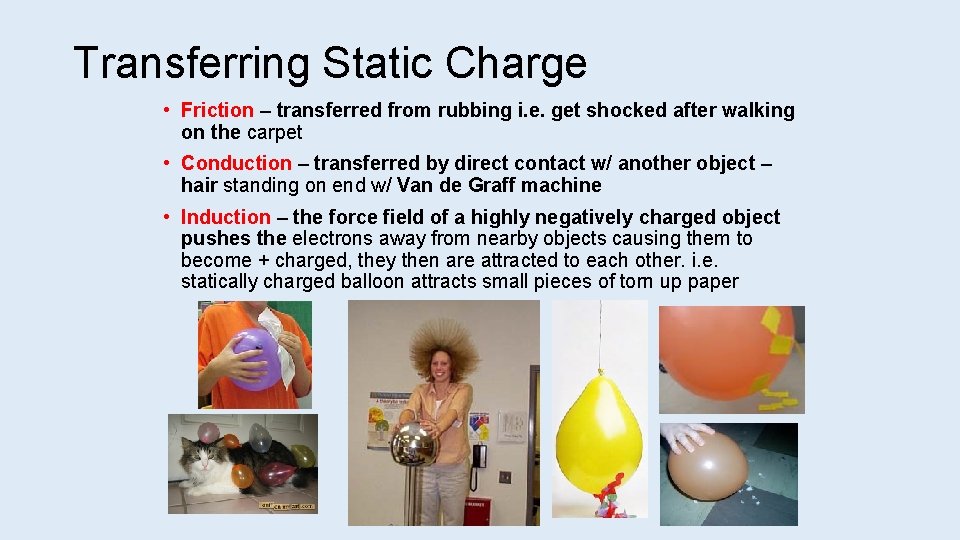
Transferring Static Charge • Friction – transferred from rubbing i. e. get shocked after walking on the carpet • Conduction – transferred by direct contact w/ another object – hair standing on end w/ Van de Graff machine • Induction – the force field of a highly negatively charged object pushes the electrons away from nearby objects causing them to become + charged, they then are attracted to each other. i. e. statically charged balloon attracts small pieces of torn up paper
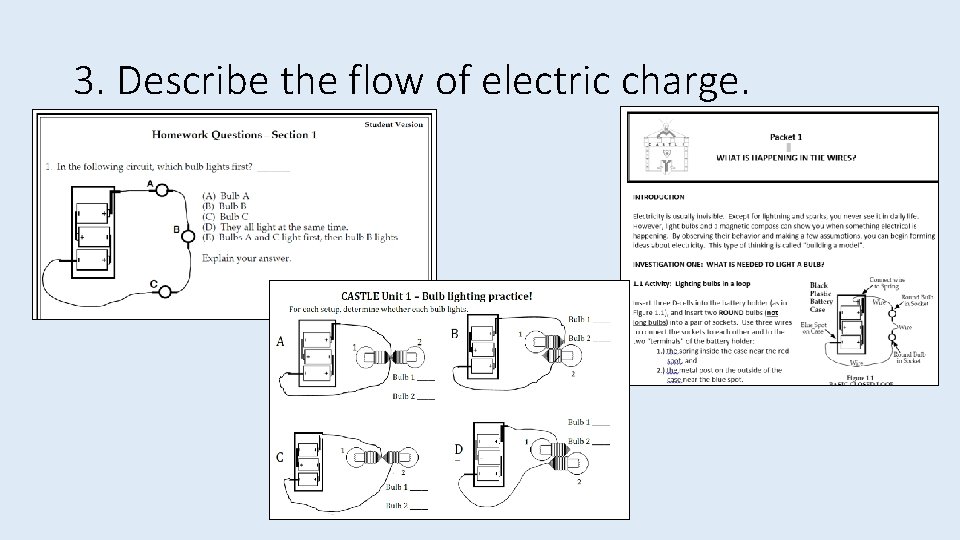
3. Describe the flow of electric charge.
3. Describe the flow of electric charge. • Flows through conductors only • Must have a complete, unbroken, closed path to follow: a circuit • Charges are always in the conductors, ready to move; all they need is a “push” • Battery/generator supplies that “push” • Conventional current flows from positive through the circuit around to the negative, then back through the battery/generator.
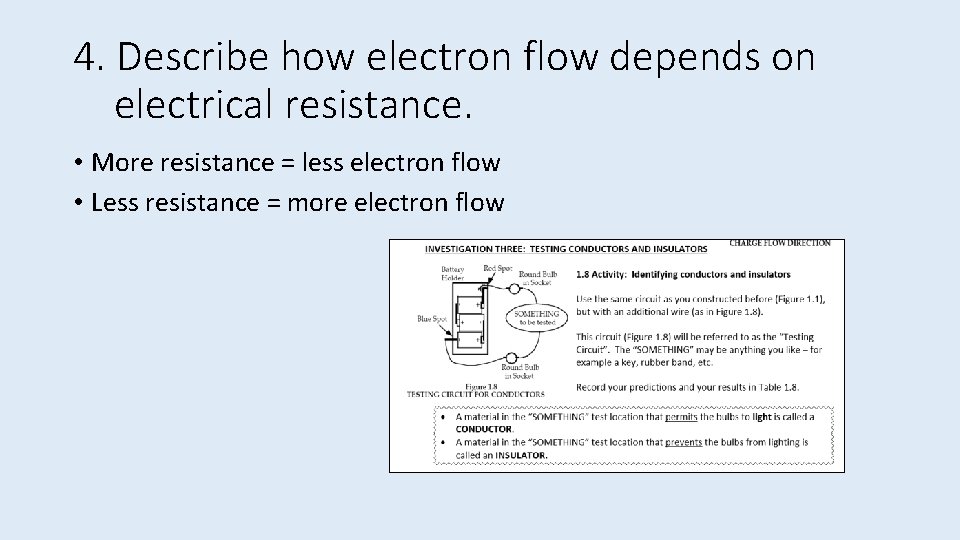
4. Describe how electron flow depends on electrical resistance. • More resistance = less electron flow • Less resistance = more electron flow
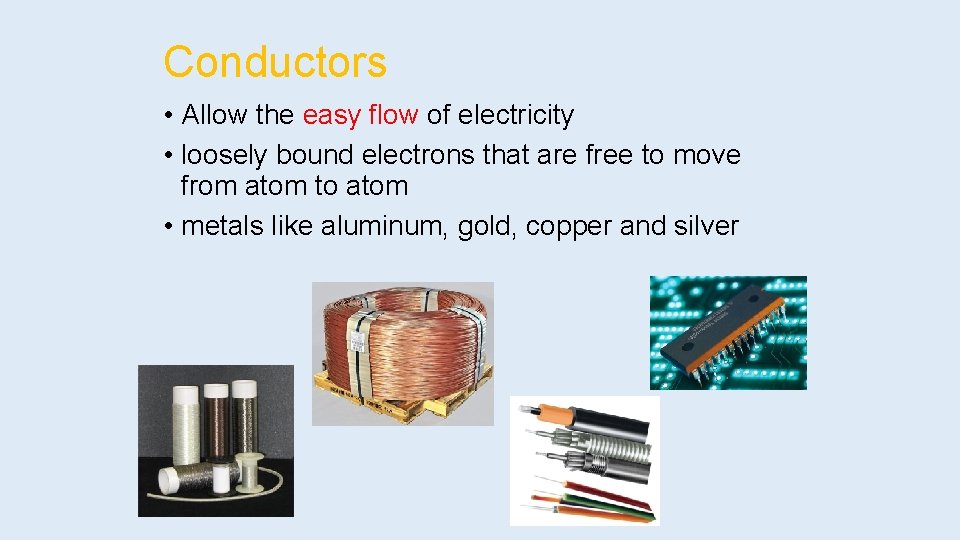
Conductors • Allow the easy flow of electricity • loosely bound electrons that are free to move from atom to atom • metals like aluminum, gold, copper and silver
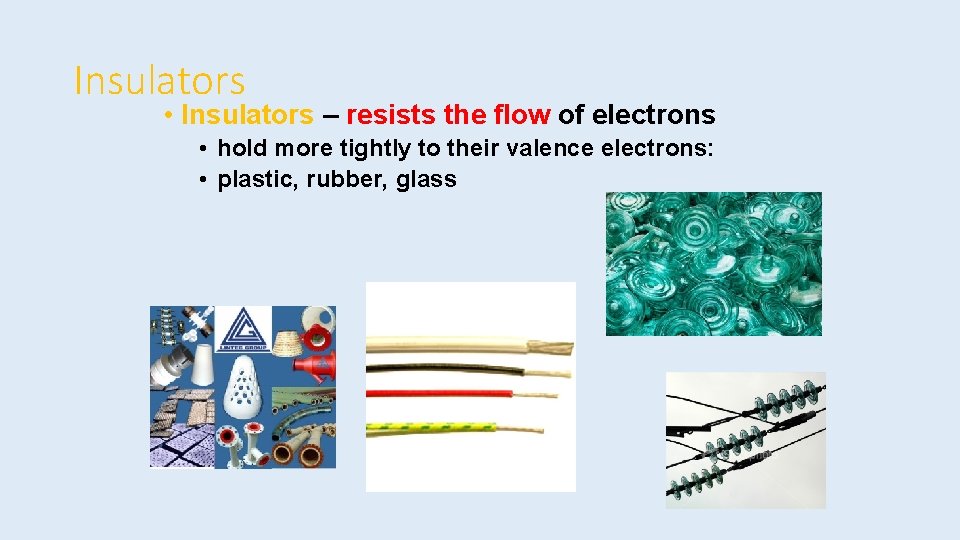
Insulators • Insulators – resists the flow of electrons • hold more tightly to their valence electrons: • plastic, rubber, glass
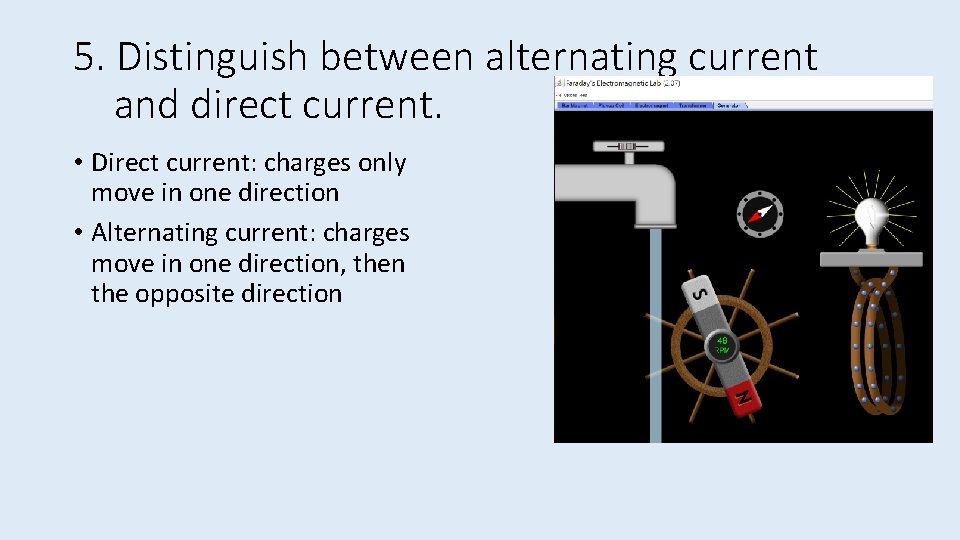
5. Distinguish between alternating current and direct current. • Direct current: charges only move in one direction • Alternating current: charges move in one direction, then the opposite direction
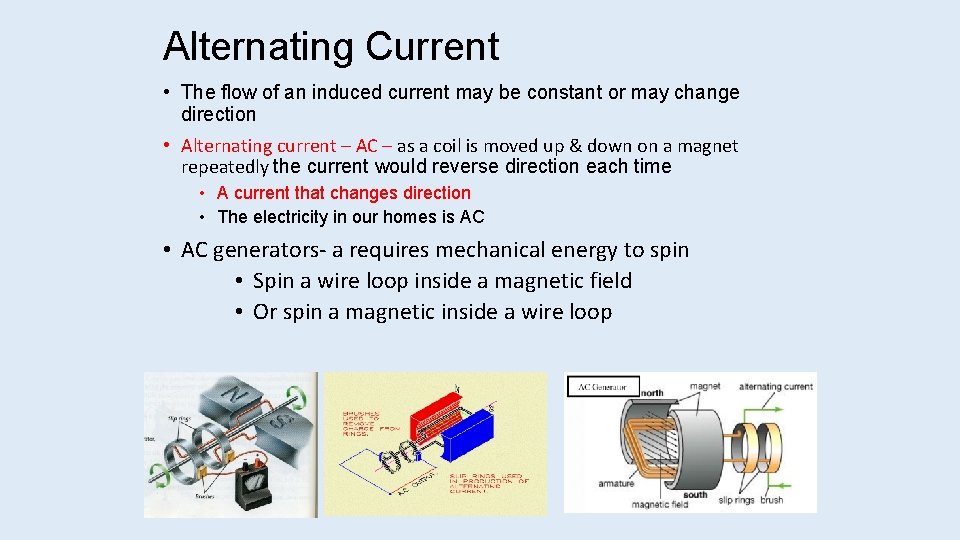
Alternating Current • The flow of an induced current may be constant or may change direction • Alternating current – AC – as a coil is moved up & down on a magnet repeatedly the current would reverse direction each time • A current that changes direction • The electricity in our homes is AC • AC generators- a requires mechanical energy to spin • Spin a wire loop inside a magnetic field • Or spin a magnetic inside a wire loop
Direct Current • Direct current – DC – the current resulting in electrons flowing from high potential to lower potential • a. Therefore it moves in one direction only • b. The electricity stored in batteries is DC
6. Describe the differences and similarities between magnetic poles and electric charges.
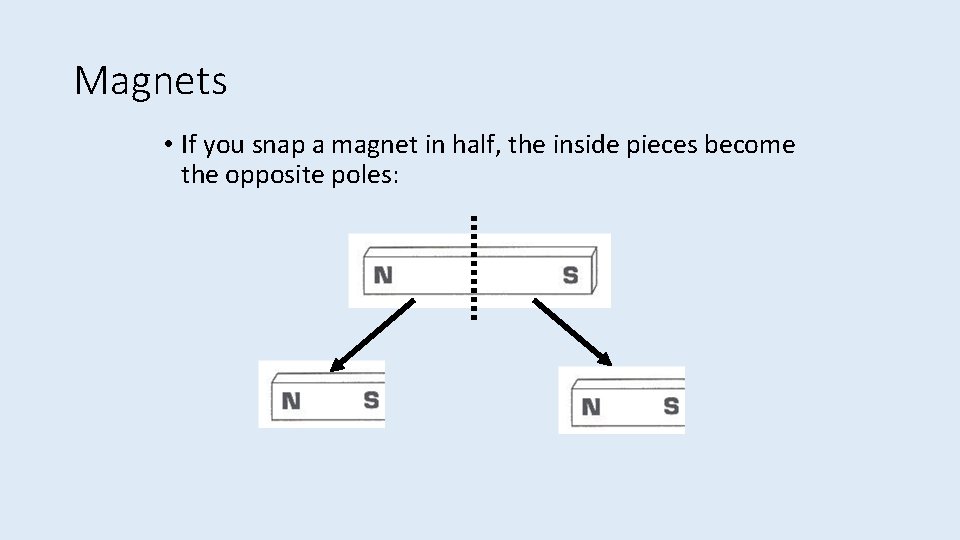
Magnets • If you snap a magnet in half, the inside pieces become the opposite poles:
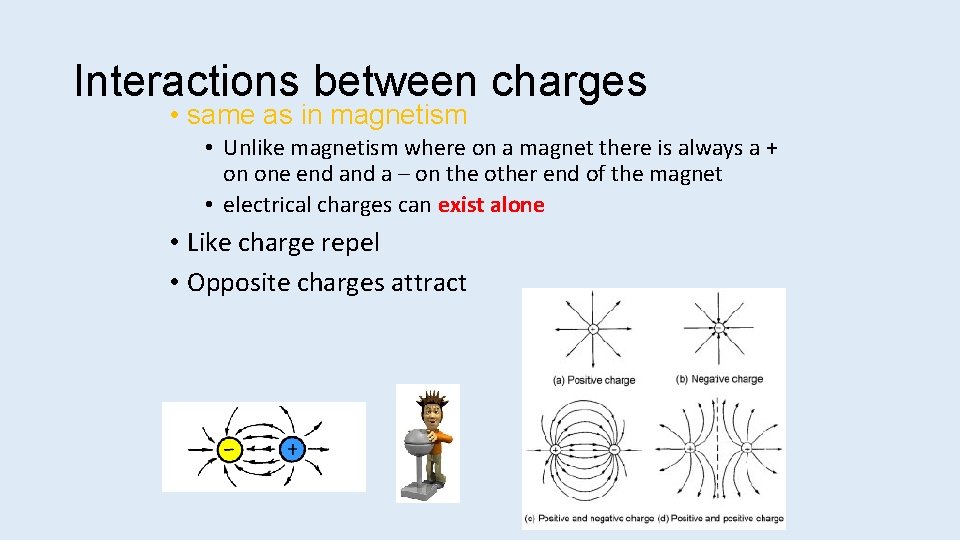
Interactions between charges • same as in magnetism • Unlike magnetism where on a magnet there is always a + on one end a – on the other end of the magnet • electrical charges can exist alone • Like charge repel • Opposite charges attract
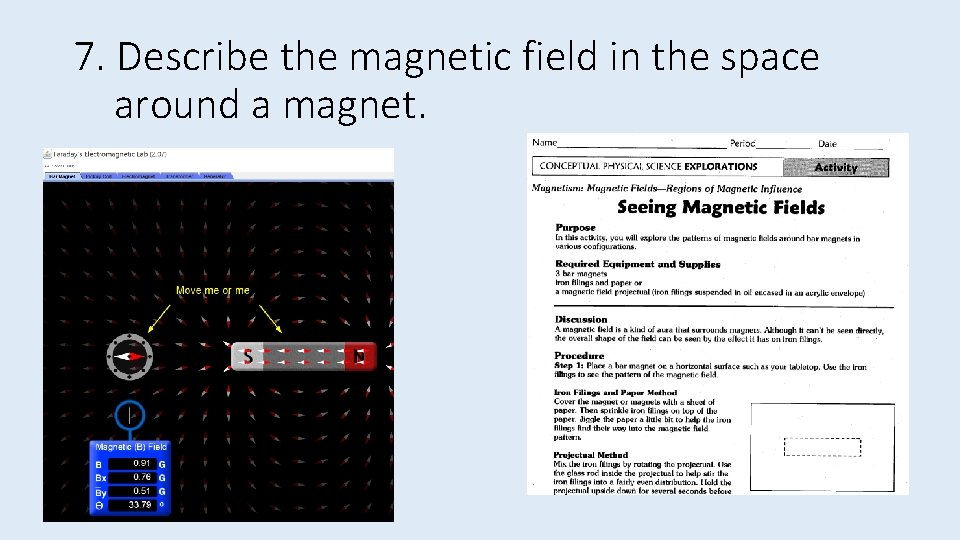
7. Describe the magnetic field in the space around a magnet.
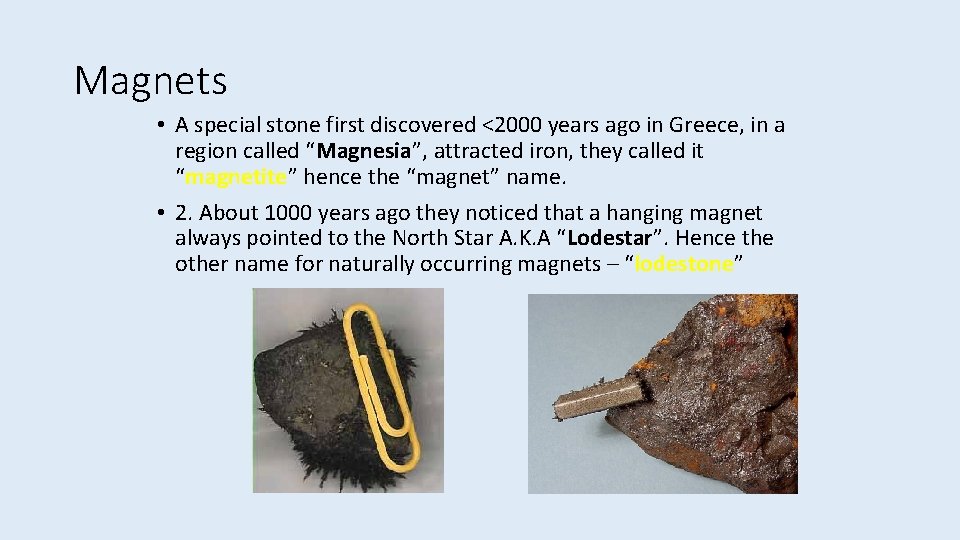
Magnets • A special stone first discovered <2000 years ago in Greece, in a region called “Magnesia”, attracted iron, they called it “magnetite” hence the “magnet” name. • 2. About 1000 years ago they noticed that a hanging magnet always pointed to the North Star A. K. A “Lodestar”. Hence the other name for naturally occurring magnets – “lodestone”
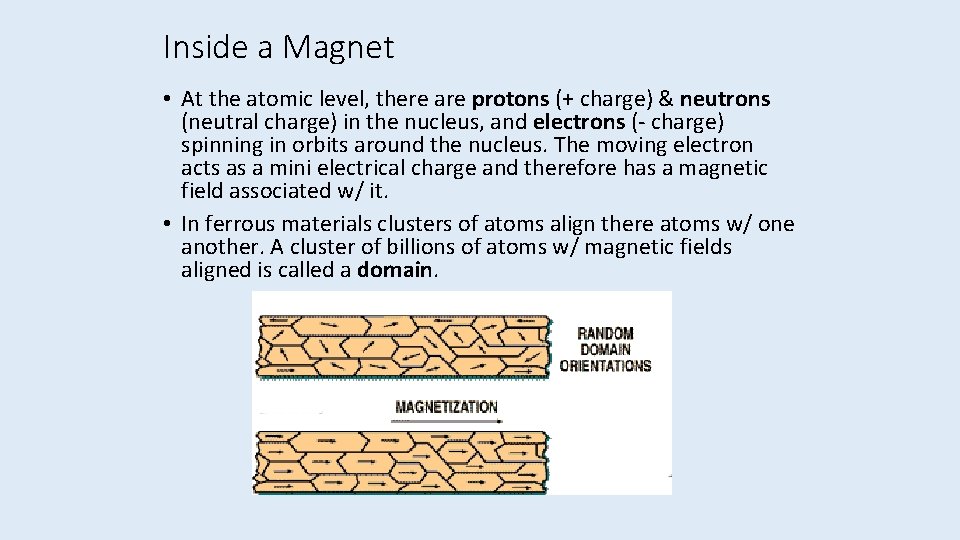
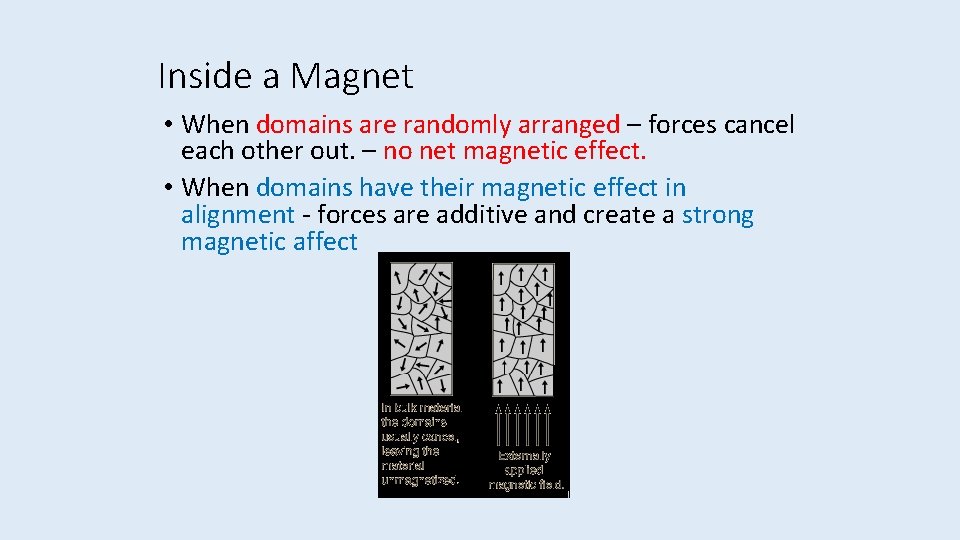
Inside a Magnet • At the atomic level, there are protons (+ charge) & neutrons (neutral charge) in the nucleus, and electrons (- charge) spinning in orbits around the nucleus. The moving electron acts as a mini electrical charge and therefore has a magnetic field associated w/ it. • In ferrous materials clusters of atoms align there atoms w/ one another. A cluster of billions of atoms w/ magnetic fields aligned is called a domain.
Inside a Magnet • When domains are randomly arranged – forces cancel each other out. – no net magnetic effect. • When domains have their magnetic effect in alignment - forces are additive and create a strong magnetic affect
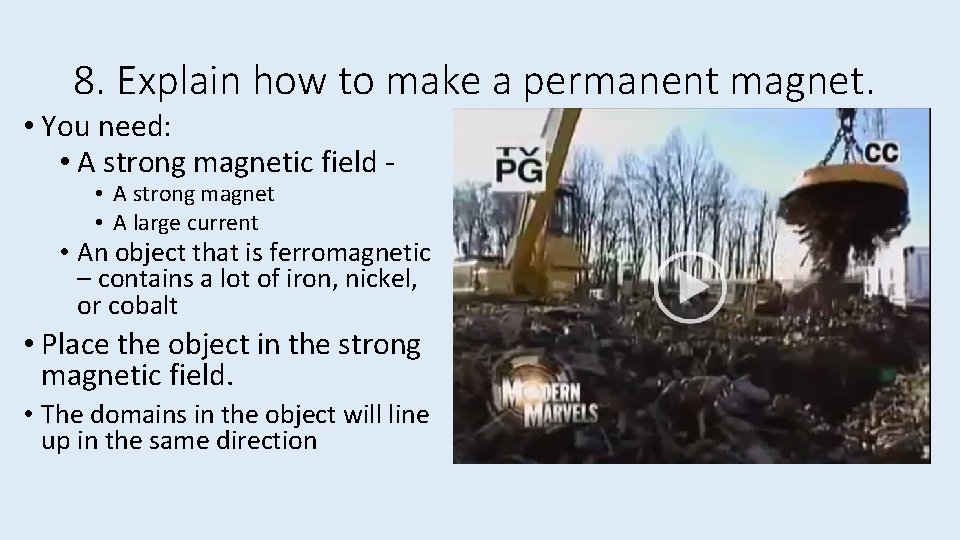
8. Explain how to make a permanent magnet. • You need: • A strong magnetic field • A strong magnet • A large current • An object that is ferromagnetic – contains a lot of iron, nickel, or cobalt • Place the object in the strong magnetic field. • The domains in the object will line up in the same direction
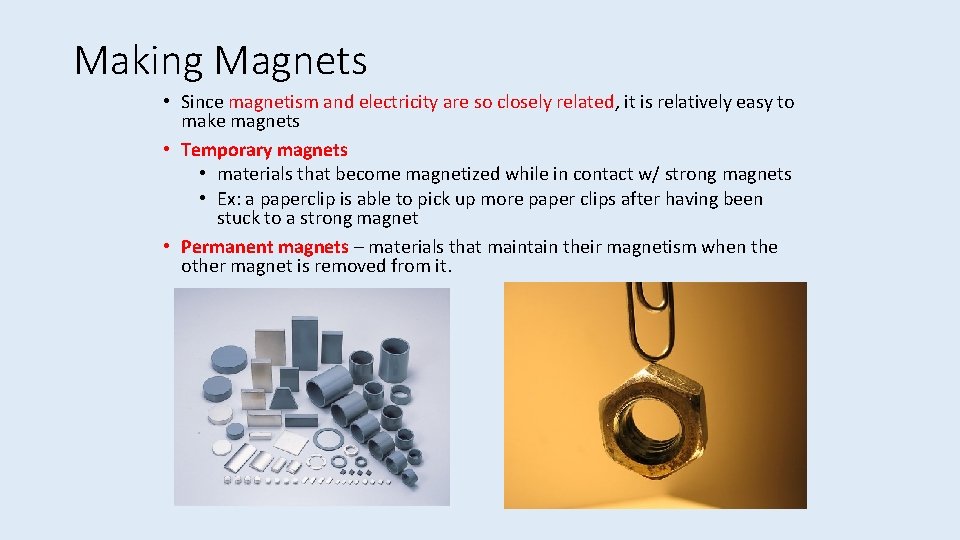
Making Magnets • Since magnetism and electricity are so closely related, it is relatively easy to make magnets • Temporary magnets • materials that become magnetized while in contact w/ strong magnets • Ex: a paperclip is able to pick up more paper clips after having been stuck to a strong magnet • Permanent magnets – materials that maintain their magnetism when the other magnet is removed from it.
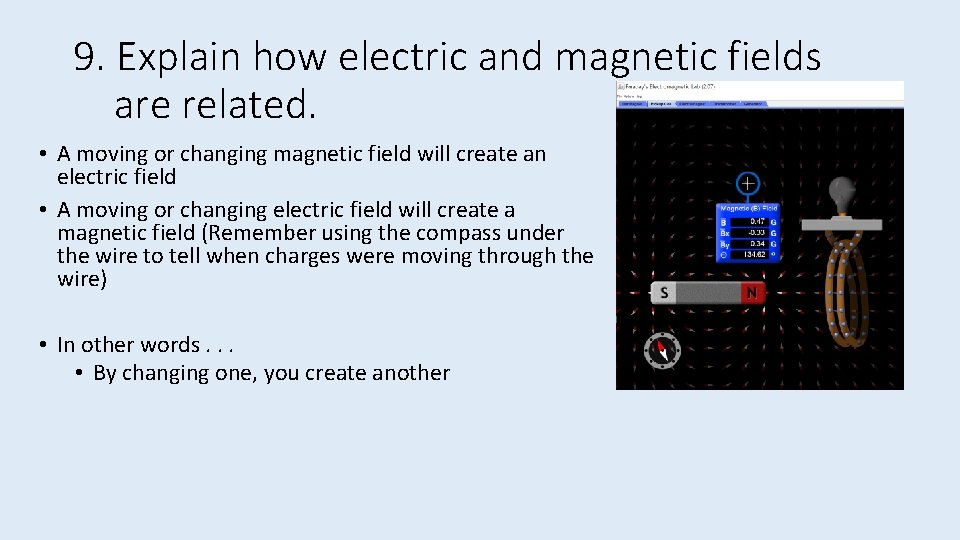
9. Explain how electric and magnetic fields are related. • A moving or changing magnetic field will create an electric field • A moving or changing electric field will create a magnetic field (Remember using the compass under the wire to tell when charges were moving through the wire) • In other words. . . • By changing one, you create another
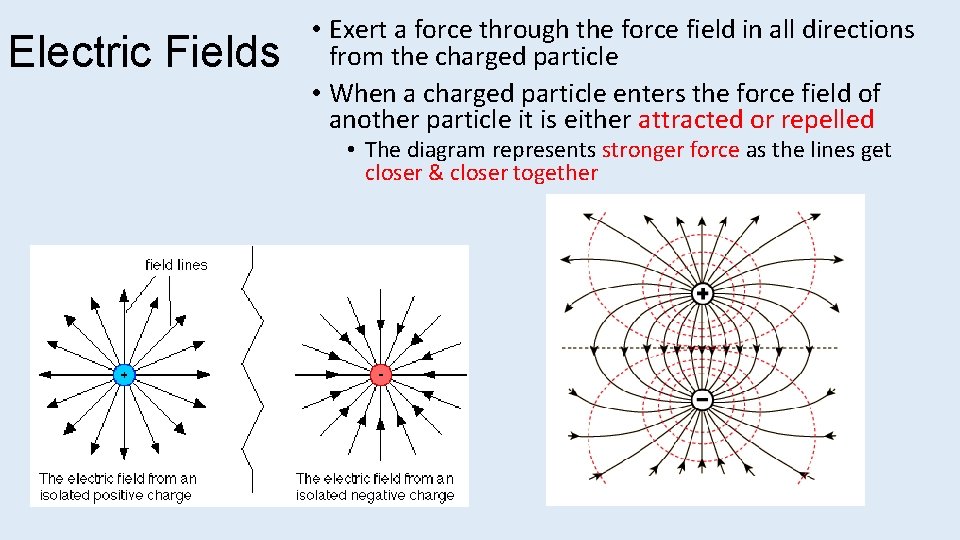
Electric Fields • Exert a force through the force field in all directions from the charged particle • When a charged particle enters the force field of another particle it is either attracted or repelled • The diagram represents stronger force as the lines get closer & closer together
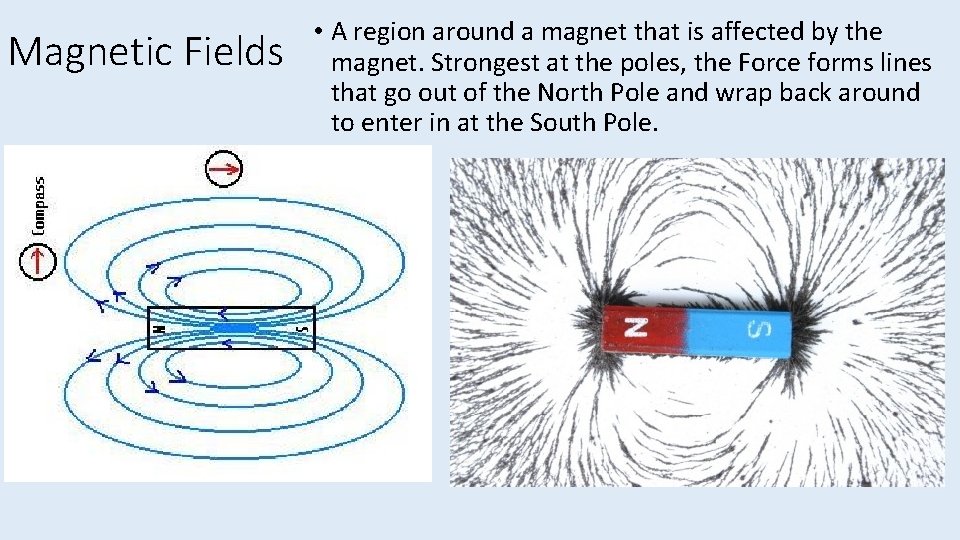
Magnetic Fields • A region around a magnet that is affected by the magnet. Strongest at the poles, the Force forms lines that go out of the North Pole and wrap back around to enter in at the South Pole.
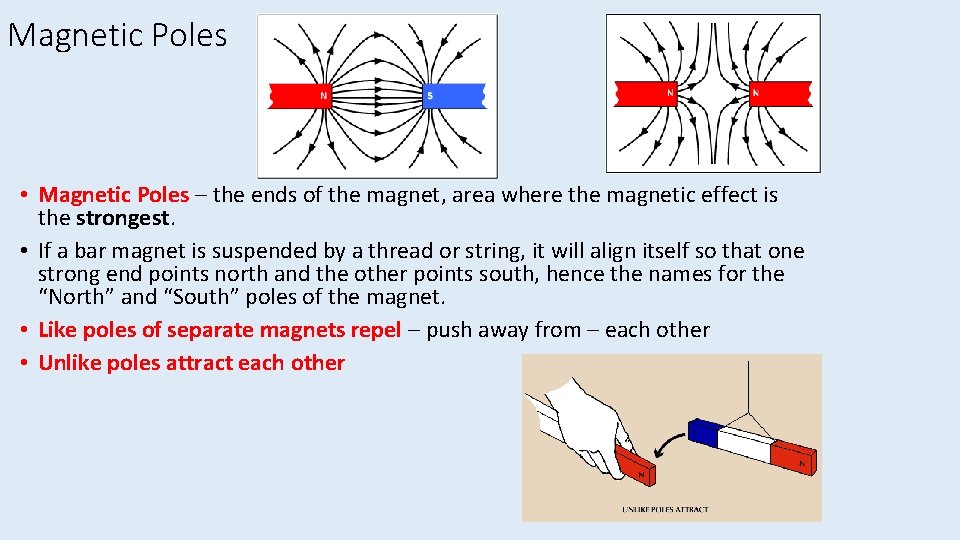
Magnetic Poles • Magnetic Poles – the ends of the magnet, area where the magnetic effect is the strongest. • If a bar magnet is suspended by a thread or string, it will align itself so that one strong end points north and the other points south, hence the names for the “North” and “South” poles of the magnet. • Like poles of separate magnets repel – push away from – each other • Unlike poles attract each other
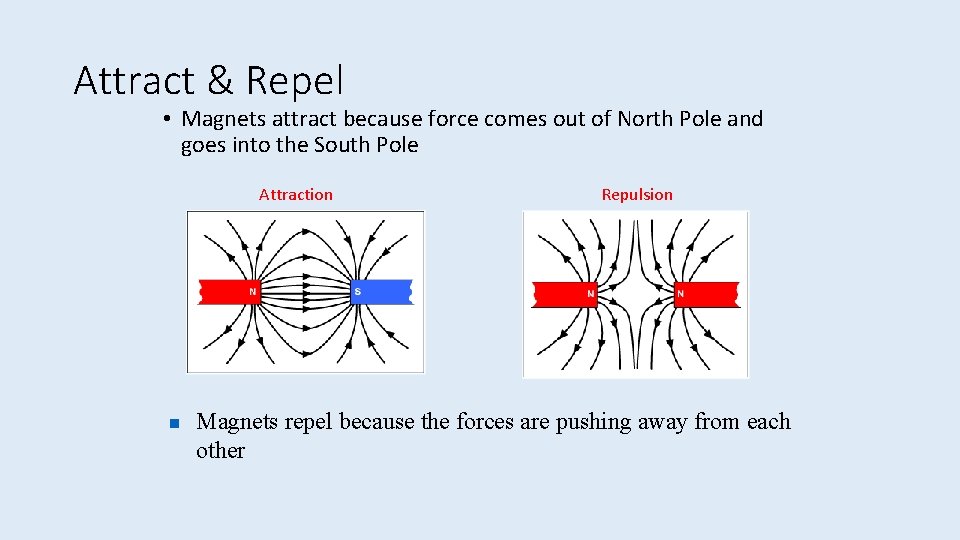
Attract & Repel • Magnets attract because force comes out of North Pole and goes into the South Pole Attraction n Repulsion Magnets repel because the forces are pushing away from each other
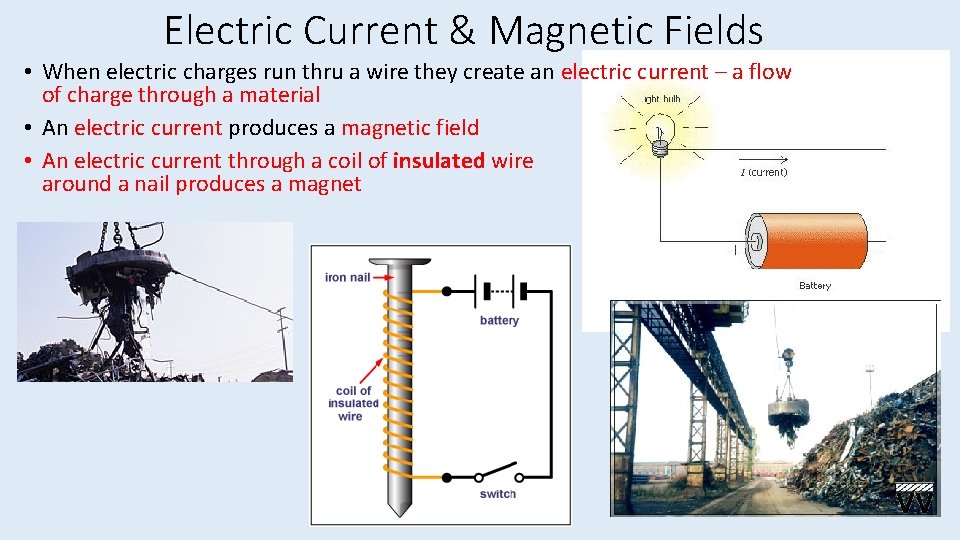
Electric Current & Magnetic Fields • When electric charges run thru a wire they create an electric current – a flow of charge through a material • An electric current produces a magnetic field • An electric current through a coil of insulated wire around a nail produces a magnet
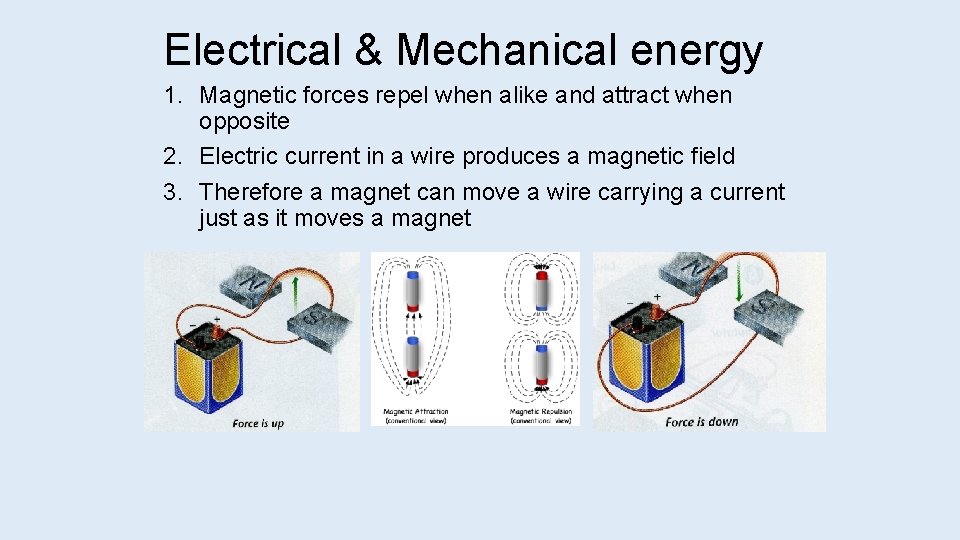
Electrical & Mechanical energy 1. Magnetic forces repel when alike and attract when opposite 2. Electric current in a wire produces a magnetic field 3. Therefore a magnet can move a wire carrying a current just as it moves a magnet
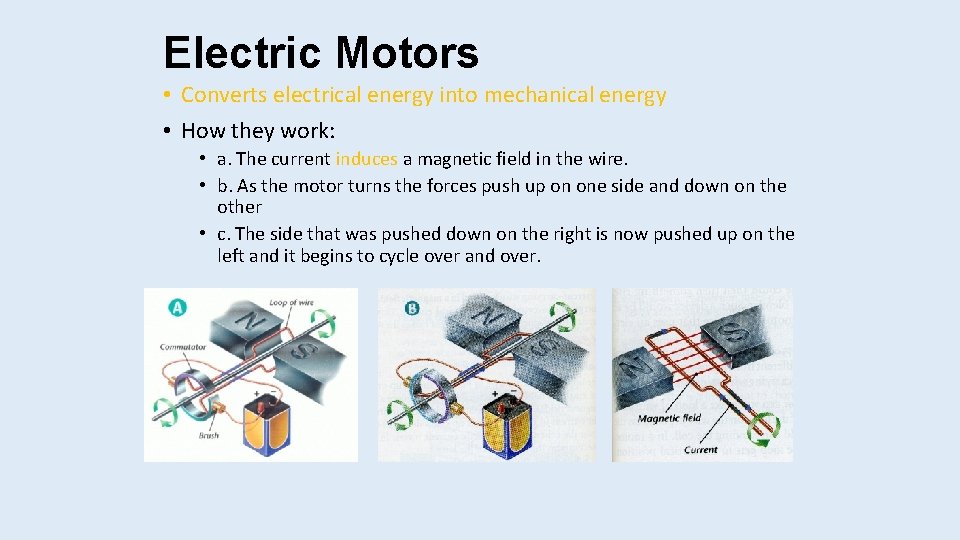
Electric Motors • Converts electrical energy into mechanical energy • How they work: • a. The current induces a magnetic field in the wire. • b. As the motor turns the forces push up on one side and down on the other • c. The side that was pushed down on the right is now pushed up on the left and it begins to cycle over and over.
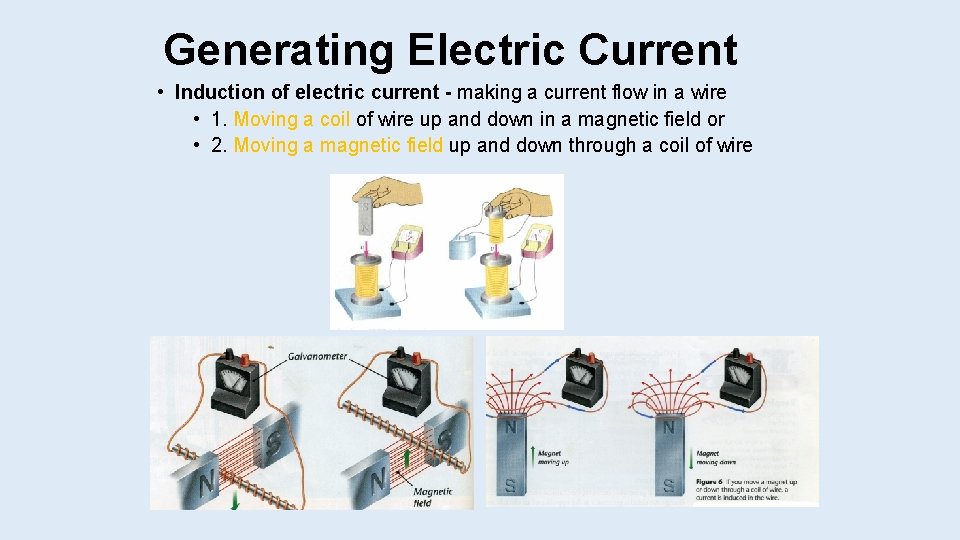
Generating Electric Current • Induction of electric current - making a current flow in a wire • 1. Moving a coil of wire up and down in a magnetic field or • 2. Moving a magnetic field up and down through a coil of wire
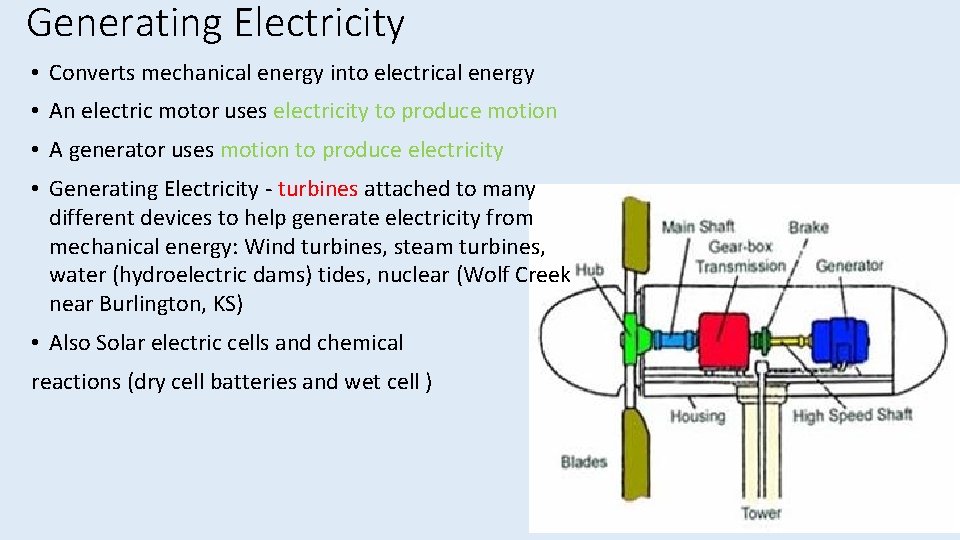
Generating Electricity • Converts mechanical energy into electrical energy • An electric motor uses electricity to produce motion • A generator uses motion to produce electricity • Generating Electricity - turbines attached to many different devices to help generate electricity from mechanical energy: Wind turbines, steam turbines, water (hydroelectric dams) tides, nuclear (Wolf Creek near Burlington, KS) • Also Solar electric cells and chemical reactions (dry cell batteries and wet cell )
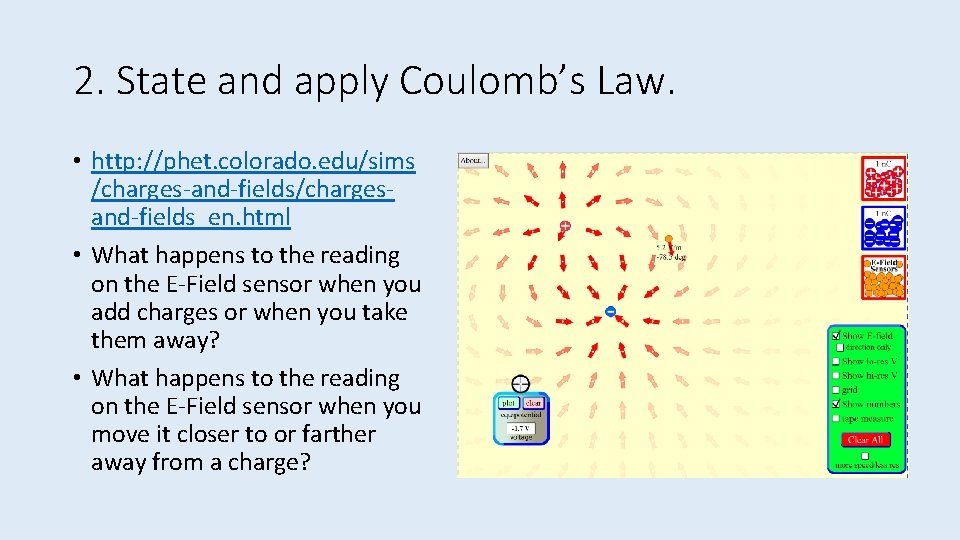
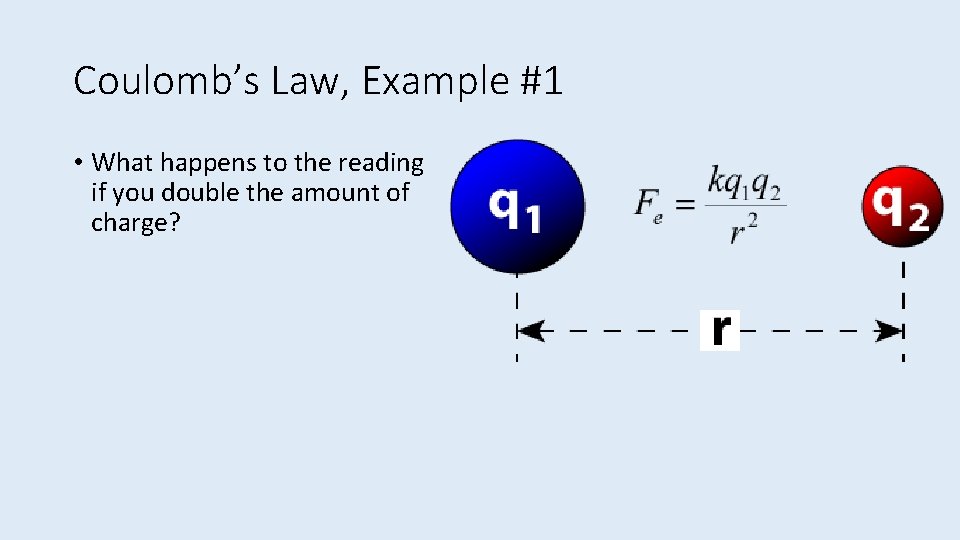
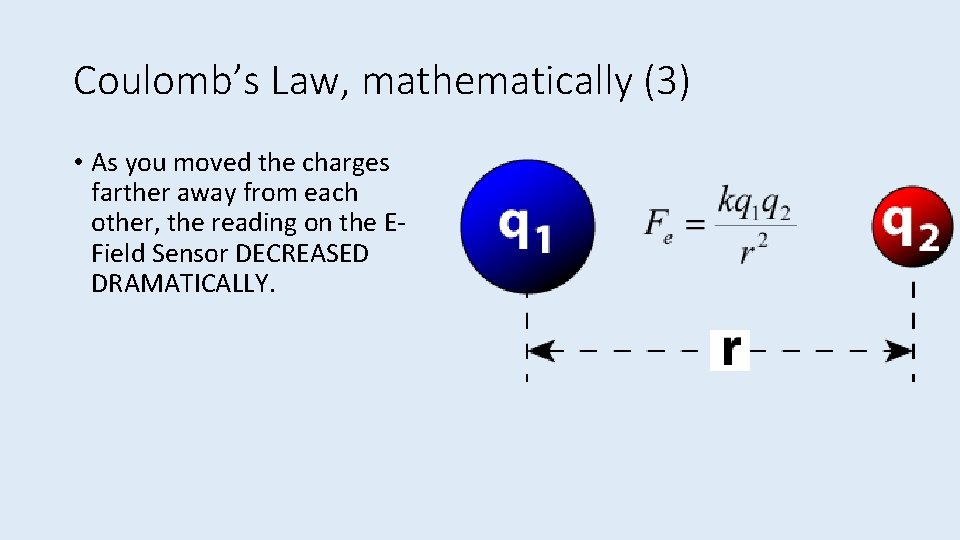
2. State and apply Coulomb’s Law. • http: //phet. colorado. edu/sims /charges-and-fields/chargesand-fields_en. html • What happens to the reading on the E-Field sensor when you add charges or when you take them away? • What happens to the reading on the E-Field sensor when you move it closer to or farther away from a charge?
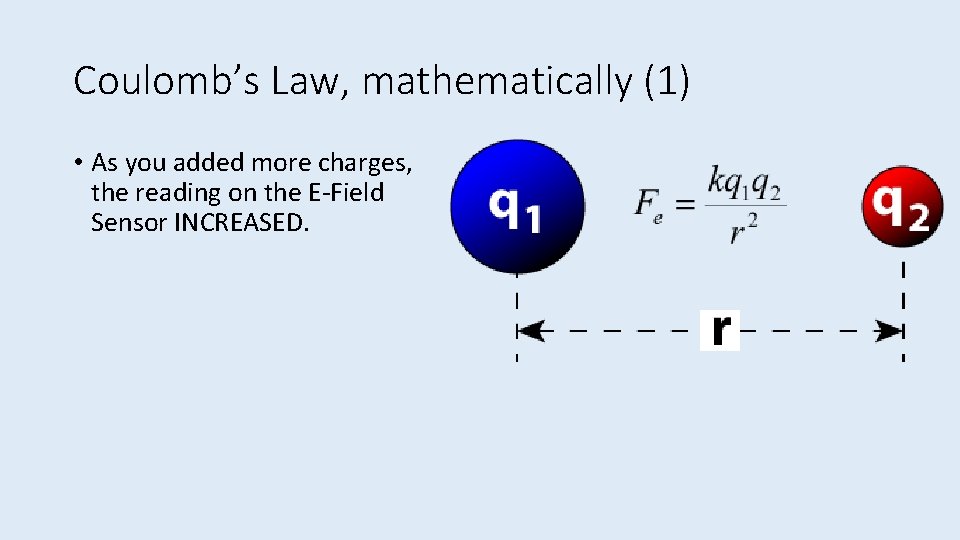
Coulomb’s Law, mathematically (1) • As you added more charges, the reading on the E-Field Sensor INCREASED.
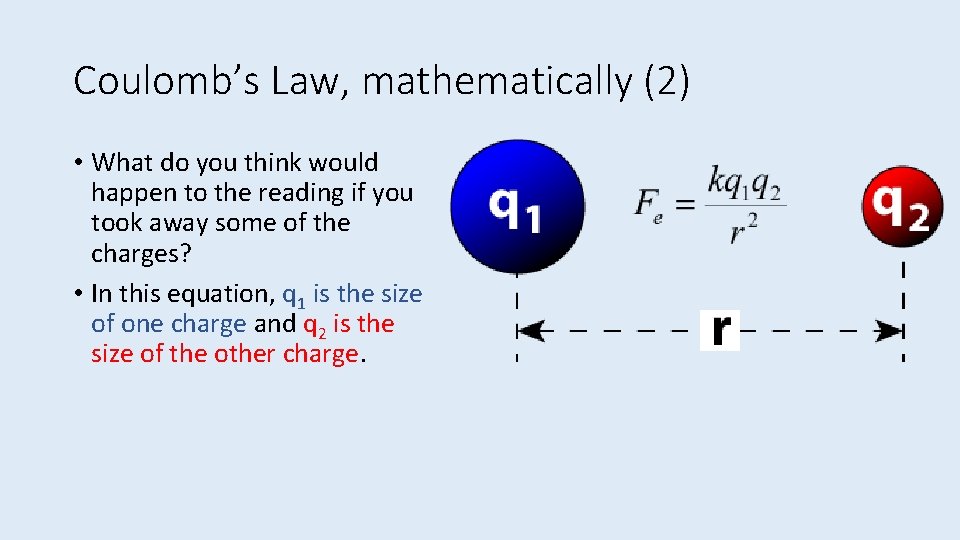
Coulomb’s Law, mathematically (2) • What do you think would happen to the reading if you took away some of the charges? • In this equation, q 1 is the size of one charge and q 2 is the size of the other charge.
Coulomb’s Law, Example #1 • What happens to the reading if you double the amount of charge?
Coulomb’s Law, mathematically (3) • As you moved the charges farther away from each other, the reading on the EField Sensor DECREASED DRAMATICALLY.
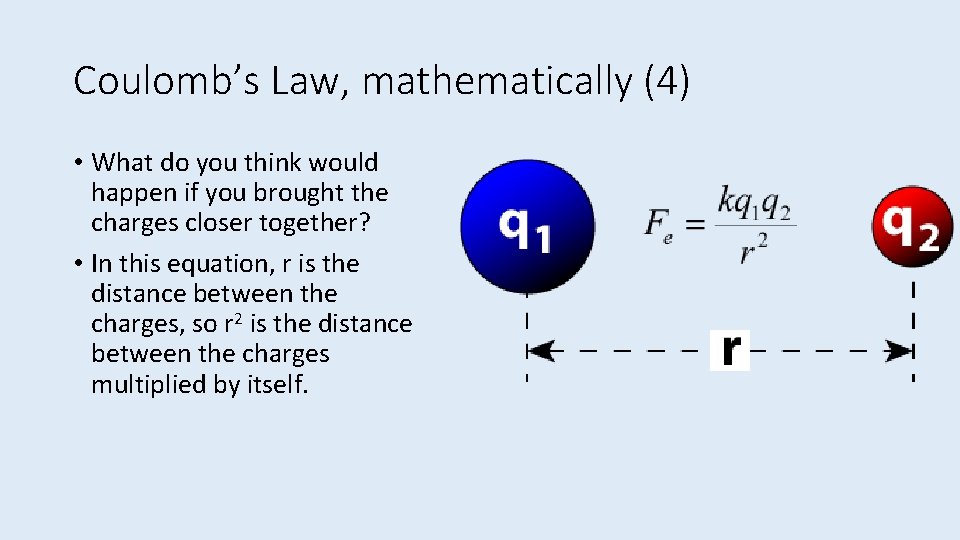
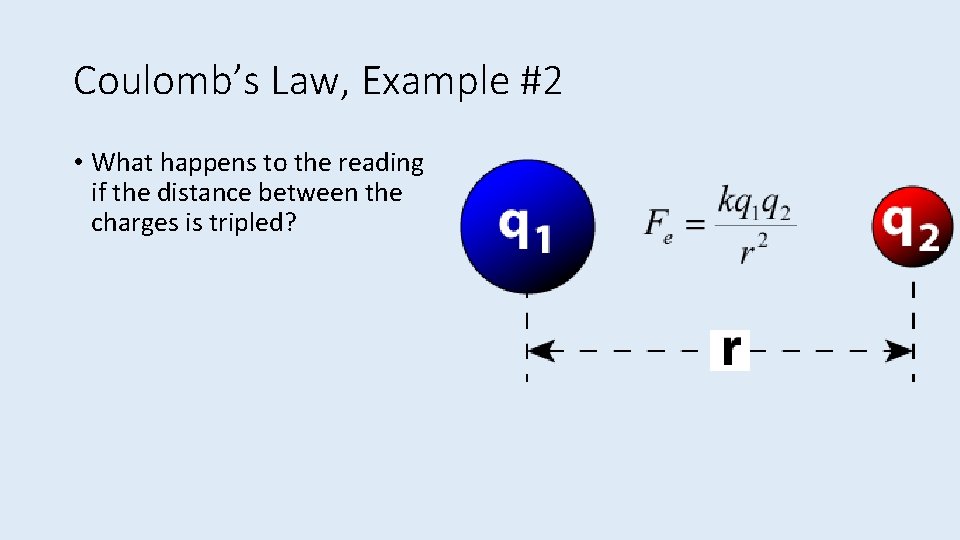
Coulomb’s Law, mathematically (4) • What do you think would happen if you brought the charges closer together? • In this equation, r is the distance between the charges, so r 2 is the distance between the charges multiplied by itself.
Coulomb’s Law, Example #2 • What happens to the reading if the distance between the charges is tripled?
“What can I study for the test? ” (1) Know each of these 9 objectives: 1. 2. 3. 4. 5. 6. Explain the fundamental rules at the base of all electrical phenomena. State and apply Coulomb’s Law. Describe the flow of electric charge. Describe how electron flow depends on electrical resistance. Distinguish between alternating current and direct current. Describe the differences and similarities between magnetic poles and electric charges. 7. Describe the magnetic field in the space around a magnet. 8. Explain how to make a permanent magnet. 9. Explain how electric and magnetic fields are related.
Review helps: • • Static Electricity concepts https: //quizlet. com/9387335/scatter Chapter 10 vocabulary http: //quizlet. com/74911558/scatter Chapter 11 vocabulary http: //quizlet. com/74912716/scatter Look through the summaries/questions at the end of these activities: • • Static Electricity Webquest CASTLE Packet 1 summary CASTLE Packet 1 homework Seeing Magnetic Fields • Review these videos: • Magnets – How Do They Work? https: //www. youtube. com/watch? v=h. FAOXd. XZ 5 TM • Bill Nye https: //www. youtube. com/watch? v=h. FAOXd. XZ 5 TM • Earth’s Magnetism in HD https: //www. youtube. com/watch? v=y. EYy_n. VC 4 L 0 • Review these notes