
Electricity Formulas CH 5 Electricity and Magnetism 1

- Slides: 16
Electricity Formulas CH 5 – Electricity and Magnetism 1
How does this all fit together? � The next few slides are ‘enrichment’. They contain topics which are taught and evaluated in the ‘advanced’ science course. � It’s a bit silly to discuss the next few topics without contextualizing the whole of electricity and magnetism so… 2
Static + Mag � Action 3 at a distance
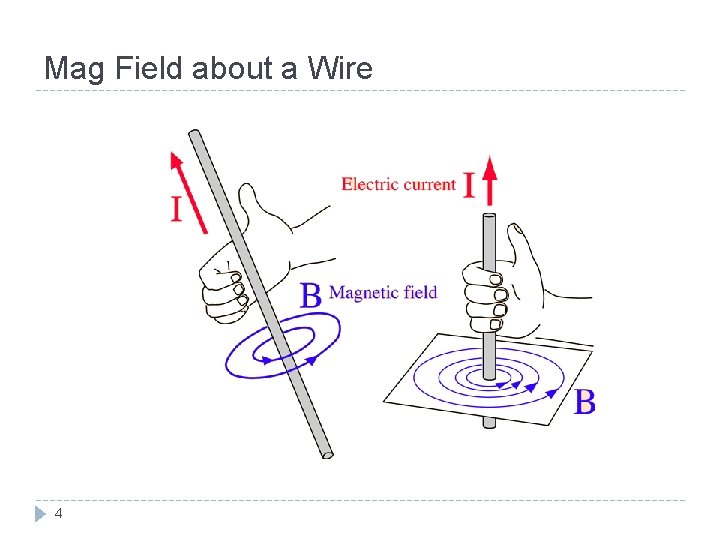
Mag Field about a Wire 4
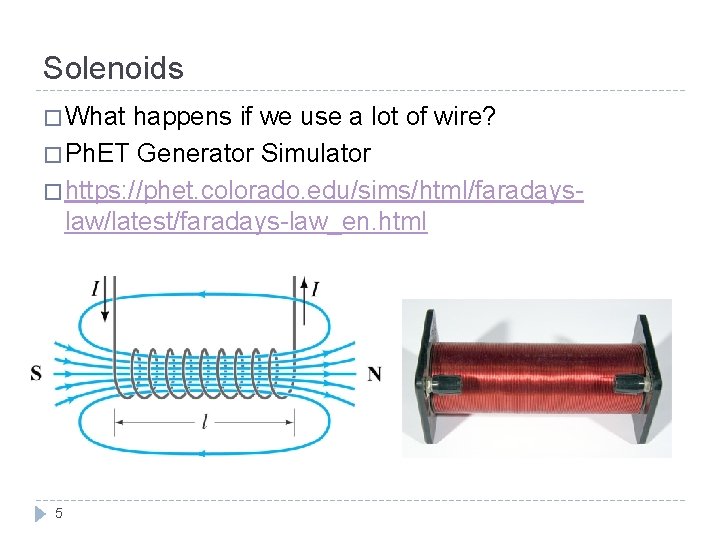
Solenoids � What happens if we use a lot of wire? � Ph. ET Generator Simulator � https: //phet. colorado. edu/sims/html/faradayslaw/latest/faradays-law_en. html 5
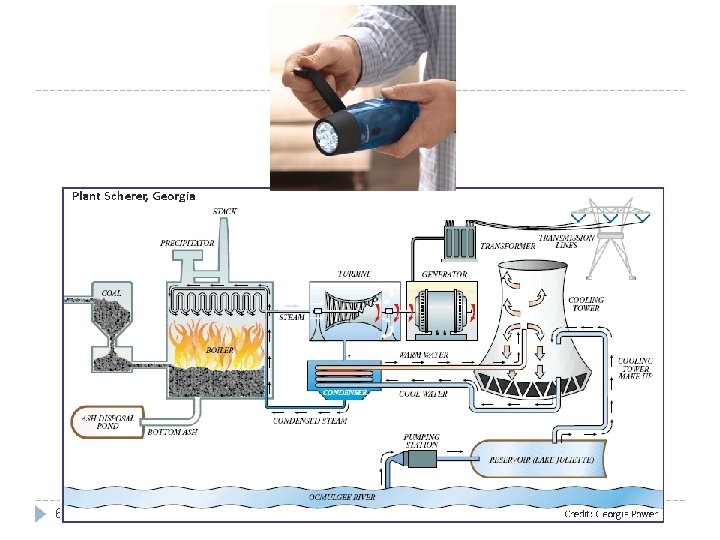
6
Now back to business… 7
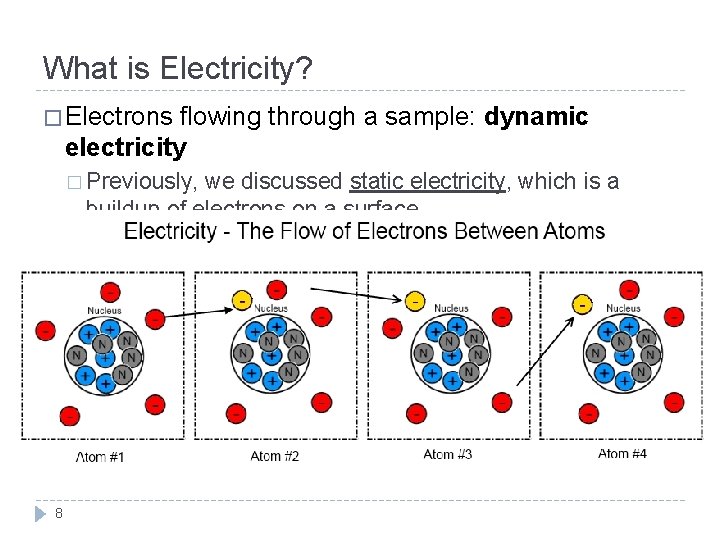
What is Electricity? � Electrons flowing through a sample: dynamic electricity � Previously, we discussed static electricity, which is a buildup of electrons on a surface 8
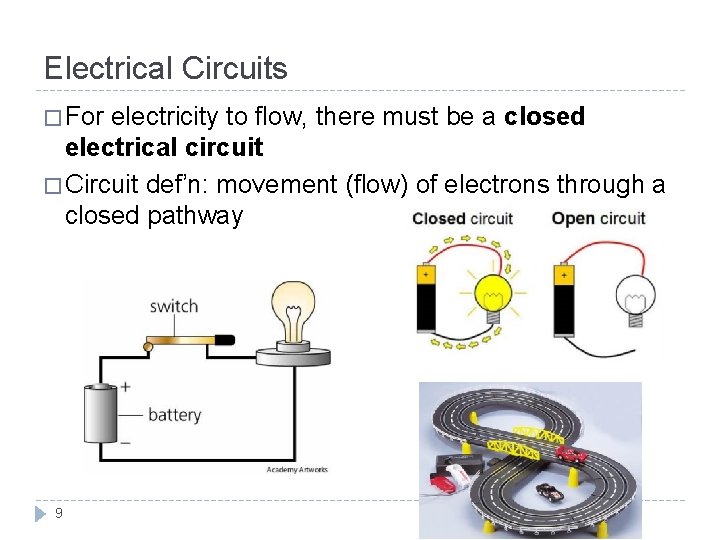
Electrical Circuits � For electricity to flow, there must be a closed electrical circuit � Circuit def’n: movement (flow) of electrons through a closed pathway 9
Describing Electrical Circuits � In order to properly analyze and investigate electrical phenomenon, we must first define certain variables 10
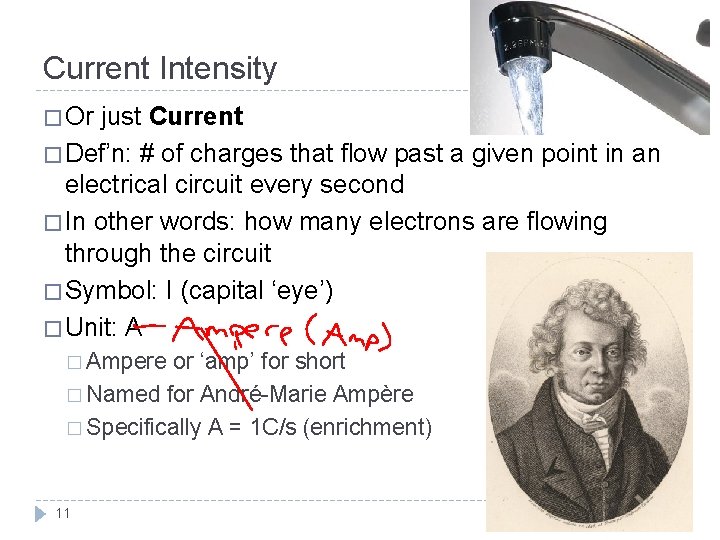
Current Intensity � Or just Current � Def’n: # of charges that flow past a given point in an electrical circuit every second � In other words: how many electrons are flowing through the circuit � Symbol: I (capital ‘eye’) � Unit: A � Ampere or ‘amp’ for short � Named for André-Marie Ampère � Specifically A = 1 C/s (enrichment) 11
Potential Difference � More commonly just called: VOLTAGE � Def’n: Amount of energy transferred between two points in an electrical circuit � In other words: what’s the ‘difference’ between two points on this circuit (not really a good definition) � Actually, the proper definition is a bit more advanced: � Suppose you have a electrical field, the voltage is equal to the work done per unit charge to move the test charge between two points � In other words… suppose you have a field and you want to move an electron from point a to b, the voltage is what you need to do 12
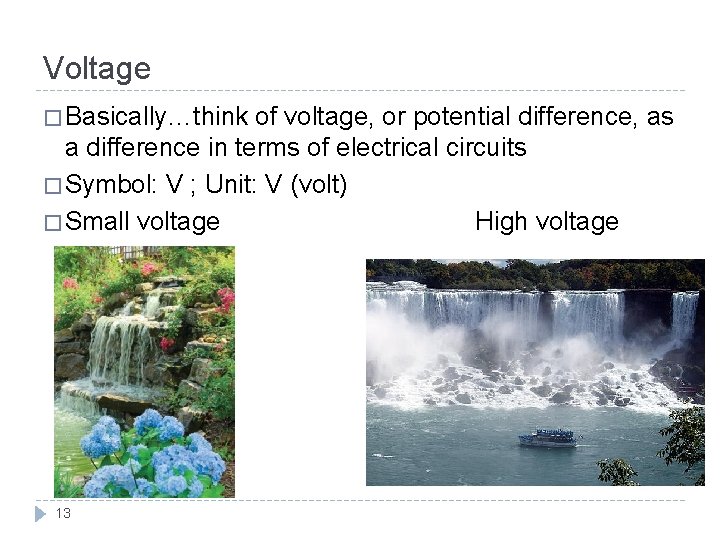
Voltage � Basically…think of voltage, or potential difference, as a difference in terms of electrical circuits � Symbol: V ; Unit: V (volt) � Small voltage High voltage 13
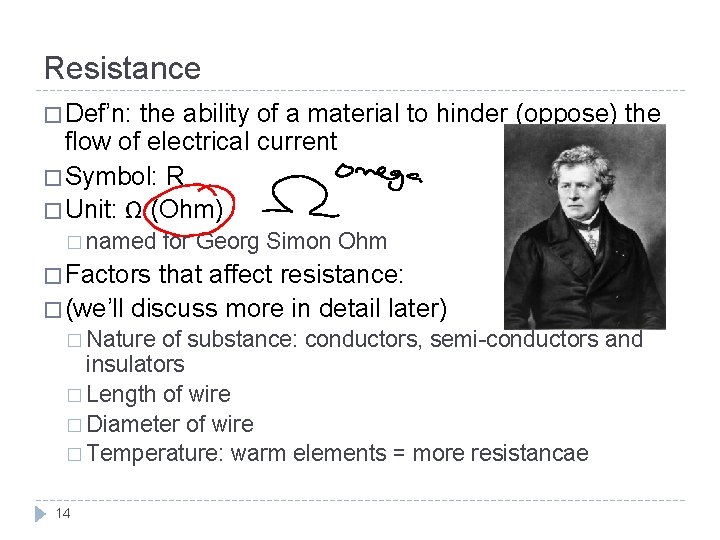
Resistance � Def’n: the ability of a material to hinder (oppose) the flow of electrical current � Symbol: R � Unit: Ω (Ohm) � named for Georg Simon Ohm � Factors that affect resistance: � (we’ll discuss more in detail later) � Nature of substance: conductors, semi-conductors and insulators � Length of wire � Diameter of wire � Temperature: warm elements = more resistancae 14
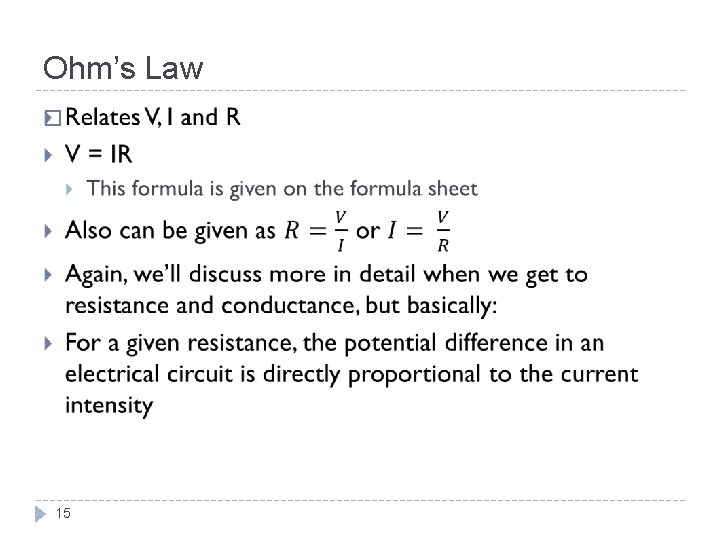
Ohm’s Law � 15
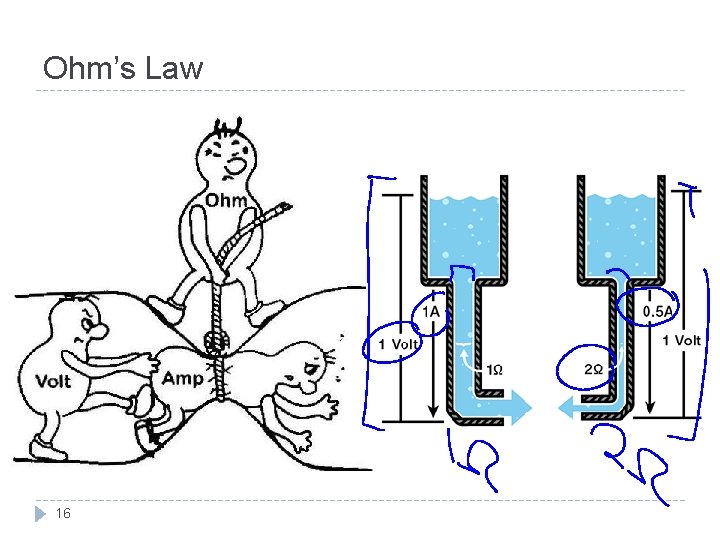
Ohm’s Law 16