
Electricity electricity begins at the atomic level nucleus
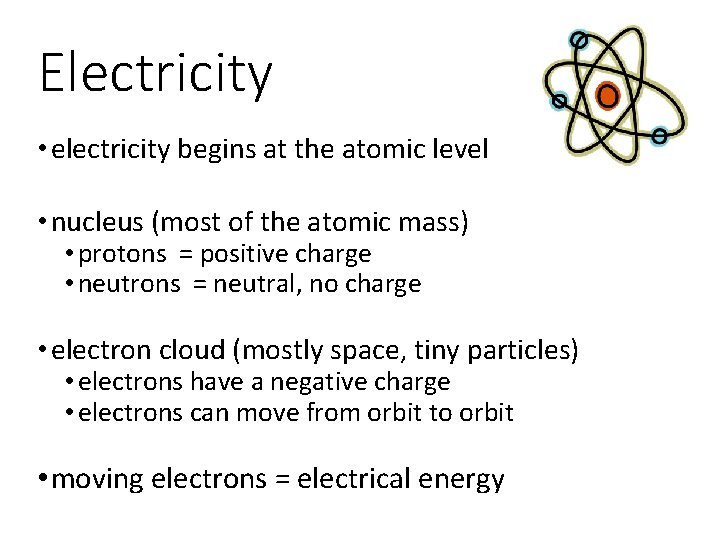
Electricity • electricity begins at the atomic level • nucleus (most of the atomic mass) • protons = positive charge • neutrons = neutral, no charge • electron cloud (mostly space, tiny particles) • electrons have a negative charge • electrons can move from orbit to orbit • moving electrons = electrical energy
Electricity • atoms may gain or lose electrons without changing the substance • only a change in protons changes the type of element • gain electrons = same atom, negative charge • lose electrons = same atom, positive charge
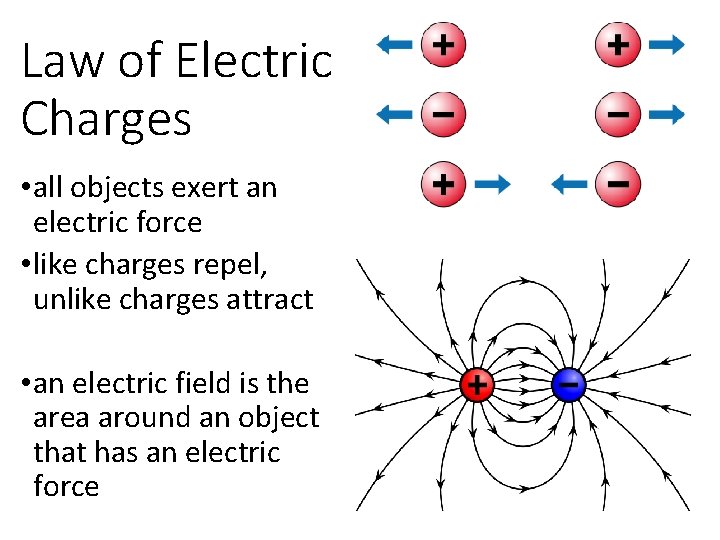
Law of Electric Charges • all objects exert an electric force • like charges repel, unlike charges attract • an electric field is the area around an object that has an electric force
Electrical Charge • friction • if you rub one material against another, electrons will transfer • ex. socks on carpet • conduction • if a charged object touches a conductor, electrons will be transferred • induction • if a charged object is brought near a conductor and if the conductor is grounded, electrons will transfer
Types of Electricity • current electricity • the flow of electrons through a material • static electricity • separation of protons and electrons • build up of charges in one place, no pathway to flow • causes of static • friction (balloon on hair, hats on hair, clothes in the dryer, shoes/socks on carpet) • air movement inside clouds (lightning is the discharge) • discharge – when the build up gets a pathway, the electrons moves rapidly

Electric Currents • the flow of electric charges (electrons) • electrons flow from areas of higher concentration to areas of lesser concentration
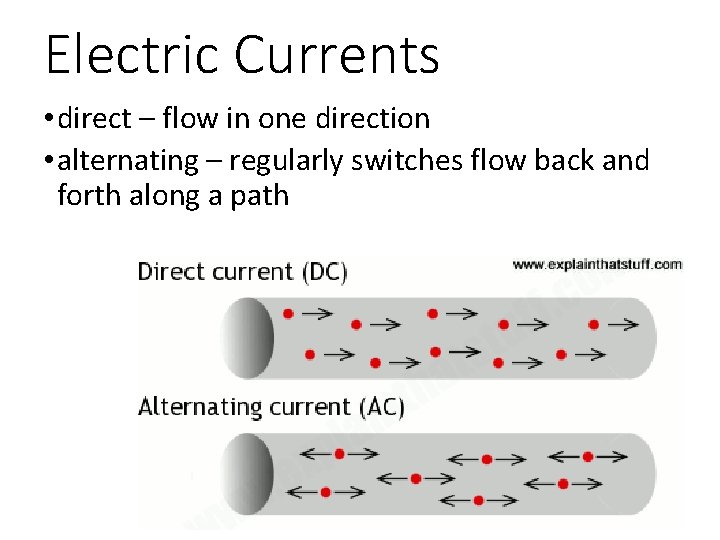
Electric Currents • direct – flow in one direction • alternating – regularly switches flow back and forth along a path
Alternating Current and Direct Current • direct current • electron flow in one direction only • used in batteries and solar cells • always have a positive terminal and a negative terminal • alternating current • electron flow periodically reverses its path • most often used for businesses and residences • audio and radio signals also use alternating current • enables the use of transformers • the ability to change current from high voltage to low voltage as needed • 1 million customers vs. 1 thousand customers
Electrical Circuit • a pathway through which electricity can flow • open or incomplete circuit • energy can not flow in an incomplete path • ex. light switch is off, circuit open, light is off • ex. light bulb burned out • closed or complete circuit • energy follows a complete path from its source through a conductor and back again • ex. light switch is on, circuit closed, light is on
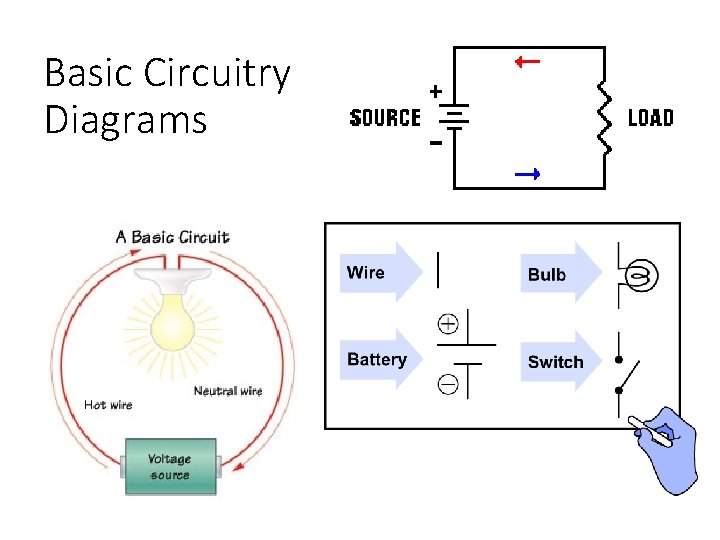
Basic Circuitry Diagrams
Parts of a Circuit - Must Haves • energy source • provides power for circuit • ex. battery (chemical reaction) • ex. generator (mechanical, magnetic) • load • a device that operates using electrical energy • ex. light bulb, i. Pod, phone, hair dryer, motor • conductor • material that allows electrical energy to flow • ex. wires
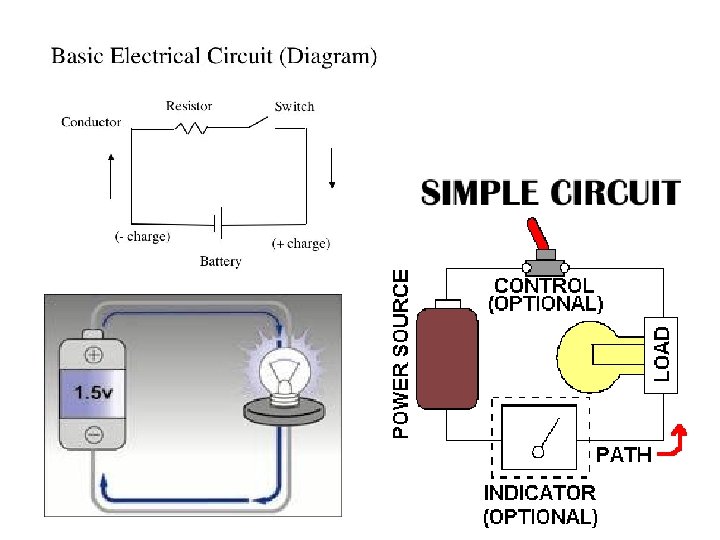
Parts of a Circuit - Extras • resistor • an object added to a circuit that restricts flow of energy • helps control electrical energy • may convert electricity to another form of energy • switch • device used to control flow of current • opens or closes circuit • used to stop current when not needed
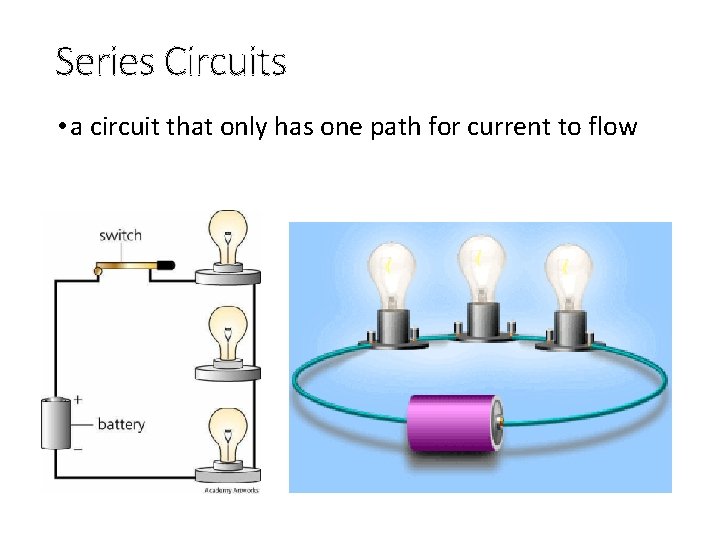
Series Circuits • a circuit that only has one path for current to flow
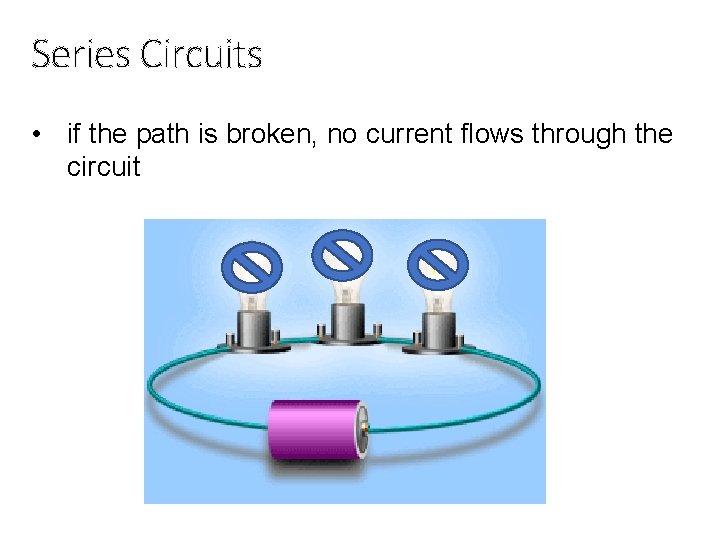
Series Circuits • if the path is broken, no current flows through the circuit
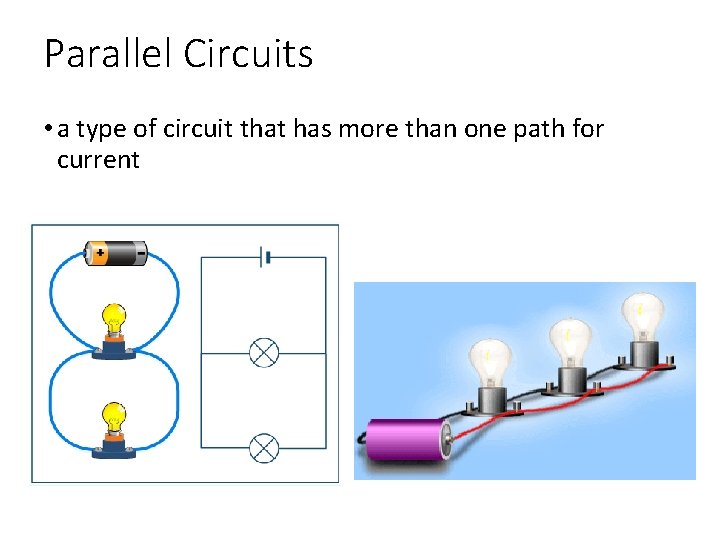
Parallel Circuits • a type of circuit that has more than one path for current
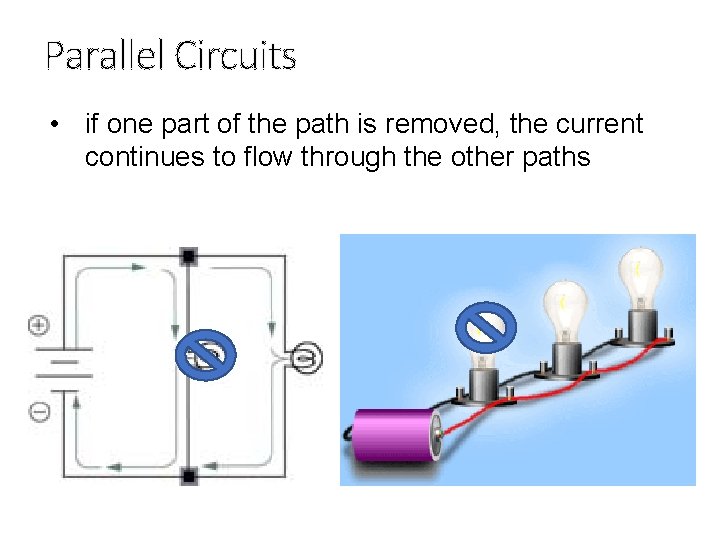
Parallel Circuits • if one part of the path is removed, the current continues to flow through the other paths
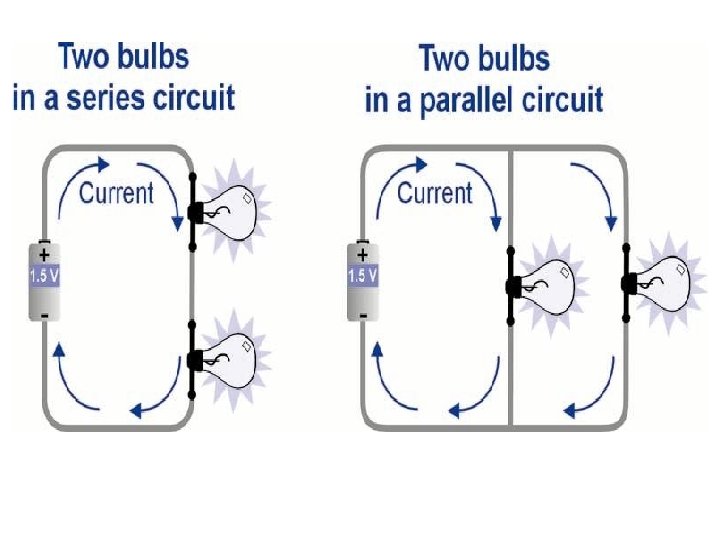
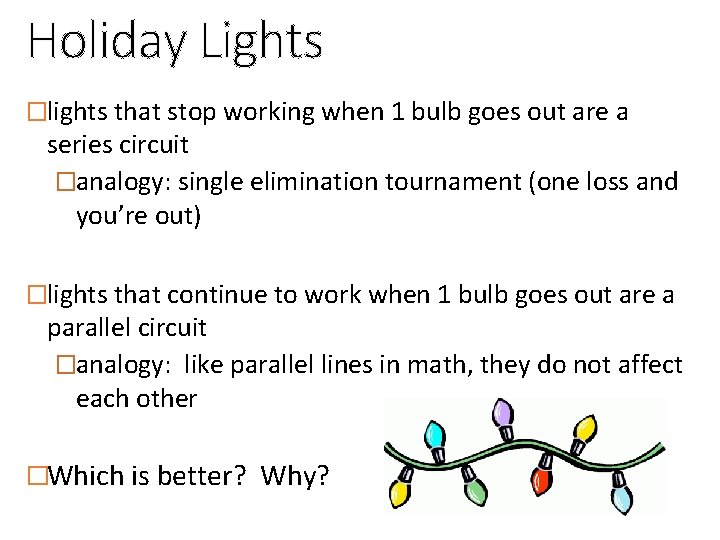
Holiday Lights �lights that stop working when 1 bulb goes out are a series circuit �analogy: single elimination tournament (one loss and you’re out) �lights that continue to work when 1 bulb goes out are a parallel circuit �analogy: like parallel lines in math, they do not affect each other �Which is better? Why?
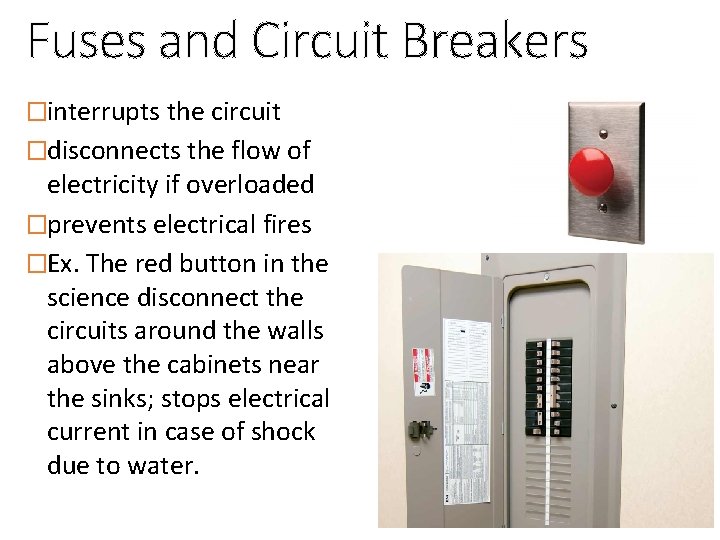
Fuses and Circuit Breakers �interrupts the circuit �disconnects the flow of electricity if overloaded �prevents electrical fires �Ex. The red button in the science disconnect the circuits around the walls above the cabinets near the sinks; stops electrical current in case of shock due to water.
Electrical Discharge • rapid movement of excess charge from one place to another • ex. lightning, carpet shocks • Grounding • provides a pathway to drain excess charge into the Earth • lightning rods provide grounding for many buildings • Why would you NOT want to be the only one on a beach or golf course during a thunderstorm? Lightning video - https: //www. sciencefriday. com/educationalresources/lets-make-some-static/
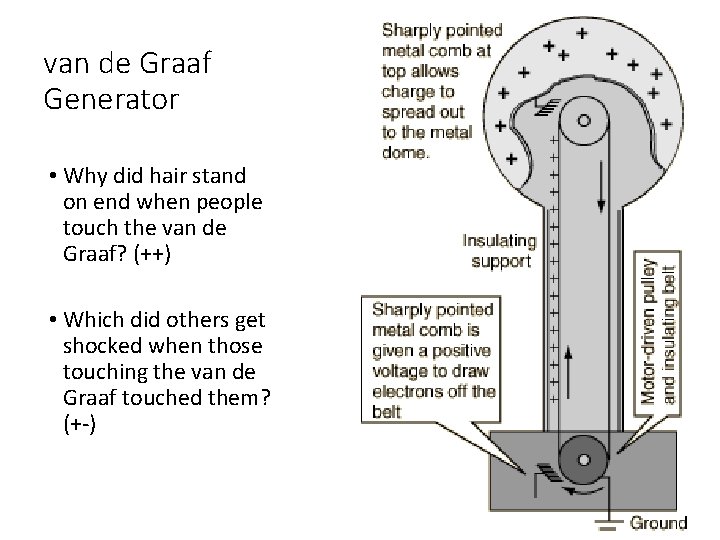
van de Graaf Generator • Why did hair stand on end when people touch the van de Graaf? (++) • Which did others get shocked when those touching the van de Graaf touched them? (+-)
Electricity Flow • Insulator • material which does not allow electrons to move easily • non-metals • Conductor • material that allows electrons to move easily • metals • Resistor • slows the flow of electricity • “electrical friction” • depends on the material, thickness, length, temperature
Measuring Electricity • Voltage “V” (volts) • the difference in the charge of two objects • the electrical potential difference between two points • the electrical pressure or tension between two points • Current “I” ( amperes or amp) • how fast the flow of electrons is moving • Resistance “Ω” or “R” - measured in Ohms • a material’s tendency to resist the flow of charges • Ohm’s Law I = V/R • the current is the ratio of voltage to resistance • current = amount of pressure / amount of resistance
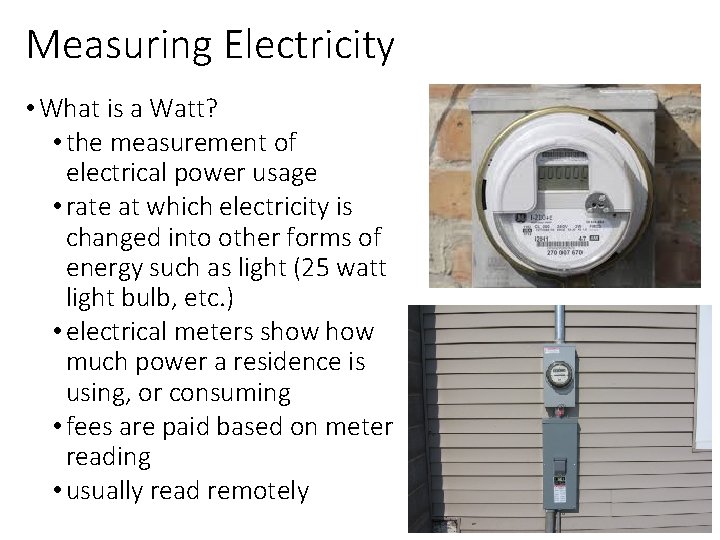
Measuring Electricity • What is a Watt? • the measurement of electrical power usage • rate at which electricity is changed into other forms of energy such as light (25 watt light bulb, etc. ) • electrical meters show much power a residence is using, or consuming • fees are paid based on meter reading • usually read remotely
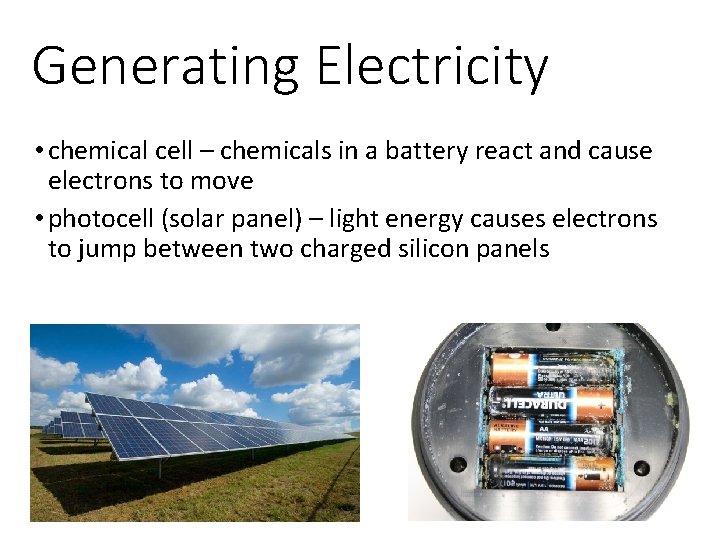
Generating Electricity • chemical cell – chemicals in a battery react and cause electrons to move • photocell (solar panel) – light energy causes electrons to jump between two charged silicon panels
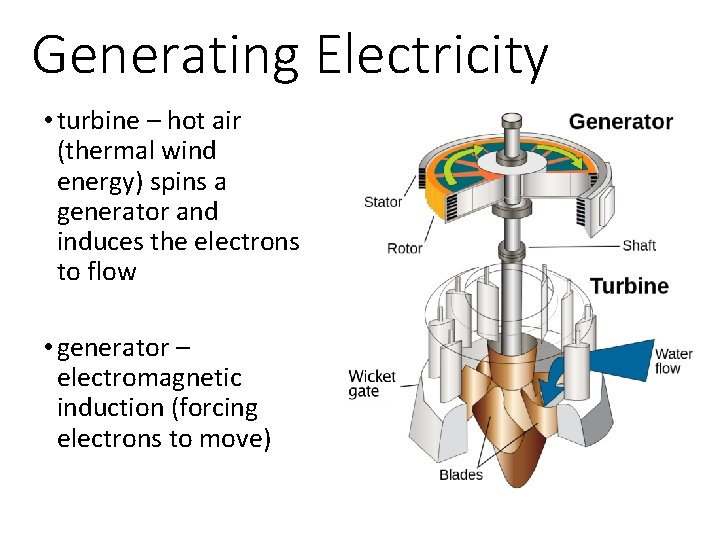
Generating Electricity • turbine – hot air (thermal wind energy) spins a generator and induces the electrons to flow • generator – electromagnetic induction (forcing electrons to move)
Generating Electricity • hydroelectric
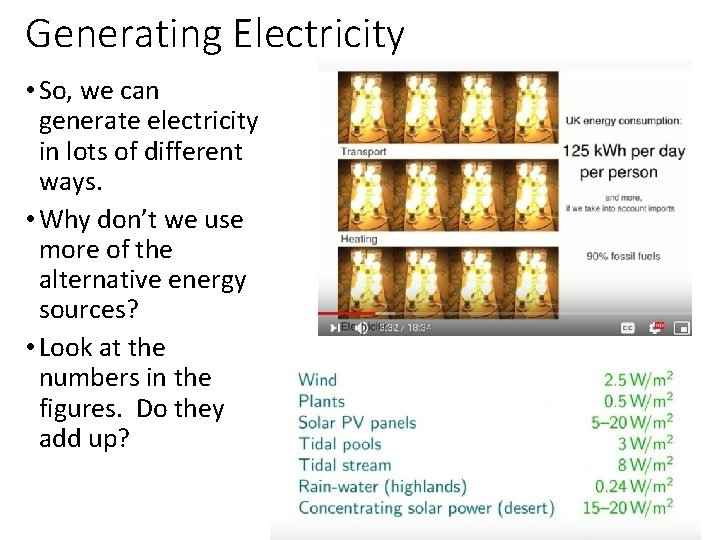
Generating Electricity • So, we can generate electricity in lots of different ways. • Why don’t we use more of the alternative energy sources? • Look at the numbers in the figures. Do they add up?
Summary • What is the matter? electrons • What is the energy? the movement of electrons • What is the force? attraction or repulsion based on charge • How is electricity both our friend and our enemy? many, many uses, but must be careful with it (can harm or kill you)
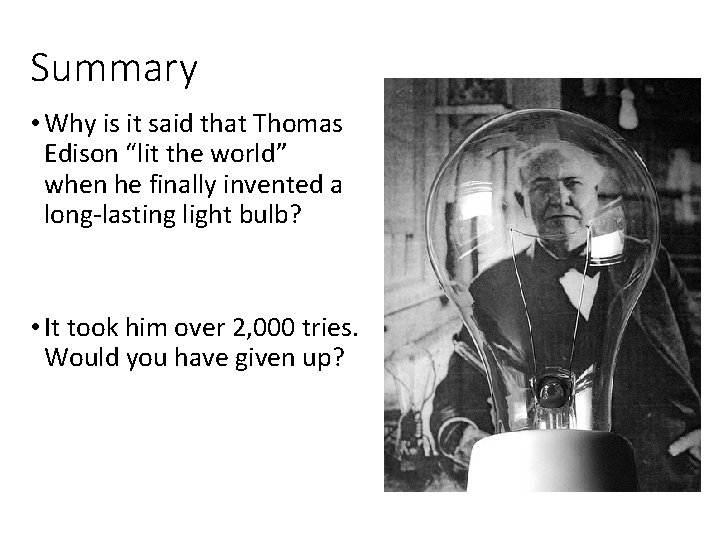
Summary • Why is it said that Thomas Edison “lit the world” when he finally invented a long-lasting light bulb? • It took him over 2, 000 tries. Would you have given up?
- Slides: 31