
ELECTRICITY Brief Overview What do we know What
ELECTRICITY
Brief Overview: What do we know? �What is electricity? �Electricity is a form of energy produced by the movement of electrons. Electricity is electrical power or an electric current. This form of energy can be sent through wires in a flow of tiny particles. It is used to produce light and heat and to run motors. �Electricity is a basic feature of all matter, of everything in the universe. Electrical force holds atoms and molecules together. Electricity determines the structure of every object that exists. Together with magnetism, it causes a force called electromagnetism, a fundamental force of the universe.
What is electricity? � Electricity or electrical signals are essential to many biological processes. In our bodies, electrical signals are carried through the nervous system, moving information to and from the brain. Electrical signals communicate to our brain what the eyes see, what the ears hear, and what the fingers feel. Electrical signals from our brain causes our muscle movements. Electrical signals cause each heartbeat. � One of the most important forms of electricity is in electrical current. During the industrial revolution of the 1800 s, people began to find ways to use electricity to do work. Today electricity is used throughout our homes, at work, in communication, in transportation, and in medicine and science. Electrically powered devices are prevalent. Relatively cheap electricity has made electrical appliances, machines, and other devices possible
Electricity �http: //www. youtube. com/watch? v=WDW 0 Iqw. MK 00 � 40 s – 3: 15 m
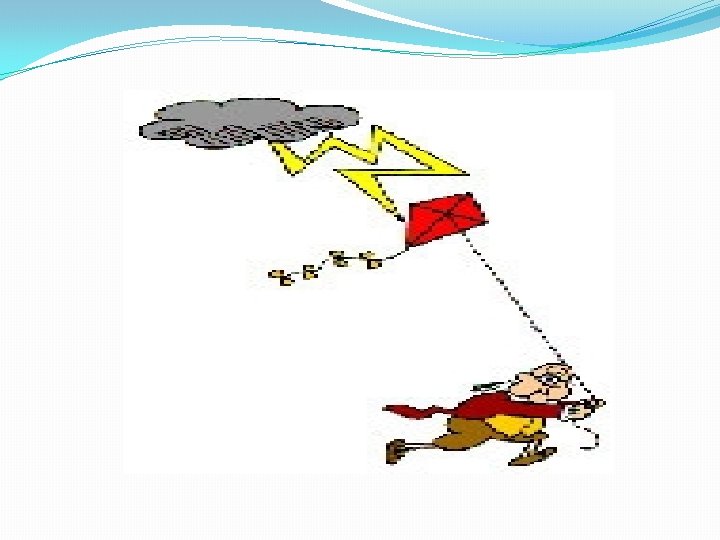
History of electricity �Maybe you have heard about the famous kite experiment by American Founding Father and inventor Benjamin Franklin. In 1752, to prove that lightning was electrical, he flew a kite during a thunderstorm. �He tied a metal key onto the string and, as he suspected it would, electricity from the storm clouds flowed down the string, which was wet, and he received an electrical shock. Franklin was extremely lucky not to have been seriously hurt during this experiment, but he was excited to have proved his idea. �Throughout the next hundred years, many inventors and scientists tried to find a way to use electrical power to make light. In 1879, the American inventor Thomas Edison was finally able to produce a reliable, long-lasting electric light bulb in his laboratory.
BRAINSTORM �Importance of electricity today? �What are some main sources of electricity? Where does it come from? �How can we conserve energy? �Imagine life 200 years ago, without electrical devices. What would you miss the most? �Describe a day in your life with no electricity.
SAFETY FIRST � If you are touching water, never touch electrical devices such as light switches, hair dryers, curling irons, mixers, or toasters. � Don't pull on electric cords to unplug them. � Keep kites away from power lines, and never fly metallic balloons outside. � Don't put your fingers in a light bulb socket. � If you see a fallen electrical wire, stay away! � Disconnect appliances before cleaning them. � Tell someone if you see a frayed cord. � Don't swim during an electrical storm. � Don't touch overhead wires when you're carrying a ladder, pool skimmer, or any other long object. � Don't climb a tree that has power lines running through or near it. � Don't use an electrical appliance when you're wet. � Tell your parents about damaged plugs and cords on outdoor and indoor appliances. � Don't touch anyone or anything that is touching a downed wire.
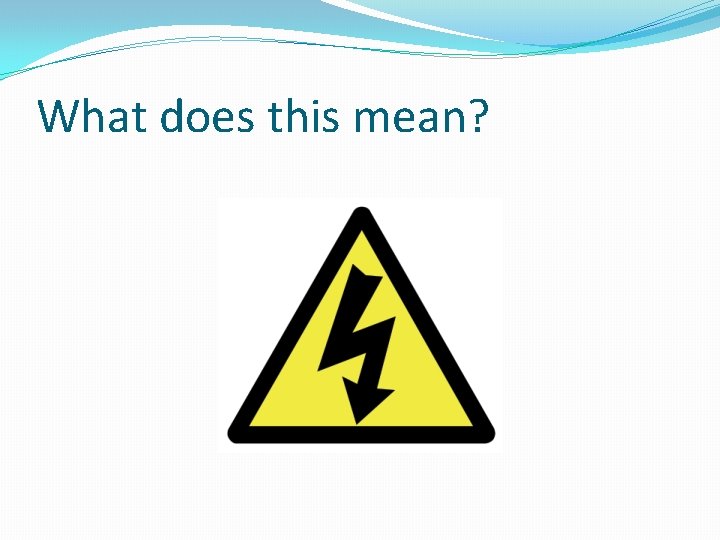
What does this mean?
Definitions � Conductors � Materials that transmit heat, sound, or electricity � Electrocution � Being killed by a strong electric current � Generated � Made or produced � Insulators � Materials used as lining or covering to keep heat or sound in or out � Outlet � A place in a wall for inserting an electric plug � Sparks � Flashes of light given off when electrons jump across an open space � Transform � Change in nature or character � Transmission � The fact of passing or sending along
Definitions � Atoms � The smallest part of an element; made up of protons, neutrons and electrons � Charge � A supply of electrical energy � Electrons � Very tiny particles that carry a negative electric charge; are outside the nucleus of every type of atom � Negative � Having more electrons than protons � Positive � Having an electric charge opposite to that of an electron � Protons � Very tin y particles that have a positive electric charge � Repel � Force back or away � Static � To do with stationary electrical charges that balance each other
Static Electricity �http: //www. youtube. com/watch? v=YFe. Fsw 3 Ht 2 c&fea ture=related � 40 s-4: 40 m
LETS GET STARTED �You may be asking: “What are all of these things in front of me? ”
Supplies �D Cell Battery �Battery Holder �Wire Strippers �Switch �Light Bulb Holder �Screw Driver �Alligator Clips
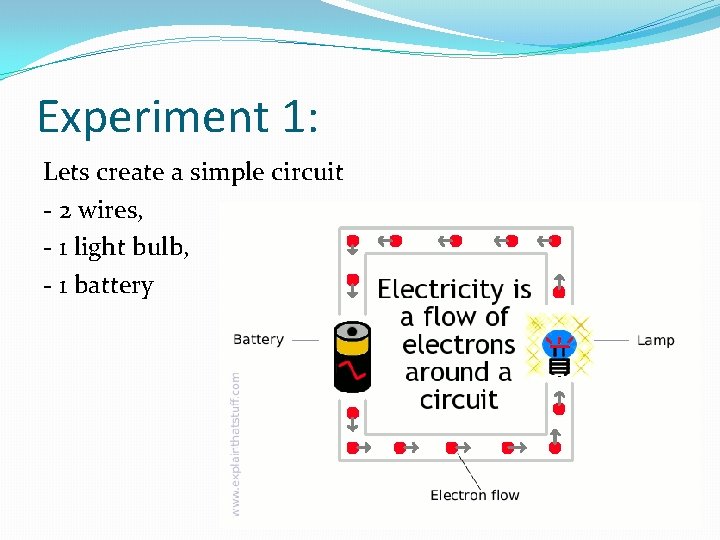
Experiment 1: Lets create a simple circuit - 2 wires, - 1 light bulb, - 1 battery
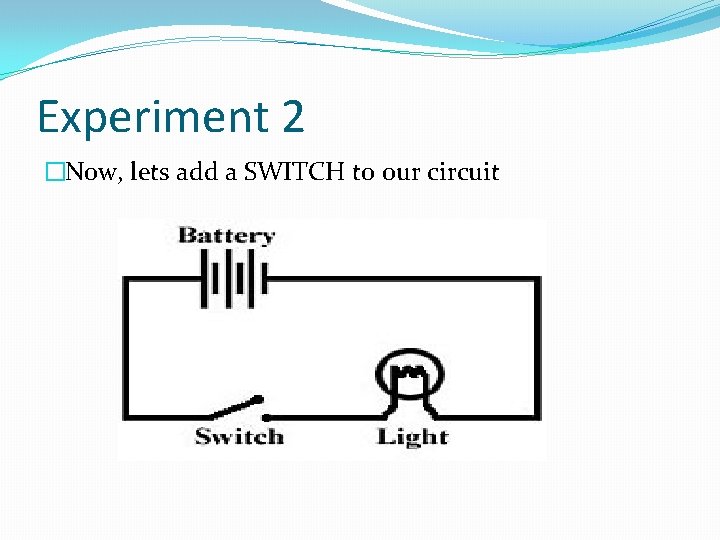
Experiment 2 �Now, lets add a SWITCH to our circuit
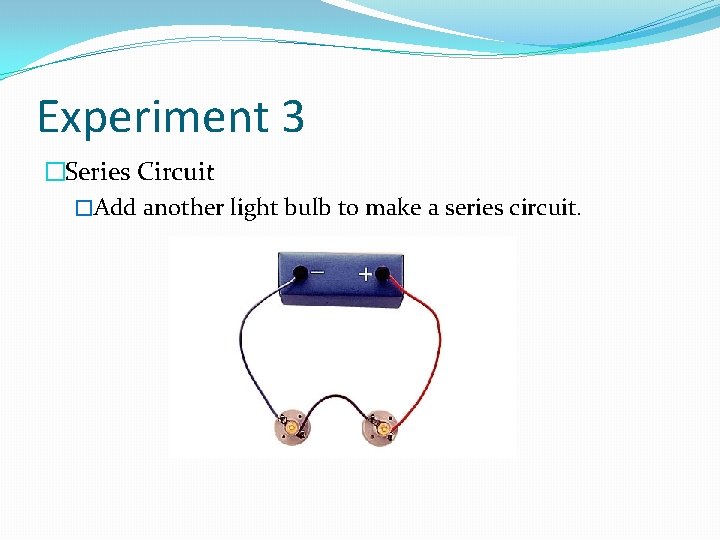
Experiment 3 �Series Circuit �Add another light bulb to make a series circuit.
Experiment 3 continued. . . �Current = Voltage/Resistance �Q: What happens when the extra bulb is added? � Because the work (resistance) the circuit has to do is increased � Lets unscrew a bulb to find out what happens? � As RESISTANCE goes UP the CURRENT goes DOWN � As RESISTANCE goes DOWN the CURRENT goes UP
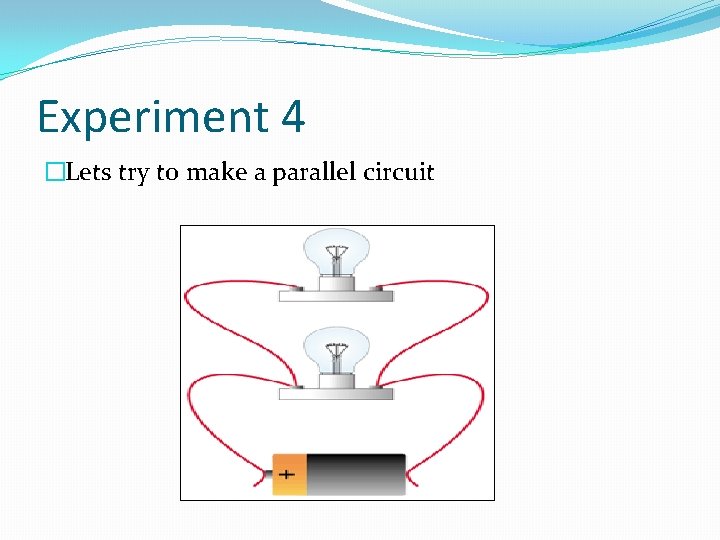
Experiment 4 �Lets try to make a parallel circuit
Experiment 4 continued. . . �Do you think you could add more light bulbs to each circuit? �How many light bulbs do you think you could add to each circuit? �Do you think you will notice any change in the brightness of the bulbs as more added? �Why do you think this happens? � Unscrew one – what happens?
Reflect �Why do you think the light bulbs stayed brightly lit in the parallel circuit and not so much in the series circuit? �In the series circuit, as each light is added the brightness of each bulb decreases to the point where none of the bulbs glows. This is because the electricity must flow through the filament wire inside each bulb in a series circuit, the bulbs themselves become part of the electrical current flow. When extra bulbs are added, the electrical current flow decreases and the bulbs dim. �This is a disadvantage of the series circuit
Reflect �So what about the parallel circuit? �The same result does not occur when extra bulbs are added. All of the electrical current does not have to flow through one light bulb to get to the next one. Instead, current flows equally through all the light bulbs at the same time and the brightness of the bulbs remain constant. �This is the advantage of the parallel circuit.
Experiment 5 �Lets find out what a CONDUCTOR, INSULATOR, and RESTRICTOR are. �Using your created battery station, lets test out a few objects to see what they have to offer. �Record your results
- Slides: 24