
Electricity and Magnetism I Griffiths Chapter 1 Vector
- Slides: 55
Electricity and Magnetism I Griffiths Chapter 1 Vector Analysis
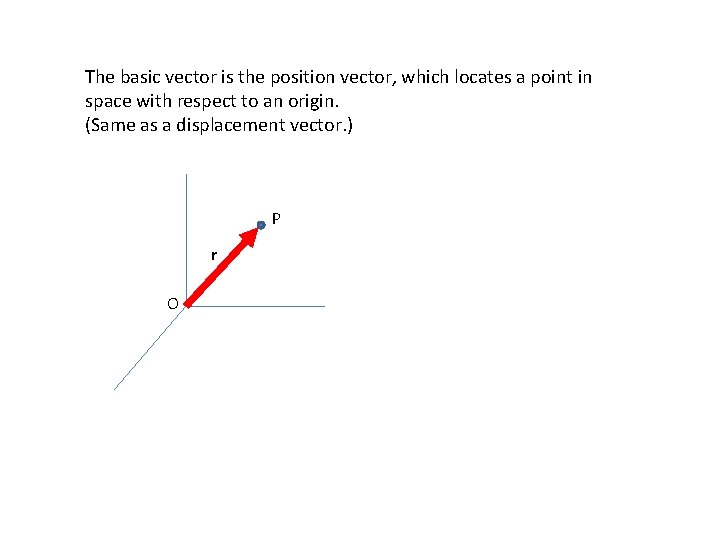
The basic vector is the position vector, which locates a point in space with respect to an origin. (Same as a displacement vector. ) P r O
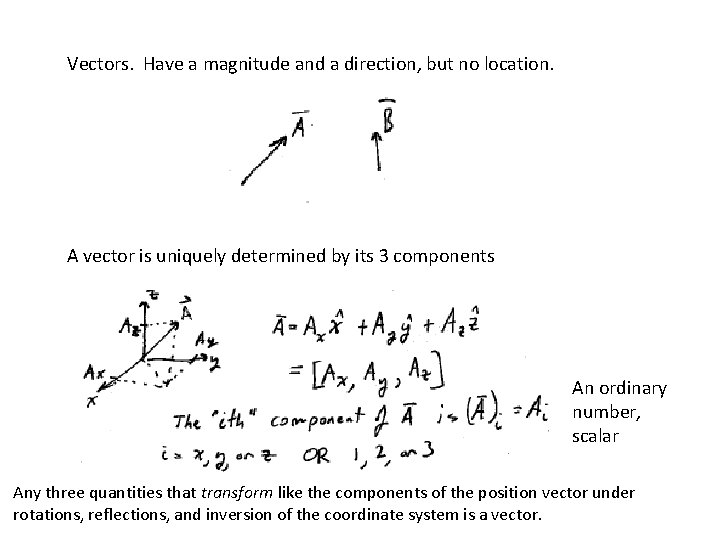
Vectors. Have a magnitude and a direction, but no location. A vector is uniquely determined by its 3 components An ordinary number, scalar Any three quantities that transform like the components of the position vector under rotations, reflections, and inversion of the coordinate system is a vector.
How does r = (x, y, z) transform under inversion? Under reflection in the yz plane? (Rotations will be considered later. ) Is (x 2, y, z) a vector?
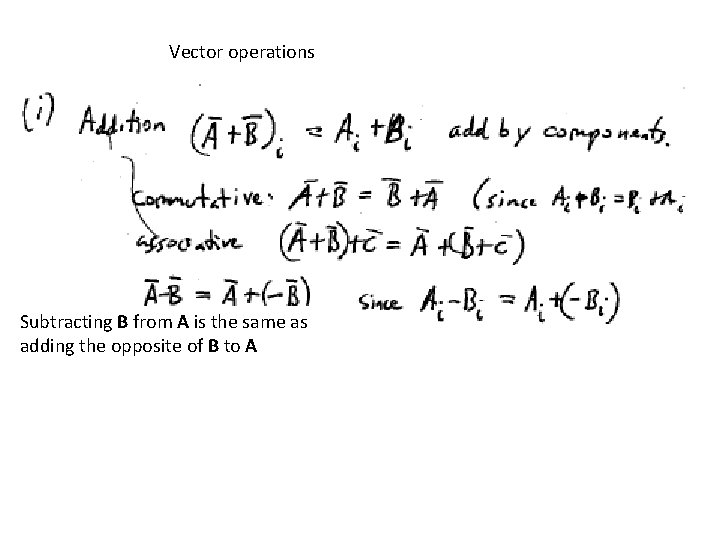
Vector operations Subtracting B from A is the same as adding the opposite of B to A
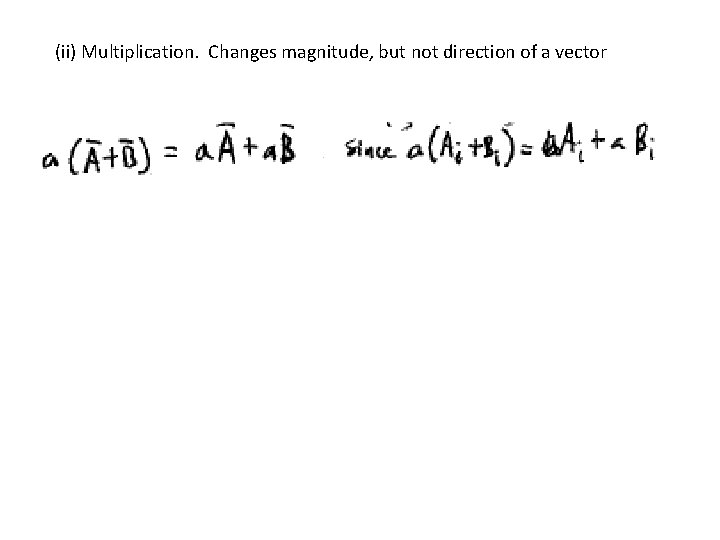
(ii) Multiplication. Changes magnitude, but not direction of a vector
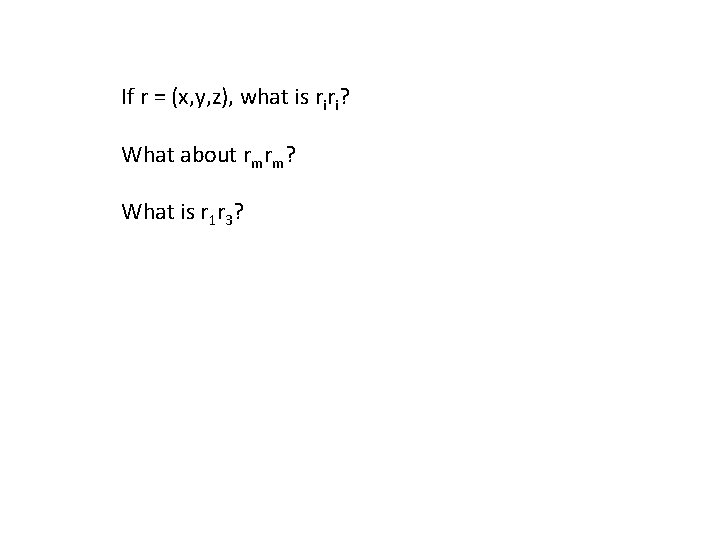
If r = (x, y, z), what is riri? What about rmrm? What is r 1 r 3?
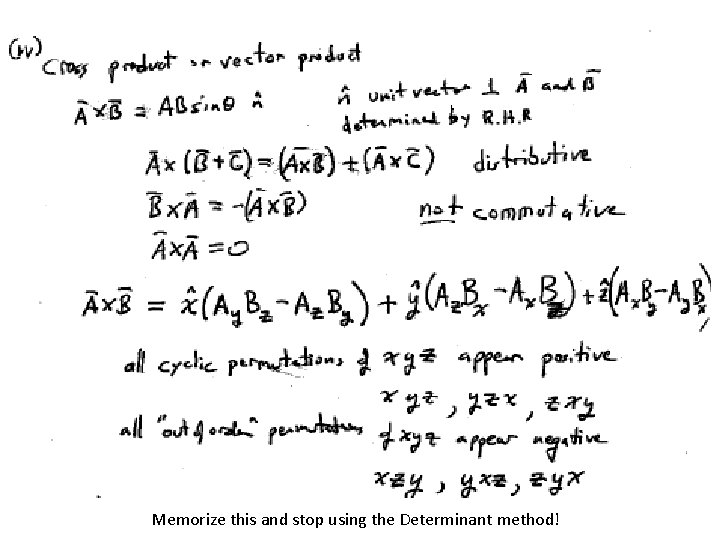
Memorize this and stop using the Determinant method!
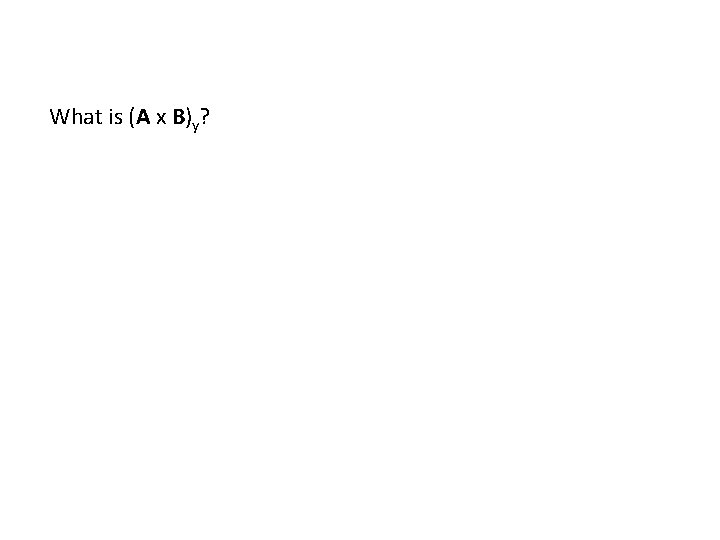
What is (A x B)y?
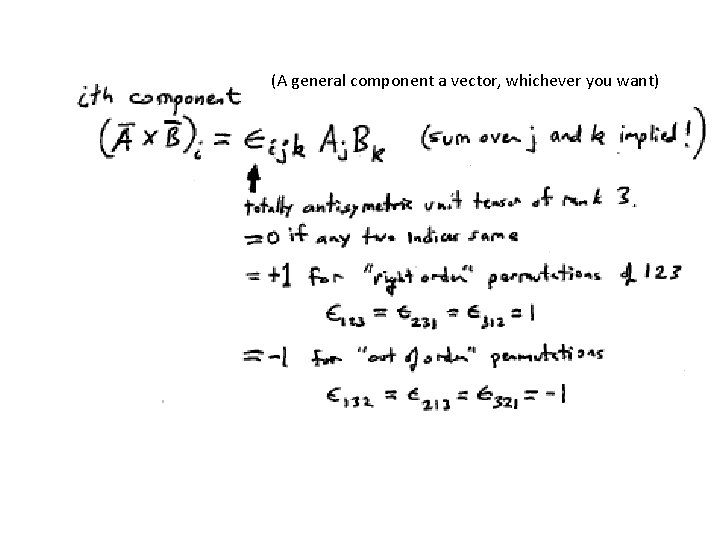
(A general component a vector, whichever you want)
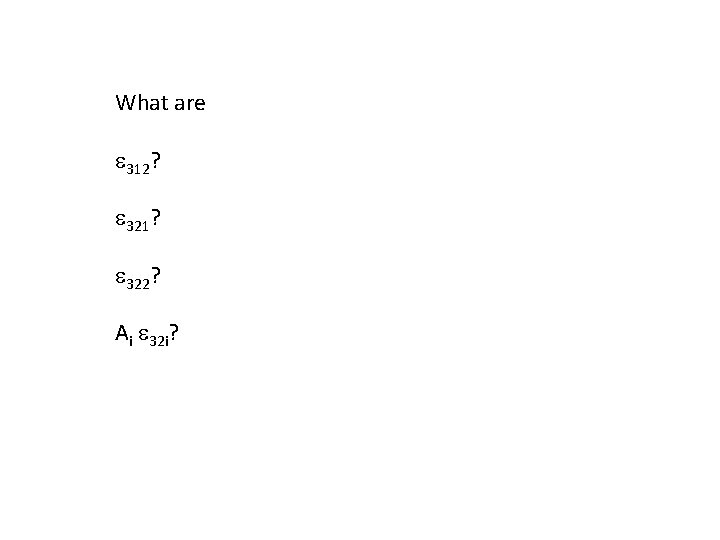
What are e 312? e 321? e 322? Ai e 32 i?
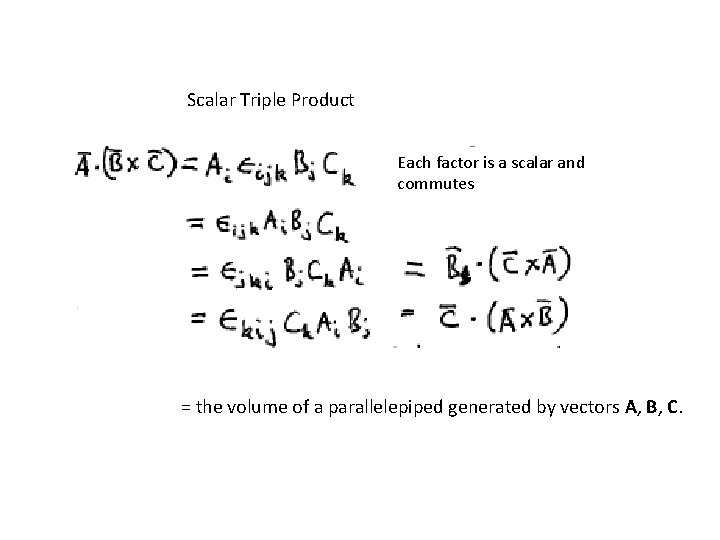
Scalar Triple Product Each factor is a scalar and commutes = the volume of a parallelepiped generated by vectors A, B, C.
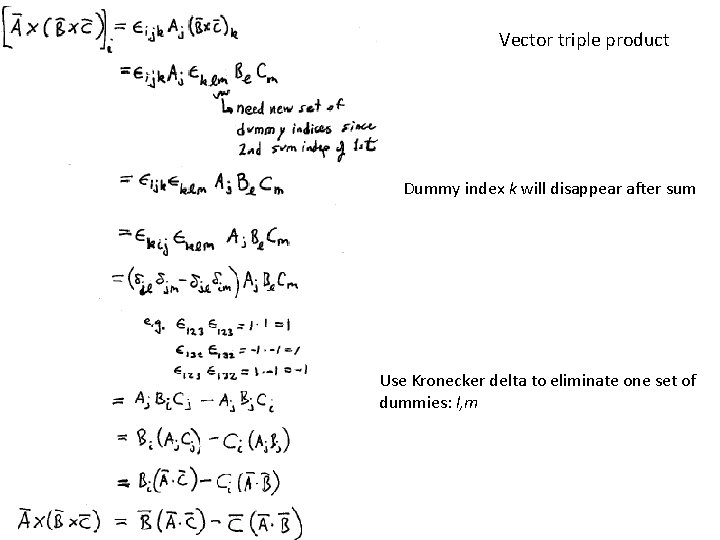
Vector triple product Dummy index k will disappear after sum Use Kronecker delta to eliminate one set of dummies: l, m
Any vector identity takes half a page of algebra using the eijk method. No need for tables or memorization. Derive them every time. Learn it!
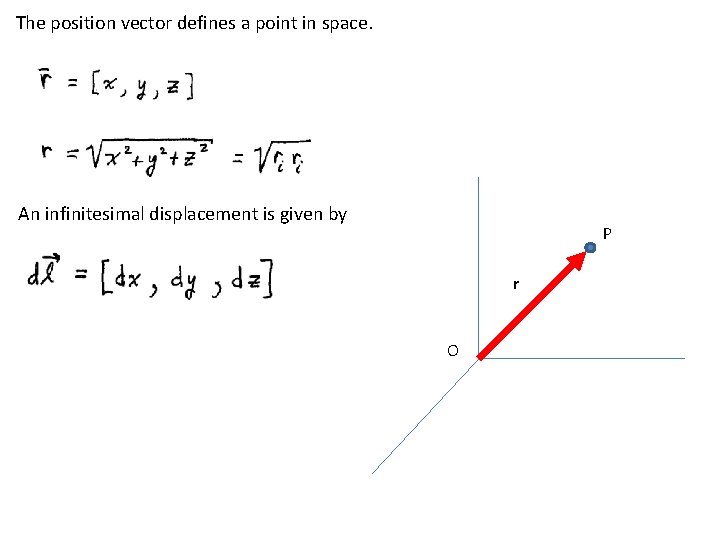
The position vector defines a point in space. An infinitesimal displacement is given by P r O
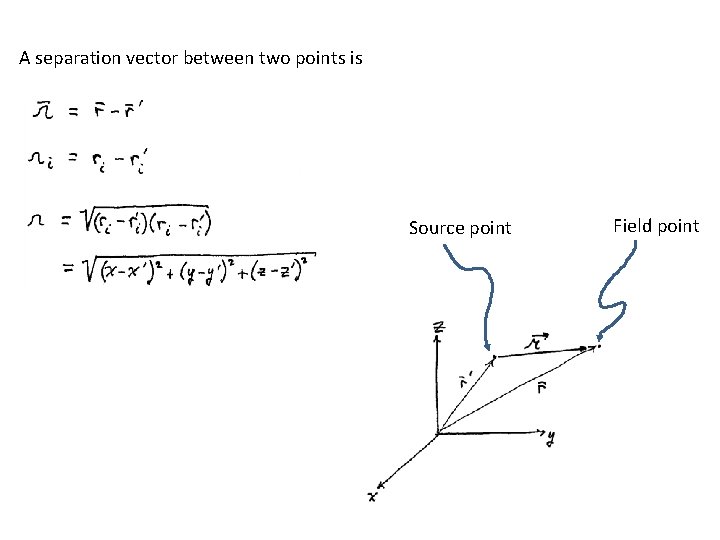
A separation vector between two points is Source point Field point
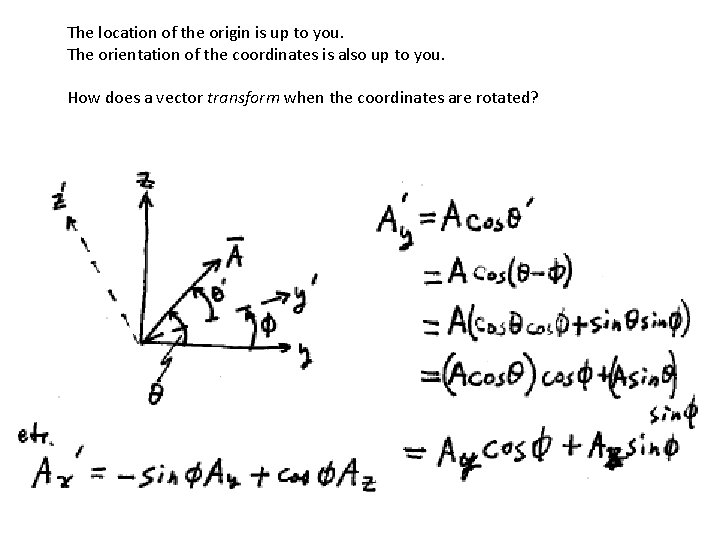
The location of the origin is up to you. The orientation of the coordinates is also up to you. How does a vector transform when the coordinates are rotated?
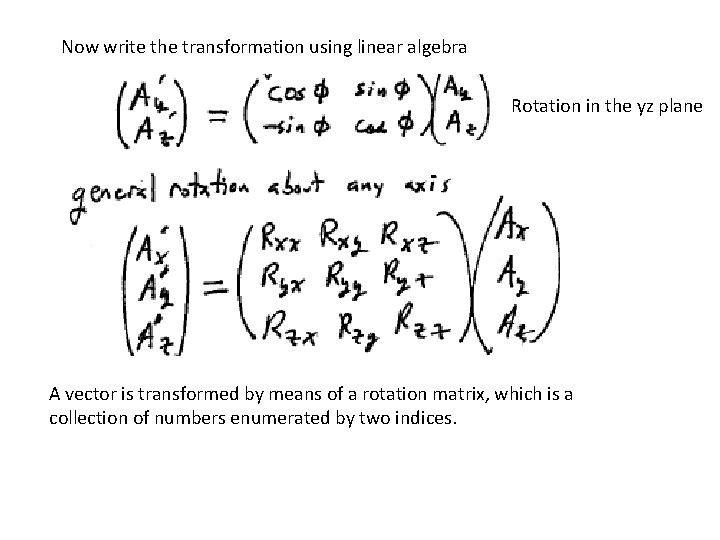
Now write the transformation using linear algebra Rotation in the yz plane A vector is transformed by means of a rotation matrix, which is a collection of numbers enumerated by two indices.
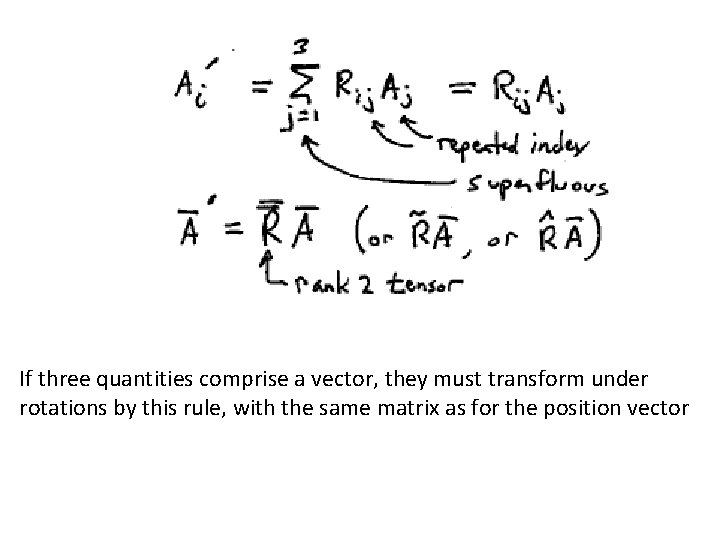
If three quantities comprise a vector, they must transform under rotations by this rule, with the same matrix as for the position vector
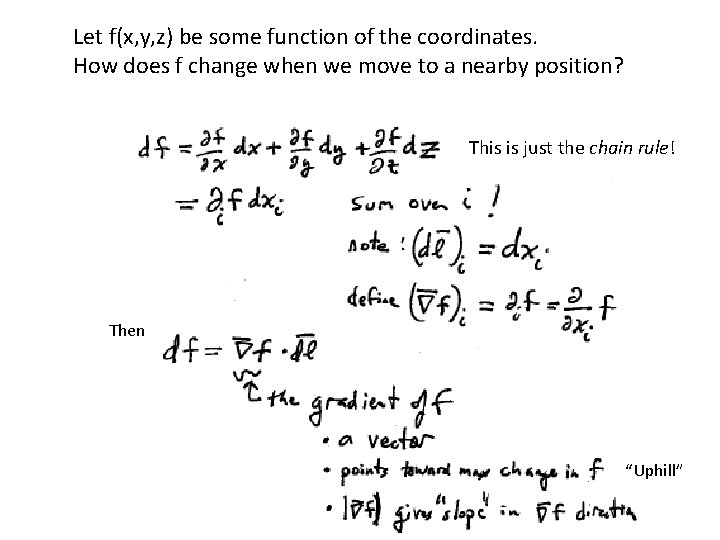
Let f(x, y, z) be some function of the coordinates. How does f change when we move to a nearby position? This is just the chain rule! Then “Uphill”
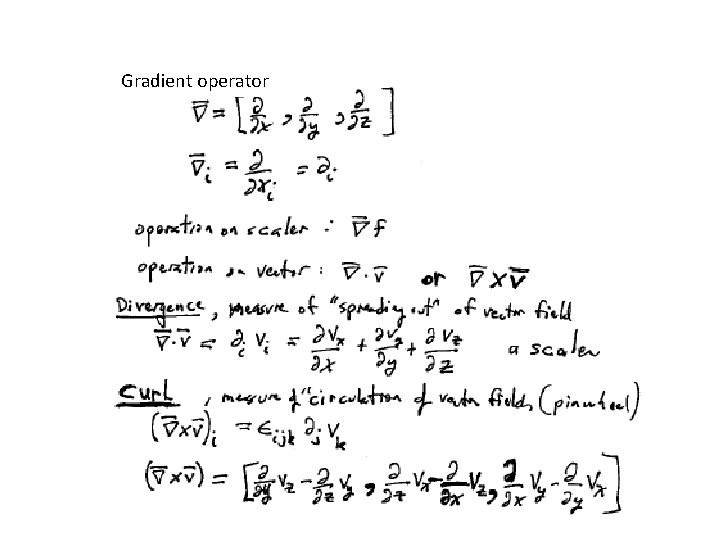
Gradient operator
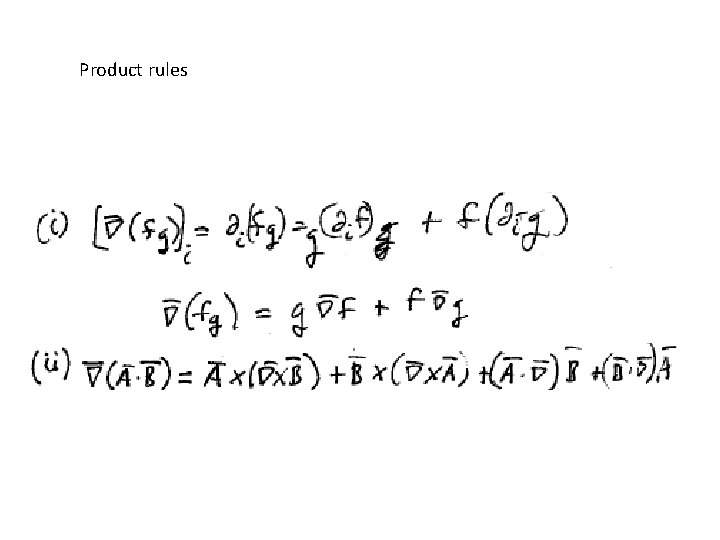
Product rules
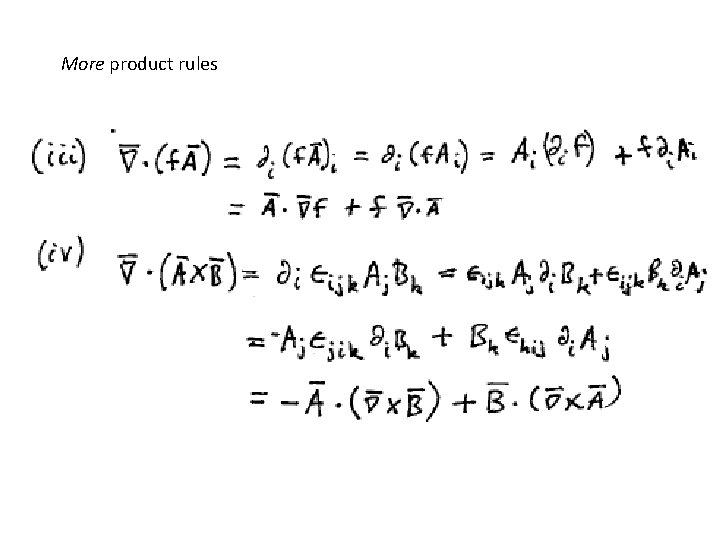
More product rules
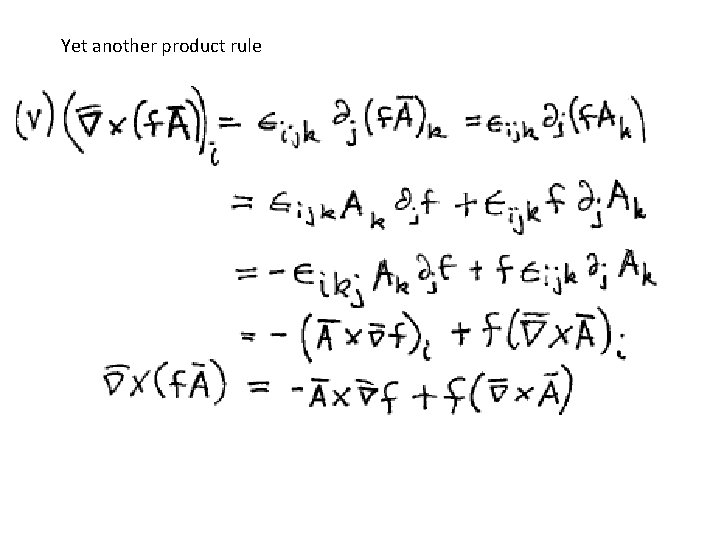
Yet another product rule
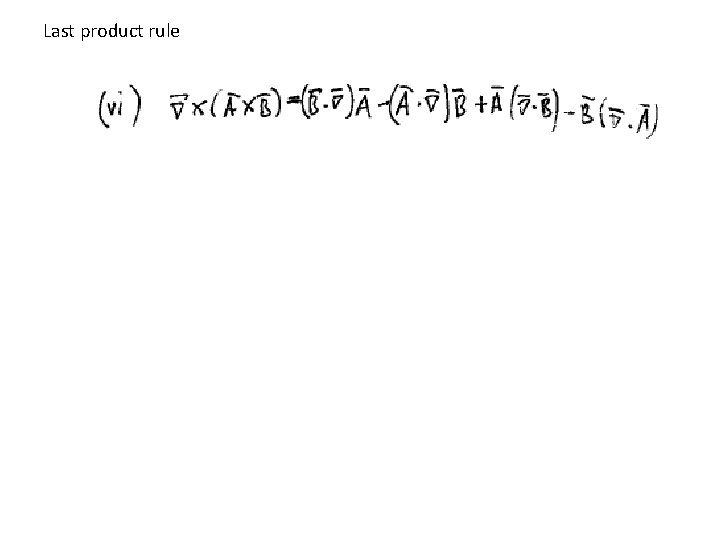
Last product rule
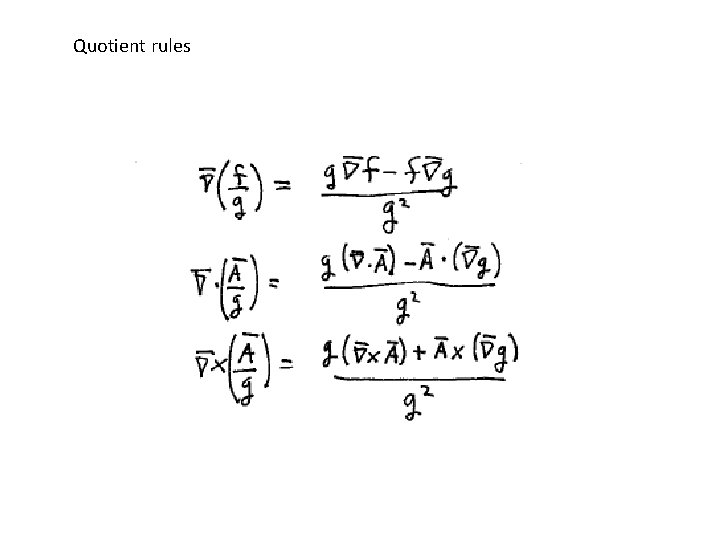
Quotient rules
What are three types of useful first derivatives?
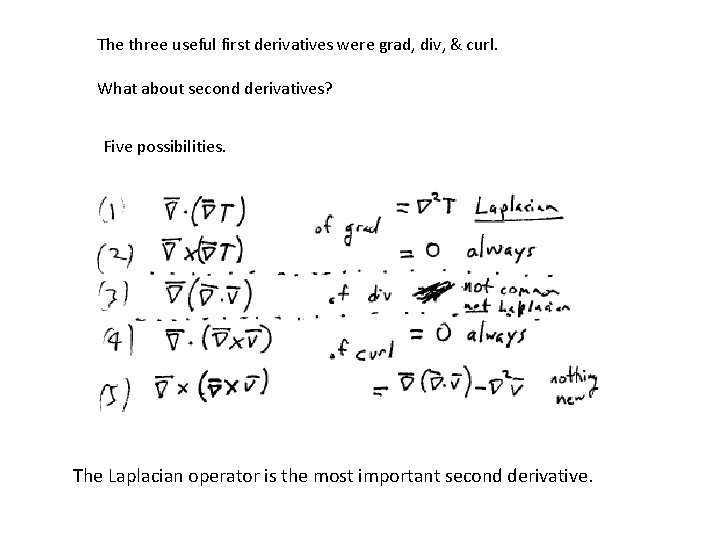
The three useful first derivatives were grad, div, & curl. What about second derivatives? Five possibilities. The Laplacian operator is the most important second derivative.
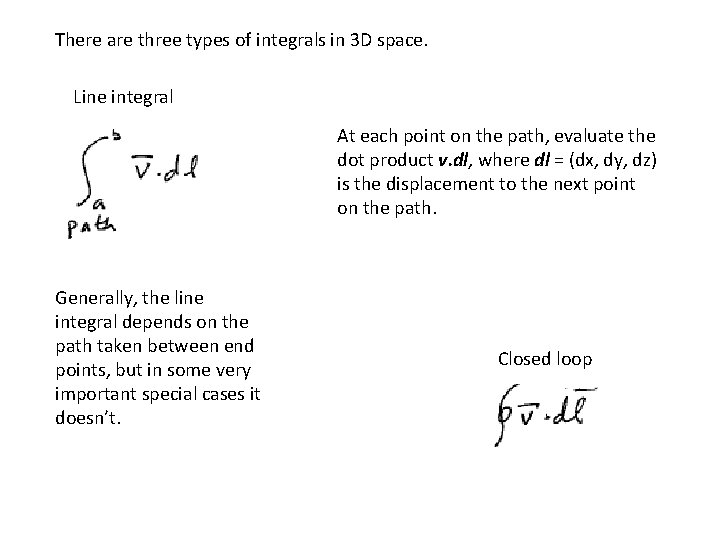
There are three types of integrals in 3 D space. Line integral At each point on the path, evaluate the dot product v. dl, where dl = (dx, dy, dz) is the displacement to the next point on the path. Generally, the line integral depends on the path taken between end points, but in some very important special cases it doesn’t. Closed loop
Give an example from classical mechanics of a line integral that does not depend on the path taken.
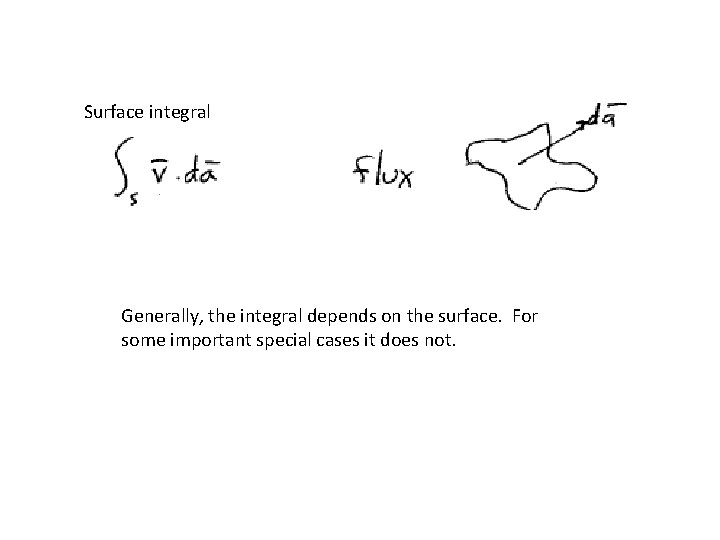
Surface integral Generally, the integral depends on the surface. For some important special cases it does not.
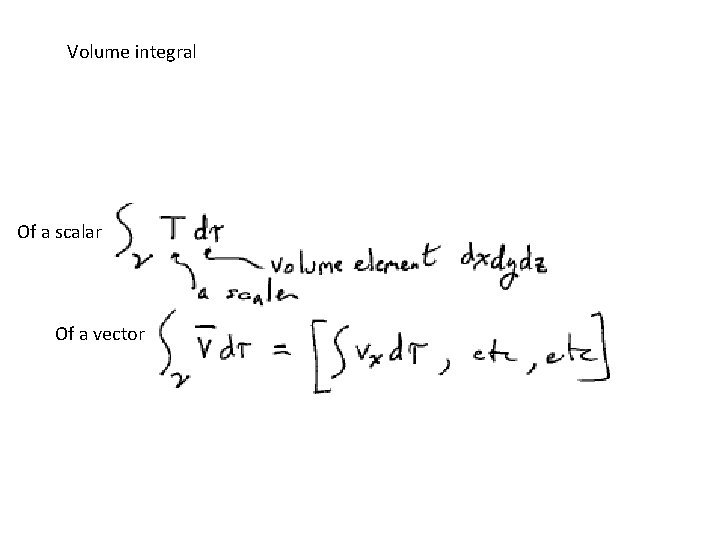
Volume integral Of a scalar Of a vector
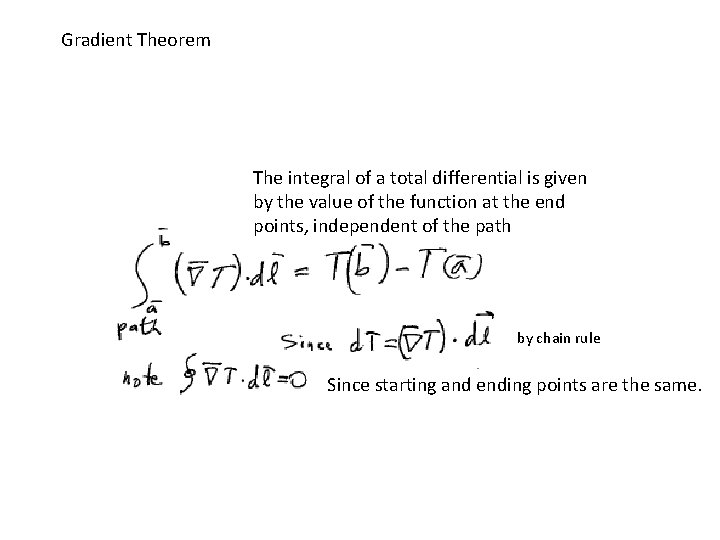
Gradient Theorem The integral of a total differential is given by the value of the function at the end points, independent of the path by chain rule Since starting and ending points are the same.
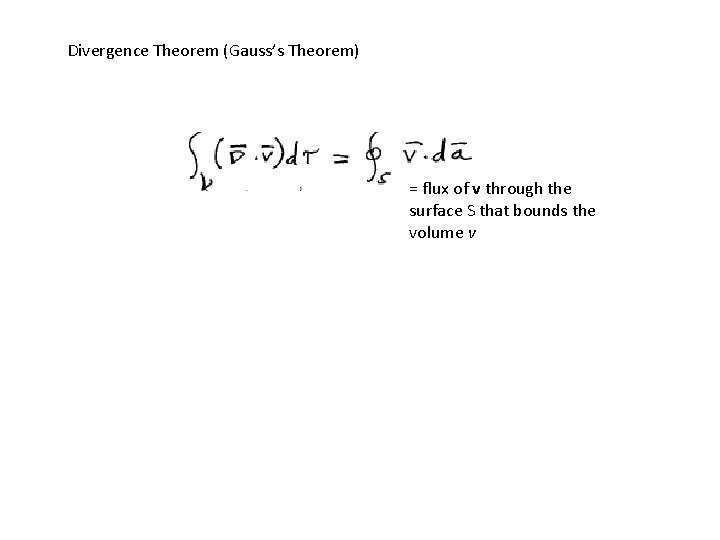
Divergence Theorem (Gauss’s Theorem) = flux of v through the surface S that bounds the volume v
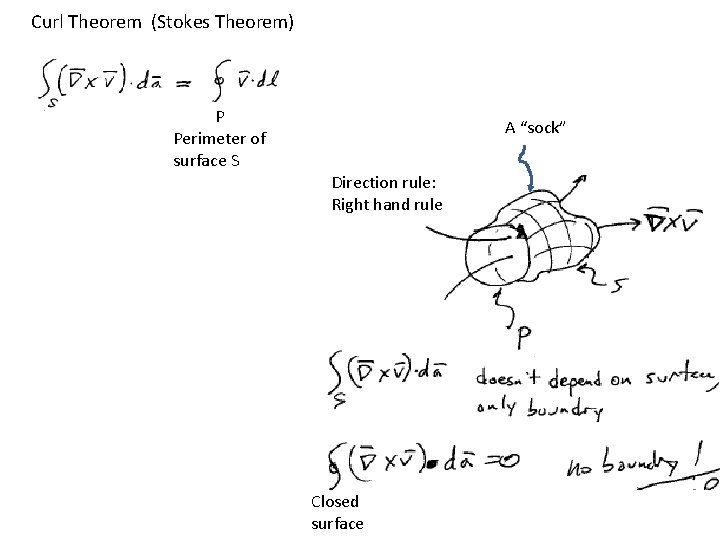
Curl Theorem (Stokes Theorem) P Perimeter of surface S A “sock” Direction rule: Right hand rule Closed surface
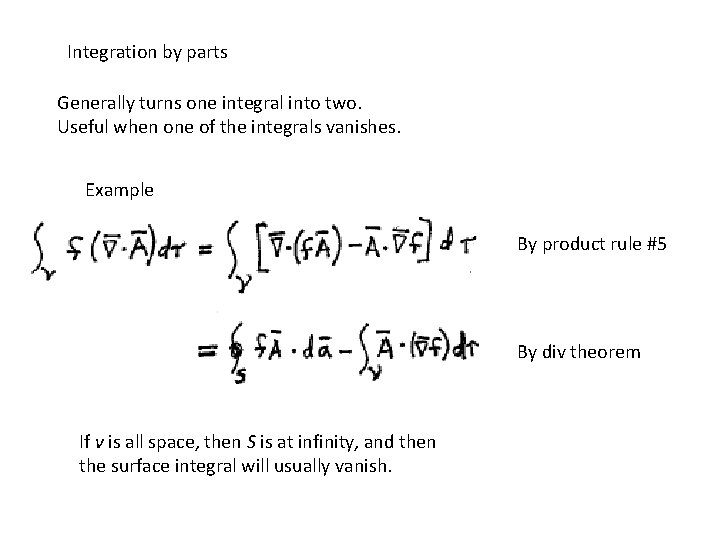
Integration by parts Generally turns one integral into two. Useful when one of the integrals vanishes. Example By product rule #5 By div theorem If v is all space, then S is at infinity, and then the surface integral will usually vanish.
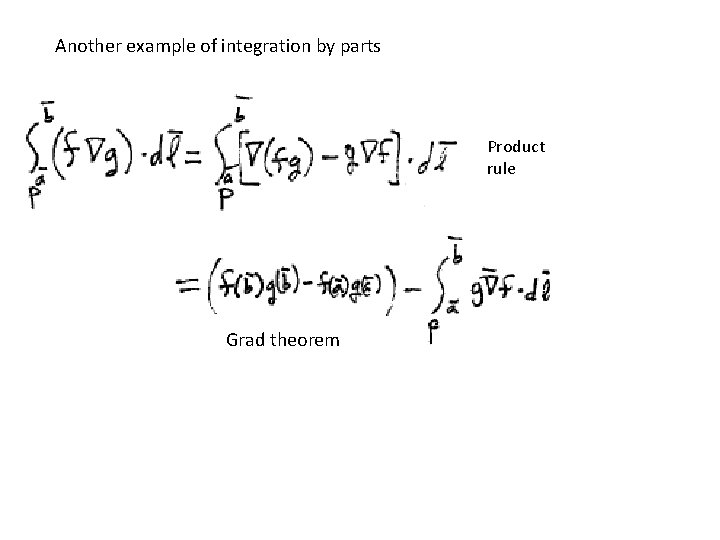
Another example of integration by parts Product rule Grad theorem
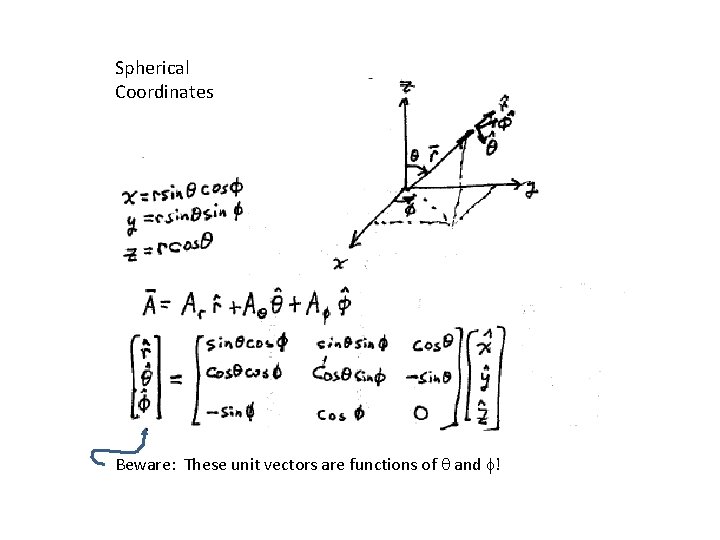
Spherical Coordinates Beware: These unit vectors are functions of q and f!
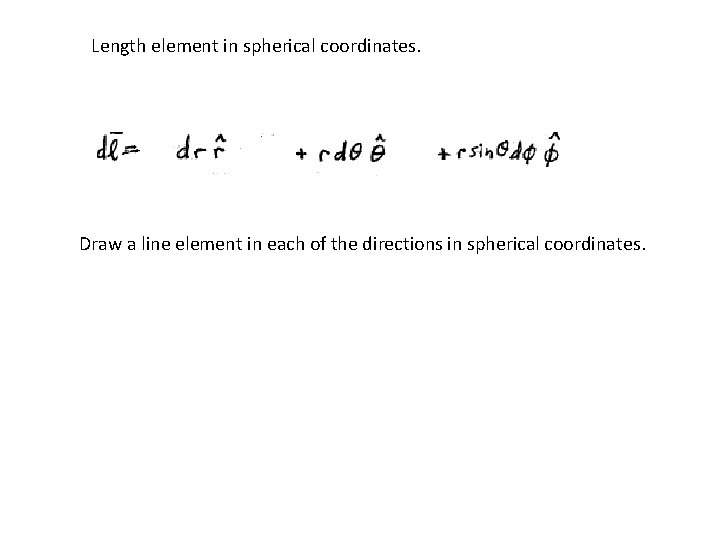
Length element in spherical coordinates. Draw a line element in each of the directions in spherical coordinates.
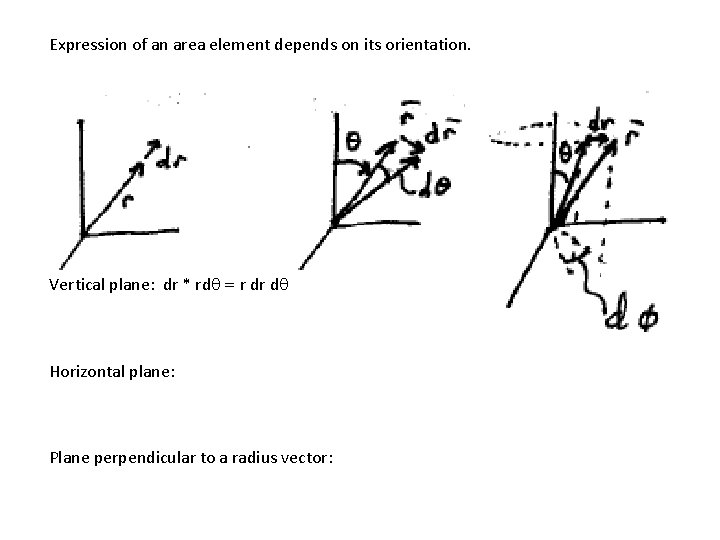
Expression of an area element depends on its orientation. Vertical plane: dr * rdq = r dr dq Horizontal plane: Plane perpendicular to a radius vector:
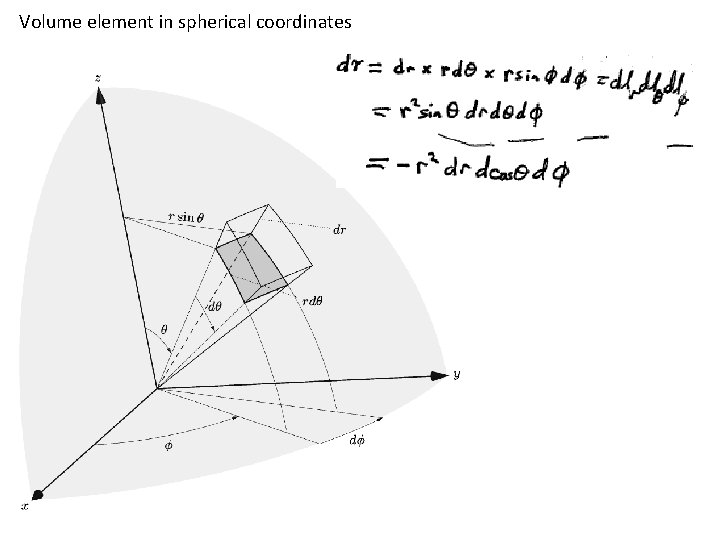
Volume element in spherical coordinates
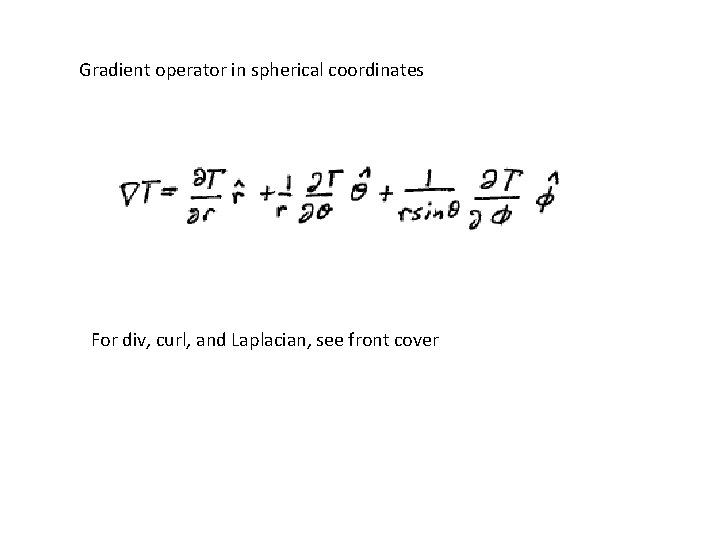
Gradient operator in spherical coordinates For div, curl, and Laplacian, see front cover
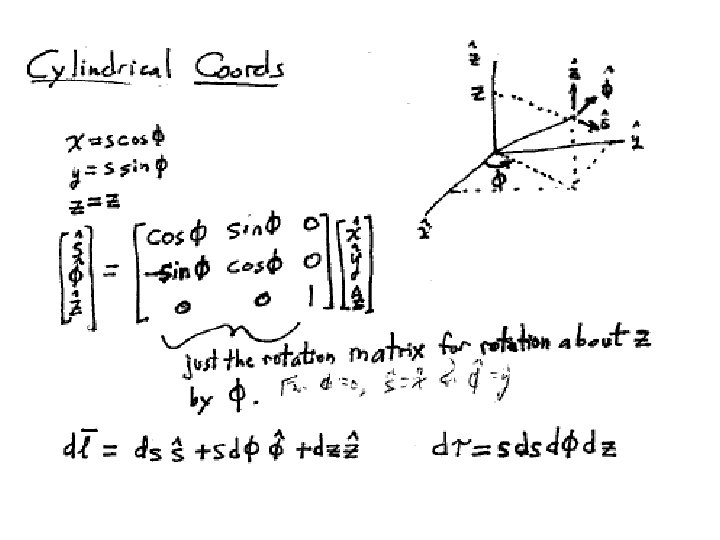
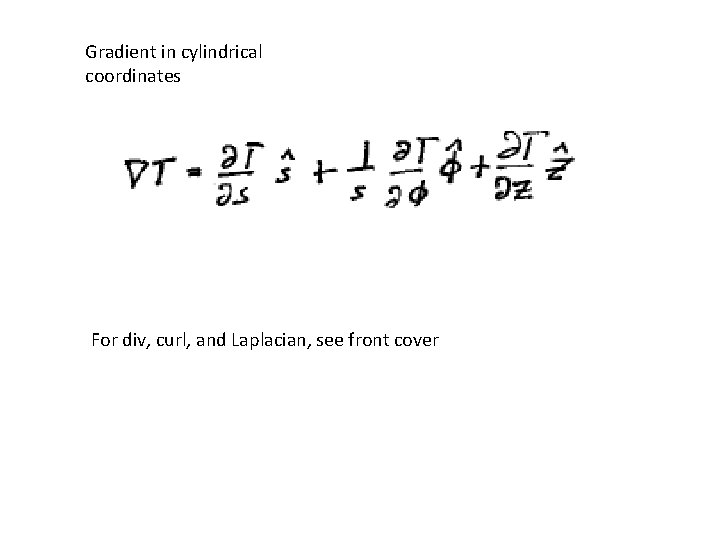
Gradient in cylindrical coordinates For div, curl, and Laplacian, see front cover
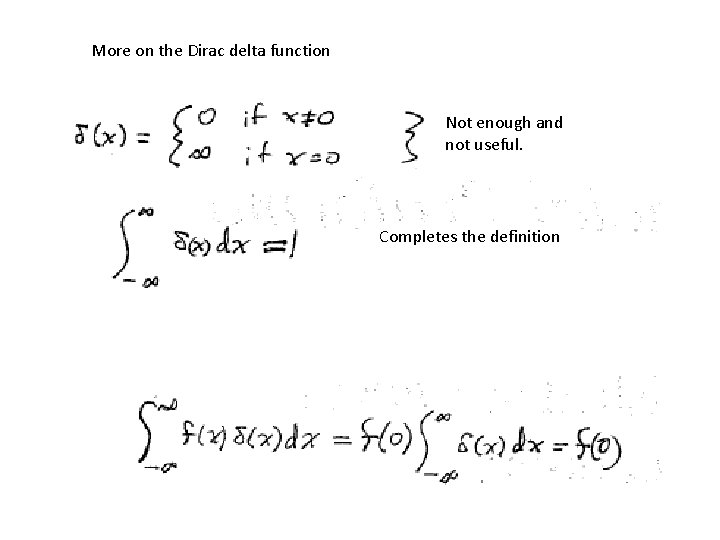
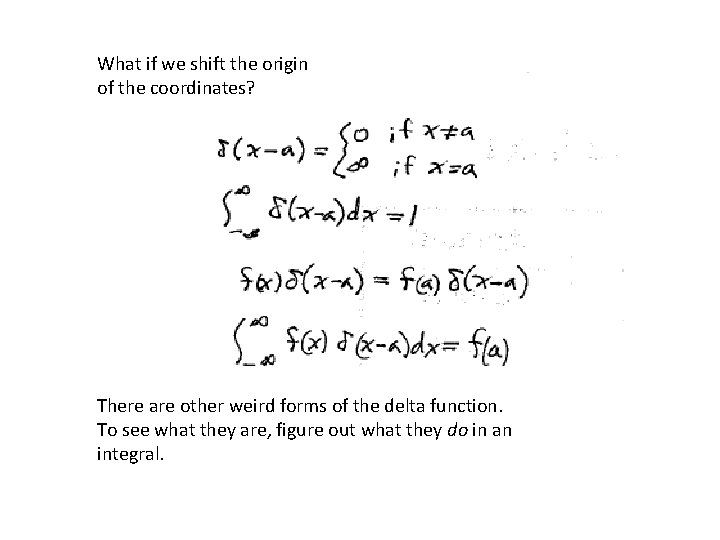
More on the Dirac delta function Not enough and not useful. Completes the definition
What if we shift the origin of the coordinates? There are other weird forms of the delta function. To see what they are, figure out what they do in an integral.
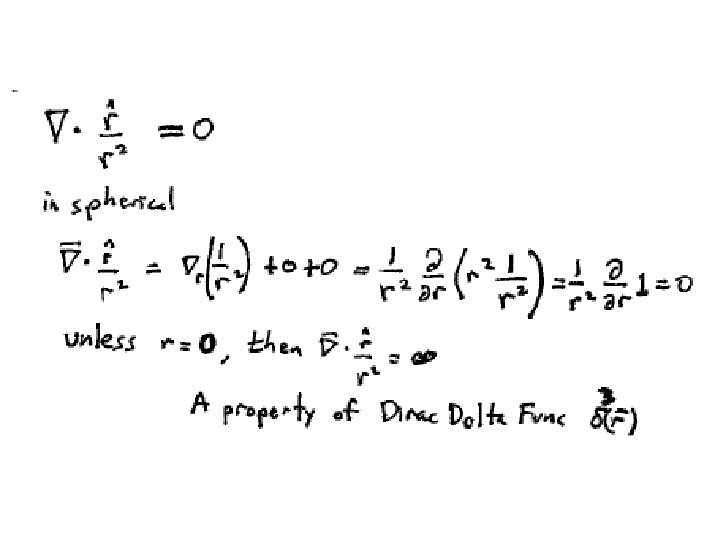
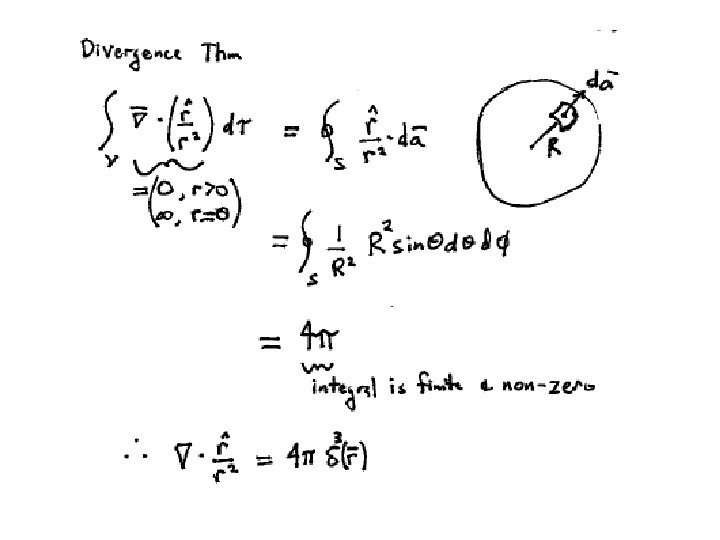
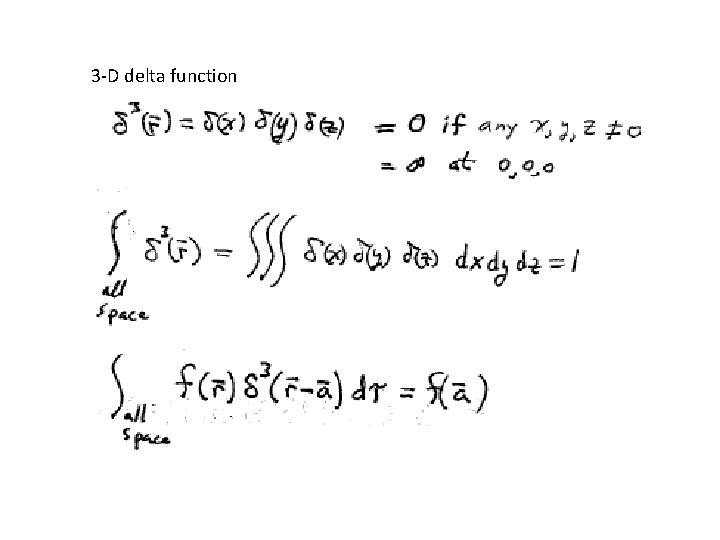
3 -D delta function
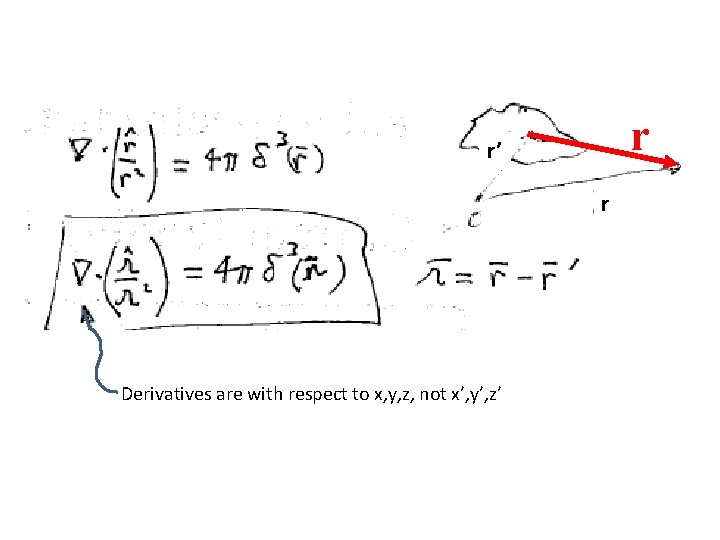
r r’ r Derivatives are with respect to x, y, z, not x’, y’, z’
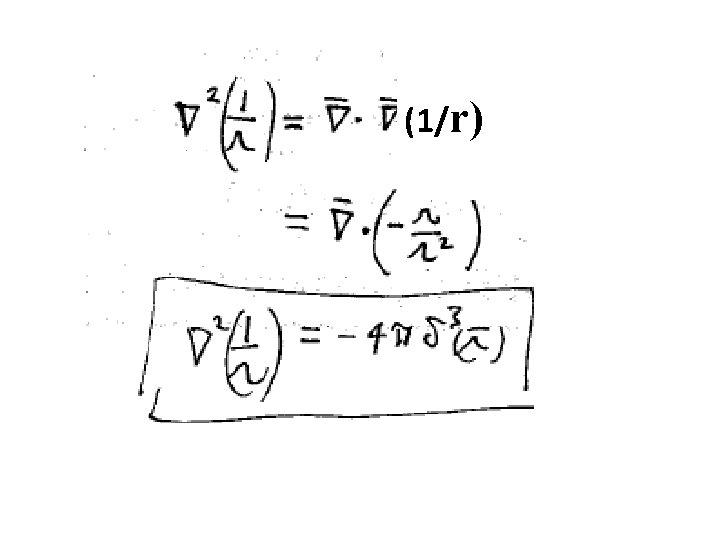
(1/r)
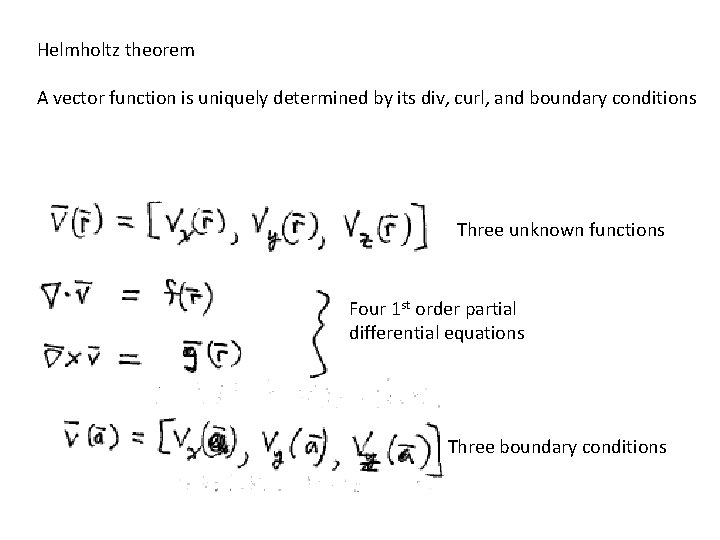
Helmholtz theorem A vector function is uniquely determined by its div, curl, and boundary conditions Three unknown functions Four 1 st order partial differential equations Three boundary conditions
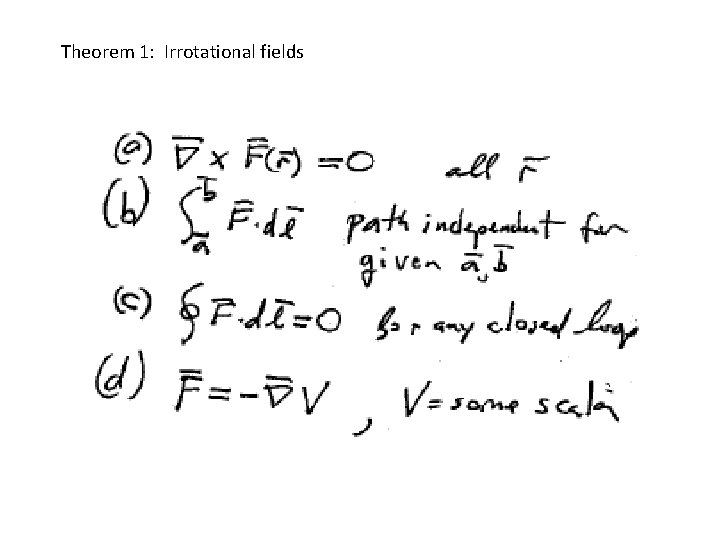
Theorem 1: Irrotational fields
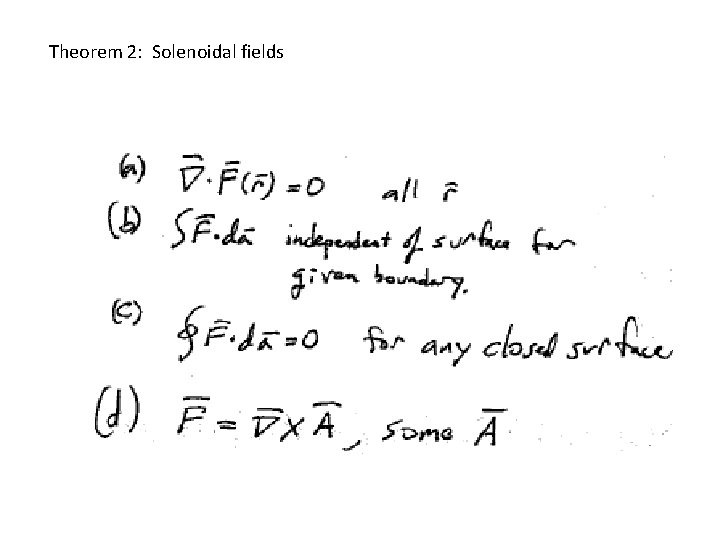
Theorem 2: Solenoidal fields