
Electricity A flow of charged particles in a
- Slides: 19
Electricity A flow of charged particles in a closed system. (Which can be very large…)
Current • Electric current is the rate of flow of charge • I = Δq/ Δt • Ampere = Coulomb per second (passing by a point in a circuit) • Ampere made discoveries regarding the interrelationships between electricity and magnetism in the early 1800’s
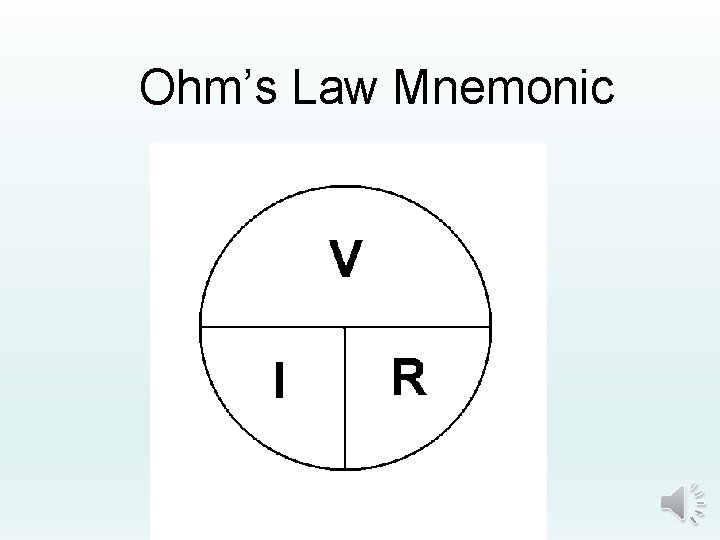
Resistance and Ohm’s Law • Resistance is the impedance to the flow of charge • Resistance is defined as the ratio of potential difference to current • R = V/I Unit is the Ohm, Ω • A device is said to obey Ohm’s Law if its resistance is independent of the Voltage
Units Voltage or potential difference (Volts, V) Current (Amps or Amperes, A) Resistance (Ohms, Ω)
Ohm’s Law Mnemonic
Ohm’s Law: Ohm's Law …says that, for many materials under a wide range of conditions, the voltage, V, and current, I, are linearly related, which implies resistance, R, is independent of V and I. When does it not apply? • Circuit elements that change temperature • Examples? • Circuit elements with large capacitance or strong magnetic fields (that are changing) • Semiconductors: materials that are natural insulators that are made to be somewhat conductive • Diode – like a one-way path
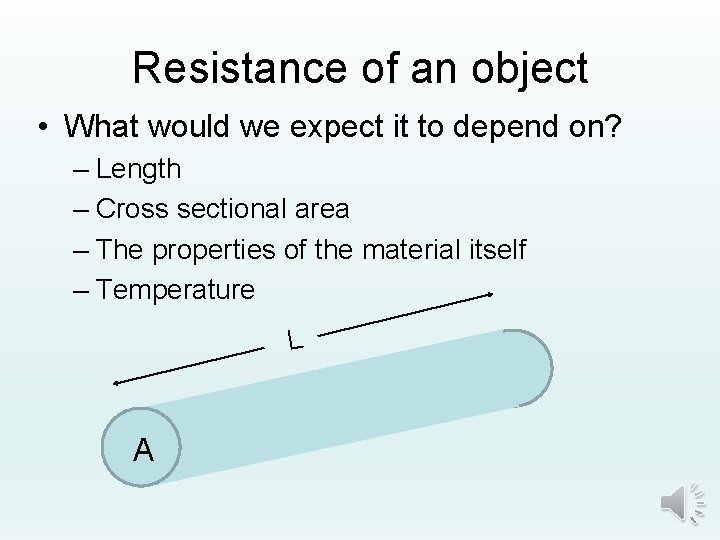
Resistance of an object • What would we expect it to depend on? – Length – Cross sectional area – The properties of the material itself – Temperature L A
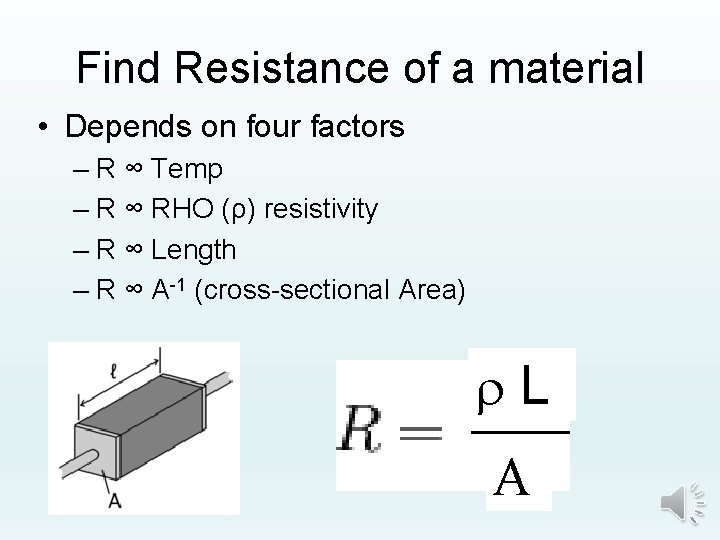
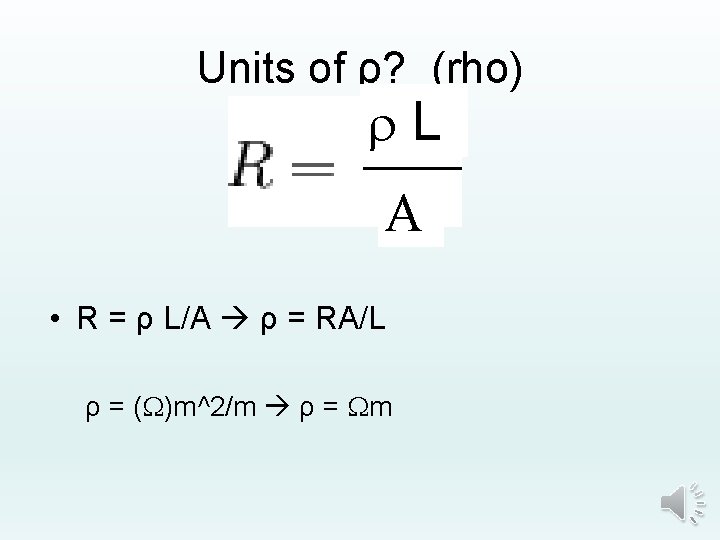
Find Resistance of a material • Depends on four factors – R ∞ Temp – R ∞ RHO (ρ) resistivity – R ∞ Length – R ∞ A-1 (cross-sectional Area) r. L A
Units of ρ? (rho) r. L A • R = ρ L/A ρ = RA/L ρ = (W)m^2/m ρ = Wm
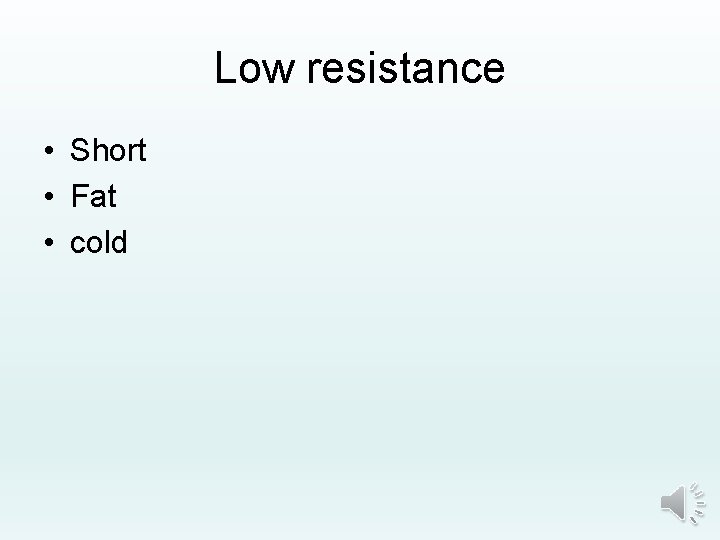
Low resistance • Short • Fat • cold
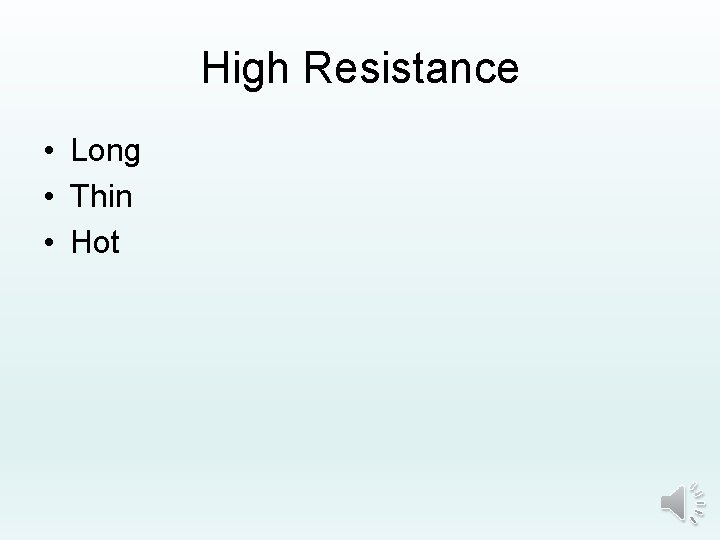
High Resistance • Long • Thin • Hot
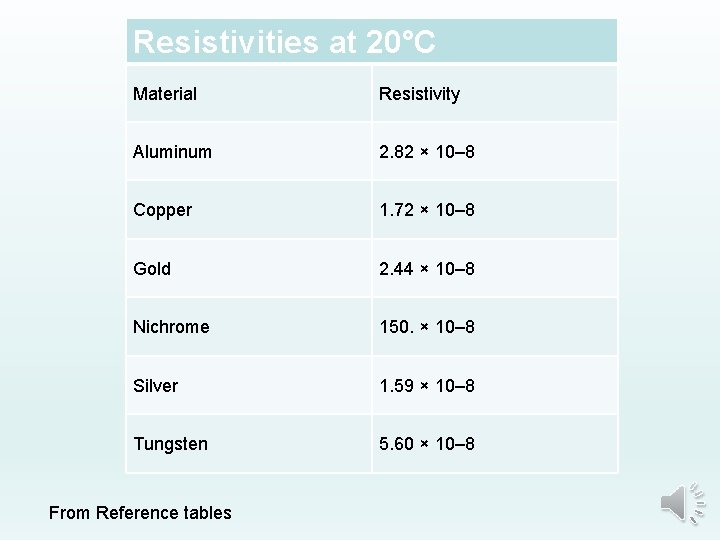
Resistivities at 20°C Material Resistivity Aluminum 2. 82 × 10– 8 Copper 1. 72 × 10– 8 Gold 2. 44 × 10– 8 Nichrome 150. × 10– 8 Silver 1. 59 × 10– 8 Tungsten 5. 60 × 10– 8 From Reference tables
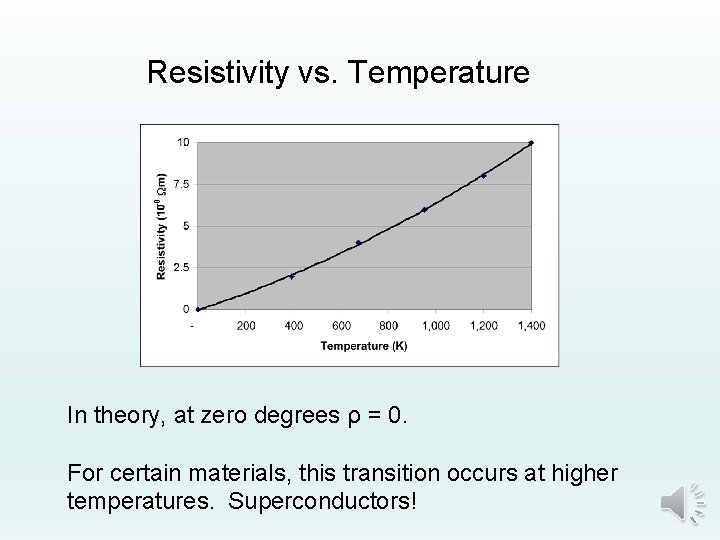
Resistivity vs. Temperature In theory, at zero degrees ρ = 0. For certain materials, this transition occurs at higher temperatures. Superconductors!
Problem • Find the resistance of a 20 meters length of Aluminum with a diameter of 12 mm
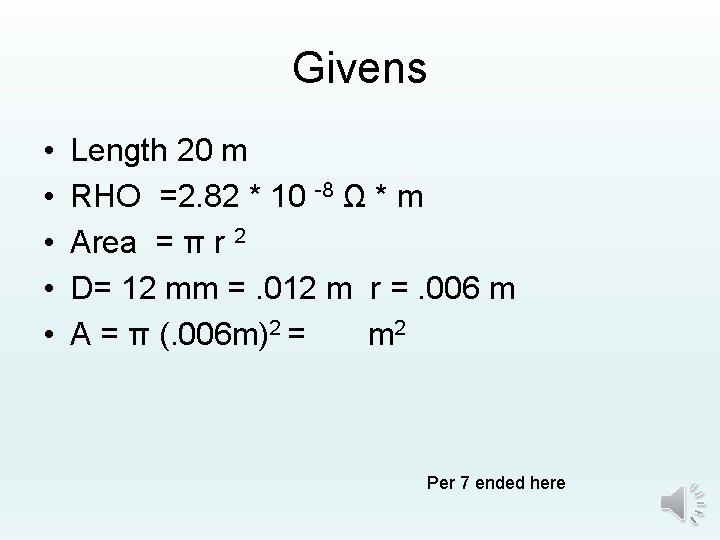
Givens • • • Length 20 m RHO =2. 82 * 10 -8 Ω * m Area = π r 2 D= 12 mm =. 012 m r =. 006 m A = π (. 006 m)2 = m 2 Per 7 ended here
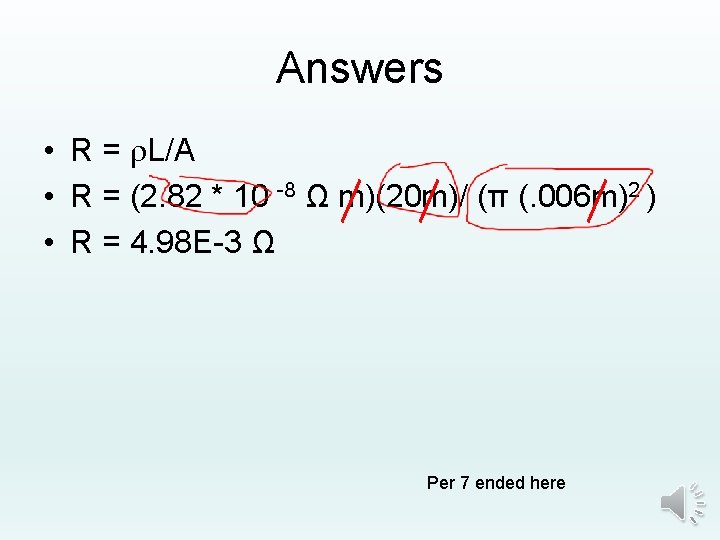
Answers • R = r. L/A • R = (2. 82 * 10 -8 Ω m)(20 m)/ (π (. 006 m)2 ) • R = 4. 98 E-3 Ω Per 7 ended here
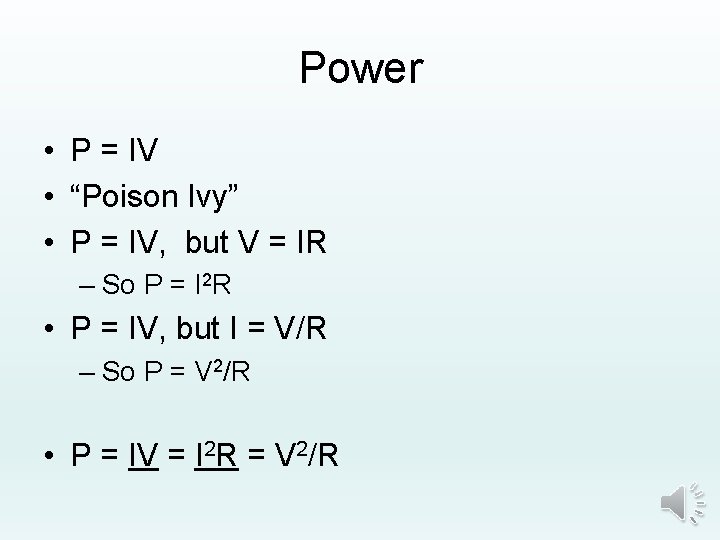
Power • P = IV • “Poison Ivy” • P = IV, but V = IR – So P = I 2 R • P = IV, but I = V/R – So P = V 2/R • P = IV = I 2 R = V 2/R
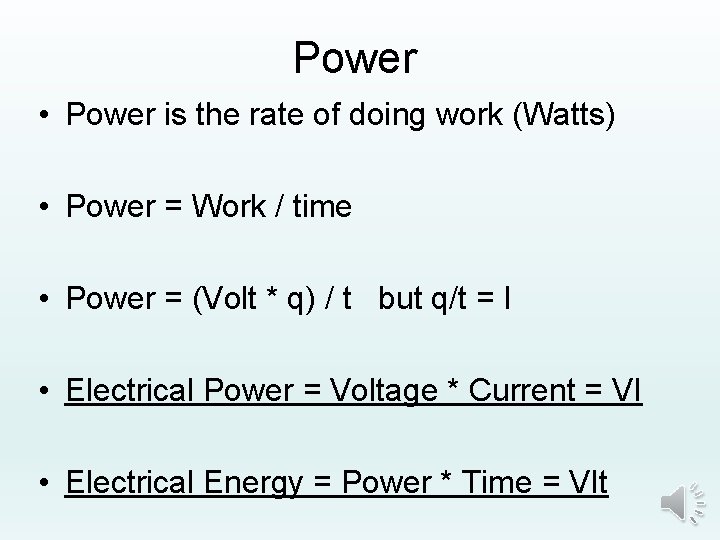
Power • Power is the rate of doing work (Watts) • Power = Work / time • Power = (Volt * q) / t but q/t = I • Electrical Power = Voltage * Current = VI • Electrical Energy = Power * Time = VIt
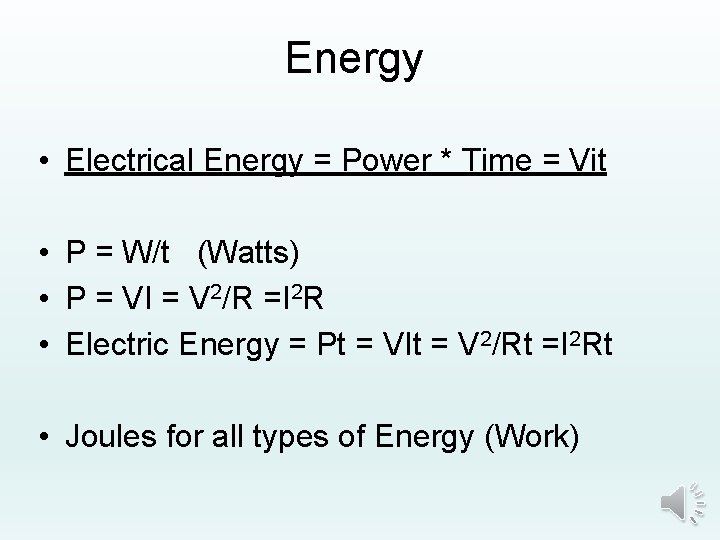
Energy • Electrical Energy = Power * Time = Vit • P = W/t (Watts) • P = VI = V 2/R =I 2 R • Electric Energy = Pt = VIt = V 2/Rt =I 2 Rt • Joules for all types of Energy (Work)