
ELECTRICAL TECHNOLOGY EET 1034 q Define parallel impedances
- Slides: 51
ELECTRICAL TECHNOLOGY EET 103/4 q Define parallel impedances and analyze parallel AC circuits using circuit techniques.
PARALLEL AC CIRCUITS (CHAPTER 15)
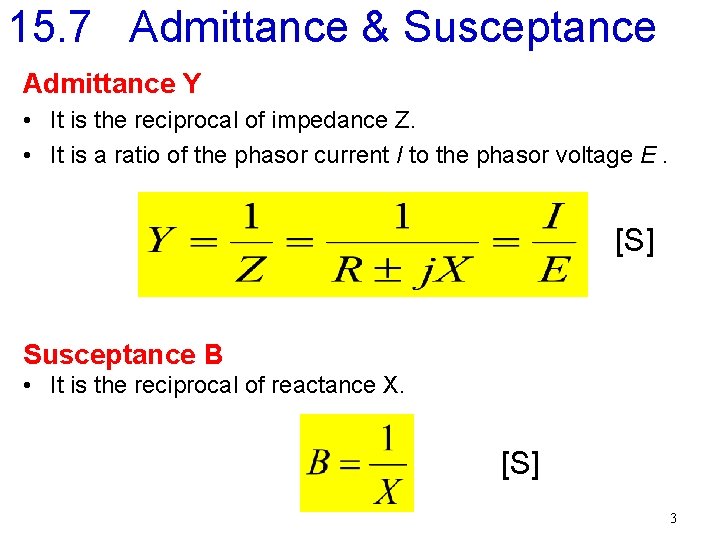
15. 7 Admittance & Susceptance Admittance Y • It is the reciprocal of impedance Z. • It is a ratio of the phasor current I to the phasor voltage E. [S] Susceptance B • It is the reciprocal of reactance X. [S] 3
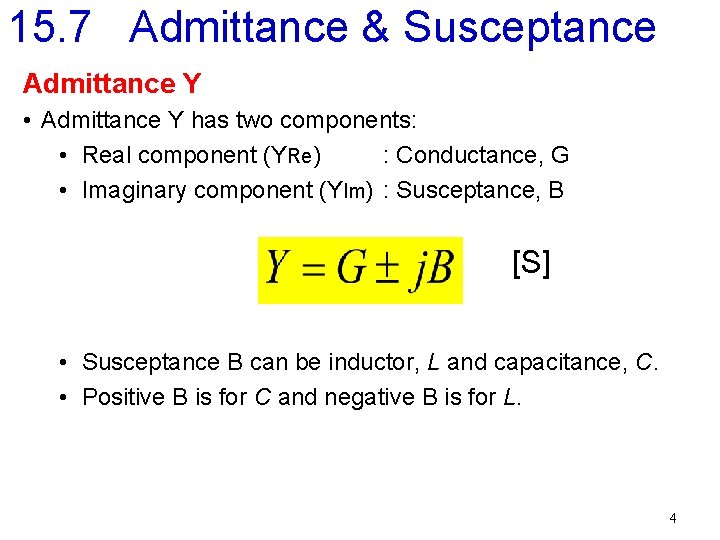
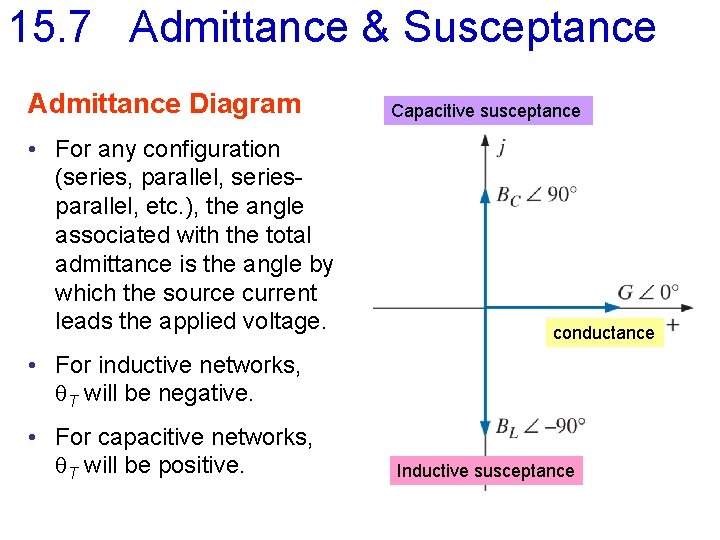
15. 7 Admittance & Susceptance Admittance Y • Admittance Y has two components: • Real component (YRe) : Conductance, G • Imaginary component (YIm) : Susceptance, B [S] • Susceptance B can be inductor, L and capacitance, C. • Positive B is for C and negative B is for L. 4
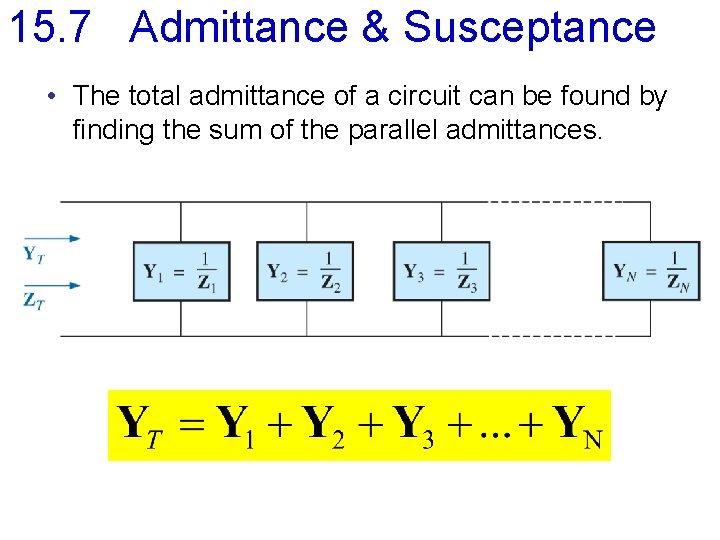
15. 7 Admittance & Susceptance • The total admittance of a circuit can be found by finding the sum of the parallel admittances.
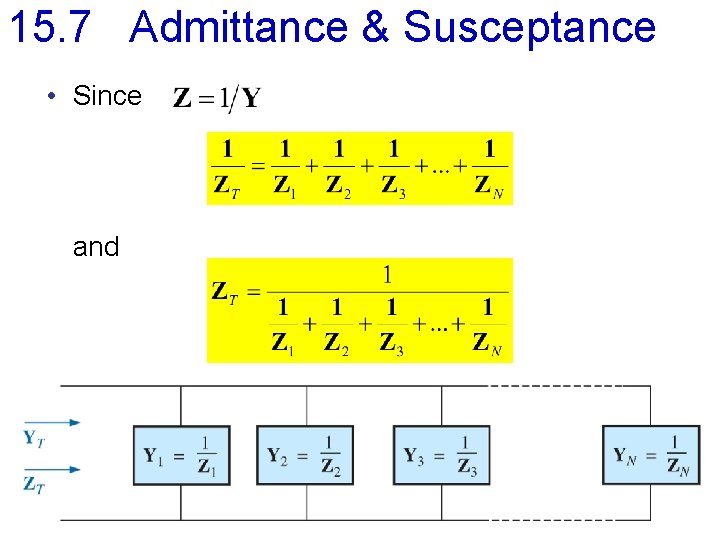
15. 7 Admittance & Susceptance • Since and
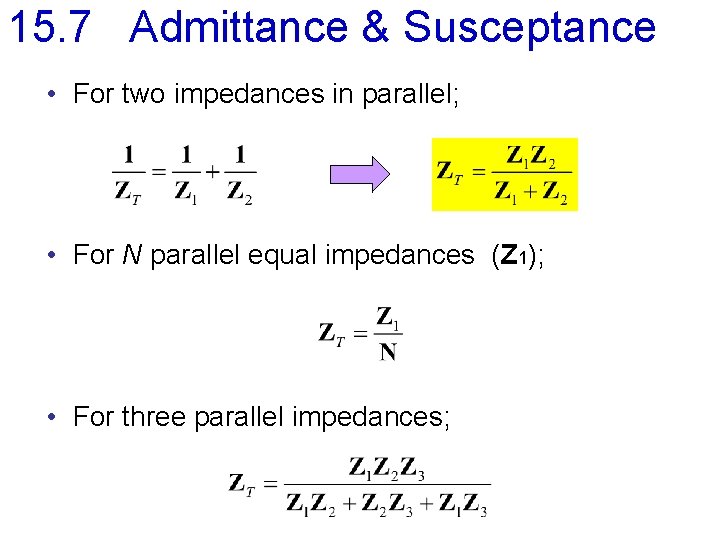
15. 7 Admittance & Susceptance • For two impedances in parallel; • For N parallel equal impedances (Z 1); • For three parallel impedances;
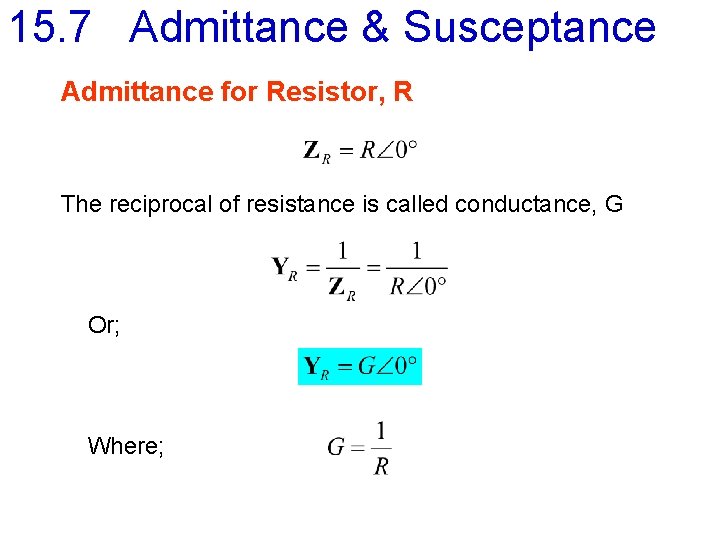
15. 7 Admittance & Susceptance Admittance for Resistor, R The reciprocal of resistance is called conductance, G Or; Where;
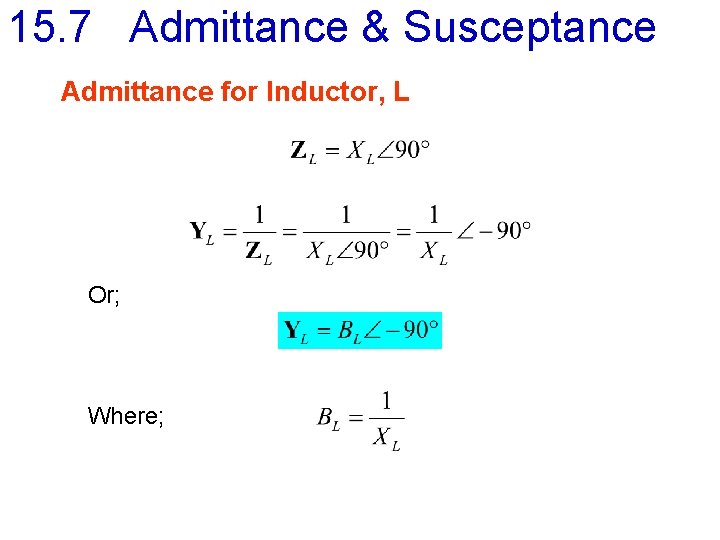
15. 7 Admittance & Susceptance Admittance for Inductor, L Or; Where;
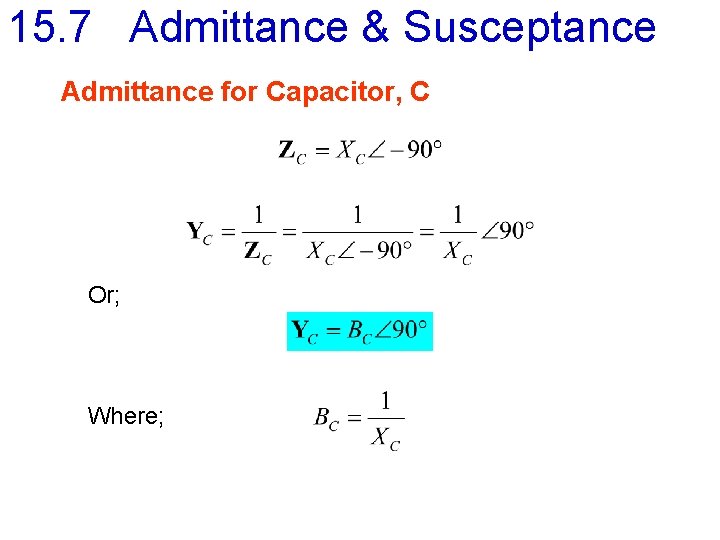
15. 7 Admittance & Susceptance Admittance for Capacitor, C Or; Where;
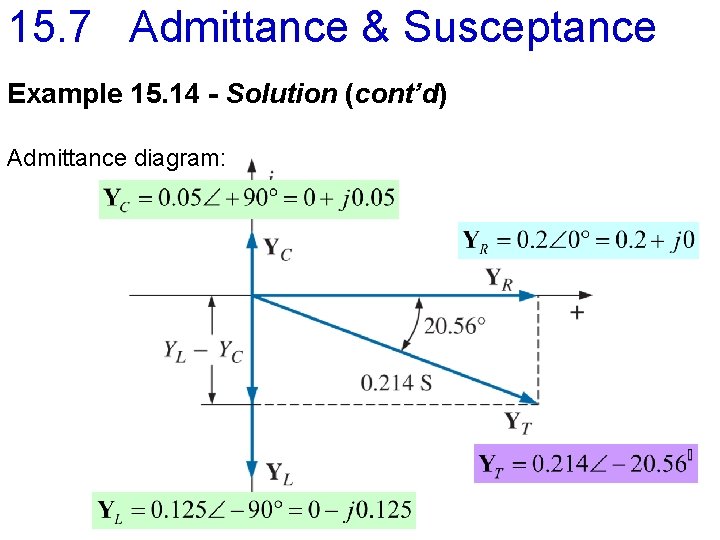
15. 7 Admittance & Susceptance Admittance Diagram • For any configuration (series, parallel, seriesparallel, etc. ), the angle associated with the total admittance is the angle by which the source current leads the applied voltage. Capacitive susceptance conductance • For inductive networks, T will be negative. • For capacitive networks, T will be positive. Inductive susceptance
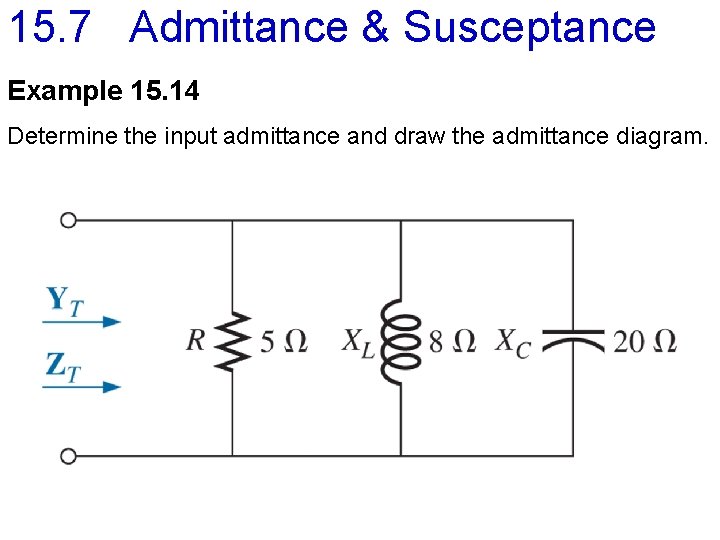
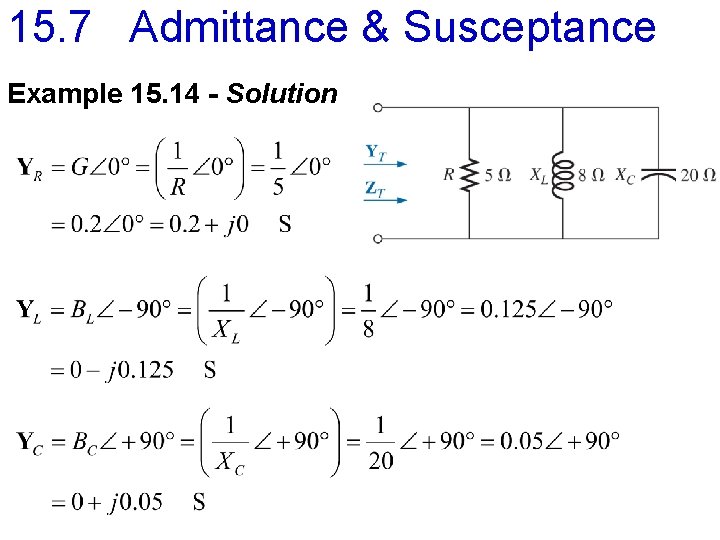
15. 7 Admittance & Susceptance Example 15. 14 Determine the input admittance and draw the admittance diagram.
15. 7 Admittance & Susceptance Example 15. 14 - Solution
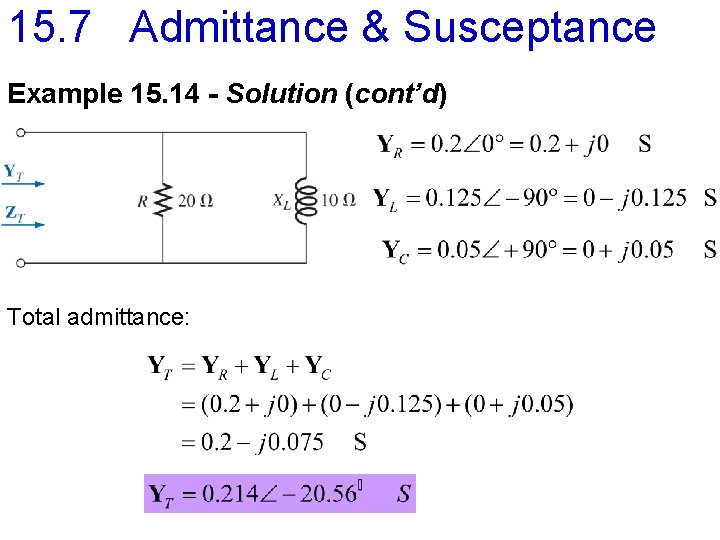
15. 7 Admittance & Susceptance Example 15. 14 - Solution (cont’d) Total admittance:
15. 7 Admittance & Susceptance Example 15. 14 - Solution (cont’d) Admittance diagram:
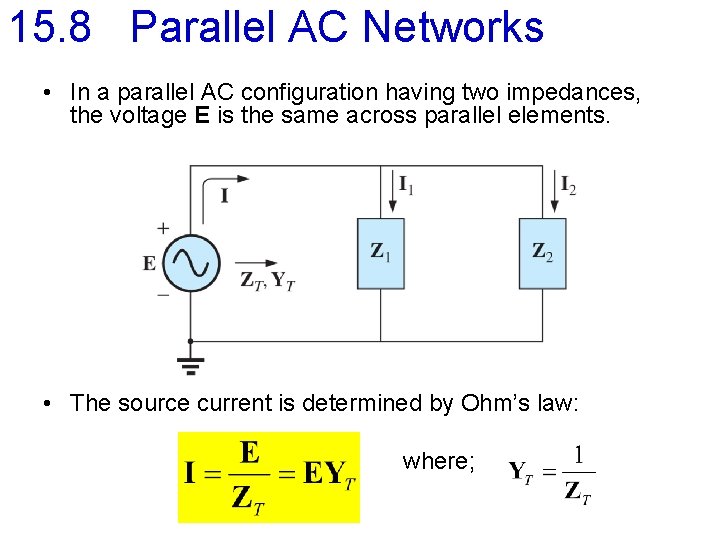
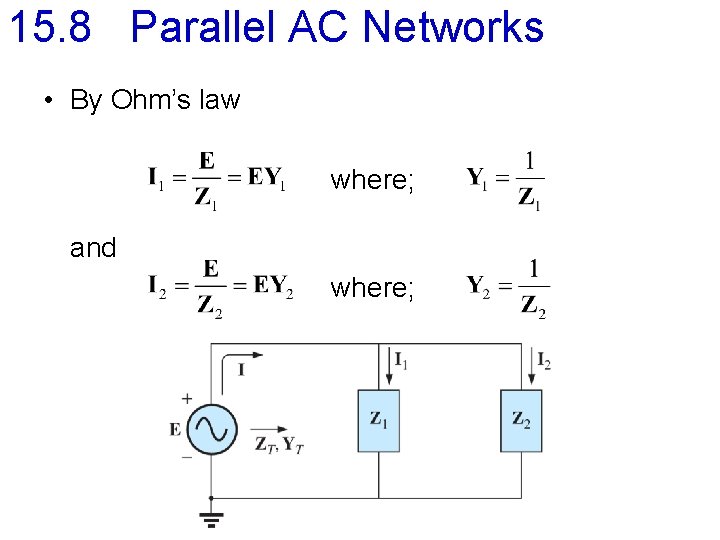
15. 8 Parallel AC Networks • In a parallel AC configuration having two impedances, the voltage E is the same across parallel elements. • The source current is determined by Ohm’s law: where;
15. 8 Parallel AC Networks • By Ohm’s law where; and where;
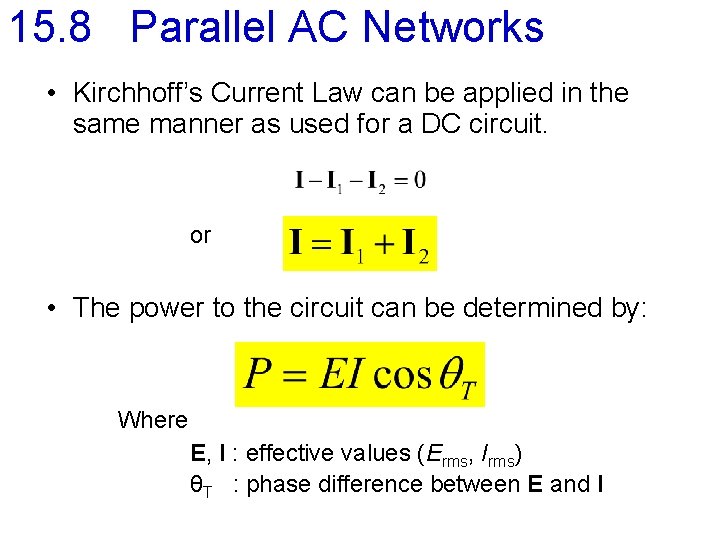
15. 8 Parallel AC Networks • Kirchhoff’s Current Law can be applied in the same manner as used for a DC circuit. or • The power to the circuit can be determined by: Where E, I : effective values (Erms, Irms) θT : phase difference between E and I
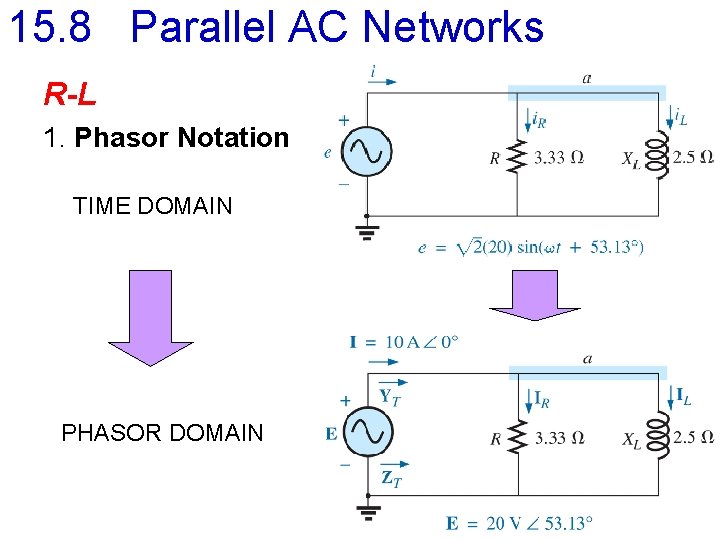
15. 8 Parallel AC Networks R-L 1. Phasor Notation TIME DOMAIN PHASOR DOMAIN
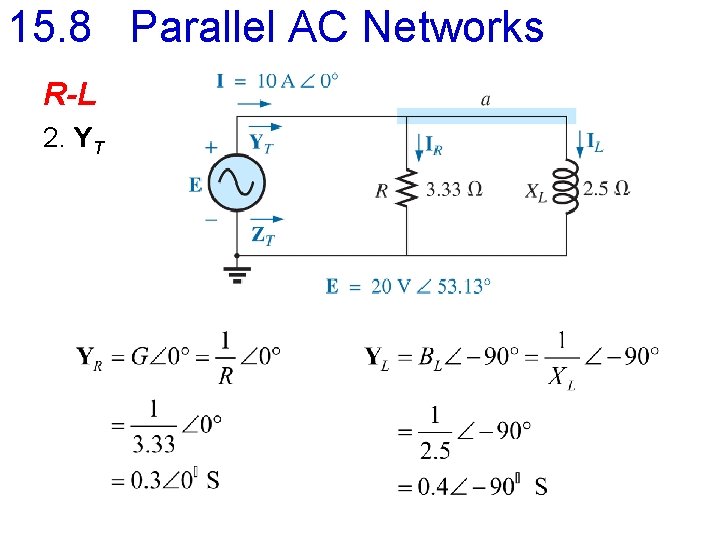
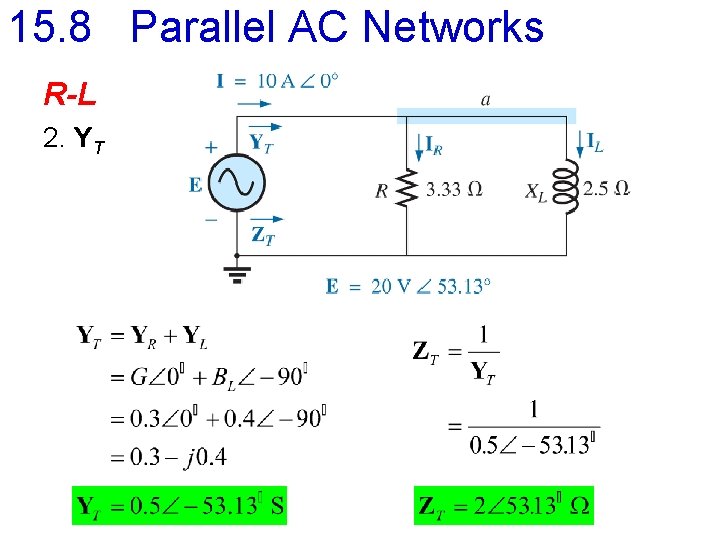
15. 8 Parallel AC Networks R-L 2. YT
15. 8 Parallel AC Networks R-L 2. YT
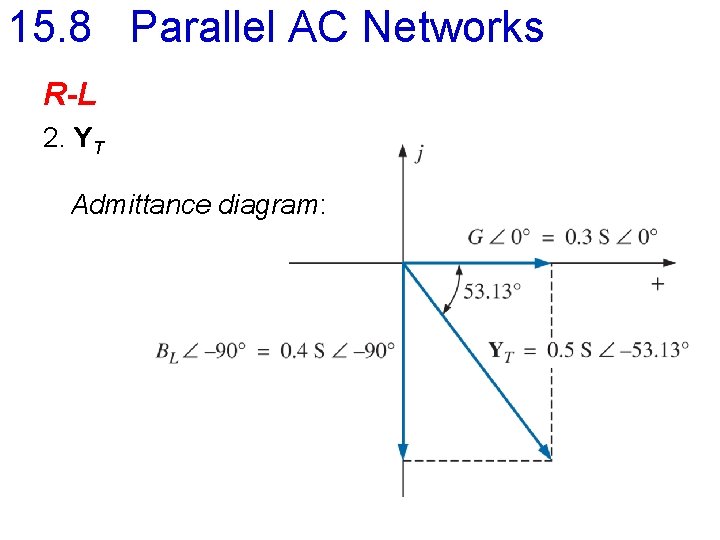
15. 8 Parallel AC Networks R-L 2. YT Admittance diagram:
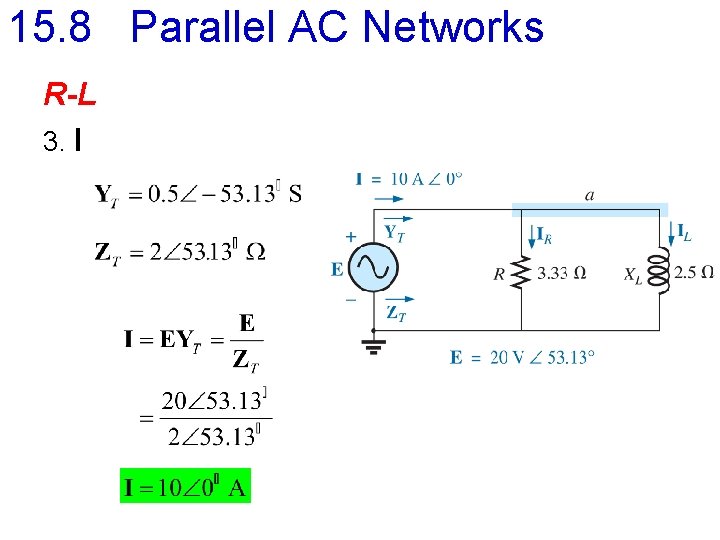
15. 8 Parallel AC Networks R-L 3. I
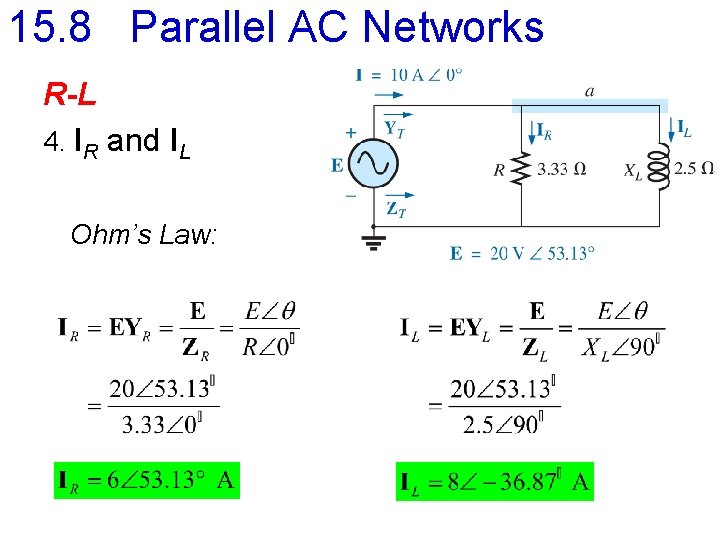
15. 8 Parallel AC Networks R-L 4. IR and IL Ohm’s Law:
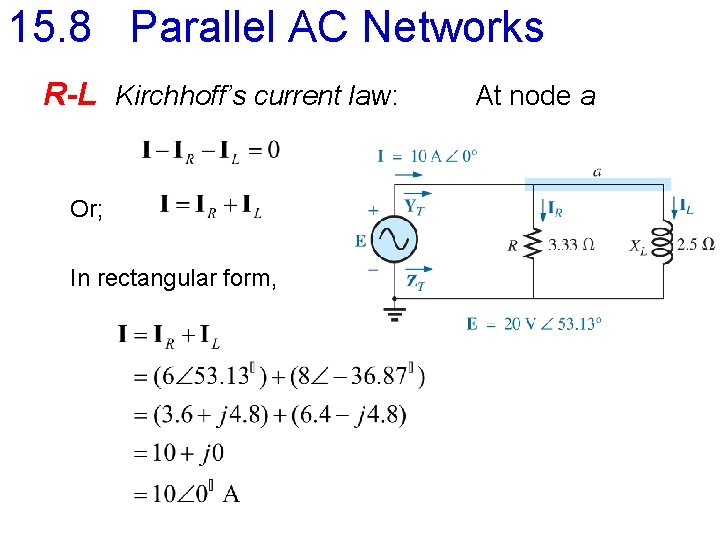
15. 8 Parallel AC Networks R-L Kirchhoff’s current law: Or; In rectangular form, At node a
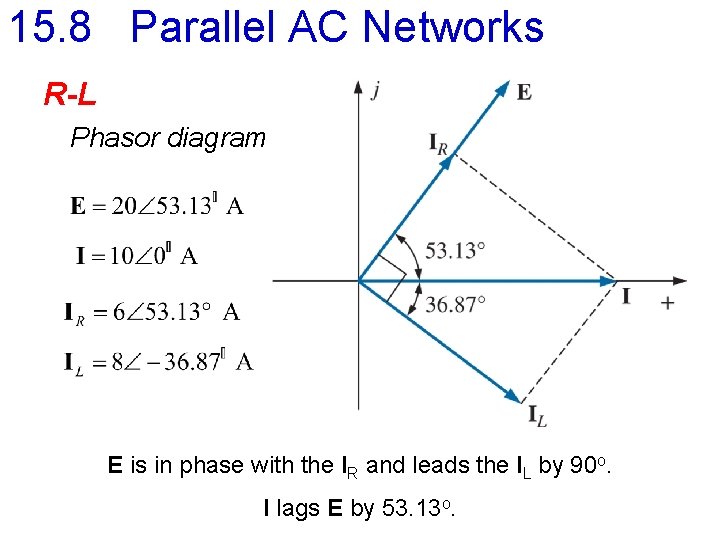
15. 8 Parallel AC Networks R-L Phasor diagram: E is in phase with the IR and leads the IL by 90 o. I lags E by 53. 13 o.
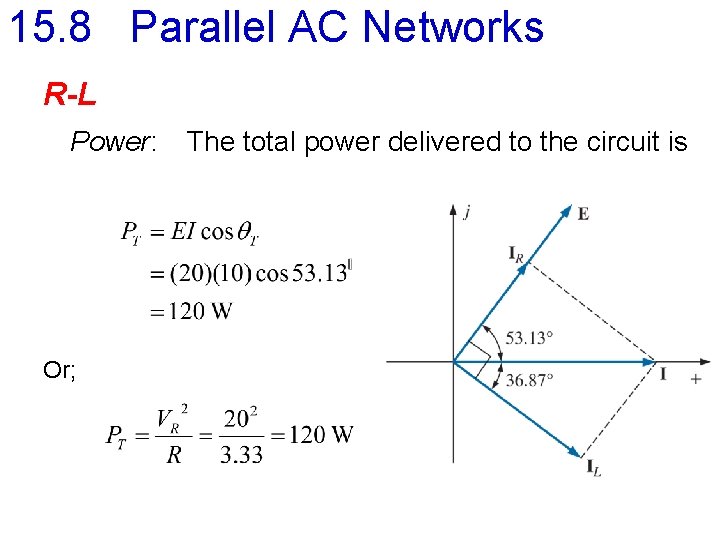
15. 8 Parallel AC Networks R-L Power: Or; The total power delivered to the circuit is
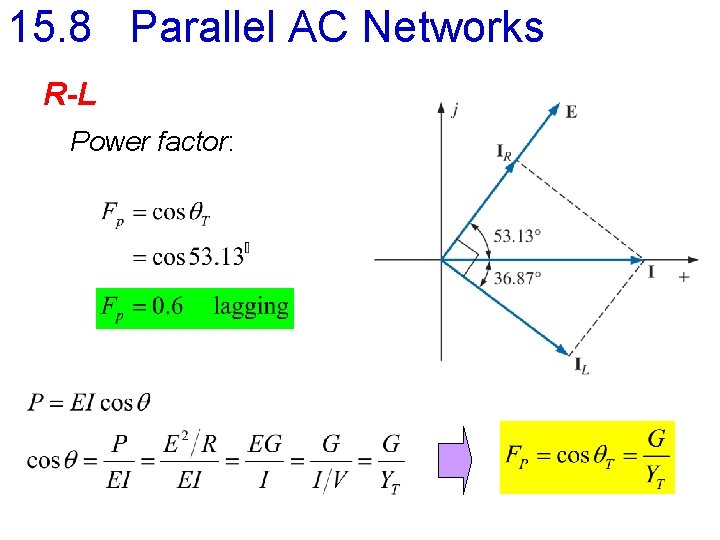
15. 8 Parallel AC Networks R-L Power factor:
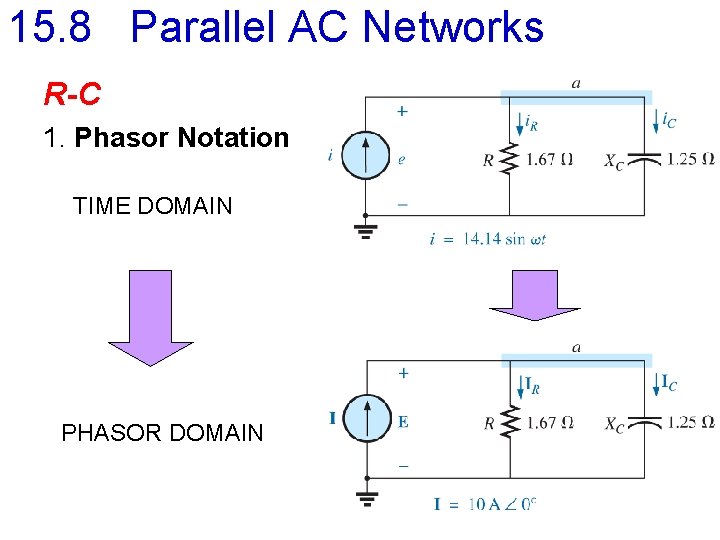
15. 8 Parallel AC Networks R-C 1. Phasor Notation TIME DOMAIN PHASOR DOMAIN
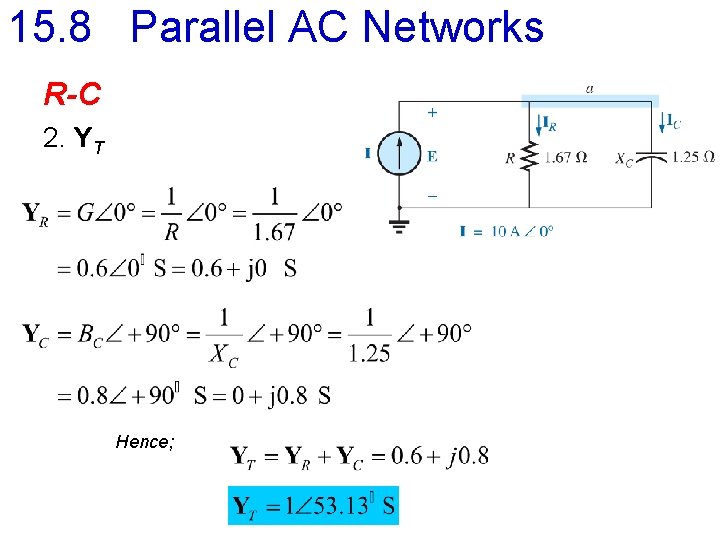
15. 8 Parallel AC Networks R-C 2. YT Hence;
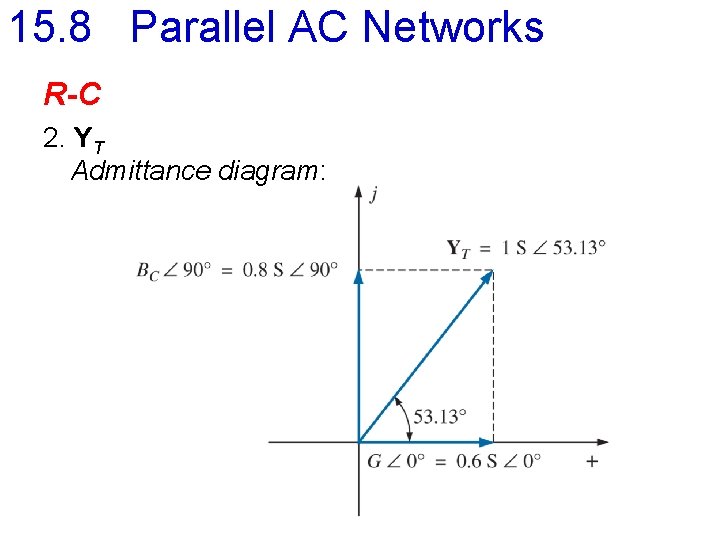
15. 8 Parallel AC Networks R-C 2. YT Admittance diagram:
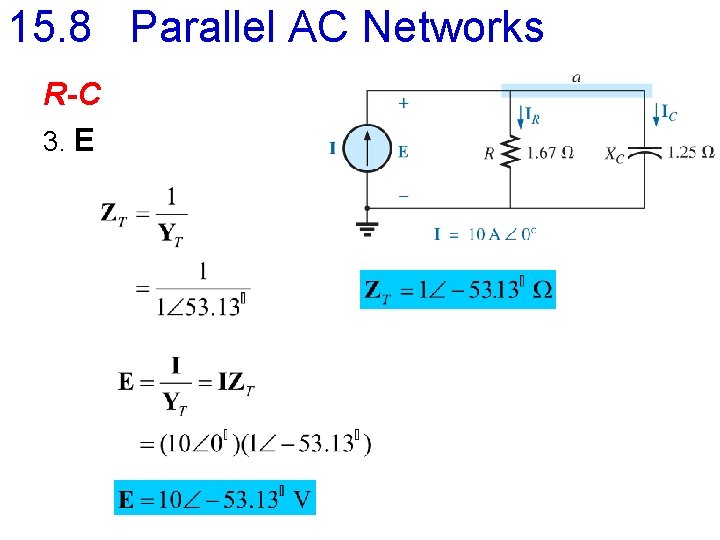
15. 8 Parallel AC Networks R-C 3. E
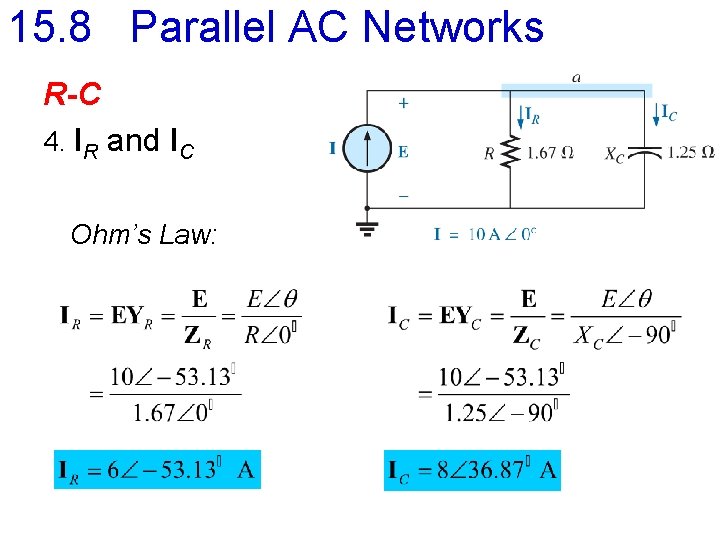
15. 8 Parallel AC Networks R-C 4. IR and IC Ohm’s Law:
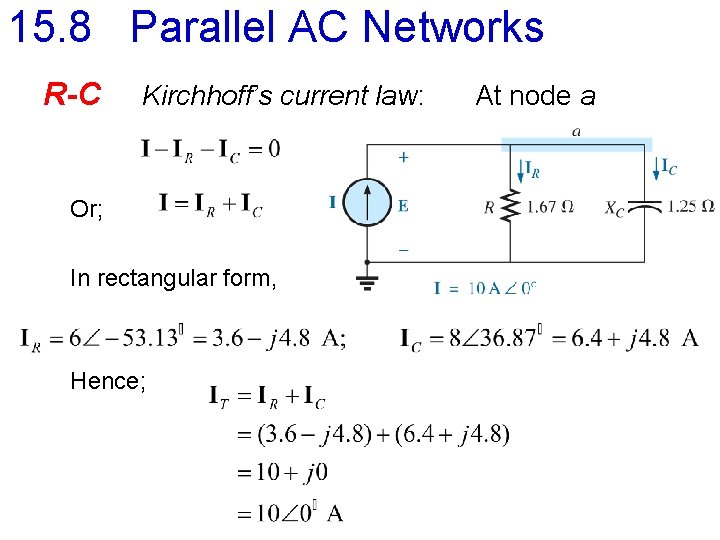
15. 8 Parallel AC Networks R-C Kirchhoff’s current law: Or; In rectangular form, Hence; At node a
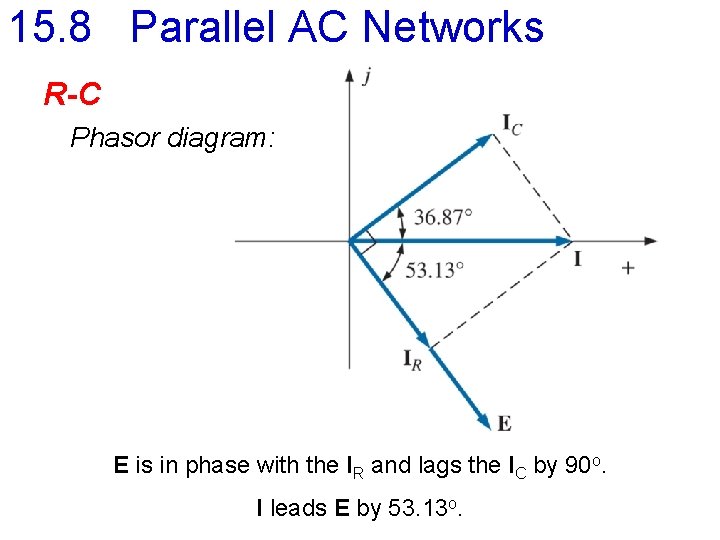
15. 8 Parallel AC Networks R-C Phasor diagram: E is in phase with the IR and lags the IC by 90 o. I leads E by 53. 13 o.
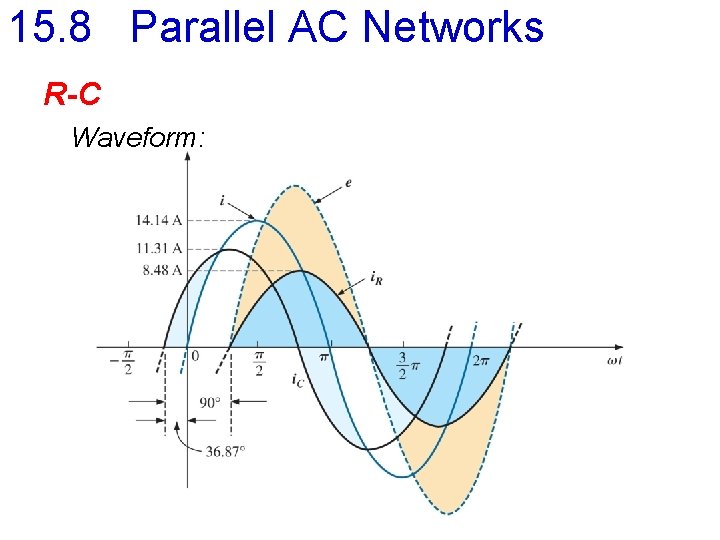
15. 8 Parallel AC Networks R-C Waveform:
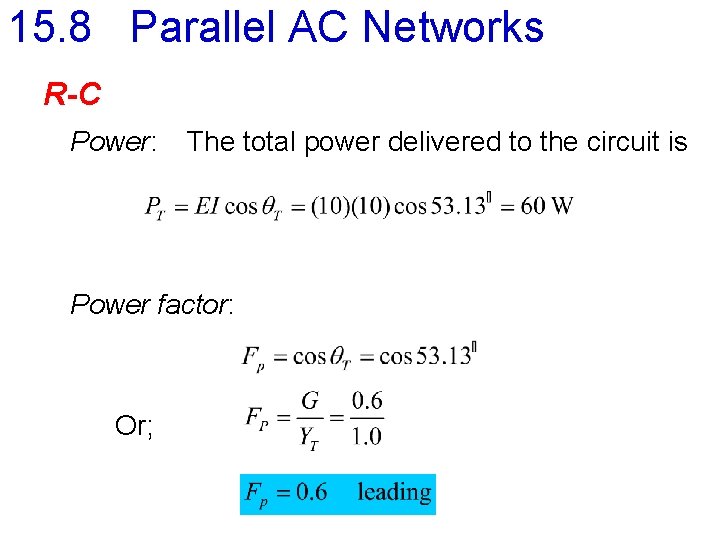
15. 8 Parallel AC Networks R-C Power: The total power delivered to the circuit is Power factor: Or;
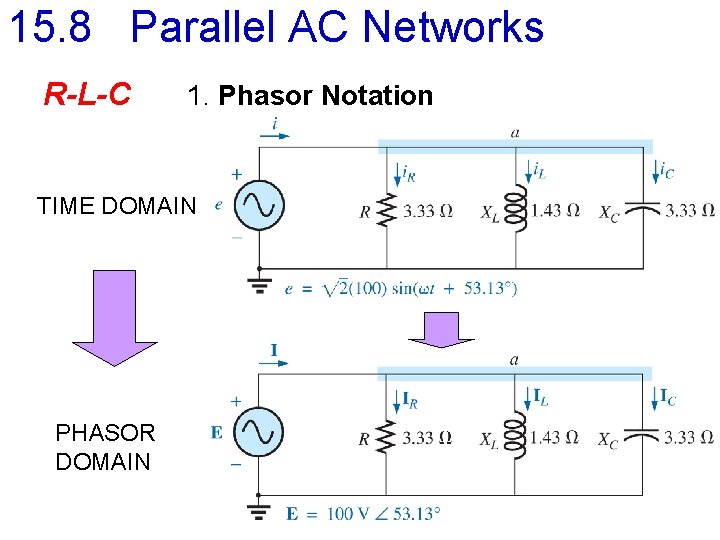
15. 8 Parallel AC Networks R-L-C 1. Phasor Notation TIME DOMAIN PHASOR DOMAIN
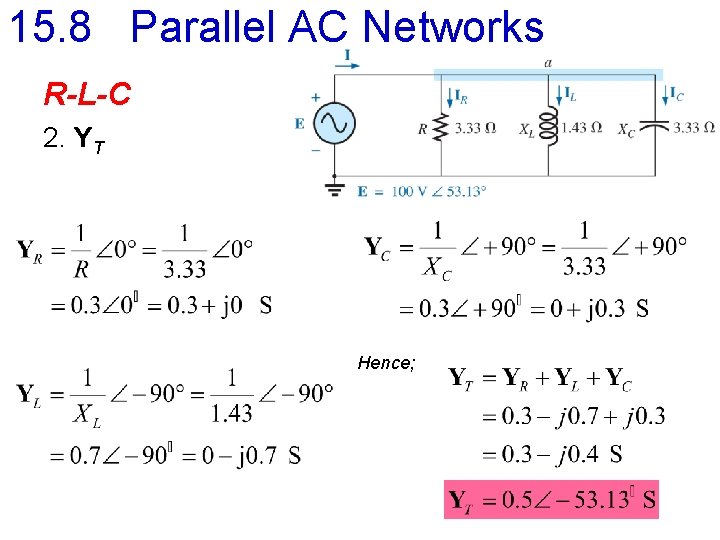
15. 8 Parallel AC Networks R-L-C 2. YT Hence;
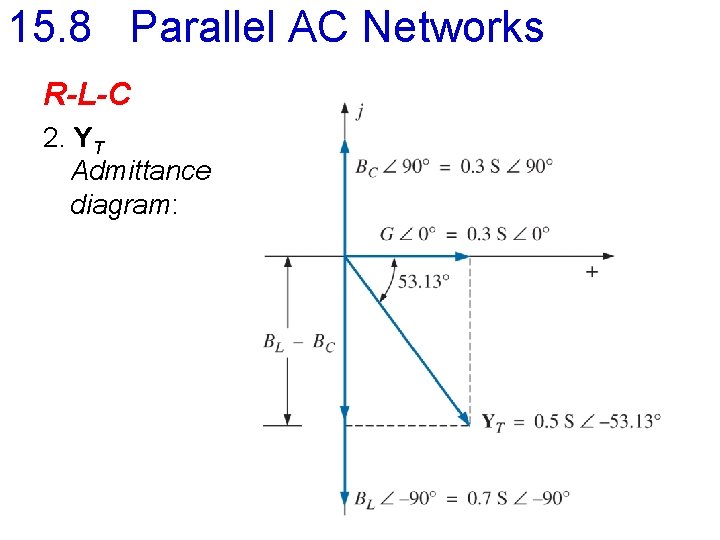
15. 8 Parallel AC Networks R-L-C 2. YT Admittance diagram:
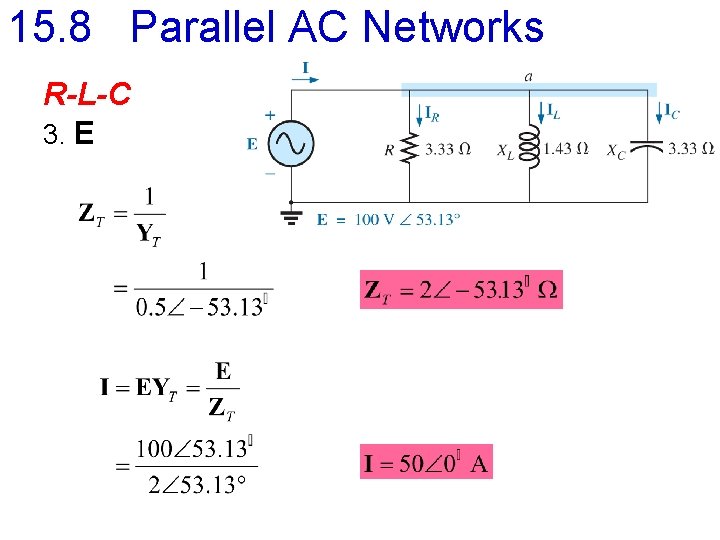
15. 8 Parallel AC Networks R-L-C 3. E
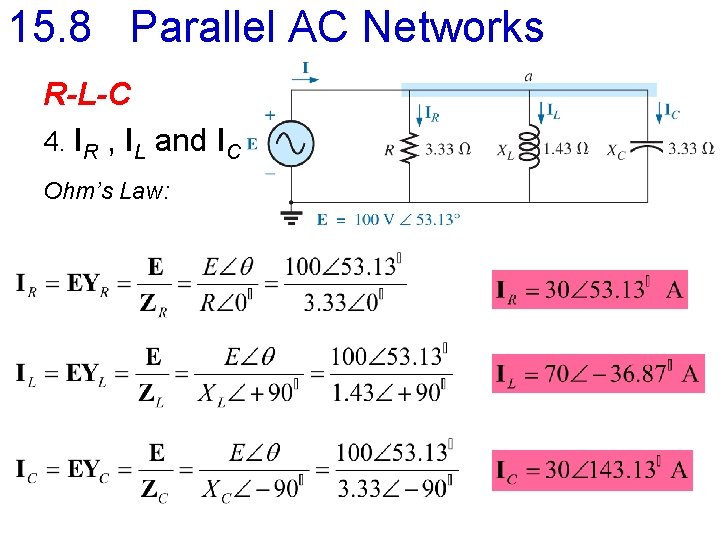
15. 8 Parallel AC Networks R-L-C 4. IR , IL and IC Ohm’s Law:
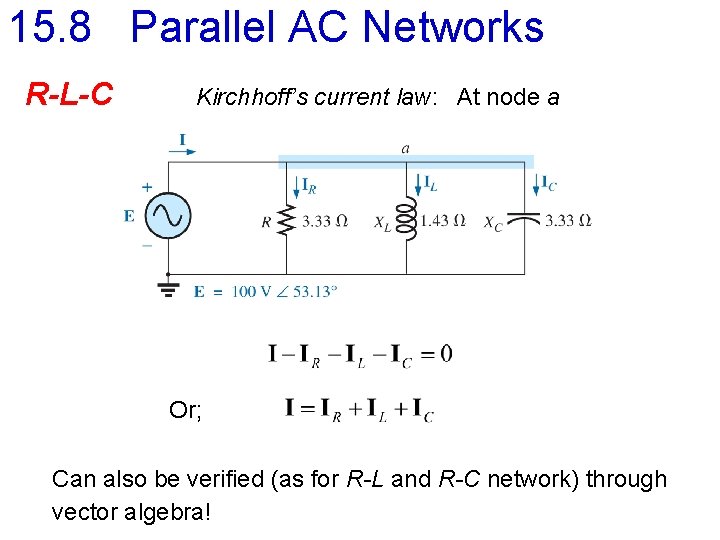
15. 8 Parallel AC Networks R-L-C Kirchhoff’s current law: At node a Or; Can also be verified (as for R-L and R-C network) through vector algebra!
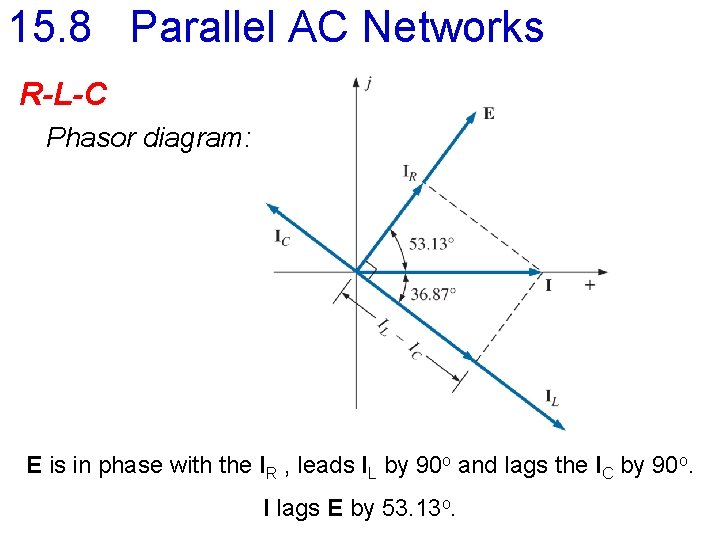
15. 8 Parallel AC Networks R-L-C Phasor diagram: E is in phase with the IR , leads IL by 90 o and lags the IC by 90 o. I lags E by 53. 13 o.
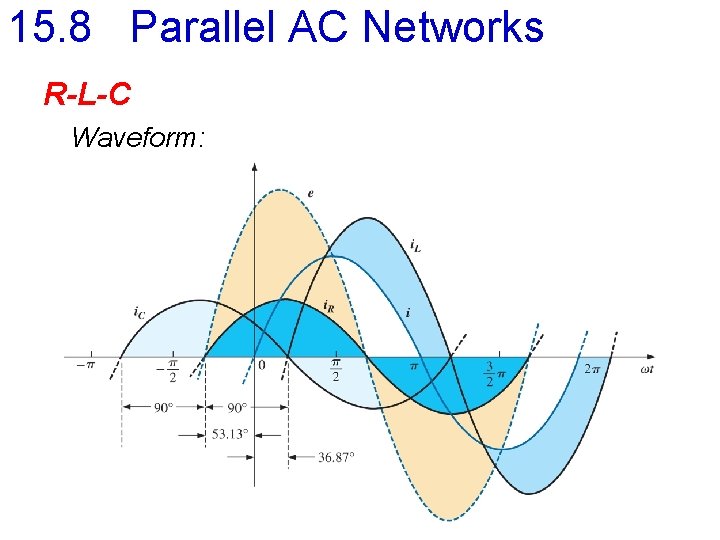
15. 8 Parallel AC Networks R-L-C Waveform:
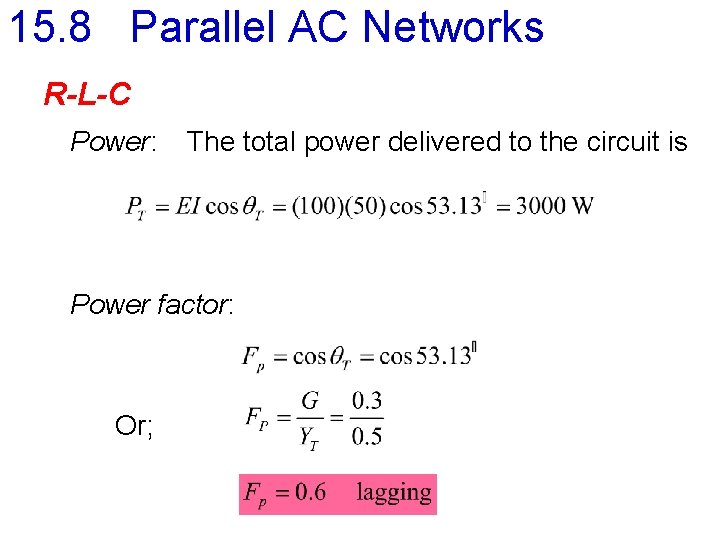
15. 8 Parallel AC Networks R-L-C Power: The total power delivered to the circuit is Power factor: Or;
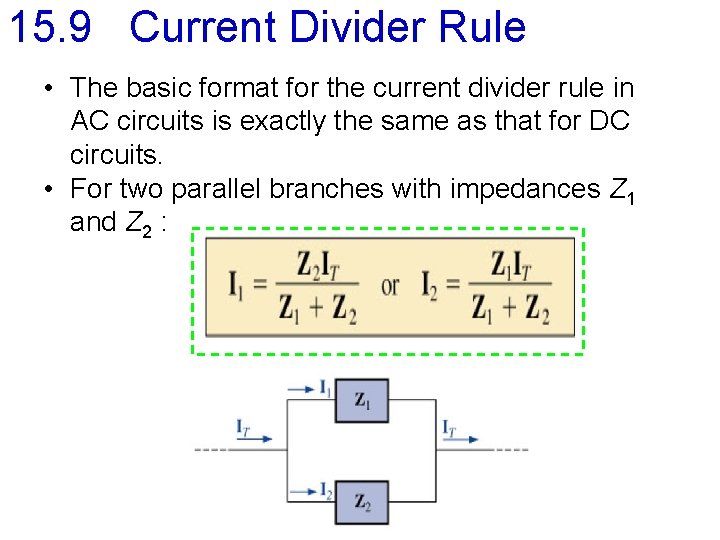
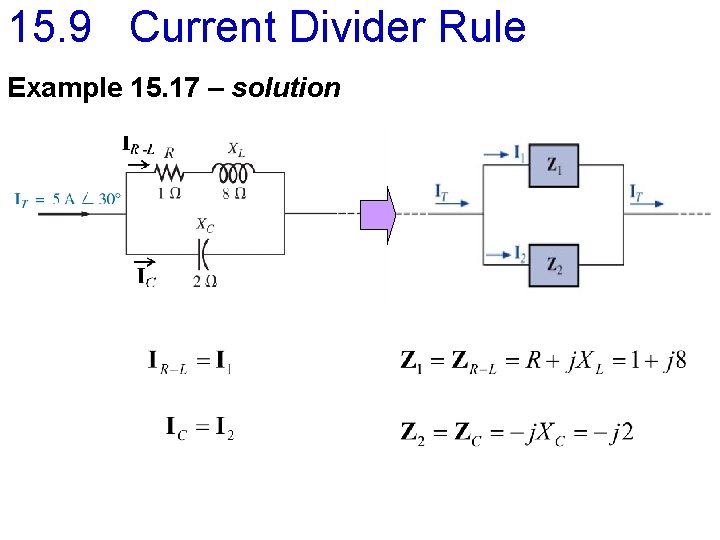
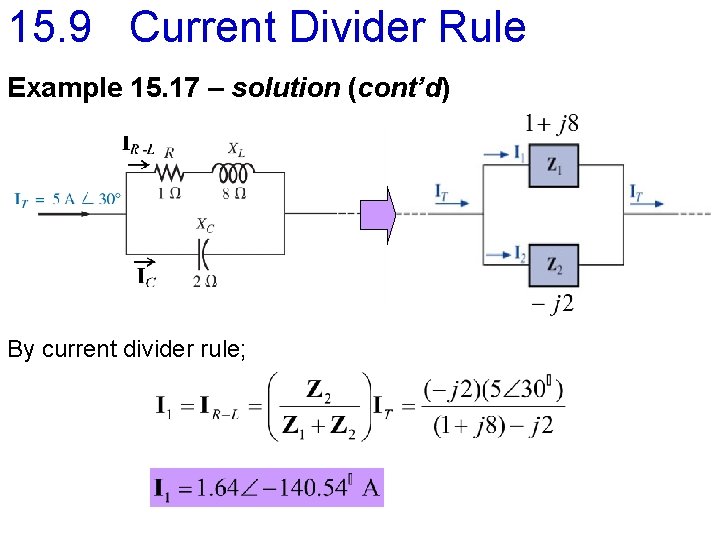
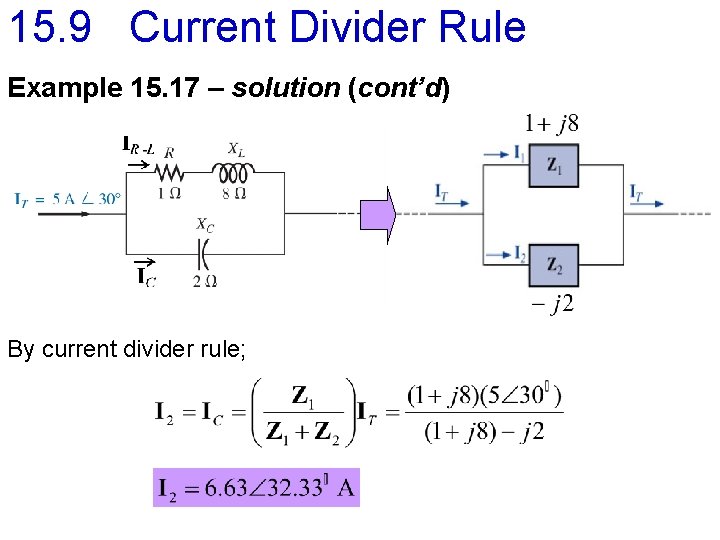
15. 9 Current Divider Rule • The basic format for the current divider rule in AC circuits is exactly the same as that for DC circuits. • For two parallel branches with impedances Z 1 and Z 2 :
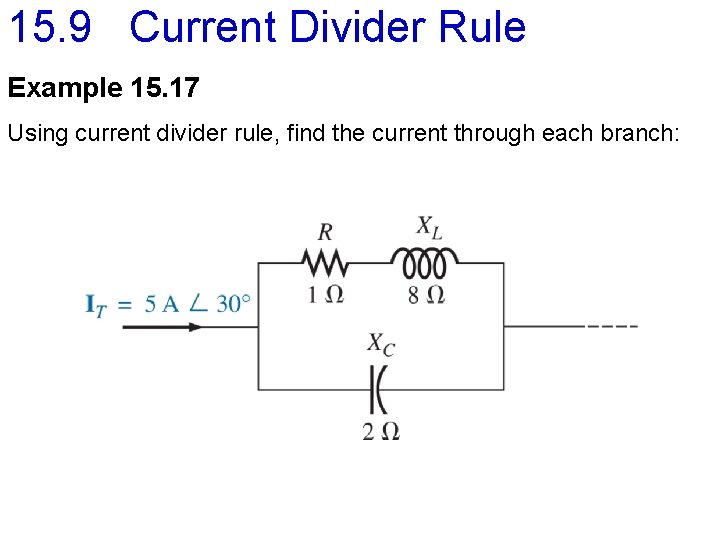
15. 9 Current Divider Rule Example 15. 17 Using current divider rule, find the current through each branch:
15. 9 Current Divider Rule Example 15. 17 – solution
15. 9 Current Divider Rule Example 15. 17 – solution (cont’d) By current divider rule;
15. 9 Current Divider Rule Example 15. 17 – solution (cont’d) By current divider rule;