
Electrical Systems Electricity can be dangerous My nephew
Electrical Systems Electricity can be dangerous. My nephew tried to stick a penny into a plug. Whoever said a penny doesn't go far didn't see him shoot across that floor. I told him he was grounded. Tim Allen
TABLE OF CONTENTS • • The Electrical System Electric Service Electric Power Distribution – Building wiring – Receptacle – Switches • Electrical Codes • Electrical Plans • Energy Conservation

The Electrical System • • Meter Service panel Building wiring Electrical boxes, receptacles (outlets), and switches Lights Equipment powered by electricity Other electrical systems – Entertainment (cable, home theater, audio systems, etc. ) – Telecommunications (telephone, security systems, intercoms, etc. )
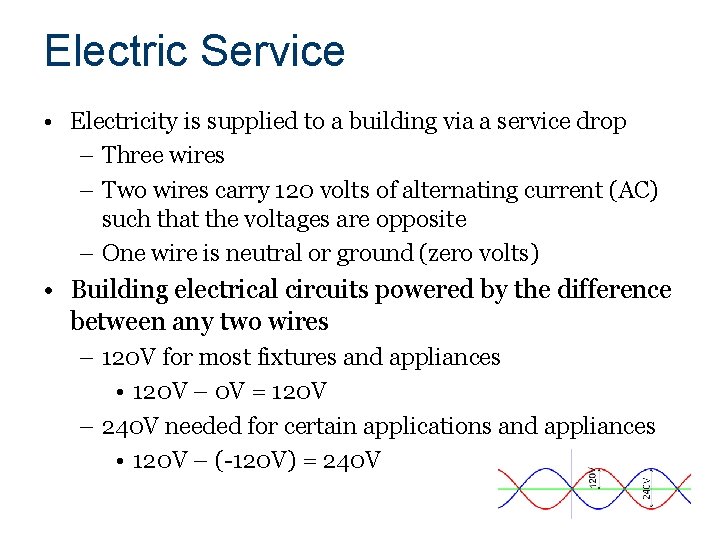
Electric Service • Electricity is supplied to a building via a service drop – Three wires – Two wires carry 120 volts of alternating current (AC) such that the voltages are opposite – One wire is neutral or ground (zero volts) • Building electrical circuits powered by the difference between any two wires – 120 V for most fixtures and appliances • 120 V – 0 V = 120 V – 240 V needed for certain applications and appliances • 120 V – (-120 V) = 240 V
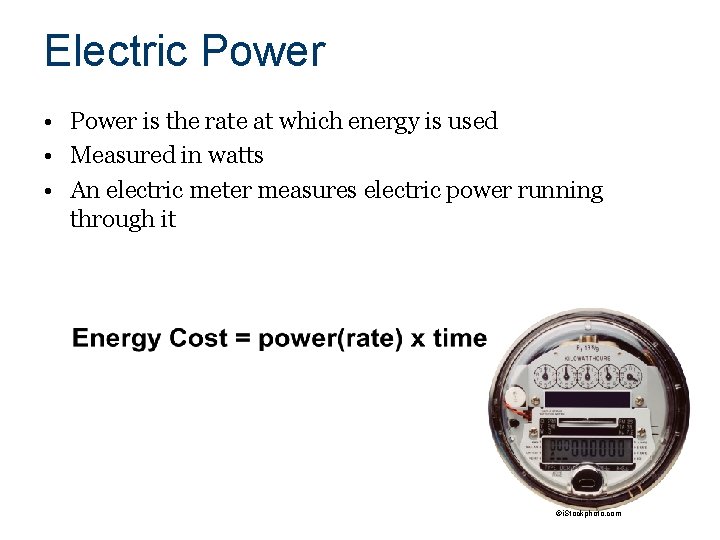
Electric Power • Power is the rate at which energy is used • Measured in watts • An electric meter measures electric power running through it ©i. Stockphoto. com
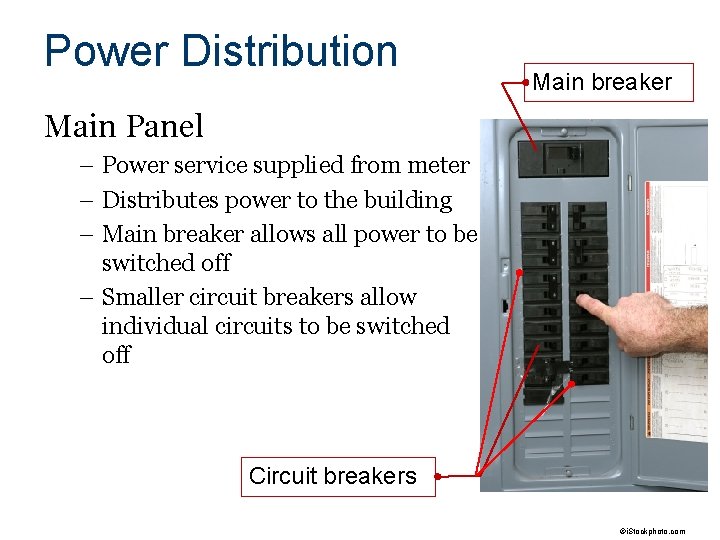
Power Distribution Main breaker Main Panel – Power service supplied from meter – Distributes power to the building – Main breaker allows all power to be switched off – Smaller circuit breakers allow individual circuits to be switched off Circuit breakers ©i. Stockphoto. com
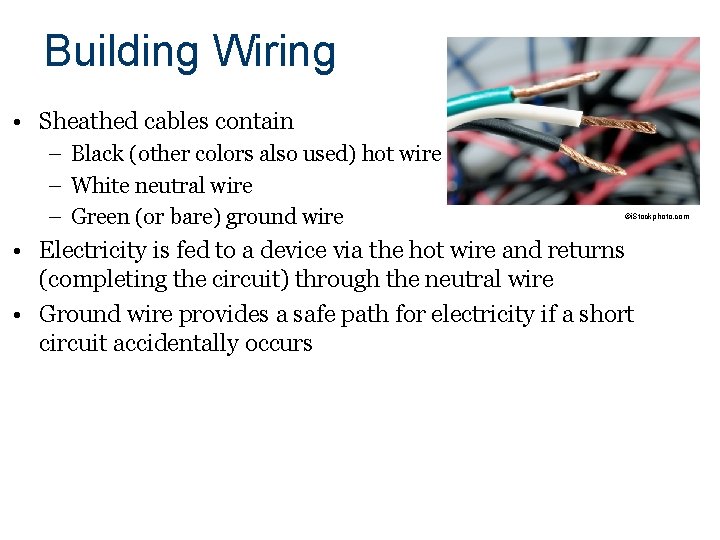
Building Wiring • Sheathed cables contain – Black (other colors also used) hot wire – White neutral wire – Green (or bare) ground wire ©i. Stockphoto. com • Electricity is fed to a device via the hot wire and returns (completing the circuit) through the neutral wire • Ground wire provides a safe path for electricity if a short circuit accidentally occurs
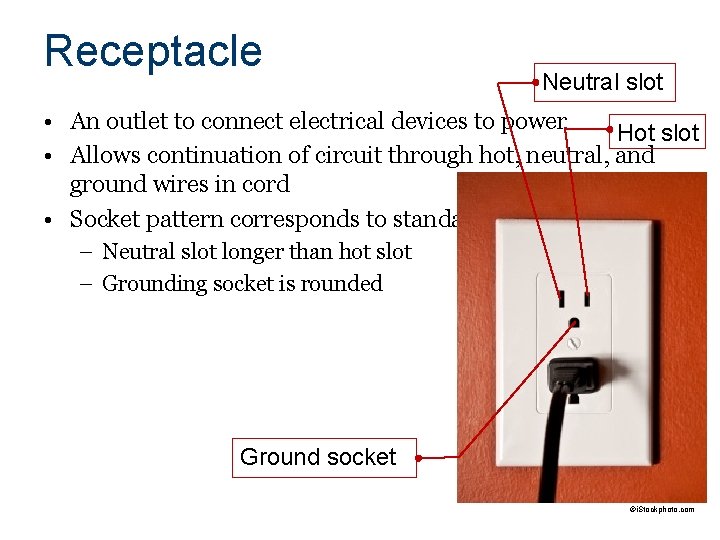
Receptacle Neutral slot • An outlet to connect electrical devices to power Hot slot • Allows continuation of circuit through hot, neutral, and ground wires in cord • Socket pattern corresponds to standard prong patterns – Neutral slot longer than hot slot – Grounding socket is rounded Ground socket ©i. Stockphoto. com
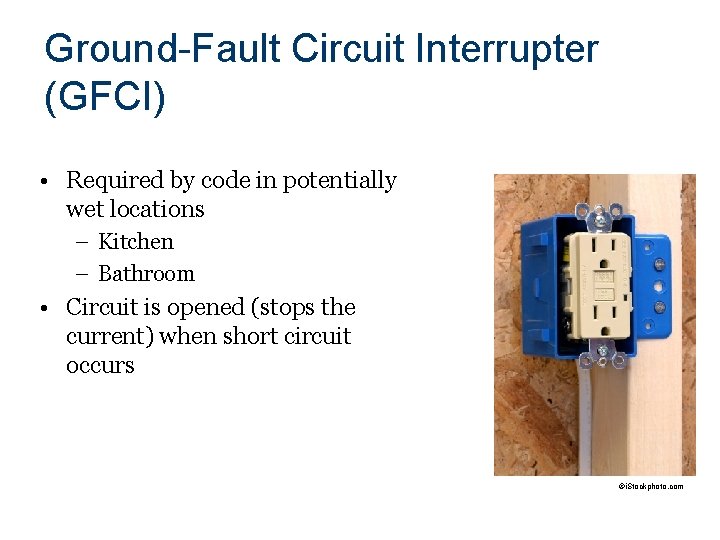
Ground-Fault Circuit Interrupter (GFCI) • Required by code in potentially wet locations – Kitchen – Bathroom • Circuit is opened (stops the current) when short circuit occurs ©i. Stockphoto. com
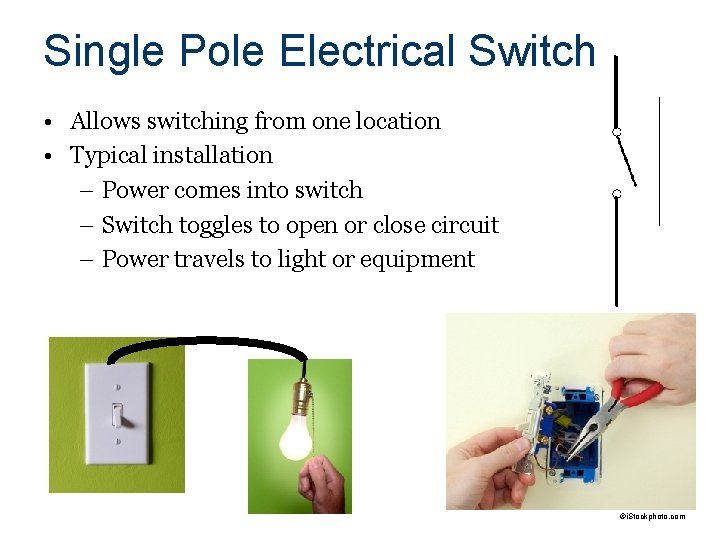
Single Pole Electrical Switch • Allows switching from one location • Typical installation – Power comes into switch – Switch toggles to open or close circuit – Power travels to light or equipment ©i. Stockphoto. com

Double-Pole/Single-Throw Switch • Allows switching two circuits from one location • Similar to single-pole switch except two circuits are opened or closed with a single switch. ©i. Stockphoto. com
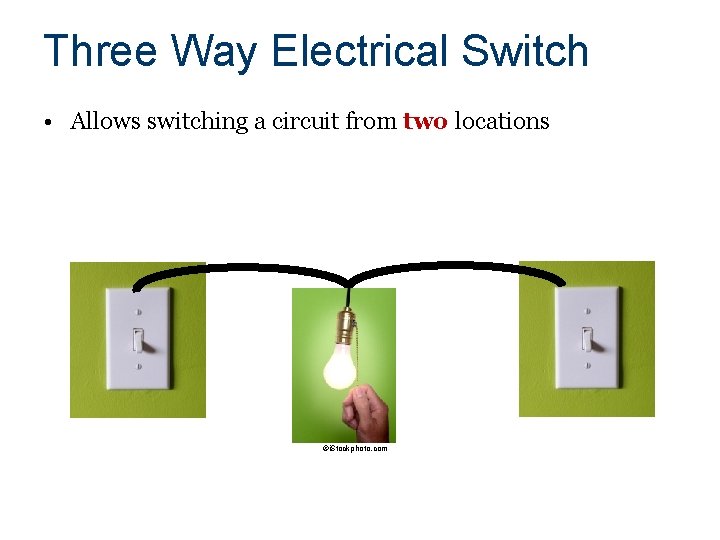
Three Way Electrical Switch • Allows switching a circuit from two locations ©i. Stockphoto. com
Electrical Codes • Local jurisdictions may have unique electrical code requirements or may adopt a model code • International Residential Code includes residential electrical requirements • National Electrical Code (NFPA 70) is a model code that provides guidelines for the design of electrical systems
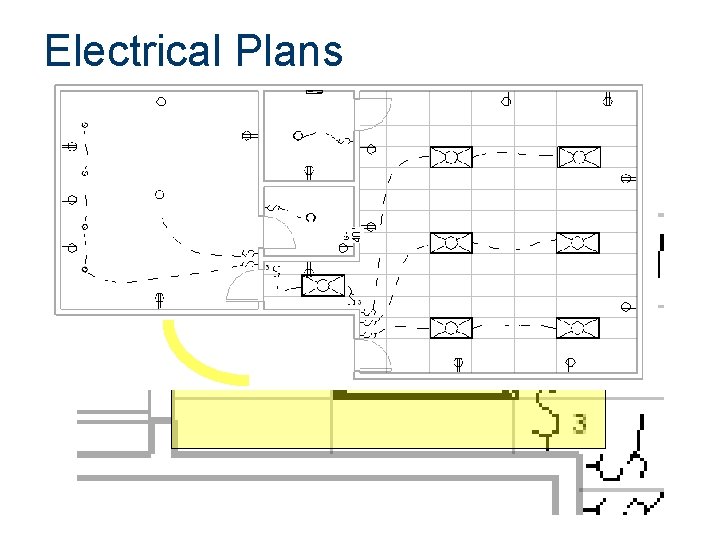
Electrical Plans
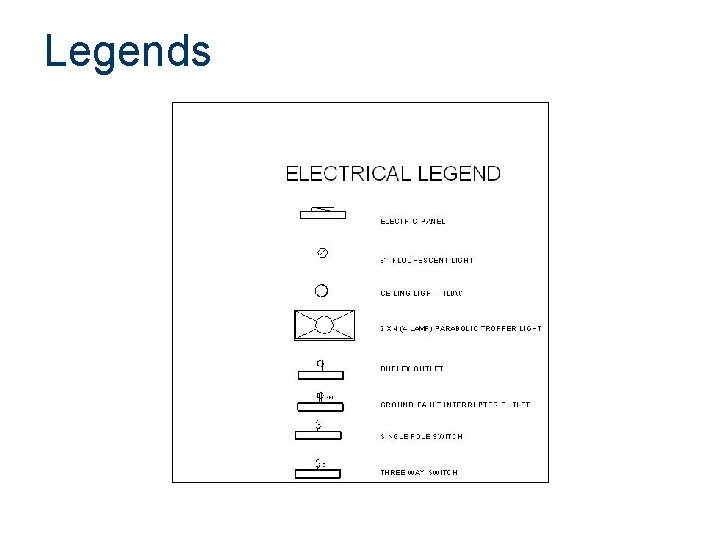
Legends
Energy Conservation • Minimize electrical outlets and recessed appliances in exterior walls • Install timed switches or a humidistat in exhaust fans to control unnecessary ventilation • Select energy efficient appliances and equipment • Use energy efficient fluorescent lighting where practical • Use recessed lighting fixtures that are rated for insulation cover
TABLE OF CONTENTS • • The Electrical System Electric Service Electric Power Distribution – Building wiring – Receptacle – Switches • Electrical Codes • Electrical Plans • Energy Conservation
Image Resources • Retrieved December 12, 2009 from www. istock. com • Retrieved December 12, 2009 from www. wikimedia. com
Electrical Systems
- Slides: 19