
Electrical Safety While Working In and Around a



- Slides: 14
Electrical Safety While Working In and Around a Lift Station Presentation by Dave Sayward President Magnum Electric
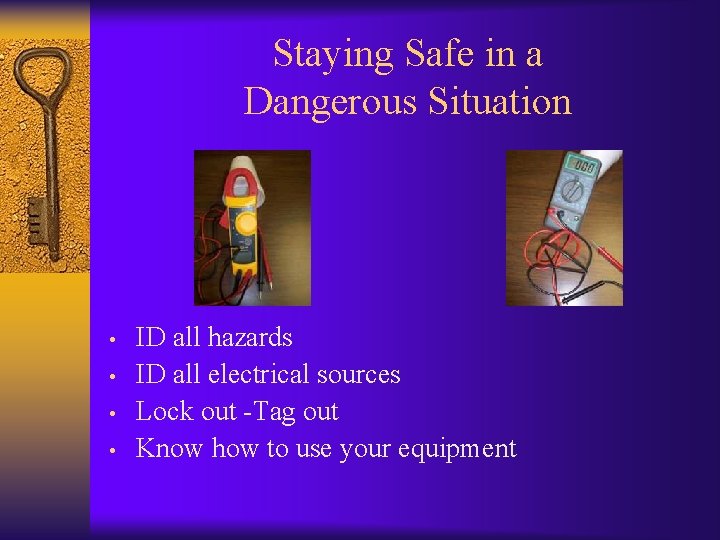
Staying Safe in a Dangerous Situation • • ID all hazards ID all electrical sources Lock out -Tag out Know how to use your equipment
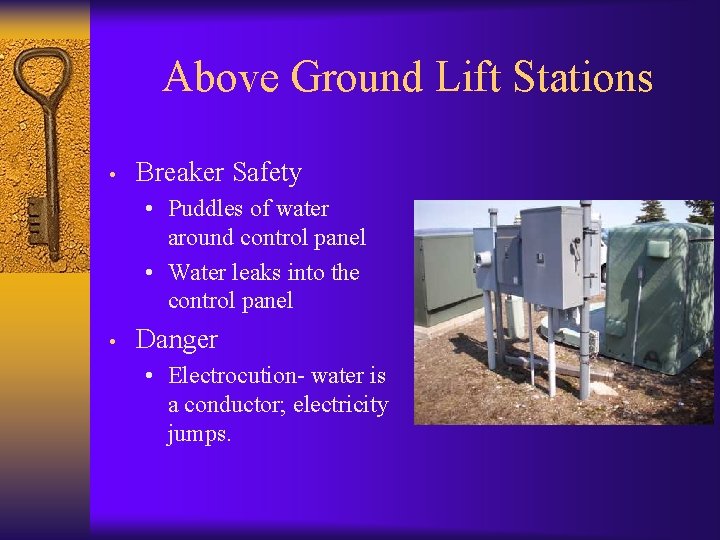
Above Ground Lift Stations • Breaker Safety • Puddles of water around control panel • Water leaks into the control panel • Danger • Electrocution- water is a conductor; electricity jumps.
Below Ground Lift Stations • ID the Hazards • Air Quality • Confined Space • Electrocution • Most stations have metal ladders • Engulfment
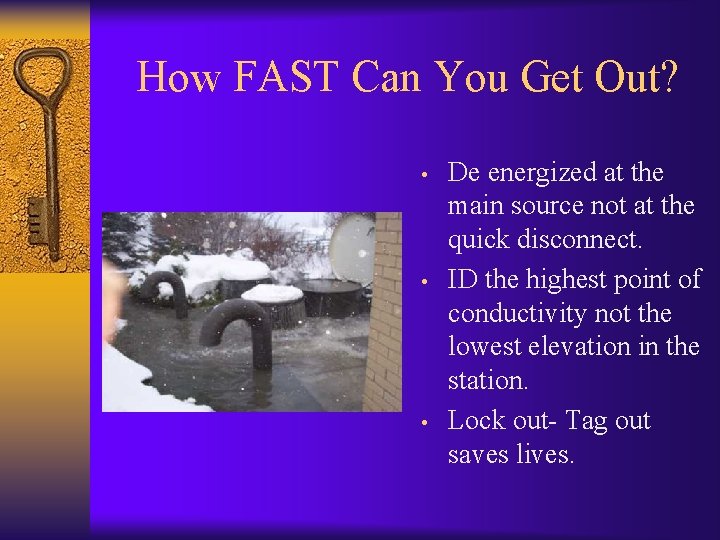
How FAST Can You Get Out? • • • De energized at the main source not at the quick disconnect. ID the highest point of conductivity not the lowest elevation in the station. Lock out- Tag out saves lives.
Safe Working Principals • • • All equipment must be inspected by qualified person. Open all motor housings check for water Open control panels check for water damage
Safe Working Principals • • Check air quality Know how to “check” for voltage or have a qualified trained person perform the work. Always disconnect the power source from the control panel if you are working on it. The main power source is for a lift station is not a motor control disconnect
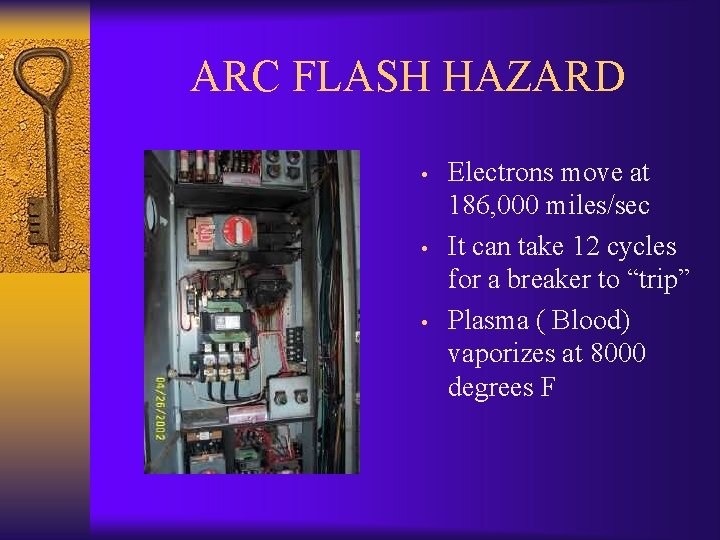
ARC FLASH HAZARD • • • Electrons move at 186, 000 miles/sec It can take 12 cycles for a breaker to “trip” Plasma ( Blood) vaporizes at 8000 degrees F
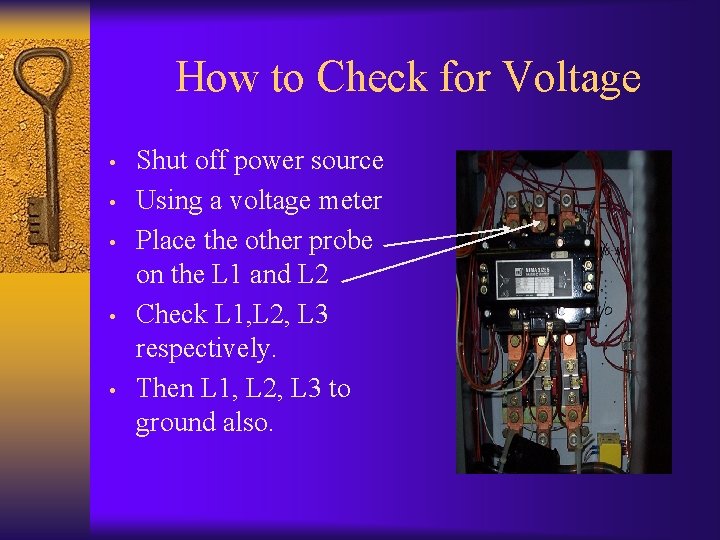
How to Check for Voltage • • • Shut off power source Using a voltage meter Place the other probe on the L 1 and L 2 Check L 1, L 2, L 3 respectively. Then L 1, L 2, L 3 to ground also.
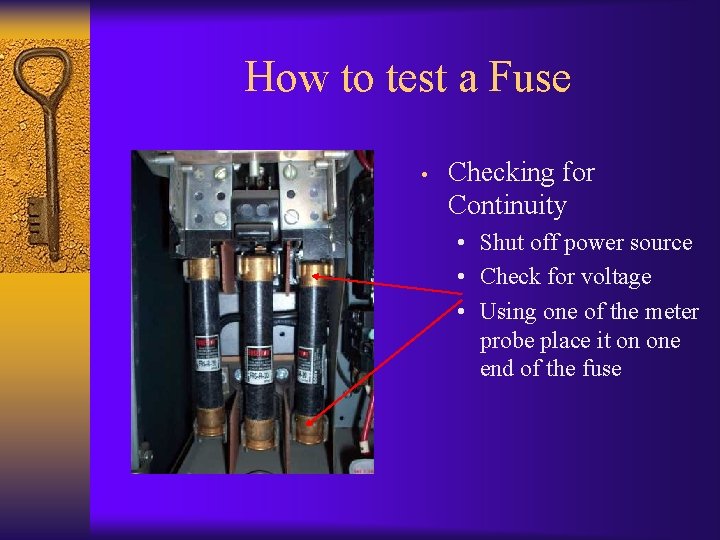
How to test a Fuse • Checking for Continuity • Shut off power source • Check for voltage • Using one of the meter probe place it on one end of the fuse
How to test a Fuse • • • Remove fuse from the fuse holder Using the meter probes touch each end cap of the fuse. If the fuse is good the meter will read closed. If the fuse is bad it will read open.
Dangers of working on VFD • • • The DC voltage is greater than 700 volts. Clear! Its 600 volts to start your heart or it can stop it! There is stored voltage in capacitors in the drive units even with the power off.
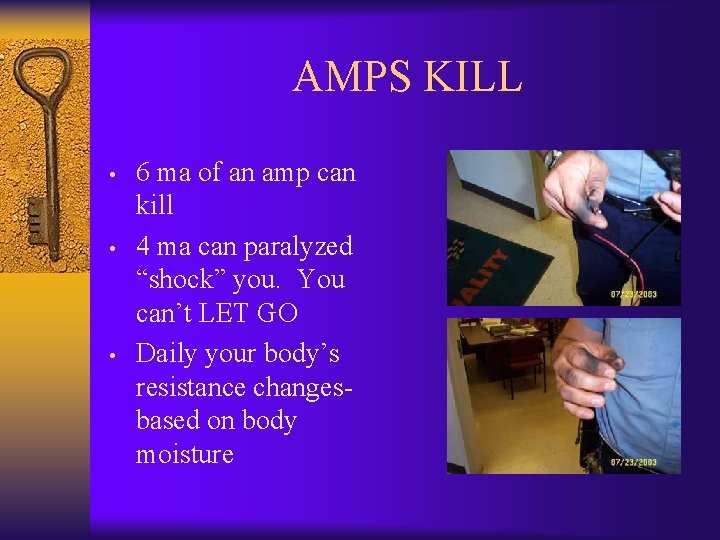
AMPS KILL • • • 6 ma of an amp can kill 4 ma can paralyzed “shock” you. You can’t LET GO Daily your body’s resistance changesbased on body moisture
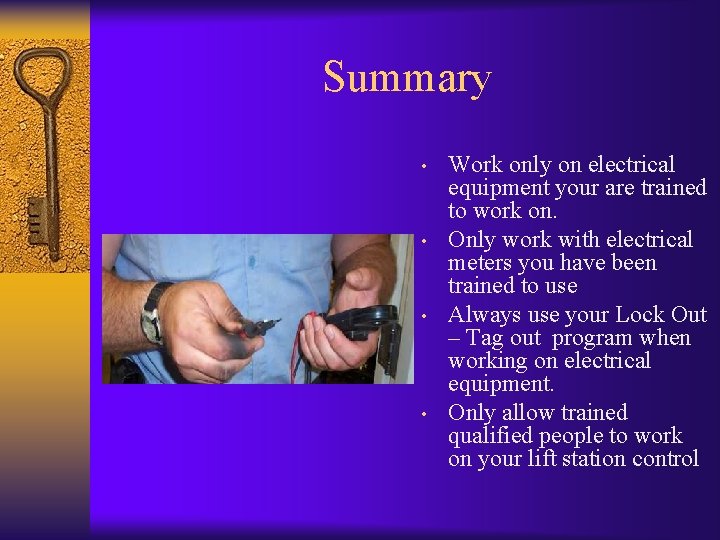
Summary • • Work only on electrical equipment your are trained to work on. Only work with electrical meters you have been trained to use Always use your Lock Out – Tag out program when working on electrical equipment. Only allow trained qualified people to work on your lift station control