
Electrical Safety Unqualified Worker Session Objectives Understand the
Electrical Safety Unqualified Worker
Session Objectives Understand the hazards of electricity Identify and avoid common electrical hazards Follow safe work practices around electrical equipment © Business & Legal Reports, Inc. 0912
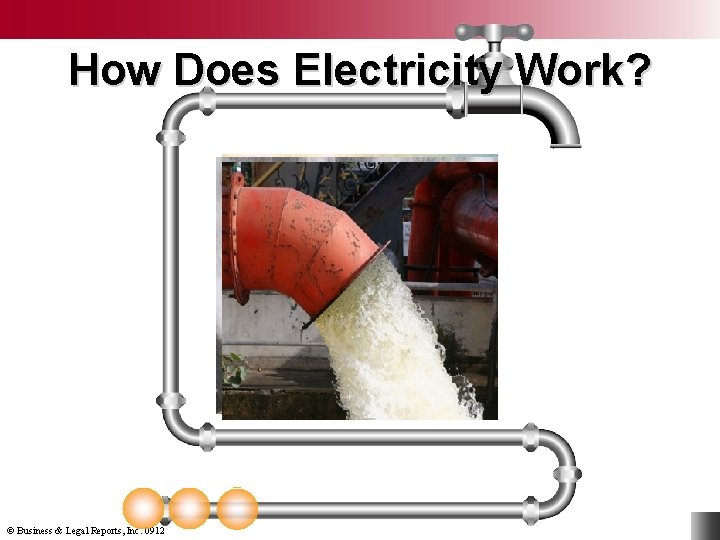
How Does Electricity Work? © Business & Legal Reports, Inc. 0912
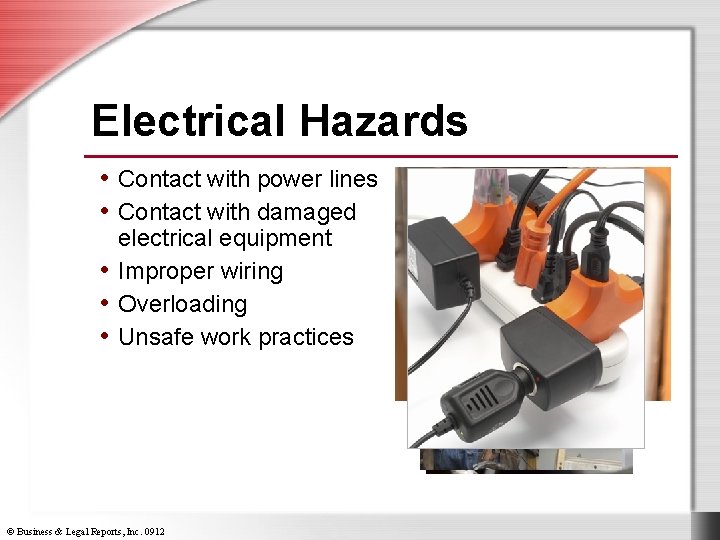
Electrical Hazards • Contact with power lines • Contact with damaged electrical equipment • Improper wiring • Overloading • Unsafe work practices © Business & Legal Reports, Inc. 0912
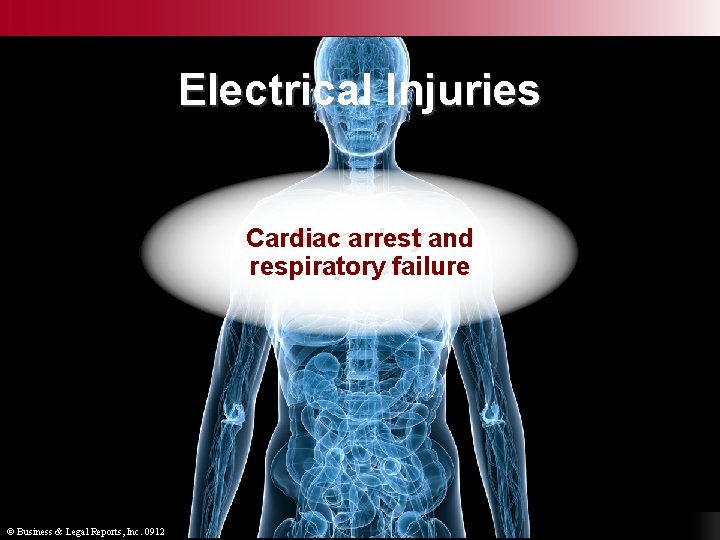
Electrical Injuries Muscle, Cardiac Secondary nerve, arrest and Thermal Burns burns tissue respiratory injuries destruction failure © Business & Legal Reports, Inc. 0912
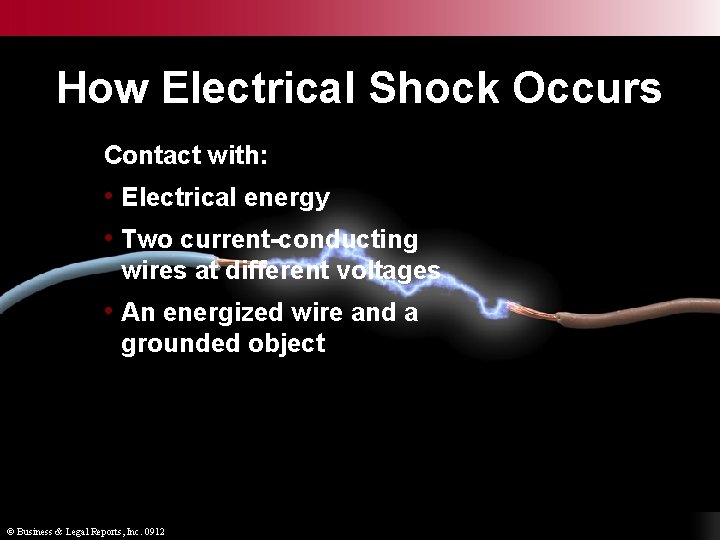
How Electrical Shock Occurs Contact with: • Electrical energy • Two current-conducting wires at different voltages • An energized wire and a grounded object © Business & Legal Reports, Inc. 0912
Severity of Electrical Shock • Amount of electrical current— higher is more dangerous • Duration—longer is more dangerous • Path through the body—through the heart is most dangerous © Business & Legal Reports, Inc. 0912
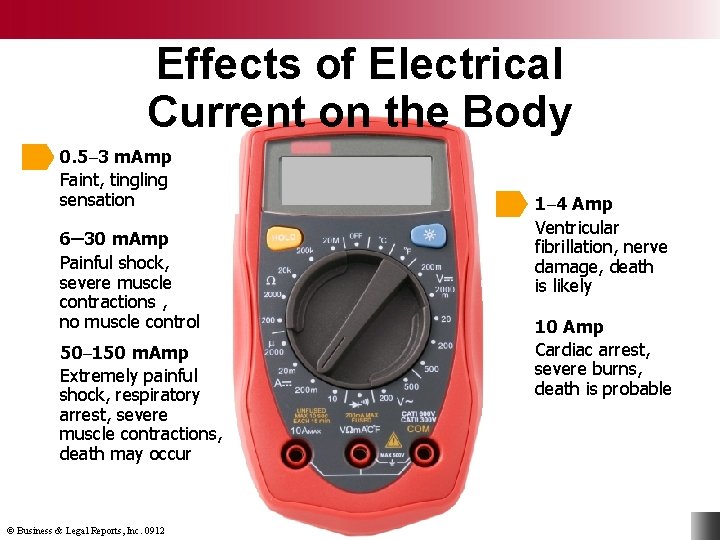
Effects of Electrical Current on the Body 0. 5– 3 m. Amp Faint, tingling sensation 6– 30 m. Amp Painful shock, severe muscle contractions , no muscle control 50– 150 m. Amp Extremely painful shock, respiratory arrest, severe muscle contractions, death may occur © Business & Legal Reports, Inc. 0912 1– 4 Amp Ventricular fibrillation, nerve damage, death is likely 10 Amp Cardiac arrest, severe burns, death is probable
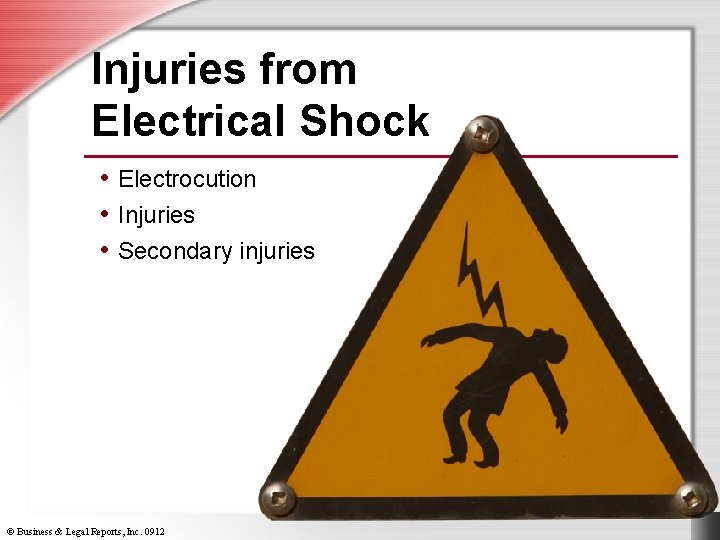
Injuries from Electrical Shock • Electrocution • Injuries • Secondary injuries © Business & Legal Reports, Inc. 0912
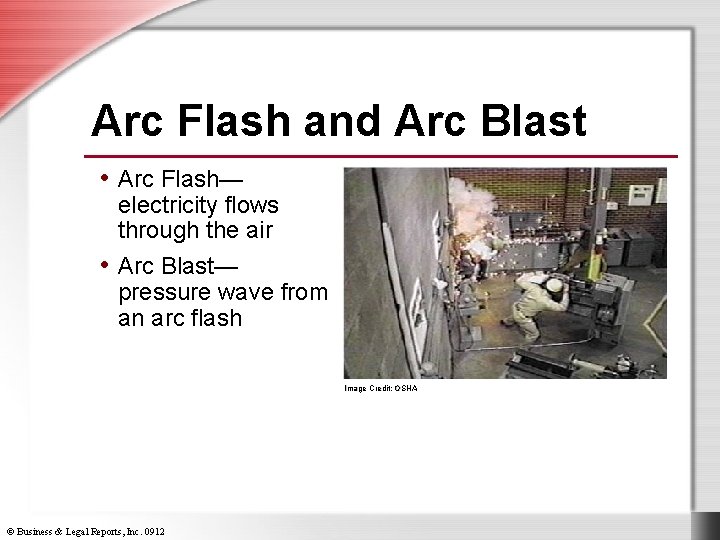
Arc Flash and Arc Blast • Arc Flash— electricity flows through the air • Arc Blast— pressure wave from an arc flash Image Credit: OSHA © Business & Legal Reports, Inc. 0912
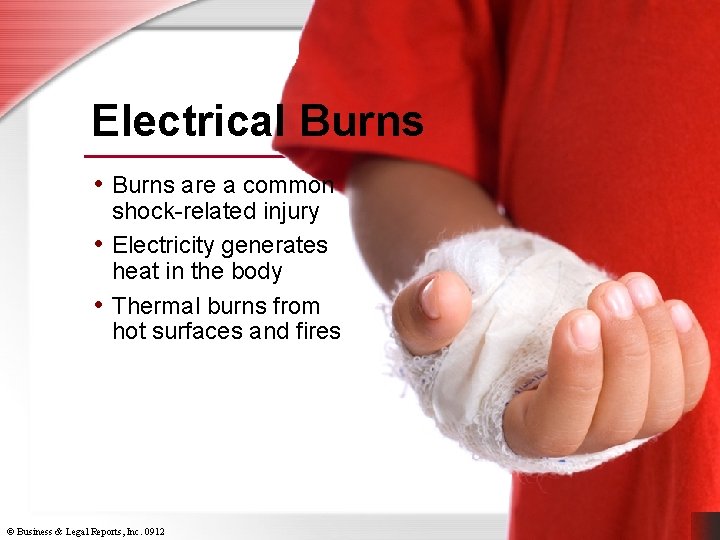
Electrical Burns • Burns are a common shock-related injury • Electricity generates heat in the body • Thermal burns from hot surfaces and fires © Business & Legal Reports, Inc. 0912
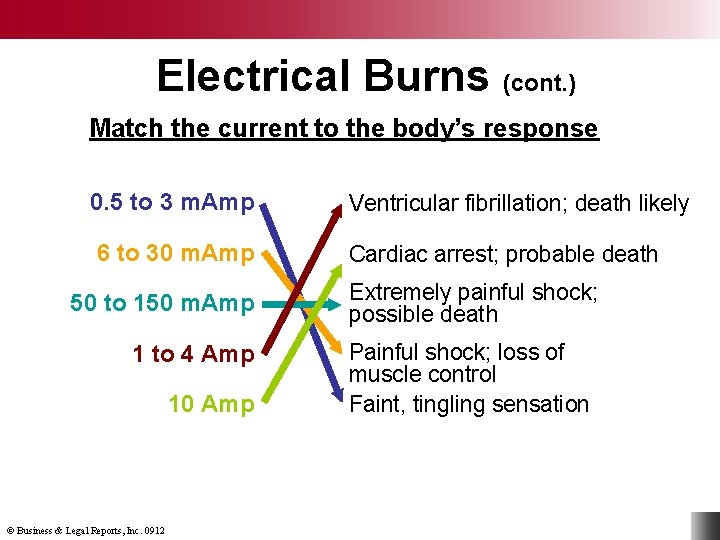
Electrical Burns (cont. ) Match the current to the body’s response 0. 5 to 3 m. Amp Ventricular fibrillation; death likely 6 to 30 m. Amp Cardiac arrest; probable death 50 to 150 m. Amp 1 to 4 Amp 10 Amp © Business & Legal Reports, Inc. 0912 Extremely painful shock; possible death Painful shock; loss of muscle control Faint, tingling sensation
Electrical Hazards— Any Questions? Do you understand: • The hazards and injuries of electricity in the workplace? © Business & Legal Reports, Inc. 0912
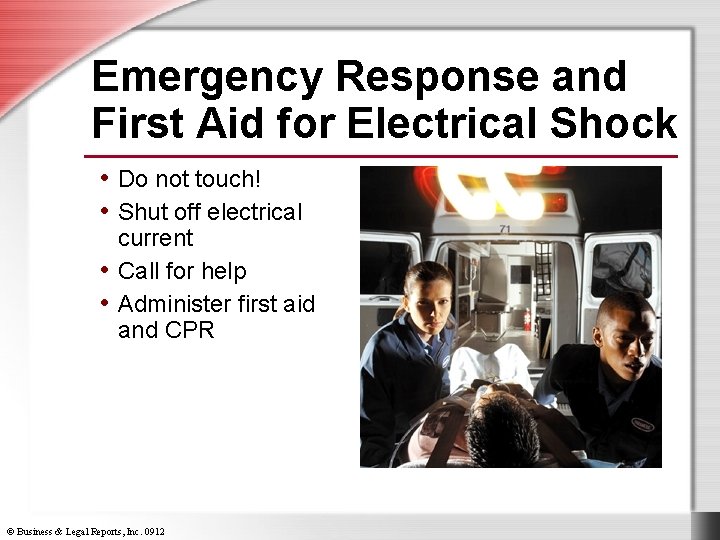
Emergency Response and First Aid for Electrical Shock • Do not touch! • Shut off electrical current • Call for help • Administer first aid and CPR © Business & Legal Reports, Inc. 0912
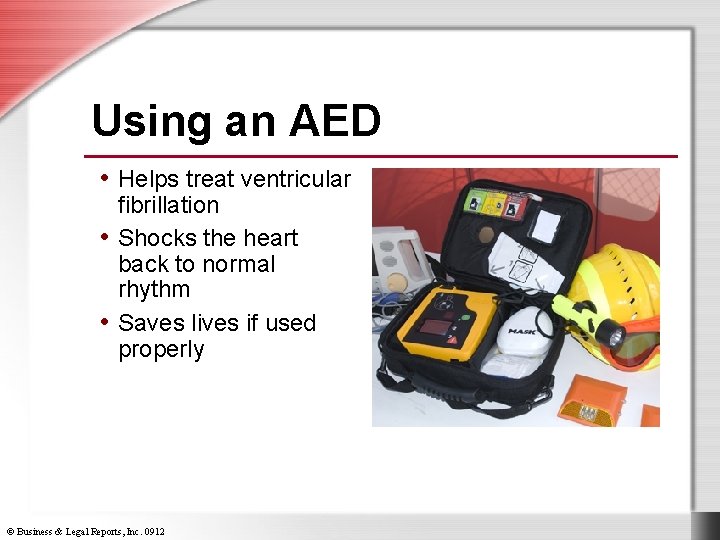
Using an AED • Helps treat ventricular fibrillation • Shocks the heart back to normal rhythm • Saves lives if used properly © Business & Legal Reports, Inc. 0912
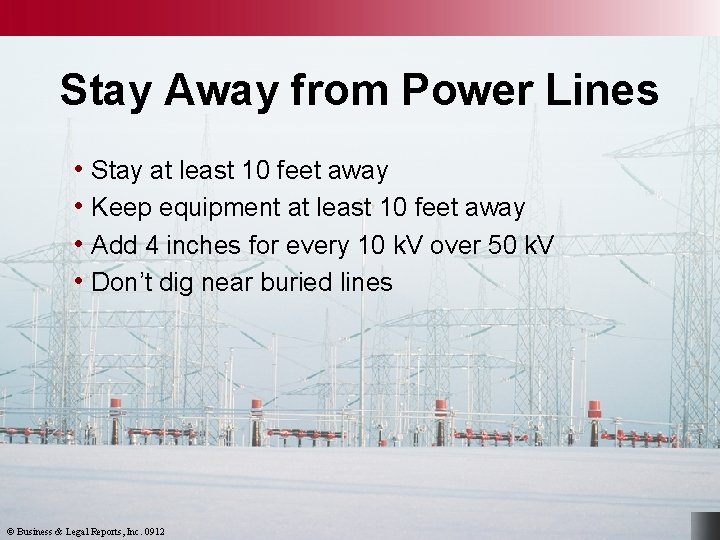
Stay Away from Power Lines • Stay at least 10 feet away • Keep equipment at least 10 feet away • Add 4 inches for every 10 k. V over 50 k. V • Don’t dig near buried lines © Business & Legal Reports, Inc. 0912
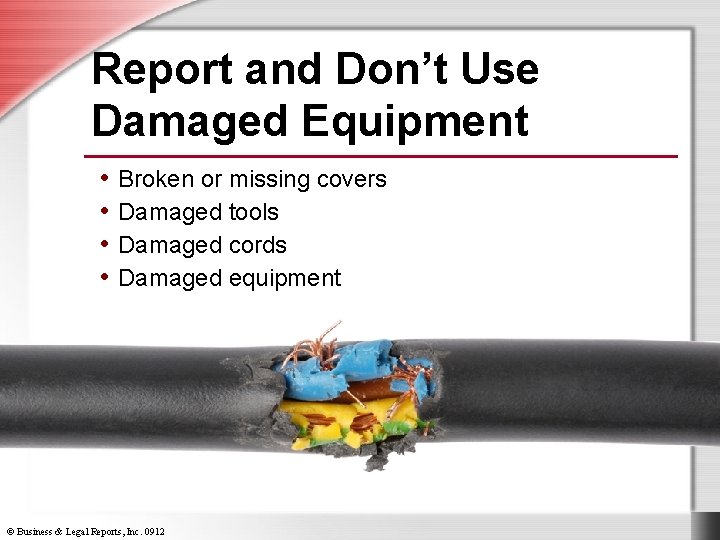
Report and Don’t Use Damaged Equipment • Broken or missing covers • Damaged tools • Damaged cords • Damaged equipment © Business & Legal Reports, Inc. 0912
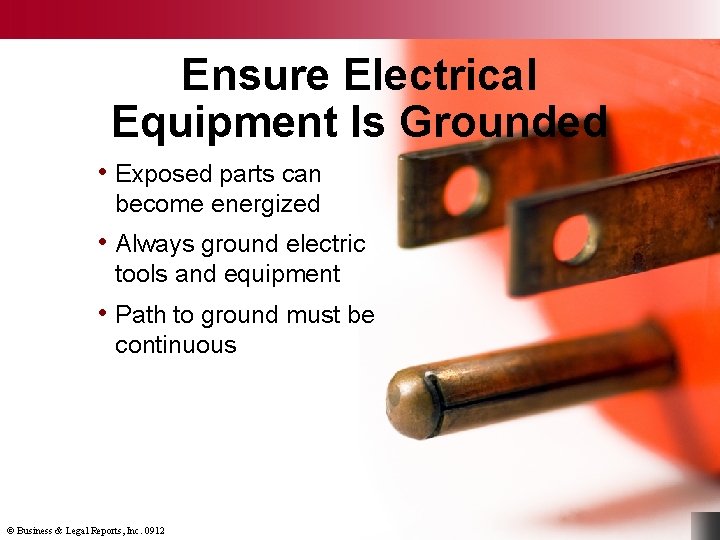
Ensure Electrical Equipment Is Grounded • Exposed parts can become energized • Always ground electric tools and equipment • Path to ground must be continuous © Business & Legal Reports, Inc. 0912
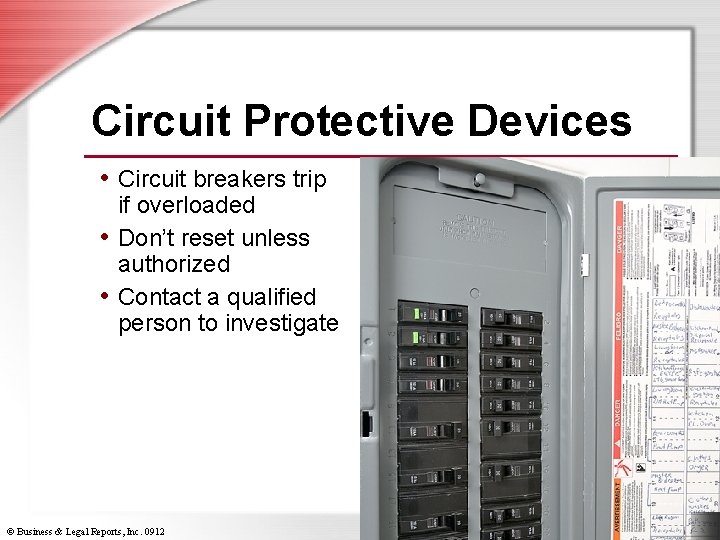
Circuit Protective Devices • Circuit breakers trip if overloaded • Don’t reset unless authorized • Contact a qualified person to investigate © Business & Legal Reports, Inc. 0912
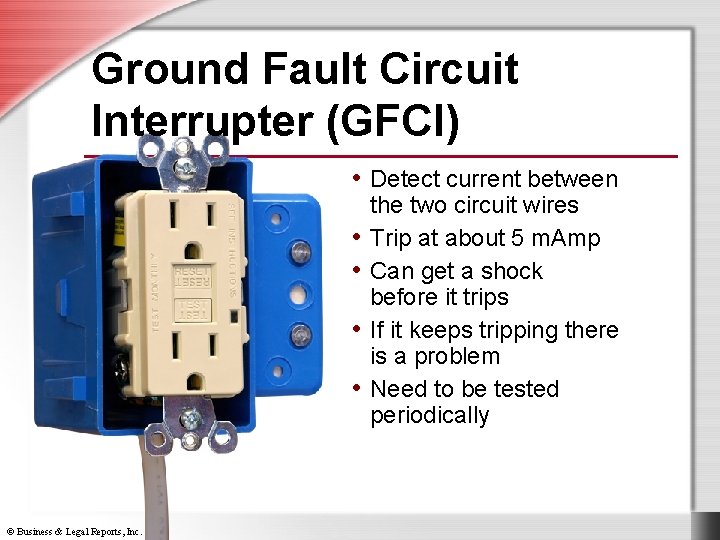
Ground Fault Circuit Interrupter (GFCI) • Detect current between • • © Business & Legal Reports, Inc. 0912 the two circuit wires Trip at about 5 m. Amp Can get a shock before it trips If it keeps tripping there is a problem Need to be tested periodically
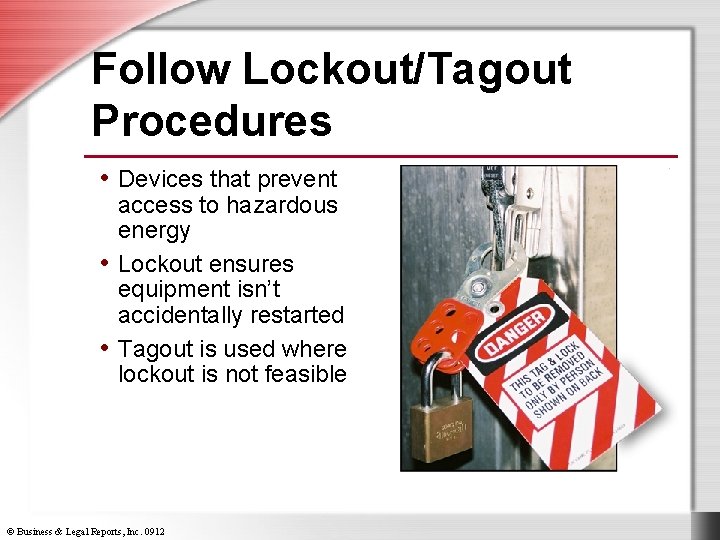
Follow Lockout/Tagout Procedures • Devices that prevent access to hazardous energy • Lockout ensures equipment isn’t accidentally restarted • Tagout is used where lockout is not feasible © Business & Legal Reports, Inc. 0912
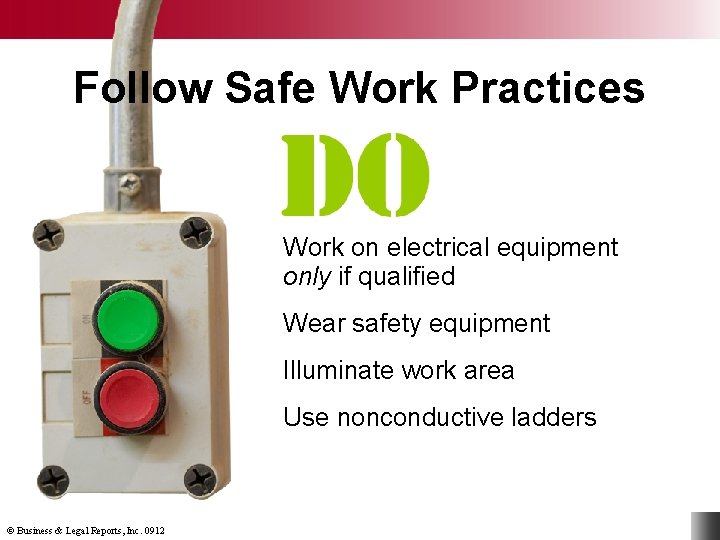
Follow Safe Work Practices Work on electrical equipment only if qualified Wear safety equipment Illuminate work area Use nonconductive ladders © Business & Legal Reports, Inc. 0912
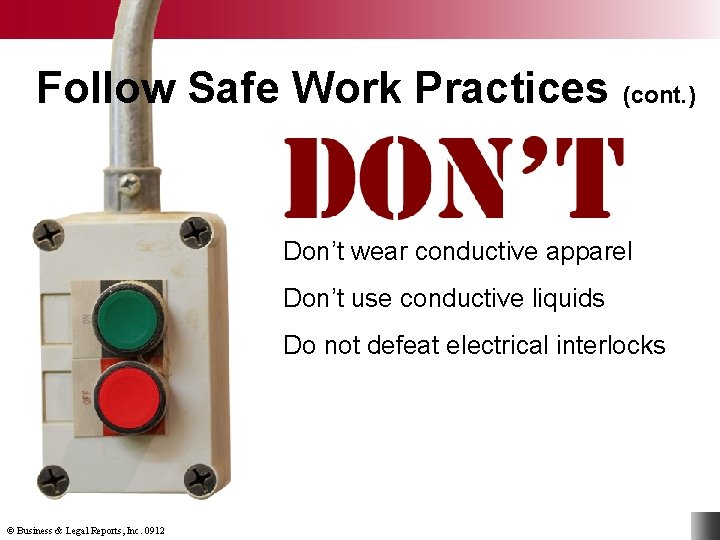
Follow Safe Work Practices (cont. ) Don’t wear conductive apparel Don’t use conductive liquids Do not defeat electrical interlocks © Business & Legal Reports, Inc. 0912
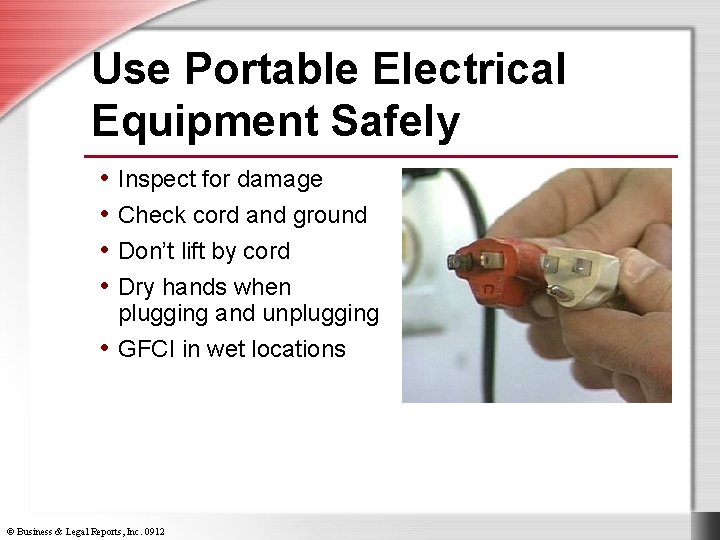
Use Portable Electrical Equipment Safely • Inspect for damage • Check cord and ground • Don’t lift by cord • Dry hands when plugging and unplugging • GFCI in wet locations © Business & Legal Reports, Inc. 0912
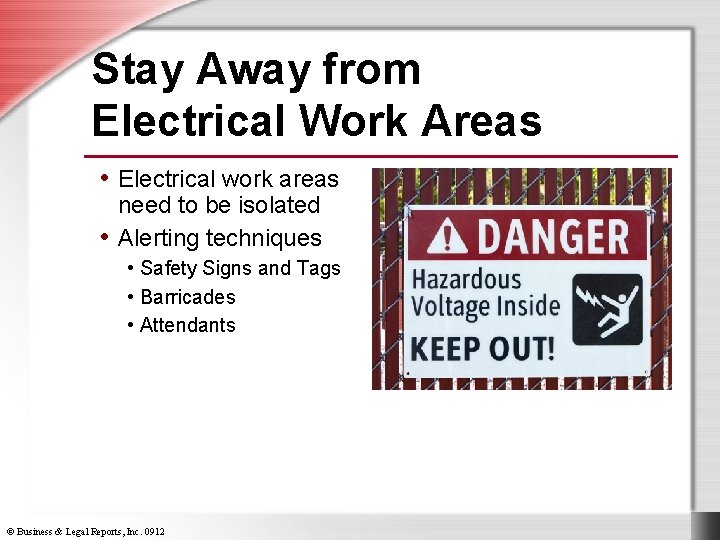
Stay Away from Electrical Work Areas • Electrical work areas need to be isolated • Alerting techniques • Safety Signs and Tags • Barricades • Attendants © Business & Legal Reports, Inc. 0912

Follow the Electrical Safety Program • Written procedure includes: – – Responsibilities Procedures Safe work practices Personal protective equipment • Only qualified personnel may work on or near exposed energized equipment! © Business & Legal Reports, Inc. 0912
Safe Practices © Business & Legal Reports, Inc. 0912 Work on electrical equipment if qualified Illuminate work area Wear conductive apparel Use nonconductive ladders Use conductive liquids near electricity Defeat electrical interlocks Unsafe Practices
Safety Practices— Any Questions? Do you understand: • First aid? • Electrical equipment? • Electrical circuits? • Lockout/tagout? • Safe work practices? • The electrical safety program? © Business & Legal Reports, Inc. 0912
Key Things to Remember Exposure to electricity can be dangerous Watch for electrical hazards Follow safe work practices Follow the electrical safety program Seek assistance from a qualified person © Business & Legal Reports, Inc. 0912
- Slides: 29