
ELECTRICAL SAFETY Electricity a hazard path of least

- Slides: 17
ELECTRICAL SAFETY
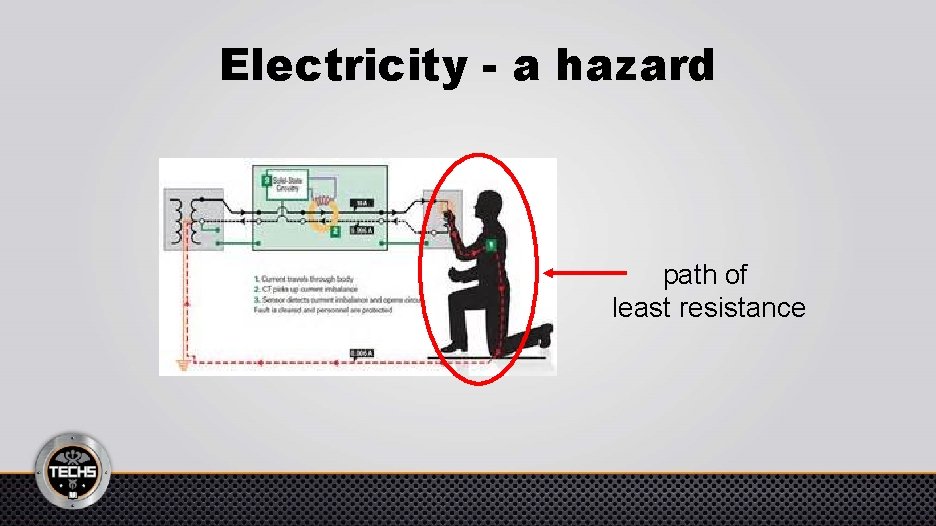
Electricity - a hazard path of least resistance
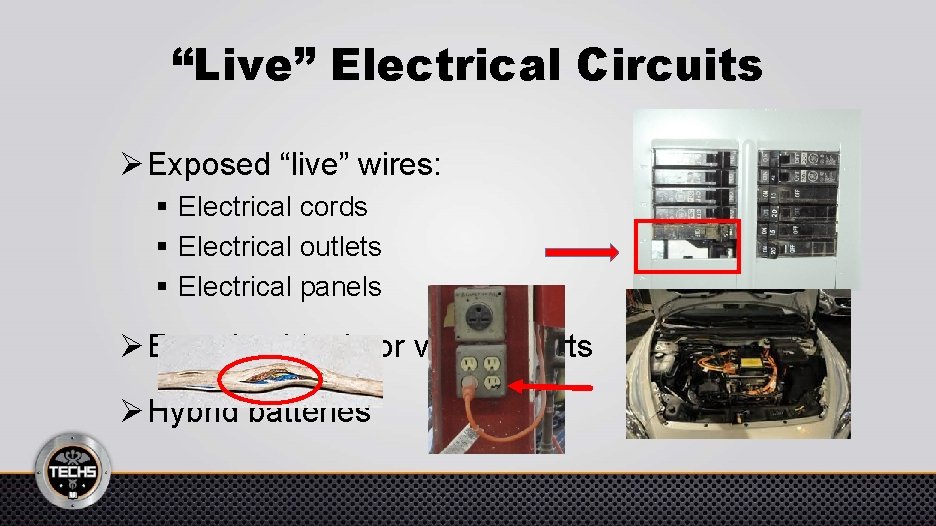
“Live” Electrical Circuits Ø Exposed “live” wires: § Electrical cords § Electrical outlets § Electrical panels Ø Energized tools or vehicle parts Ø Hybrid batteries
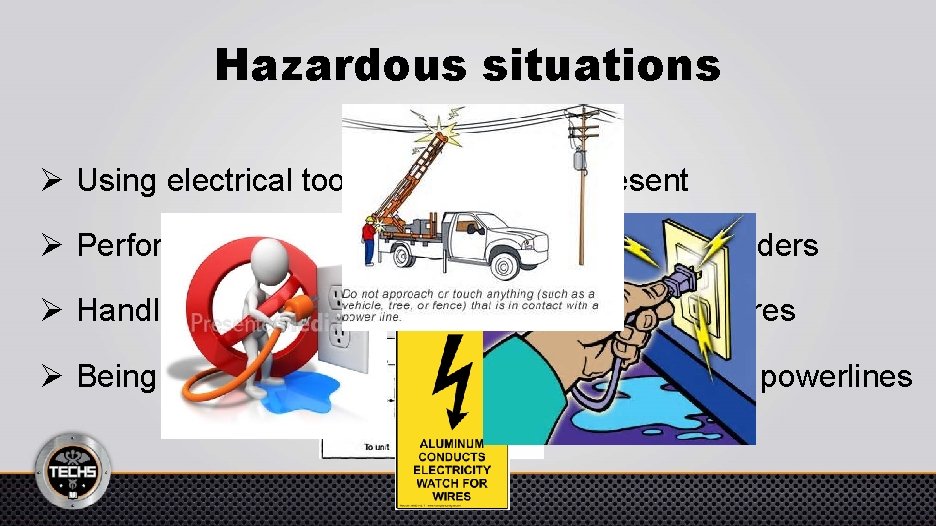
Hazardous situations Ø Using electrical tools when water is present Ø Performing electrical work standing on metal ladders Ø Handling metal objects that can contact “live” wires Ø Being in or around vehicles in contact with “live” powerlines
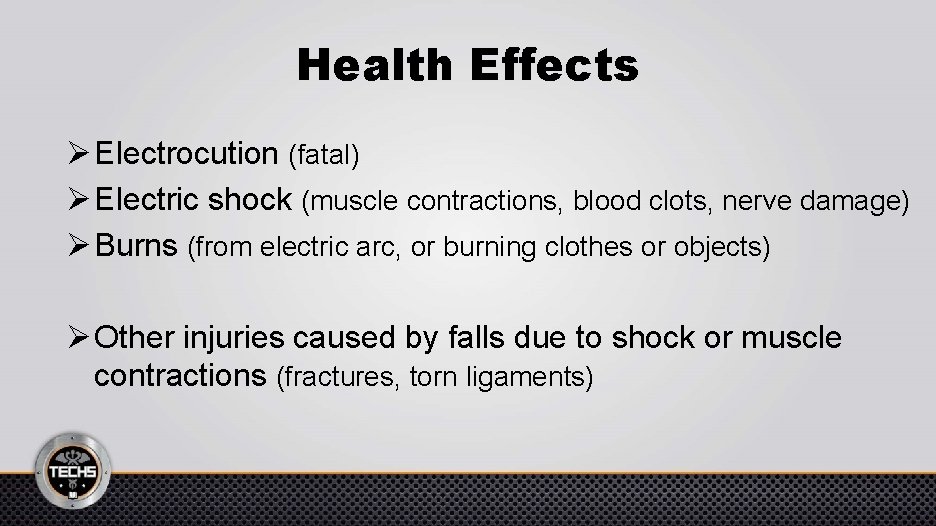
Health Effects Ø Electrocution (fatal) Ø Electric shock (muscle contractions, blood clots, nerve damage) Ø Burns (from electric arc, or burning clothes or objects) Ø Other injuries caused by falls due to shock or muscle contractions (fractures, torn ligaments)
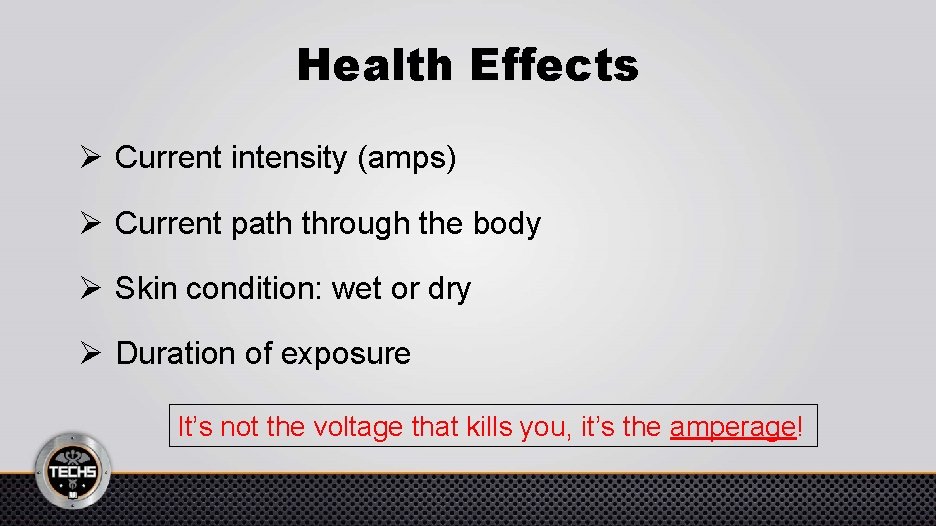
Health Effects Ø Current intensity (amps) Ø Current path through the body Ø Skin condition: wet or dry Ø Duration of exposure It’s not the voltage that kills you, it’s the amperage!
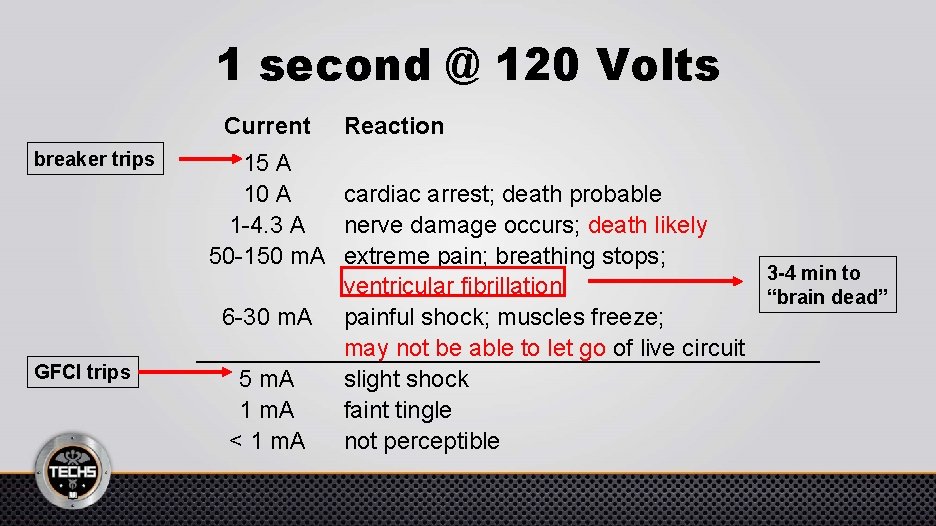
1 second @ 120 Volts Current breaker trips GFCI trips Reaction 15 A 10 A cardiac arrest; death probable 1 -4. 3 A nerve damage occurs; death likely 50 -150 m. A extreme pain; breathing stops; 3 -4 min to ventricular fibrillation “brain dead” 6 -30 m. A painful shock; muscles freeze; may not be able to let go of live circuit 5 m. A slight shock 1 m. A faint tingle < 1 m. A not perceptible
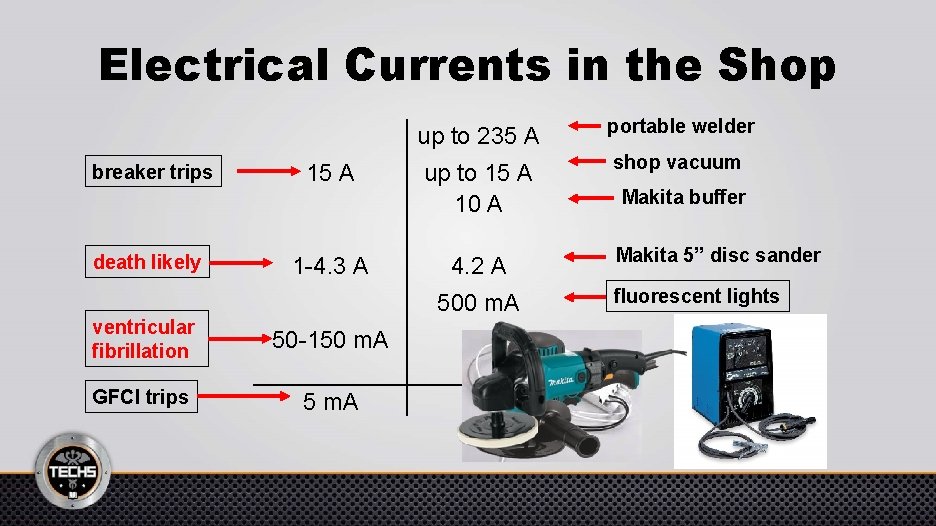
Electrical Currents in the Shop breaker trips death likely up to 235 A portable welder 15 A up to 15 A 10 A shop vacuum 1 -4. 3 A 4. 2 A 500 m. A ventricular fibrillation 50 -150 m. A GFCI trips 5 m. A Makita buffer Makita 5” disc sander fluorescent lights
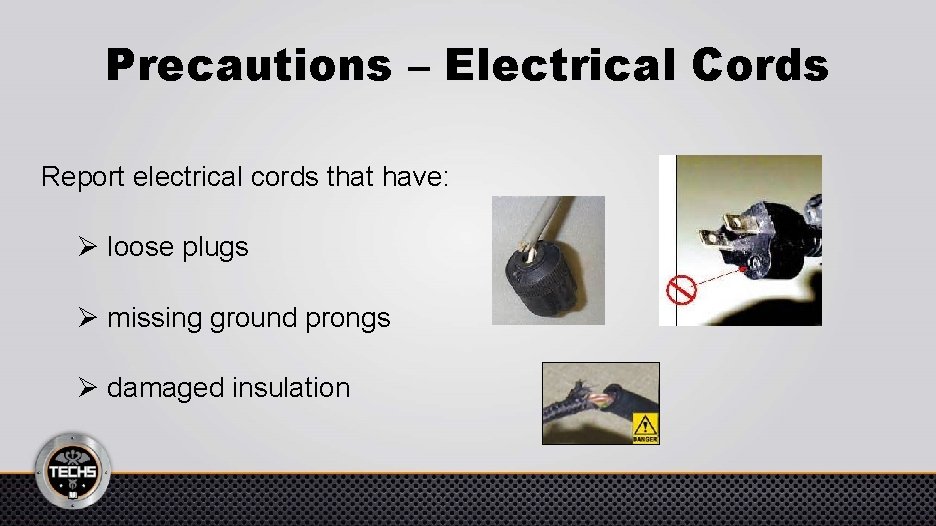
Precautions – Electrical Cords Report electrical cords that have: Ø loose plugs Ø missing ground prongs Ø damaged insulation
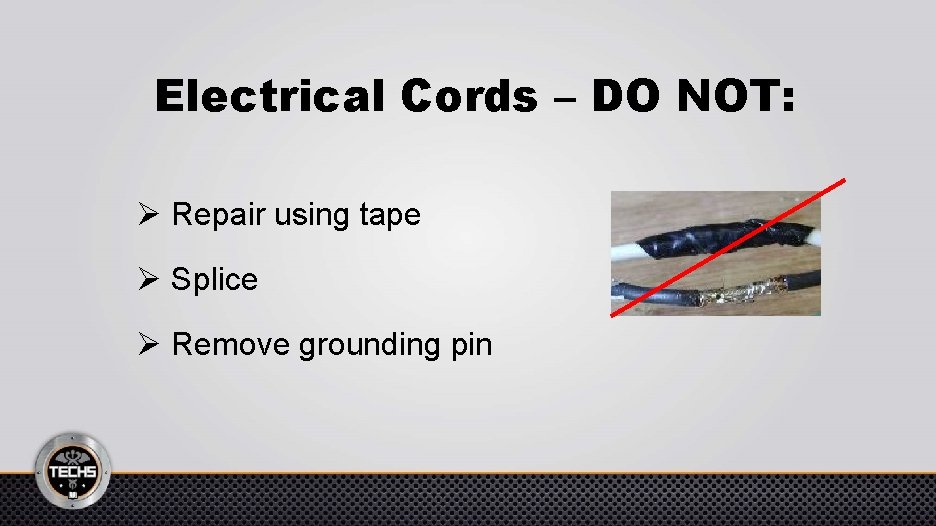
Electrical Cords – DO NOT: Ø Repair using tape Ø Splice Ø Remove grounding pin
Electrical Tools - DO NOT: Ø Use if you get shocked or the breaker trips repeatedly Ø Operate while holding against your chest, arm, or leg Ø Repair or troubleshoot while the tool is plugged in Ø Pull by the cord when unplugging Ø Carry by the cord
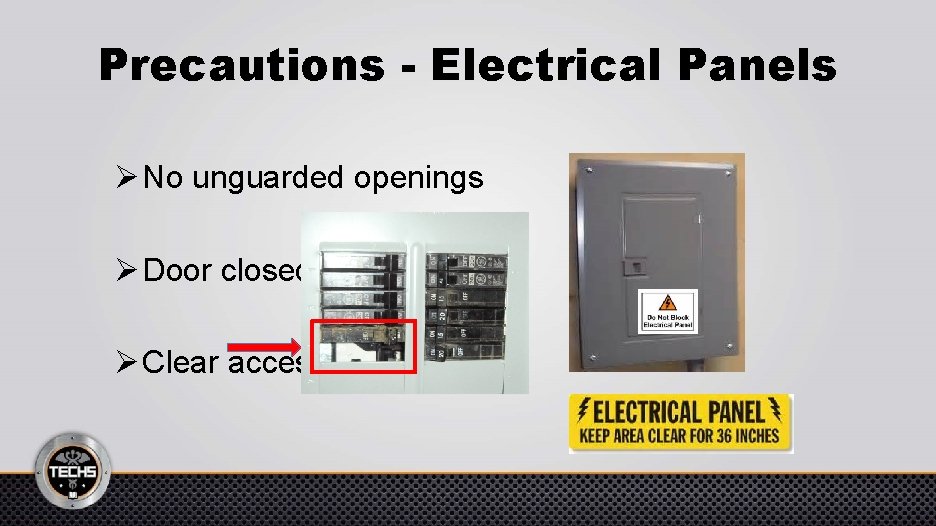
Precautions - Electrical Panels Ø No unguarded openings Ø Door closed at all times Ø Clear access
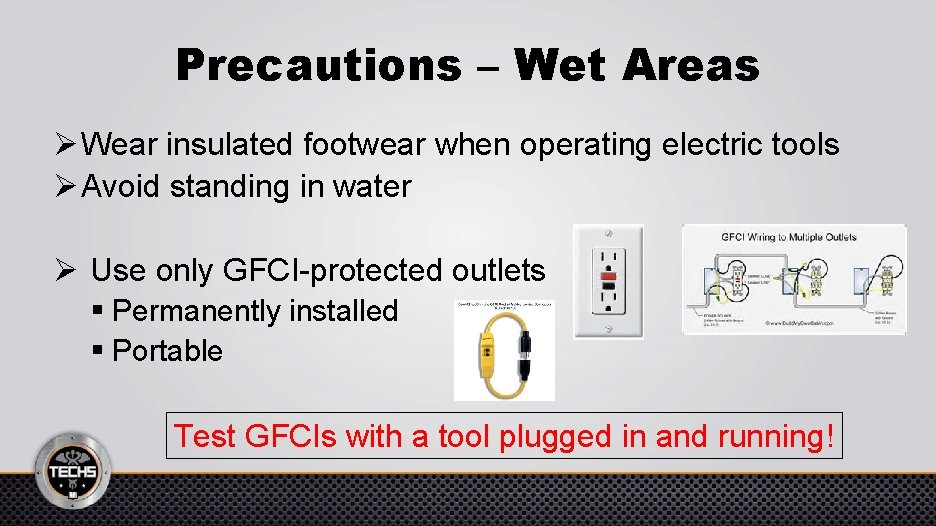
Precautions – Wet Areas Ø Wear insulated footwear when operating electric tools Ø Avoid standing in water Ø Use only GFCI-protected outlets § Permanently installed § Portable Test GFCIs with a tool plugged in and running!
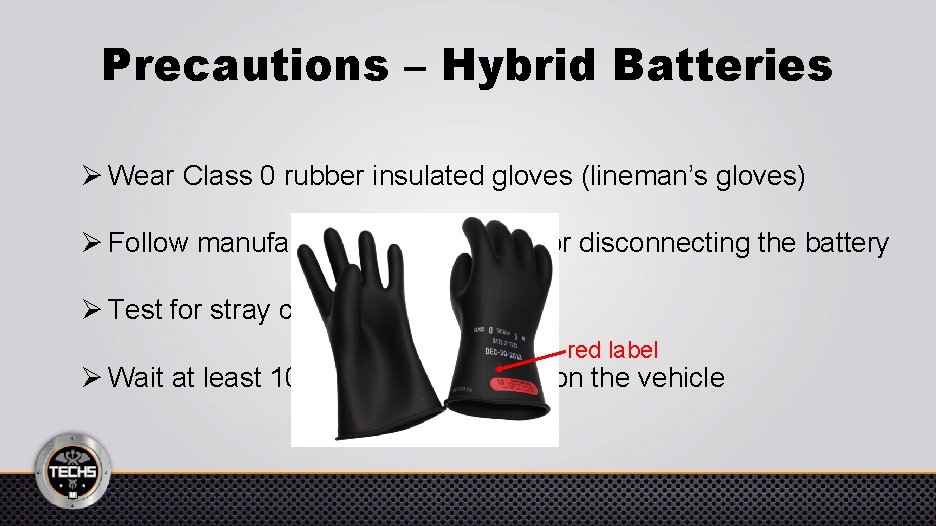
Precautions – Hybrid Batteries Ø Wear Class 0 rubber insulated gloves (lineman’s gloves) Ø Follow manufacturer’s instructions for disconnecting the battery Ø Test for stray currents red label Ø Wait at least 10 min before working on the vehicle
In Case of Emergency Ø Ø Turn off the electrical current Call 911 Do not touch the victim if still in contact with the “live” circuit! Pry the victim from the energized circuit using non-conducive materials (broom wood handle, plastic vacuum cleaner tube, PVC pipe) Ø Do not move the victim Ø Use a defibrillator (AED) if the victim is breathing but has rapid irregular heart rhythm Ø Perform CPR if the victim is NOT breathing and you’ve been trained
Summary ü Contact with “live” wires can be potentially fatal ü Avoid using electric tools in wet environments, with wet hands, or when perspiring heavily ü Report all damaged cords, outlets, tools ü GFCIs protect YOU – test them! ü Know what to do in case of emergency It’s not the voltage that kills you, it’s the amperage!
Questions?