
ELECTRICAL PRINCIPLES AND TECHNOLOGIES SECTION 1 1 THE

- Slides: 17
ELECTRICAL PRINCIPLES AND TECHNOLOGIES SECTION 1. 1
THE PLAN 1. Quick lab 2. Discuss static electricity and electrical discharge 3. Demo 4. Lab • I can explain static electricity and electrical discharge. http: //blog. ssis. edu. vn/103059/2013/09/17/does-the-color-of-hair-affect-how-much-static-electricity-it-cancarry/
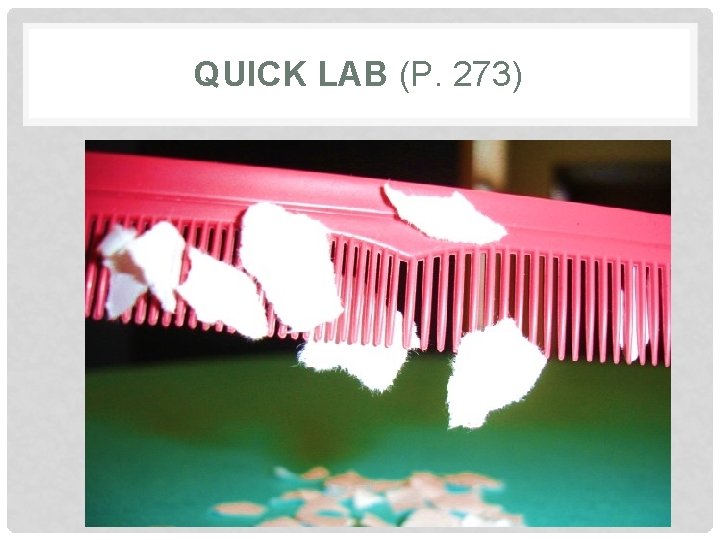
QUICK LAB (P. 273)
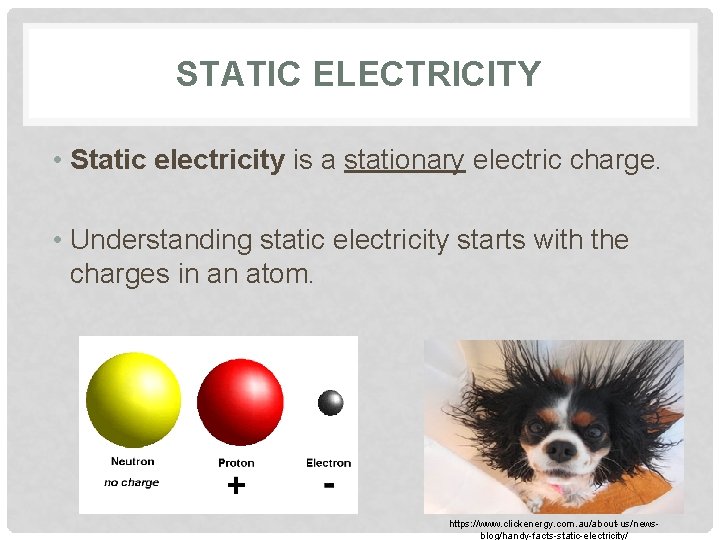
STATIC ELECTRICITY • Static electricity is a stationary electric charge. • Understanding static electricity starts with the charges in an atom. https: //www. clickenergy. com. au/about-us/newsblog/handy-facts-static-electricity/
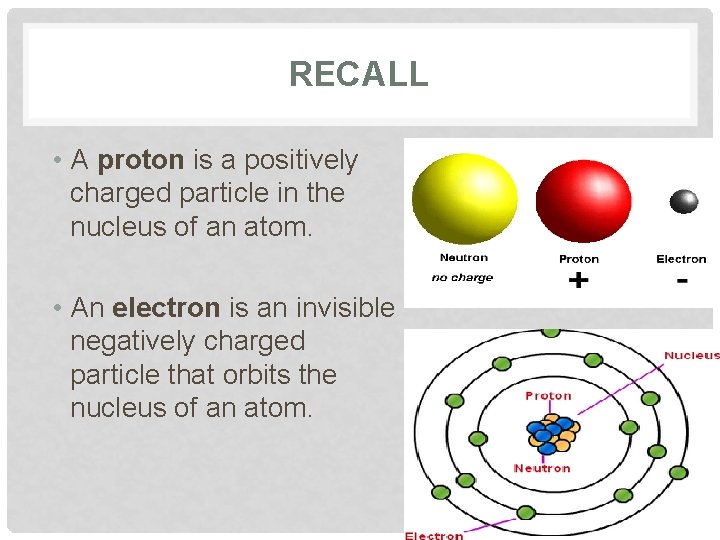
RECALL • A proton is a positively charged particle in the nucleus of an atom. • An electron is an invisible negatively charged particle that orbits the nucleus of an atom.
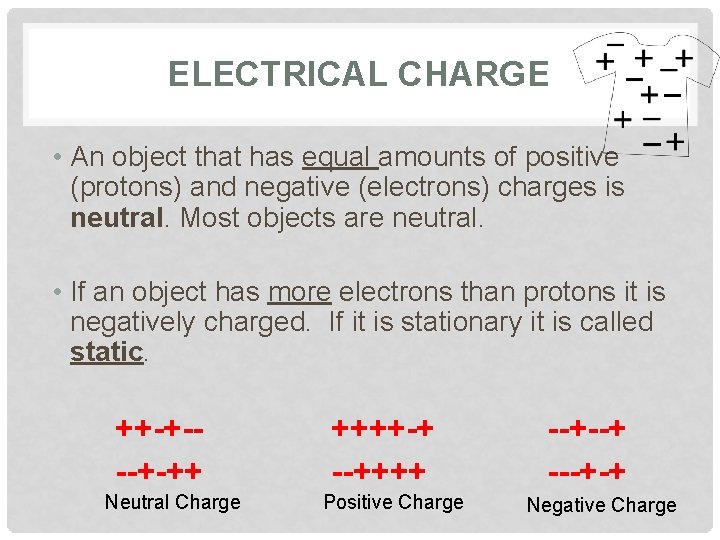
ELECTRICAL CHARGE • An object that has equal amounts of positive (protons) and negative (electrons) charges is neutral. Most objects are neutral. • If an object has more electrons than protons it is negatively charged. If it is stationary it is called static. ++-+---+-++ Neutral Charge ++++-+ --++++ Positive Charge --+--+ ---+-+ Negative Charge
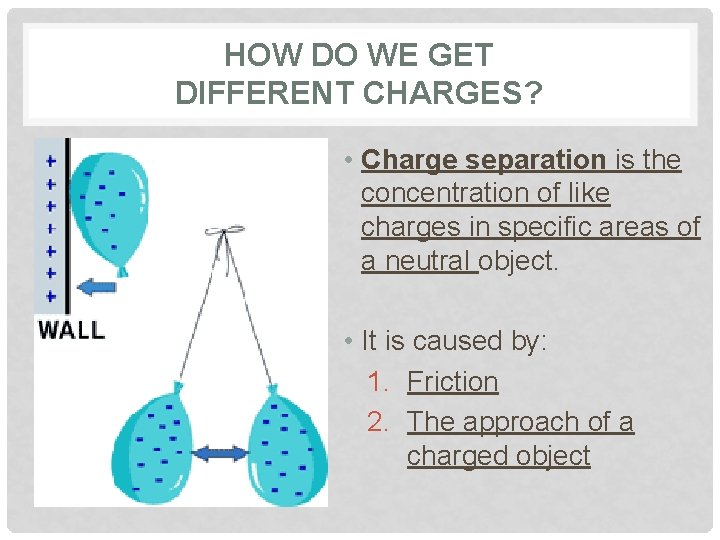
HOW DO WE GET DIFFERENT CHARGES? • Charge separation is the concentration of like charges in specific areas of a neutral object. • It is caused by: 1. Friction 2. The approach of a charged object
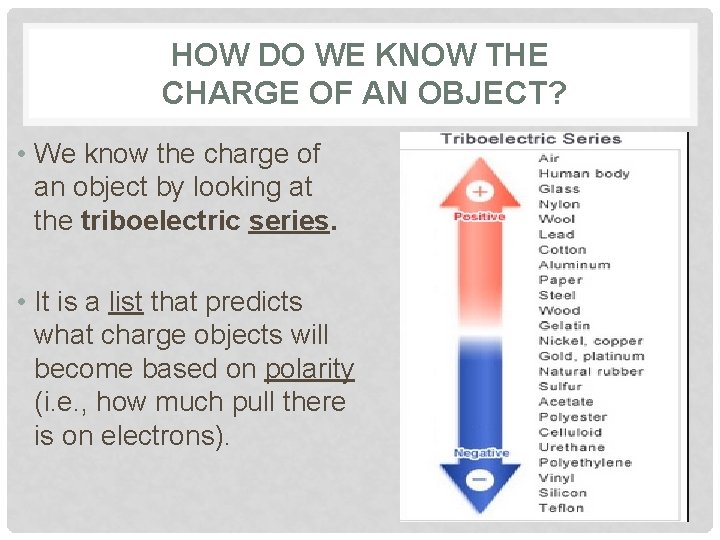
HOW DO WE KNOW THE CHARGE OF AN OBJECT? • We know the charge of an object by looking at the triboelectric series. • It is a list that predicts what charge objects will become based on polarity (i. e. , how much pull there is on electrons).
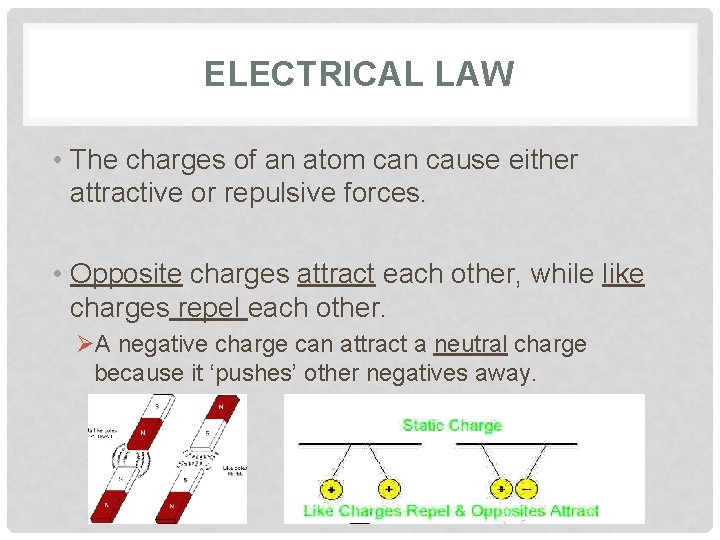
ELECTRICAL LAW • The charges of an atom can cause either attractive or repulsive forces. • Opposite charges attract each other, while like charges repel each other. ØA negative charge can attract a neutral charge because it ‘pushes’ other negatives away.
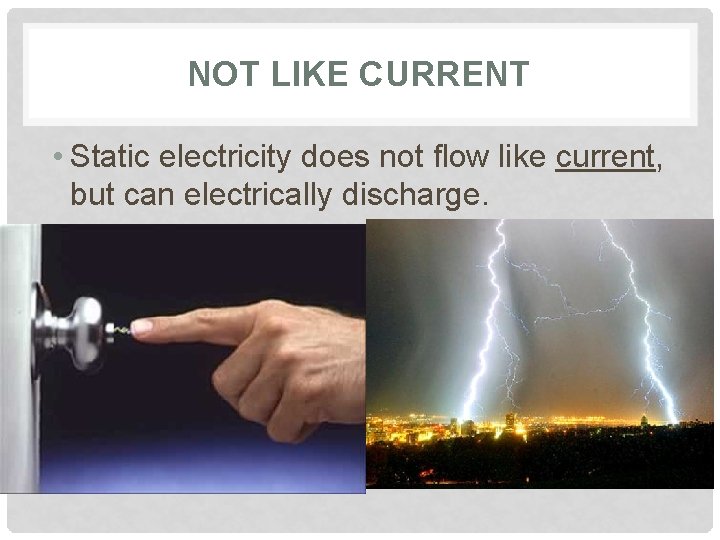
NOT LIKE CURRENT • Static electricity does not flow like current, but can electrically discharge.
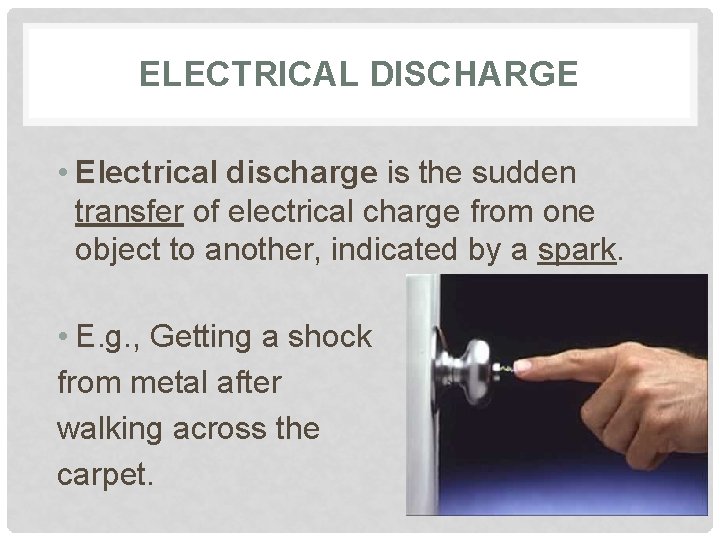
ELECTRICAL DISCHARGE • Electrical discharge is the sudden transfer of electrical charge from one object to another, indicated by a spark. • E. g. , Getting a shock from metal after walking across the carpet.
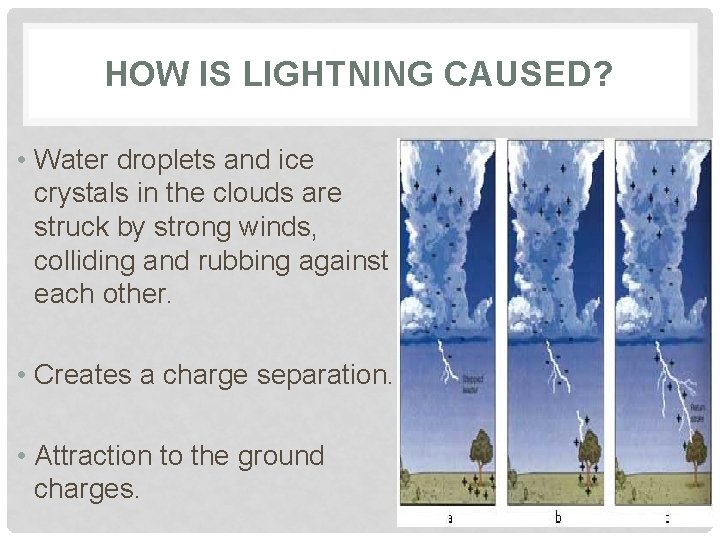
HOW IS LIGHTNING CAUSED? • Water droplets and ice crystals in the clouds are struck by strong winds, colliding and rubbing against each other. • Creates a charge separation. • Attraction to the ground charges.
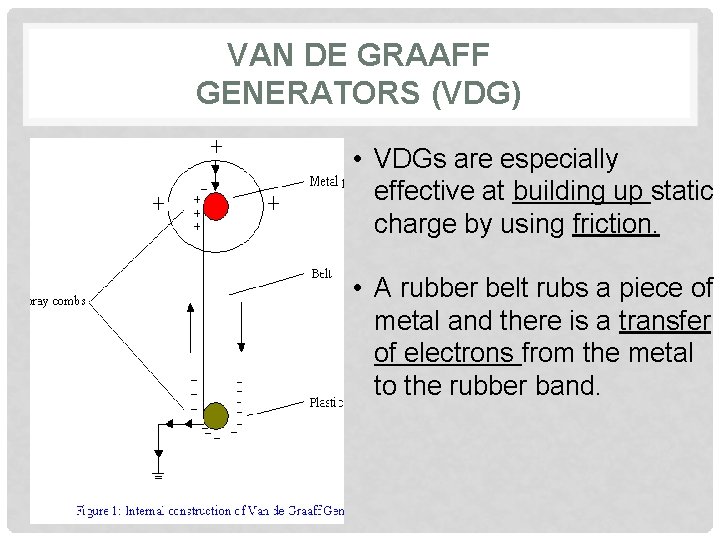
VAN DE GRAAFF GENERATORS (VDG) • VDGs are especially effective at building up static charge by using friction. • A rubber belt rubs a piece of metal and there is a transfer of electrons from the metal to the rubber band.
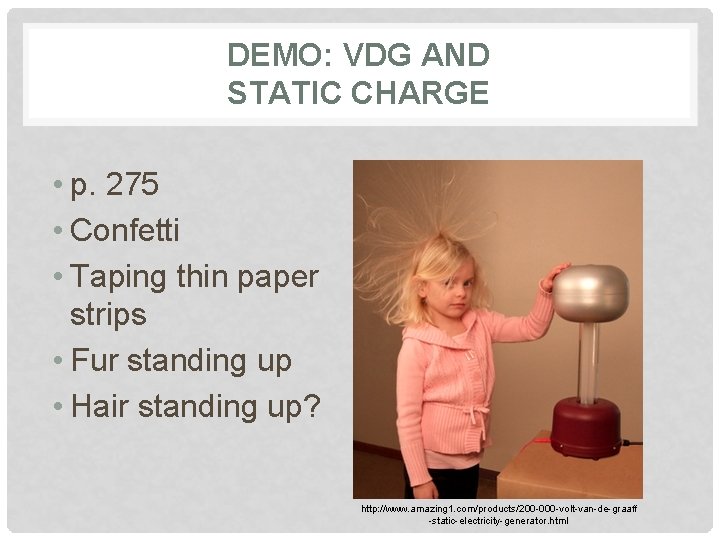
DEMO: VDG AND STATIC CHARGE • p. 275 • Confetti • Taping thin paper strips • Fur standing up • Hair standing up? http: //www. amazing 1. com/products/200 -000 -volt-van-de-graaff -static-electricity-generator. html
LAB • Explain the charges of each substance.
HOMEWORK • P. 278 #1 -8.