
Electrical muscle stimulation ems in medicine palliative care
- Slides: 40
Electrical muscle stimulation (ems) in medicine & palliative care. Let’s talk about regeneration! Christos Stefanou MD, EDICM, Ph. D-cand Assoc. Prof. Medicine Internist, Intensivist. Orlando, FL; Aug. 2015. stefanouchristos@hotmail. com No conflicts of interest.
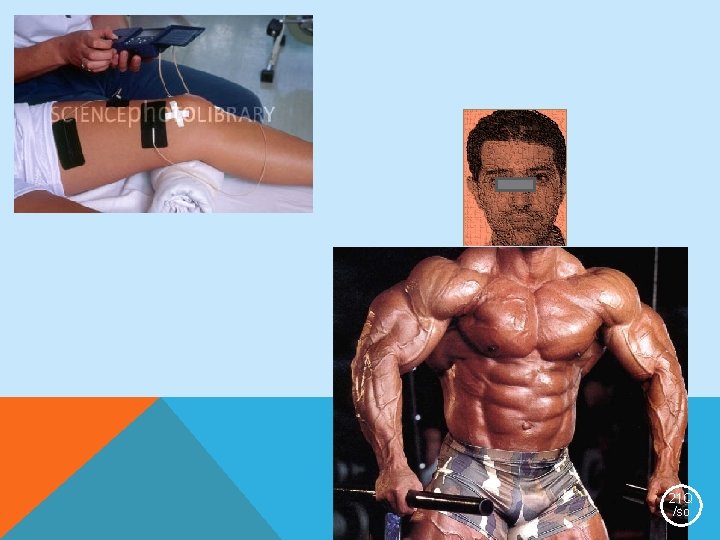
ELECTRICAL MUSCLE STIMULATION (ems) 20 min ~US > Directions stefanouchristos@hotmail. com ~exercise?
Today’s talk on Electrical Muscle Stimulation (EMS) • • • A. Introduction: about. Technical facts. B. Established & investigational uses/ evidence. C. EMS & exercise; Tissue regeneration & EPCs. D. Own research. E. Safety/ problems. F. Summary of EMS role in palliative care.
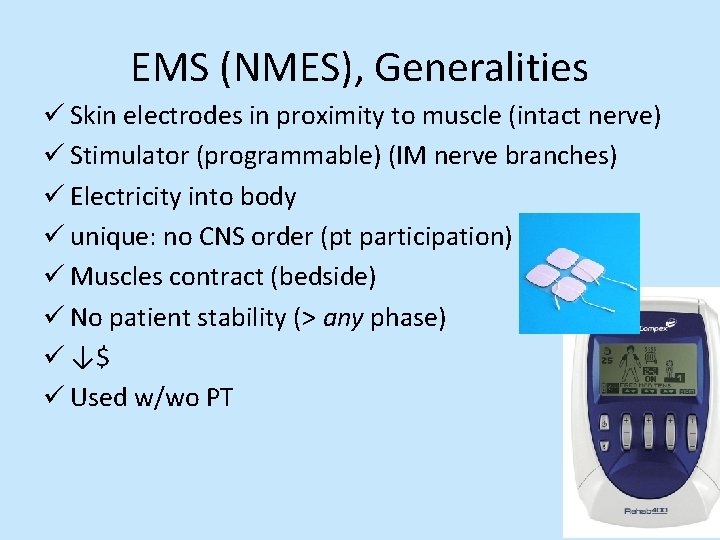
EMS (NMES), Generalities ü Skin electrodes in proximity to muscle (intact nerve) ü Stimulator (programmable) (IM nerve branches) ü Electricity into body ü unique: no CNS order (pt participation) ü Muscles contract (bedside) ü No patient stability (> any phase) ü ↓$ ü Used w/wo PT
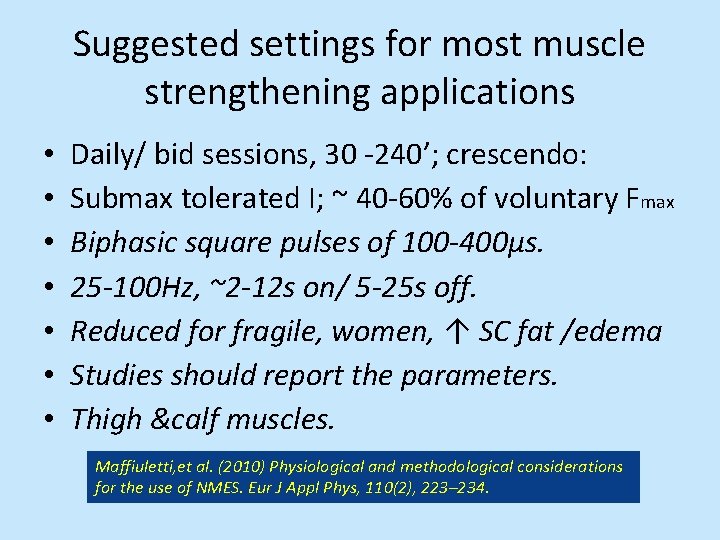
Suggested settings for most muscle strengthening applications • • Daily/ bid sessions, 30 -240’; crescendo: Submax tolerated I; ~ 40 -60% of voluntary Fmax Biphasic square pulses of 100 -400μs. 25 -100 Hz, ~2 -12 s on/ 5 -25 s off. Reduced for fragile, women, ↑ SC fat /edema Studies should report the parameters. Thigh &calf muscles. Maffiuletti, et al. (2010) Physiological and methodological considerations for the use of NMES. Eur J Appl Phys, 110(2), 223– 234.
FDA-approved uses • • Prevention or retardation of disuse atrophy Relaxation of muscle spasms Muscle re-education Immediate post-surgical stimulation of calf muscles to prevent venous thrombosis • Maintaining or increasing range of motion • Increasing local blood circulation
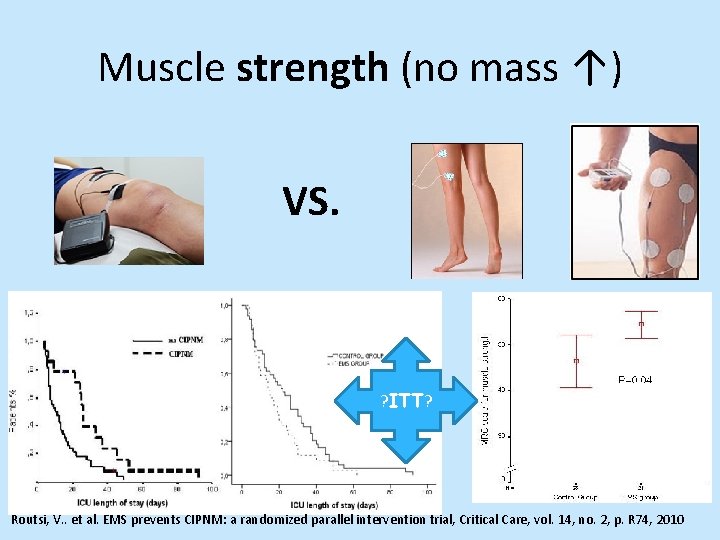
Muscle strength (no mass ↑) VS. ? ITT? Routsi, V. . et al. EMS prevents CIPNM: a randomized parallel intervention trial, Critical Care, vol. 14, no. 2, p. R 74, 2010
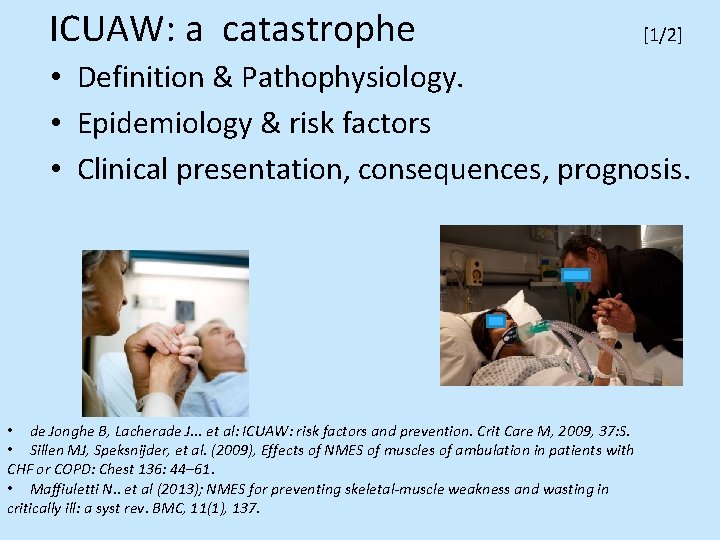
ICUAW: a catastrophe [1/2] • Definition & Pathophysiology. • Epidemiology & risk factors • Clinical presentation, consequences, prognosis. • de Jonghe B, Lacherade J. . . et al: ICUAW: risk factors and prevention. Crit Care M, 2009, 37: S. • Sillen MJ, Speksnijder, et al. (2009), Effects of NMES of muscles of ambulation in patients with CHF or COPD: Chest 136: 44– 61. • Maffiuletti N. . et al (2013); NMES for preventing skeletal-muscle weakness and wasting in critically ill: a syst rev. BMC, 11(1), 137.
ICUAW: a catastrophe [2/2] • Treatment/ Ppx • Evidence of EMS -Review (RCTs in which current parameters are reported): POSITIVE EFFECT (no meta- analysis) -Other studies with positive effect: CHF, COPD (1 -2 M: improved 6 MWD, SOB, Qo. L) Abdellaoui A, Prefaut, et al: Skeletal muscle effects of EMS after COPD exacerbation: a pilot study. Eur Respir J 2011, 38: 781– 788.
EMS in DVT prophylaxis sp surgery • VTE > MVA + Ca breast + AIDS. • Mechanism: (a) EMS ~triples vein return velocity; & increases circulating t. PA (b) Indirect evidence from exercise shear-stress (>cytoskeletal changes, e. NOS, prostacycline, nuclear factor (NF) kappa. B, c-fos, cjun, SP-1, ICAM-1, MCP-1, tissue factor, PDGF-B, transforming growth factor-beta 1, Cox-II. . . ) -FDA >square pulses 50 ms, 0 -5 V, for painless ems, 1 -2 Hz. • • Spyropoulos AC; Emerging strategies in the prevention of VTE in hospitalized medical patients; Chest. 2005 Aug; 128(2): 958 -69 Cohen, A. T. , et al (2007). VTE in Europe. The number of VTEs, morbidity, mortality. Thromb Haemost, 98, 756. B. J Broderick et al; A pilot evaluation of NMES-based methodology for prevention of venous stasis; Med. Eng. & Phys 32 (2010). Kopetzky CD. Wien Med Wochenschr; Combined compression and EMS; 1994; 144(10 -11): 238 -42 M. Izumi, et al; Prevention of Venous Stasis in the Lower Limb by TENS; Eur J Vasc Endovasc Surg (2010) 39, 642 e 645. Lobastov KV et al; Haemodynamic and clinical efficacy of EMS of the venous outflow in prev of postop VTE; Ang Sosud Khir. 2013; 19(2) Nicolaides, A. N. , et al. Prevention and treatment VTE-International Consensus Statement. Intnl Angio (2013): 111 -260.
I trained EMS.
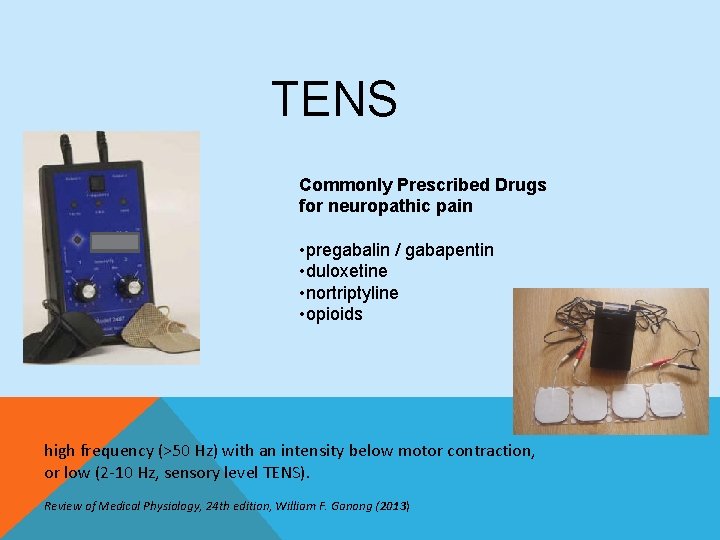
TENS Commonly Prescribed Drugs for neuropathic pain • pregabalin / gabapentin • duloxetine • nortriptyline • opioids high frequency (>50 Hz) with an intensity below motor contraction, or low (2 -10 Hz, sensory level TENS). Review of Medical Physiology, 24 th edition, William F. Ganong (2013)
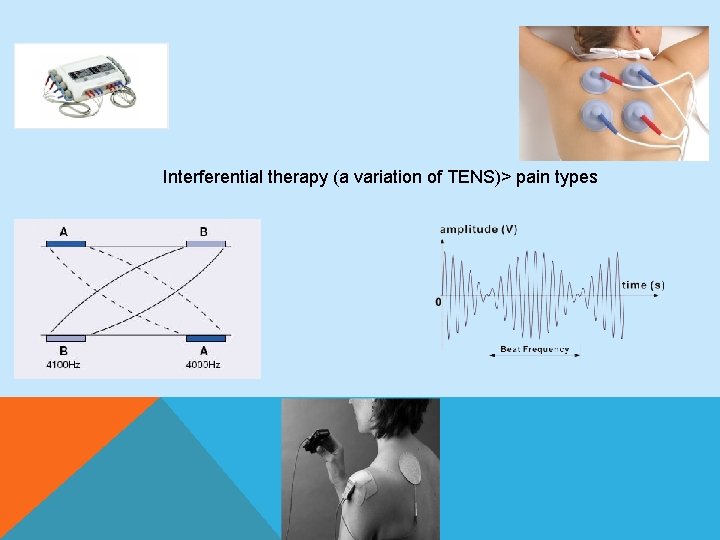
Interferential therapy (a variation of TENS)> pain types
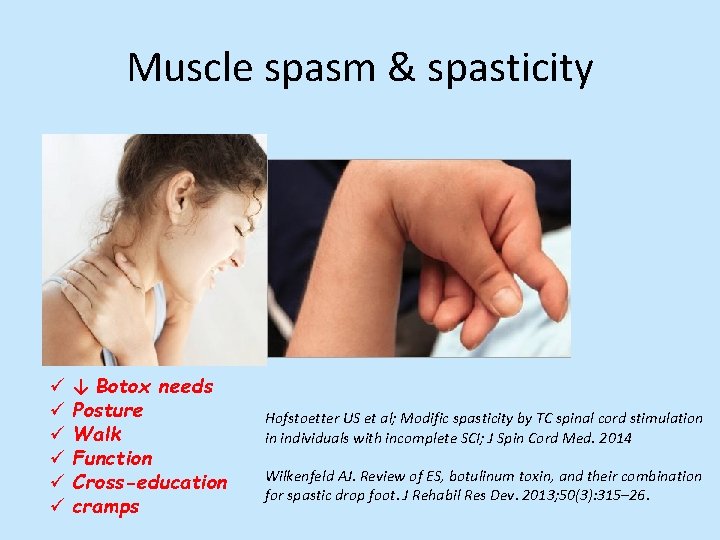
Muscle spasm & spasticity ü ü ü ↓ Botox needs Posture Walk Function Cross-education cramps Hofstoetter US et al; Modific spasticity by TC spinal cord stimulation in individuals with incomplete SCI; J Spin Cord Med. 2014 Wilkenfeld AJ. Review of ES, botulinum toxin, and their combination for spastic drop foot. J Rehabil Res Dev. 2013; 50(3): 315– 26.
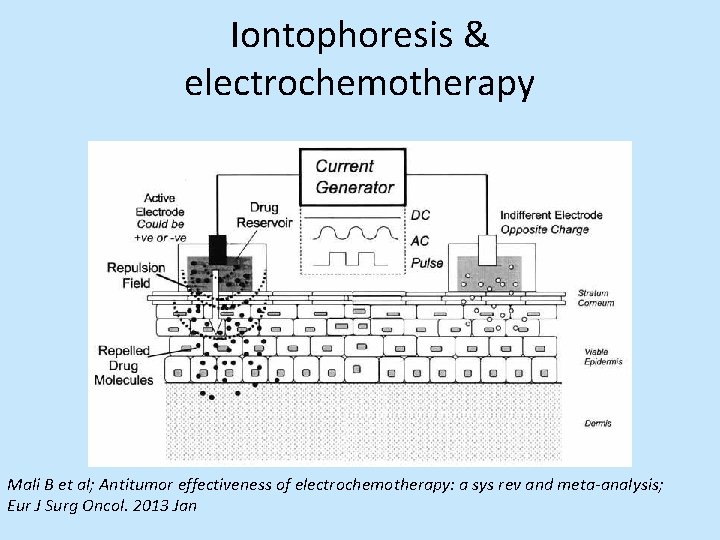
Iontophoresis & electrochemotherapy Mali B et al; Antitumor effectiveness of electrochemotherapy: a sys rev and meta-analysis; Eur J Surg Oncol. 2013 Jan
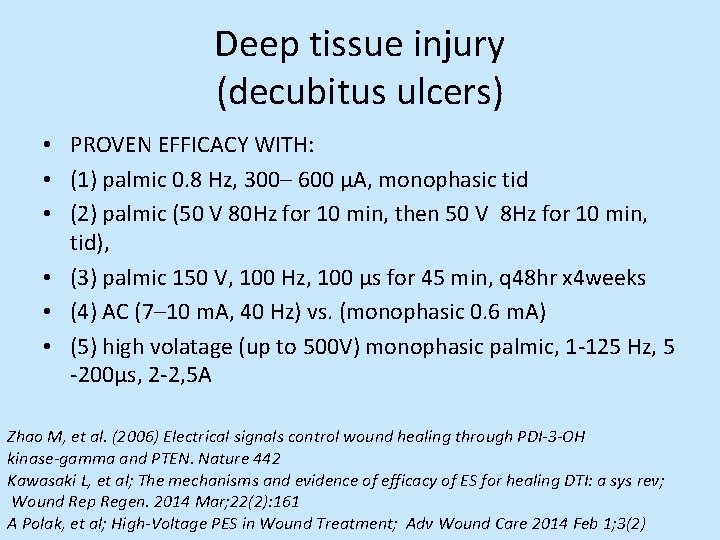
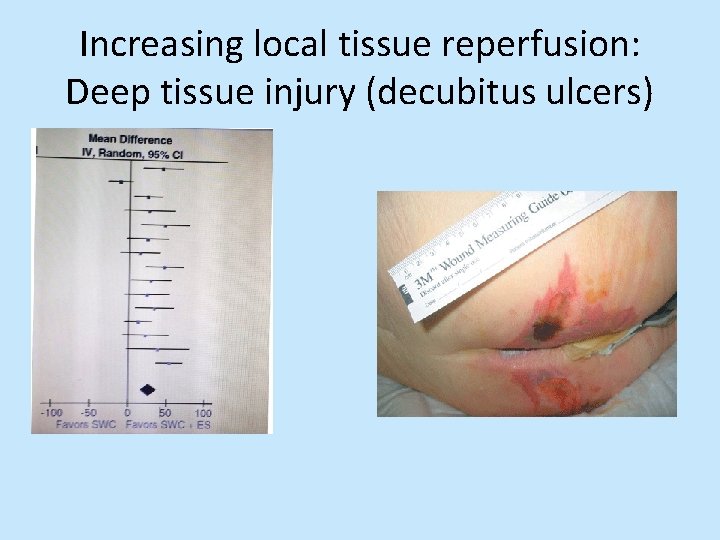
Deep tissue injury (decubitus ulcers) • PROVEN EFFICACY WITH: • (1) palmic 0. 8 Hz, 300– 600 μA, monophasic tid • (2) palmic (50 V 80 Hz for 10 min, then 50 V 8 Hz for 10 min, tid), • (3) palmic 150 V, 100 Hz, 100 μs for 45 min, q 48 hr x 4 weeks • (4) AC (7– 10 m. A, 40 Hz) vs. (monophasic 0. 6 m. A) • (5) high volatage (up to 500 V) monophasic palmic, 1 -125 Ηz, 5 -200μs, 2 -2, 5 A Zhao M, et al. (2006) Electrical signals control wound healing through PDI-3 -OH kinase-gamma and PTEN. Nature 442 Kawasaki L, et al; The mechanisms and evidence of efficacy of ES for healing DTI: a sys rev; Wound Rep Regen. 2014 Mar; 22(2): 161 A Polak, et al; High-Voltage PES in Wound Treatment; Adv Wound Care 2014 Feb 1; 3(2)
Increasing local tissue reperfusion: Deep tissue injury (decubitus ulcers)
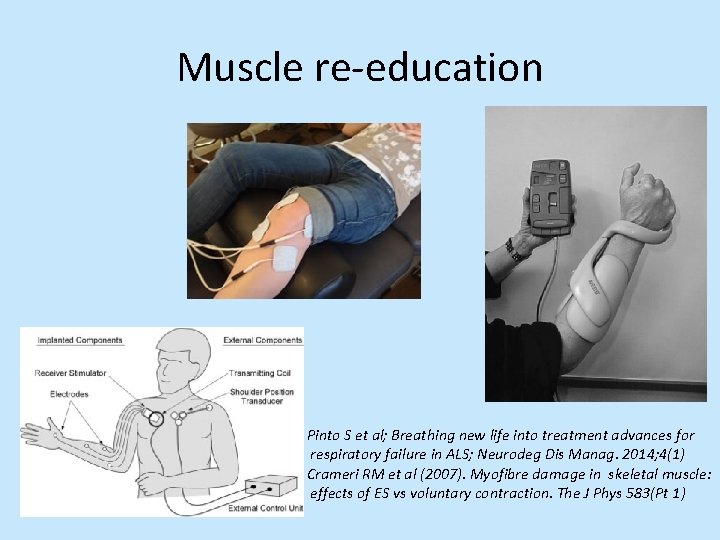
Muscle re-education Pinto S et al; Breathing new life into treatment advances for respiratory failure in ALS; Neurodeg Dis Manag. 2014; 4(1) Crameri RM et al (2007). Myofibre damage in skeletal muscle: effects of ES vs voluntary contraction. The J Phys 583(Pt 1)
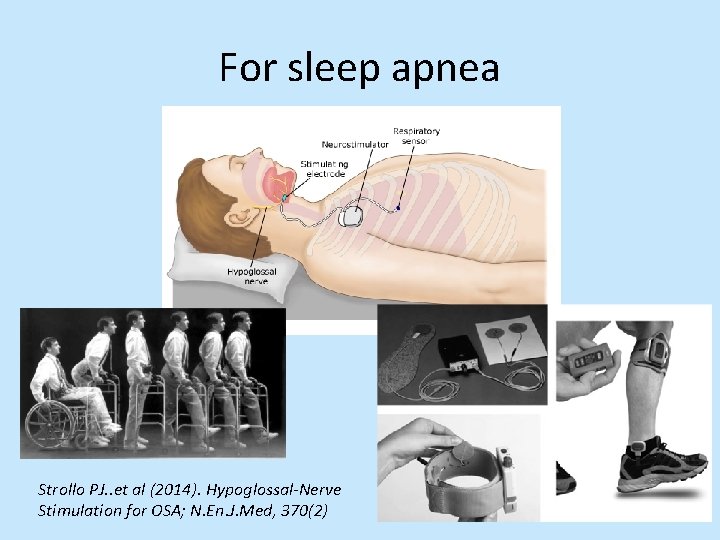
For sleep apnea Strollo PJ. . et al (2014). Hypoglossal-Nerve Stimulation for OSA; N. En. J. Med, 370(2)
21 Q /so
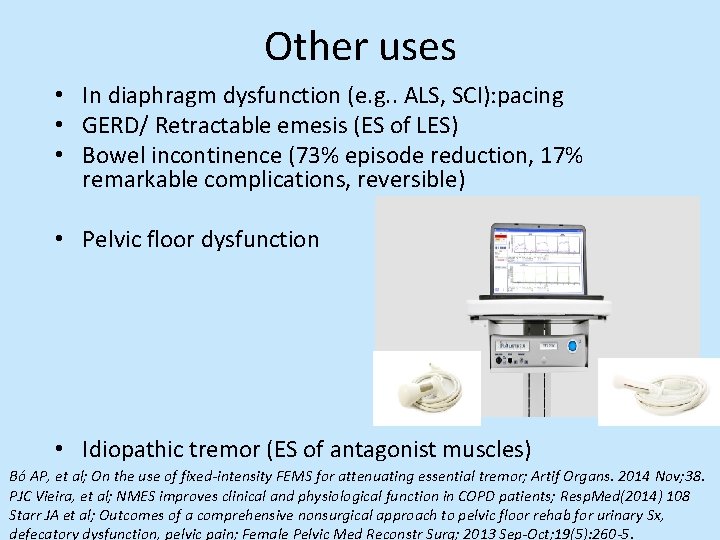
Other uses • In diaphragm dysfunction (e. g. . ALS, SCI): pacing • GERD/ Retractable emesis (ES of LES) • Bowel incontinence (73% episode reduction, 17% remarkable complications, reversible) • Pelvic floor dysfunction • Idiopathic tremor (ES of antagonist muscles) Bó AP, et al; On the use of fixed-intensity FEMS for attenuating essential tremor; Artif Organs. 2014 Nov; 38. PJC Vieira, et al; NMES improves clinical and physiological function in COPD patients; Resp. Med(2014) 108 Starr JA et al; Outcomes of a comprehensive nonsurgical approach to pelvic floor rehab for urinary Sx, defecatory dysfunction, pelvic pain; Female Pelvic Med Reconstr Surg; 2013 Sep-Oct; 19(5): 260 -5.
Further evidence of EMS having systemic effects: cytokine/ myokine release TGFβ-1, stromelysin-2, growth-regulated alpha protein, β 2 microglobulin, somatotropin, IL-2, IL-7, IL-8, IL-15, IL-31, Neurotrophin-4, Granulocyte chemotactic protein 2, TNFreceptor superfamily member 8, IGF-binding protein 3, myonectin, IL-6, VEGF, IL-7, IL-15, leukemia inhibitory factor, angiopoietin-related protein 4, fibroblast growth factor 21, myostatin. . Raschke J et al (2013); Identification and Validation of Novel Contraction- Regulated Myokines Released from Primary Human Skeletal Muscle Cells; PLo. S ONE 8(4): e 62008 Pedersen BK et al; Muscle as an endocrine organ: focus on muscle-derived Il-6. Physiol Rev 88: 1379 -1406, 2008
Exercise: facts • • The most critical measure of preventive health after smoking cessation. Guidelines in Canada & Australia mention that it is essential in 1 & 2 prevention of >25 chronic Dx, i. e. avoidance of deaths related to: - 1/3 of coronary 1/4 -1/5 of CVA, OP#, Ca colon, HTN, DM 2 other: Ca breast, falls, functionality condition of M/skeletal system, mobility, psychological wellness, obesity • >2/3 of individuals older than 15 perform less than recommended physical activity (e. g. ~30’/d of moderate). 70% adults: No Exercise! Warburton, DE et al (2007). Evidence-informed physical activity guidelines for Canadian adults; Can. J. Pub Health 98
Pleotropic effects: in cardiovascular, exercise induces new vessel formation, mobilizes EPCs; also affects blood levels of hormones (GH, sex steroids, cortisol, insulin), cytokines (VEGF), immune, free radicals, . . . > all body systems
PARENTHESIS. Endothelial progenitor cells -breaking news of the last 2 decades in medicine? • • • Originate from bone marrow Derive from more undifferentiated stem cells Circulate in blood in extremely low numbers Attach to tissues injured by any cause, and: Contribute to repair and regeneration, by selfreproduction &/or paracrine action (VEGF, SDF-1α, e. NOS, IGF 1, HGF, Ang-1, SDF-1α. . . ) • • Express surface antigens: CD 34/45 -/133, VEGFR 2. . Definition highly debatable/ variable However they stimulate Ca-genesis (? ) CV protection factors cause an ↑
How circulating EPC & their function ↑ in exercise -regulation of activity of matrix metalloproteinases (enzymes which, through degradation of extracellular matrix regulate EPC attachment to bone marrow) -reduction of: radical oxygen species, xanthine oxidase, NADPH- oxidase -elevation of NO levels and of the receptors of SDF- 1 a (CXCR 4) as well as of the protein kinase B > approximation of EPC towards the marrow vasculature > >numerical & functional ↑ -Hypoxia inducible factors > ↑ genes > agiopoietin-1, ICAM-1, PDGF, IGF, SDF, VEGFA, FGF, glycolytic enzyme, erythropoietin > EPC mobilization. - VEGF↑ and its receptors, as well as via antiangiogenic factors like endostatin, thrombospondin-1, tissue inhibitors of matrix metalloproteinases, angiostatin, vasohibin, stimulating vascular remodeling > EPC-induced angiogenesis and or vasculogenesis and angial remodeling in tissues like skeletal muscle and myocardium
PARENTHESIS. Endothelium: a protagonist in tissue regeneration • Our age is the age of our endothelium • Enorchestrator of most physiologic and pathologic body functions • Local factors define tissue-specific biologic and morphologic eterogenicity • Endothelium is the main target and the major fighter in disease • Organogenesis- oxygenation- nutrition- vasomotion- coagulation- defense-… • Sepsis/MODS, inflammation- metastasis- vascular Dx- COPD- diabetes- renal failure- hepatic failure- ICUAW-TBI … • Hence, its regeneration processes signify smooth recovery from disease and serve as a health state indicator. • Endothelial progenitor cells: putative central role on regeneration KA Hajjar; The endothelium: A primer; Up. To. Date 2015
National and Kapodistrian University of Athens First Critical Care Department “Evangelismos” General Hospital Acute Effects & Safety of EMS in ICU: EPC Mobiliza C. Stefanou; G. Mitsiou; E. Karatzanos; E. Angelopoulos; S. Dimopoulos; C. Routsi; S. Nanas From a distance we are instruments marching in a common band. g n i d n e p n Russel C, Peters C; Endothelial cells, angiogenesis and vasculogenesis; stemcell, 2013, J T Morishita; et al; Number of EPC in PVD as a marker of severity and association with pentraxin-3, malondialdehyde-modif LDL and MMP-1; J ather thromb 2012 Vol: Werner N, et al. EPC and cardiovascular outcomes. N Engl J Med 353: 999– 1007, 2005. A Angelidi, et al; EPC as a cardiometabolic RF marker in prediabetes; Hormones, 2014 Tecilazich F, Dinh T, Pradhan-Nabzdyk L, Leal E, Tellechea A, et al. (2013) Role of EPC a Inflammatory Cytokines in Healing of Diabetic Foot Ulcers. PLo. S ONE 8(12): e 83314. Moschetta M et al; ROle of EPC in cancer progression; Biochim Biophys Acta. 2014 Au l b Pu o i t ica
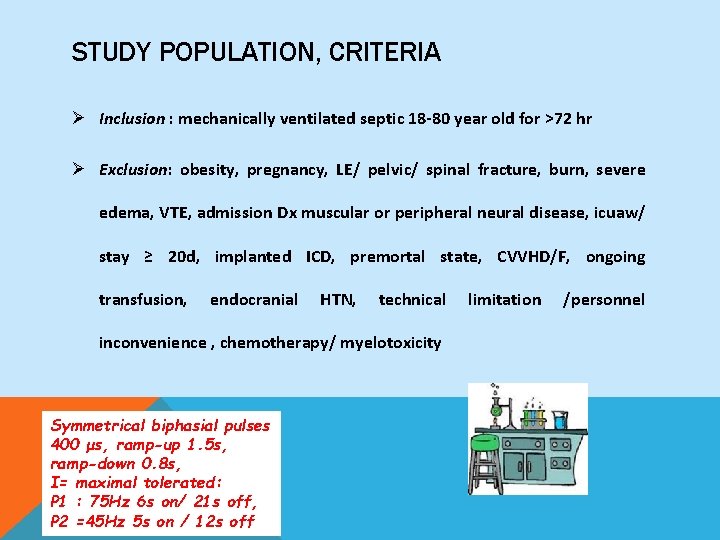
STUDY POPULATION, CRITERIA Inclusion : mechanically ventilated septic 18 -80 year old for >72 hr Exclusion: obesity, pregnancy, LE/ pelvic/ spinal fracture, burn, severe edema, VTE, admission Dx muscular or peripheral neural disease, icuaw/ stay ≥ 20 d, implanted ICD, premortal state, CVVHD/F, ongoing transfusion, endocranial HTN, technical limitation /personnel inconvenience , chemotherapy/ myelotoxicity Symmetrical biphasial pulses 400 μs, ramp-up 1. 5 s, ramp-down 0. 8 s, I= maximal tolerated: Ρ 1 : 75 Hz 6 s on/ 21 s off, Ρ 2 =45 Hz 5 s on / 12 s off
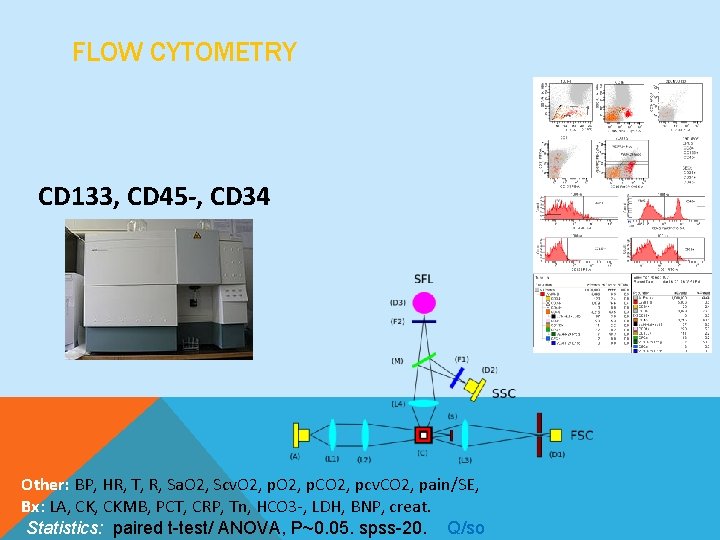
FLOW CYTOMETRY CD 133, CD 45 -, CD 34 Other: BP, HR, T, R, Sa. O 2, Scv. O 2, p. CO 2, pcv. CO 2, pain/SE, Bx: LA, CKMB, PCT, CRP, Tn, HCO 3 -, LDH, BNP, creat. Statistics: paired t-test/ ANOVA, Ρ~0. 05. spss-20. Q/so
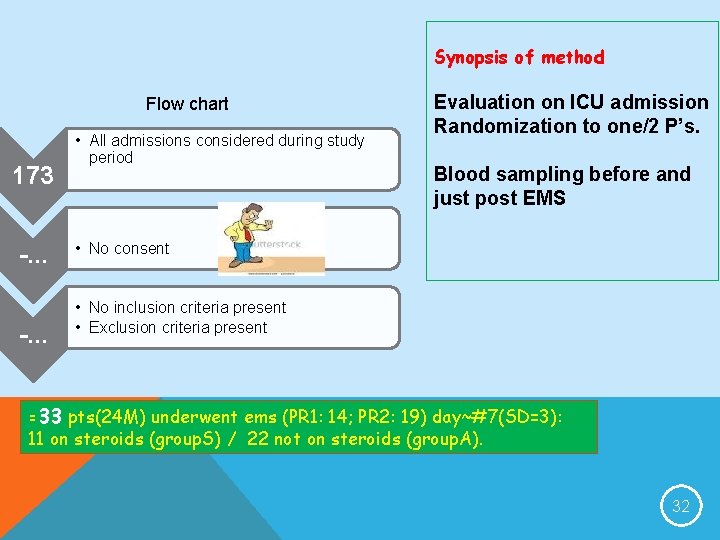
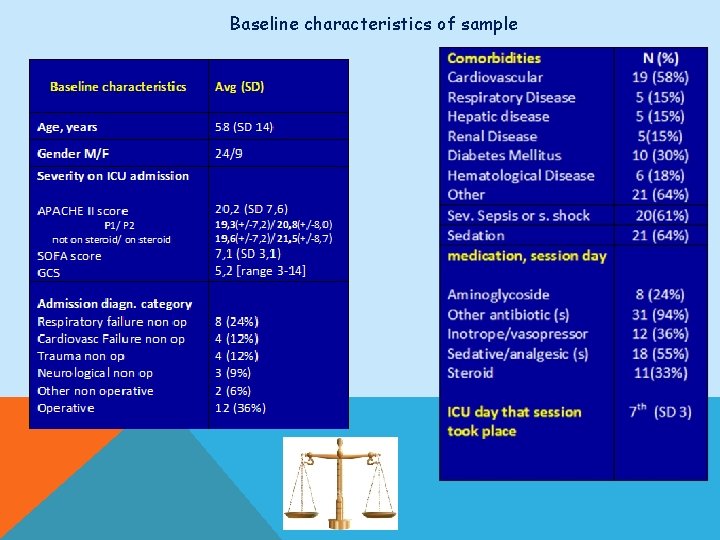
Synopsis of method Flow chart 173 -. . . • All admissions considered during study period • No consent Evaluation on ICU admission Randomization to one/2 P’s. Blood sampling before and just post EMS • No inclusion criteria present • Exclusion criteria present =33 pts(24Μ) underwent ems (PR 1: 14; PR 2: 19) day~#7(SD=3): 11 on steroids (group. S) / 22 not on steroids (group. A). 32
Baseline characteristics of sample 1/2…
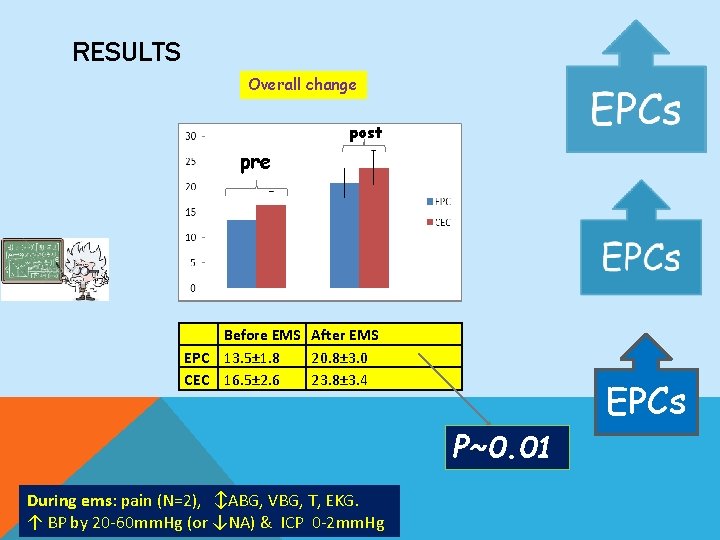
RESULTS Overall change post pre Before EMS After EMS EPC 13. 5± 1. 8 20. 8± 3. 0 CEC 16. 5± 2. 6 23. 8± 3. 4 P~0. 01 During ems: pain (N=2), ↕ABG, VBG, T, EKG. ↑ BP by 20 -60 mm. Hg (or ↓ΝΑ) & ICP 0 -2 mm. Hg EPCs
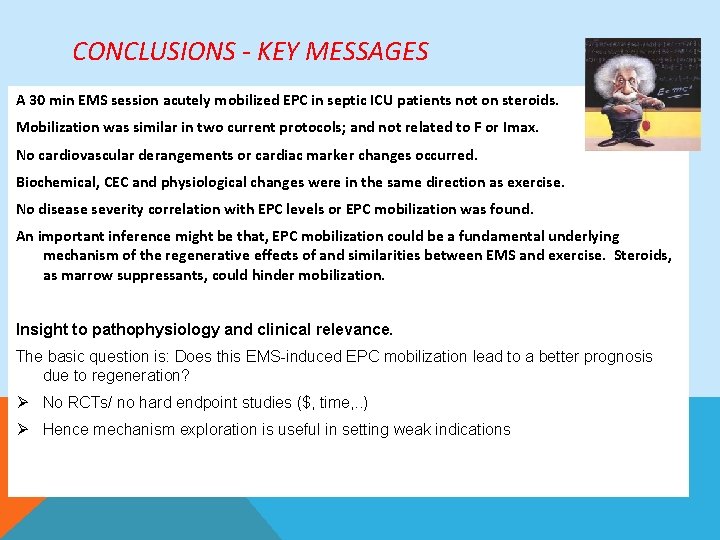
CONCLUSIONS - KEY MESSAGES A 30 min EMS session acutely mobilized EPC in septic ICU patients not on steroids. Mobilization was similar in two current protocols; and not related to F or Imax. No cardiovascular derangements or cardiac marker changes occurred. Biochemical, CEC and physiological changes were in the same direction as exercise. No disease severity correlation with EPC levels or EPC mobilization was found. An important inference might be that, EPC mobilization could be a fundamental underlying mechanism of the regenerative effects of and similarities between EMS and exercise. Steroids, as marrow suppressants, could hinder mobilization. Insight to pathophysiology and clinical relevance. The basic question is: Does this EMS-induced EPC mobilization lead to a better prognosis due to regeneration? No RCTs/ no hard endpoint studies ($, time, . . ) Hence mechanism exploration is useful in setting weak indications
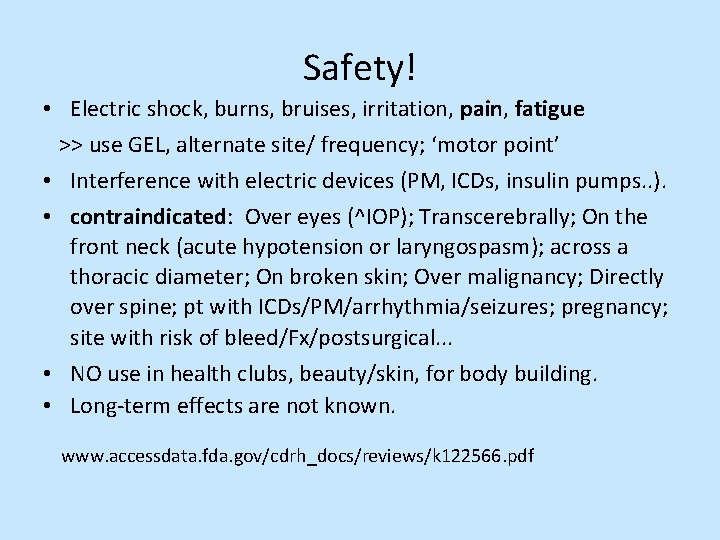
Safety! • Electric shock, burns, bruises, irritation, pain, fatigue >> use GEL, alternate site/ frequency; ‘motor point’ • Interference with electric devices (PM, ICDs, insulin pumps. . ). • contraindicated: Over eyes (^IOP); Transcerebrally; On the front neck (acute hypotension or laryngospasm); across a thoracic diameter; On broken skin; Over malignancy; Directly over spine; pt with ICDs/PM/arrhythmia/seizures; pregnancy; site with risk of bleed/Fx/postsurgical. . . • NO use in health clubs, beauty/skin, for body building. • Long-term effects are not known. www. accessdata. fda. gov/cdrh_docs/reviews/k 122566. pdf
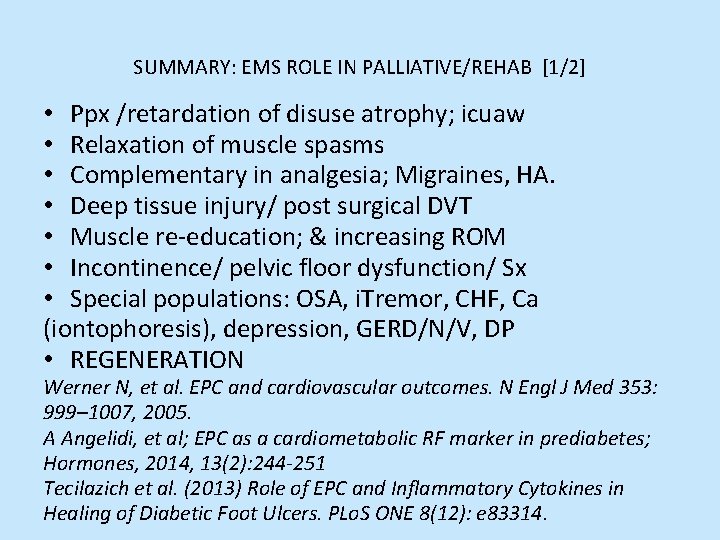
SUMMARY: EMS ROLE IN PALLIATIVE/REHAB [1/2] • Ppx /retardation of disuse atrophy; icuaw • Relaxation of muscle spasms • Complementary in analgesia; Migraines, HA. • Deep tissue injury/ post surgical DVT • Muscle re-education; & increasing ROM • Incontinence/ pelvic floor dysfunction/ Sx • Special populations: OSA, i. Tremor, CHF, Ca (iontophoresis), depression, GERD/N/V, DP • REGENERATION Werner N, et al. EPC and cardiovascular outcomes. N Engl J Med 353: 999– 1007, 2005. A Angelidi, et al; EPC as a cardiometabolic RF marker in prediabetes; Hormones, 2014, 13(2): 244 -251 Tecilazich et al. (2013) Role of EPC and Inflammatory Cytokines in Healing of Diabetic Foot Ulcers. PLo. S ONE 8(12): e 83314.
What said: • • • A. Introduction: about. Technical facts. B. Established & investigational uses/ evidence. C. EMS & exercise; Tissue regeneration & EPCs. D. Own research. E. Safety ems: an essential tool in PC! Q?
Literature stefanouchristos@hotmail. com 1. 2. 3. 4. 5. 6. 7. 8. 9. 10. 11. 12. 13. 14. 15. 16. 17. 18. Maffiuletti, et al. (2010) Physiological and methodological considerations for the use of NMES. Eur J Appl Phys, 110(2), 223– 234. Gobbo, M. , Maffiuletti, . . . (2014). Muscle motor point identification is essential for optimizing NMES use; J Neuroegin Reh 11(1), 17 Routsi, V. . et al. EMS prevents CIPNM: a randomized parallel intervention trial, Critical Care, vol. 14, no. 2, p. R 74, 2010 de Jonghe B, Lacherade J. . . et al: ICUAW: risk factors and prevention. Crit Care Med 2009, 37: S 309– 315. Sillen MJ, Speksnijder, et al. (2009), Effects of NMES of muscles of ambulation in patients with CHF or COPD: Chest 136: 44– 61. Abdellaoui A, Prefaut, et al: Skeletal muscle effects of EMS after COPD exacerbation: a pilot study. Eur Respir J 2011, 38: 781– 788. Maffiuletti N. . et al (2013); NMES for preventing skeletal-muscle weakness and wasting in critically ill: a syst rev. BMC, 11(1), 137. Chest. 2005 Aug; 128(2): 958 -69; Emerging strategies in the prevention of VTE in hospitalized medical patients; Spyropoulos AC. Cohen, A. T. , et al (2007). VTE in Europe. The number of VTEs, morbidity, mortality. Thromb Haemost, 98, 756. B. J Broderick et al; A pilot evaluation of NMES-based methodology for prevention of venous stasis; Med. Eng. & Physics 32 (2010). Kopetzky CD. Wien Med Wochenschr; Combined compression and EMS; 1994; 144(10 -11): 238 -42 M. Izumi, et al; Prevention of Venous Stasis in the Lower Limb by TENS; Eur J Vasc Endovasc Surg (2010) 39, 642 e 645. Lobastov KV et al; Haemodynamic and clinical efficacy of EMS of the venous outflow in prev of postop VTE; Ang Sosud Khir. 2013; 19(2) Nicolaides, A. N. , et al. Prevention and treatment VTE-International Consensus Statement. Intnl Angio (2013): 111 -260. Review of Medical Physiology, 24 th edition, William F. Ganong (2013) Bó AP, et al; On the use of fixed-intensity FEMS for attenuating essential tremor; Artif Organs. 2014 Nov; 38(11): 984 -91. PJC Vieira, et al; NMES improves clinical and physiological function in COPD patients; Respiratory Medicine (2014) 108, 609 e 620 Karavidas A, et al (2013); FEMS improves endothelial function and clinical and emotional status in CHF patient; Am Heart J 166(4), 760– 767. 19. Hofstoetter US et al; Modific spasticity by TC spinal cord stimulation in individuals with incomplete SCI; J Spin Cord Med. 2014 20. Mali B et al; Antitumor effectiveness of electrochemotherapy: a sys rev and meta-analysis; Eur J Surg Oncol. 2013 Jan; 39(1): 4 -16 21. Wilkenfeld AJ. Review of ES, botulinum toxin, and their combination for spastic drop foot. J Rehabil Res Dev. 2013; 50(3): 315– 26.
Literature stefanouchristos@hotmail. com 22. Strollo PJ. . et al (2014). Hypoglossal-Nerve Stimulation for OSA; N. En. J. Med, 370(2), 139– 149 23. Zhao M, et al. (2006) Electrical signals control wound healing through PDI-3 -OH kinase-gamma and PTEN. Nature 442: 457– 460 24. Kawasaki L, et al; The mechanisms and evidence of efficacy of ES for healing DTI: a sys rev; Wound Rep Regen. 2014 Mar; 22(2): 161 25. A Polak, et al; High-Voltage PES in Wound Treatment; Adv Wound Care 2014 Feb 1; 3(2): 104 -117 26. Pinto S et al; Breathing new life into treatment advances for respiratory failure in ALS; Neurodeg Dis Manag. 2014; 4(1): 83 -102 27. Crameri RM et al (2007). Myofibre damage in human skeletal muscle: effects of ES vs voluntary contraction. The J Phys 583(Pt 1), 365– 380. 28. www. accessdata. fda. gov/cdrh_docs/reviews/k 122566. pdf 29. Starr JA et al; Outcomes of a comprehensive nonsurgical approach to pelvic floor rehab for urinary Sx, defecatory dysfunction, pelvic pain; Female Pelvic Med Reconstr Surg; 2013 Sep-Oct; 19(5): 260 -5. 30. Raschke J et al (2013); Identification and Validation of Novel Contraction- Regulated Myokines Released from Primary Human Skeletal Muscle Cells; PLo. S ONE 8(4): e 62008 31. Warburton, DE et al (2007). Evidence-informed physical activity guidelines for Canadian adults; Can. J. Pub Health 98 32. Sarto P et al (2007). Effects of Exercise Training on EPC in Patients With CHF. J of CHF, 13(9), 701– 708. 33. 34. Pedersen BK et al; Muscle as an endocrine organ: focus on muscle-derived Il-6. Physiol Rev 88: 1379 -1406, 2008. 35. KAHajjar; The endothelium: A primer; Up. To. Date 2015 36. Russel C, Peters C; Endothelial cells, angiogenesis and vasculogenesis; stemcell, 2013, Jan 37. T Morishita; et al; Number of EPC in PVD as a marker of severity and association with pentraxin-3, malondialdehydemodif LDL and MMP-1; J ather thromb 2012 Vol: 19 38. Werner N, et al. EPC and cardiovascular outcomes. N Engl J Med 353: 999– 1007, 2005. 39. A Angelidi, et al; EPC as a cardiometabolic RF marker in prediabetes; Hormones, 2014, 13(2): 244 -251 40. Tecilazich F, Dinh T, Pradhan-Nabzdyk L, Leal E, Tellechea A, et al. (2013) Role of EPC and Inflammatory Cytokines in Healing of Diabetic Foot Ulcers. PLo. S ONE 8(12): e 83314. 41. Moschetta M et al; ROle of EPC in cancer progression; Biochim Biophys Acta. 2014 Aug; 1846(1): 26 -39 42. www. fda. gov/medicaldevices/safety/alertsandnotices/tipsandarticlesondevicesafety/ucm 229468. htm 43. Zeng C, et al; ES for pain relief in knee OA: systematic review and network meta-analysis; Osteoarthritis Cartilage. 2015 Feb; 23(2): 189 -202.