
Electrical Injury Electrical Injury In the U S

- Slides: 26
Electrical Injury
Electrical Injury • In the U. S. 52, 000 admissions/yr • 3 -8 % of all burn unit admissions • May-Sept lightning related. • Decrease in incidence due to GFCIs
Electrical Injury - Epidemiology • Ages 15 -44 yrs. • High voltage mostly occupational injury • 20% Children – Low voltage injuries in toddlers M: F 1. 7: 1 – High voltage injuries in adolescents 97% male
Electrical Injury Pathophysiology • Electrical – tetany, arrhythmia • Thermal – burns, coagulation • Mechanical – fractures, dislocation
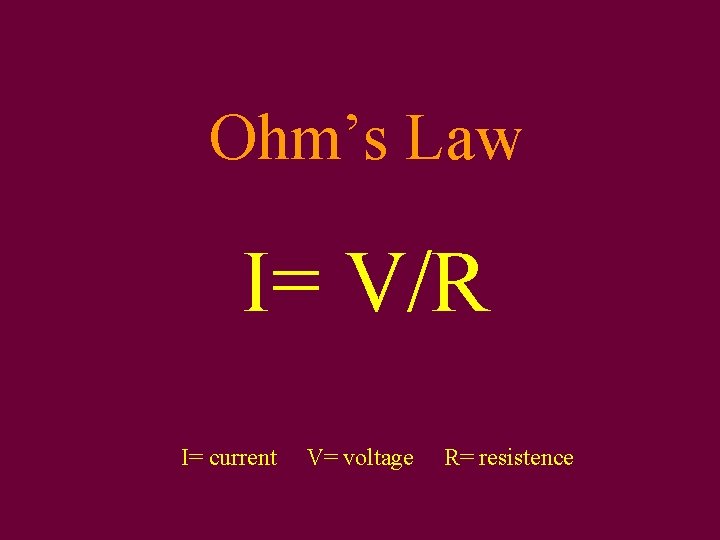
Ohm’s Law I= V/R I= current V= voltage R= resistence
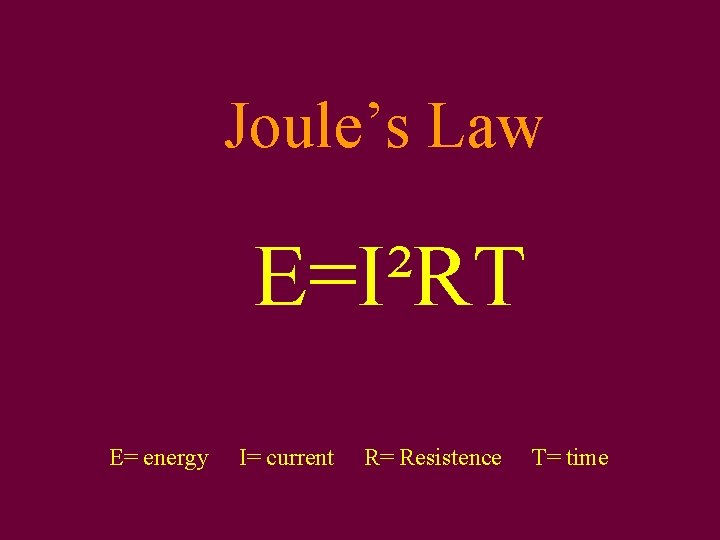
Joule’s Law E=I²RT E= energy I= current R= Resistence T= time
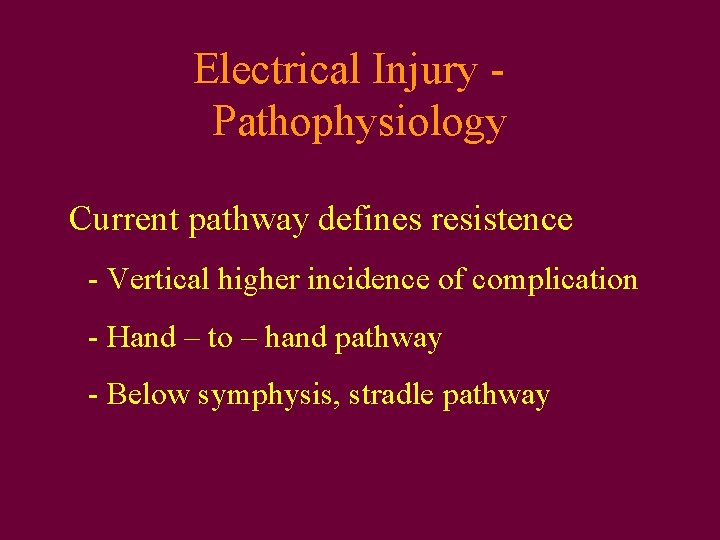
Electrical Injury Pathophysiology Current pathway defines resistence - Vertical higher incidence of complication - Hand – to – hand pathway - Below symphysis, stradle pathway
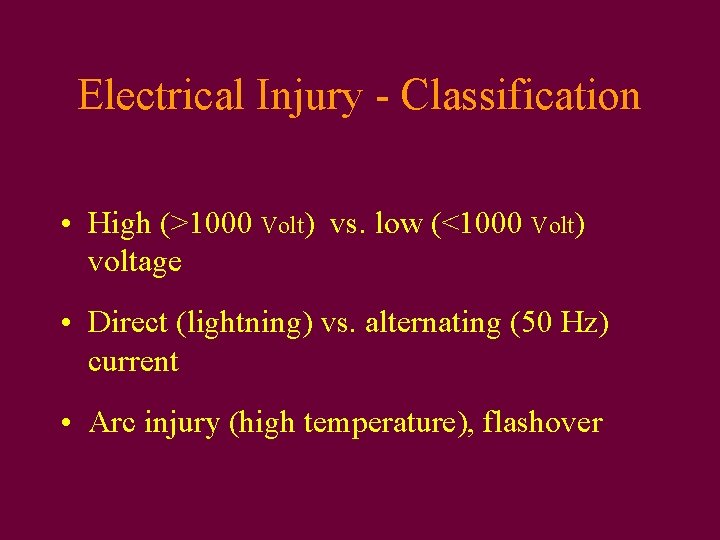
Electrical Injury - Classification • High (>1000 Volt) vs. low (<1000 Volt) voltage • Direct (lightning) vs. alternating (50 Hz) current • Arc injury (high temperature), flashover
Cardiovascular Involvment • Mostly in vertical injury • DC – Asystole • AC – High VF/ VT, asystole – Low ectopic beats, AF, tachycardia, bradycardia, ECG changes • Coagulation necrosis, coronary spasm, MI
Respiratory Involvement • Tetany of respiratory muscle • Brain stem injury • May induce hypoxia, acidosis cardiac arrest
Nervous System • Immediate - loss of consciousness, amnesia • Early - intracranial hemorrhage, vertebral fractures • Late - ALS, transverse myelitis, ascending paralysis • Peripheral neuropathy, RSD
Vascular Injury • Large arteries – medial necrosis, aneurisms • Small vessels – intimal injury, coagulation necrosis • Secondary to compartment syndrome
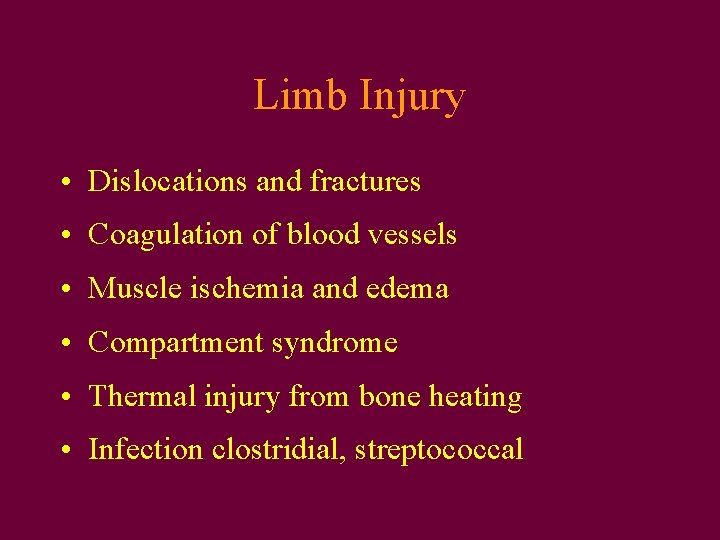
Limb Injury • Dislocations and fractures • Coagulation of blood vessels • Muscle ischemia and edema • Compartment syndrome • Thermal injury from bone heating • Infection clostridial, streptococcal
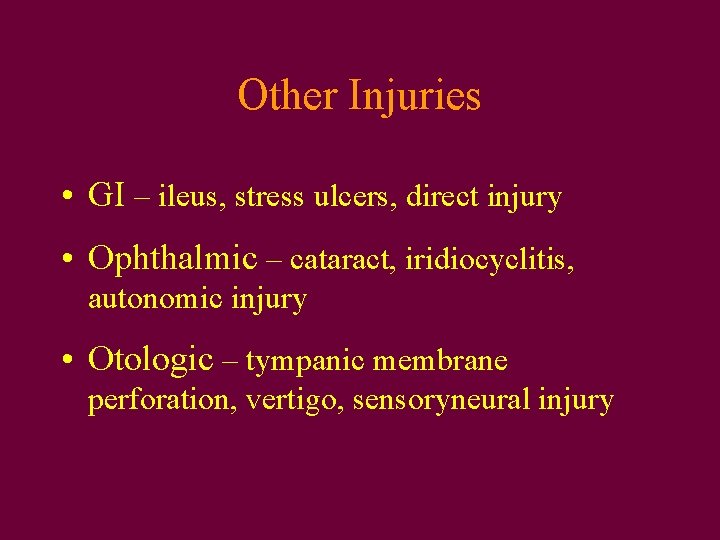
Other Injuries • GI – ileus, stress ulcers, direct injury • Ophthalmic – cataract, iridiocyclitis, autonomic injury • Otologic – tympanic membrane perforation, vertigo, sensoryneural injury
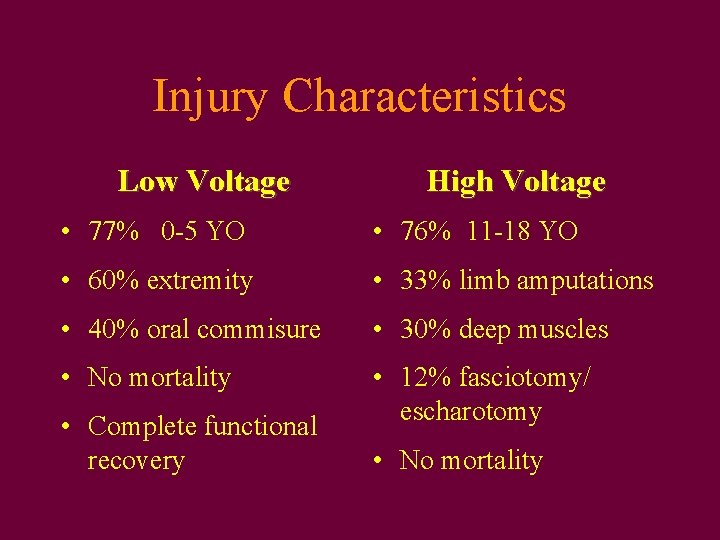
Injury Characteristics Low Voltage High Voltage • 77% 0 -5 YO • 76% 11 -18 YO • 60% extremity • 33% limb amputations • 40% oral commisure • 30% deep muscles • No mortality • 12% fasciotomy/ escharotomy • Complete functional recovery • No mortality
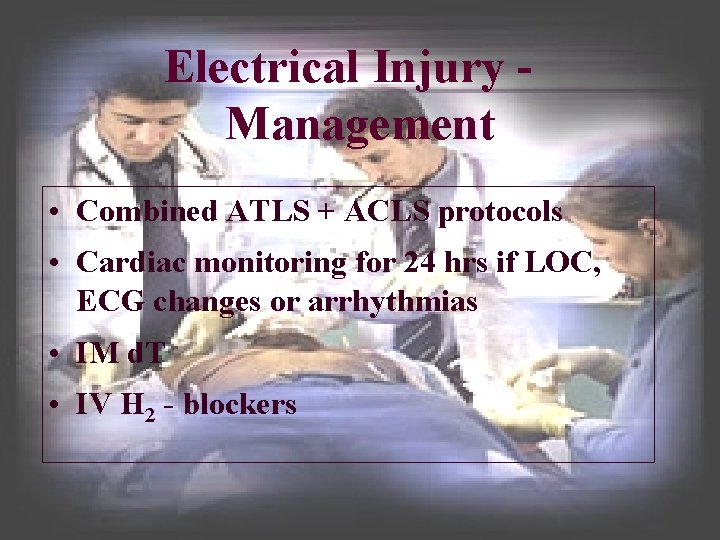
Electrical Injury Management • Combined ATLS + ACLS protocols • Cardiac monitoring for 24 hrs if LOC, ECG changes or arrhythmias • IM d. T • IV H 2 - blockers
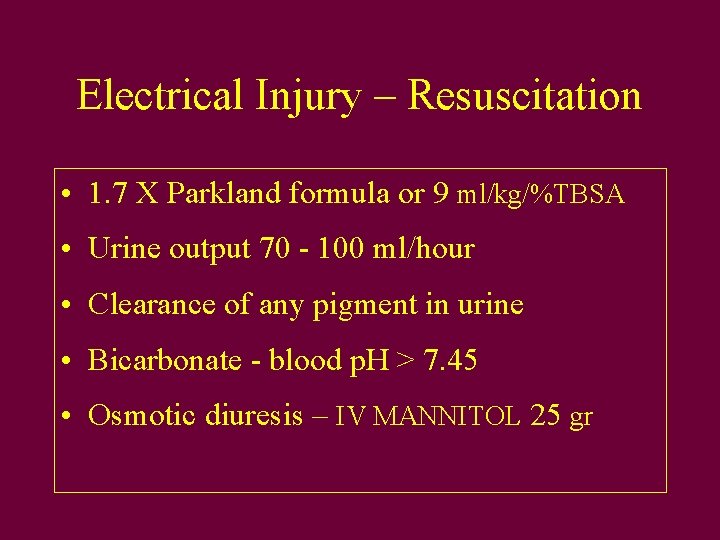
Electrical Injury – Resuscitation • 1. 7 X Parkland formula or 9 ml/kg/%TBSA • Urine output 70 - 100 ml/hour • Clearance of any pigment in urine • Bicarbonate - blood p. H > 7. 45 • Osmotic diuresis – IV MANNITOL 25 gr
Electrical Injury – Wound Managemant “True” high tension • Sharply demarcated • Always full thickness • Leathery appearence
Electrical injury – Wound Management • “Progressive necrosis” theory • Primary resuscitation. • Early exploration and debridment • “Second look” in 24 -48 hrs –definitive Tx – Primary closure – Coverage – Amputation
Wound Management – Extremities • Frequent envolvement of the hand • Exit point in one or both legs • Arc injury in distal fore arm or axilla
Wound Management – Extremities • Initial assessment usually predicts outcome: – Depth of burns – Ischemia – Anasthesia – Flexion position – Muscle viability- response to electrocautery
Electrical Burn - Extremities
Wound Management – Extremities • Exploration - large volume underlying necrotic area • Full thickness burns • Proximal periosseous myonecrosis • Retained questionable tissue may lead to contamination and further compromise
Wound Management - Scalp • Saucer shaped, deapest in the middle • Delayed Tx osteomyelitis and epidural abscess • Debridment of soft tissue, outer cortical bone and skin grafting • Full thicknss skull - devitalization & flap coverage
Wound Management – Trunk & perineum • Suspect visceral injury • Lung – Atelectasis and edema • Abdomen – consider as penetrating wound • Perineum –urinary and bowel diversion & debridment +STSG