
Electrical field induced charging dynamics of single colloidal

- Slides: 15
Electrical field induced charging dynamics of single colloidal particles C. Schreuer, O. Drobchak, T. Brans, F. Strubbe, S. Vandewiele, K. Neyts, F. Beunis Electronics and Information Systems, University of Ghent Belgium ECIS 2014: Limassol, Cyprus • September 7 – 12, 2014
Overview • • Introduction What is OTE? Why use OTE? Technological improvements Induced charging Complementary technique Conclusion
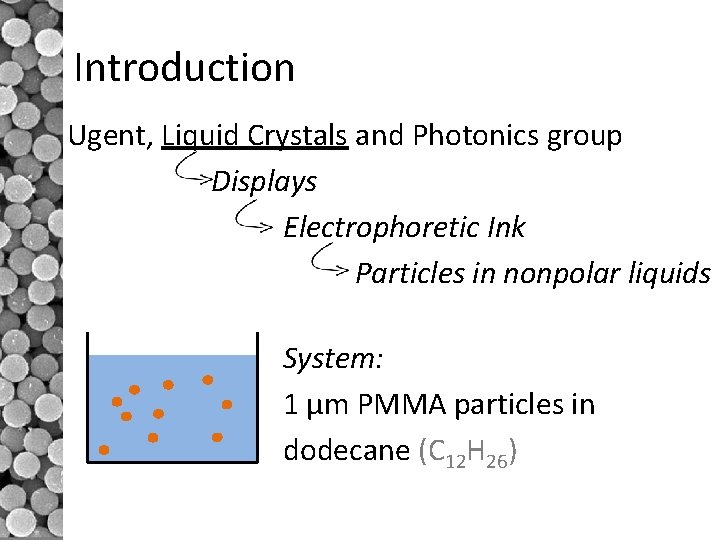
Introduction Ugent, Liquid Crystals and Photonics group Displays Electrophoretic Ink Particles in nonpolar liquids System: 1 µm PMMA particles in dodecane (C 12 H 26)
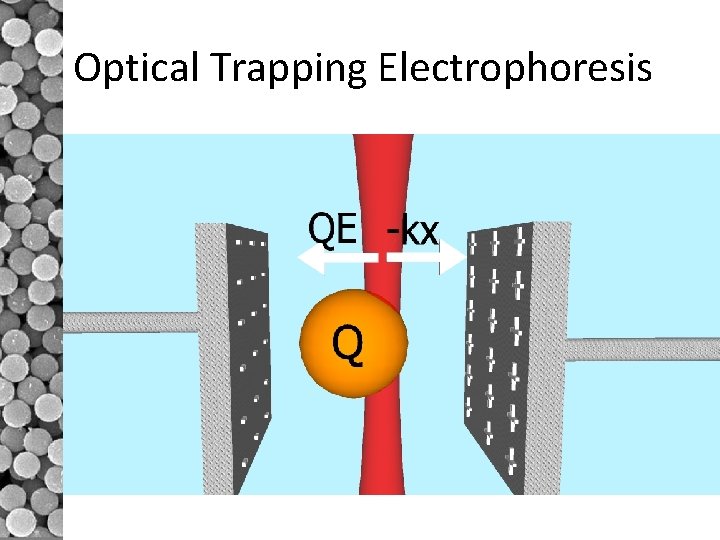
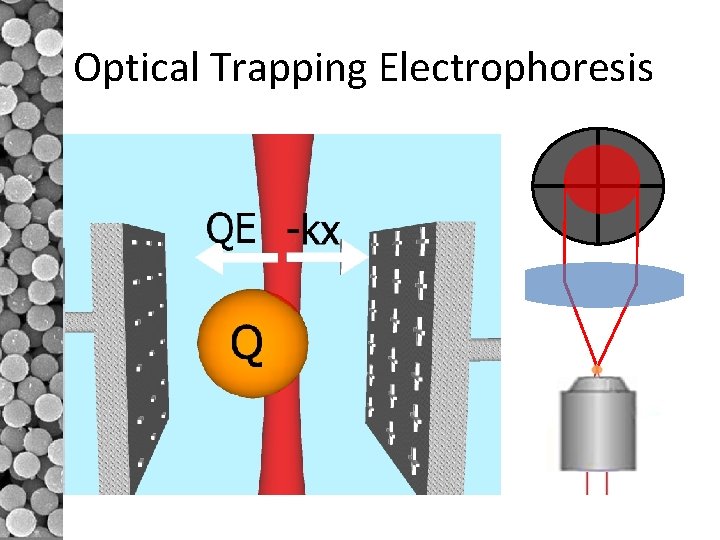
Optical Trapping Electrophoresis
Optical Trapping Electrophoresis
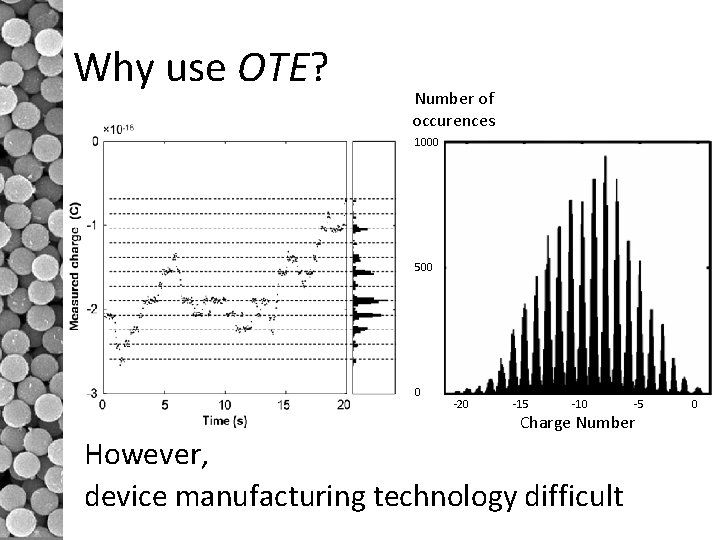
Why use OTE? Number of occurences 1000 500 0 -20 -15 -10 -5 Charge Number However, device manufacturing technology difficult 0
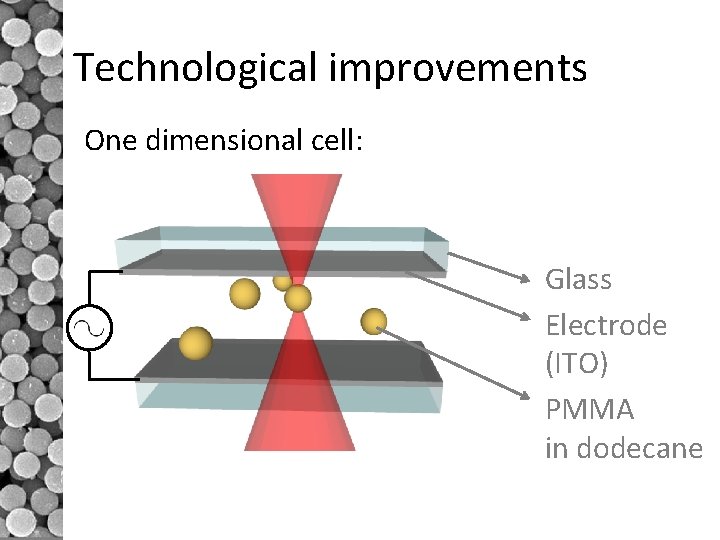
Technological improvements One dimensional cell: Glass Electrode (ITO) PMMA in dodecane
Technological improvements Advantages Single Beam Easy fabrication Cleanroom tech. Thickness control Parallel electrodes Precise E-field NO ELECTRO-OSMOSIS, HOW COULD I FORGET THIS? ? !?
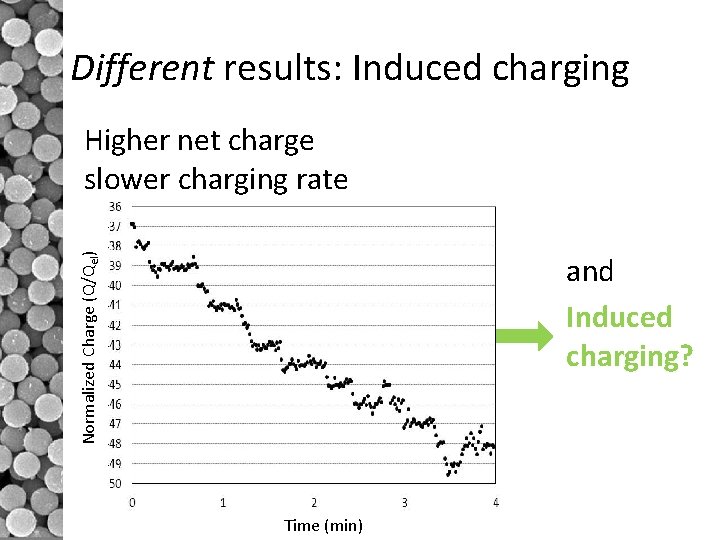
Different results: Induced charging Higher net charge slower charging rate Normalized Charge (Q/Qel) and Induced charging? Time (min)
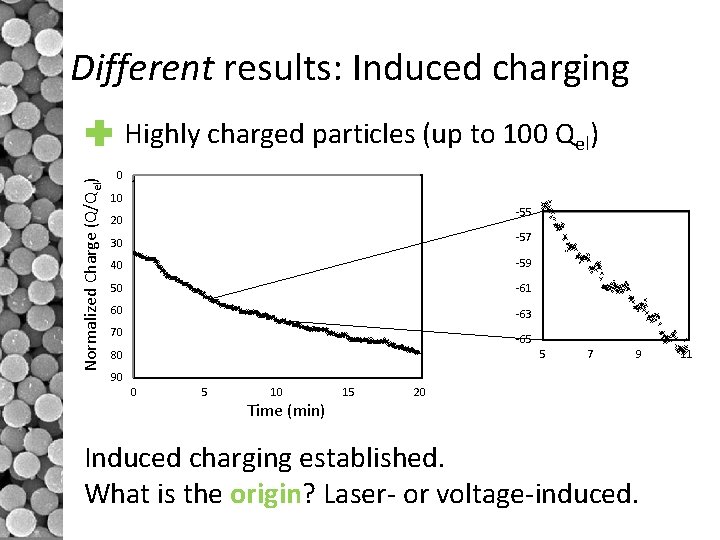
Different results: Induced charging Normalized Charge (Q/Qel) Highly charged particles (up to 100 Qel) 0 -10 -55 -20 -30 -57 -40 -59 -50 -61 -60 -63 -70 -65 5 -80 7 9 -90 0 5 10 Time (min) 15 20 Induced charging established. What is the origin? Laser- or voltage-induced. 11
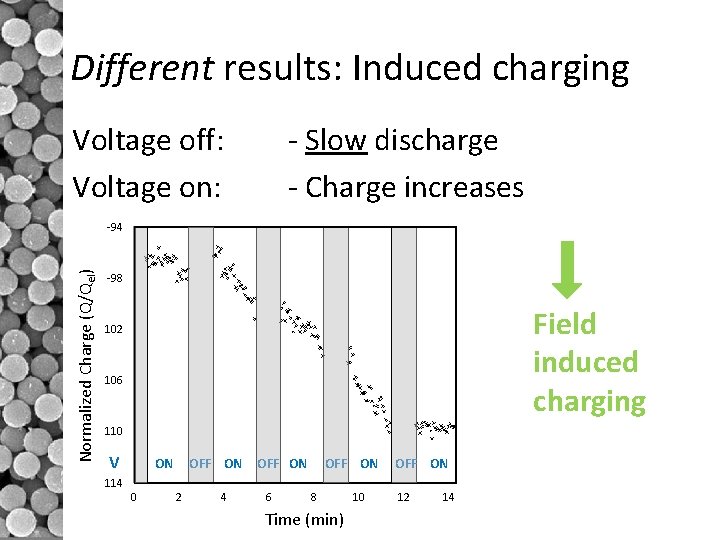
Different results: Induced charging Voltage off: Voltage on: - Slow discharge - Charge increases Normalized Charge (Q/Qel) -94 -98 Field induced charging -102 -106 -110 V ON OFF ON -114 0 2 4 6 8 Time (min) 10 12 14 16
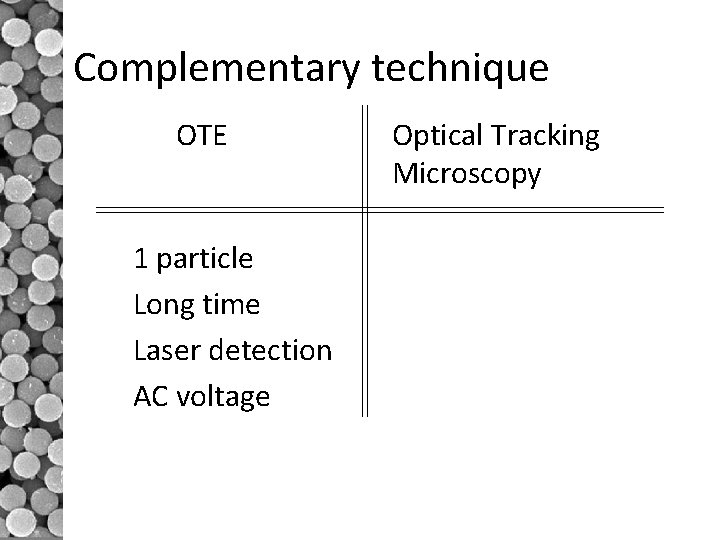
Complementary technique OTE 1 particle Long time Laser detection AC voltage Optical Tracking Microscopy
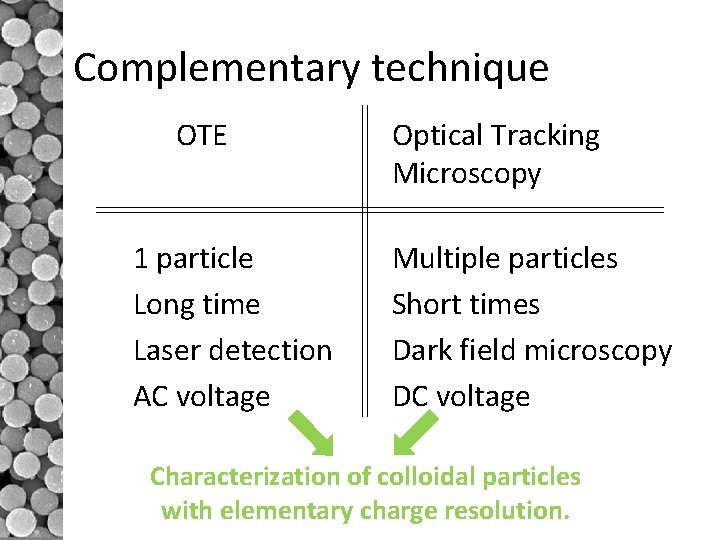
Complementary technique OTE 1 particle Long time Laser detection AC voltage Optical Tracking Microscopy Multiple particles Short times Dark field microscopy DC voltage Characterization of colloidal particles with elementary charge resolution.
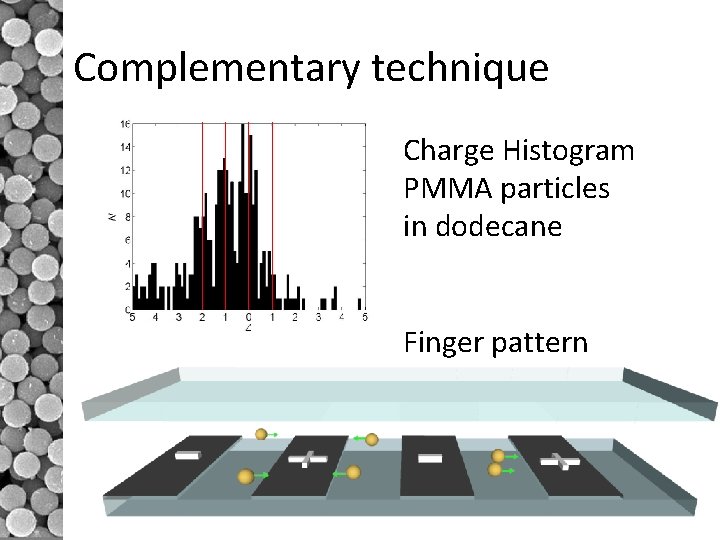
Complementary technique Charge Histogram PMMA particles in dodecane Finger pattern
Conclusion and prospects OTE A powerful tool to monitor surface charging events of single colloidal particles Improved setup Single Beam Easy fabrication Cleanroom technology Thickness control Highly charged particles Precise E-field We measure Electrical Field Induced Charging