
Electrical Engineering Technology EE 306 Lecture 7 Hughes
- Slides: 14
Electrical Engineering Technology EE 306 Lecture 7 Hughes : Chapter 33 – pgs 669 - 675
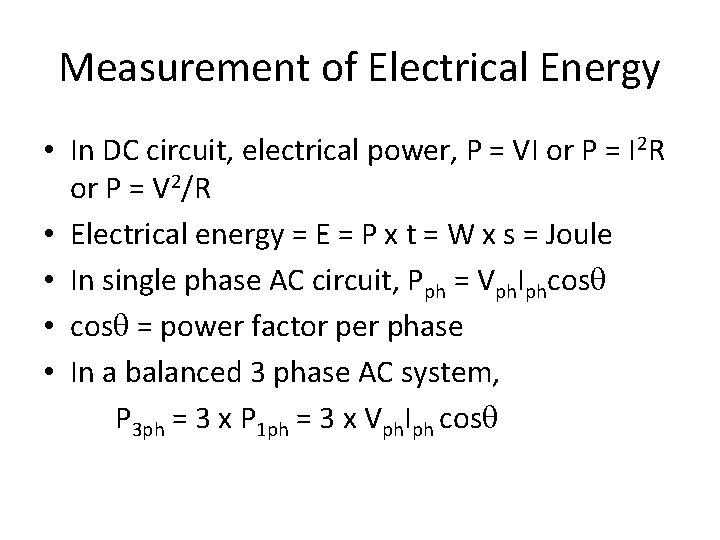
Measurement of Electrical Energy • In DC circuit, electrical power, P = VI or P = I 2 R or P = V 2/R • Electrical energy = E = P x t = W x s = Joule • In single phase AC circuit, Pph = Vph. Iphcos • cos = power factor per phase • In a balanced 3 phase AC system, P 3 ph = 3 x P 1 ph = 3 x Vph. Iph cos
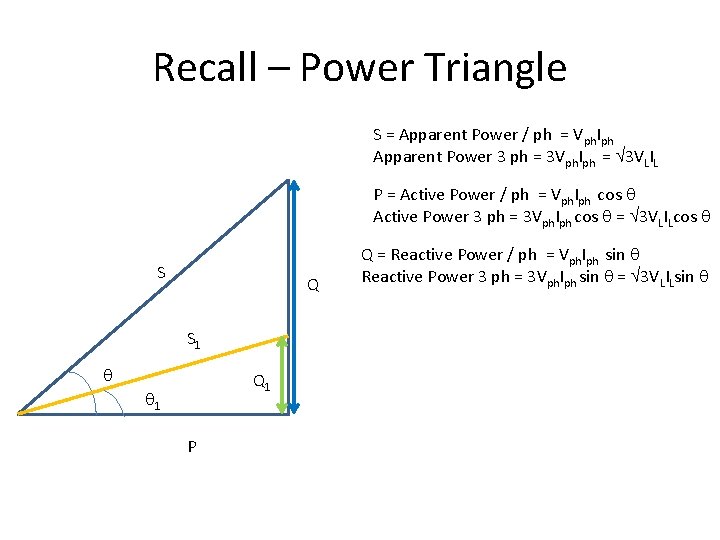
Recall – Power Triangle S = Apparent Power / ph = Vph. Iph Apparent Power 3 ph = 3 Vph. Iph = 3 VLIL P = Active Power / ph = Vph. Iph cos Active Power 3 ph = 3 Vph. Iph cos = 3 VLILcos S Q S 1 Q 1 1 P Q = Reactive Power / ph = Vph. Iph sin Reactive Power 3 ph = 3 Vph. Iph sin = 3 VLILsin
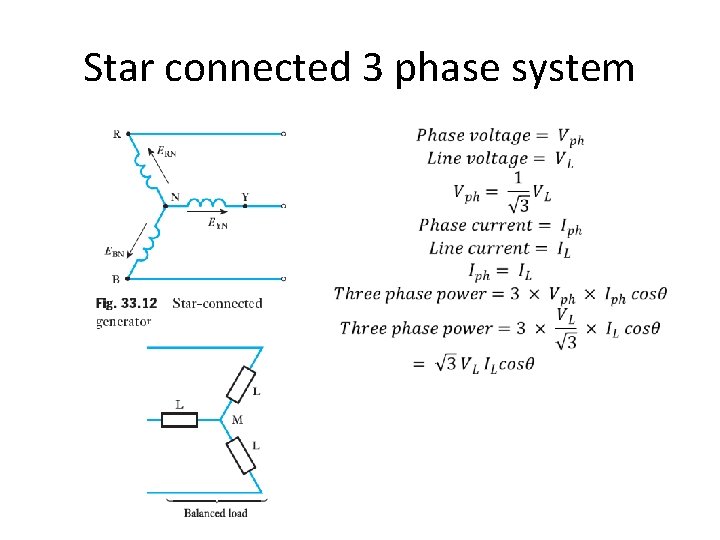
Star connected 3 phase system
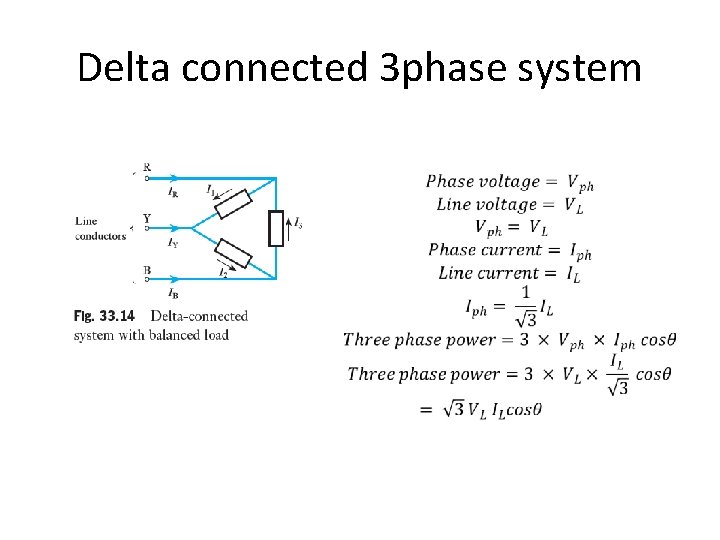
Delta connected 3 phase system
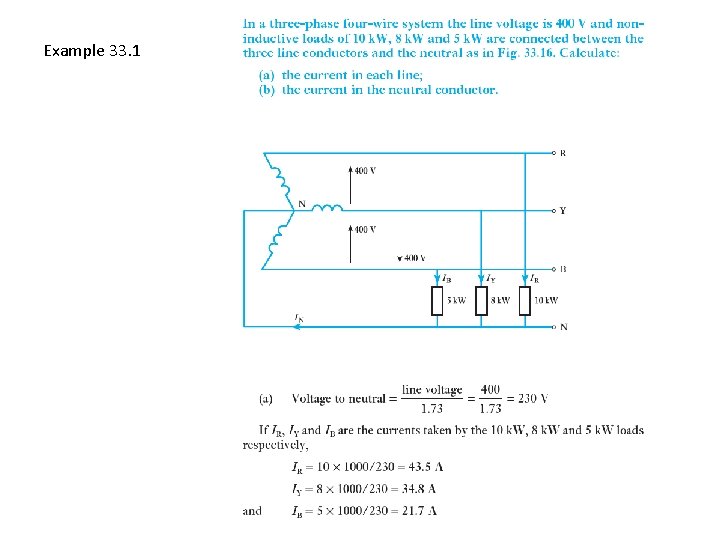
Example 33. 1
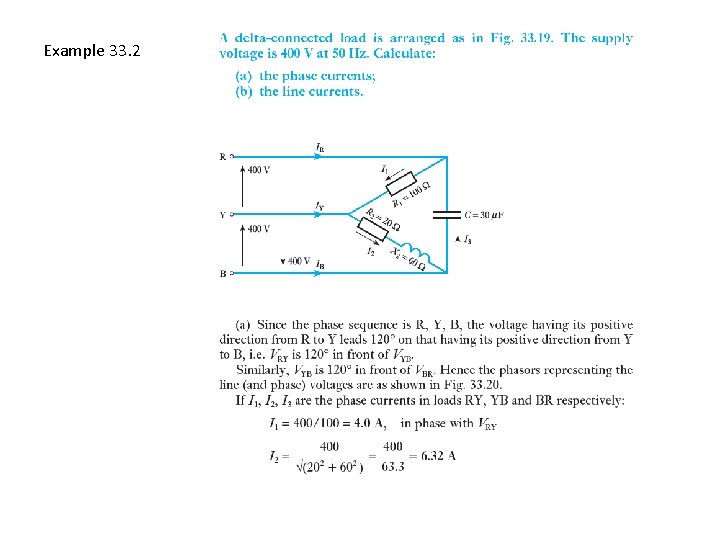
Example 33. 2
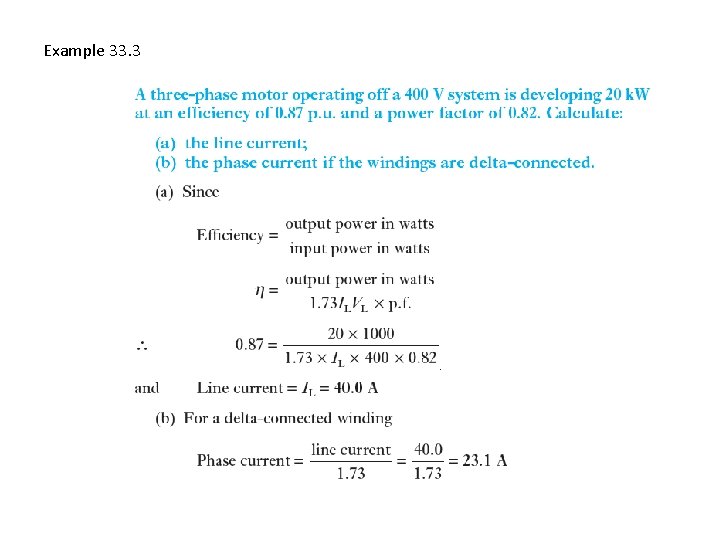
Example 33. 3
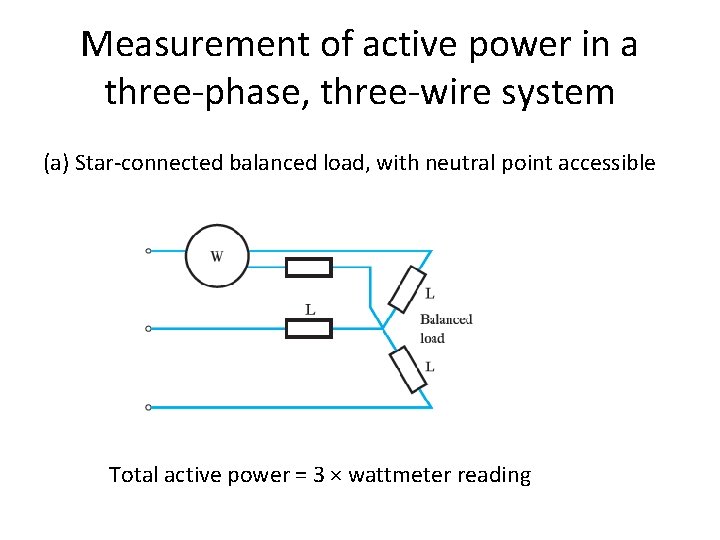
Measurement of active power in a three-phase, three-wire system (a) Star-connected balanced load, with neutral point accessible Total active power = 3 × wattmeter reading
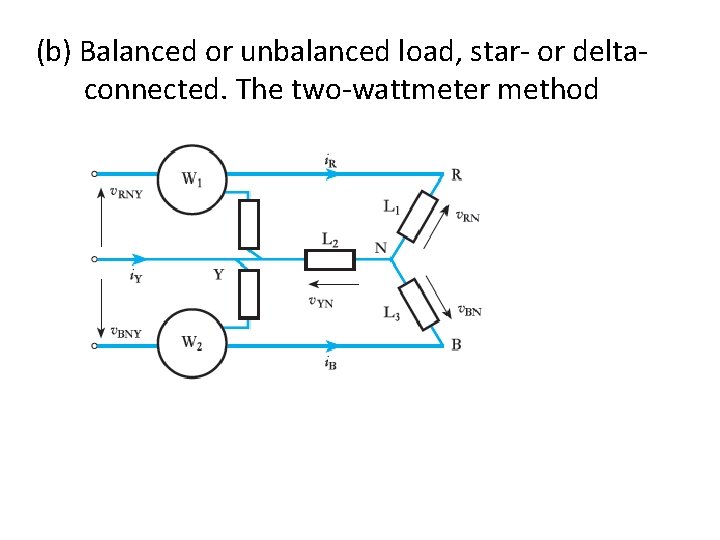
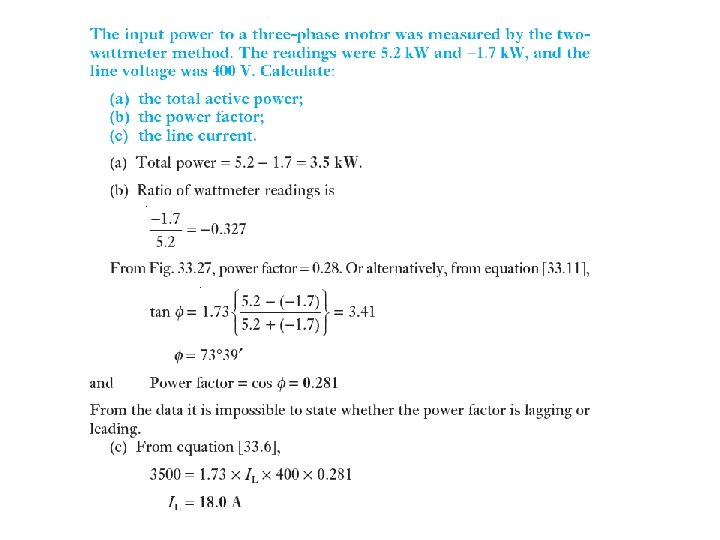
(b) Balanced or unbalanced load, star- or deltaconnected. The two-wattmeter method
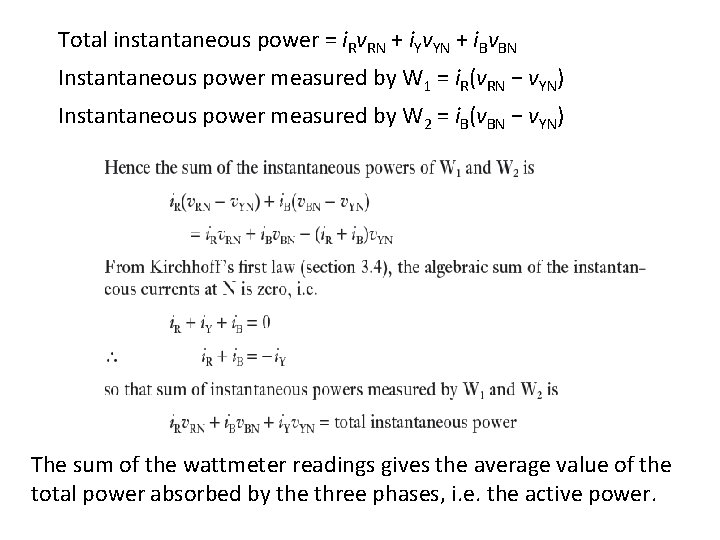
Total instantaneous power = i. Rv. RN + i. Yv. YN + i. Bv. BN Instantaneous power measured by W 1 = i. R(v. RN − v. YN) Instantaneous power measured by W 2 = i. B(v. BN − v. YN) The sum of the wattmeter readings gives the average value of the total power absorbed by the three phases, i. e. the active power.
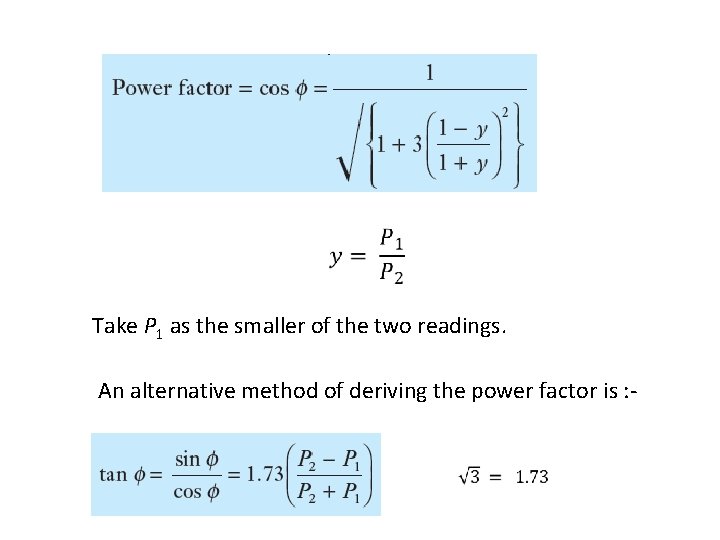
Take P 1 as the smaller of the two readings. An alternative method of deriving the power factor is : -
PROBLEMS : 5, 7, 8, 20, 21, 23, 25, 26