
Electrical Engineering Control Plans Building on a Valid
Electrical Engineering Control Plans - Building on a Valid Control Framework A Paper for the 2017 Electrical Engineer ing Safety Seminar by Peter Standish of Op. RM
Presentation Overview ● Goals and Intent ● Some Theory ● Valid Controls - a Step Change in Thinking ● Getting the Terminology Right ● Control Support Activities and Demonstrable Compliance ● Where to from here?
Goals and Intent Goals - to share findings from applying a Valid or Effective Control approach to strategic risk assessments Intent - help encourage companies and operations be aware of an approach that is a fail safe way to demonstrate compliance
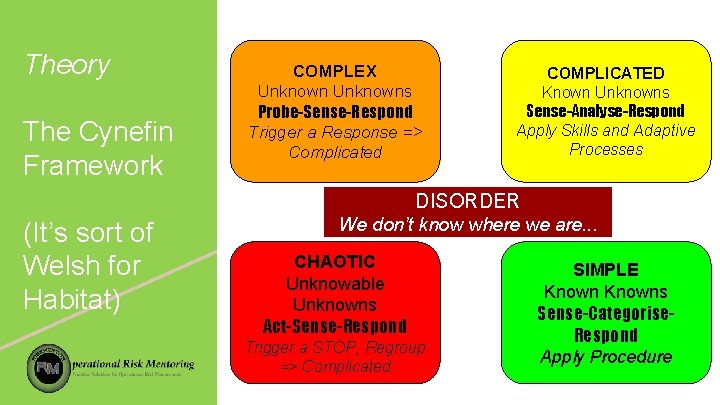
Theory The Cynefin Framework COMPLEX Unknowns Probe-Sense-Respond Trigger a Response => Complicated COMPLICATED Known Unknowns Sense-Analyse-Respond Apply Skills and Adaptive Processes DISORDER (It’s sort of Welsh for Habitat) We don’t know where we are. . . CHAOTIC Unknowable Unknowns Act-Sense-Respond Trigger a STOP, Regroup => Complicated SIMPLE Knowns Sense-Categorise. Respond Apply Procedure
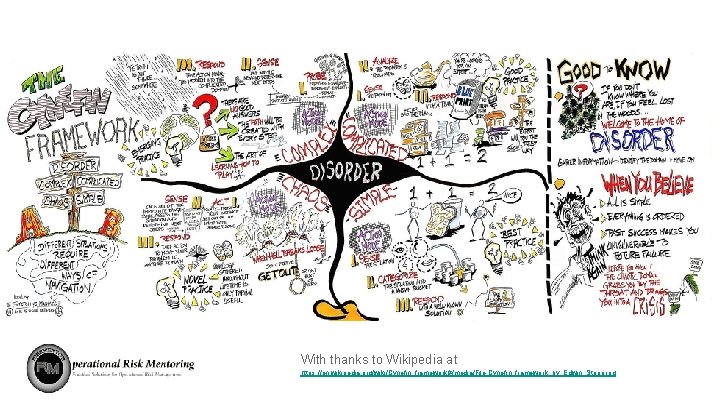
With thanks to Wikipedia at https: //en. wikipedia. org/wiki/Cynefin_framework#/media/File: Cynefin_framework_by_Edwin_Stoop. jpg
Theory Enhanced ● Based on ACARP Project C 23007 Selection and Optimisation of Risk Controls (Joy, Hassall, Punch, Doran, 2015): ○ Act, Object or Technological System ○ Of Itself Prevents or Mitigates an Incident ○ Can be Specified, Measured and Audited ● Leads to the development of a very concise set of Valid and Effective Controls - that describe the Required Operating States for an Organisation addressing a type of Incident ● Addresses the issues which arise from the CYNEFIN framework
Applying the Theory ACARP Valid Control Guidance Incident Analysis and Site Refinement Control Management Sheet Approach to Strategic (BBRA) Risk Control Identification
A Step Change in Thinking about Controls ● Applying new and valid Control logic to reduce complexity ● Valid Controls describe the Required Operating State and Workers just “get it” ● When you’re solid on the controls the risk levels are visible from site and industry incident data
Control Support Activities and Demonstrabl e Compliance ● Who has re-written or significantly changed their Management Plans as a result of the change in statute? ● 2 o’clock on a Thursday morning - who will know whether the approved document the supervisors have grabbed is aligned with the latest version of the Control Plan? ?
Control Supports as Unchanging Points of Truth ● Control Support Activities match to fundamental states of operating - they shouldn’t change due to any (non-physical) external change ● Changes in what is mandated and recommended should only trigger a change in mapping - not a change in activity
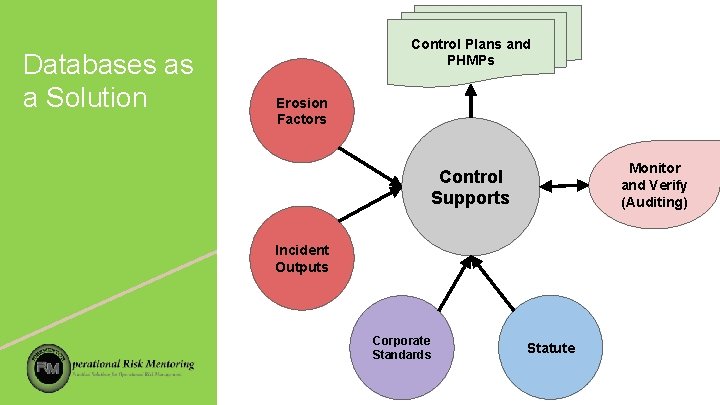
Databases as a Solution Control Plans and PHMPs Erosion Factors Monitor and Verify (Auditing) Control Supports Incident Outputs Corporate Standards Statute
Getting the Terminology Right ● Terms/Language Used are important ● Consistency can avoid confusion ○ Valid or Effective Controls - are the Required Operating States that are Acts, Objects or Technological Systems ○ Erosion factors are the People / Equipment / Controlled Work Environment events or conditions which disrupt the Required Operating State ○ Control Support Activities are Specified, Implemented, Monitored and Verified to constrain the Erosion Factor and move the operating state back to that required
Where to from here? ● Well considered Effective Controls/Required Operating States form the basis of a powerful taxonomy of business sensible activities (Control Support Activities) ● Incidents can be analysed by reviewing which Controls were compromised by what Erosion Factors and guide towards which Control Support Activities that need to be performed or strengthened ● Well cross mapped external (statutory) and business (corporate standards etc. ) imperatives generate a very sensitive and sensible way to monitor and audit your system

Critical Controls for Electrical Engineering ● Suggested set of Electrical Controls ○ Preventative ■ Workers identify all electrical energy sources present and apply appropriate work method ■ Workers identify electrical energy being introduced and respond appropriately ■ Electrical enclosures/insulation constrain electrical energy ■ Equipment trips due to load/fault condition ■ Workers identify changes in the work environment whilst exposed and respond appropriately ○ Mitigating ■ Co-workers/bystanders react to an electrical fault and prevent harm to the worker ■ Workers deploy appropriate (LV) protection gear to avoid harm

Shameless Self Promotion Moment ● We would love to share more of our passion and enthusiasm for this approach with you ○ Sign up for an online course on the approach (no charge to EESS attendees) ○ Call - Peter Standish 0417 419 709 or drop me an email peter. standish@oprm. com. au ● Thanks for your attention and interest!
- Slides: 15