
Electrical Circuits WJEC Physics Unit 1 1 1
- Slides: 23
Electrical Circuits WJEC Physics Unit 1 - 1. 1 WJEC Science (Double Award) Unit 3 - 3. 1
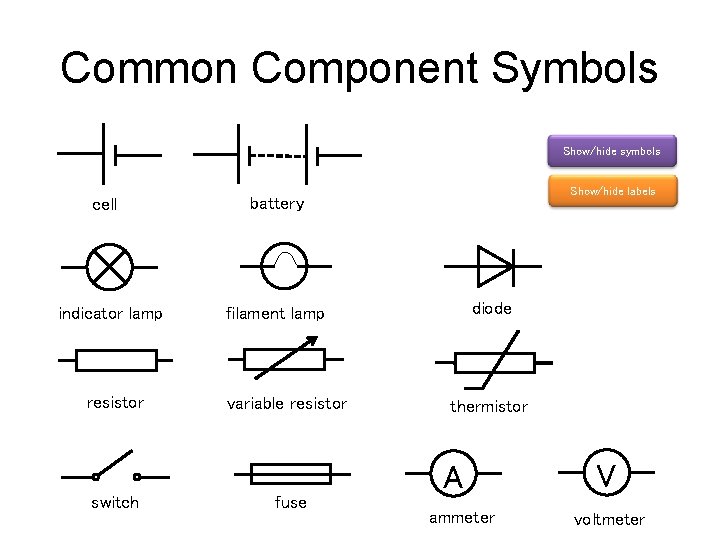
Common Component Symbols Show/hide symbols cell indicator lamp resistor Show/hide labels battery diode filament lamp variable resistor thermistor A switch fuse ammeter V voltmeter
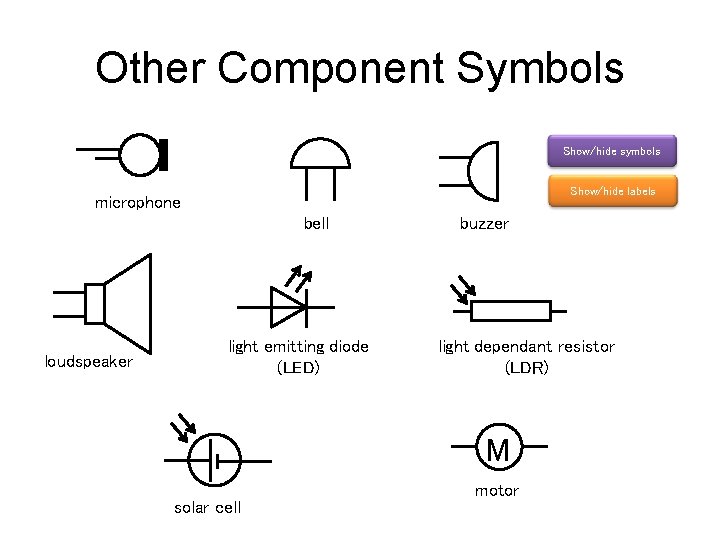
Other Component Symbols Show/hide symbols Show/hide labels microphone bell loudspeaker light emitting diode (LED) buzzer light dependant resistor (LDR) M solar cell motor
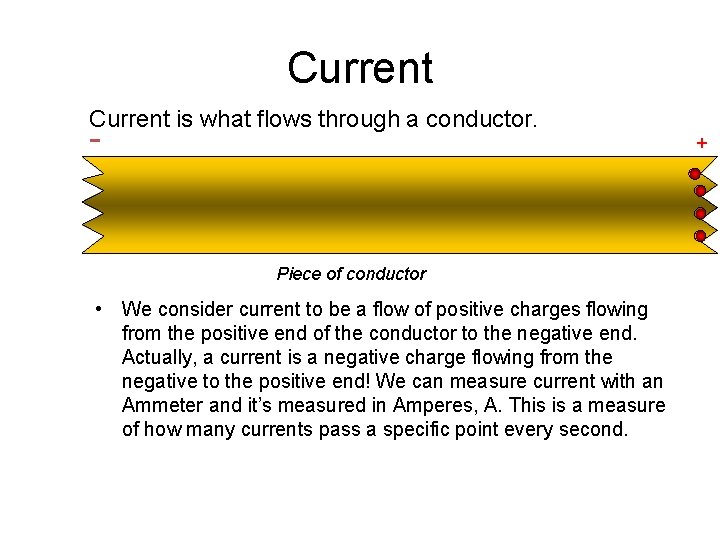
Current is what flows through a conductor. - + Piece of conductor • We consider current to be a flow of positive charges flowing from the positive end of the conductor to the negative end. Actually, a current is a negative charge flowing from the negative to the positive end! We can measure current with an Ammeter and it’s measured in Amperes, A. This is a measure of how many currents pass a specific point every second.
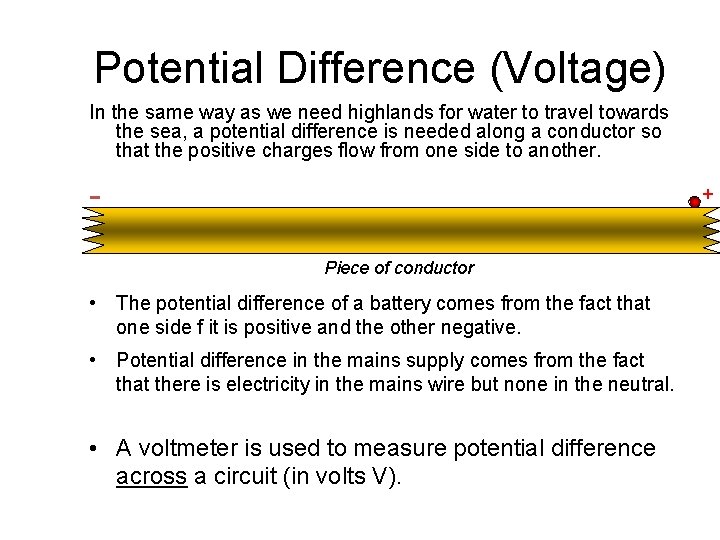
Potential Difference (Voltage) In the same way as we need highlands for water to travel towards the sea, a potential difference is needed along a conductor so that the positive charges flow from one side to another. - `+ Piece of conductor • The potential difference of a battery comes from the fact that one side f it is positive and the other negative. • Potential difference in the mains supply comes from the fact that there is electricity in the mains wire but none in the neutral. • A voltmeter is used to measure potential difference across a circuit (in volts V).
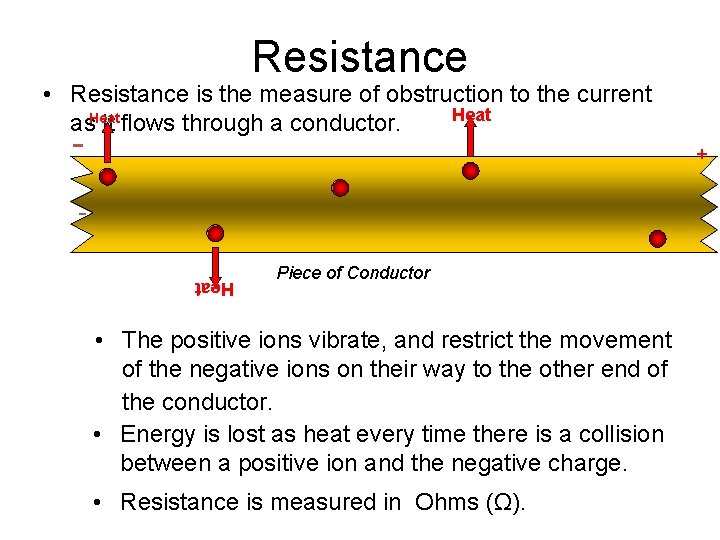
Resistance • Resistance is the measure of obstruction to the current Heat as. Heat it flows through a conductor. - + Piece of Conductor Heat • The positive ions vibrate, and restrict the movement of the negative ions on their way to the other end of the conductor. • Energy is lost as heat every time there is a collision between a positive ion and the negative charge. • Resistance is measured in Ohms (Ω).
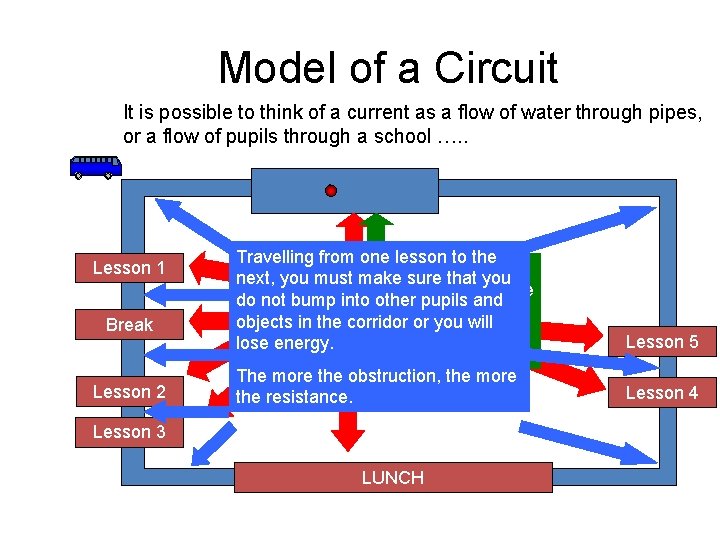
Model of a Circuit It is possible to think of a current as a flow of water through pipes, or a flow of pupils through a school …. . ` Lesson 1 Break Lesson 2 Travelling from one lesson to the You have the a lot more energy the Counting number ofat pupils next, you musttotal make sure that you start of the day, than you at the arriving in the morning, is have equal do not bump into other pupils andto end of the day. The in the sum pupils at difference any timewill during objects inofthe corridor or you energy is. This the is potential the day. what a difference, current is. or lose energy. the voltage in a circuit. The more the obstruction, the more the resistance. Lesson 3 LUNCH Lesson 5 Lesson 4
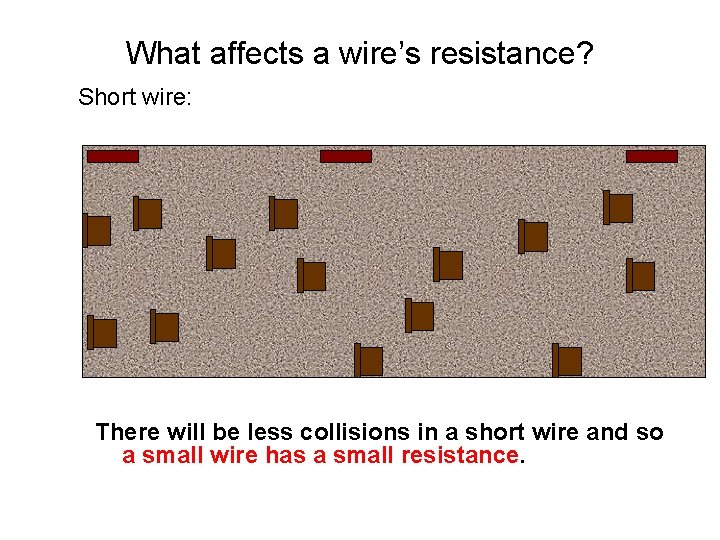
What affects a wire’s resistance? Short wire: There will be less collisions in a short wire and so a small wire has a small resistance.
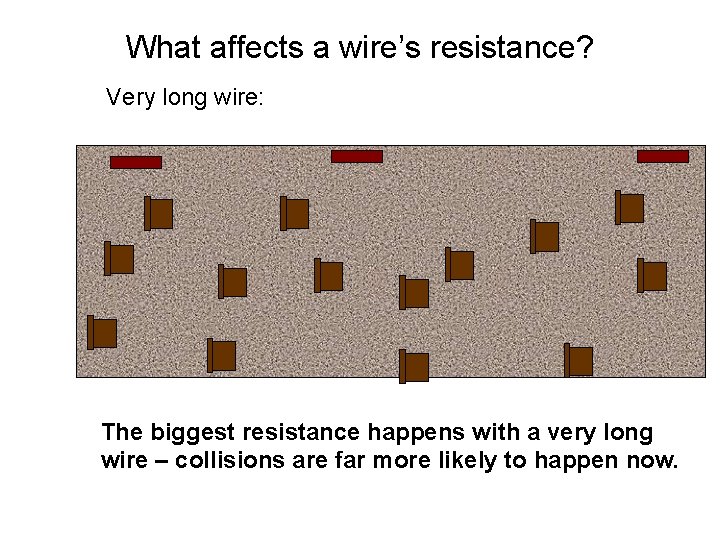
What affects a wire’s resistance? Very long wire: The biggest resistance happens with a very long wire – collisions are far more likely to happen now.
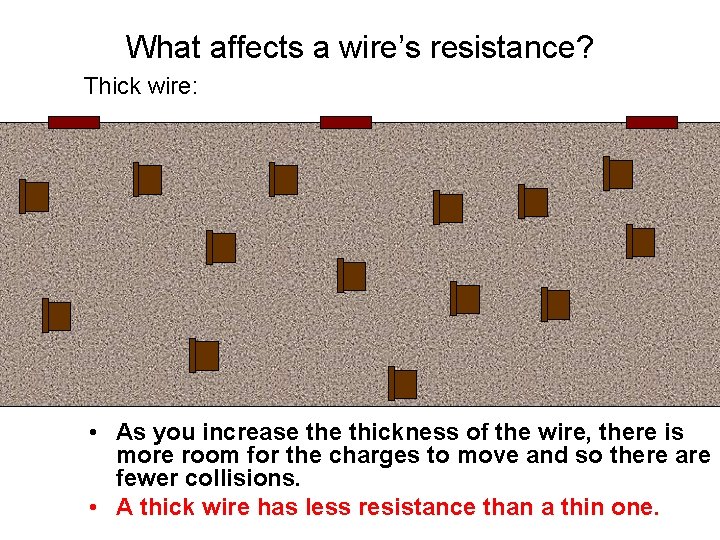
What affects a wire’s resistance? Thick wire: • As you increase thickness of the wire, there is more room for the charges to move and so there are fewer collisions. • A thick wire has less resistance than a thin one.
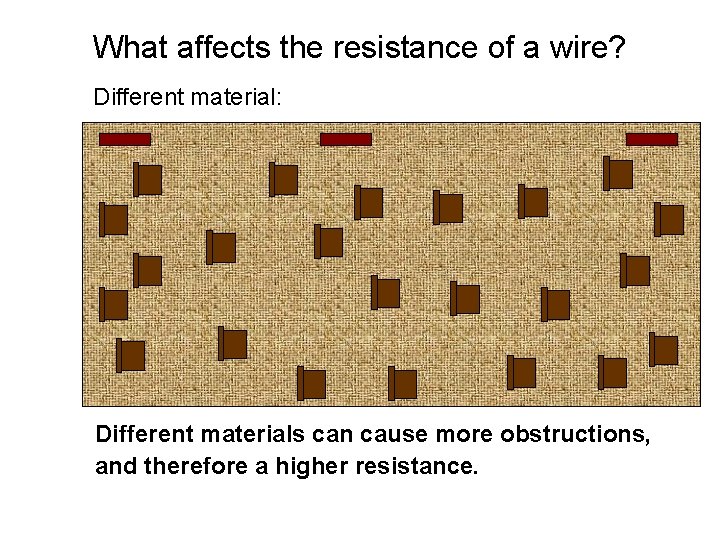
What affects the resistance of a wire? Different material: Different materials can cause more obstructions, and therefore a higher resistance.
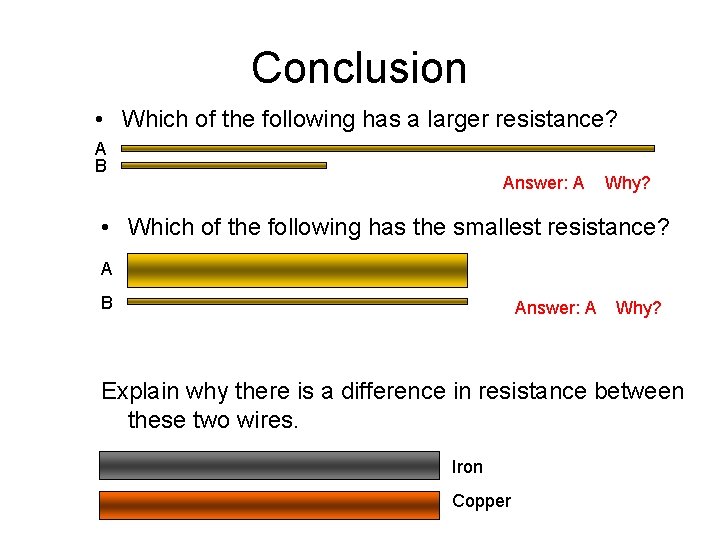
Conclusion • Which of the following has a larger resistance? A B Answer: A Why? • Which of the following has the smallest resistance? A B Answer: A Why? Explain why there is a difference in resistance between these two wires. Iron Copper
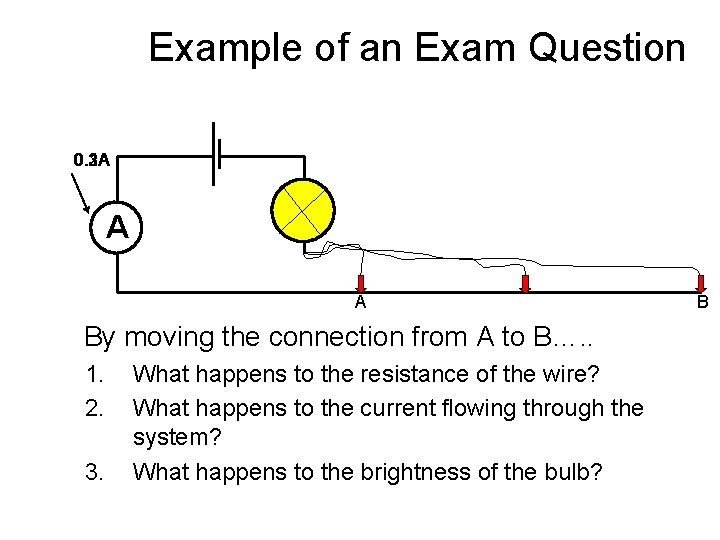
Example of an Exam Question 0. 3 A 0. 2 A 0. 1 A A A By moving the connection from A to B…. . 1. 2. 3. What happens to the resistance of the wire? What happens to the current flowing through the system? What happens to the brightness of the bulb? B
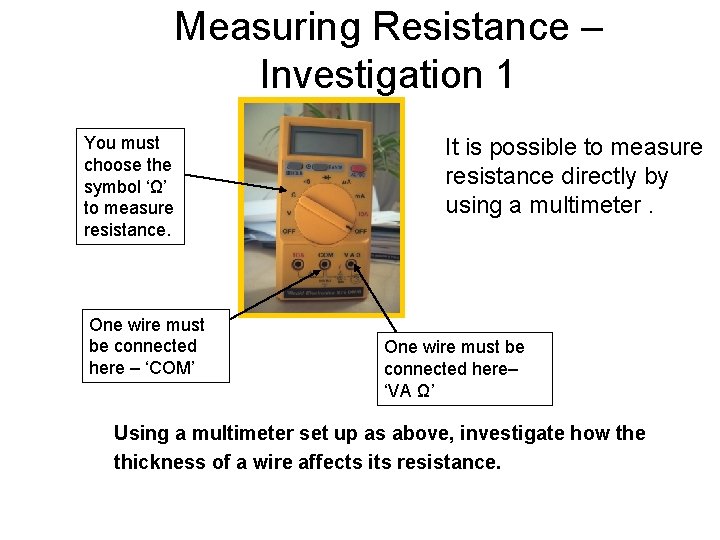
Measuring Resistance – Investigation 1 You must choose the symbol ‘Ω’ to measure resistance. One wire must be connected here – ‘COM’ It is possible to measure resistance directly by using a multimeter. One wire must be connected here– ‘VA Ω’ Using a multimeter set up as above, investigate how the thickness of a wire affects its resistance.
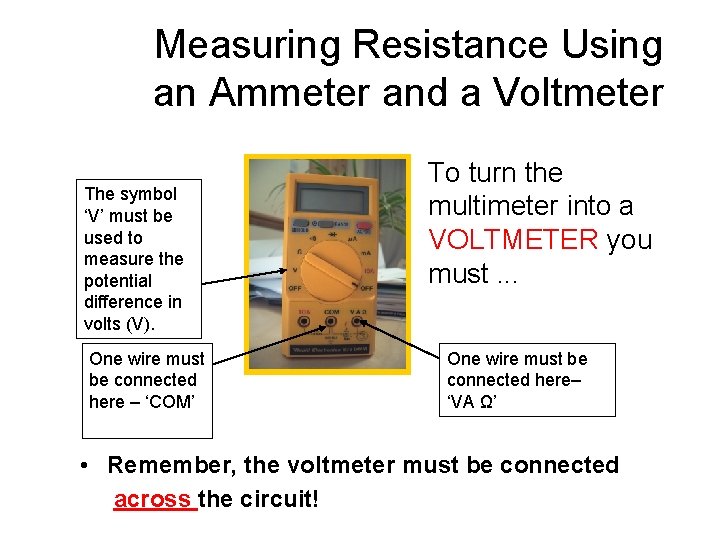
Measuring Resistance Using an Ammeter and a Voltmeter The symbol ‘V’ must be used to measure the potential difference in volts (V). One wire must be connected here – ‘COM’ To turn the multimeter into a VOLTMETER you must. . . One wire must be connected here– ‘VA Ω’ • Remember, the voltmeter must be connected across the circuit!
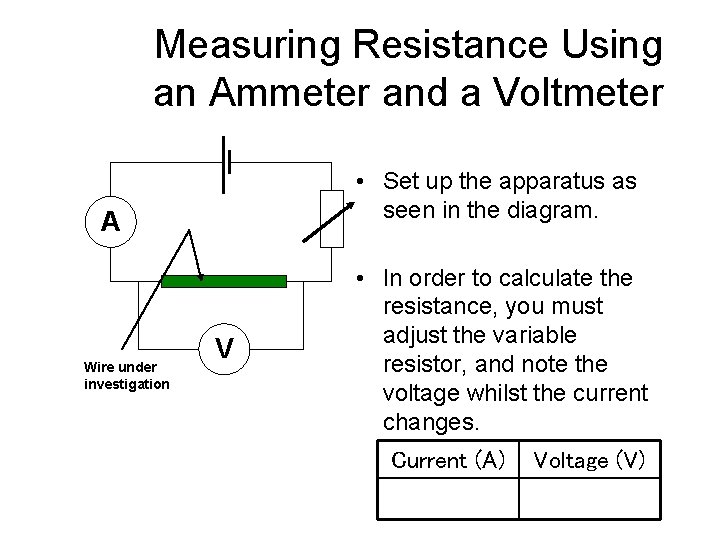
Measuring Resistance Using an Ammeter and a Voltmeter • Set up the apparatus as seen in the diagram. A Wire under investigation V • In order to calculate the resistance, you must adjust the variable resistor, and note the voltage whilst the current changes. Current (A) Voltage (V)
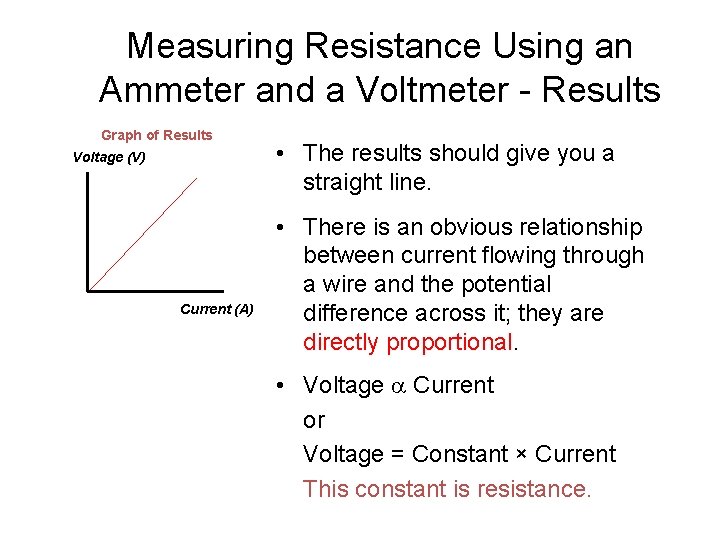
Measuring Resistance Using an Ammeter and a Voltmeter - Results Graph of Results Voltage (V) Current (A) • The results should give you a straight line. • There is an obvious relationship between current flowing through a wire and the potential difference across it; they are directly proportional. • Voltage Current or Voltage = Constant × Current This constant is resistance.
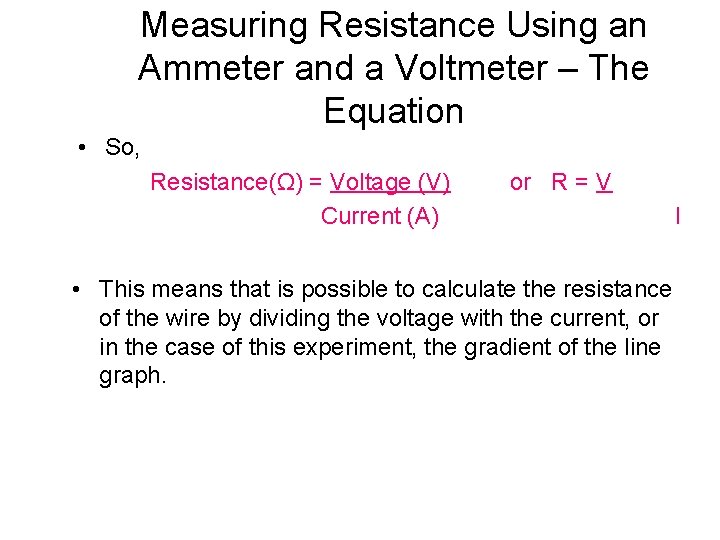
Measuring Resistance Using an Ammeter and a Voltmeter – The Equation • So, Resistance(Ω) = Voltage (V) Current (A) or R = V • This means that is possible to calculate the resistance of the wire by dividing the voltage with the current, or in the case of this experiment, the gradient of the line graph. I
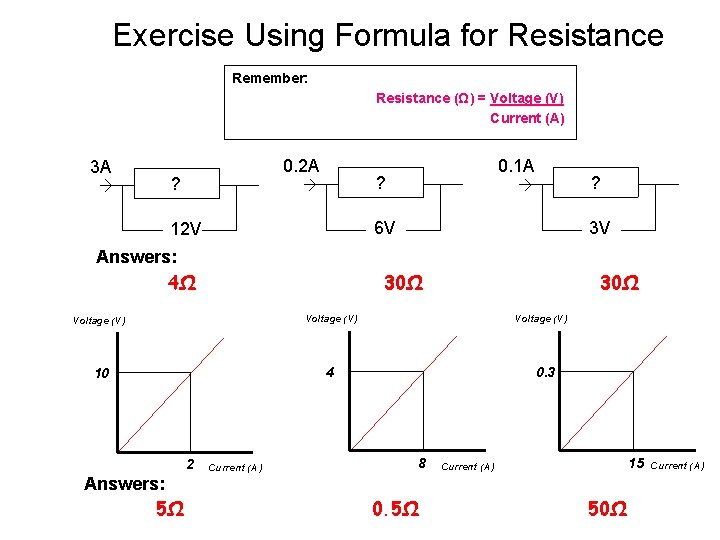
Exercise Using Formula for Resistance Remember: Resistance (Ω) = Voltage (V) Current (A) 3 A 0. 2 A ? ? Answers: 4Ω 3 V 30Ω Voltage (V) 10 4 Answers: 5Ω ? 6 V 12 V 2 0. 1 A Current (A) 30Ω Voltage (V) 0. 3 8 0. 5Ω 15 Current (A) 50Ω Current (A)
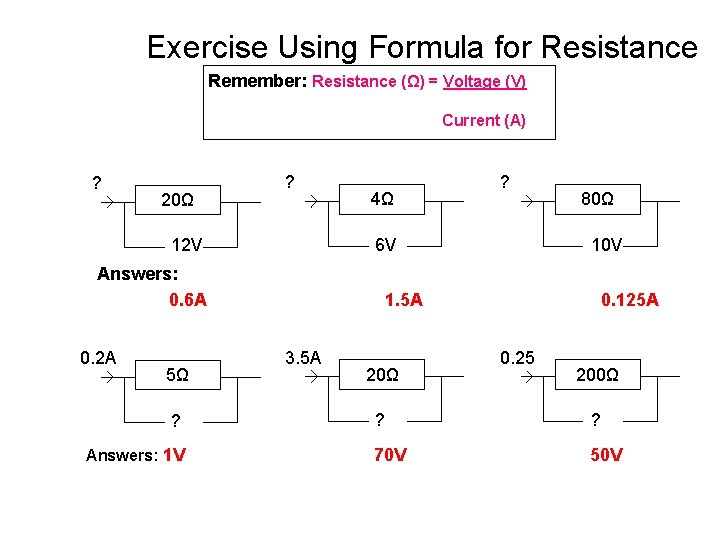
Exercise Using Formula for Resistance Remember: Resistance (Ω) = Voltage (V) Current (A) ? 20Ω ? 4Ω 6 V 12 V Answers: 0. 6 A 0. 2 A 5Ω ? Answers: 1 V ? 80Ω 10 V 1. 5 A 3. 5 A 20Ω 0. 125 A 0. 25 200Ω ? ? 70 V 50 V
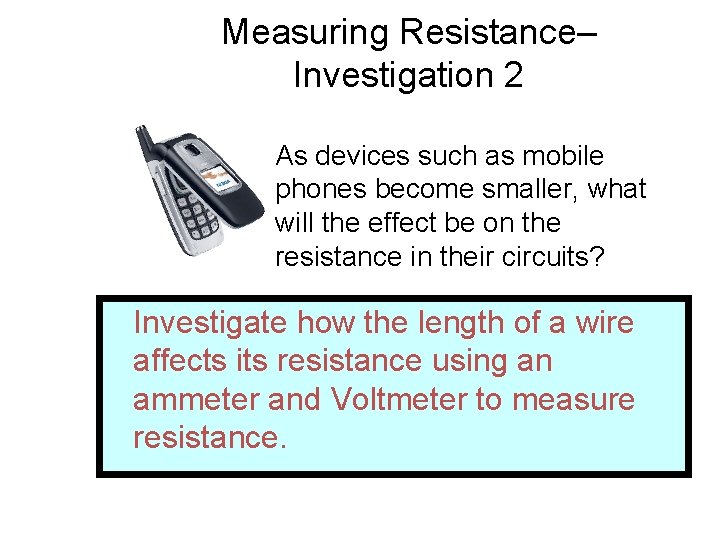
Measuring Resistance– Investigation 2 As devices such as mobile phones become smaller, what will the effect be on the resistance in their circuits? Investigate how the length of a wire affects its resistance using an ammeter and Voltmeter to measure resistance.
Measuring Resistance– Investigation 3 By increasing the current through a lamp, its brightness increases, but what happens to the resistance? Investigate how heat affects a wire’s resistance by using a bulb instead of a wire.
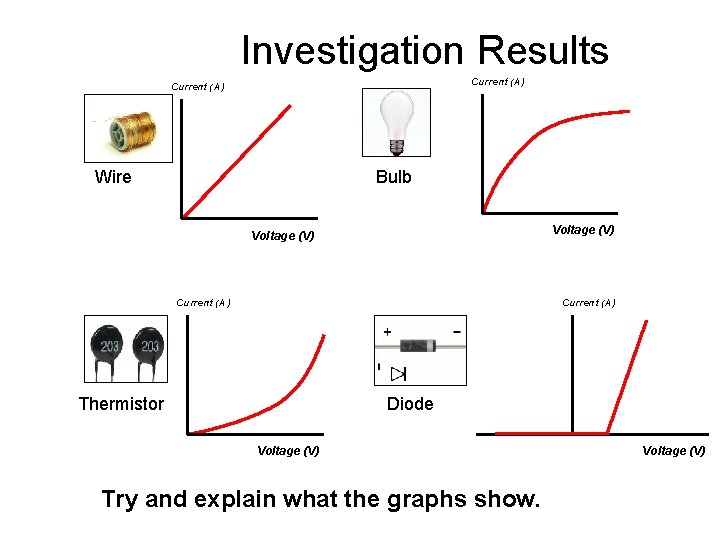
Investigation Results Current (A) Wire Bulb Voltage (V) Current (A) Thermistor Diode Voltage (V) Try and explain what the graphs show. Voltage (V)