
Electrical Circuits Electrical Circuits A Circuit is a
- Slides: 27
Electrical Circuits
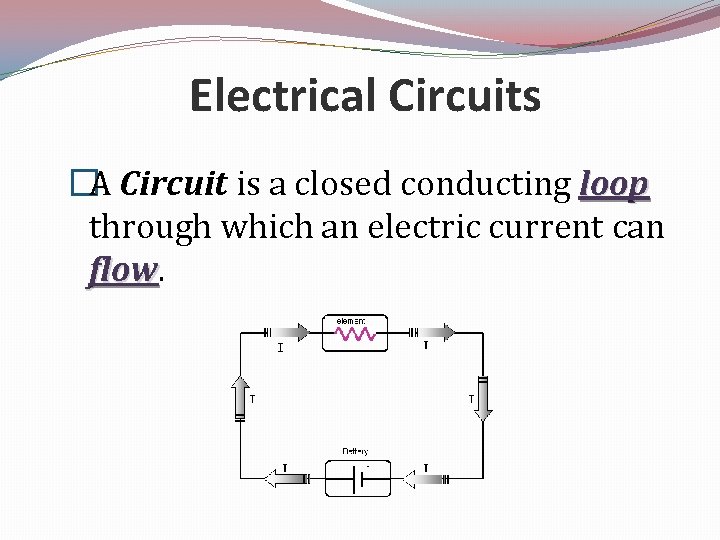
Electrical Circuits �A Circuit is a closed conducting loop through which an electric current can flow
Electrical Circuits - Parts 1. Source of Energy – battery, thermocouple, electric generator, photocell 2. Resistance (load) – device that uses energy – light bulb, appliance, machine, motor
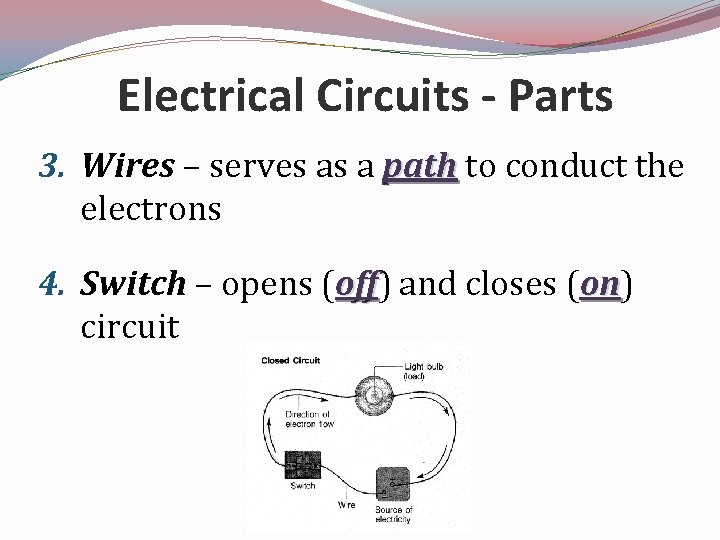
Electrical Circuits - Parts 3. Wires – serves as a path to conduct the electrons 4. Switch – opens (off) off and closes (on) on circuit
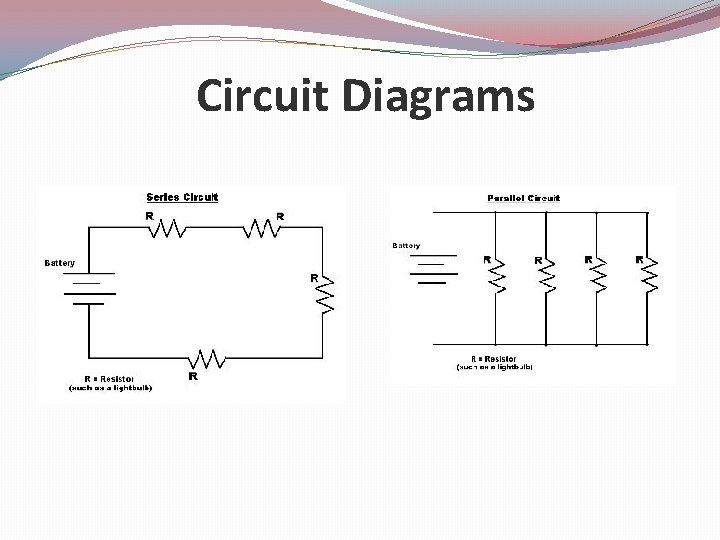
Circuit Diagrams
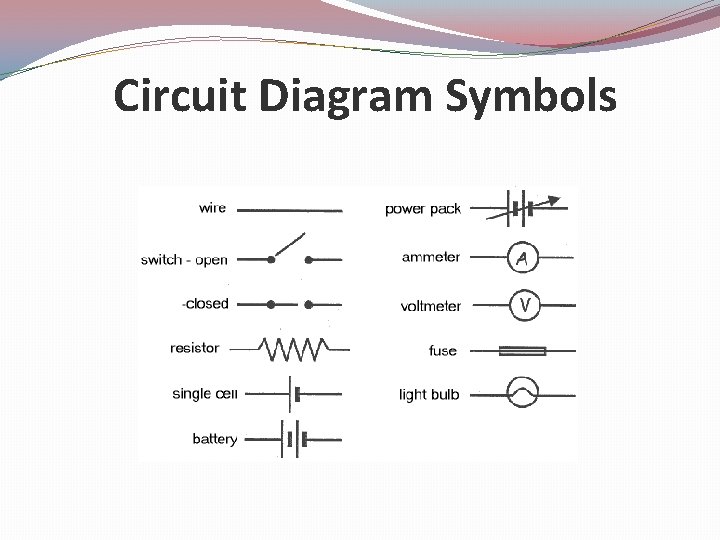
Circuit Diagram Symbols
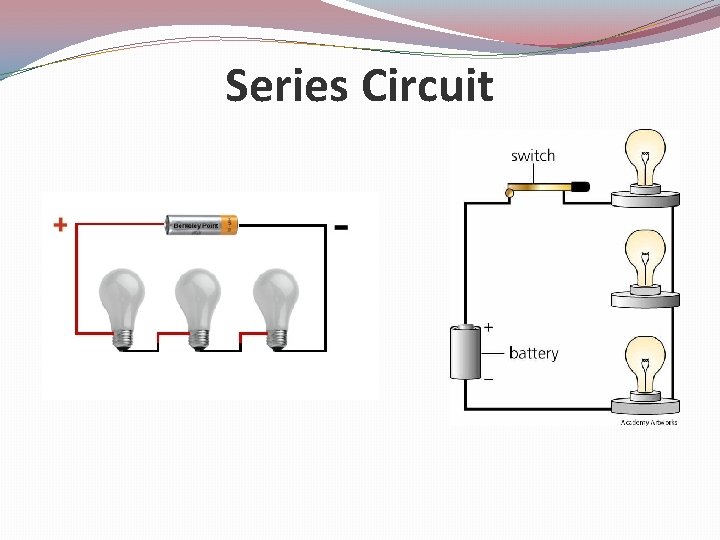
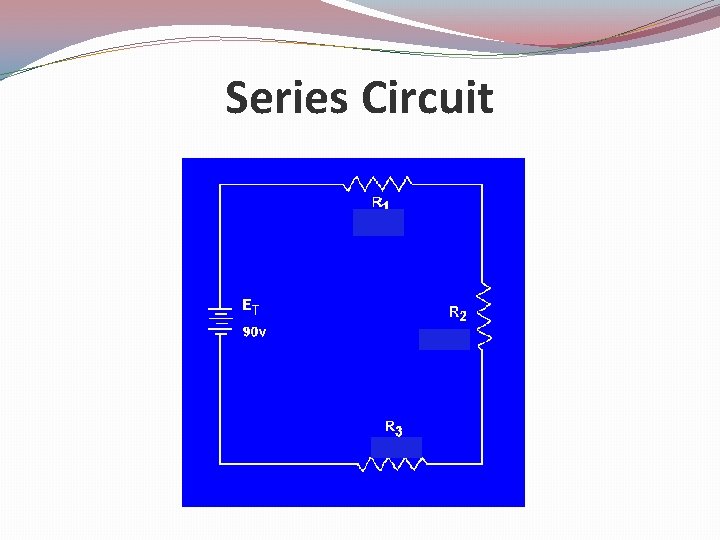
Types of Electrical Circuits 1) Series �All the parts of an electric circuit are connected one after another �Only 1 path for the electron to take
Series Circuit
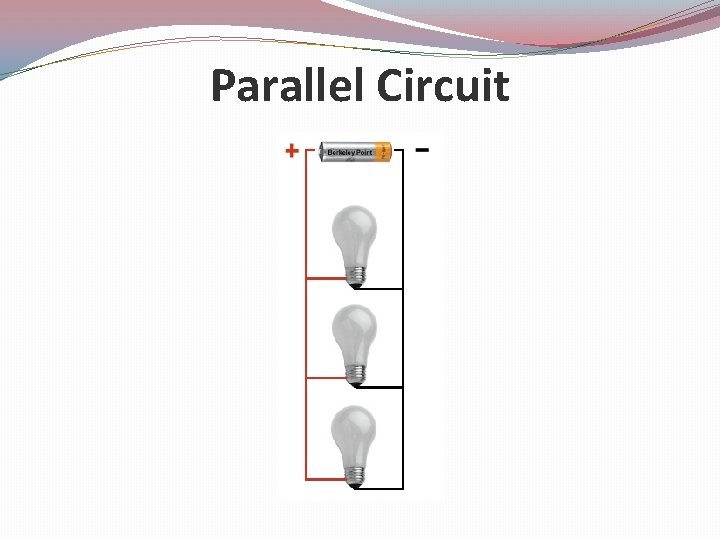
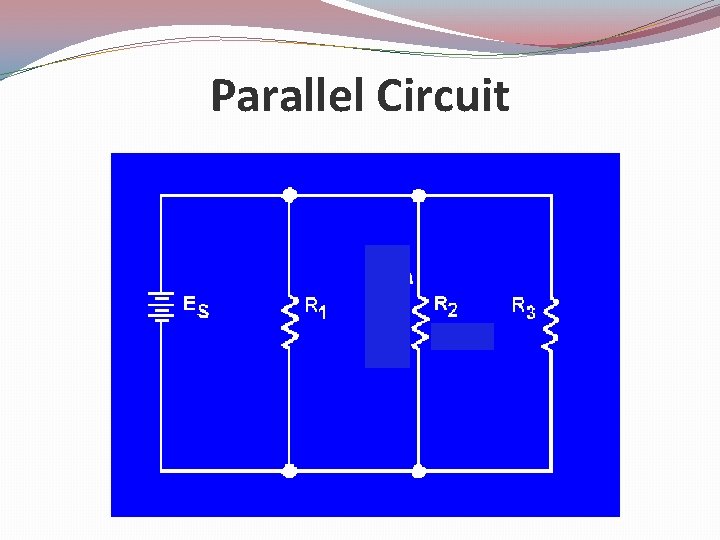
Types of Electrical Circuits 2) Parallel �Different parts of an electric circuit on separate branches �Several paths for electrons to take
Parallel Circuit
Series Circuit �Disadvantage: if there is a break anywhere in the circuit, the entire circuit is open and no current can flow �Ex: cheap holiday lights
Series Circuit
Parallel Circuit �If there is a break in one branch, the electrons and current can still flow through the other branches �Ex: more expensive holiday lights
Parallel Circuit
Magnetism
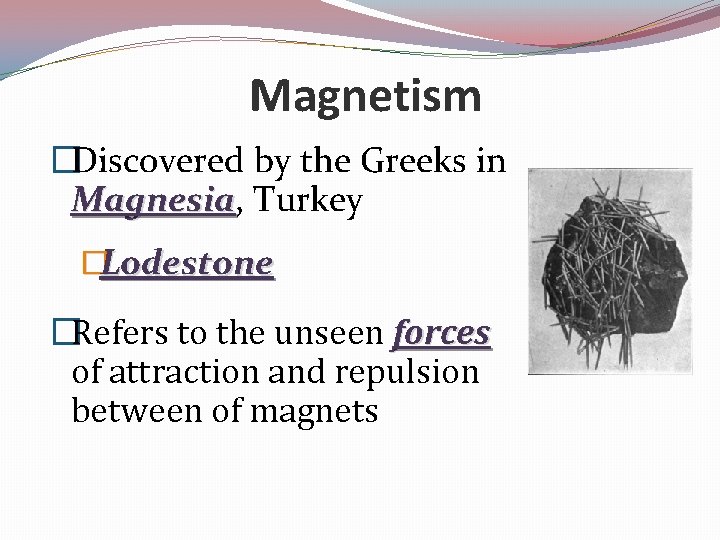
Magnetism �Discovered by the Greeks in Magnesia, Magnesia Turkey �Lodestone �Refers to the unseen forces of attraction and repulsion between of magnets
Magnetism �Magnetic Force – magnets exert force on each other �The closer they are, the stronger the force �A magnet is surrounded by a magnetic field
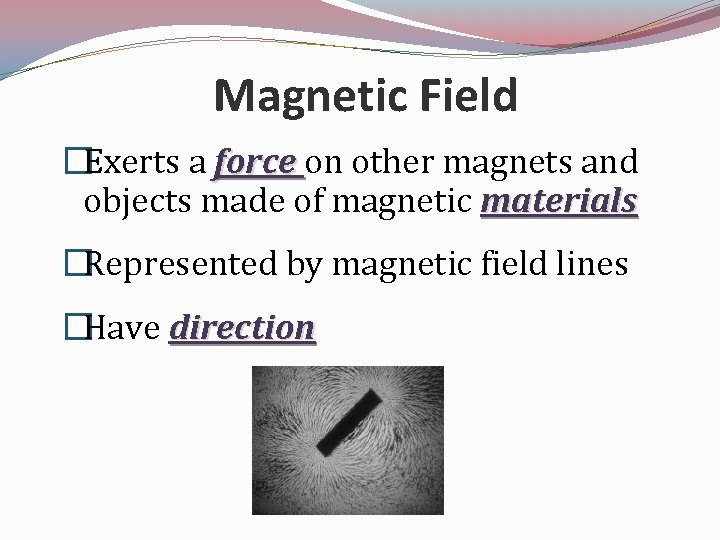
Magnetic Field �Exerts a force on other magnets and objects made of magnetic materials �Represented by magnetic field lines �Have direction
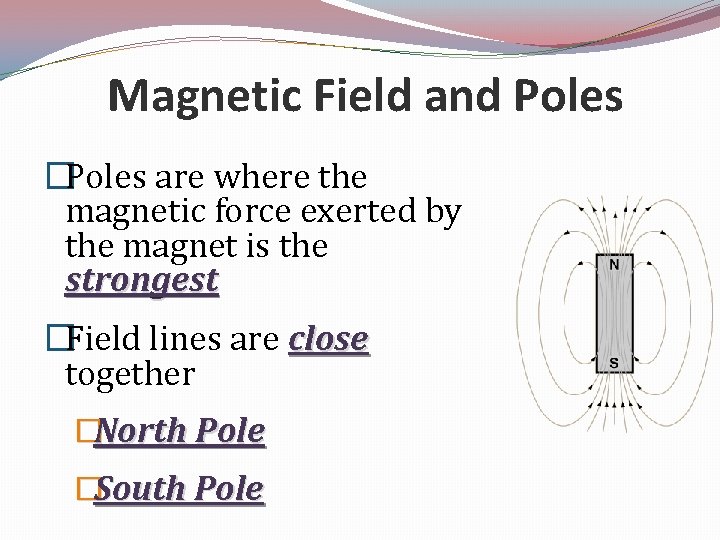
Magnetic Field and Poles �Poles are where the magnetic force exerted by the magnet is the strongest �Field lines are close together �North Pole �South Pole
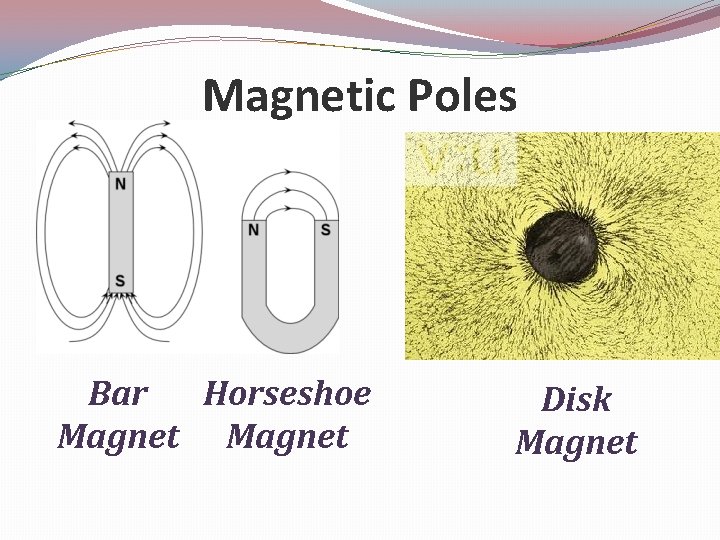
Magnetic Poles Bar Horseshoe Magnet Disk Magnet
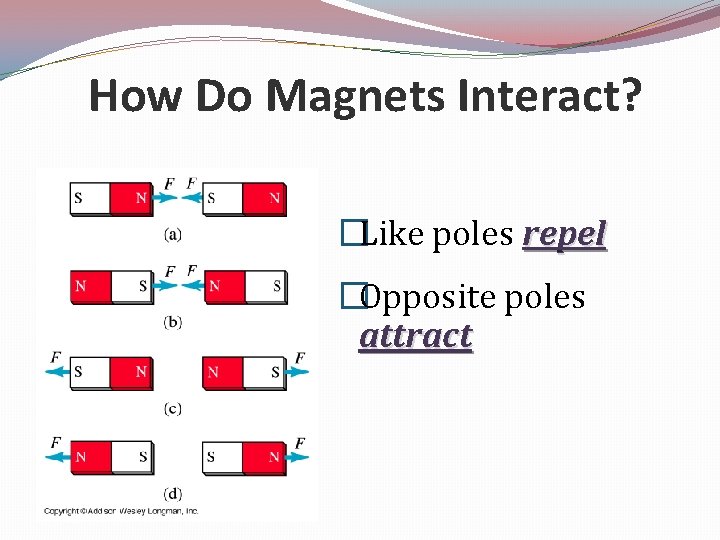
How Do Magnets Interact? �Like poles repel �Opposite poles attract
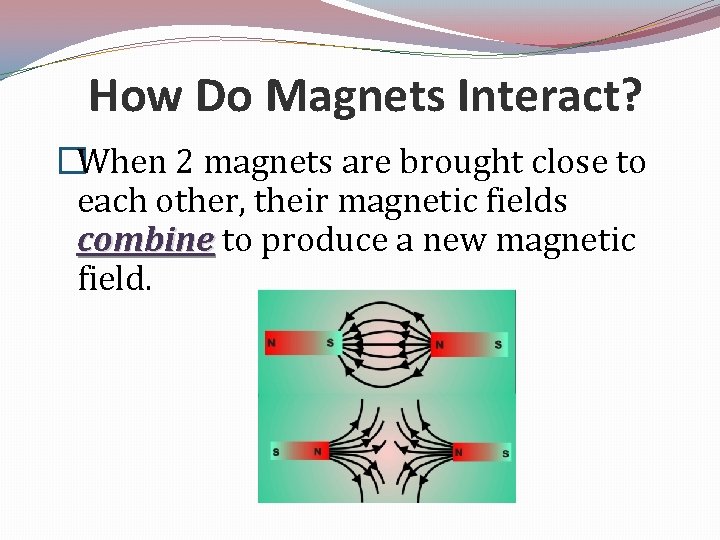
How Do Magnets Interact? �When 2 magnets are brought close to each other, their magnetic fields combine to produce a new magnetic field.
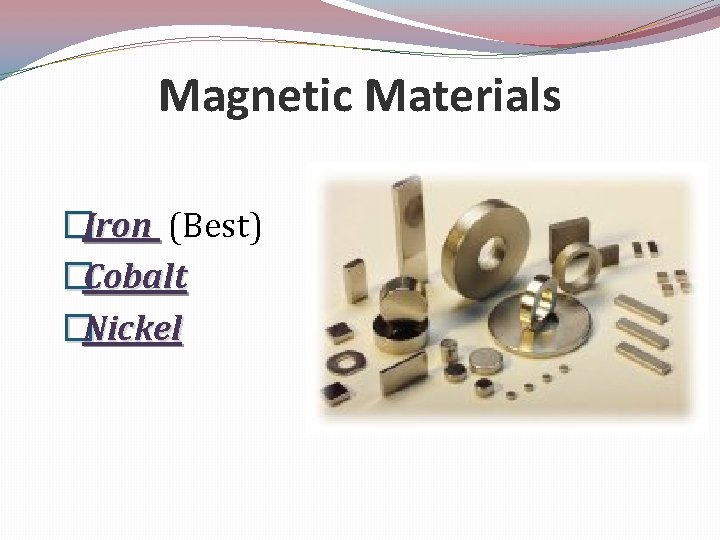
Magnetic Materials �Iron (Best) �Cobalt �Nickel
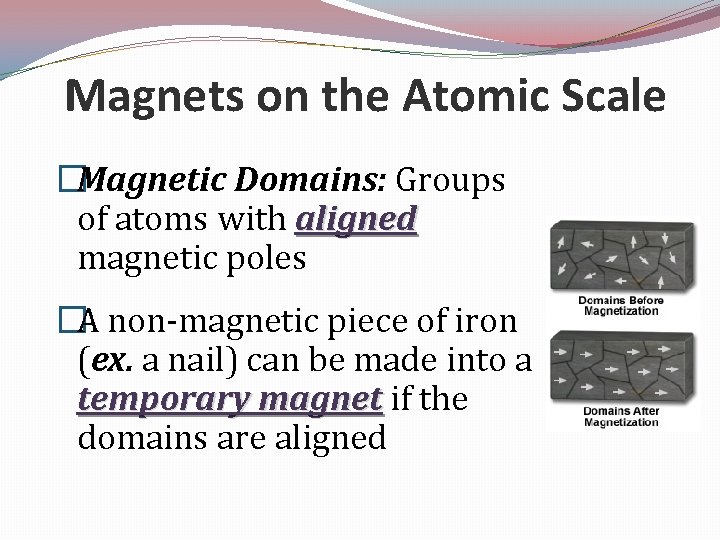
Magnets on the Atomic Scale �Magnetic Domains: Groups of atoms with aligned magnetic poles �A non-magnetic piece of iron (ex. a nail) can be made into a temporary magnet if the domains are aligned
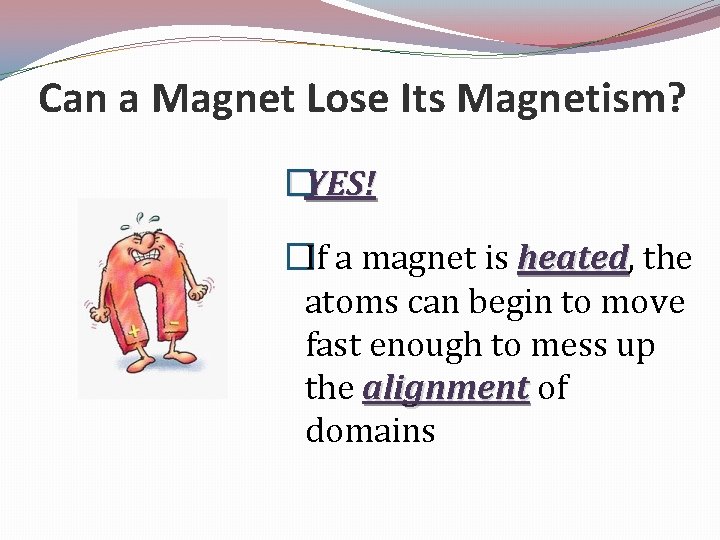
Can a Magnet Lose Its Magnetism? �YES! �If a magnet is heated, heated the atoms can begin to move fast enough to mess up the alignment of domains
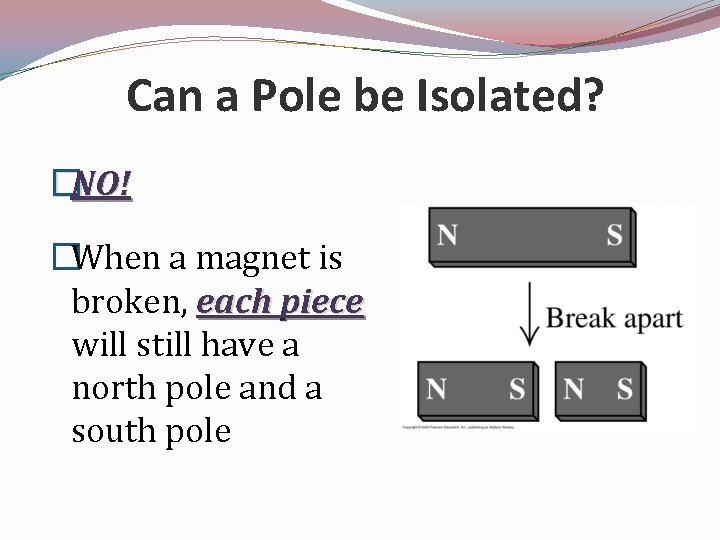
Can a Pole be Isolated? �NO! �When a magnet is broken, each piece will still have a north pole and a south pole
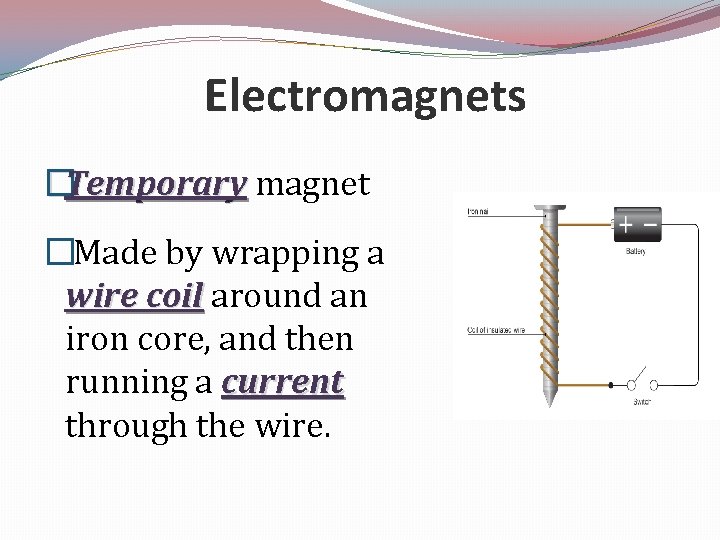
Electromagnets �Temporary magnet �Made by wrapping a wire coil around an iron core, and then running a current through the wire.