
Electrical circuit and Ohms law Minimum requirements for



- Slides: 17
Electrical circuit and Ohm’s law
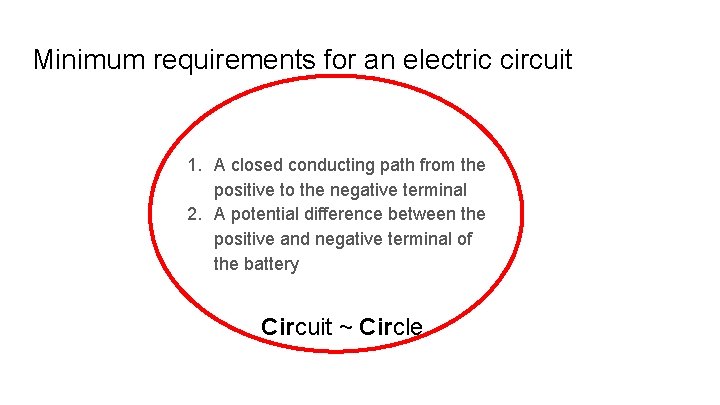
Minimum requirements for an electric circuit 1. A closed conducting path from the positive to the negative terminal 2. A potential difference between the positive and negative terminal of the battery Circuit ~ Circle
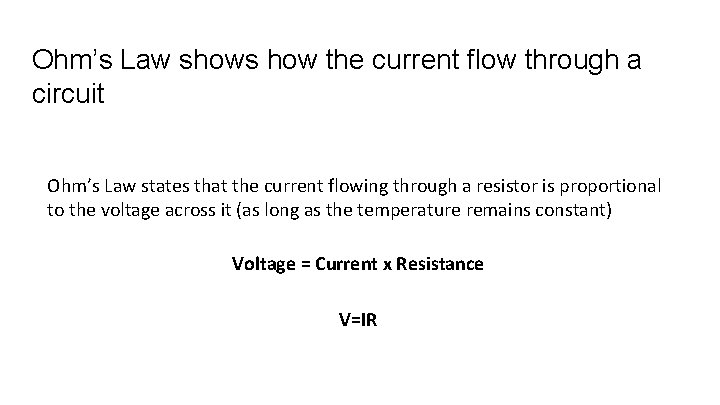
Ohm’s Law shows how the current flow through a circuit Ohm’s Law states that the current flowing through a resistor is proportional to the voltage across it (as long as the temperature remains constant) Voltage = Current x Resistance V=IR
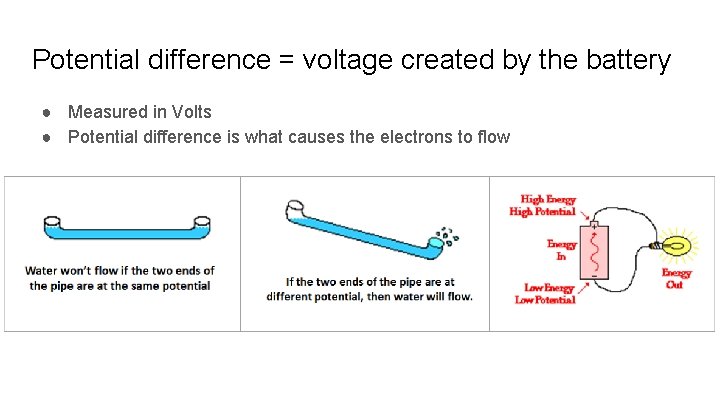
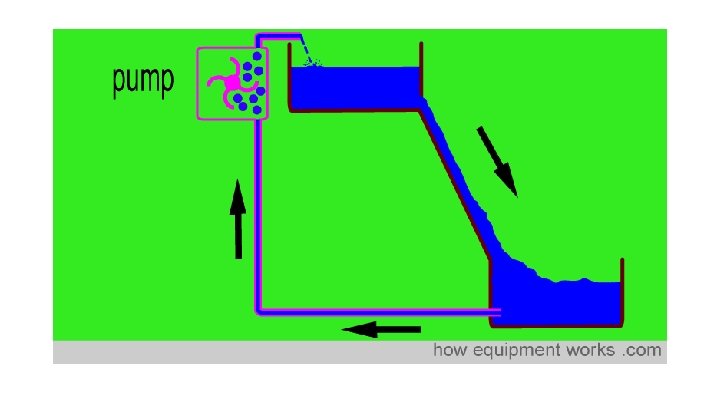
Potential difference = voltage created by the battery ● Measured in Volts ● Potential difference is what causes the electrons to flow
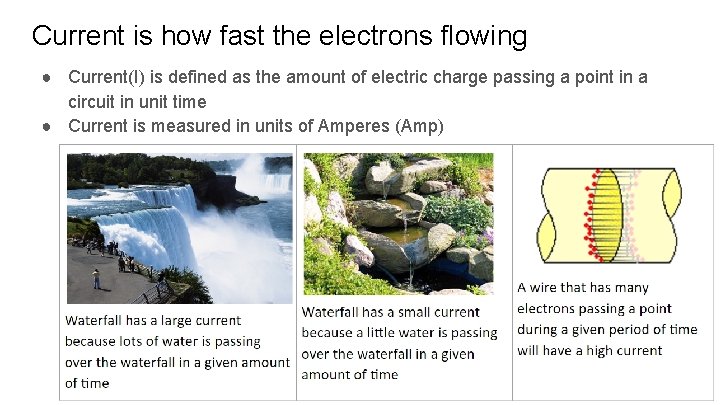
Current is how fast the electrons flowing ● Current(I) is defined as the amount of electric charge passing a point in a circuit in unit time ● Current is measured in units of Amperes (Amp) Ampere=Coulomb/second
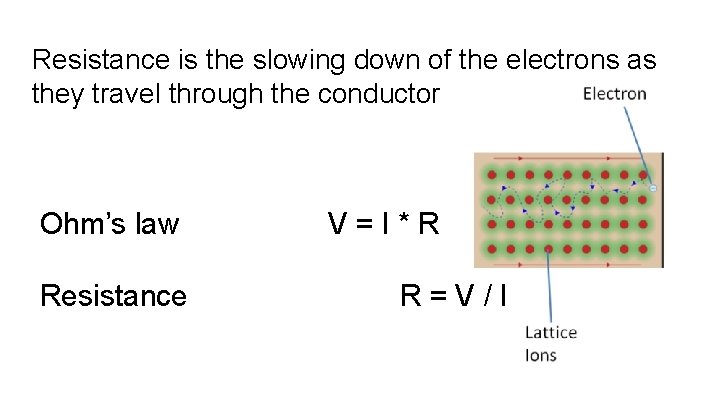
Resistance is the slowing down of the electrons as they travel through the conductor Ohm’s law Resistance V=I*R R=V/I
Which waterfall has more potential?
Which waterfall has more current?
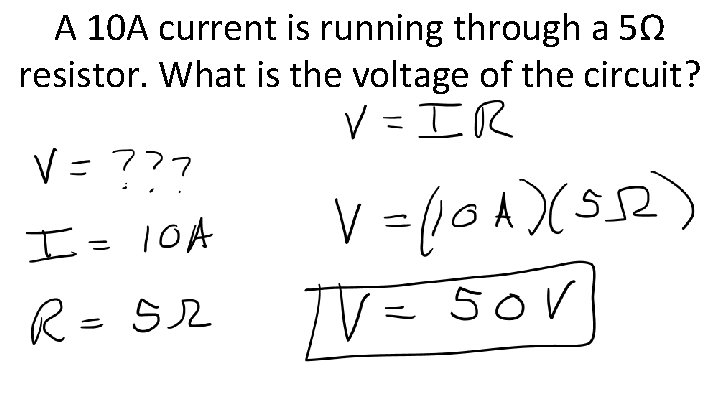
A 10 A current is running through a 5Ω resistor. What is the voltage of the circuit?
A 10 A current is running through a 5Ω resistor. What is the voltage of the circuit?
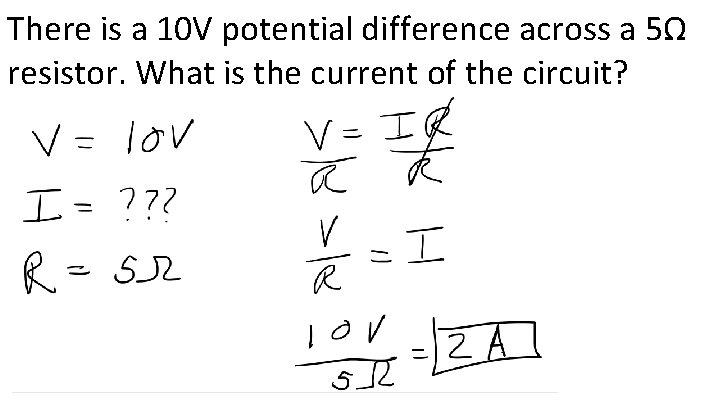
There is a 10 V potential difference across a 5Ω resistor. What is the current of the circuit?
There is a 10 V potential difference across a 5Ω resistor. What is the current of the circuit?
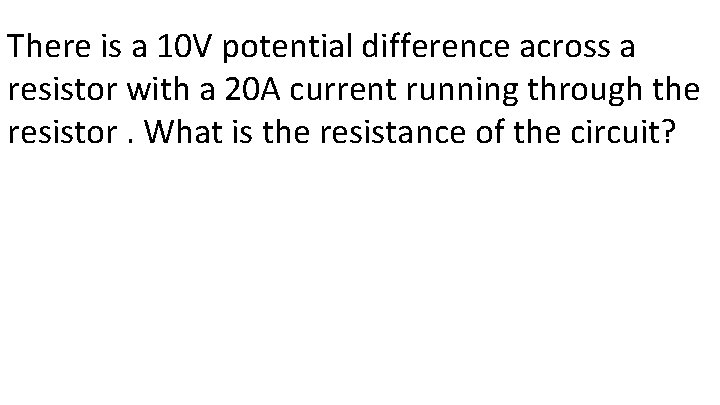
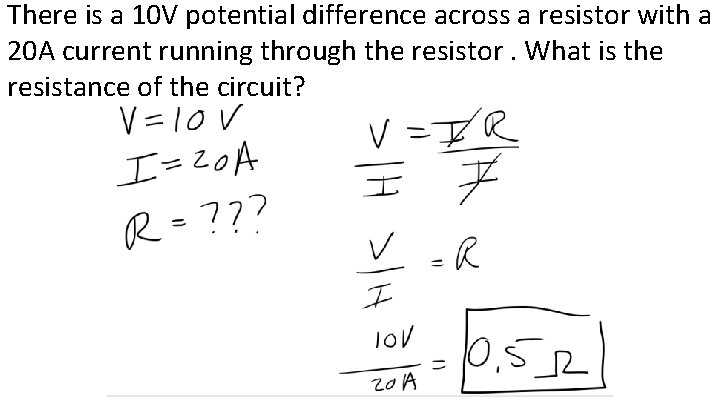
There is a 10 V potential difference across a resistor with a 20 A current running through the resistor. What is the resistance of the circuit?
There is a 10 V potential difference across a resistor with a 20 A current running through the resistor. What is the resistance of the circuit?