
Electrical brain activity following magnetic stimulation as recorded
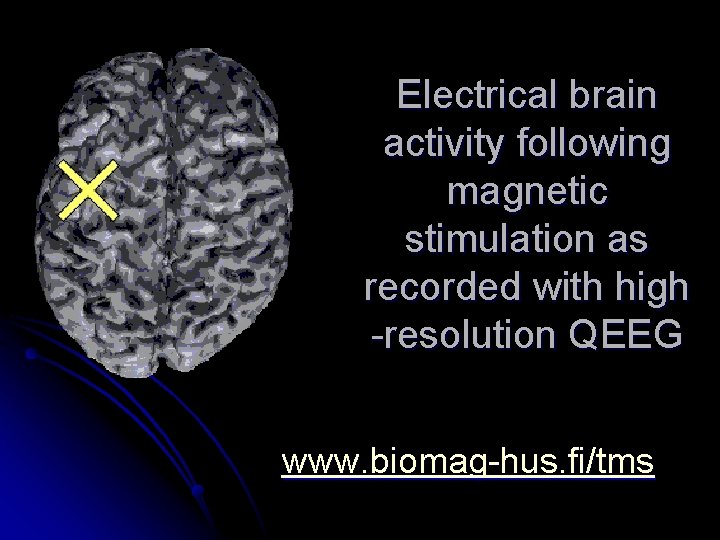
Electrical brain activity following magnetic stimulation as recorded with high -resolution QEEG www. biomag-hus. fi/tms
r. TMS l First TMS capable of delivering a pulse every three seconds (as diagnostic aids for neurologists. ) l New machines which can give up to 50 stimuli per second (r. TMS) l A non-invasive technique, free of serious side effects, easily modifying activity of specific brain areas
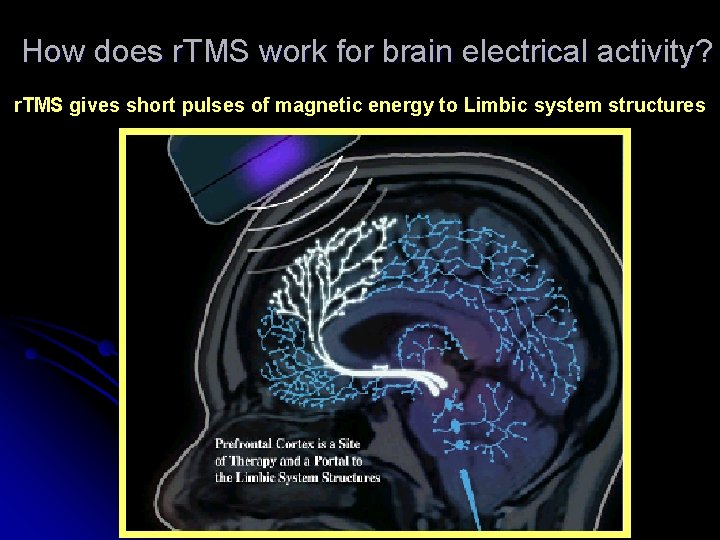
How does r. TMS work for brain electrical activity? r. TMS gives short pulses of magnetic energy to Limbic system structures
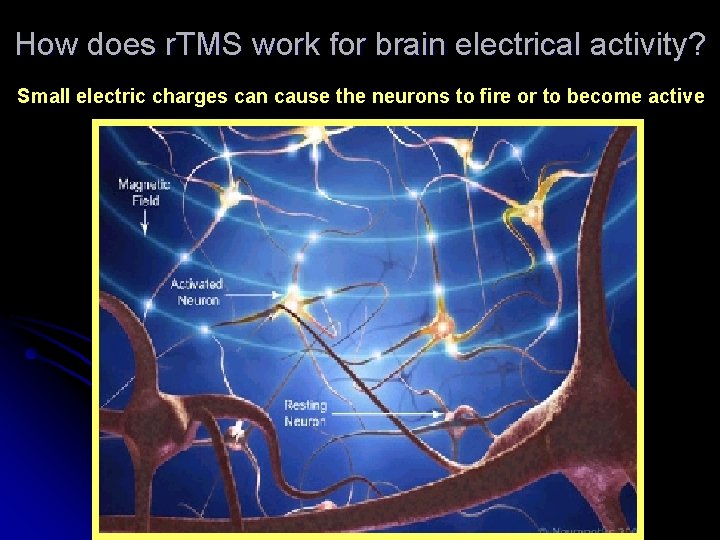
How does r. TMS work for brain electrical activity? Small electric charges can cause the neurons to fire or to become active
Ilmoniemi et. al. (1997) were able to measure with QEEG just seconds after electromagnetic pulse Nashaat et. al (2001), Nikulin et. al (2003), Kommsi et. al (2004) have used ongoing r. TMS and QEEG Monitoring
Brain electrical activity changes with r. TMS Acute r. TMS induces changes in regional activity throughout the brain l Stimulation intensity is important l Low frequency has a tendency to decrease l High frequency has a tendency to increase l
Resynchronization effects Normal brain function requires synchronized activity of interconnected brain areas l r. TMS may help ‘reset’ ‘reset the normal synchrony between brain regions (Garcia-Toro et. al. 2001, Avery 2004) l
GABA and QEEG GABA increases functional connectivity on QEEG (Benzodiazepine effect) l GABA decreases with stress l GABA decreases in plasma and in brain (MRS) of depressed patients l ECT increases GABA level in depressed patients. l r. TMS: increase ? l
l State marker improves after treatment l Trait marker doesn’t improve after treatment
‘State markers’ of QEEG being: Ratio of Alpha waves Al l Ratio of Delta waves l Hemispheric asymmetry l Alpha/Delta ratio of the frontal area l
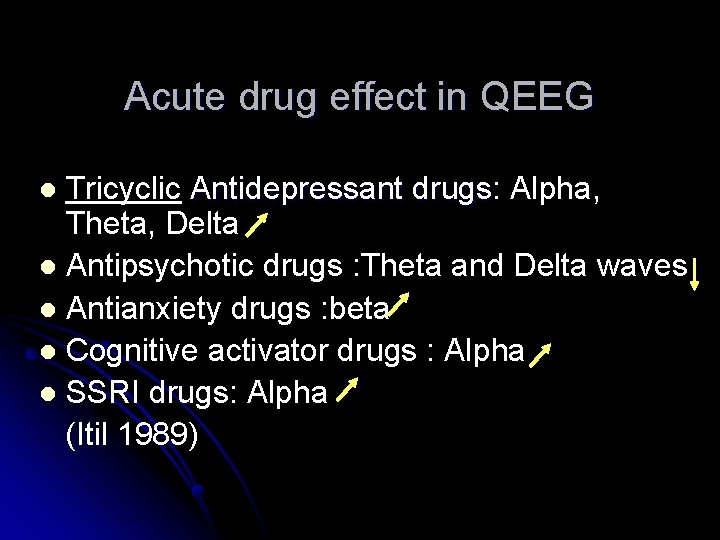
Acute drug effect in QEEG Tricyclic Antidepressant drugs: drugs Alpha, Theta, Delta l Antipsychotic drugs : Theta and Delta waves l Antianxiety drugs : beta l Cognitive activator drugs : Alpha l SSRI drugs: Alpha (Itil 1989) l
The Response to drug treatment in depression • Delta waves: good response, • Alpha and Beta waves: good response, • Unchanged QEEG: bad response. (Kendler)
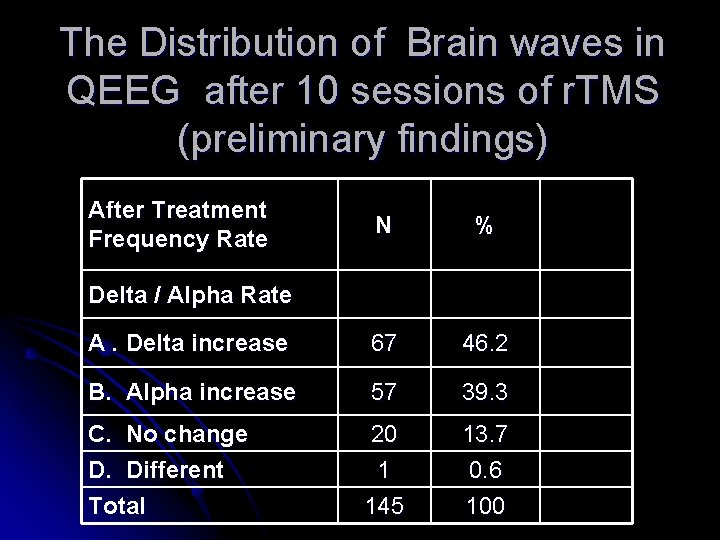
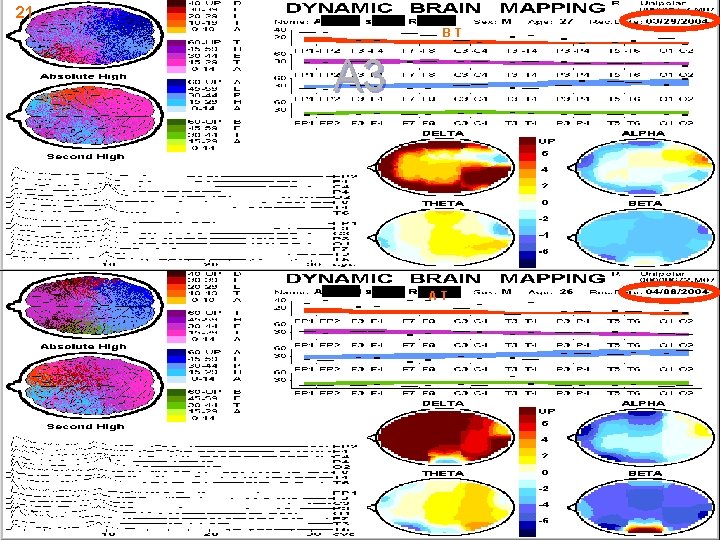
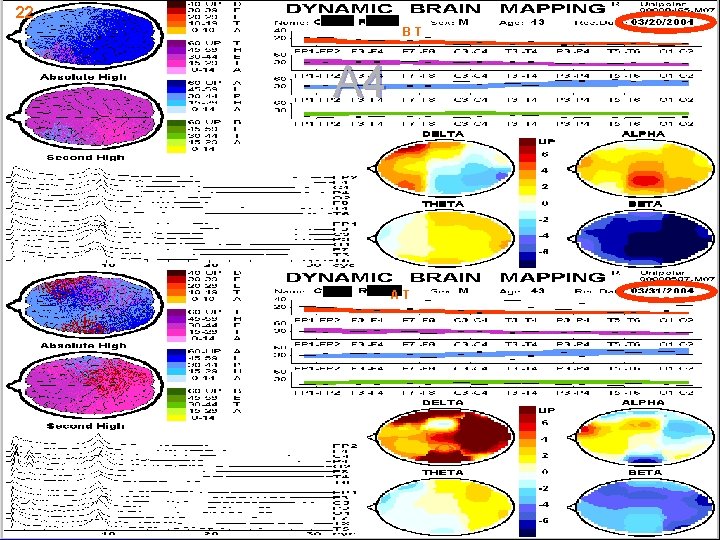
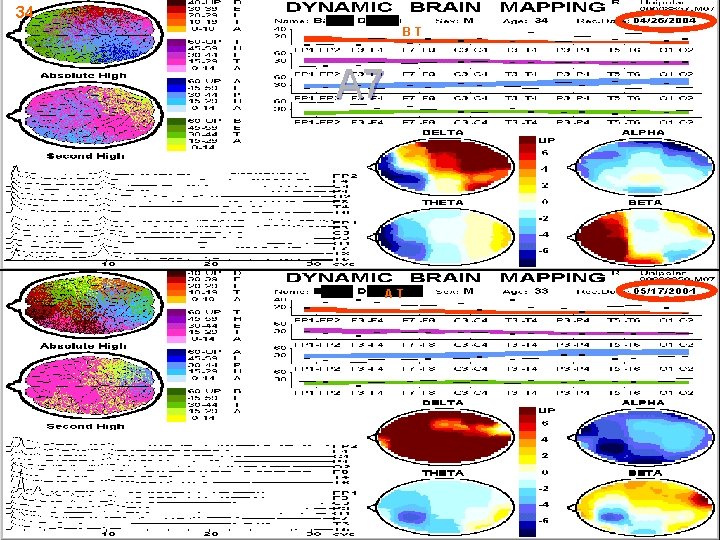
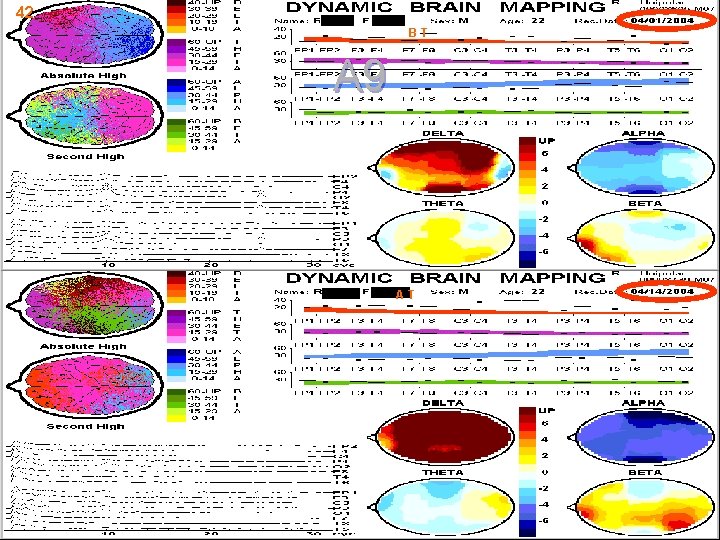
The Distribution of Brain waves in QEEG after 10 sessions of r. TMS (preliminary findings) After Treatment Frequency Rate N % A. Delta increase 67 46. 2 B. Alpha increase 57 39. 3 C. No change D. Different Total 20 1 145 13. 7 0. 6 100 Delta / Alpha Rate
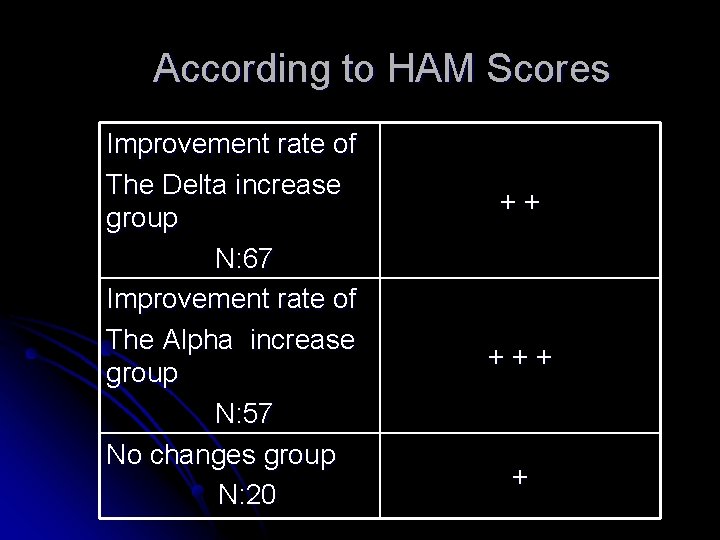
According to HAM Scores Improvement rate of The Delta increase group N: 67 Improvement rate of The Alpha increase group N: 57 No changes group N: 20 ++ +
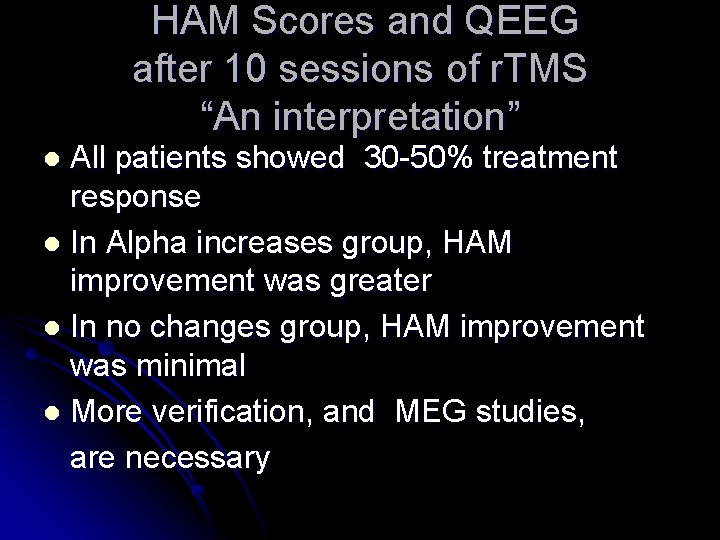
HAM Scores and QEEG after 10 sessions of r. TMS “An interpretation” All patients showed 30 -50% treatment response l In Alpha increases group, HAM improvement was greater l In no changes group, HAM improvement was minimal l More verification, and MEG studies, are necessary l
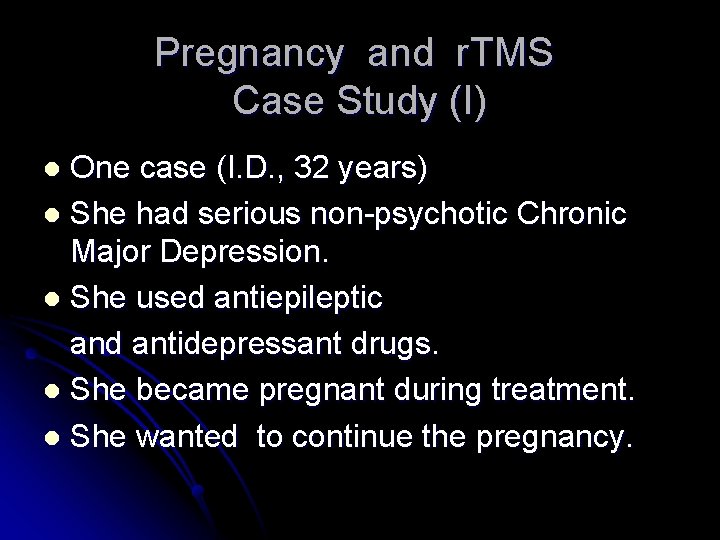
Pregnancy and r. TMS Case Study (I) One case (I. D. , 32 years) l She had serious non-psychotic Chronic Major Depression. l She used antiepileptic and antidepressant drugs. l She became pregnant during treatment. l She wanted to continue the pregnancy. l
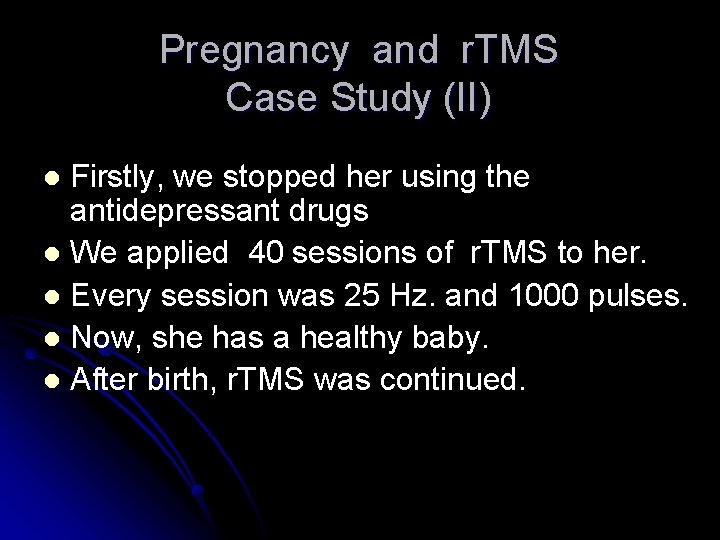
Pregnancy and r. TMS Case Study (II) Firstly, we stopped her using the antidepressant drugs l We applied 40 sessions of r. TMS to her. l Every session was 25 Hz. and 1000 pulses. l Now, she has a healthy baby. l After birth, r. TMS was continued. l
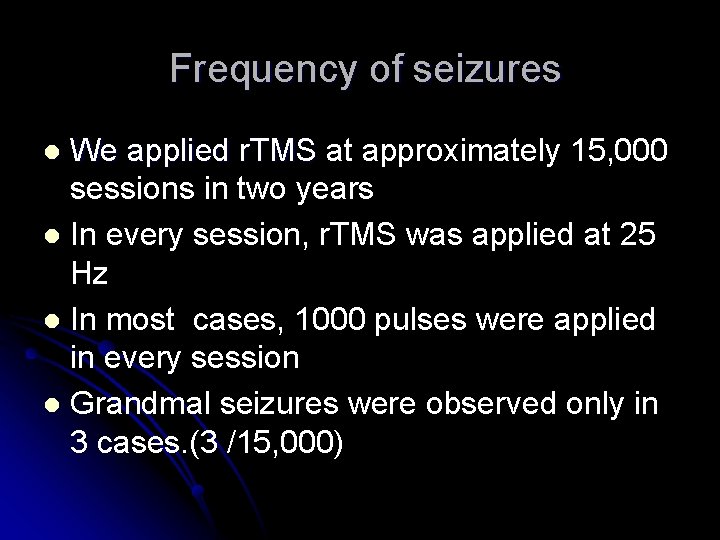
Frequency of seizures We applied r. TMS at approximately 15, 000 sessions in two years l In every session, r. TMS was applied at 25 Hz l In most cases, 1000 pulses were applied in every session l Grandmal seizures were observed only in 3 cases. (3 /15, 000) l
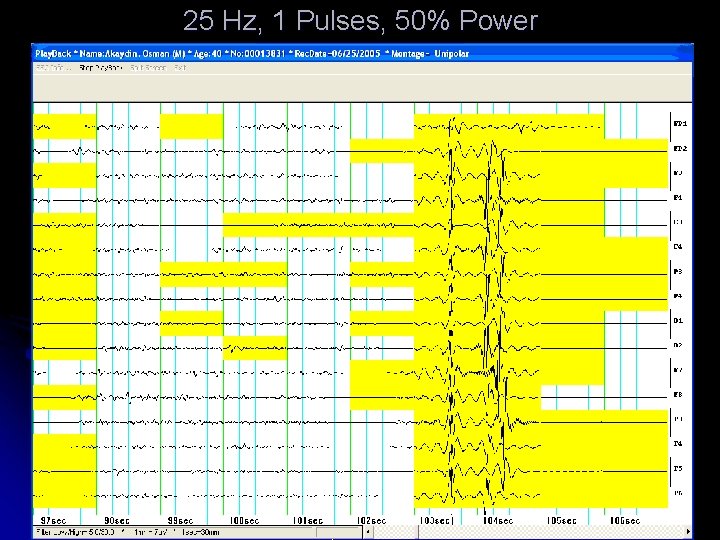
25 Hz, 1 Pulses, 50% Power
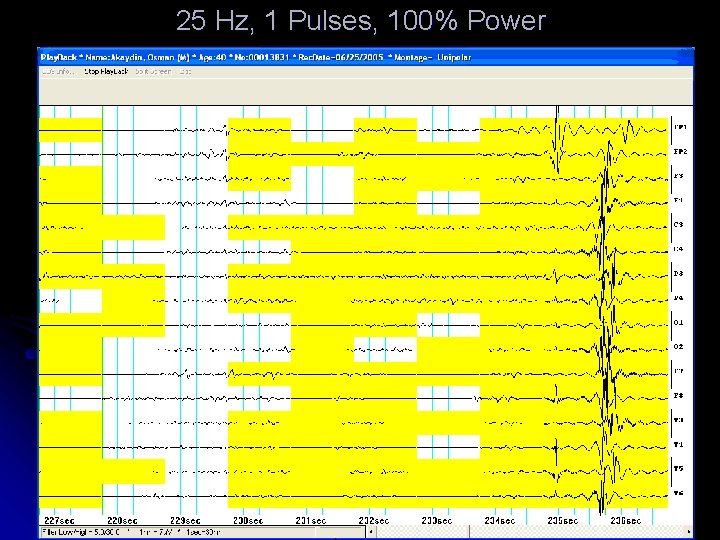
25 Hz, 1 Pulses, 100% Power
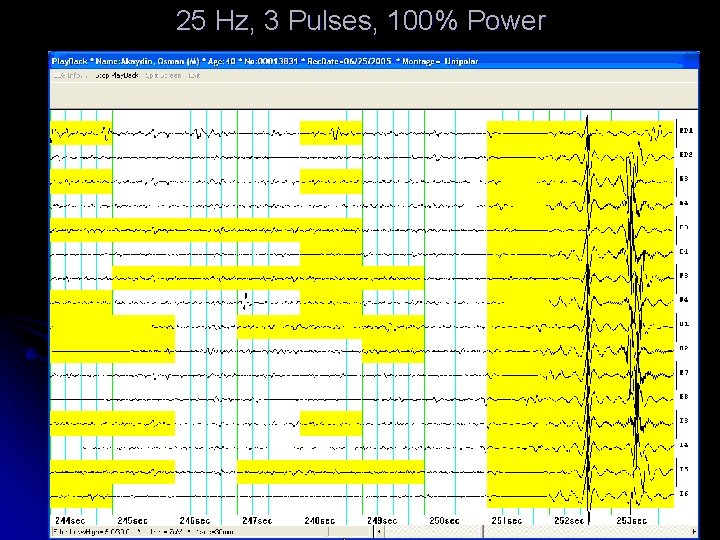
25 Hz, 3 Pulses, 100% Power
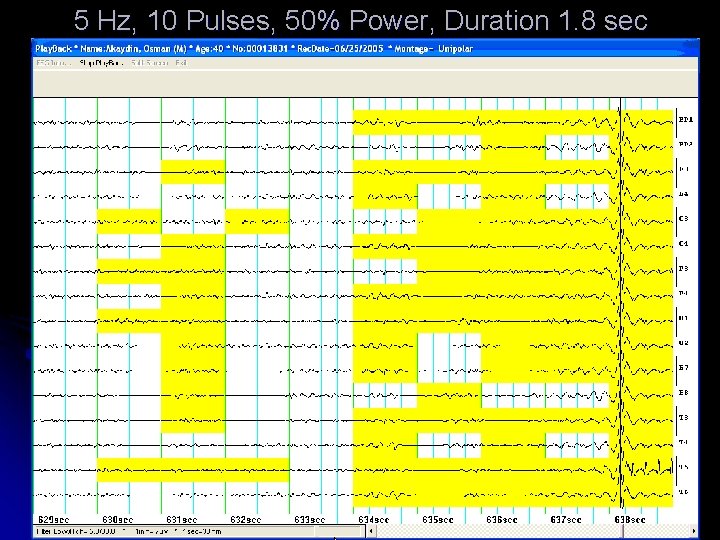
5 Hz, 10 Pulses, 50% Power, Duration 1. 8 sec
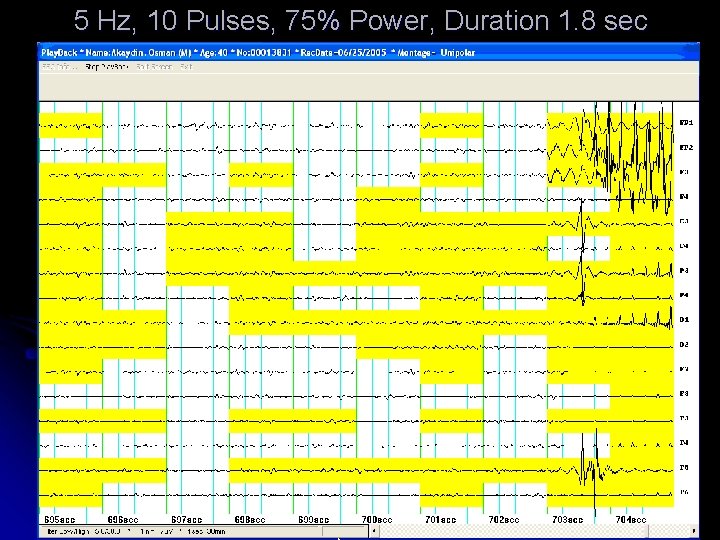
5 Hz, 10 Pulses, 75% Power, Duration 1. 8 sec
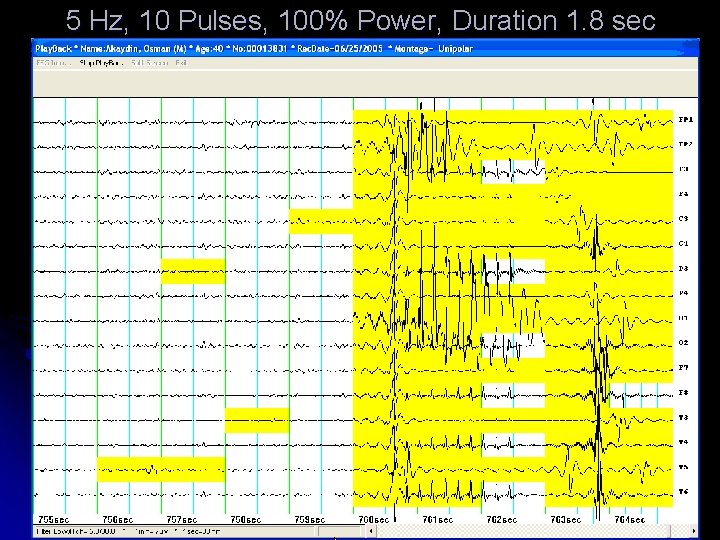
5 Hz, 10 Pulses, 100% Power, Duration 1. 8 sec
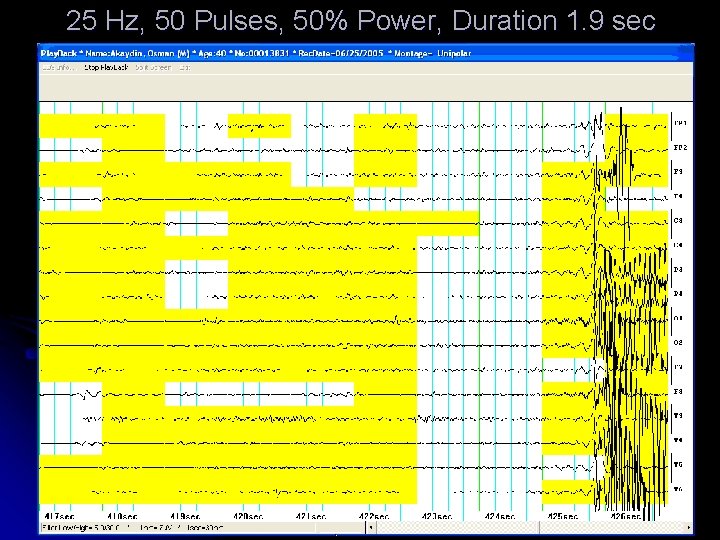
25 Hz, 50 Pulses, 50% Power, Duration 1. 9 sec
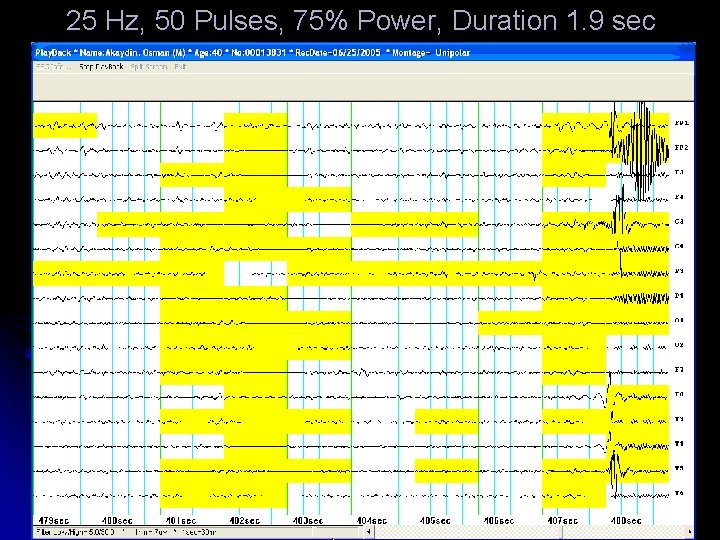
25 Hz, 50 Pulses, 75% Power, Duration 1. 9 sec
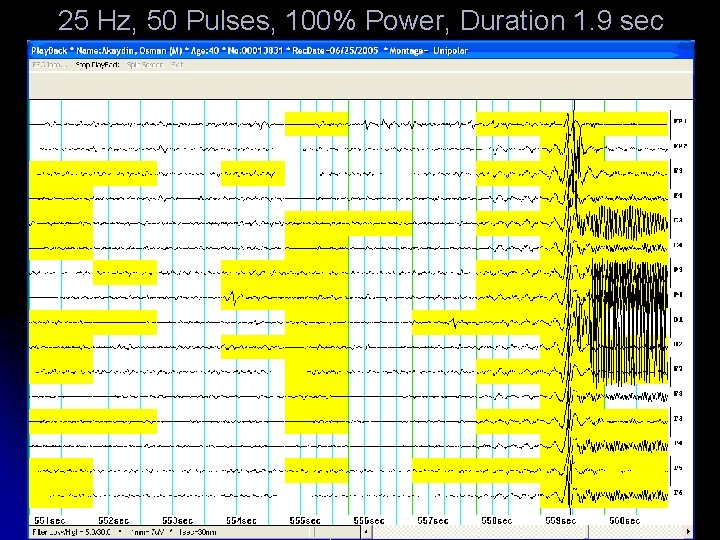
25 Hz, 50 Pulses, 100% Power, Duration 1. 9 sec
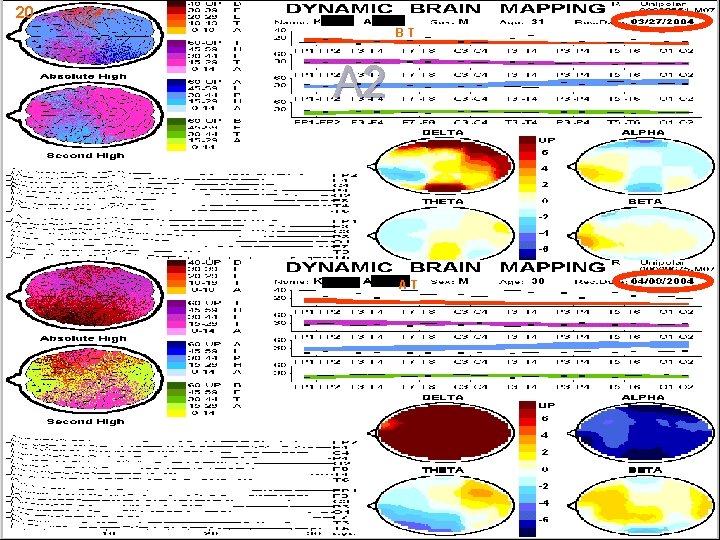
20 BT A 2 AT
21 BT A 3 AT
22 BT A 4 AT
34 BT A 7 AT
42 BT A 9 AT
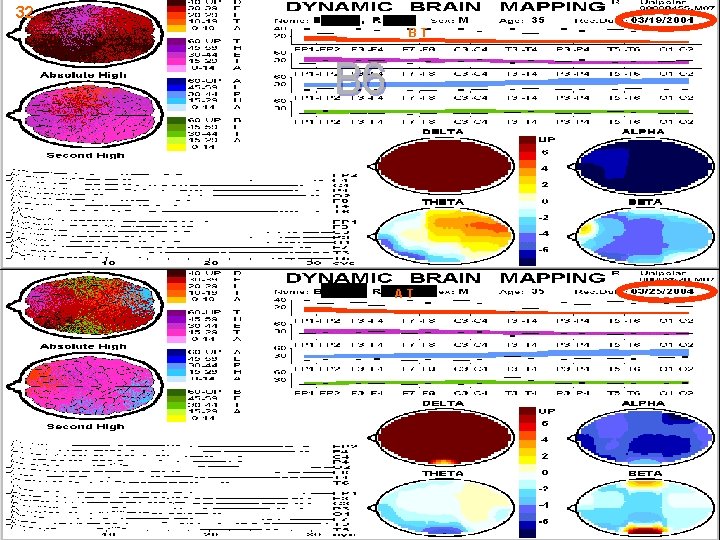
32 BT B 6 AT
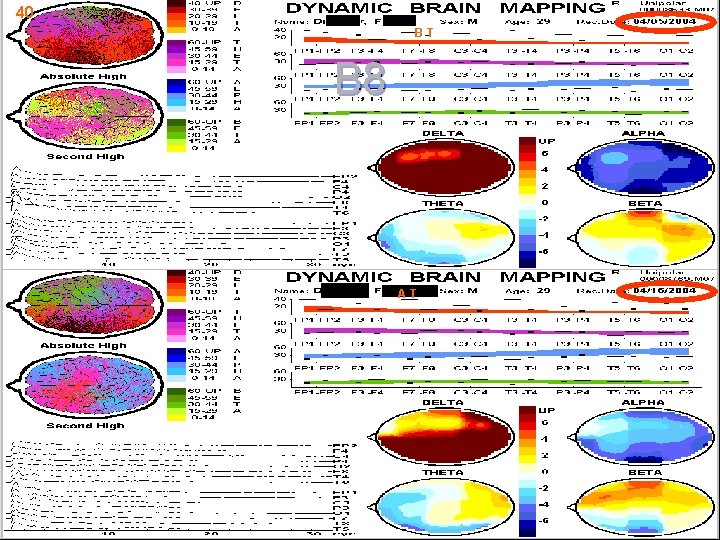
40 BT B 8 AT
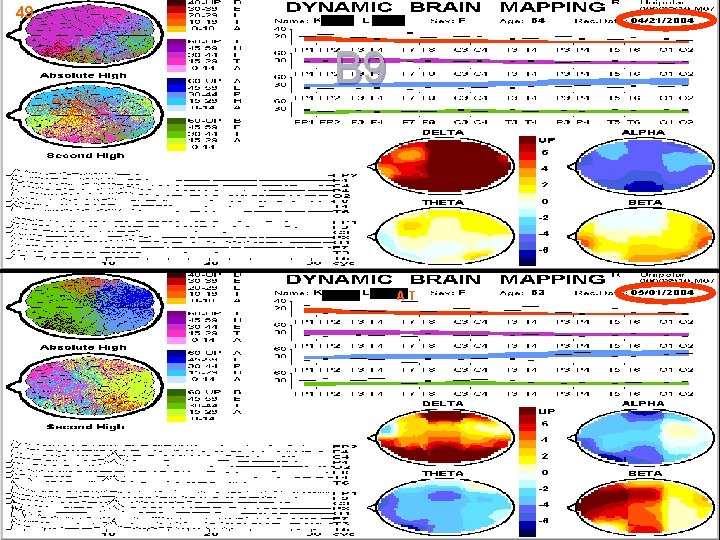
49 B 9 AT
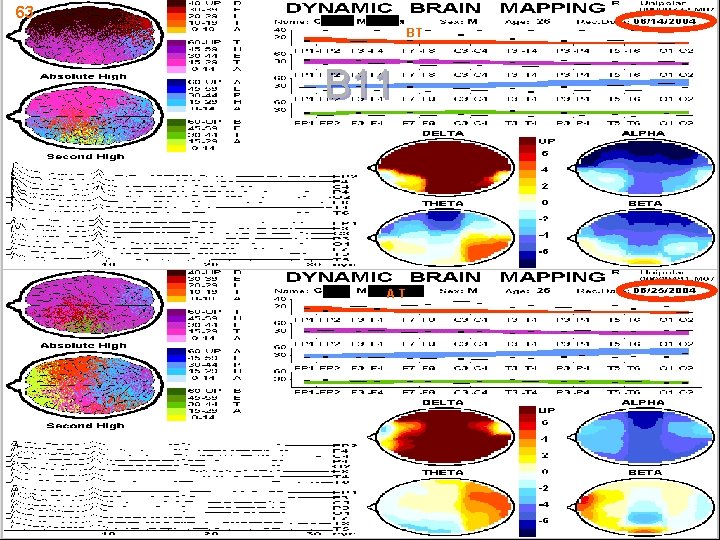
63 BT B 11 AT
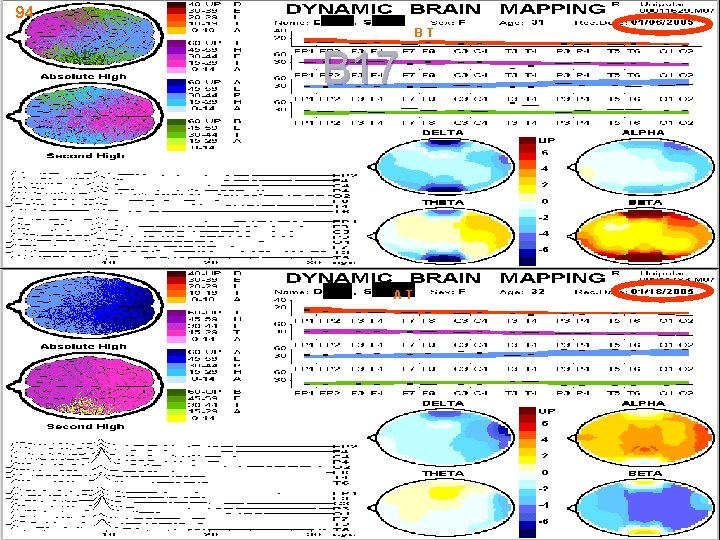
94 BT B 17 AT
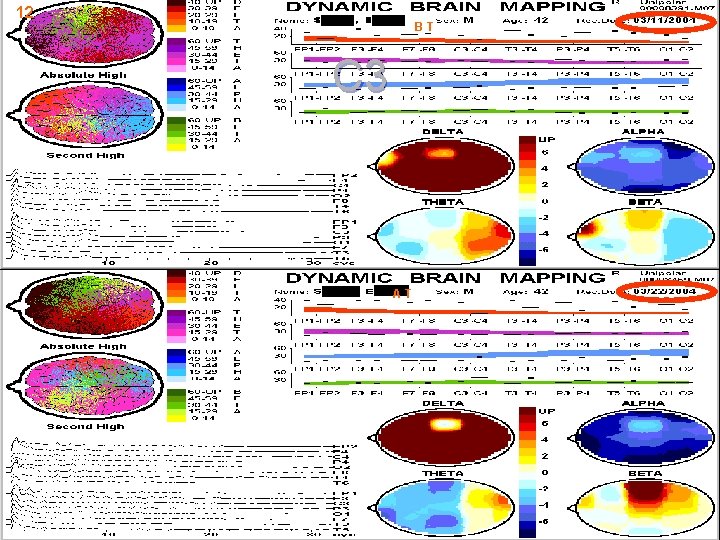
12 BT C 3 AT
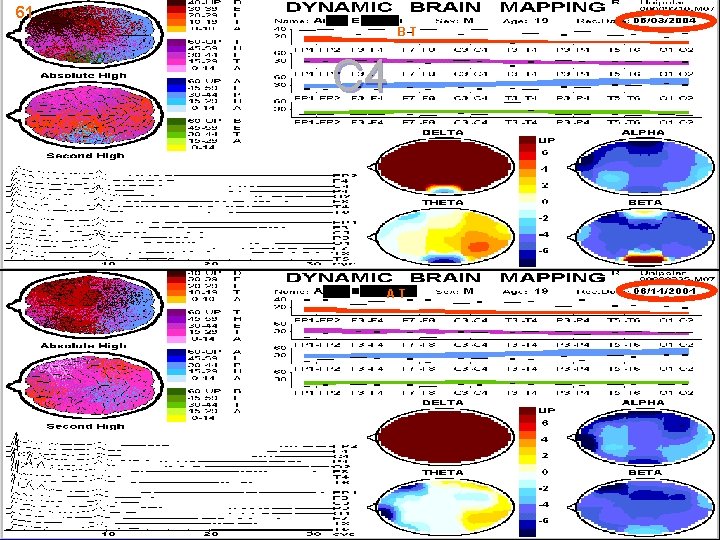
61 BT C 4 AT
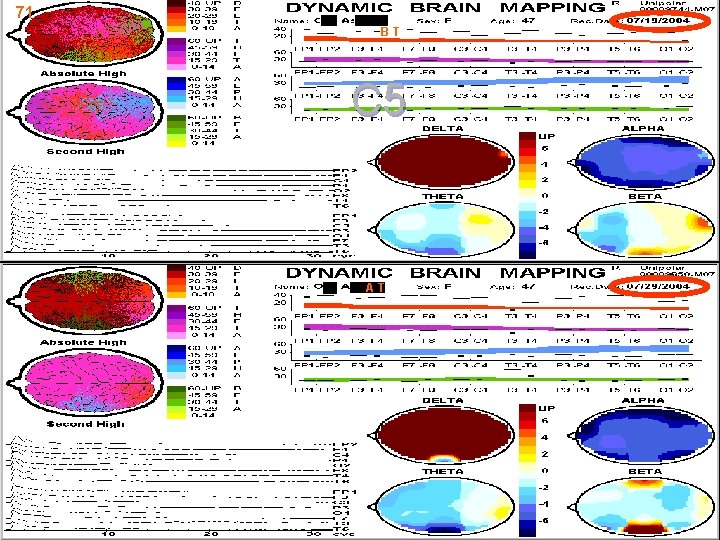
71 BT C 5 AT
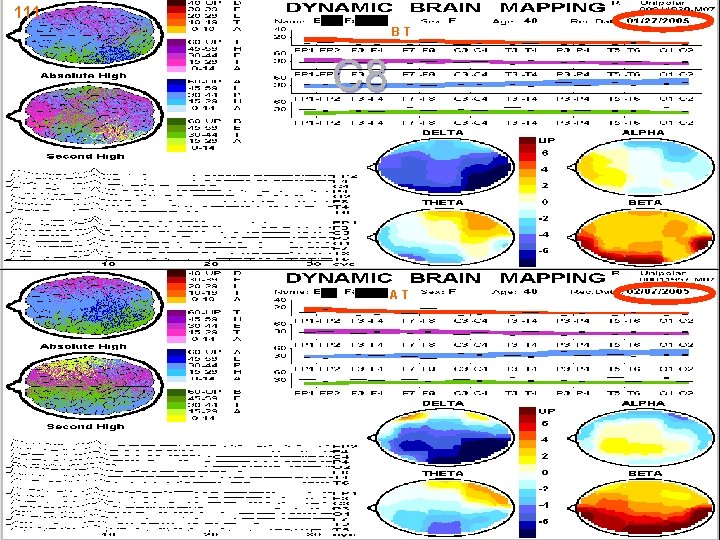
111 BT C 8 AT
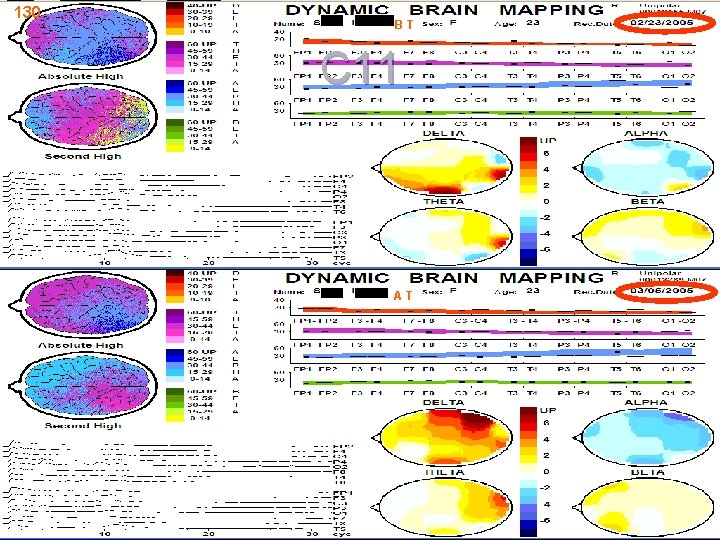
130 BT C 11 AT
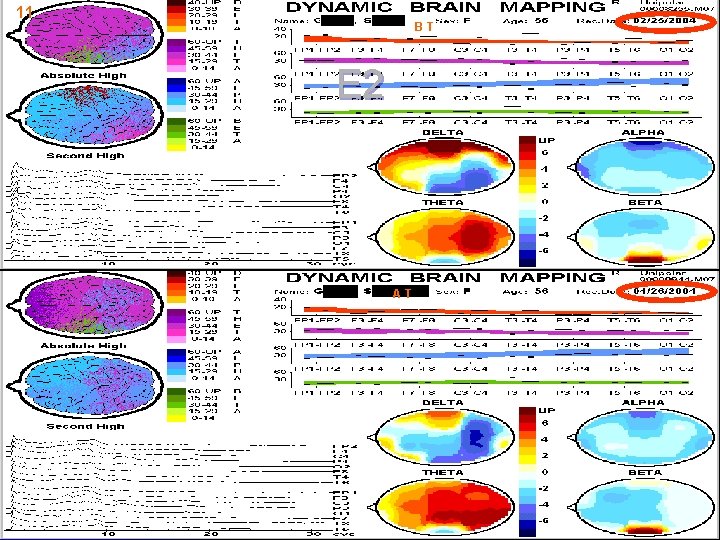
11 BT E 2 AT
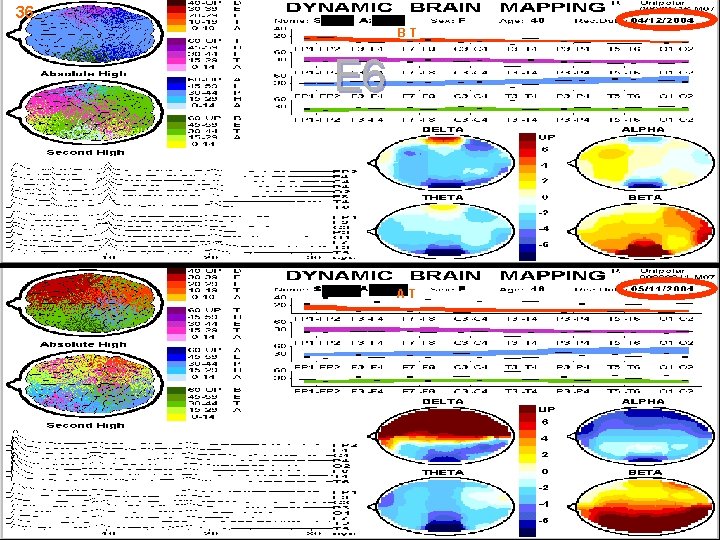
36 BT E 6 AT
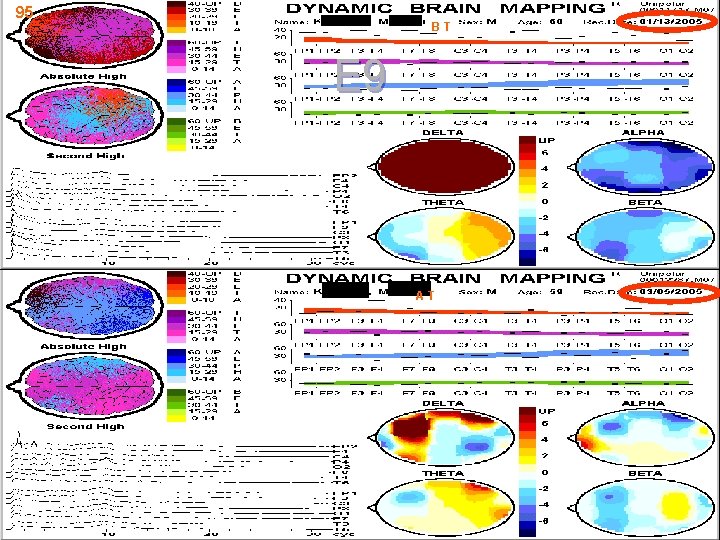
95 BT E 9 AT
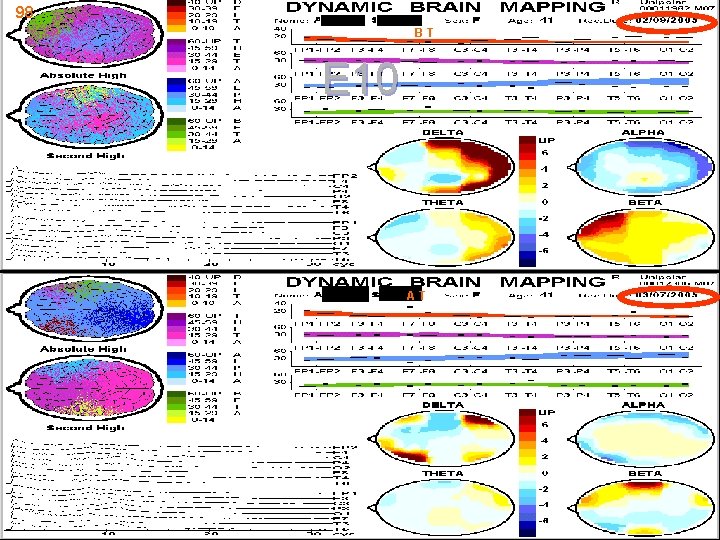
98 BT E 10 AT
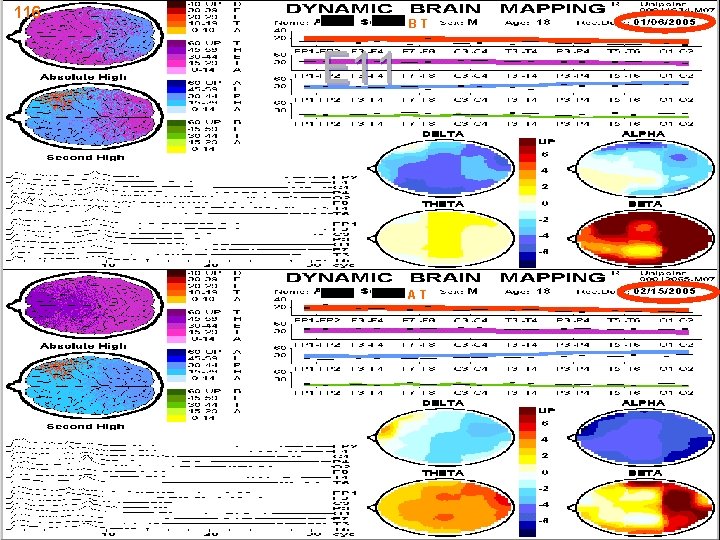
116 BT E 11 AT
Scientific Inspiration l l l One day, in 1990 at a London Hospital in an elevator, a passenger was giggling. A magnetic stimulation had been applied to his head. It was a neuro-diagnostic motor test, for thumb jerk Dr. Mark George observed and was astonished by this situation. He suspected that magnetic fields could move much more than the thumb. The story of magnetic therapy in psychiatry started like this.
- Slides: 48