
Electric Vehicles The I C E age is

- Slides: 41
Electric Vehicles “The I. C. E. age is over. ”
What is an Electric Vehicle? Any vehicle that uses an electric motor for propulsion.
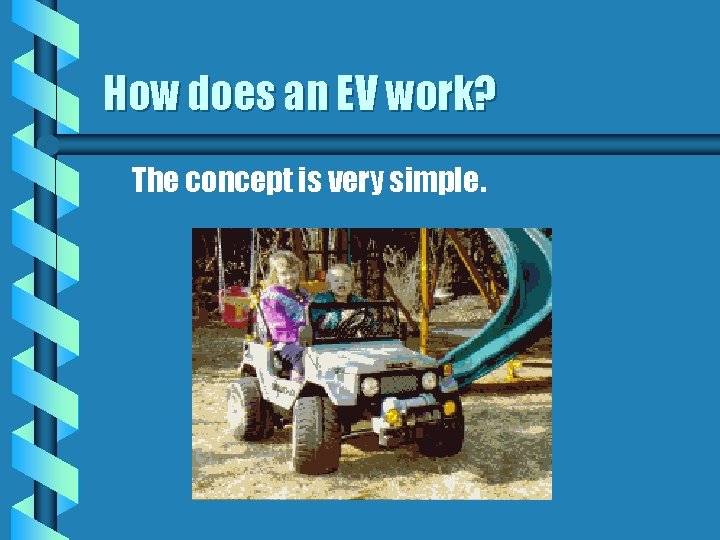
How does an EV work? The concept is very simple.
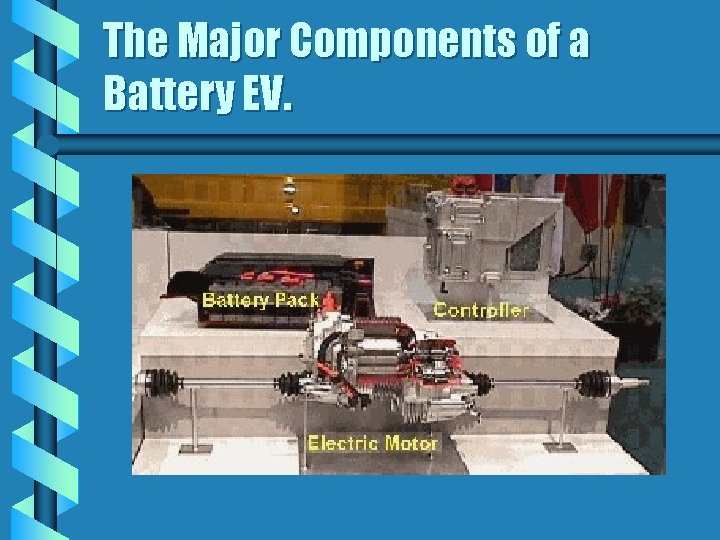
The Major Components of a Battery EV.
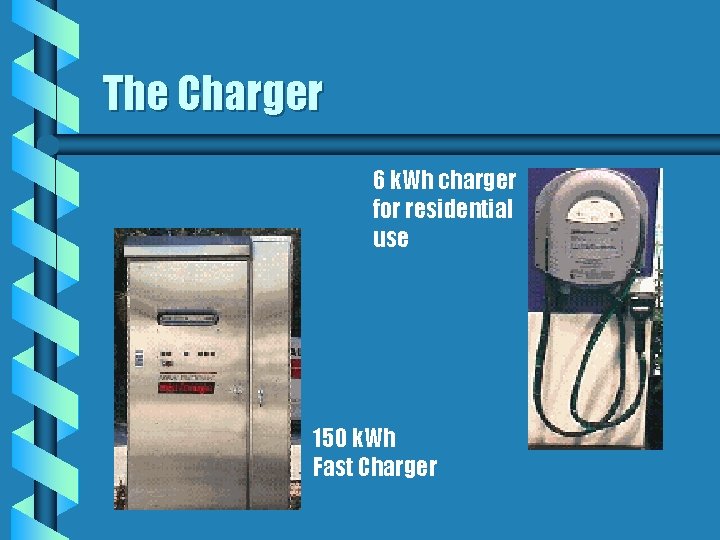
The Charger 6 k. Wh charger for residential use 150 k. Wh Fast Charger
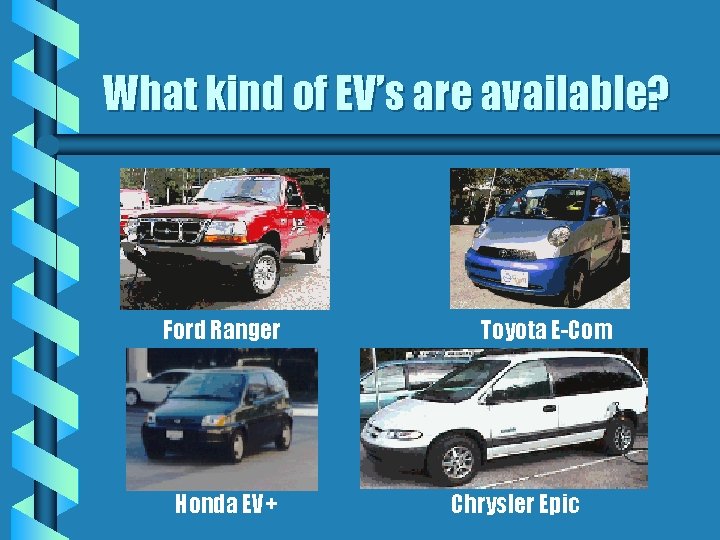
What kind of EV’s are available? Ford Ranger Honda EV+ Toyota E-Com Chrysler Epic
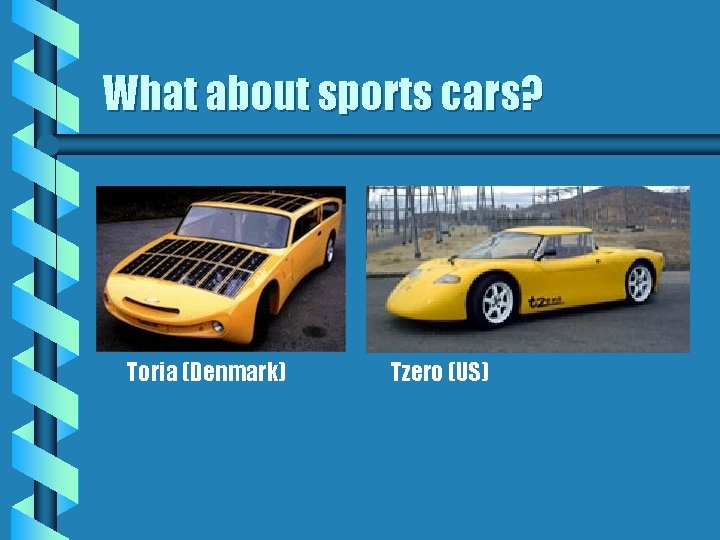
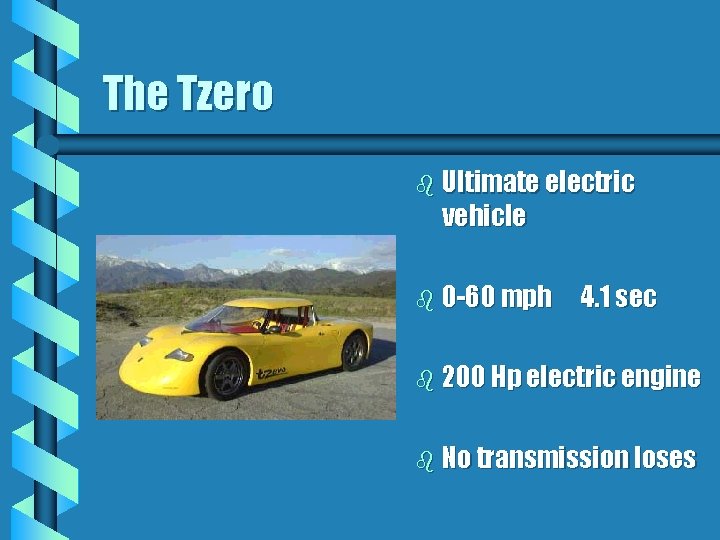
What about sports cars? Toria (Denmark) Tzero (US)
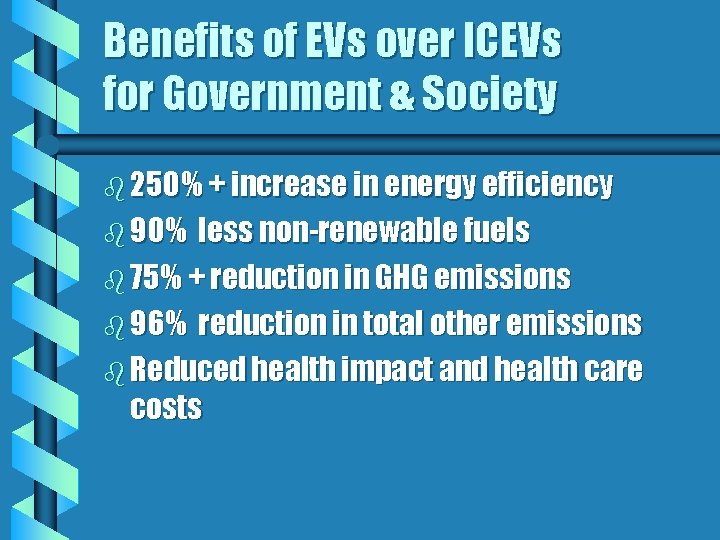
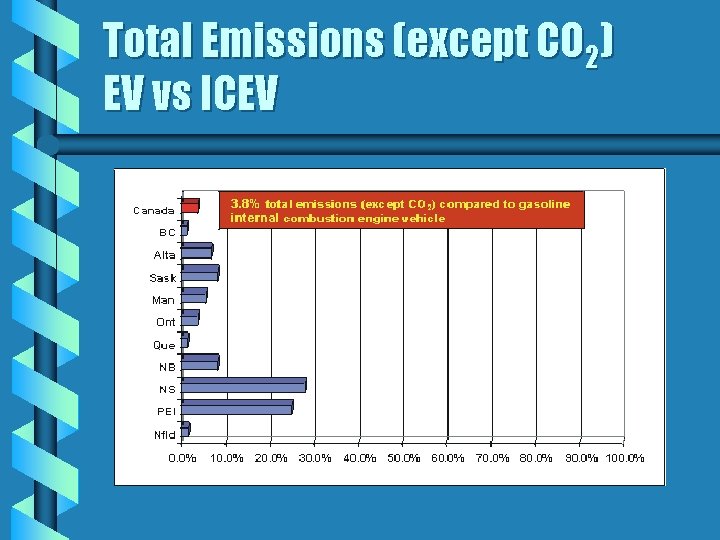
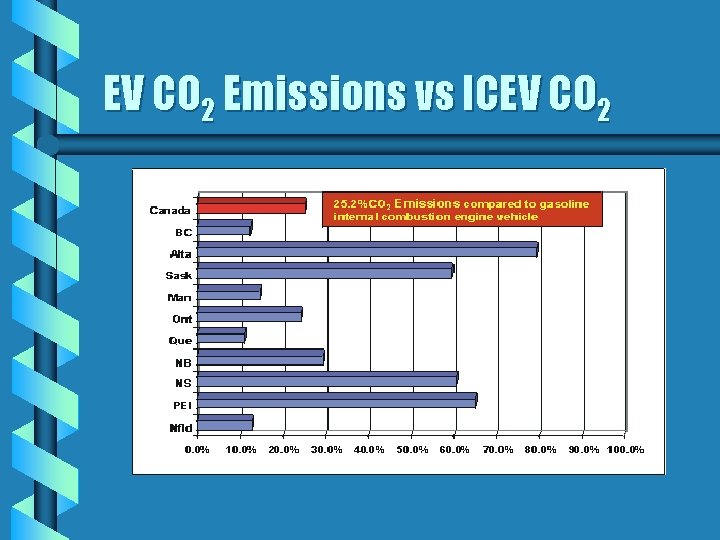
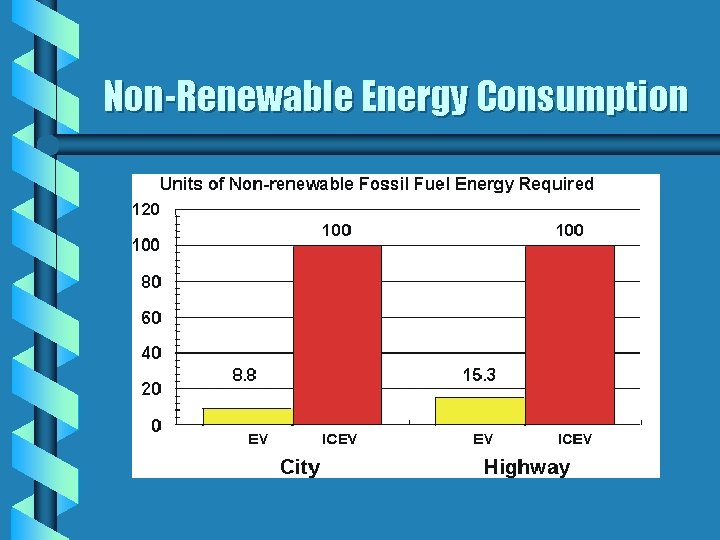
Benefits of EVs over ICEVs for Government & Society b 250% + increase in energy efficiency b 90% less non-renewable fuels b 75% + reduction in GHG emissions b 96% reduction in total other emissions b Reduced health impact and health care costs
Total Emissions (except CO 2) EV vs ICEV
EV CO 2 Emissions vs ICEV CO 2
Non-Renewable Energy Consumption
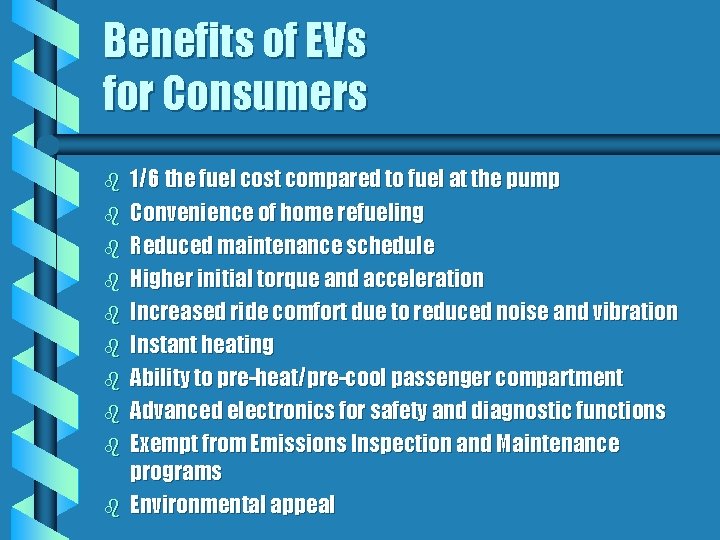
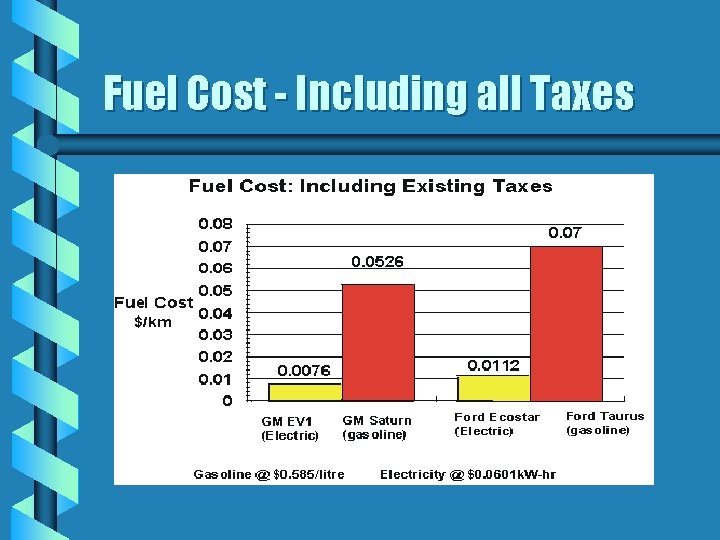
Benefits of EVs for Consumers b b b b b 1/6 the fuel cost compared to fuel at the pump Convenience of home refueling Reduced maintenance schedule Higher initial torque and acceleration Increased ride comfort due to reduced noise and vibration Instant heating Ability to pre-heat/pre-cool passenger compartment Advanced electronics for safety and diagnostic functions Exempt from Emissions Inspection and Maintenance programs Environmental appeal
Fuel Cost - Including all Taxes
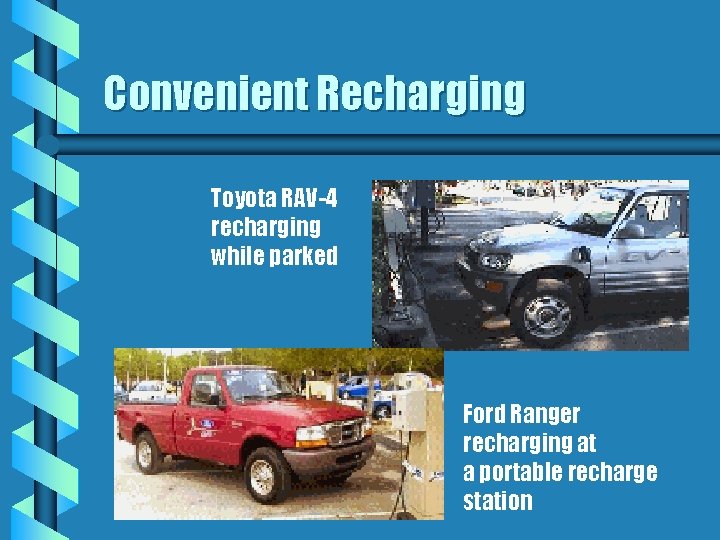
Convenient Recharging Toyota RAV-4 recharging while parked Ford Ranger recharging at a portable recharge station
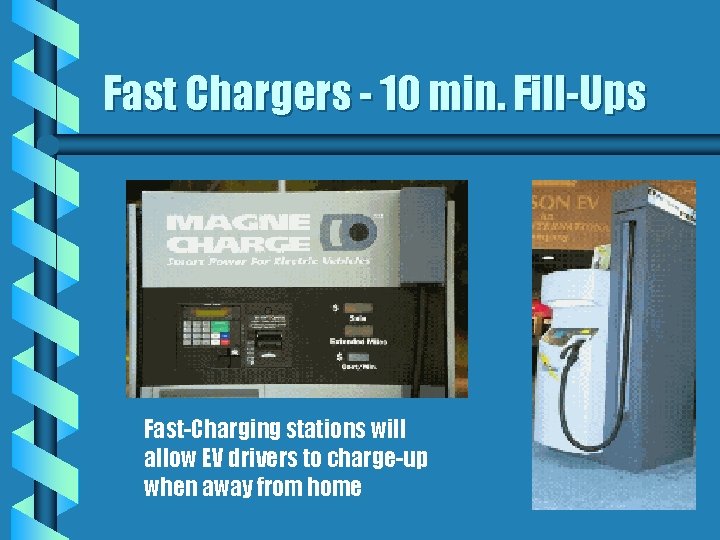
Fast Chargers - 10 min. Fill-Ups Fast-Charging stations will allow EV drivers to charge-up when away from home
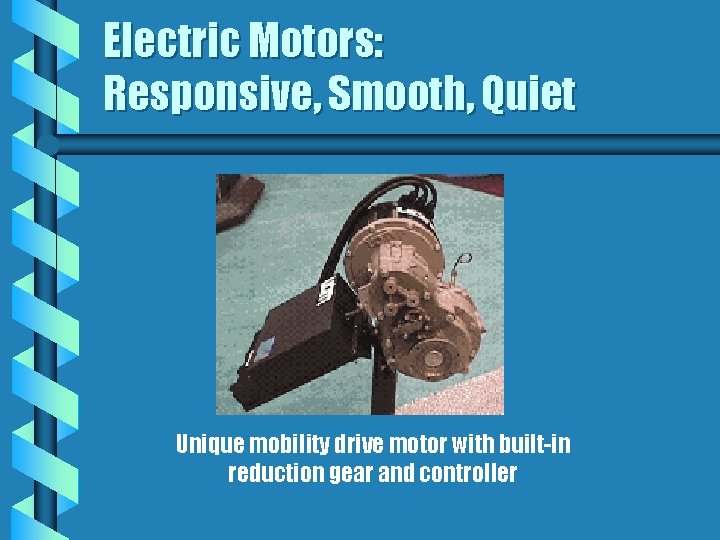
Electric Motors: Responsive, Smooth, Quiet Unique mobility drive motor with built-in reduction gear and controller
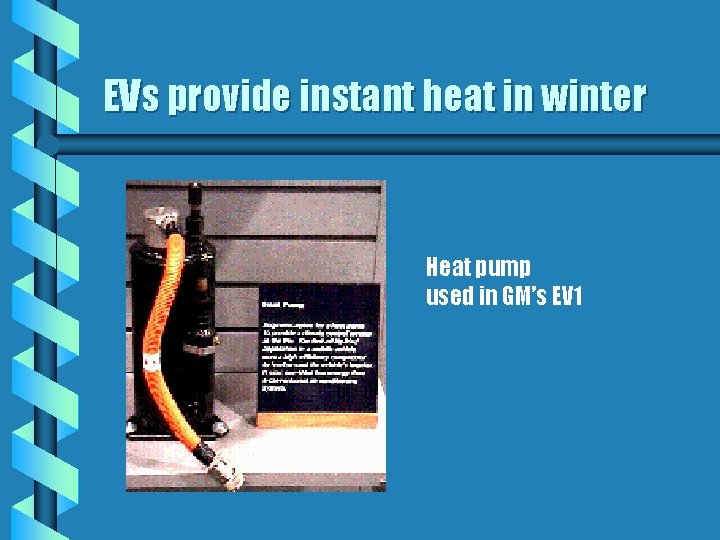
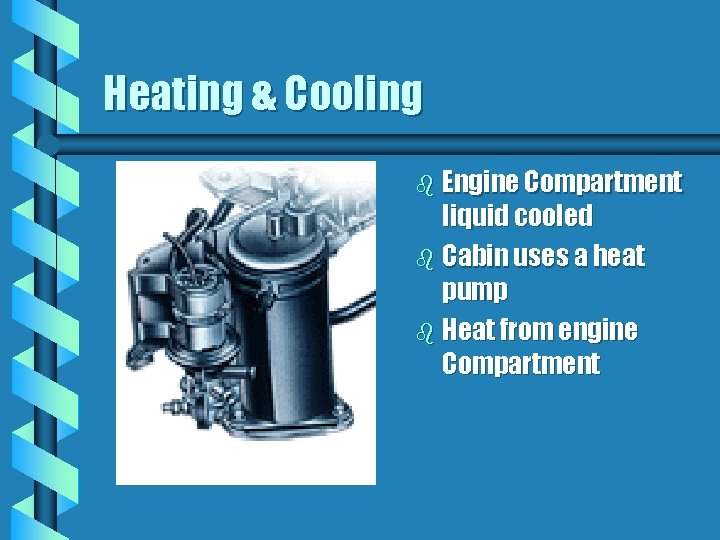
EVs provide instant heat in winter Heat pump used in GM’s EV 1
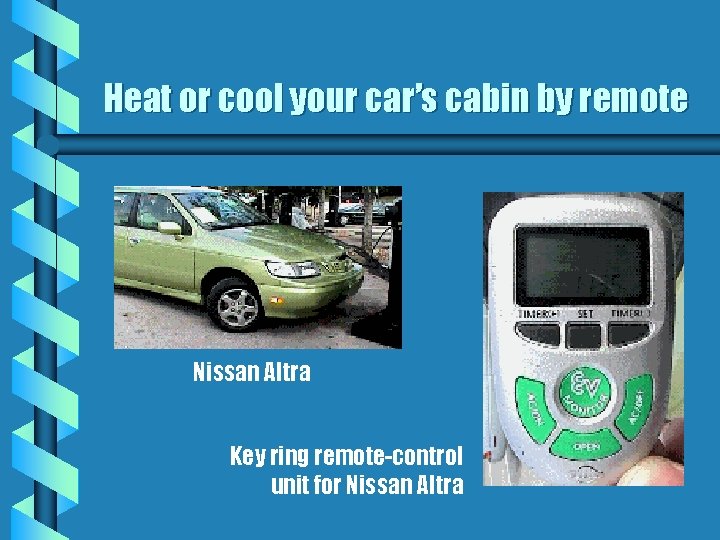
Heat or cool your car’s cabin by remote Nissan Altra Key ring remote-control unit for Nissan Altra
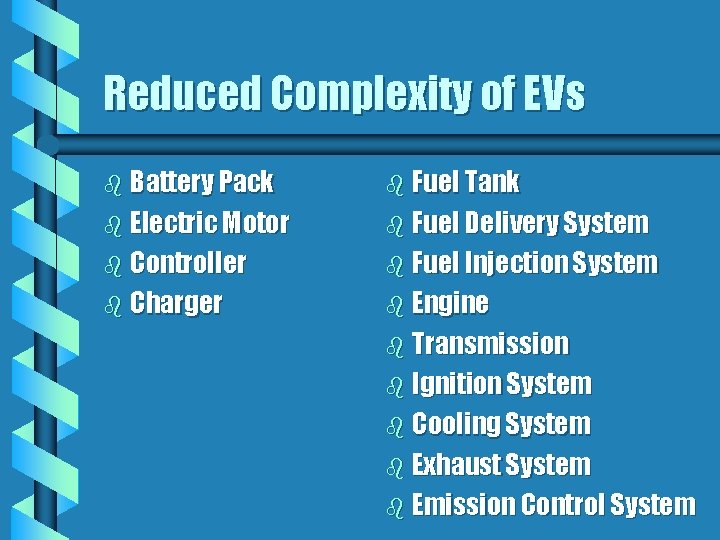
Reduced Complexity of EVs b Battery Pack b Fuel Tank b Electric Motor b Fuel Delivery System b Controller b Fuel Injection System b Charger b Engine b Transmission b Ignition System b Cooling System b Exhaust System b Emission Control System
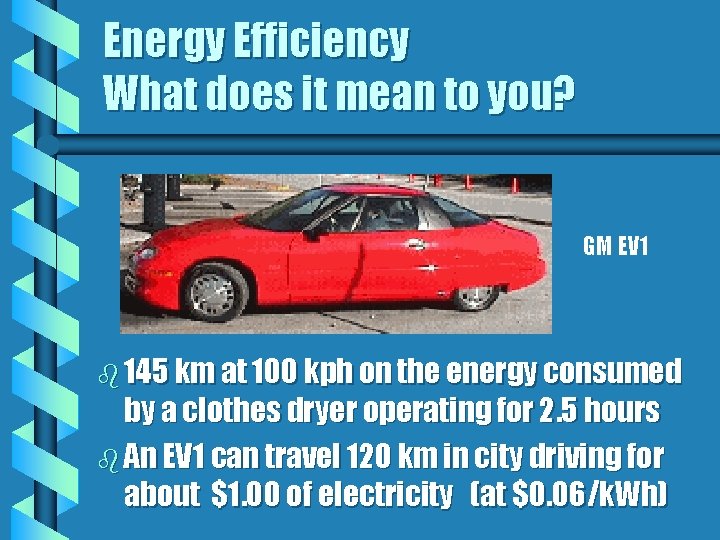
Energy Efficiency What does it mean to you? GM EV 1 b 145 km at 100 kph on the energy consumed by a clothes dryer operating for 2. 5 hours b An EV 1 can travel 120 km in city driving for about $1. 00 of electricity (at $0. 06/k. Wh)
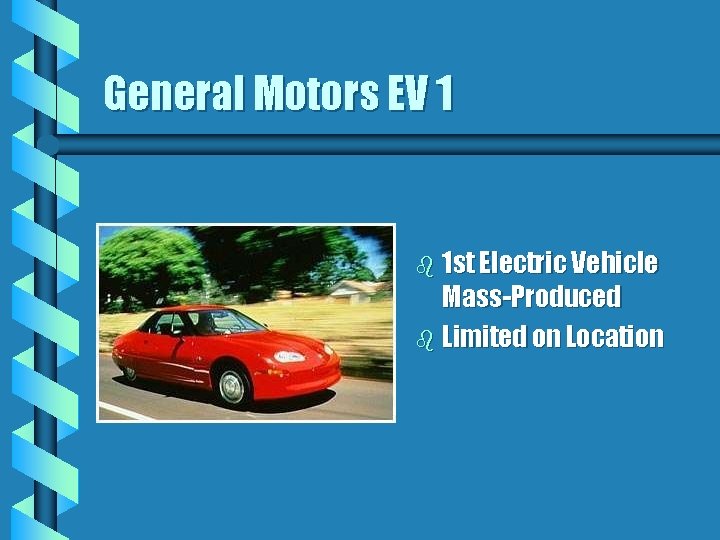
General Motors EV 1 b 1 st Electric Vehicle Mass-Produced b Limited on Location
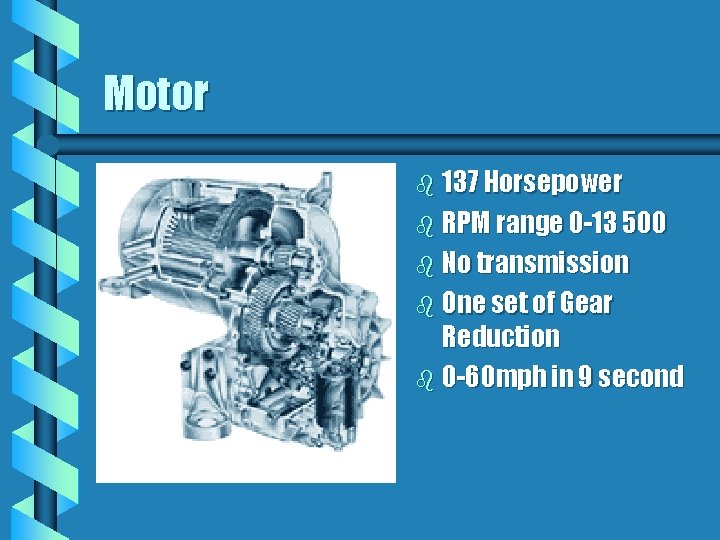
Motor b 137 Horsepower b RPM range 0 -13 500 b No transmission b One set of Gear Reduction b 0 -60 mph in 9 second
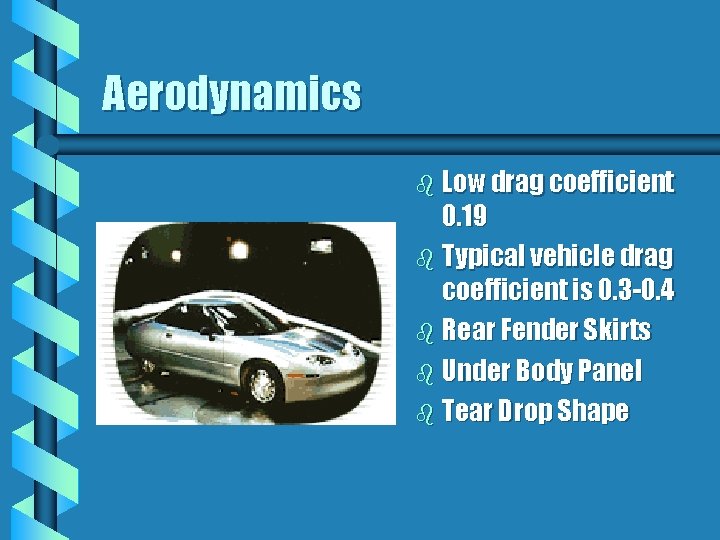
Aerodynamics b Low drag coefficient 0. 19 b Typical vehicle drag coefficient is 0. 3 -0. 4 b Rear Fender Skirts b Under Body Panel b Tear Drop Shape
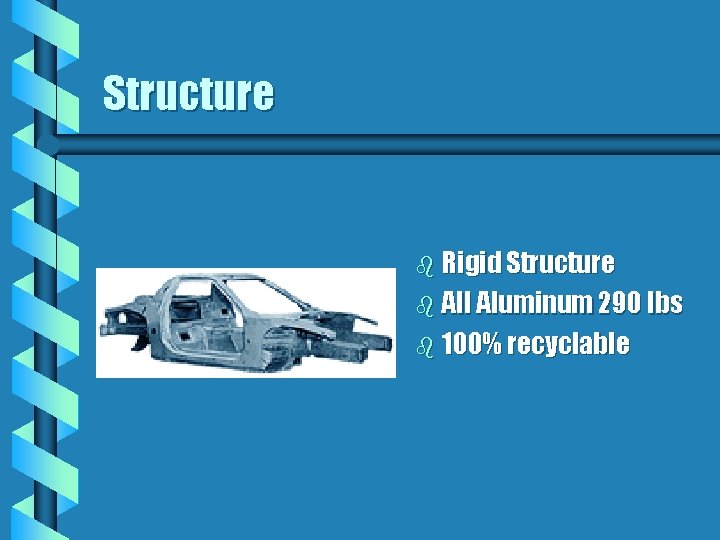
Structure b Rigid Structure b All Aluminum 290 lbs b 100% recyclable
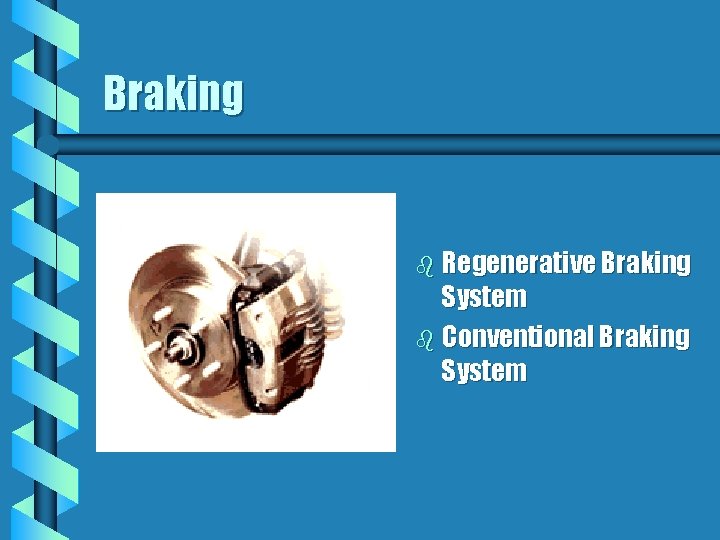
Braking b Regenerative Braking System b Conventional Braking System
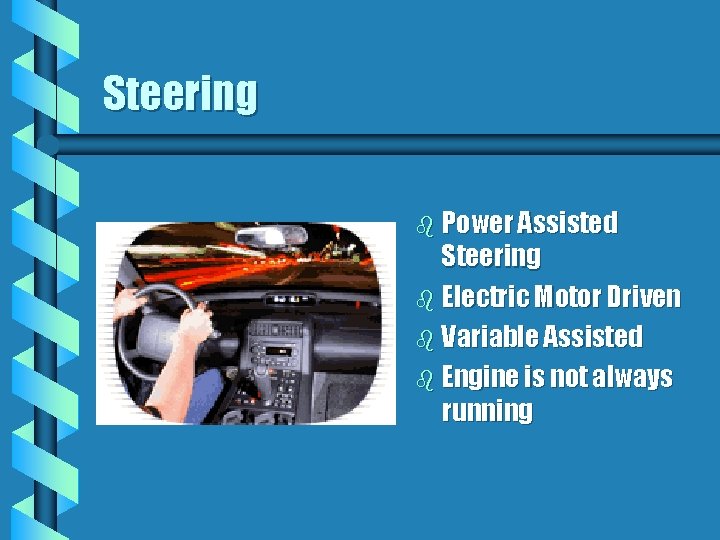
Steering b Power Assisted Steering b Electric Motor Driven b Variable Assisted b Engine is not always running
Heating & Cooling b Engine Compartment liquid cooled b Cabin uses a heat pump b Heat from engine Compartment
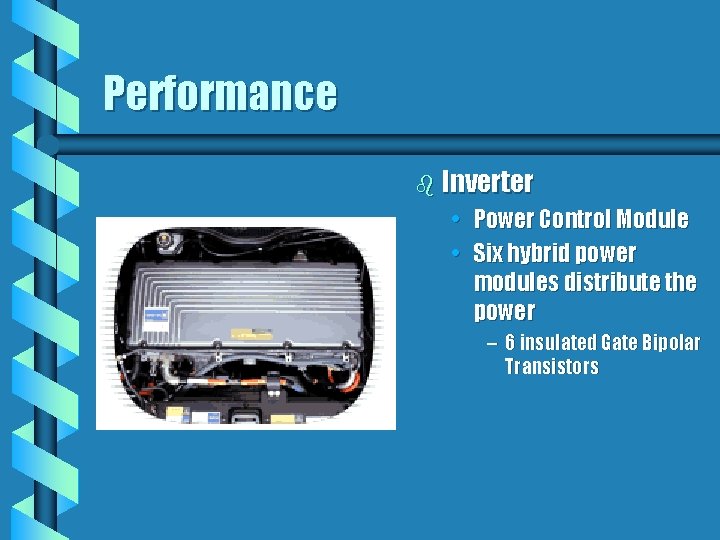
Performance b Inverter • Power Control Module • Six hybrid power modules distribute the power – 6 insulated Gate Bipolar Transistors
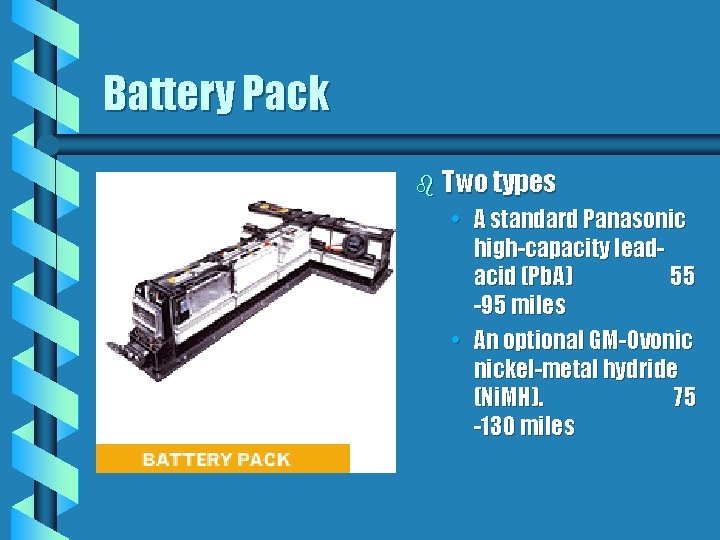
Battery Pack b Two types • A standard Panasonic high-capacity leadacid (Pb. A) 55 -95 miles • An optional GM-Ovonic nickel-metal hydride (Ni. MH). 75 -130 miles
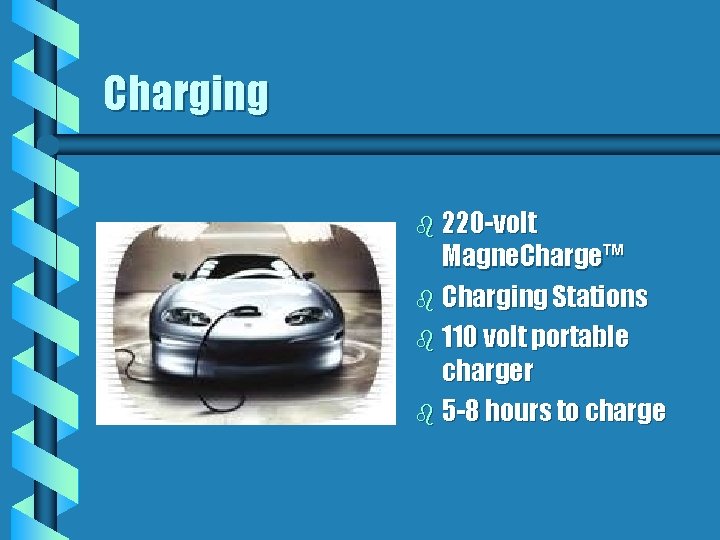
Charging b 220 -volt Magne. Charge™ b Charging Stations b 110 volt portable charger b 5 -8 hours to charge
Purchasing b Lease Only b $424 -$574 b Government Incentives
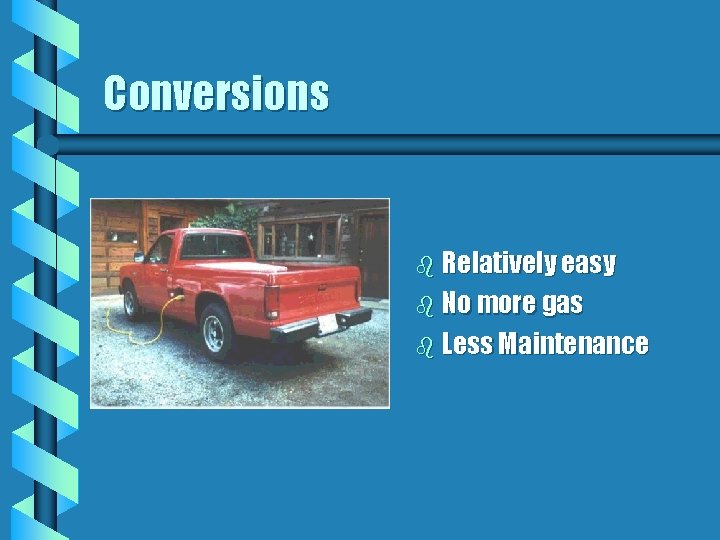
Conversions b Relatively easy b No more gas b Less Maintenance
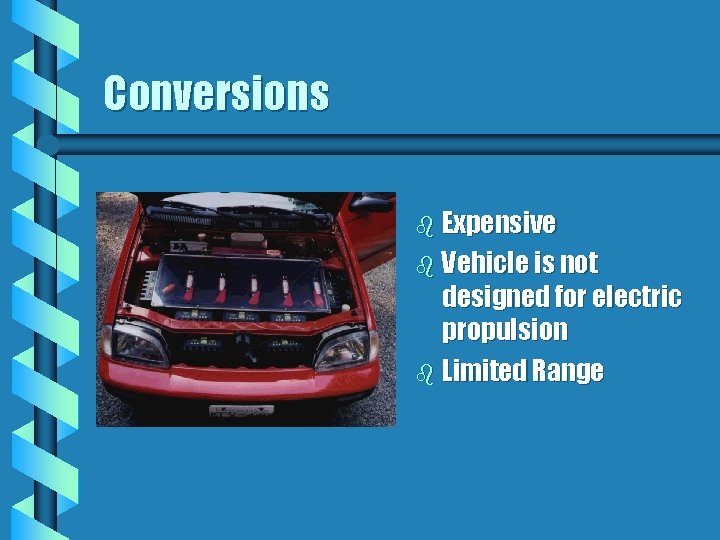
Conversions b Expensive b Vehicle is not designed for electric propulsion b Limited Range
The Tzero b Ultimate electric vehicle b 0 -60 mph 4. 1 sec b 200 Hp electric engine b No transmission loses
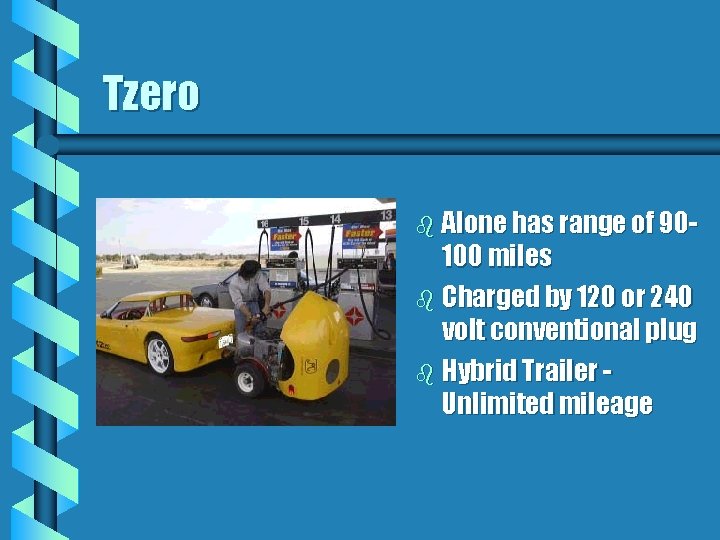
Tzero b Alone has range of 90 - 100 miles b Charged by 120 or 240 volt conventional plug b Hybrid Trailer Unlimited mileage
The possible near future…. In the year 2003 the California government is planning to pass the Zero Emission Vehicle (ZEV) mandate. By this mandate, all automakers in the area must actively develop at least one type of EV, or pay into a fund for companies who do want to develop ZEVs.
Some EVs have extra energy…. Some EVs, such as hybrid fuel cell, solar, and other energy producing designs, produce more energy than they need. For example, a solar powered car sitting in a parking lot all day. Battery EVs charge at night during off peak hours when electricity is cheaper. Which means that during the day, their energy is worth more than they paid for it.
The Idea…. What if EVs with extra, or cheaper, power could feed that power back into the grid during peak periods while the car is parked? With enough EVs you could produce are large amount of electricity to supply to the grid, which would cut down on brown outs and such. To take it one step further, you could sell the electricity to the power utility during the day when they need it for more money than you paid for it the night before.
The Vision…. The benefit from a life time of supplying electricity to the grid has the potential to exceed the cost of the battery. What if the electric utility pays for and owns the battery pack, and gives you unlimited free use of it and free electricity for charging? Suddenly the cost of travelling becomes almost zero.
The Potential…. Imagine that all the cars in the US were some form of electric producing EV. That’s 146 million vehicles. Each EV provides about 0. 01 - 0. 02 MW of power. The US generates about 800, 000 MW of power. You would only need 40 million EVs to supply enough electricity to power the entire US. Cars are parked 90% of the time. With this amount of portable, available energy, power plants would operate much more efficiently. You would produce much less emissions with no ICEVs.
Electric Vehicles “The I. C. E. age is over. ” Any Questions?