
Electric Potential Physics Department New York City College

- Slides: 13
Electric Potential Physics Department, New York City College of Technology
Key words n n n Electric potential energy Electric potential Electric field Equipotential lines Principle of superposition
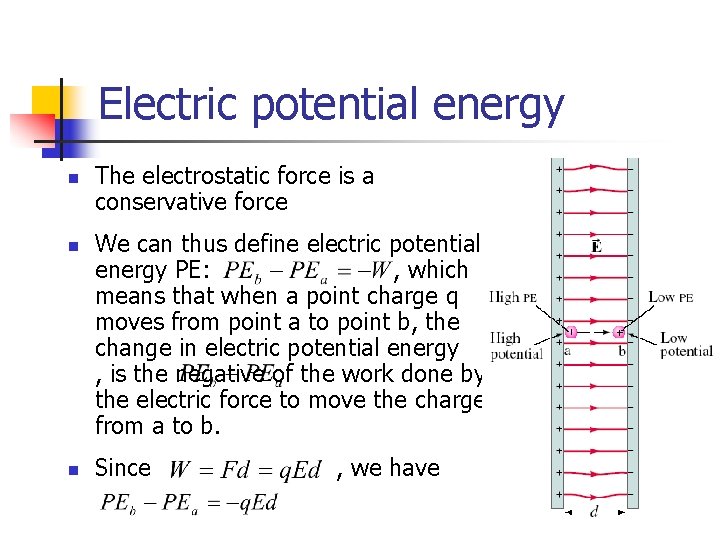
Electric potential energy n n n The electrostatic force is a conservative force We can thus define electric potential energy PE: , which means that when a point charge q moves from point a to point b, the change in electric potential energy , is the negative of the work done by the electric force to move the charge from a to b. Since , we have
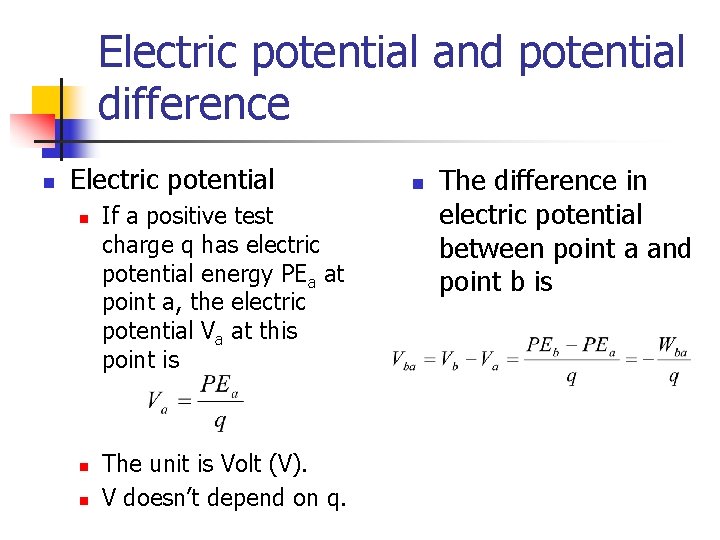
Electric potential and potential difference n Electric potential n n n If a positive test charge q has electric potential energy PEa at point a, the electric potential Va at this point is The unit is Volt (V). V doesn’t depend on q. n The difference in electric potential between point a and point b is
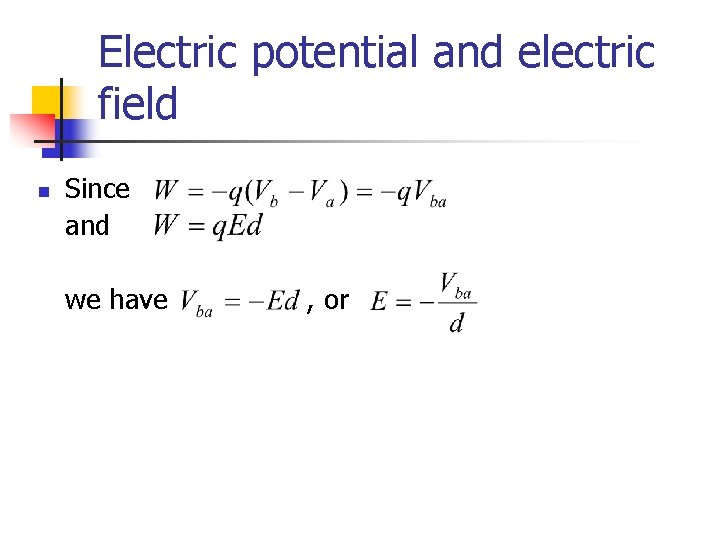
Electric potential and electric field n Since and we have , or
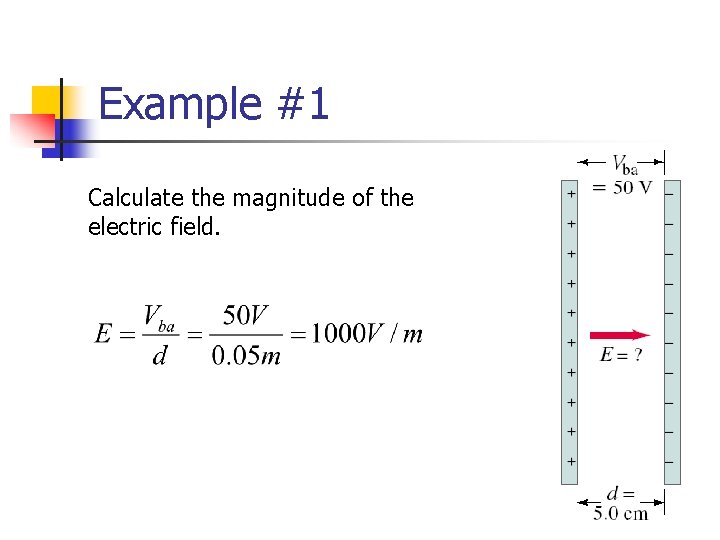
Example #1 Calculate the magnitude of the electric field.
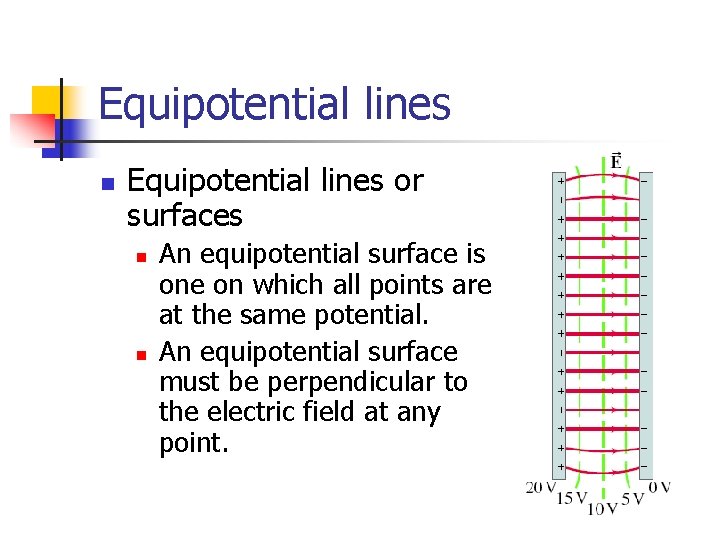
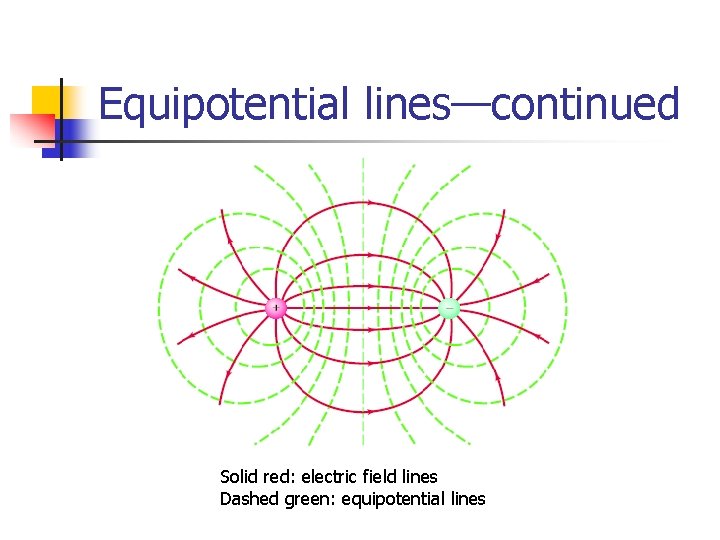
Equipotential lines n Equipotential lines or surfaces n n An equipotential surface is one on which all points are at the same potential. An equipotential surface must be perpendicular to the electric field at any point.
Equipotential lines—continued Solid red: electric field lines Dashed green: equipotential lines
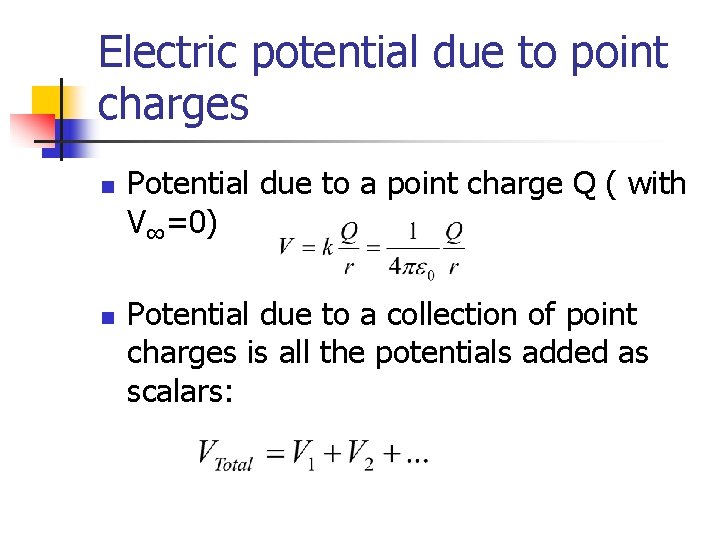
Electric potential due to point charges n n Potential due to a point charge Q ( with V∞=0) Potential due to a collection of point charges is all the potentials added as scalars:
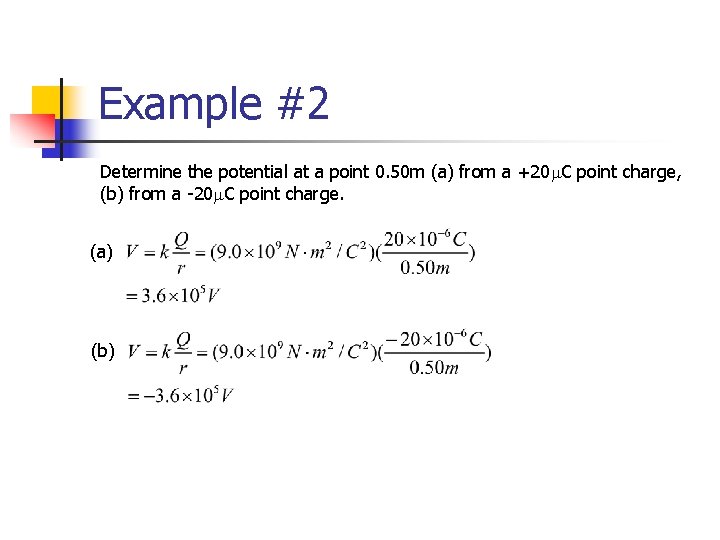
Example #2 Determine the potential at a point 0. 50 m (a) from a +20 C point charge, (b) from a -20 C point charge. (a) (b)
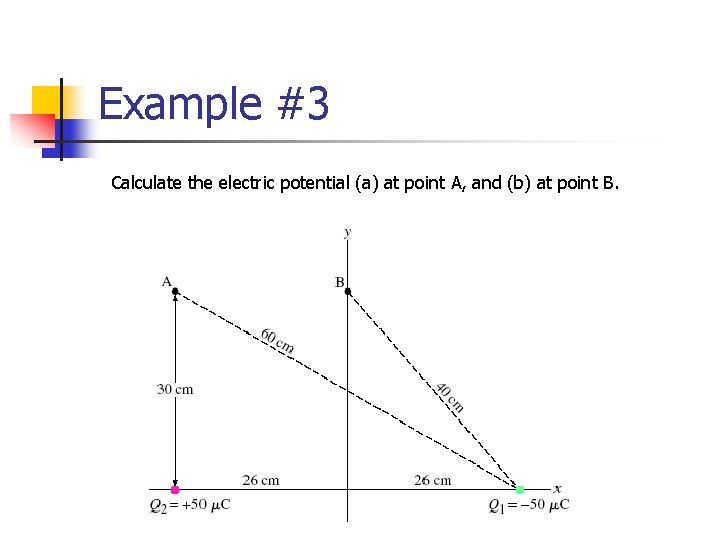
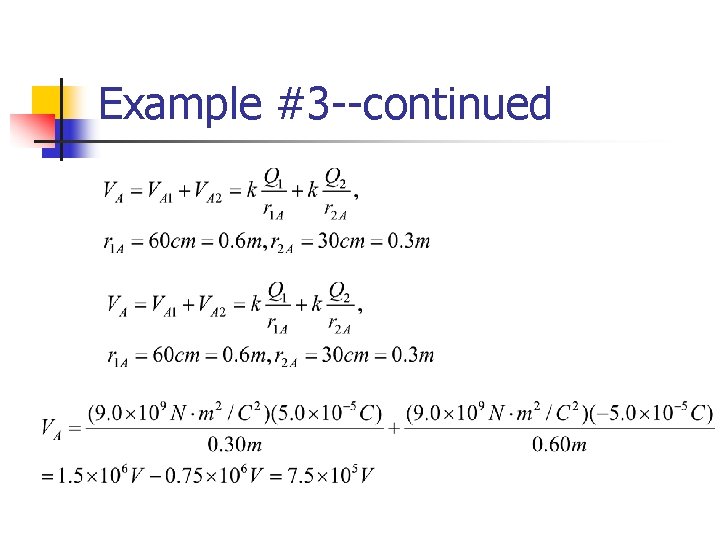
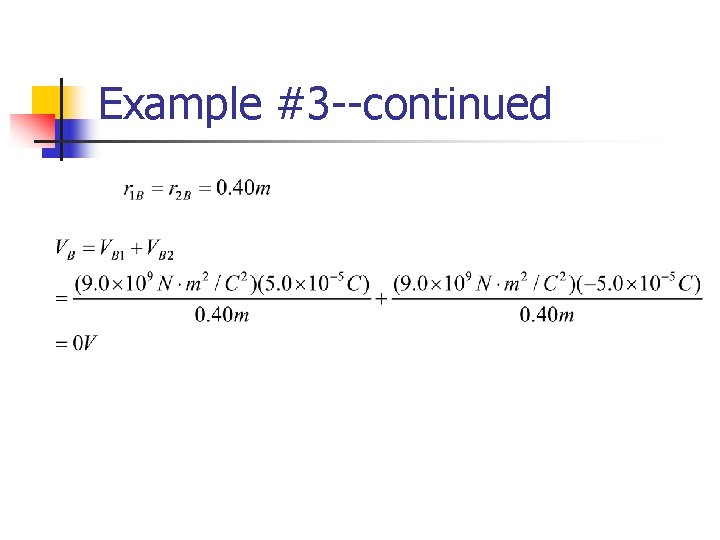
Example #3 Calculate the electric potential (a) at point A, and (b) at point B.
Example #3 --continued
Example #3 --continued