
Electric Motors and Filtration The ECM Textbook Table
Electric Motors and Filtration
The ECM Textbook Table of Contents History of ECM Motor Technologies Static Pressure Impact
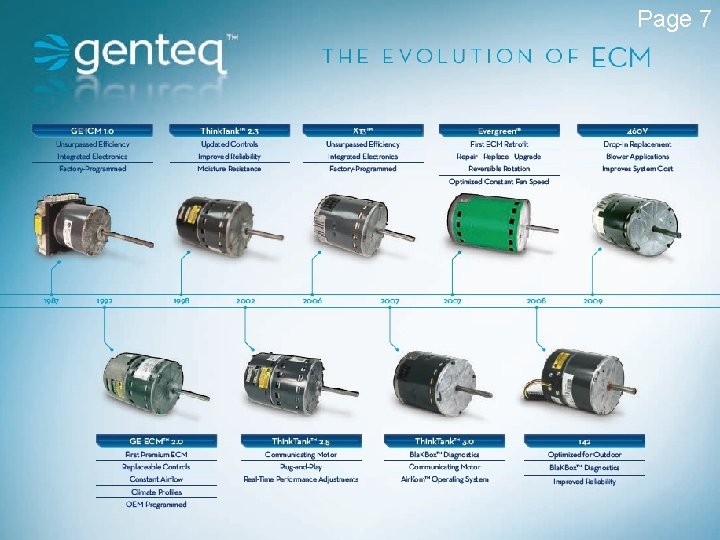
History of ECM Technology 1987 • General Electric introduces first ECM to residential HVAC 2004 • Regal Beloit purchases the ECM, PSC and Capacitor divisions from GE with permission to brand as:
History of ECM Technology Regal-Beloit Corporation Background • Public Corporation established in 1955 - NYSE – RBC • History Ø 50 s to 70 s - Special Cutting Tools Ø 80 s to 90 s – Mechanical Power Transmission Ø 90 s to 00 s – Motors and Generators Ø Largest Non-Captive Motor supplier globally Ø #1 Commercial and Industrial and #1 HVAC • Recognized Motor Brands
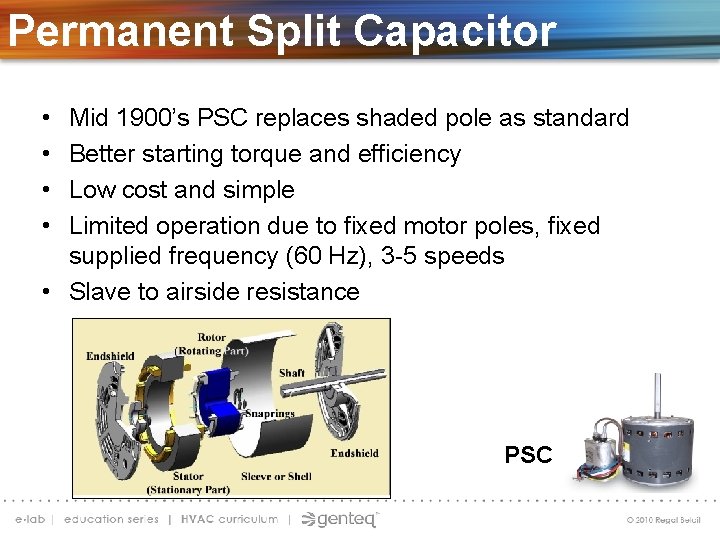
Permanent Split Capacitor • • Mid 1900’s PSC replaces shaded pole as standard Better starting torque and efficiency Low cost and simple Limited operation due to fixed motor poles, fixed supplied frequency (60 Hz), 3 -5 speeds • Slave to airside resistance PSC
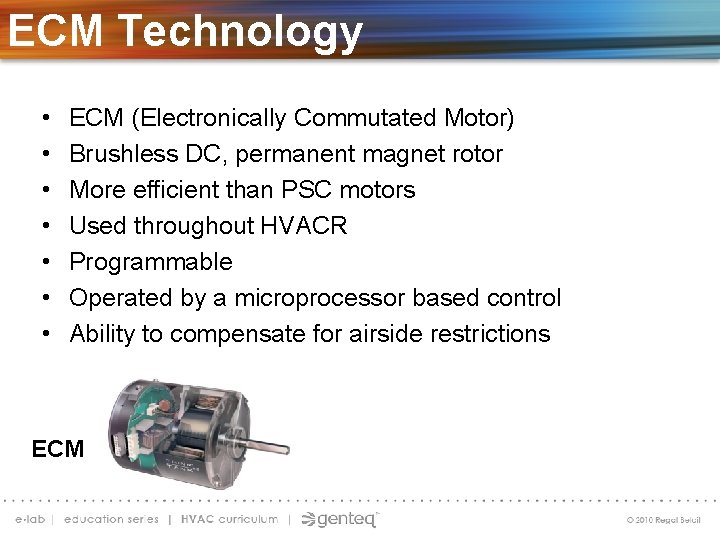
ECM Technology • • ECM (Electronically Commutated Motor) Brushless DC, permanent magnet rotor More efficient than PSC motors Used throughout HVACR Programmable Operated by a microprocessor based control Ability to compensate for airside restrictions ECM
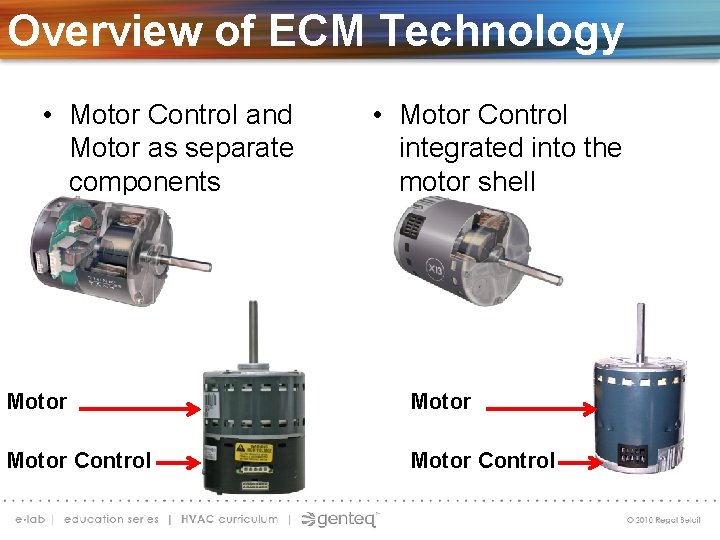
Overview of ECM Technology • Motor Control and Motor as separate components • Motor Control integrated into the motor shell Motor Control
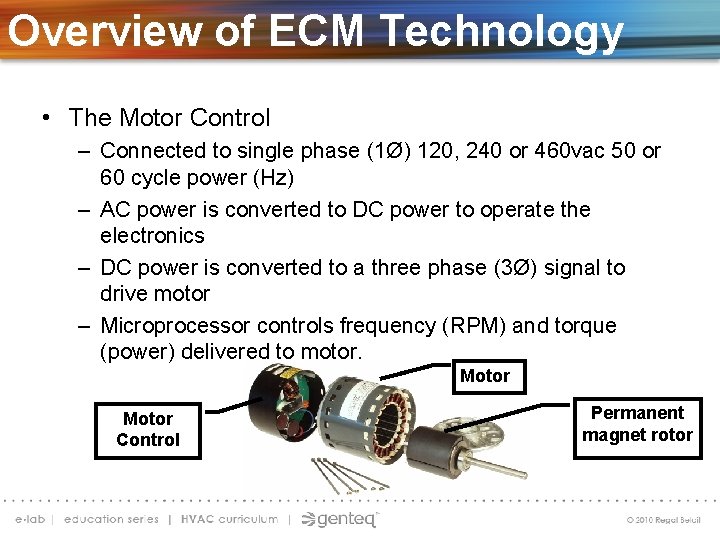
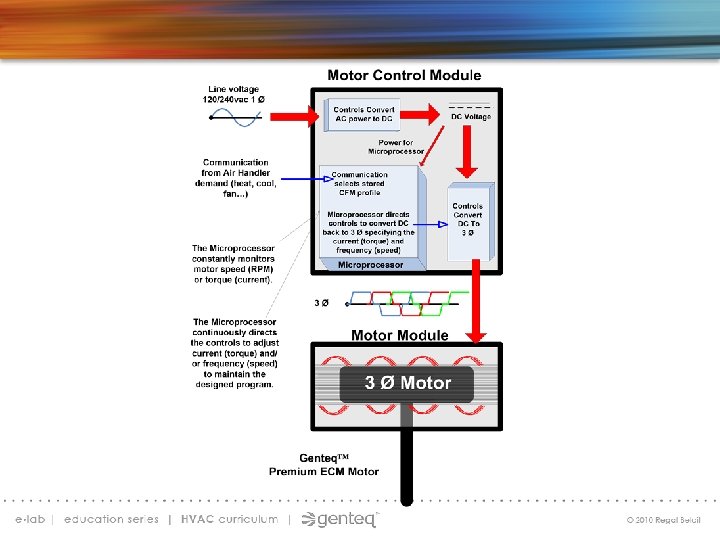
Overview of ECM Technology • The Motor Control – Connected to single phase (1Ø) 120, 240 or 460 vac 50 or 60 cycle power (Hz) – AC power is converted to DC power to operate the electronics – DC power is converted to a three phase (3Ø) signal to drive motor – Microprocessor controls frequency (RPM) and torque (power) delivered to motor. Motor Control Permanent magnet rotor
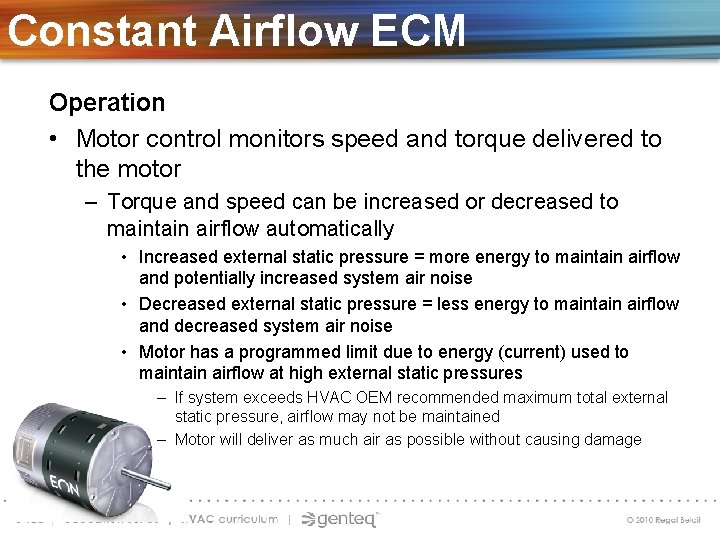
Constant Airflow ECM Operation • Motor control monitors speed and torque delivered to the motor – Torque and speed can be increased or decreased to maintain airflow automatically • Increased external static pressure = more energy to maintain airflow and potentially increased system air noise • Decreased external static pressure = less energy to maintain airflow and decreased system air noise • Motor has a programmed limit due to energy (current) used to maintain airflow at high external static pressures – If system exceeds HVAC OEM recommended maximum total external static pressure, airflow may not be maintained – Motor will deliver as much air as possible without causing damage
Constant Airflow ECM Definition • Constant Airflow – Maintained during changes in external static pressure • External Static Pressure (ESP) – resistance to air movement – Undersized, poorly constructed or dirty ductwork – Dirt build up on air distribution system components • Airflow is maintained in all situations within limits of HVAC OEM programming and design – PSC motors produce less airflow when ESP increases
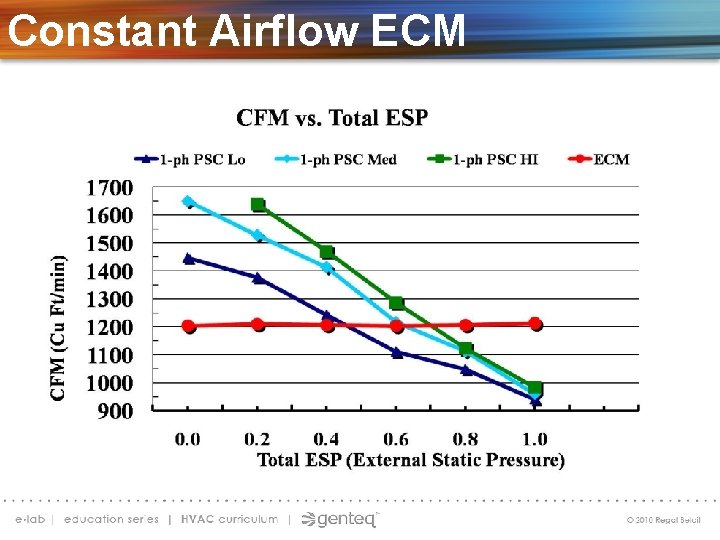
Constant Airflow ECM
Constant Airflow ECM Benefits • When set up correctly benefits include: – – – Energy Savings Improved outlet air temperature for each system demand Improved humidity control Improved system capacity Reduced space temperature swings Reduced air noise, soft start/stop, gradual airflow change between demands, delays and/or profiles – Reduced continuous fan air noise, increased energy savings – Reduced repairs associated with continuous low airflow operation
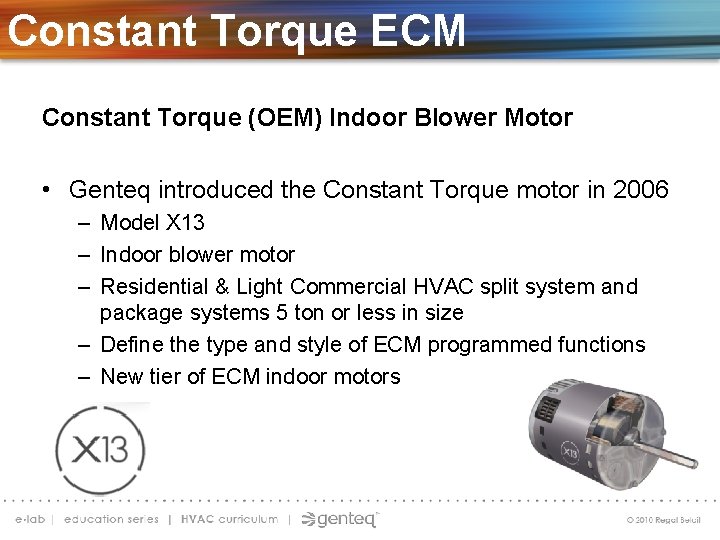
Constant Torque ECM Constant Torque (OEM) Indoor Blower Motor • Genteq introduced the Constant Torque motor in 2006 – Model X 13 – Indoor blower motor – Residential & Light Commercial HVAC split system and package systems 5 ton or less in size – Define the type and style of ECM programmed functions – New tier of ECM indoor motors
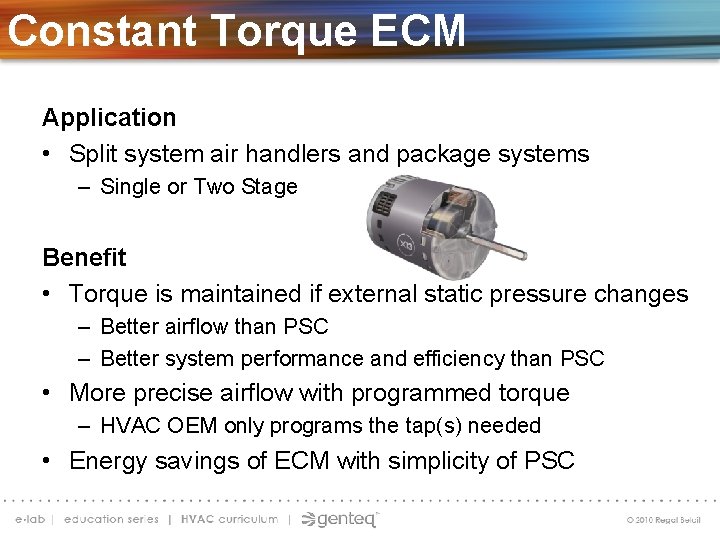
Constant Torque ECM Application • Split system air handlers and package systems – Single or Two Stage Benefit • Torque is maintained if external static pressure changes – Better airflow than PSC – Better system performance and efficiency than PSC • More precise airflow with programmed torque – HVAC OEM only programs the tap(s) needed • Energy savings of ECM with simplicity of PSC
Retrofit Motors - Evergreen
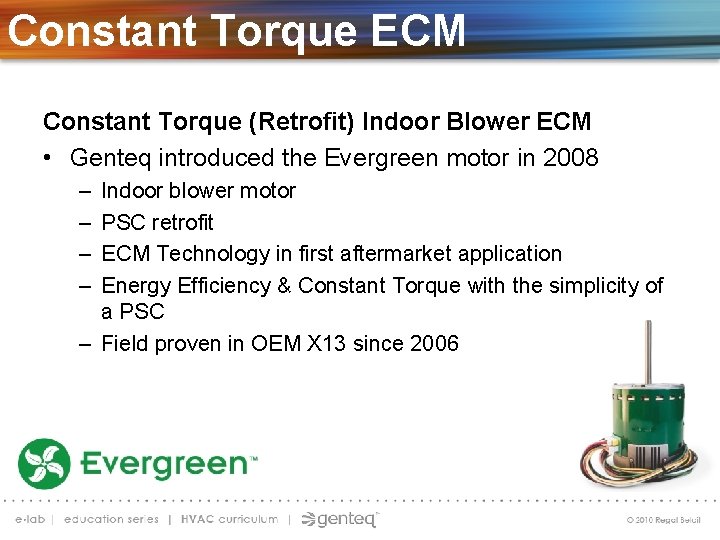
Constant Torque ECM Constant Torque (Retrofit) Indoor Blower ECM • Genteq introduced the Evergreen motor in 2008 – – Indoor blower motor PSC retrofit ECM Technology in first aftermarket application Energy Efficiency & Constant Torque with the simplicity of a PSC – Field proven in OEM X 13 since 2006
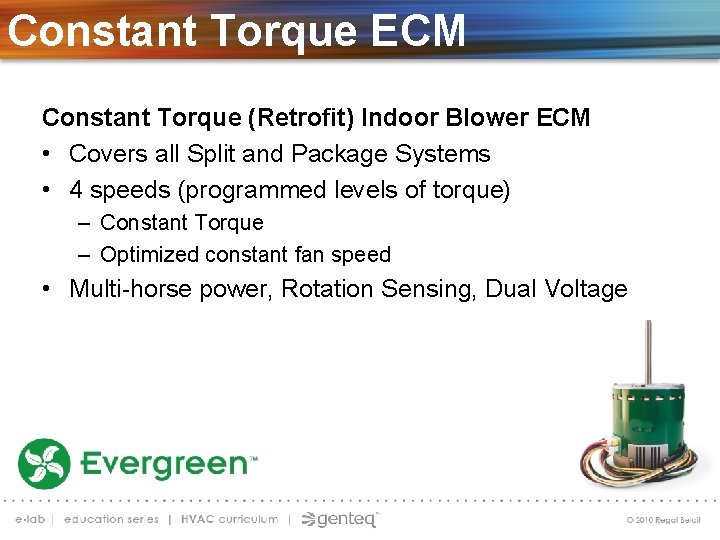
Constant Torque ECM Constant Torque (Retrofit) Indoor Blower ECM • Covers all Split and Package Systems • 4 speeds (programmed levels of torque) – Constant Torque – Optimized constant fan speed • Multi-horse power, Rotation Sensing, Dual Voltage
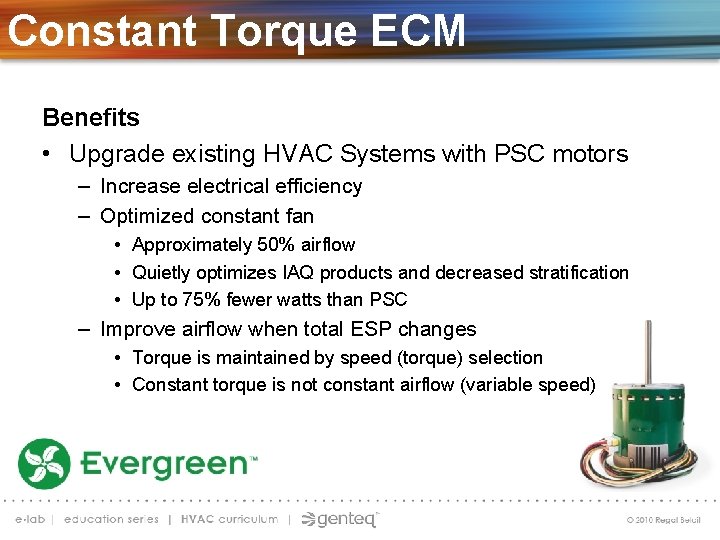
Constant Torque ECM Benefits • Upgrade existing HVAC Systems with PSC motors – Increase electrical efficiency – Optimized constant fan • Approximately 50% airflow • Quietly optimizes IAQ products and decreased stratification • Up to 75% fewer watts than PSC – Improve airflow when total ESP changes • Torque is maintained by speed (torque) selection • Constant torque is not constant airflow (variable speed)
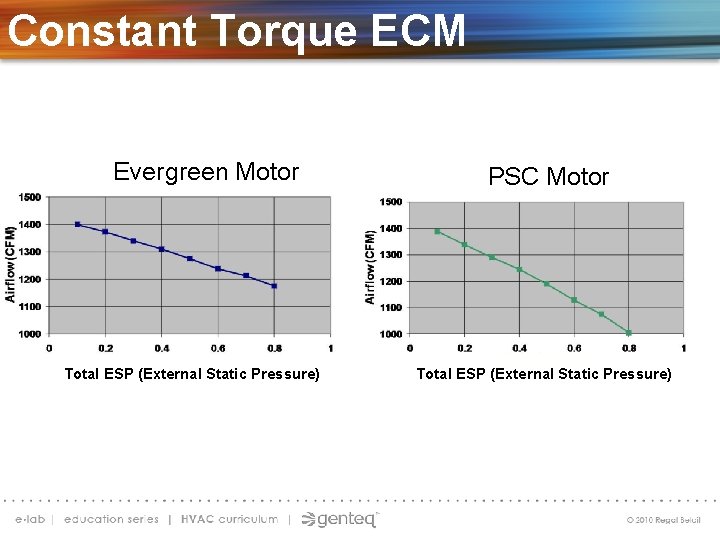
Constant Torque ECM Evergreen Motor Total ESP (External Static Pressure) PSC Motor Total ESP (External Static Pressure)
Motors and Static Pressure
How Has The Industry Changed? • Total External Static Pressure (TESP) – Ductwork • Poorly sized and constructed – Indoor Coil • Increased resistance with higher SEER – Air Filter • Poorly sized • Increased MERV ratings • Blower Performance – Permanent Split Capacitor (PSC) – Constant Torque ECM – Constant Airflow ECM
What’s The Problem? • Contractors lack basic airflow knowledge • Lets start with some fundamentals – Total External Static Pressure (TESP) – Blower Performance
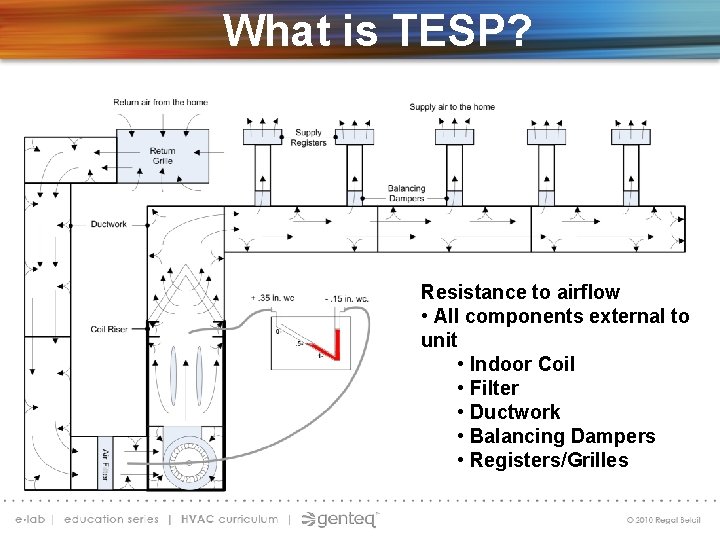
What is TESP? Resistance to airflow • All components external to unit • Indoor Coil • Filter • Ductwork • Balancing Dampers • Registers/Grilles
TESP Guidelines • Fossil Fuel – Try to operate around 0. 5 in. wc. for best performance and noise – Try not to operate above 0. 8 – 1. 0 • Air Handlers/Packs – Try to operate around 0. 3 – 0. 5 in. wc. for best performance and noise – Try not to operate above 0. 8 Always follow OEM specifications if they are available. Most manufacturers will provide the recommended TESP that the system was rated at and the maximum it will perform at.
How Does TESP Effect Blowers • That depends on the type of blower motor – PSC Induction Motor – Constant Torque ECM • Airflow based on speed or tap selection at a given Total External Static Pressure (TESP) • Airflow changes with TESP – Constant Airflow ECM (Variable Speed) • Airflow is based on system configuration using dip switches • Airflow is maintained within recommended TESP range • Above recommended maximum TESP, airflow will decrease
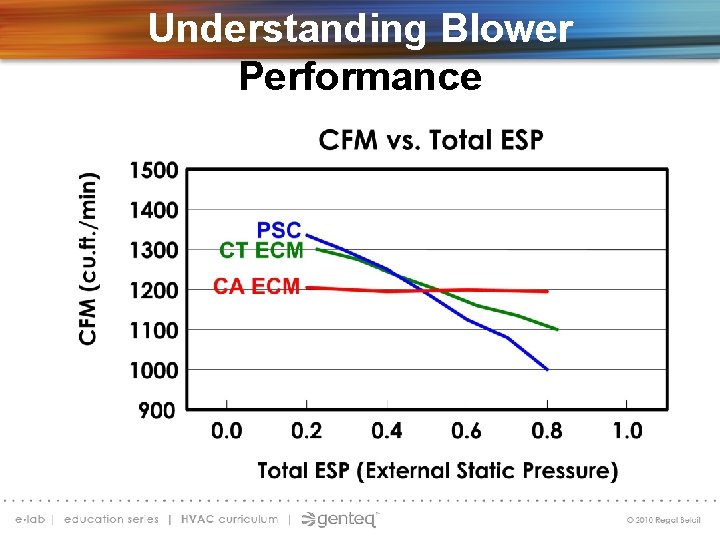
Understanding Blower Performance
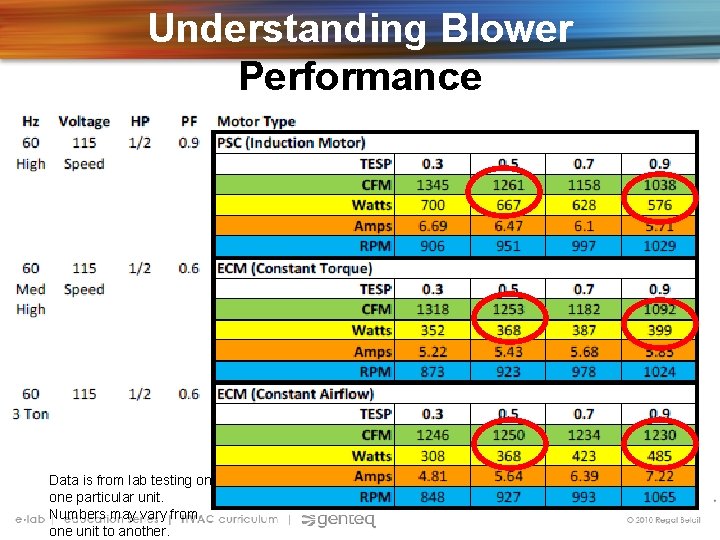
Understanding Blower Performance Data is from lab testing on one particular unit. Numbers may vary from one unit to another.
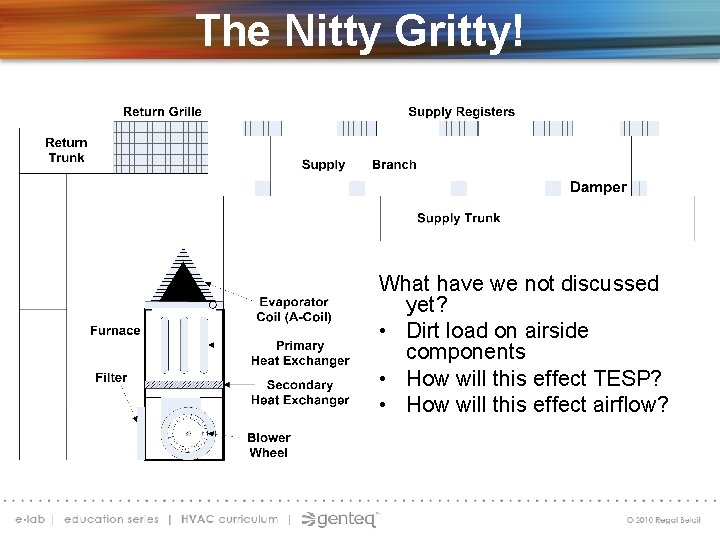
The Nitty Gritty! What have we not discussed yet? • Dirt load on airside components • How will this effect TESP? • How will this effect airflow?
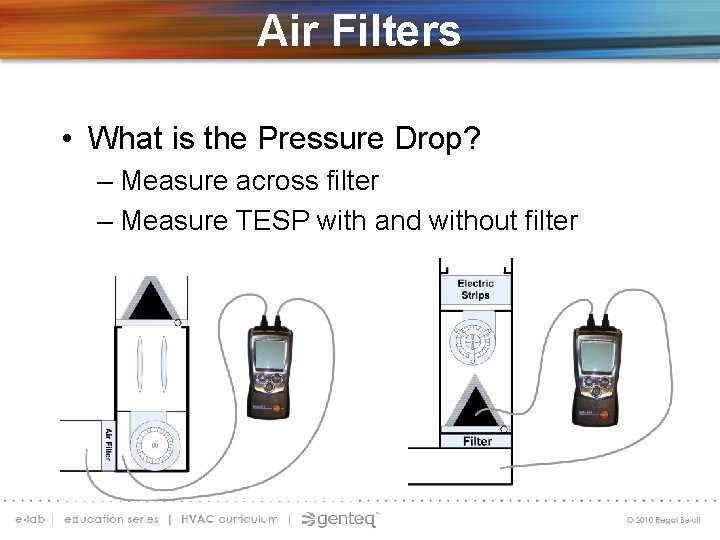
Air Filters • What is the Pressure Drop? – Measure across filter – Measure TESP with and without filter
Air Filters • What is the Pressure Drop? – 0. 10 – 0. 20 in. wc. • How much airflow does it need to move? • This could be a big part of the problem • This could be the least expensive solution for the customer • Higher MERV may have higher resistance depending on filter size and airflow
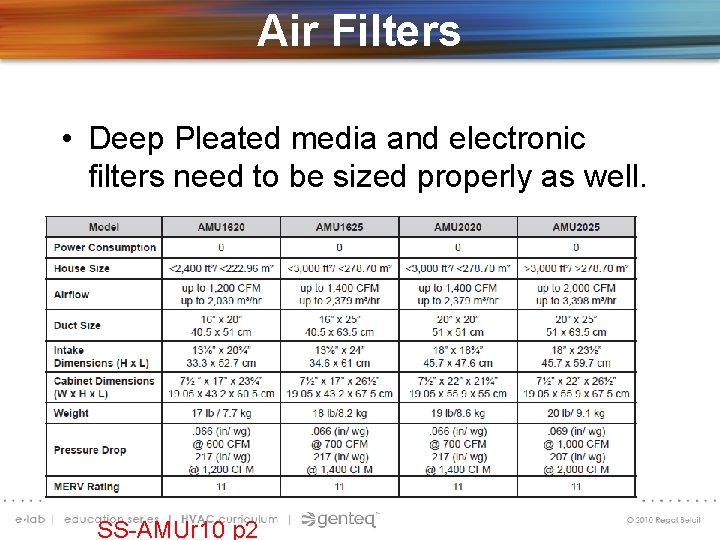
Air Filters • Deep Pleated media and electronic filters need to be sized properly as well. SS-AMUr 10 p 2
How to apply this information • Keep air side components clean • Measure airflow – Temperature Rise (Fossil Fuel Systems) – CFM (A/C and Heat Pump Systems) • • • Adjust blower operation for proper airflow Measure TESP Evaluate TESP concerns Provide customer with airflow solutions Communicate system operation and maintenance requirements to customers – Maintenance Programs !!!!
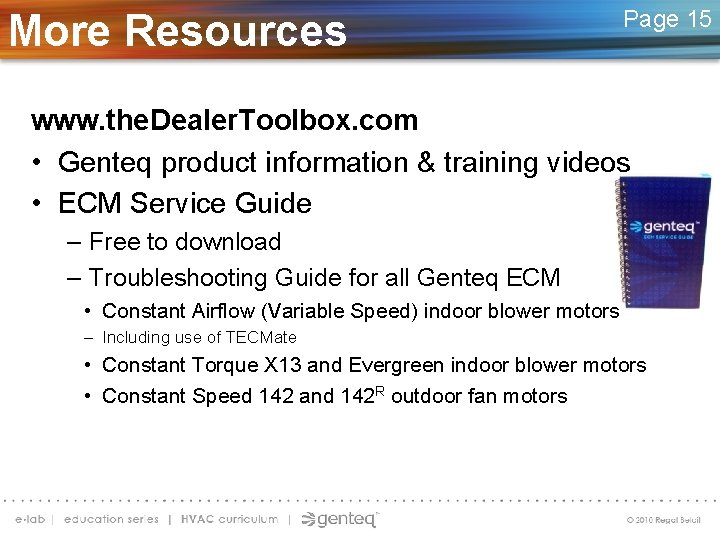
More Resources Page 15 www. the. Dealer. Toolbox. com • Genteq product information & training videos • ECM Service Guide – Free to download – Troubleshooting Guide for all Genteq ECM • Constant Airflow (Variable Speed) indoor blower motors – Including use of TECMate • Constant Torque X 13 and Evergreen indoor blower motors • Constant Speed 142 and 142 R outdoor fan motors

Thank YOU would like to thank you for your dedication to professionalism and continuing education.

Hey “Paul & Kam”, don’t forget to answer questions, you do have a tendency to ramble you know.

That’s All Folks!
Page 7
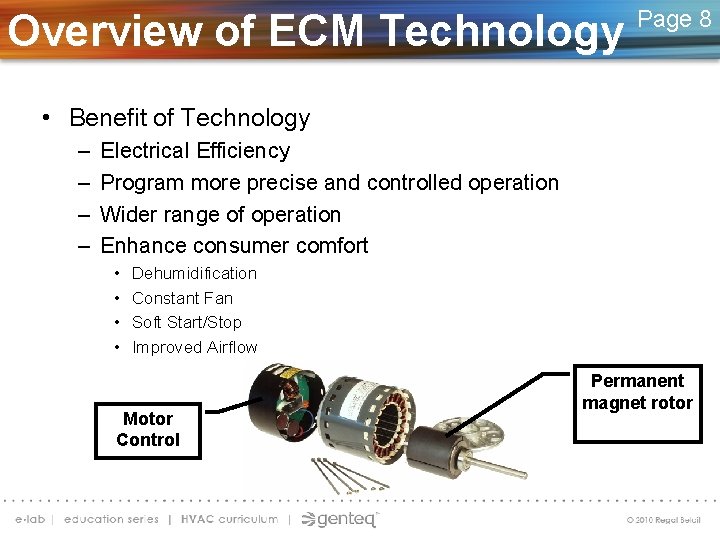
Overview of ECM Technology Page 8 • Benefit of Technology – – Electrical Efficiency Program more precise and controlled operation Wider range of operation Enhance consumer comfort • • Dehumidification Constant Fan Soft Start/Stop Improved Airflow Motor Control Permanent magnet rotor
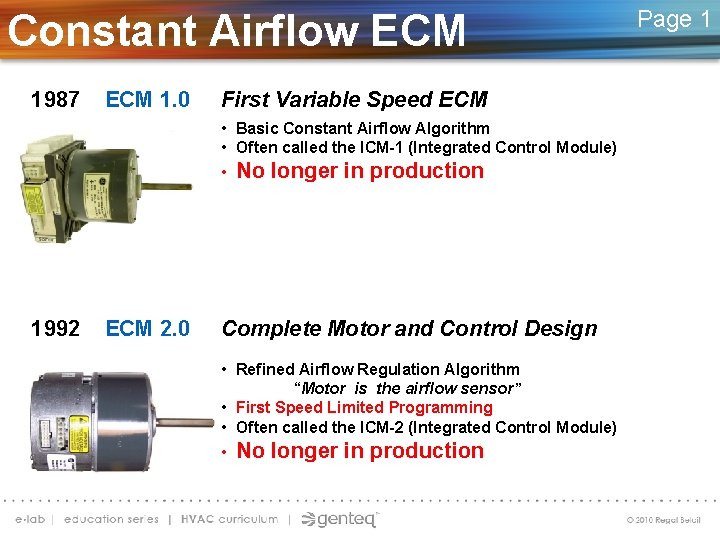
Constant Airflow ECM 1987 ECM 1. 0 First Variable Speed ECM • Basic Constant Airflow Algorithm • Often called the ICM-1 (Integrated Control Module) • 1992 ECM 2. 0 No longer in production Complete Motor and Control Design • Refined Airflow Regulation Algorithm “Motor is the airflow sensor” • First Speed Limited Programming • Often called the ICM-2 (Integrated Control Module) • No longer in production Page 1
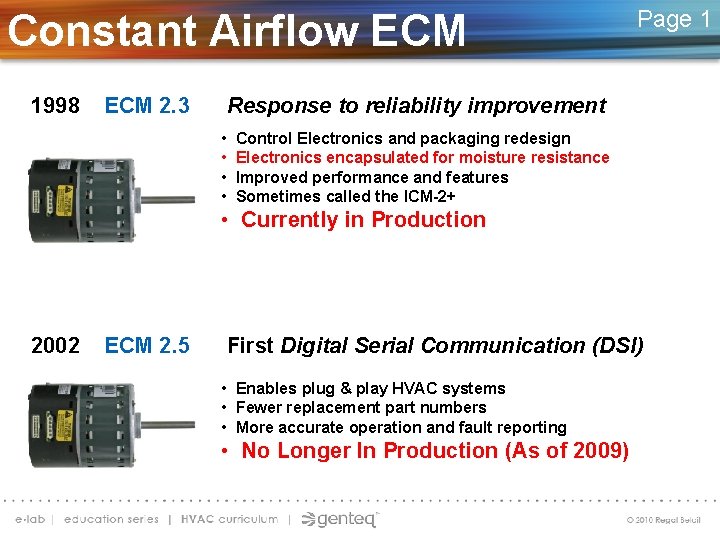
Constant Airflow ECM 1998 ECM 2. 3 Page 1 Response to reliability improvement • • Control Electronics and packaging redesign Electronics encapsulated for moisture resistance Improved performance and features Sometimes called the ICM-2+ • Currently in Production 2002 ECM 2. 5 First Digital Serial Communication (DSI) • Enables plug & play HVAC systems • Fewer replacement part numbers • More accurate operation and fault reporting • No Longer In Production (As of 2009)
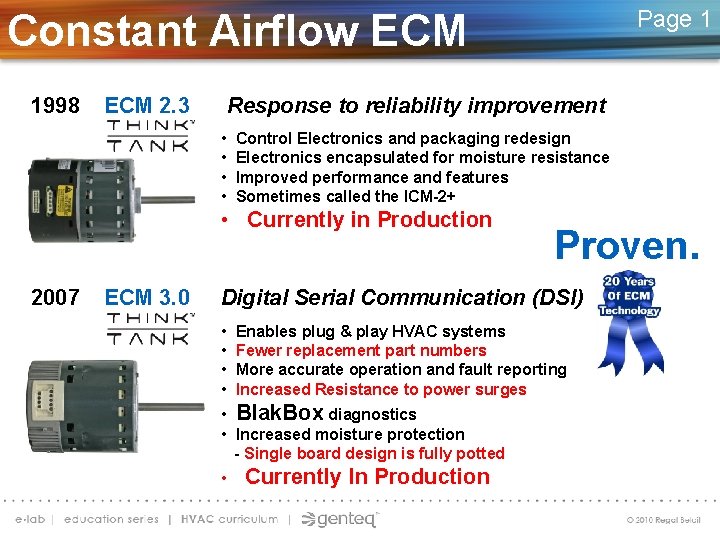
Page 1 Constant Airflow ECM 1998 ECM 2. 3 Response to reliability improvement • • Control Electronics and packaging redesign Electronics encapsulated for moisture resistance Improved performance and features Sometimes called the ICM-2+ • Currently in Production 2007 ECM 3. 0 Proven. Digital Serial Communication (DSI) • • Enables plug & play HVAC systems Fewer replacement part numbers More accurate operation and fault reporting Increased Resistance to power surges • Blak. Box diagnostics • Increased moisture protection - Single board design is fully potted • Currently In Production
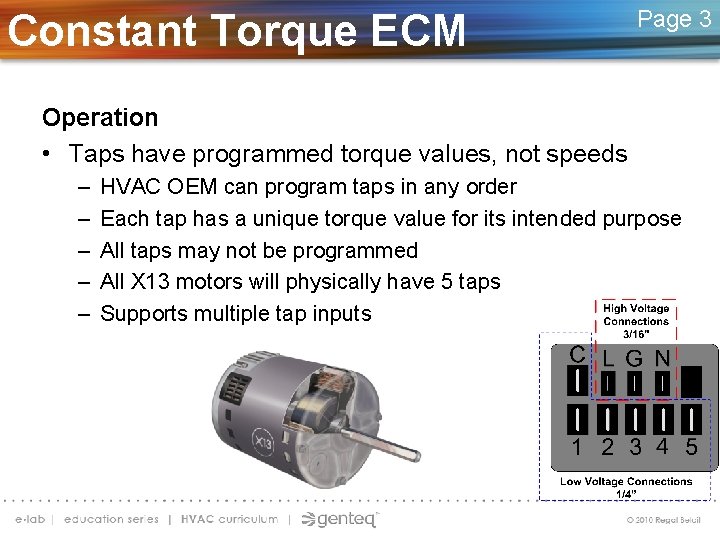
Constant Torque ECM Page 3 Operation • Taps have programmed torque values, not speeds – – – HVAC OEM can program taps in any order Each tap has a unique torque value for its intended purpose All taps may not be programmed All X 13 motors will physically have 5 taps Supports multiple tap inputs
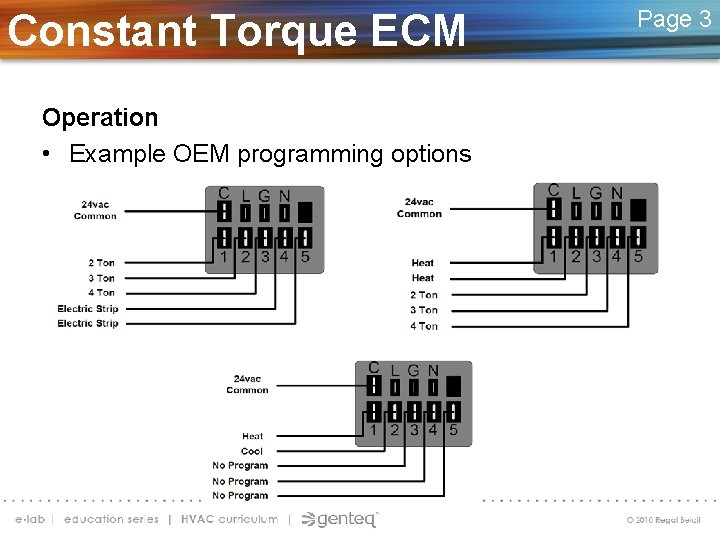
Constant Torque ECM Operation • Example OEM programming options Page 3
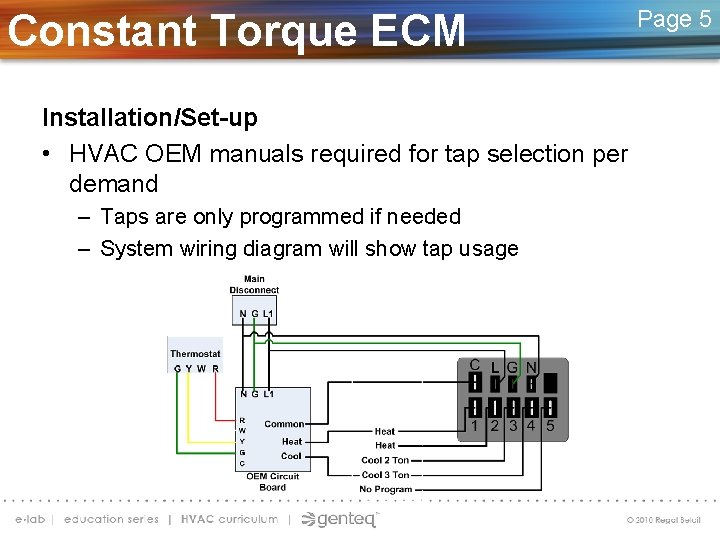
Constant Torque ECM Installation/Set-up • HVAC OEM manuals required for tap selection per demand – Taps are only programmed if needed – System wiring diagram will show tap usage Page 5
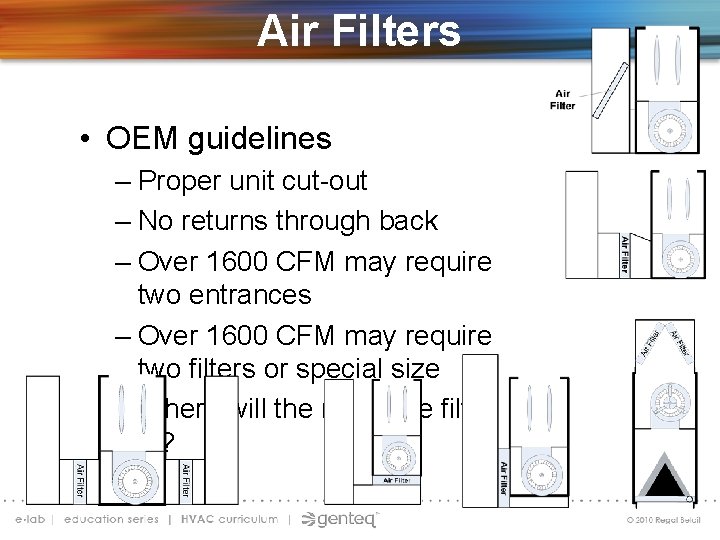
Air Filters • OEM guidelines – Proper unit cut-out – No returns through back – Over 1600 CFM may require two entrances – Over 1600 CFM may require two filters or special size – Where will the right size filter fit?
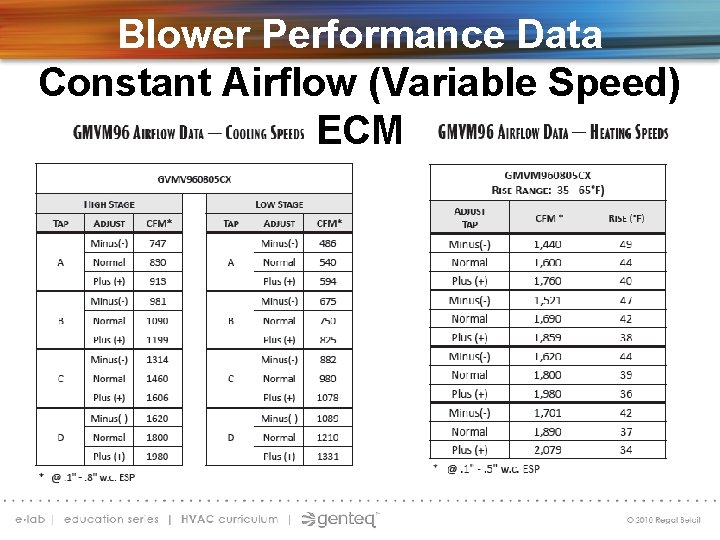
Blower Performance Data Constant Airflow (Variable Speed) ECM
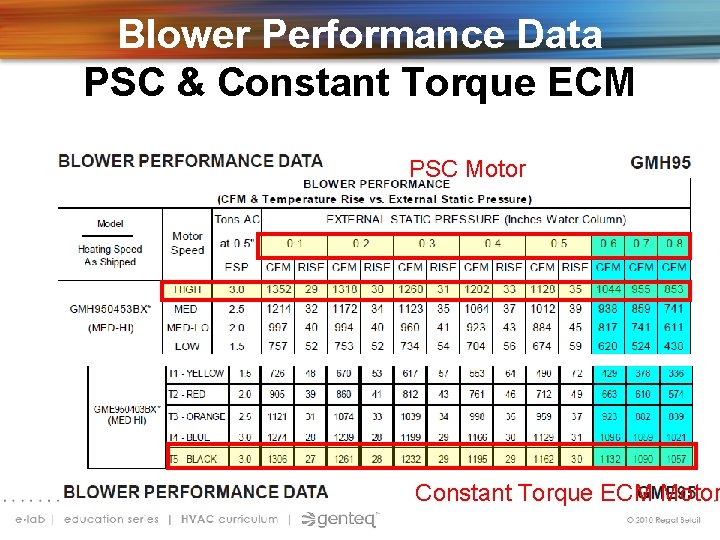
Blower Performance Data PSC & Constant Torque ECM PSC Motor Constant Torque ECM Motor
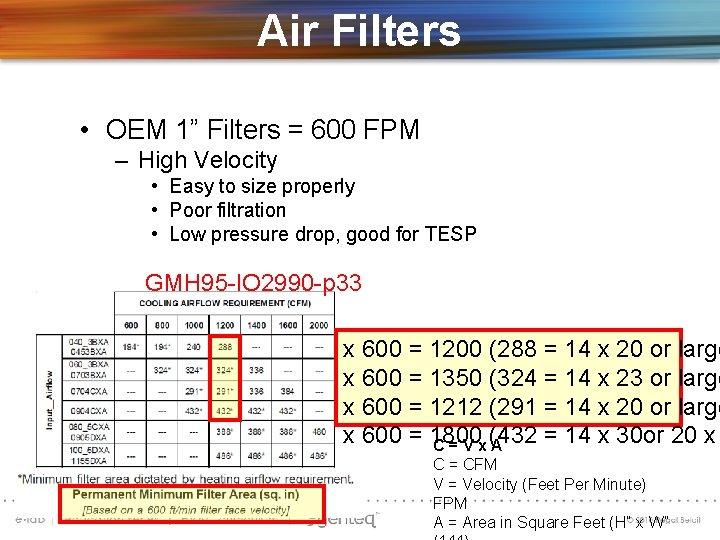
Air Filters • OEM 1” Filters = 600 FPM – High Velocity • Easy to size properly • Poor filtration • Low pressure drop, good for TESP GMH 95 -IO 2990 -p 33 x 600 = 1200 (288 = 14 x 20 or large x 600 = 1350 (324 = 14 x 23 or large x 600 = 1212 (291 = 14 x 20 or large x 600 = 1800 = 14 x 30 or 20 x C = V x (432 A C = CFM V = Velocity (Feet Per Minute) FPM A = Area in Square Feet (H” x W”
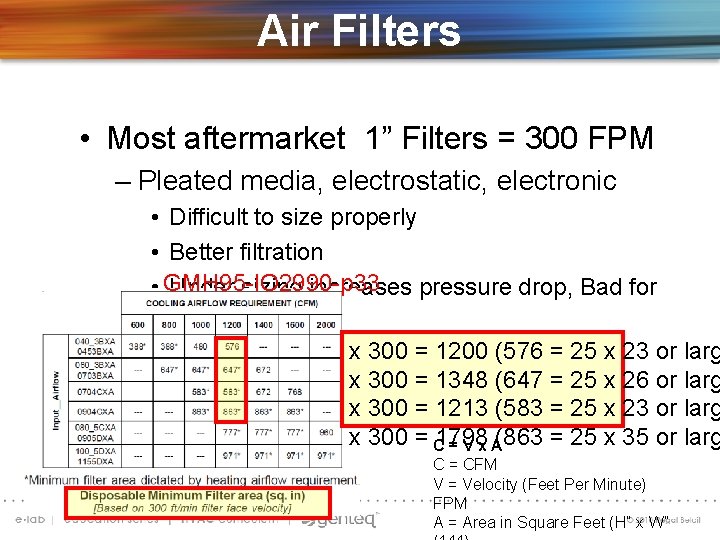
Air Filters • Most aftermarket 1” Filters = 300 FPM – Pleated media, electrostatic, electronic • Difficult to size properly • Better filtration • GMH 95 -IO 2990 -p 33 Under sizing increases pressure drop, Bad for TESP x 300 = 1200 (576 = 25 x 23 or larg x 300 = 1348 (647 = 25 x 26 or larg x 300 = 1213 (583 = 25 x 23 or larg x 300 = C 1798 = V x A(863 = 25 x 35 or larg C = CFM V = Velocity (Feet Per Minute) FPM A = Area in Square Feet (H” x W”
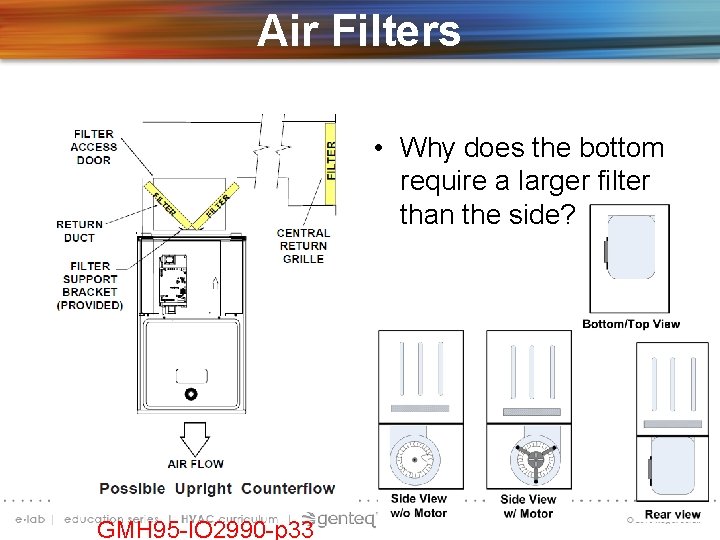
Air Filters • • Registers & Grilles Balancing Dampers Filter size and load Blower Wheel and Heat Exchanger load • Duct sizing and/or restriction GMH 95 -IO 2990 -p 33 • Why does the bottom require a larger filter than the side?
- Slides: 51