
Electric Machine Design Course Stator Insulation System vs


- Slides: 21
Electric Machine Design Course Stator Insulation System vs. Voltage & Temperature Lecture # 13 Mod 13 Copyright: JR Hendershot 2012 120
Introduction to motor insulation design Grid machines are designed to UHV (ultra high voltages to 70, 000 VAC) Motor types discussed in these lectures are intended for inverter operation rather than grid AC powered or battery powered IGBT transistor DC link voltage ratings are about 2. 8 KV (Development work is on-going to extend to 8 KV) UHV machine for grid power require very special insulation materials Enameled magnet wire, Nomex & Kapton & trickle varnish or VPI Trickle varnish used for high volume small motors VPI most advanced process for all most all larger motors High voltage machine use Mica and Bakelite Mod 13 Copyright: JR Hendershot 2012 121
Insulation thickness vs. voltage Average dielectric strength of most materials = 1 KV/mil High performance materials up to 4 KV/mil Motor voltage classes vary with vendors & countries LV under 480 VAC MV 481 to 6000 VAC HV 6001 to 20, 000 VAC UHV 20, 001 to 70, 000 VAC Higher voltages require special & thicker insulation materials Mod 13 Copyright: JR Hendershot 2012 122
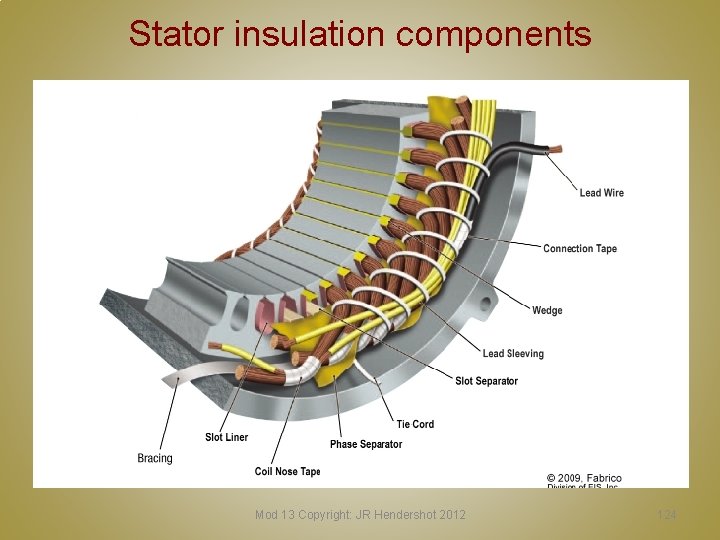
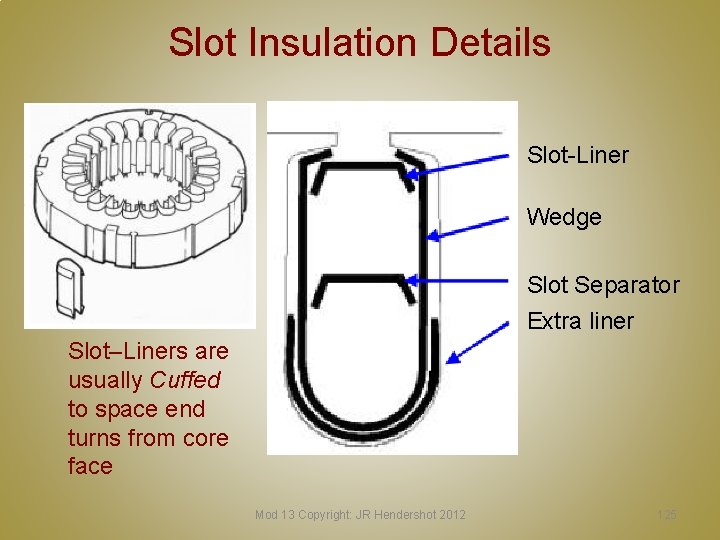
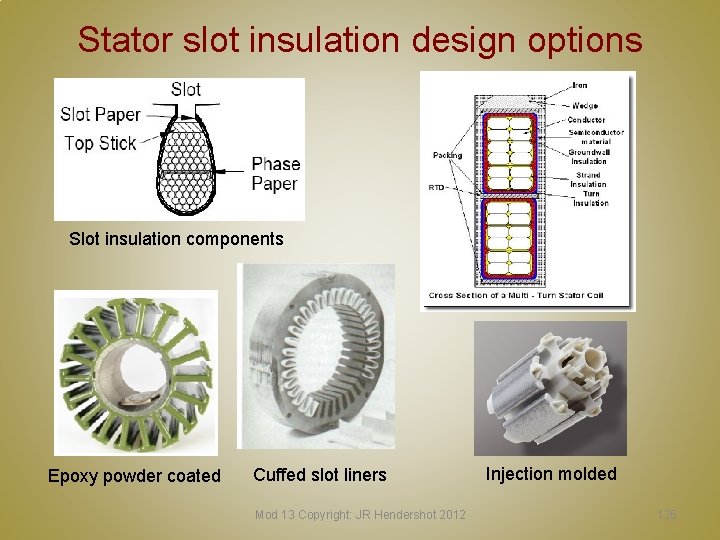
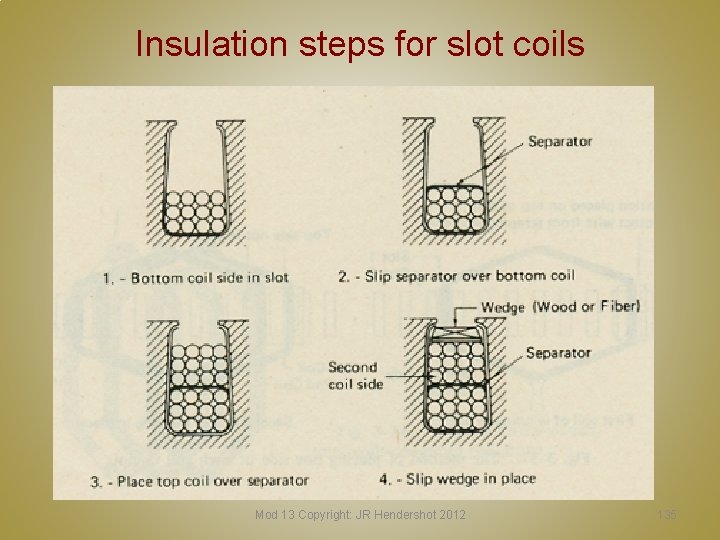
Stator insulation basics Stator phase coils must be insulated against ground, phase and turn shorts Turn to turn shorts are insulated by by conductor enamel or tape wrapping. Ground shorts are prevented by slot insulation, Slot liners & end boards Slot liners that are cuffed at each end of core Epoxy powder coating for low voltage stators Molded tooth bobbins or coil forms Phase shorts are prevented by added insulation Slot inner slot phase strips Fiberglass sheets in end turn phase overlaps Mod 13 Copyright: JR Hendershot 2012 123
Stator insulation components Mod 13 Copyright: JR Hendershot 2012 124
Slot Insulation Details Slot-Liner Wedge Slot Separator Extra liner Slot–Liners are usually Cuffed to space end turns from core face Mod 13 Copyright: JR Hendershot 2012 125
Stator slot insulation design options Slot insulation components Epoxy powder coated Cuffed slot liners Mod 13 Copyright: JR Hendershot 2012 Injection molded 126
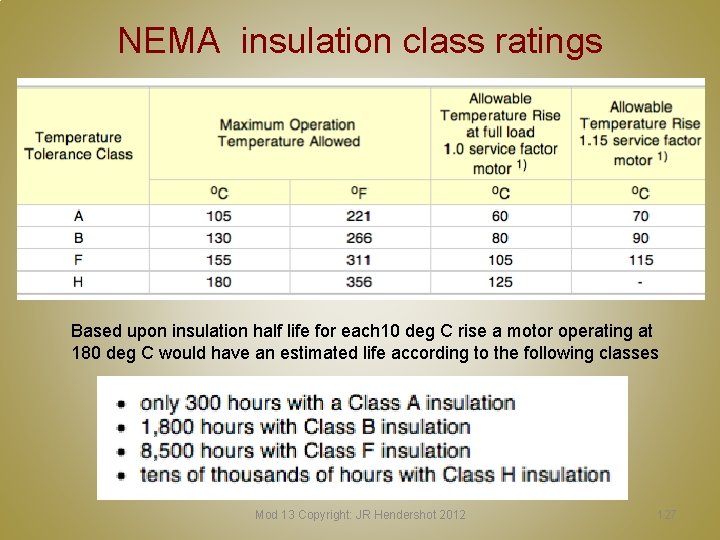
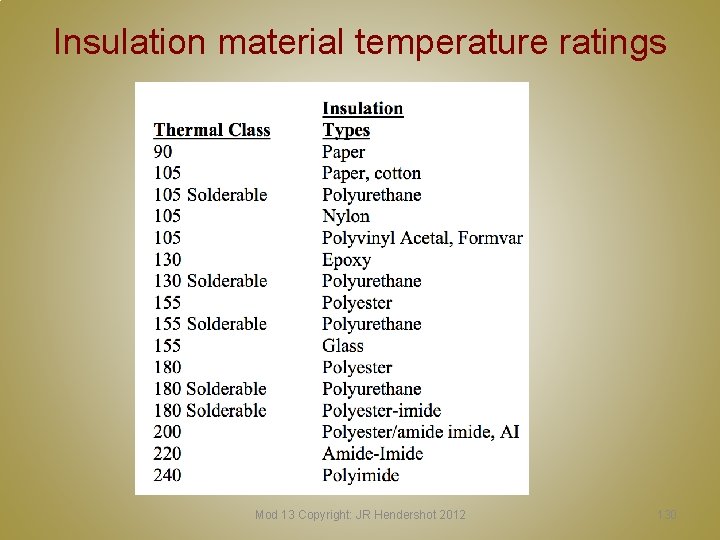
NEMA insulation class ratings Based upon insulation half life for each 10 deg C rise a motor operating at 180 deg C would have an estimated life according to the following classes Mod 13 Copyright: JR Hendershot 2012 127
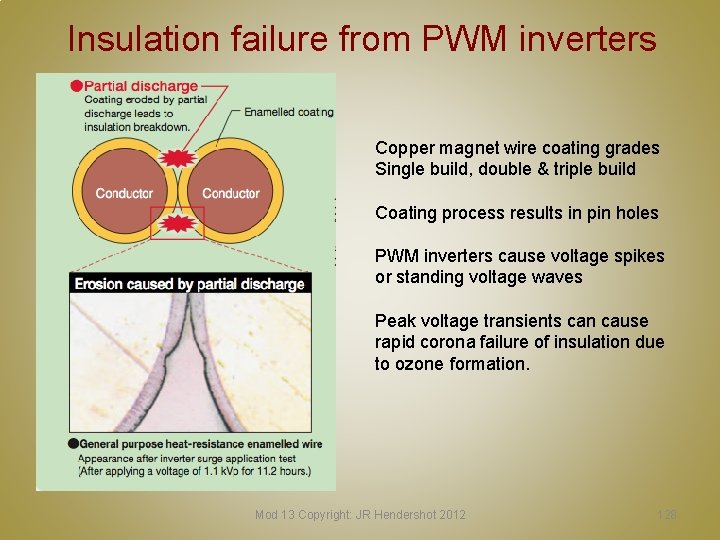
Insulation failure from PWM inverters Copper magnet wire coating grades Single build, double & triple build Coating process results in pin holes PWM inverters cause voltage spikes or standing voltage waves Peak voltage transients can cause rapid corona failure of insulation due to ozone formation. Mod 13 Copyright: JR Hendershot 2012 128
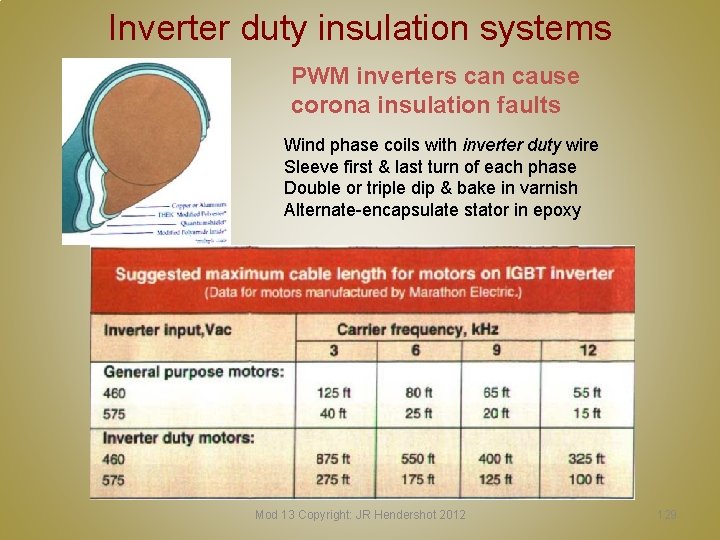
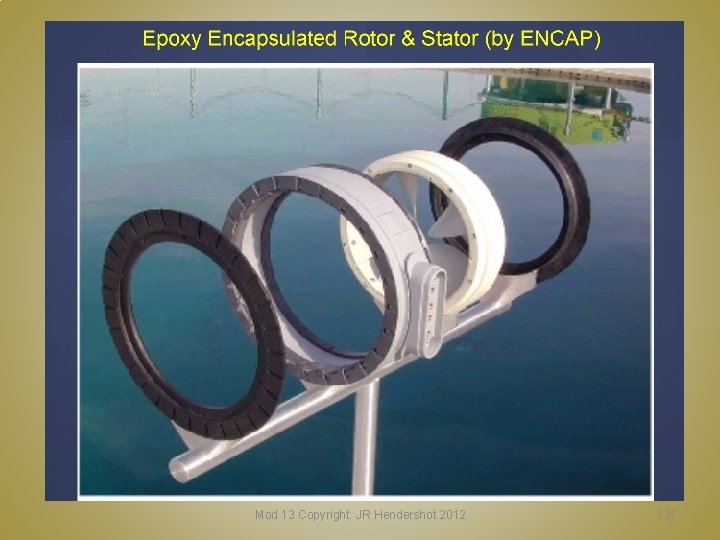
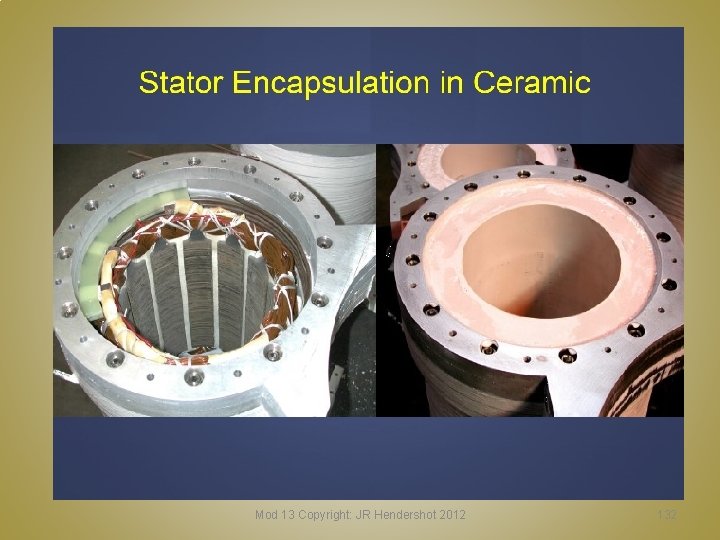
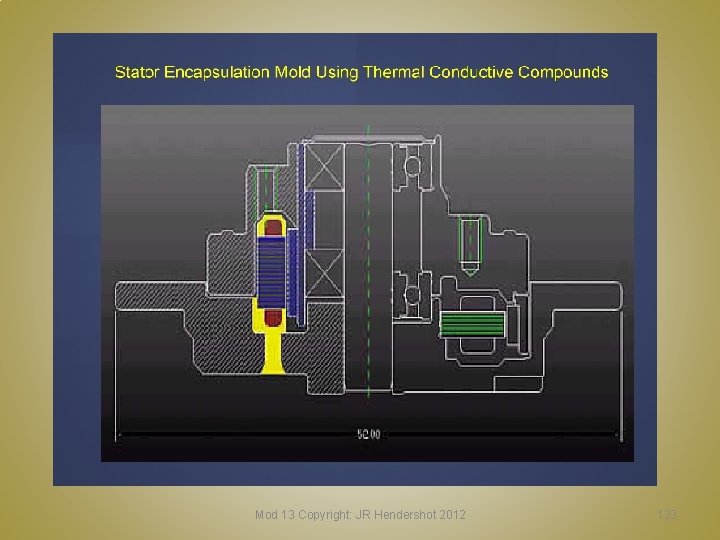
Inverter duty insulation systems PWM inverters can cause corona insulation faults Wind phase coils with inverter duty wire Sleeve first & last turn of each phase Double or triple dip & bake in varnish Alternate-encapsulate stator in epoxy Mod 13 Copyright: JR Hendershot 2012 129
Insulation material temperature ratings Mod 13 Copyright: JR Hendershot 2012 130
Mod 13 Copyright: JR Hendershot 2012 131
Mod 13 Copyright: JR Hendershot 2012 132
Mod 13 Copyright: JR Hendershot 2012 133
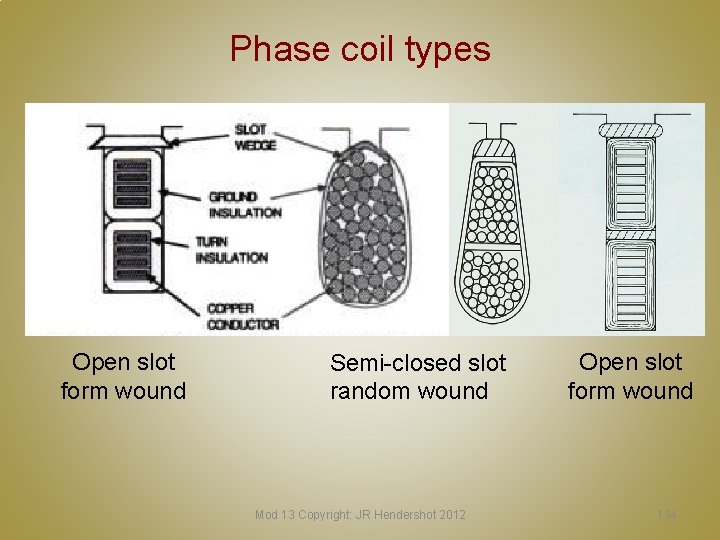
Phase coil types Open slot form wound Semi-closed slot random wound Mod 13 Copyright: JR Hendershot 2012 Open slot form wound 134
Insulation steps for slot coils Mod 13 Copyright: JR Hendershot 2012 135
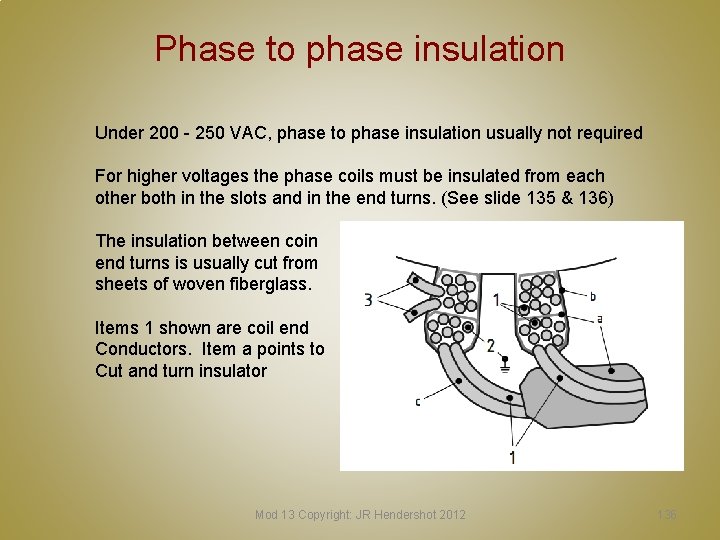
Phase to phase insulation Under 200 - 250 VAC, phase to phase insulation usually not required For higher voltages the phase coils must be insulated from each other both in the slots and in the end turns. (See slide 135 & 136) The insulation between coin end turns is usually cut from sheets of woven fiberglass. Items 1 shown are coil end Conductors. Item a points to Cut and turn insulator Mod 13 Copyright: JR Hendershot 2012 136
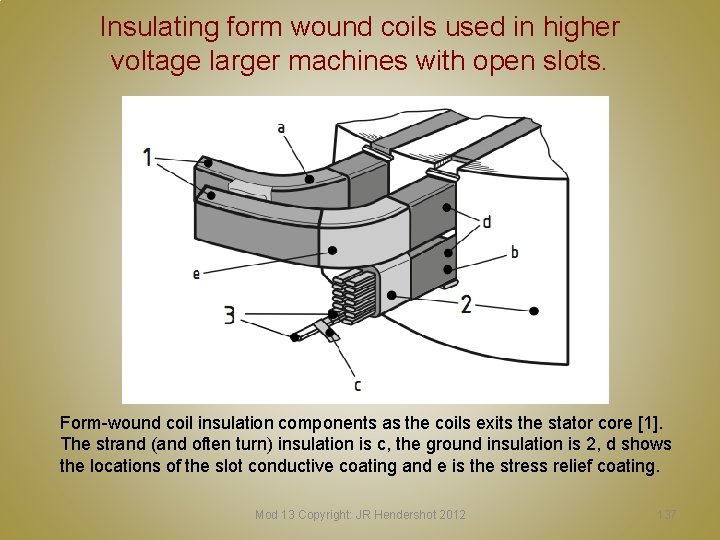
Insulating form wound coils used in higher voltage larger machines with open slots. Form-wound coil insulation components as the coils exits the stator core [1]. The strand (and often turn) insulation is c, the ground insulation is 2, d shows the locations of the slot conductive coating and e is the stress relief coating. Mod 13 Copyright: JR Hendershot 2012 137
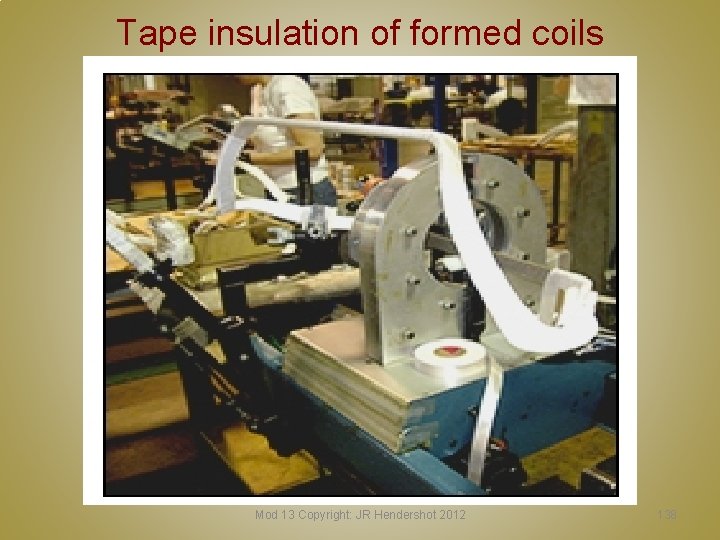
Tape insulation of formed coils Mod 13 Copyright: JR Hendershot 2012 138
Title Mod 13 Copyright: JR Hendershot 2012 139
Title Mod 13 Copyright: JR Hendershot 2012 140