
Electric fields from single charge to charged plates
- Slides: 11
Electric fields - from single charge to charged plates Mr Ang JL 27 Feb 2010
Creating the slides o Using the Java applet simulation from http: //phet. colorado. edu/simulations/sims. php? sim=Charges_and_Fields o The simulation allows the user n n to view the electric field around a charge or charges, and explore electric force on a positive test charge
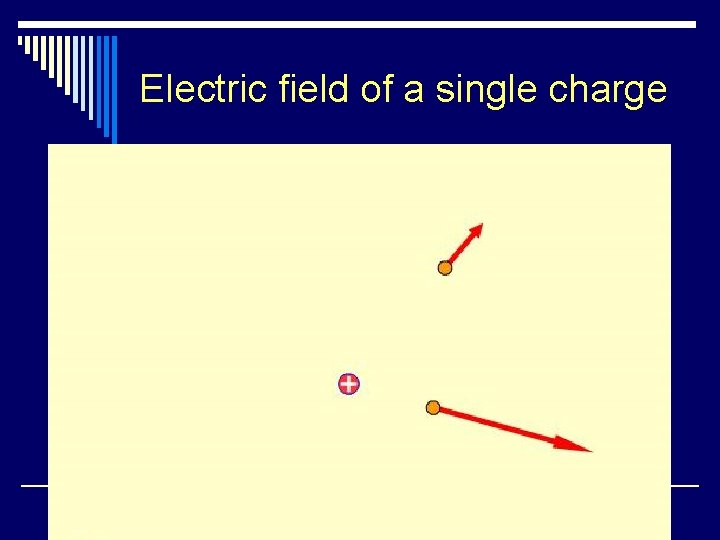
Electric field of a single charge
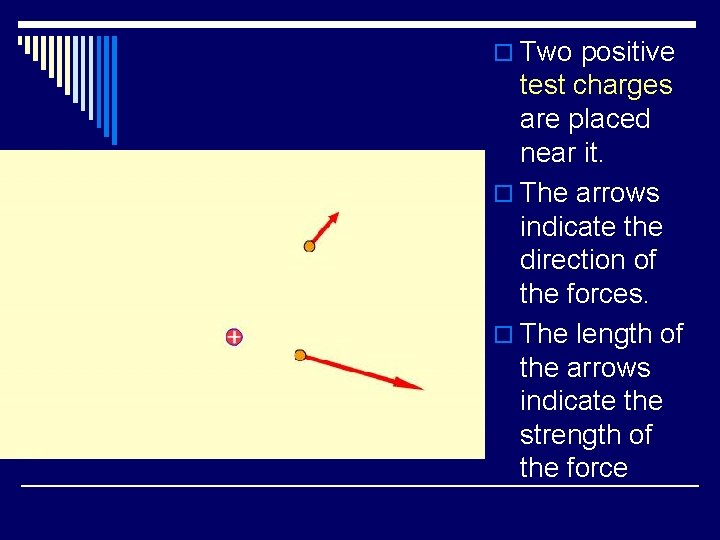
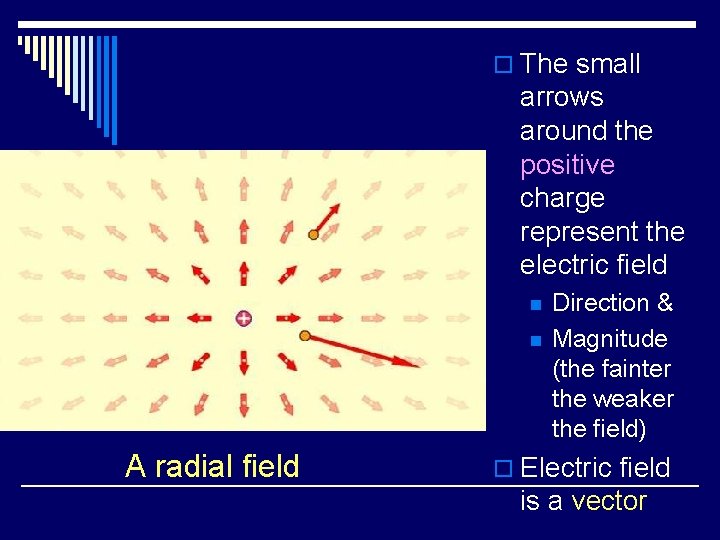
o Two positive test charges are placed near it. o The arrows indicate the direction of the forces. o The length of the arrows indicate the strength of the force
o The small arrows around the positive charge represent the electric field n n A radial field Direction & Magnitude (the fainter the weaker the field) o Electric field is a vector
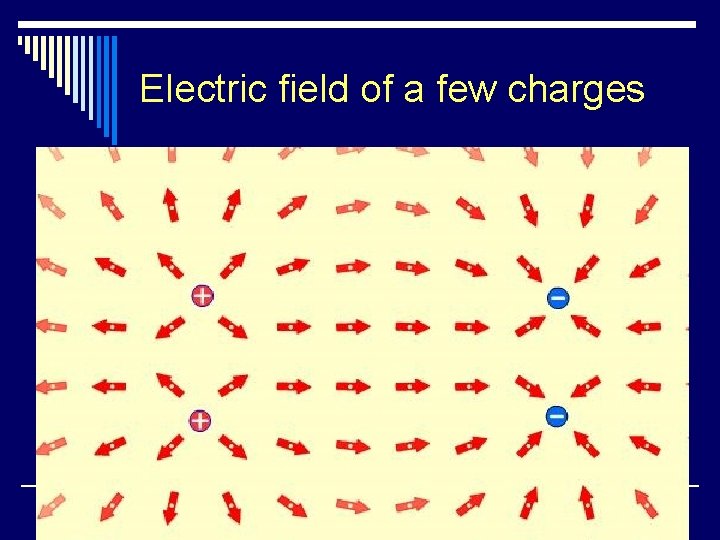
Electric field of a few charges
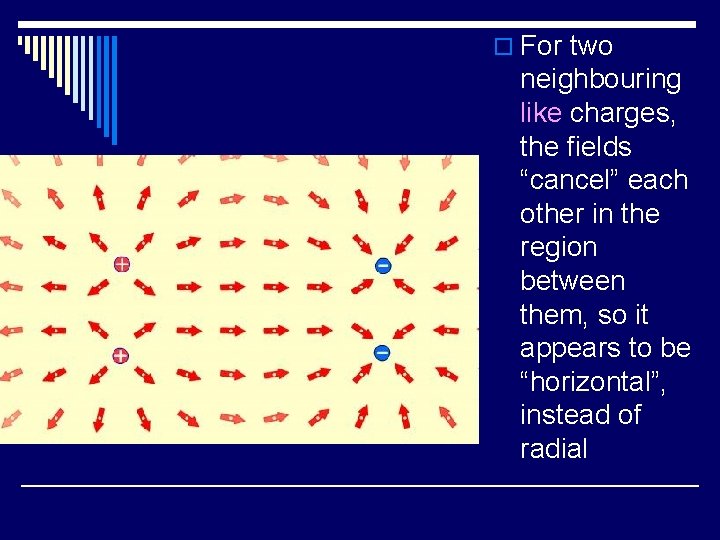
o For two neighbouring like charges, the fields “cancel” each other in the region between them, so it appears to be “horizontal”, instead of radial
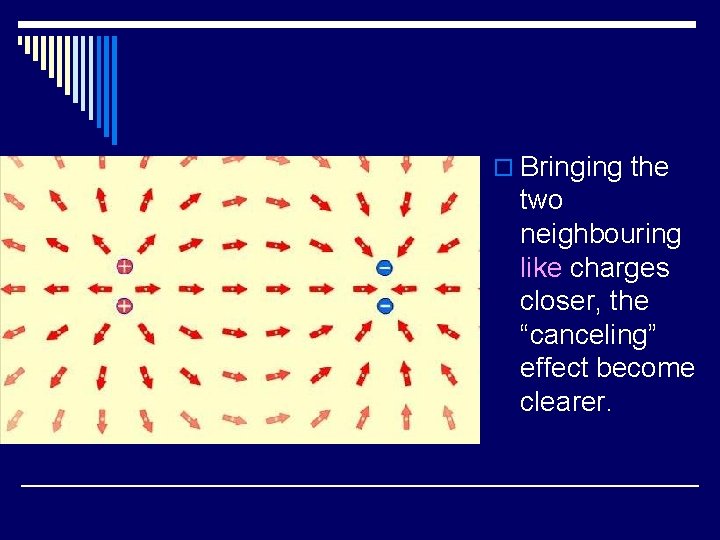
o Bringing the two neighbouring like charges closer, the “canceling” effect become clearer.
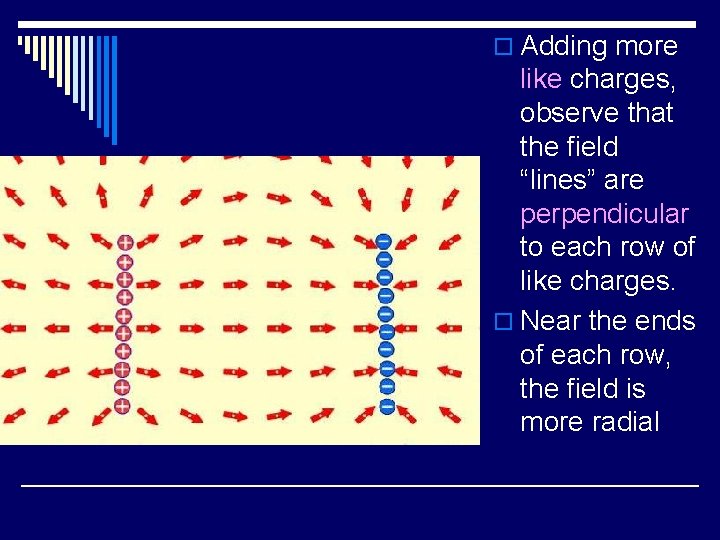
o Adding more like charges, observe that the field “lines” are perpendicular to each row of like charges. o Near the ends of each row, the field is more radial
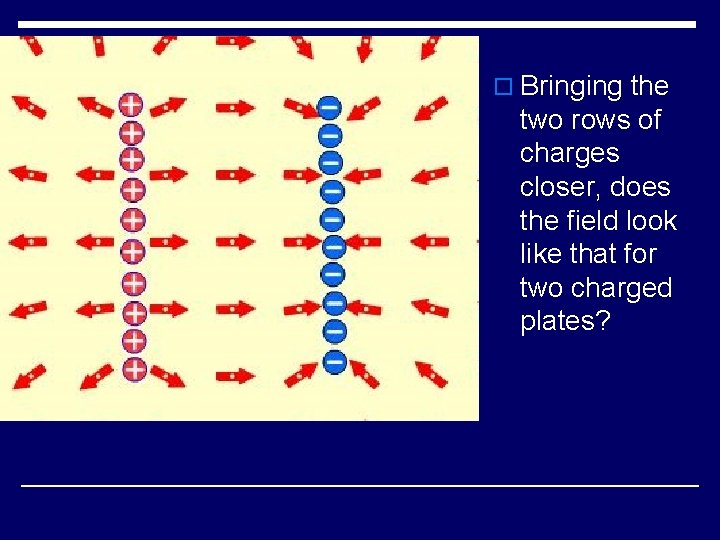
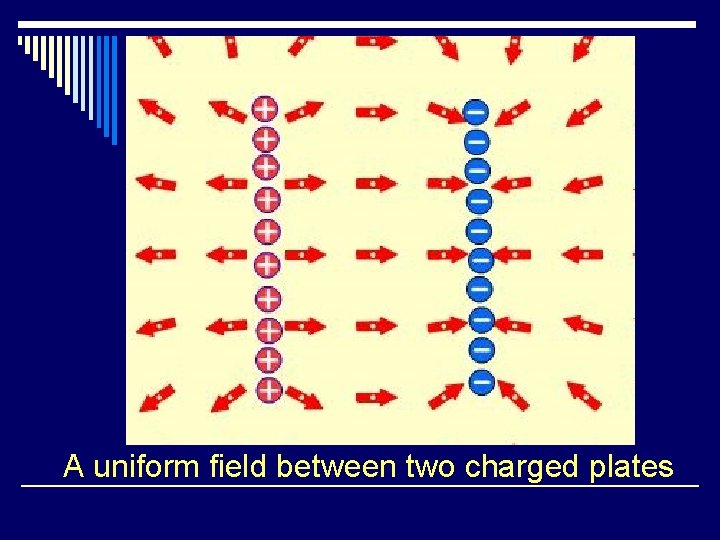
o Bringing the two rows of charges closer, does the field look like that for two charged plates?
A uniform field between two charged plates