
Electric diagnostic and stimulation methods Petr Marlek February
Electric diagnostic and stimulation methods Petr Maršálek February 2020
Outline Recall electric phenomena and equations from the last lecture, active electic mechanisms according to the Hodgkin. Huxley equations, energy sources for electrical excitability Electrophysiological diagnostic methods 1. Electrocardiography (ECG) 2. Electroencephalography (EEG) 3. Evoked potentials (EP) 4. Electromyography (EMG) Electrical stimulation methods 1. (Cardiac) pacemakers 2. Cochlear implants 3. (Deep) Brain stimulation
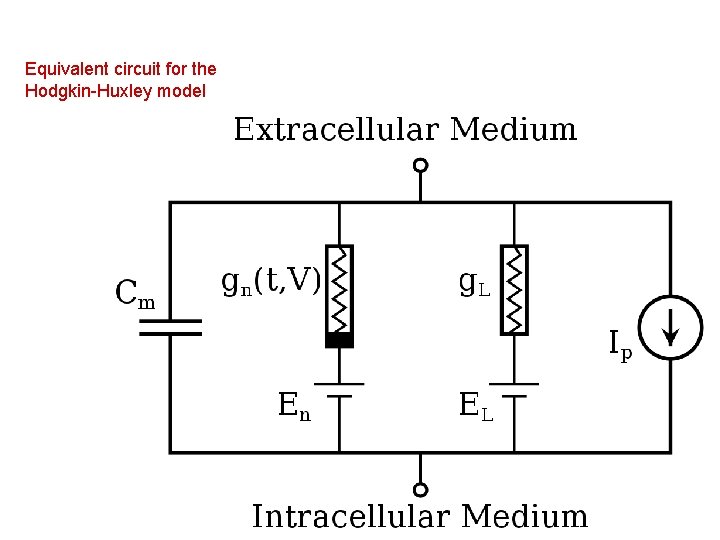
Equivalent circuit for the Hodgkin-Huxley model
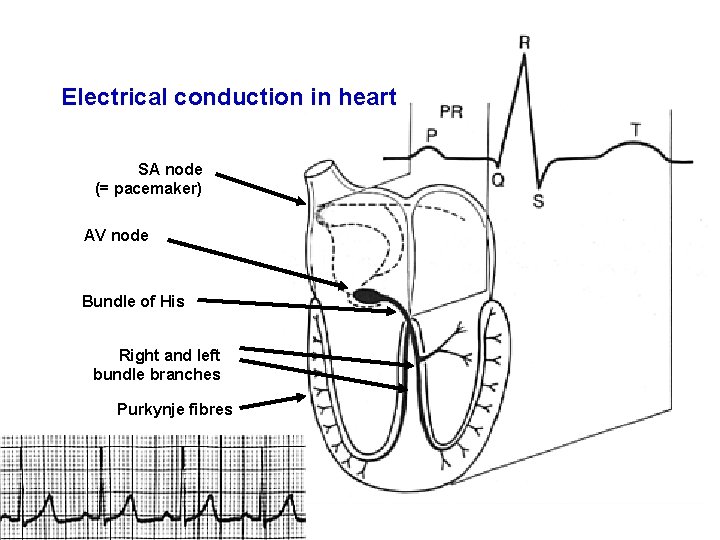
Electrical conduction in heart SA node (= pacemaker) AV node Bundle of His Right and left bundle branches Purkynje fibres
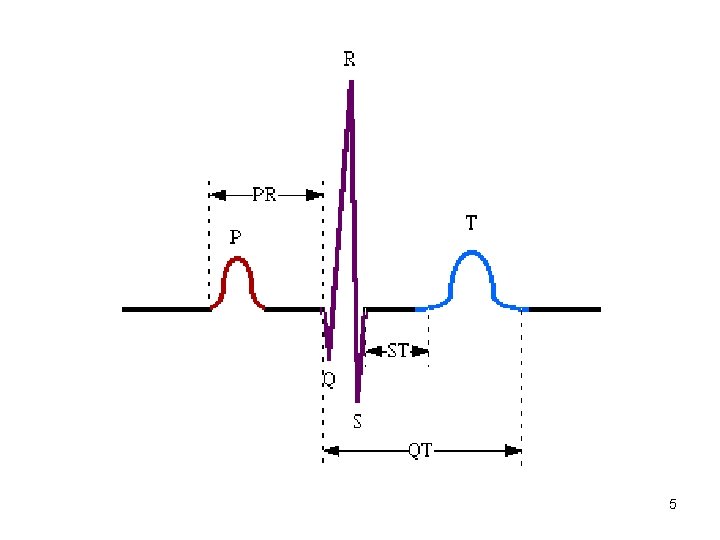
5
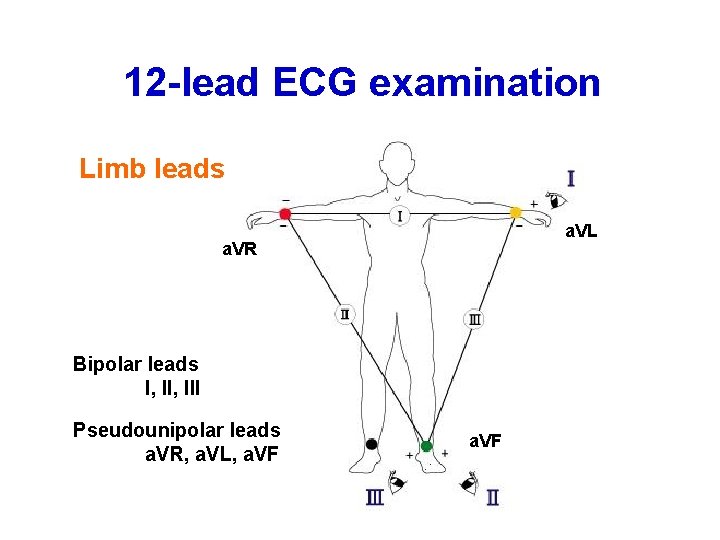
12 -lead ECG examination Limb leads a. VL a. VR Bipolar leads I, III Pseudounipolar leads a. VR, a. VL, a. VF
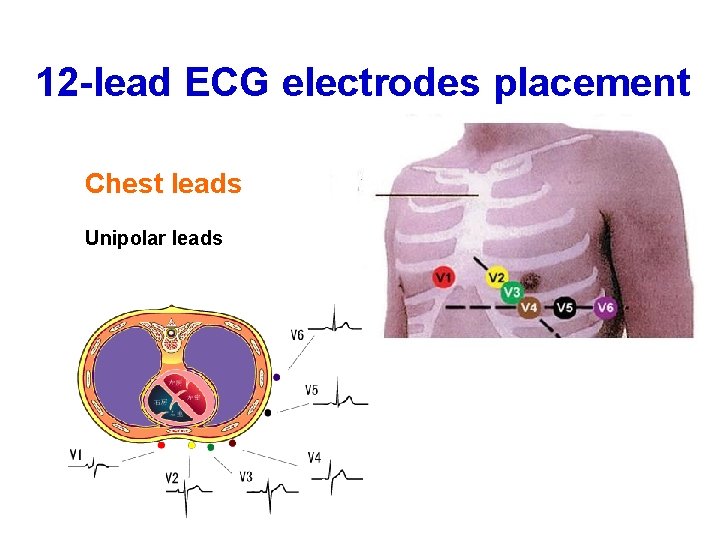
12 -lead ECG electrodes placement Chest leads Unipolar leads
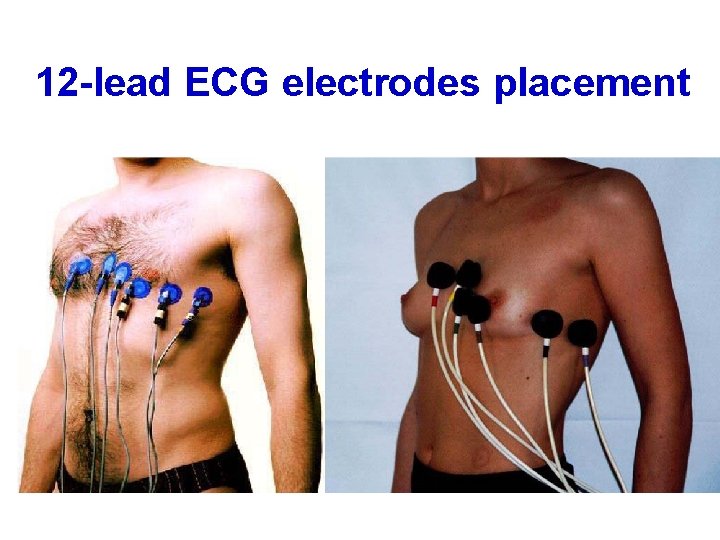
12 -lead ECG electrodes placement
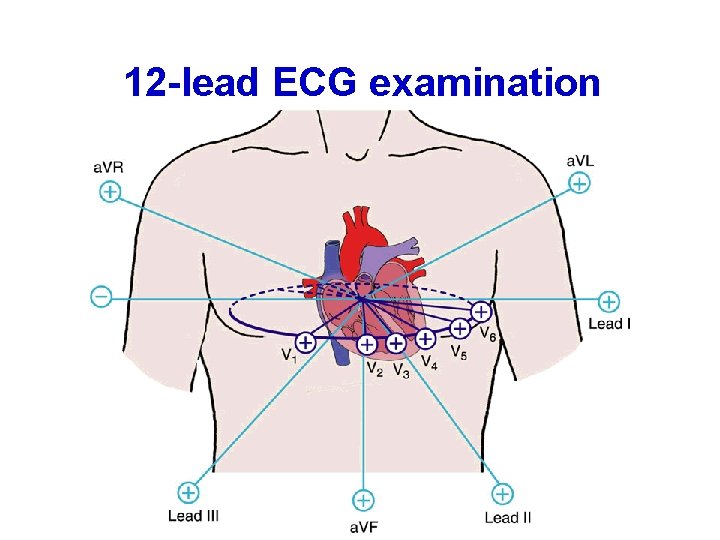
12 -lead ECG examination
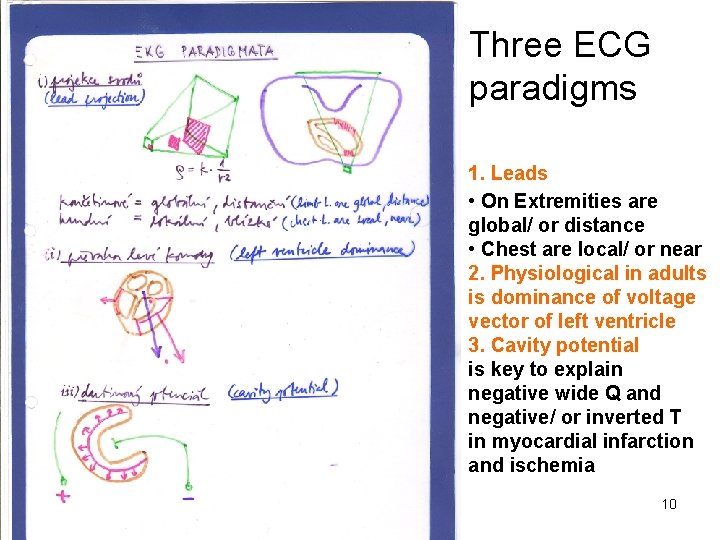
Three ECG paradigms 1. Leads • On Extremities are global/ or distance • Chest are local/ or near 2. Physiological in adults is dominance of voltage vector of left ventricle 3. Cavity potential is key to explain negative wide Q and negative/ or inverted T in myocardial infarction and ischemia 10
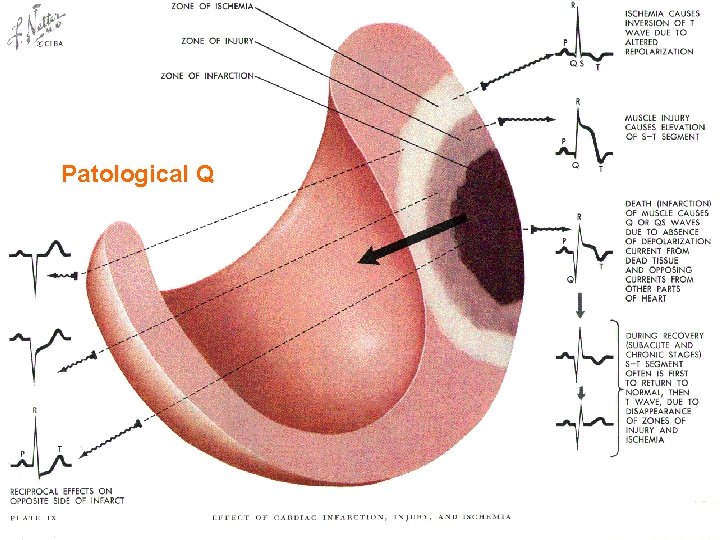
Patological Q
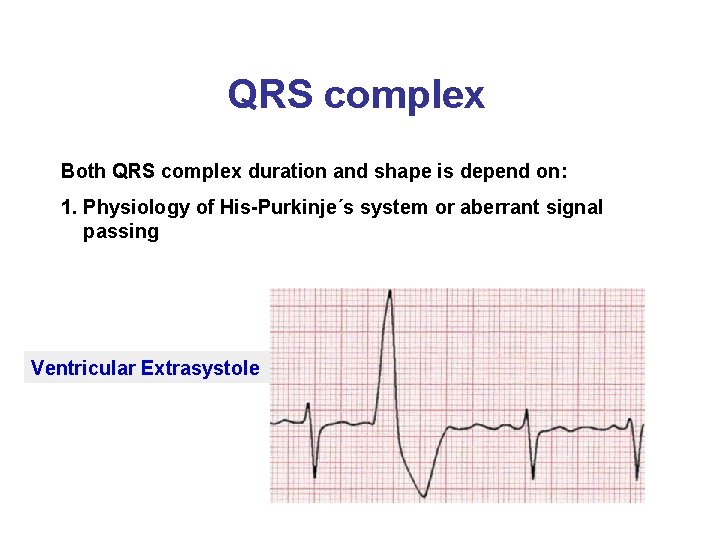
QRS complex Both QRS complex duration and shape is depend on: 1. Physiology of His-Purkinje´s system or aberrant signal passing Ventricular Extrasystole
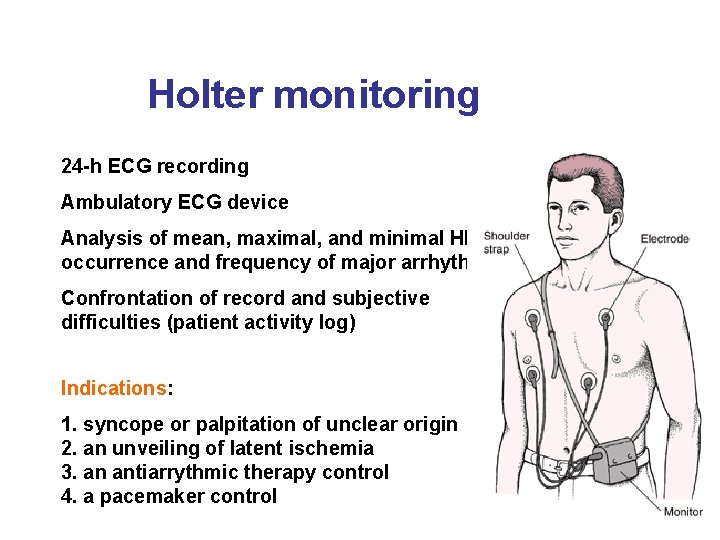
Holter monitoring 24 -h ECG recording Ambulatory ECG device Analysis of mean, maximal, and minimal HR, occurrence and frequency of major arrhythmia Confrontation of record and subjective difficulties (patient activity log) Indications: 1. syncope or palpitation of unclear origin 2. an unveiling of latent ischemia 3. an antiarrythmic therapy control 4. a pacemaker control
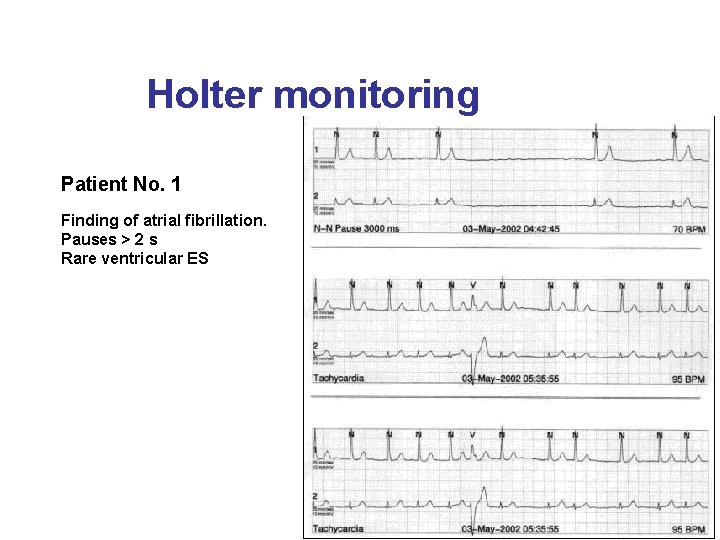
Holter monitoring Patient No. 1 Finding of atrial fibrillation. Pauses > 2 s Rare ventricular ES
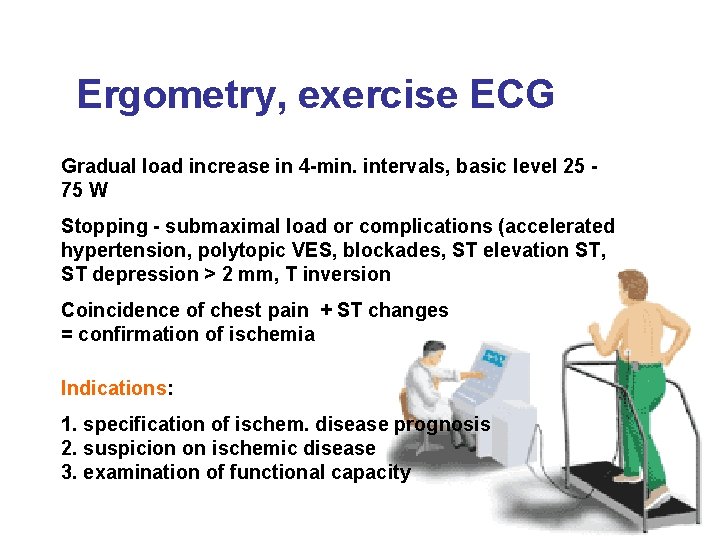
Ergometry, exercise ECG Gradual load increase in 4 -min. intervals, basic level 25 75 W Stopping - submaximal load or complications (accelerated hypertension, polytopic VES, blockades, ST elevation ST, ST depression > 2 mm, T inversion Coincidence of chest pain + ST changes = confirmation of ischemia Indications: 1. specification of ischem. disease prognosis 2. suspicion on ischemic disease 3. examination of functional capacity
/~45 16
Electroencephalography (EEG) Principle: The EEG signal is result of summing net excitatory and inhibitory post-synaptic activity in surface layers of cerebral cortex. On the surface of the skull this is sometimes called macro-EEG, as compared to micro-EEG recorded at the cortex surface during surgery. In surgery it is also possible to record at the surface of cerebral cotex (elctrocorticography). 17
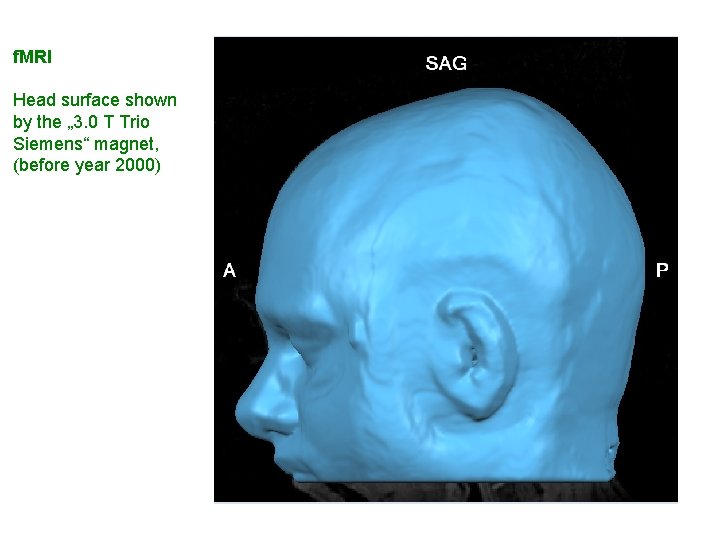
f. MRI Head surface shown by the „ 3. 0 T Trio Siemens“ magnet, (before year 2000)
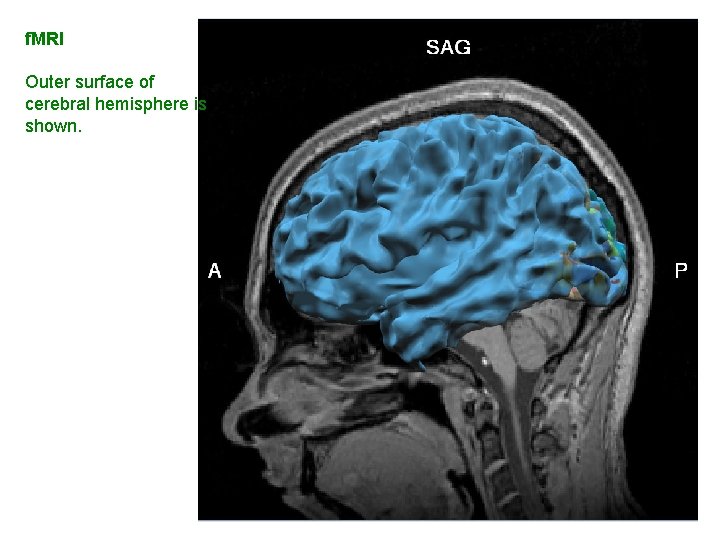
f. MRI Outer surface of cerebral hemisphere is shown.
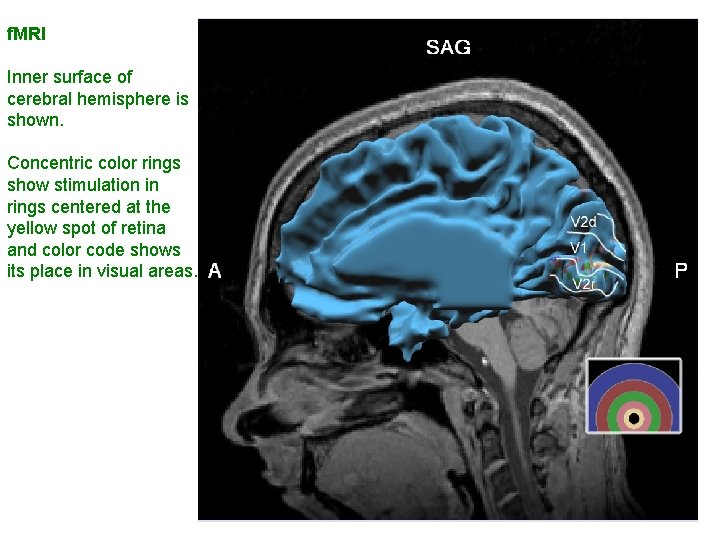
f. MRI Inner surface of cerebral hemisphere is shown. Concentric color rings show stimulation in rings centered at the yellow spot of retina and color code shows its place in visual areas.
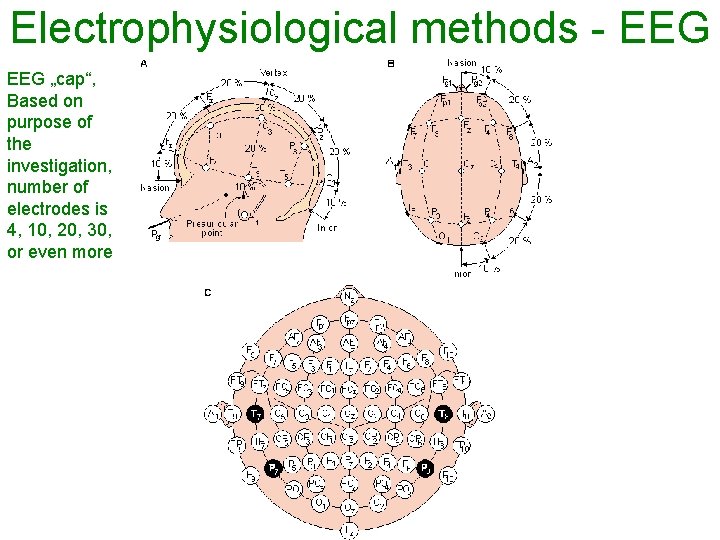
Electrophysiological methods - EEG „cap“, Based on purpose of the investigation, number of electrodes is 4, 10, 20, 30, or even more
Electro-encephalo-graphy (EEG) Spatial resolution: due to crosstalks coarser than 1 cm, Time resolution: better than in imaging, in the range of 1 ms. Application: Epilepsy, sleep disorders, also in investigation of sensory systems.
Summation and synchronization of post-synaptic potentials in surface layers of cerebral cortex.
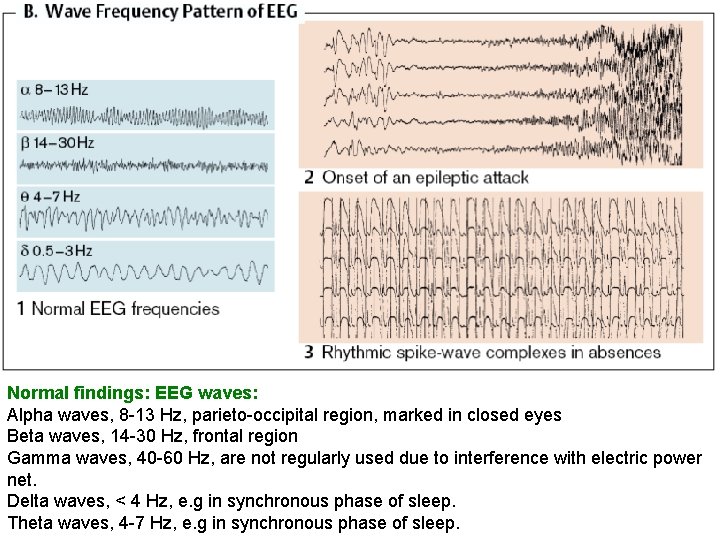
Normal findings: EEG waves: Alpha waves, 8 -13 Hz, parieto-occipital region, marked in closed eyes Beta waves, 14 -30 Hz, frontal region Gamma waves, 40 -60 Hz, are not regularly used due to interference with electric power net. Delta waves, < 4 Hz, e. g in synchronous phase of sleep. Theta waves, 4 -7 Hz, e. g in synchronous phase of sleep.
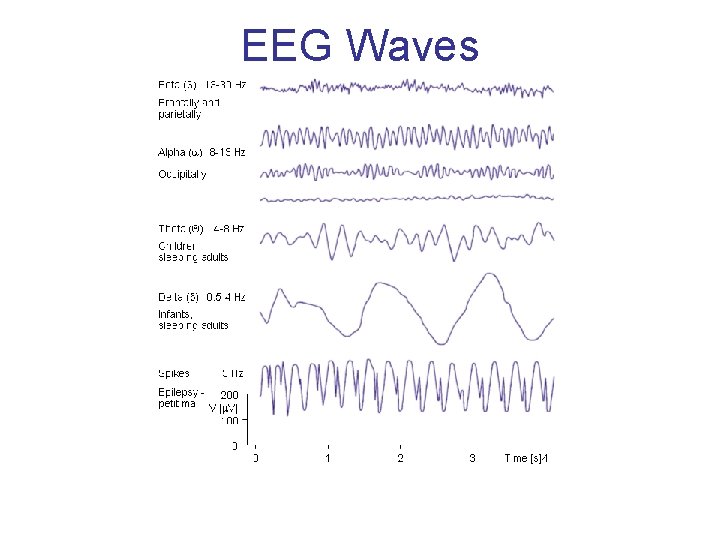
EEG Waves
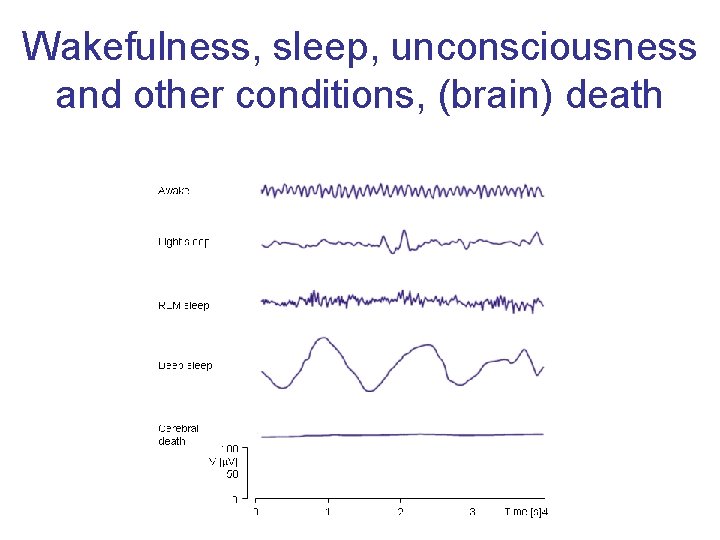
Wakefulness, sleep, unconsciousness and other conditions, (brain) death
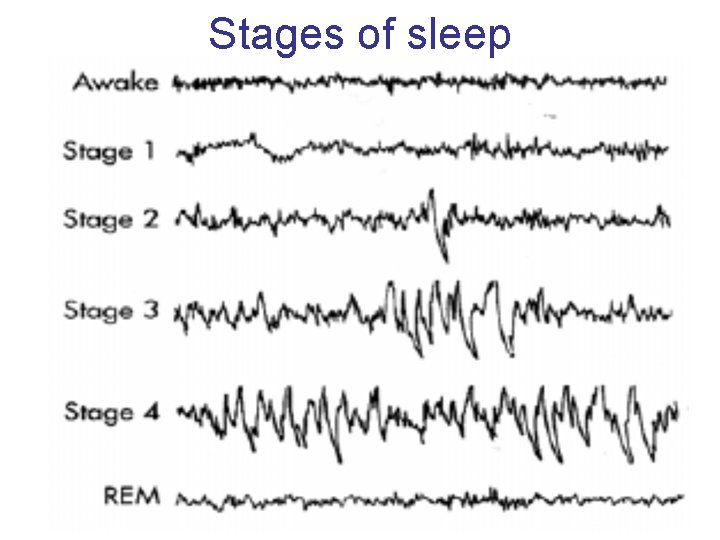
Stages of sleep
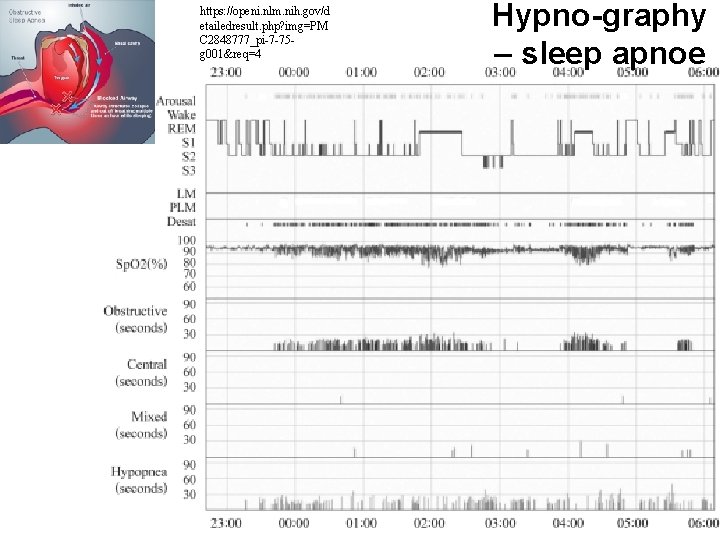
https: //openi. nlm. nih. gov/d etailedresult. php? img=PM C 2848777_pi-7 -75 g 001&req=4 Hypno-graphy – sleep apnoe
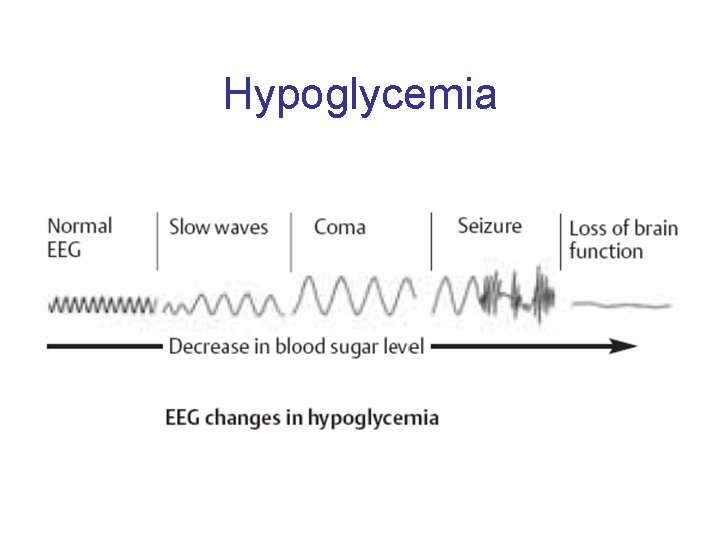
Hypoglycemia
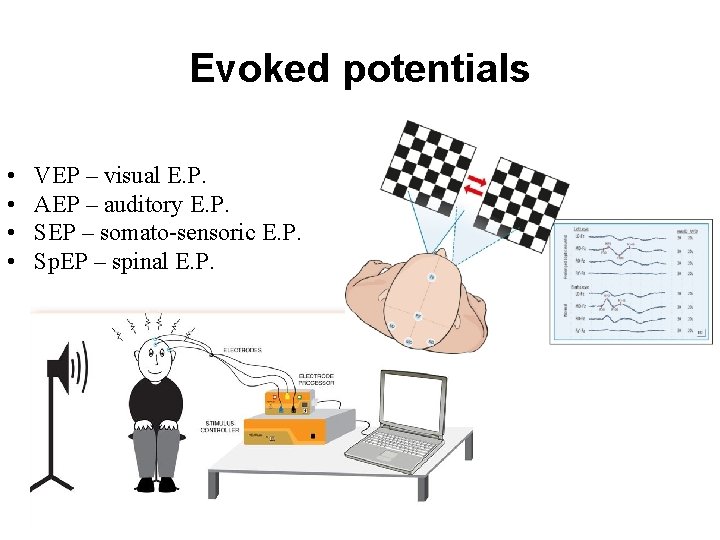
Evoked potentials • • VEP – visual E. P. AEP – auditory E. P. SEP – somato-sensoric E. P. Sp. EP – spinal E. P.
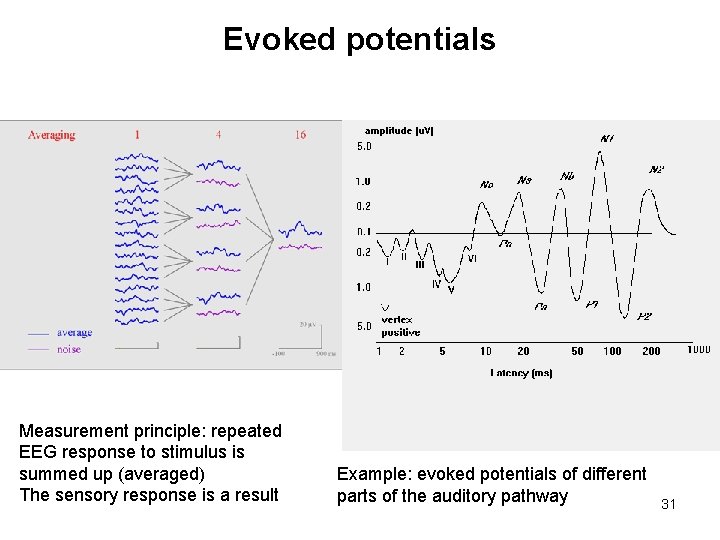
Evoked potentials Measurement principle: repeated EEG response to stimulus is summed up (averaged) The sensory response is a result Example: evoked potentials of different parts of the auditory pathway 31
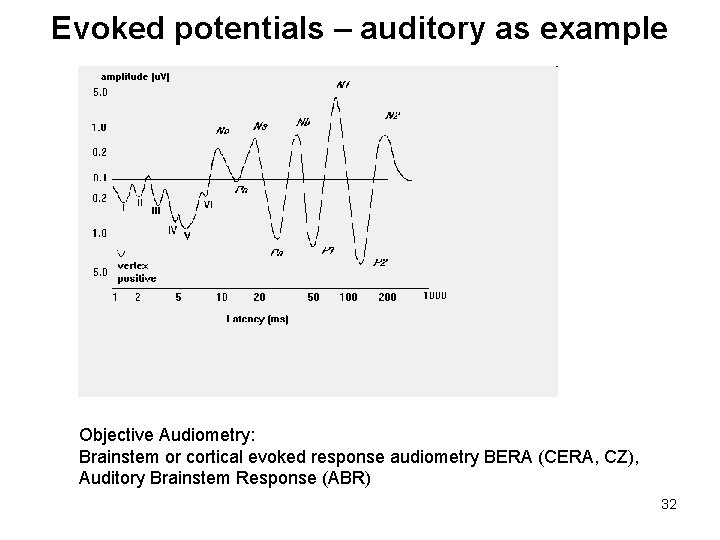
Evoked potentials – auditory as example Objective Audiometry: Brainstem or cortical evoked response audiometry BERA (CERA, CZ), Auditory Brainstem Response (ABR) 32
Somatosensoric EP (SEP) – mechanical or electrical stimulation - stimulus duration 2 - 300 ms, repetition rate up to 3 Hz - recorded from various locations in correspondence to stimulations - typical sequence (positive and negative EEG waves) P 1 N 1 P 2 N 2 P 3 N 3 16 ms 20 ms 28 ms 33 ms 43 ms 50 ms typical use: - during spinal cord surgery – continuous checkup of CNS conditions - prolonged latency in multiple sclerosis 33
Electromyography (EMG) Principle: Recording from needles, shows recruitment of muscle fibers by motoneuron stimulation, myo-pathies and neuro-pathies can be distinguished. Spatial resolution, Time resolution: as in EEG, or better Application: Disorders of neuro-motor unit.
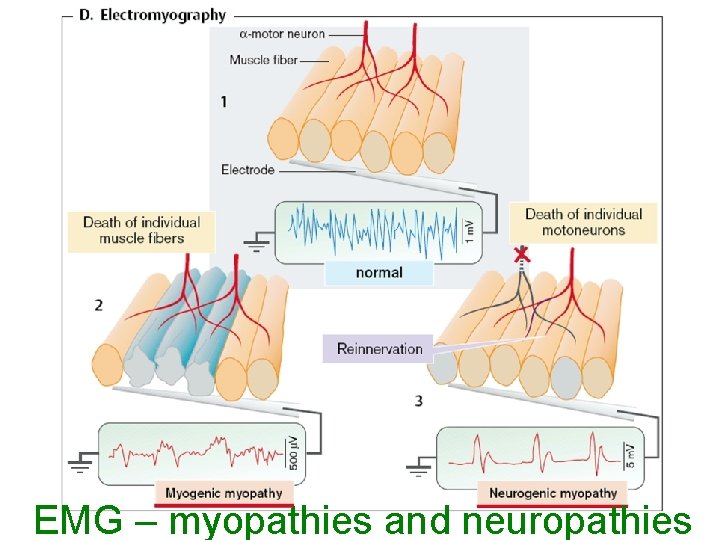
EMG – myopathies and neuropathies
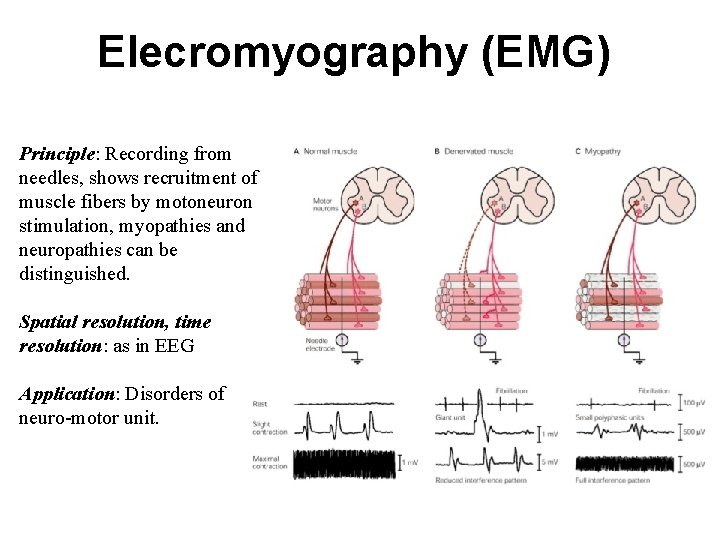
Elecromyography (EMG) Principle: Recording from needles, shows recruitment of muscle fibers by motoneuron stimulation, myopathies and neuropathies can be distinguished. Spatial resolution, time resolution: as in EEG Application: Disorders of neuro-motor unit.
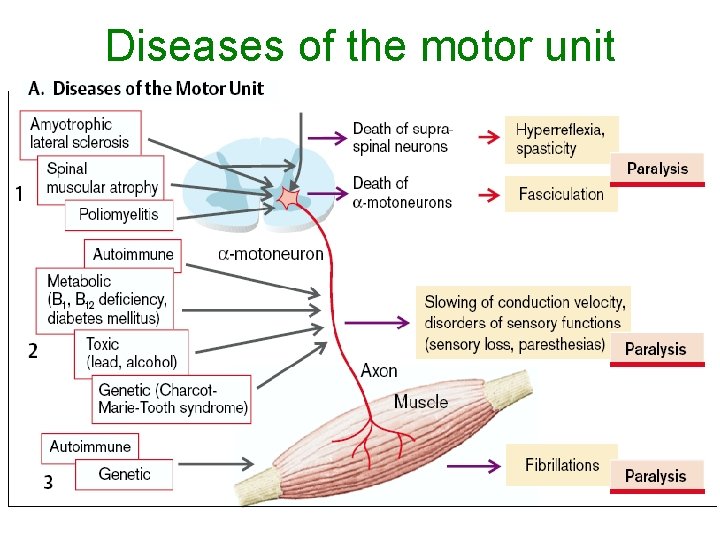
Diseases of the motor unit
Electrical stimulation methods 1. (Cardiac) pacemakers 2. Cochlear implants 3. (Deep) Brain stimulation
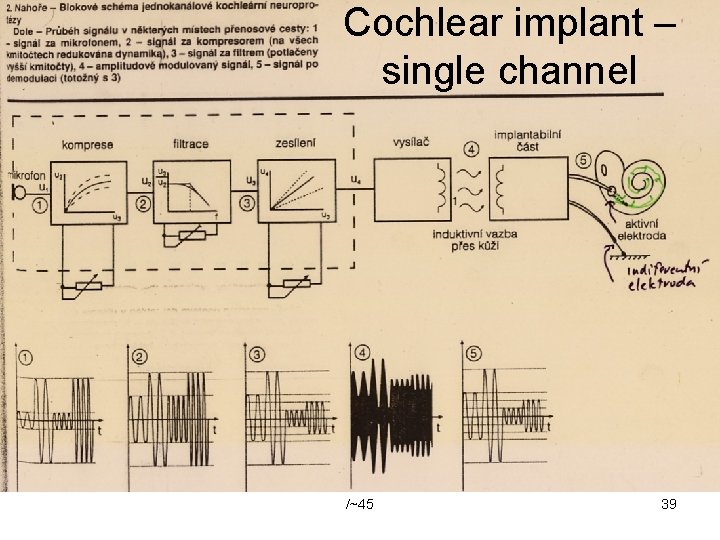
Cochlear implant – single channel /~45 39
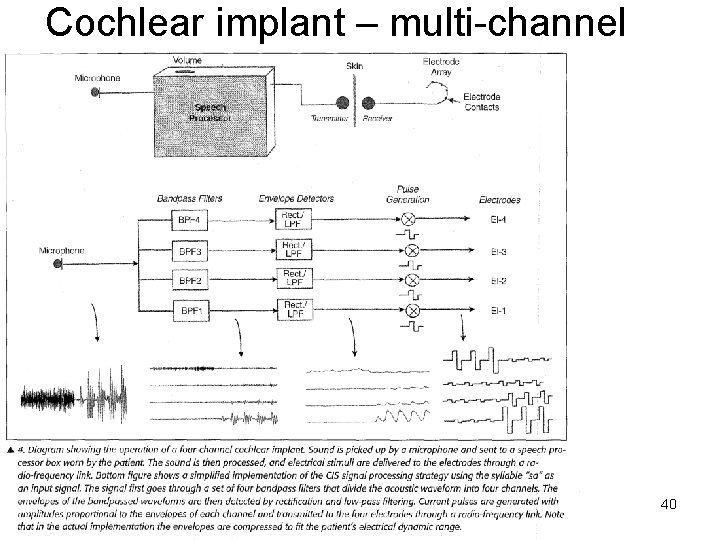
Cochlear implant – multi-channel /~45 40
END OF THE LECTURE Thanks for your attention Warning: neither the PDF, nor the PPT, PPTX, etc. versions of this presentation are official study materials. For internal use only. Do not distribute. Contact: Petr. Marsalek@LF 1. CUNI. CZ First Medical Faculty, Institute of Pathological Physiology / 65 41


- Slides: 43