
Electric Current Electric Potential Electrons in a circuit
- Slides: 9
Electric Current
Electric Potential • Electrons in a circuit have potential energy – The energy is related to the force exerted by an electric field – The potential energy per unit of electric charge is called the electric potential • This is measured in Joules per Coulomb
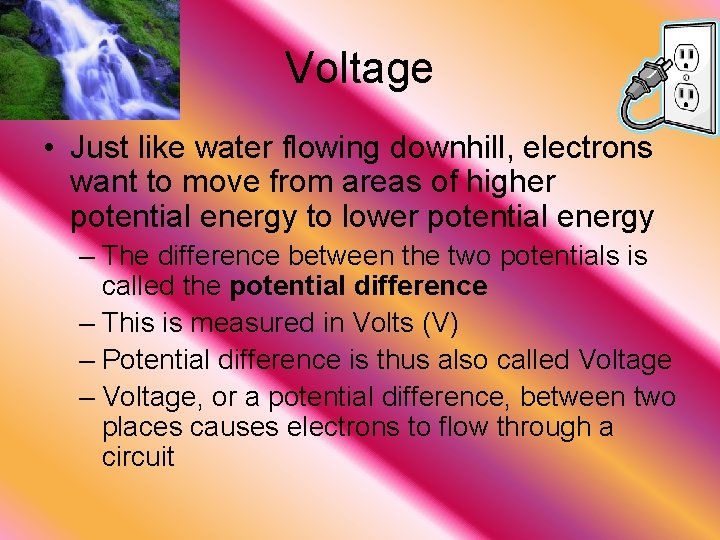
Voltage • Just like water flowing downhill, electrons want to move from areas of higher potential energy to lower potential energy – The difference between the two potentials is called the potential difference – This is measured in Volts (V) – Potential difference is thus also called Voltage – Voltage, or a potential difference, between two places causes electrons to flow through a circuit
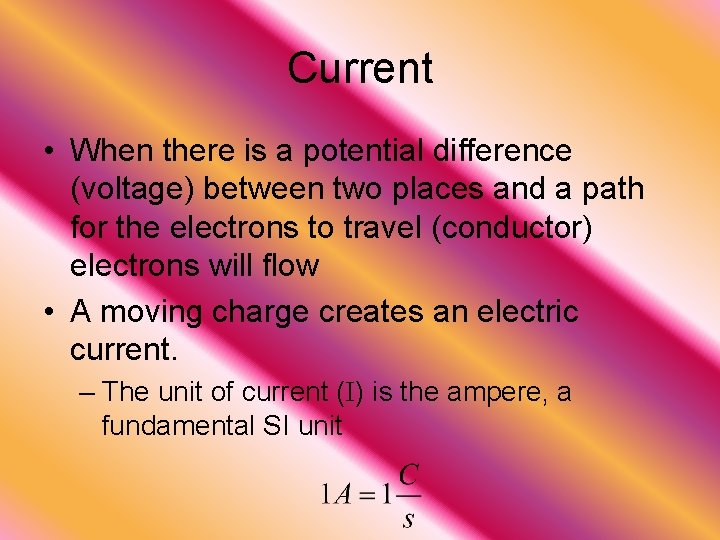
Current • When there is a potential difference (voltage) between two places and a path for the electrons to travel (conductor) electrons will flow • A moving charge creates an electric current. – The unit of current (I) is the ampere, a fundamental SI unit
Conductors • In a conductor, the ‘free’ electrons are able to move • When an electric field is applied to the conductor the electrons are forced to accelerate opposite the electric field. – The electrons all move in the same direction, creating a current
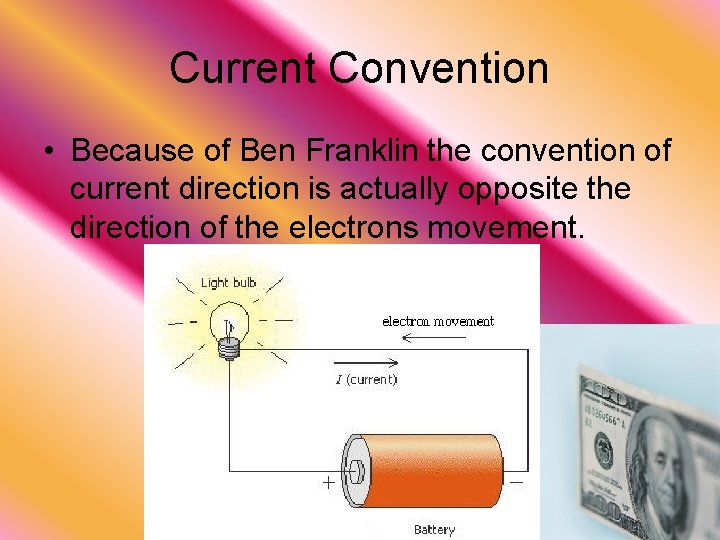
Current Convention • Because of Ben Franklin the convention of current direction is actually opposite the direction of the electrons movement.
Amount of Current • If we increase the potential difference between two positions, the current will increase • Current also depends upon something called resistance – Resistance is how easy or hard it is for the electrons to move through the material – The greater the resistance in the circuit, the less current there is for a given voltage
Resistance • The resistance in a wire is dependant upon – The material of the wire – The length of the wire – The width of the wire
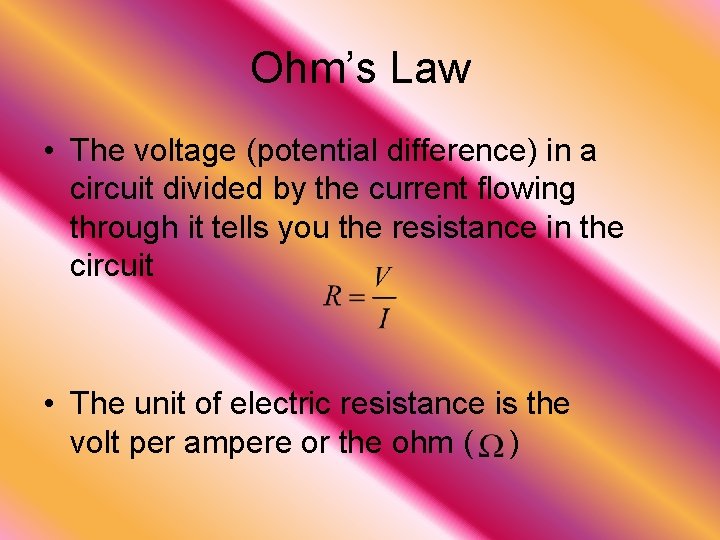
Ohm’s Law • The voltage (potential difference) in a circuit divided by the current flowing through it tells you the resistance in the circuit • The unit of electric resistance is the volt per ampere or the ohm ( )