
electric cells a simple electric cell a simple
- Slides: 4
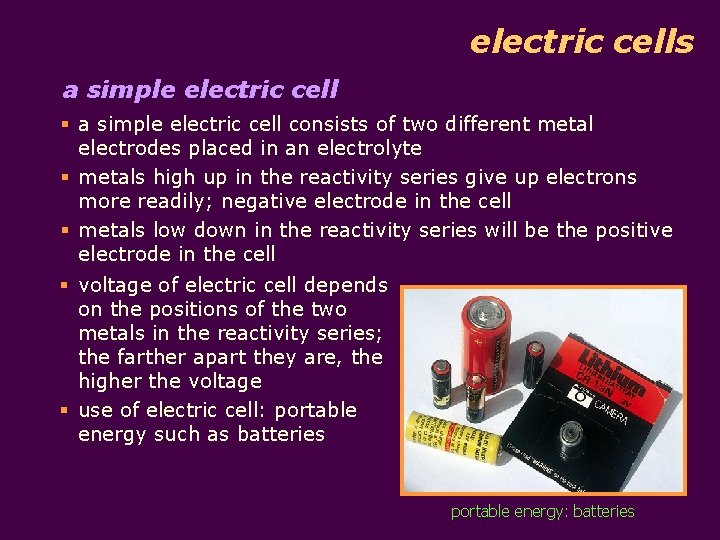
electric cells a simple electric cell § a simple electric cell consists of two different metal electrodes placed in an electrolyte § metals high up in the reactivity series give up electrons more readily; negative electrode in the cell § metals low down in the reactivity series will be the positive electrode in the cell § voltage of electric cell depends on the positions of the two metals in the reactivity series; the farther apart they are, the higher the voltage § use of electric cell: portable energy such as batteries portable energy: batteries
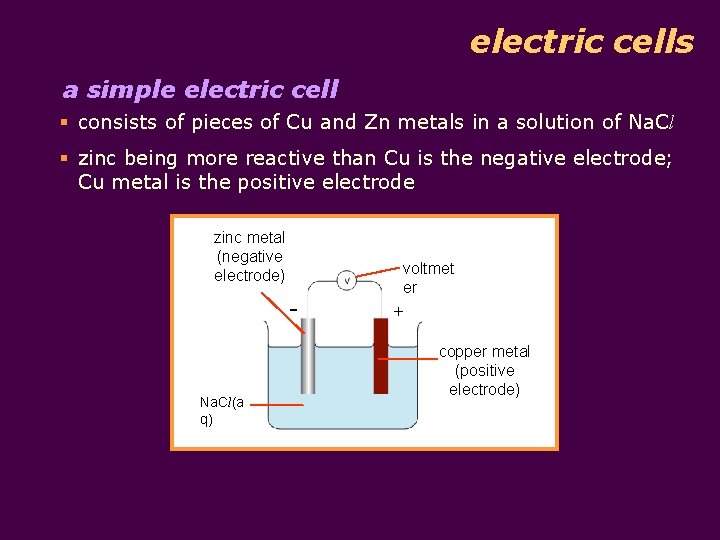
electric cells a simple electric cell § consists of pieces of Cu and Zn metals in a solution of Na. Cl § zinc being more reactive than Cu is the negative electrode; Cu metal is the positive electrode zinc metal (negative electrode) - Na. Cl(a q) voltmet er + copper metal (positive electrode)
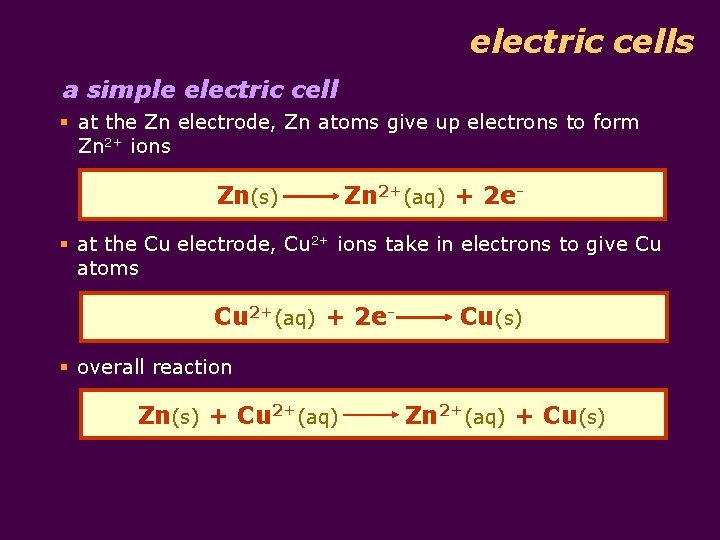
electric cells a simple electric cell § at the Zn electrode, Zn atoms give up electrons to form Zn 2+ ions Zn(s) Zn 2+(aq) + 2 e- § at the Cu electrode, Cu 2+ ions take in electrons to give Cu atoms Cu 2+(aq) + 2 e- Cu(s) § overall reaction Zn(s) + Cu 2+(aq) Zn 2+(aq) + Cu(s)
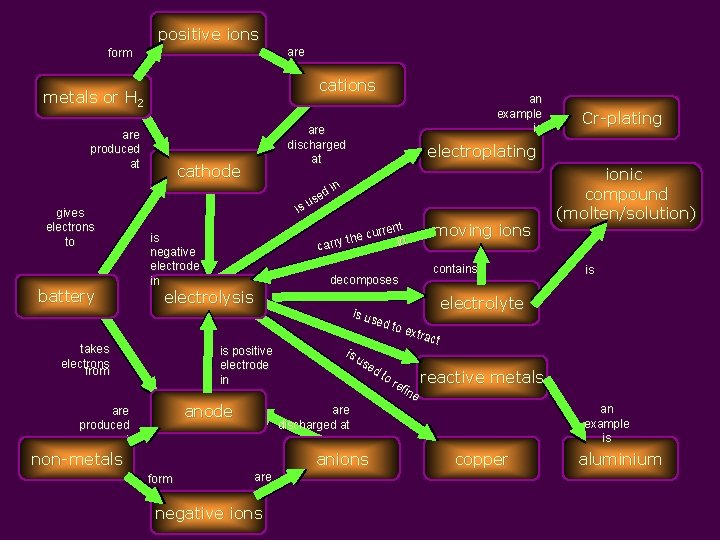
positive ions are form cations metals or H 2 are produced at gives electrons to battery are discharged at cathode nt curre e h t in carry is us ed t o is positive electrode in anode are produced at non-metals form are negative ions ionic compound (molten/solution) is electrolyte extr act is us ed to ref ine are discharged at anions moving ions contains decomposes electrolysis Cr-plating electroplating in ed s u is is negative electrode in takes electrons from an example is reactive metals an example is copper aluminium