
Electric and Electronic Technology Chapter 2 C Resistance





- Slides: 23
Electric and Electronic Technology Chapter 2 C – Resistance in Series and Parallel by Akhtar Razali FKM akhtar@ump. edu. my
Chapter Description • Aims – To distinguish resistance in series and parallel – To analyze equivalent resistance in series and parallel and combination circuit • Expected Outcomes – Replace series or parallel combinations of resistances by equivalent resistances. – Determine currents and voltages of circuits by combining resistance in series and parallel • Other related Information – One of mid semester exam is from this topic – No other relevant information be disclosed • References – Rizzoni G. , 2004, Principles and Applications of Electrical Engineering, Revised Fourth Edition, Mc. Graw Hill – Hambley A. R. , 2005, Electrical Engineering Principles and Applications, Third Edition, Pearson Prentice Hall
Contents • • Series circuit Parallel circuit Delta and Y circuit Equivalent resistance in series and parallel and combination circuit
Series Resistance
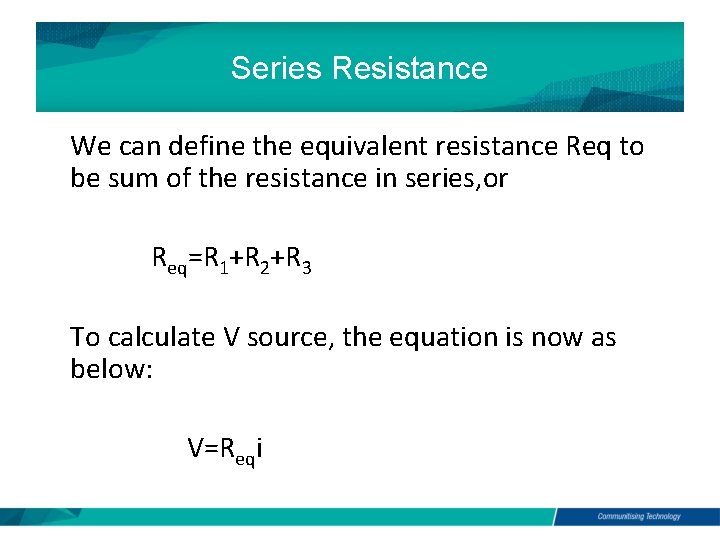
Series Resistance We can define the equivalent resistance Req to be sum of the resistance in series, or Req=R 1+R 2+R 3 To calculate V source, the equation is now as below: V=Reqi
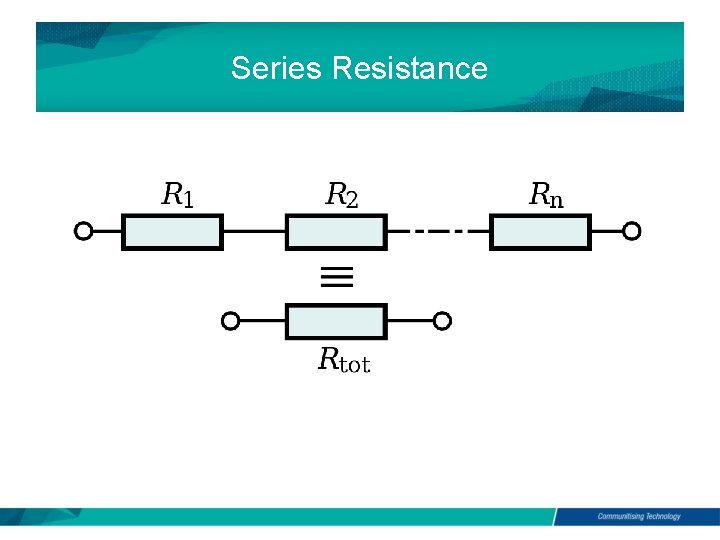
Series Resistance • Thus, we can conclude that 3 resistances in series can be replaced by the equivalent resistance Req. Source: https: //common s. wikimedia. org/ wiki/File: Resistor s_in_Series. svg
Series Resistance Therefore, “a series combination of resistances has an equivalent resistance equal to the sum of the original resistance. ”
Parallel Resistance • In parallel circuit, the voltage across each element is the same. Source: https: //common s. wikimedia. org/ wiki/File: Resistor s_in_parallel. svg
Parallel Resistance • Therefore, we can define the equivalent resistance as:
Network Analysis by using series and parallel equivalents • An electrical network consists of circuit elements such as resistances, voltage sources, and current sources, connected together to form closed paths. • Network analysis is the process of determining the current, voltage, and power for each element.
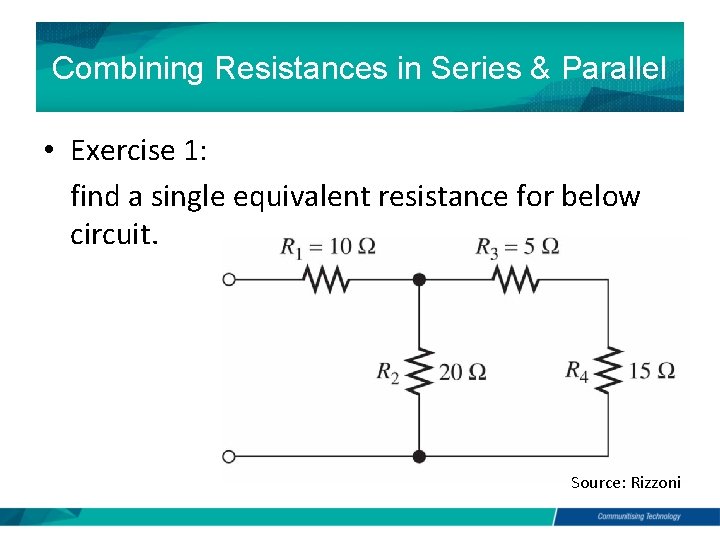
Combining Resistances in Series & Parallel • Exercise 1: find a single equivalent resistance for below circuit. Source: Rizzoni
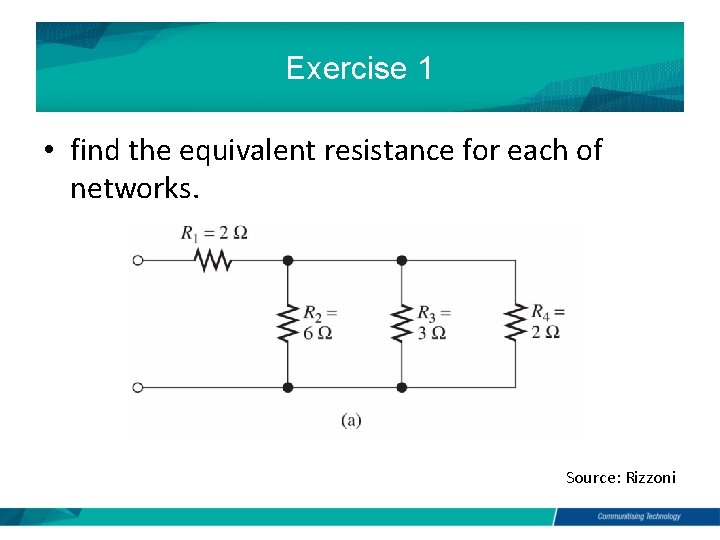
Exercise 1 • find the equivalent resistance for each of networks. Source: Rizzoni
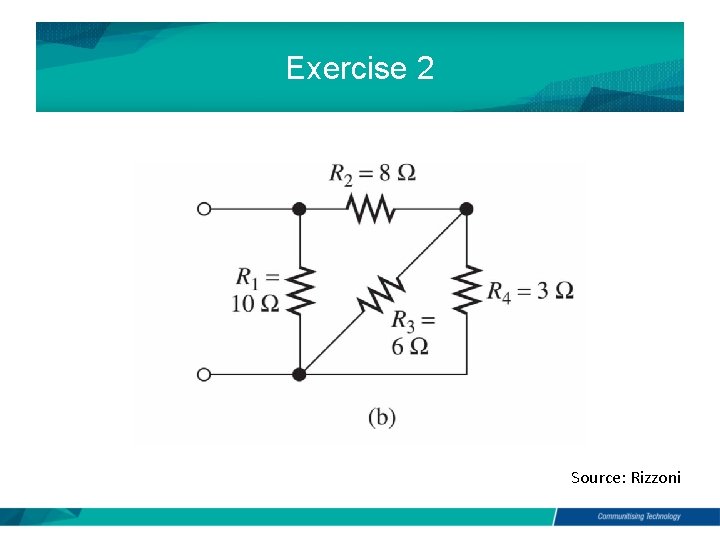
Exercise 2 Source: Rizzoni
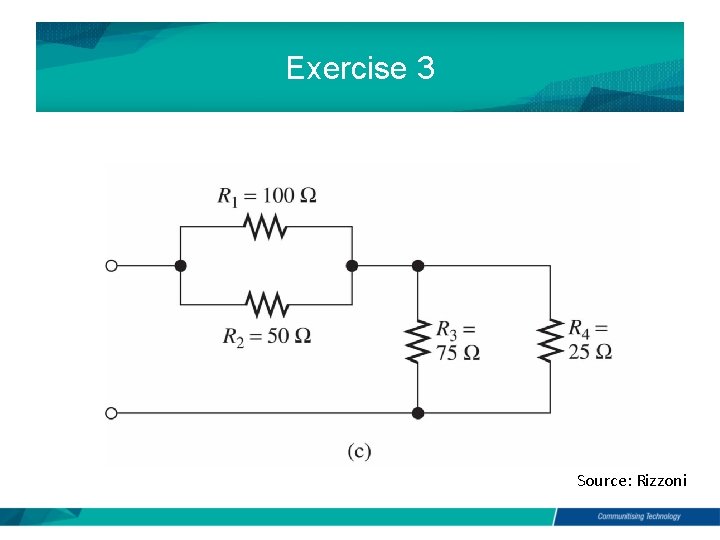
Exercise 3 Source: Rizzoni
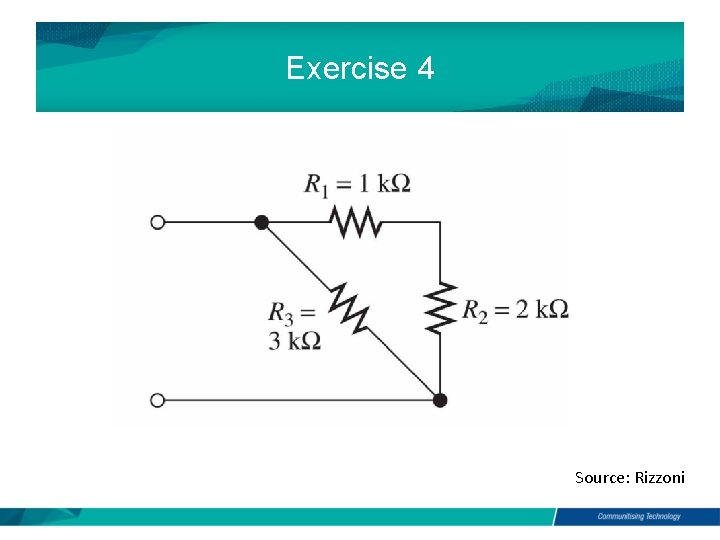
Exercise 4 Source: Rizzoni
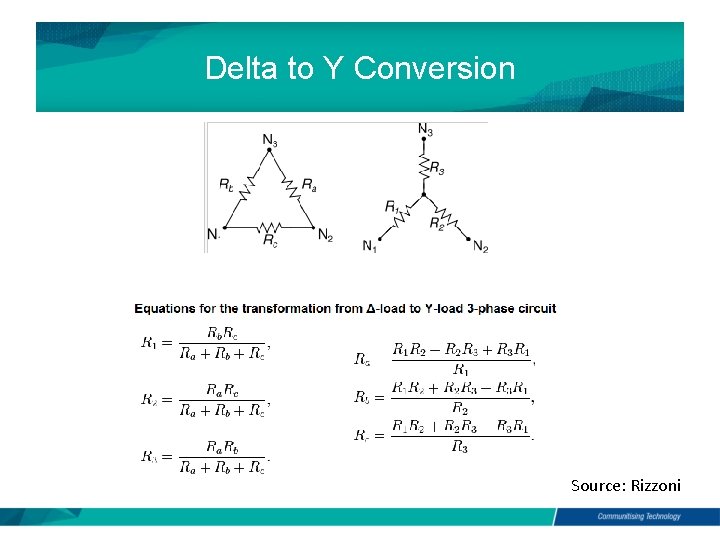
Delta to Y Conversion Source: Rizzoni
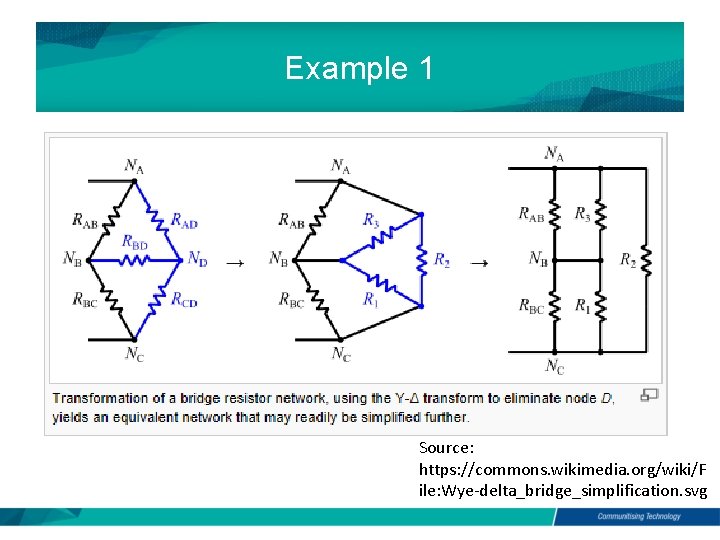
Example 1 Source: https: //commons. wikimedia. org/wiki/F ile: Wye-delta_bridge_simplification. svg
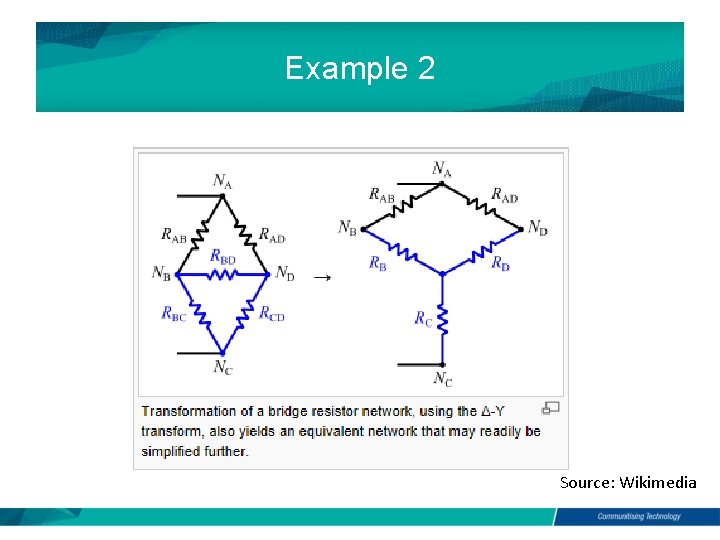
Example 2 Source: Wikimedia
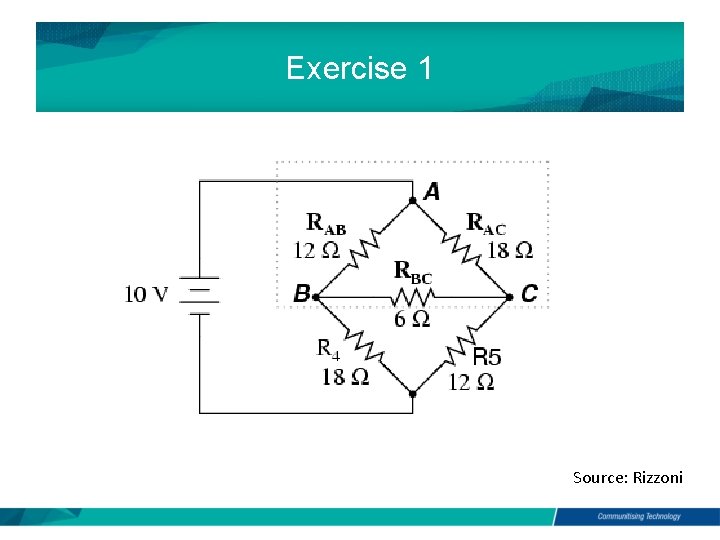
Exercise 1 Source: Rizzoni
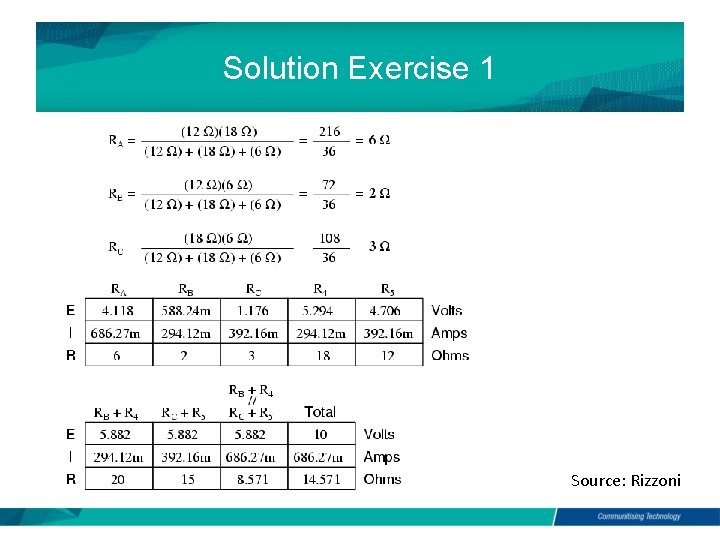
Solution Exercise 1 Source: Rizzoni
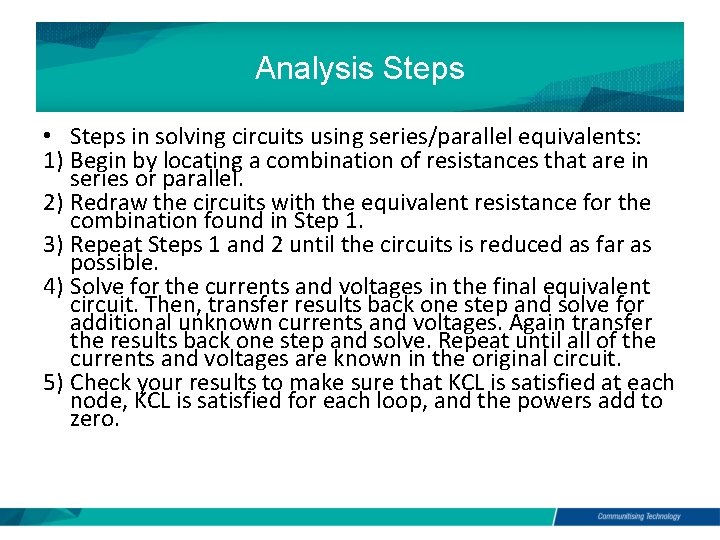
Analysis Steps • Steps in solving circuits using series/parallel equivalents: 1) Begin by locating a combination of resistances that are in series or parallel. 2) Redraw the circuits with the equivalent resistance for the combination found in Step 1. 3) Repeat Steps 1 and 2 until the circuits is reduced as far as possible. 4) Solve for the currents and voltages in the final equivalent circuit. Then, transfer results back one step and solve for additional unknown currents and voltages. Again transfer the results back one step and solve. Repeat until all of the currents and voltages are known in the original circuit. 5) Check your results to make sure that KCL is satisfied at each node, KCL is satisfied for each loop, and the powers add to zero.
Conclusion of The Chapter • Conclusion #1 – Resistance in series, just add all the resistors involved. – Resistance in parallel, cannot add directly but to use fraction equation for N numbers of resistors. • Conclusion #2 – To work out equivalent resistance, do the analysis to the farthest end of the voltage source. – Whenever you see voltage source, just short circuit it. – Whenever you see current source, just break the connection
Akhtar Razali FKM, UMP.