
Elective Course 1 Introduction to Protection System ELEMENTS
- Slides: 9
Elective Course 1 Introduction to Protection System
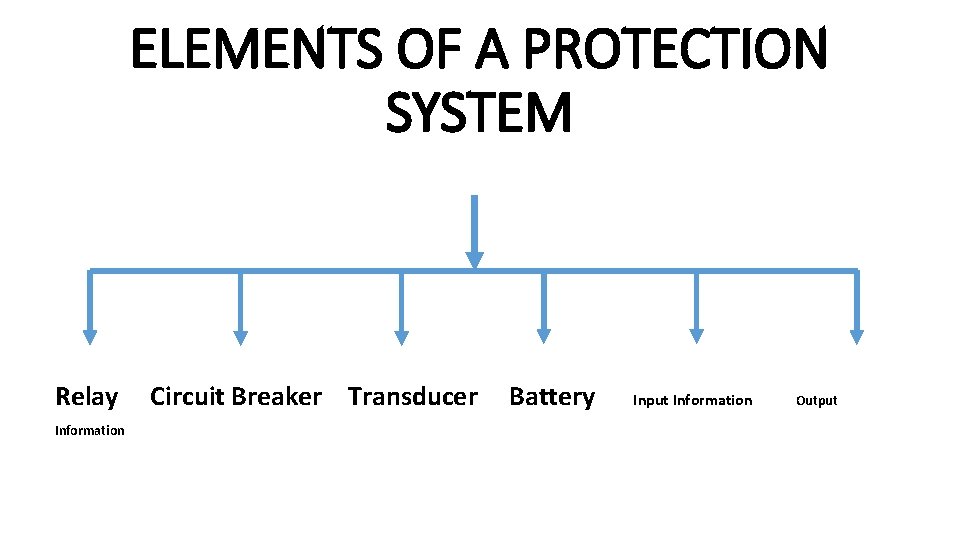
ELEMENTS OF A PROTECTION SYSTEM Relay Information Circuit Breaker Transducer Battery Input Information Output
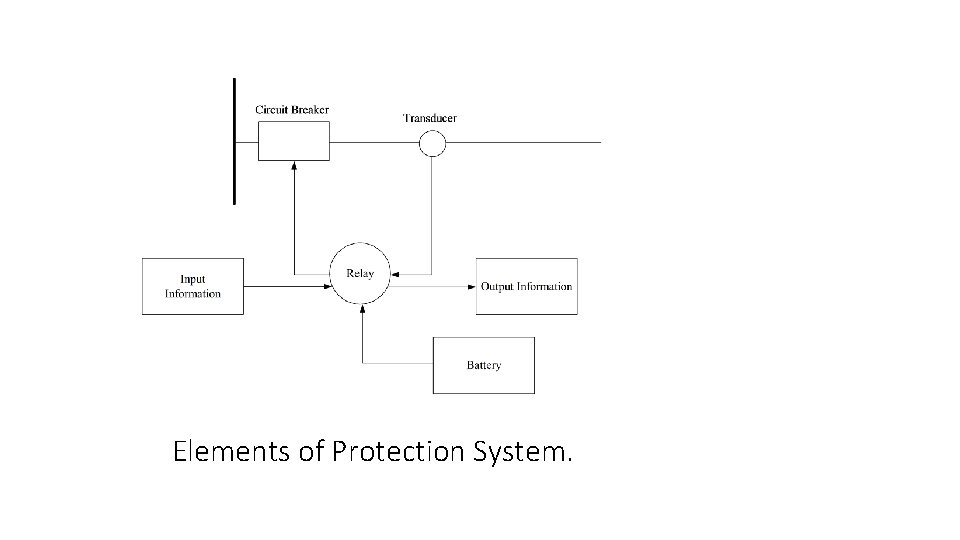
Elements of Protection System.
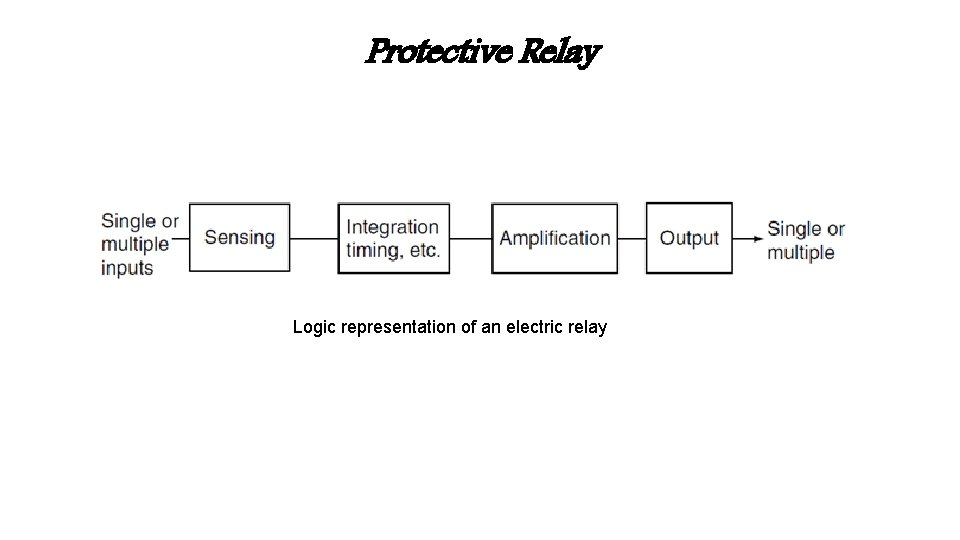
Protective Relays are the logic elements, which initiate the tripping and closing operations. Logic representation of an electric relay is shown in the following Figure. The components can be electromechanical, electronic, or both. The logic functions are general in nature, so that in any particular unit they may be combined or, on occasion, not required.
Protective Relay Logic representation of an electric relay
Protective Relay • Specific designs and features vary widely with application requirements, different manufacturers, and the time period of the particular design. Originally, all protective relays were of the electromechanical type. Electromechanical type relays are still in widespread use and continue to be manufactured and applied. Ana log type electronic relays using discreet electronic component s were introduced in the 197 0 s. In recent years, micro processor –based electronic relays have been developed and are being applied at an increasing rate. Microprocessor- based relays are sometimes referred to as numerical type relays since the analog inputs are converted to digital numbers that are then processed within the relay. Even with this trend toward the utilization of micro processor -based relays, however, it may be a long time before electromechanical devices are completely replace d. With electronic relays, the protection principles and fundamentals are essentially unchanged as are the issues regarding protection reliability. Microprocessor type relays do provide man y benefits such as higher accuracy , reduced space, lower equipment and installation cost s, wider application and setting capabilities, plus various other desirable supplemental features. These include control logic, remote and peer-t o-peer communications, data acquisition, event recording, fault location, remote setting, and self monitoring and checking. The specifics of these features will vary between different type s of relays and relay manufacturers.
transducers The function of current and voltage transformers (collectively known as transducers) is to transform the power system currents and voltages to lower magnitudes, and to provide galvanic isolation between the power network and the relays and other instruments, connected to the transducer secondary windings. The ratings of the secondary windings of the transducers have been standardized, so that a degree of interchangeability among different manufacturers relays and meters can be achieved.
Battery Since the primary function of a protection system is to remove a fault, the ability to trip a circuit breaker through a relay must not be compromised during a fault, when the ac voltage available in the substation may not be of sufficient magnitude. For example, a close-in three-phase fault can result in zero ac voltage at the substation ac outlets. Tripping power, as well as the power required by the relays, cannot therefore be obtained from the ac system, and is usually provided by the station battery.
Circuit Breaker The circuit breakers constitute the executive part of a protection system. They are usually isolating the faulted component by interrupting the current at or near current zero. A modern extra high voltage circuit breaker can interrupt fault current of the order of 100 k. A at system voltages of up to 800 k. V. Although the modern circuit breakers may interrupt the current as quickly as the first current zero after initiation of the fault, more often they do so at the second or third current zero.