
ELECTIONS VOTING THE PROCESS LEARNING GOALS Students will
- Slides: 28
ELECTIONS & VOTING THE PROCESS
LEARNING GOALS: Students will identify Canada’s form of government and demonstrate an understanding of the process of electing governments in Canada
SUCCESS CRITERIA: ● I can identify what Canada’s form of government is ● I can demonstrate understanding of how governments are elected in Canada
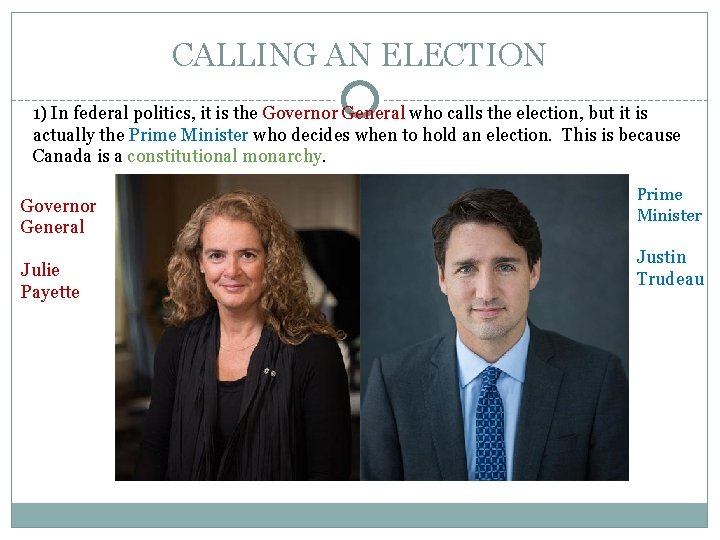
CALLING AN ELECTION 1) In federal politics, it is the Governor General who calls the election, but it is actually the Prime Minister who decides when to hold an election. This is because Canada is a constitutional monarchy. Governor General Julie Payette Prime Minister Justin Trudeau
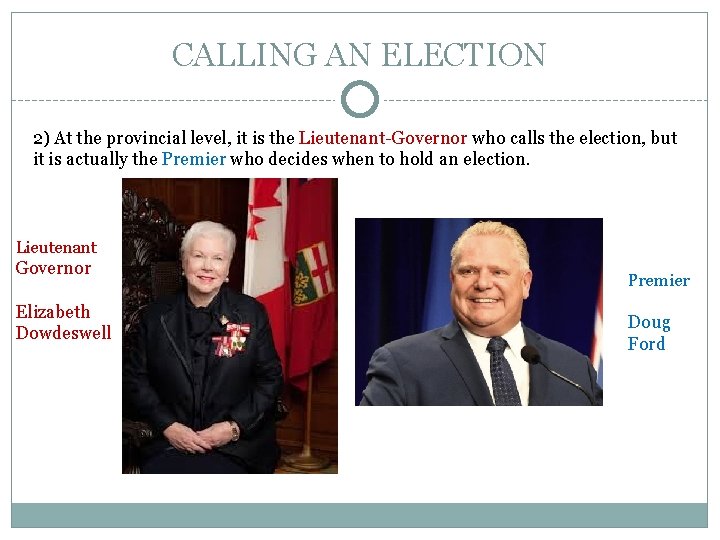
CALLING AN ELECTION 2) At the provincial level, it is the Lieutenant-Governor who calls the election, but it is actually the Premier who decides when to hold an election. Lieutenant Governor Elizabeth Dowdeswell Premier Doug Ford
CALLING AN ELECTION 3) The Constitution states that an election must be called at least every 5 years.
WHO CAN VOTE? 1) There are two qualifications to vote in any municipal, provincial, or federal election across the country: o A person must be 18 years old o The voter must be a Canadian citizen 2) All persons serving jail time can vote.
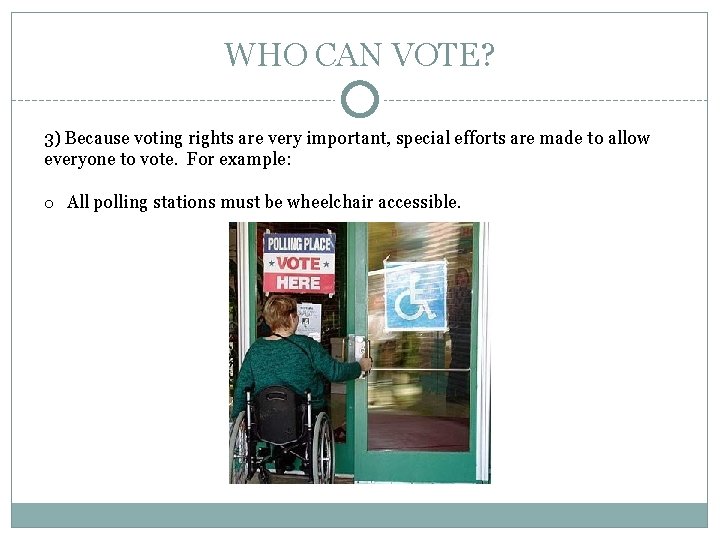
WHO CAN VOTE? 3) Because voting rights are very important, special efforts are made to allow everyone to vote. For example: o All polling stations must be wheelchair accessible.
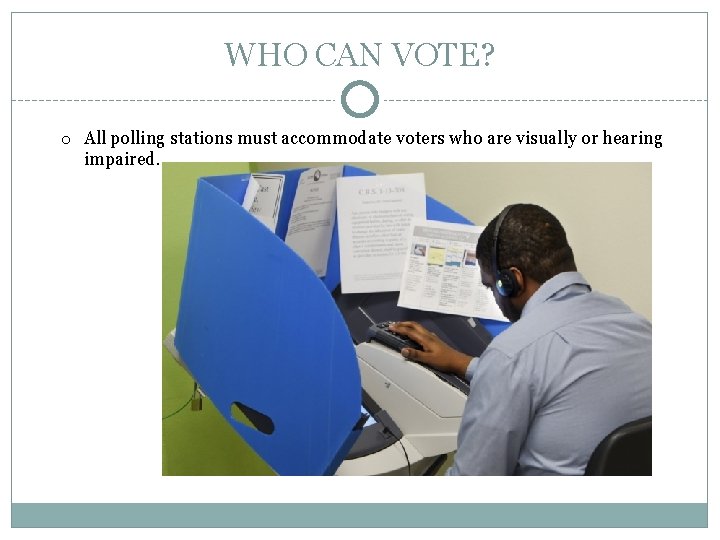
WHO CAN VOTE? o All polling stations must accommodate voters who are visually or hearing impaired.
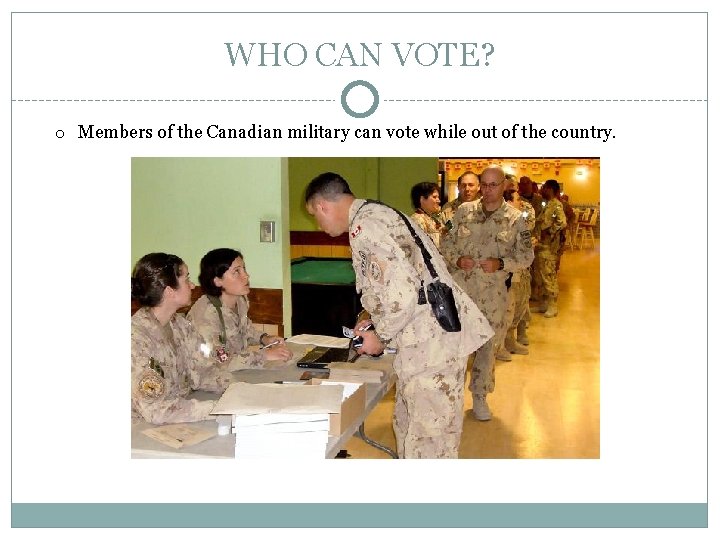
WHO CAN VOTE? o Members of the Canadian military can vote while out of the country.
WHO CAN VOTE? o Other Canadians who are living outside Canada for less than 5 years and intend to return to Canada one day can vote. o Some polling stations open up a few weeks earlier than election day to allow people to vote if they cannot vote on election day. o By law, every employer has to allow their employees at least 4 hours to vote and the employee must be paid in full.
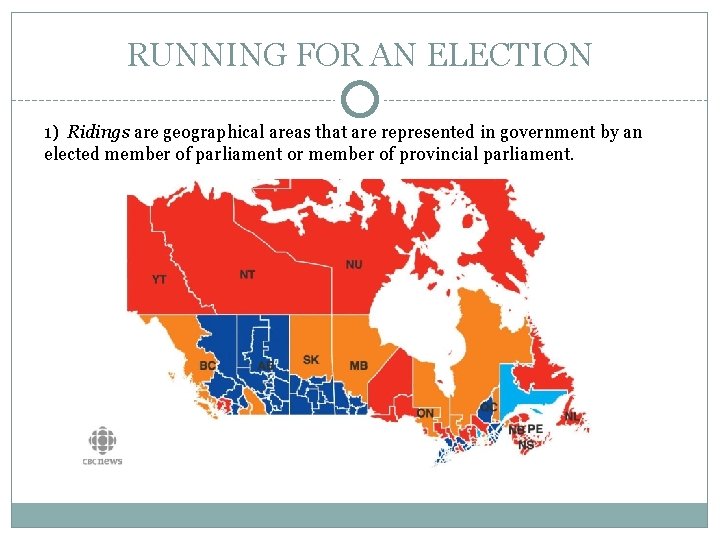
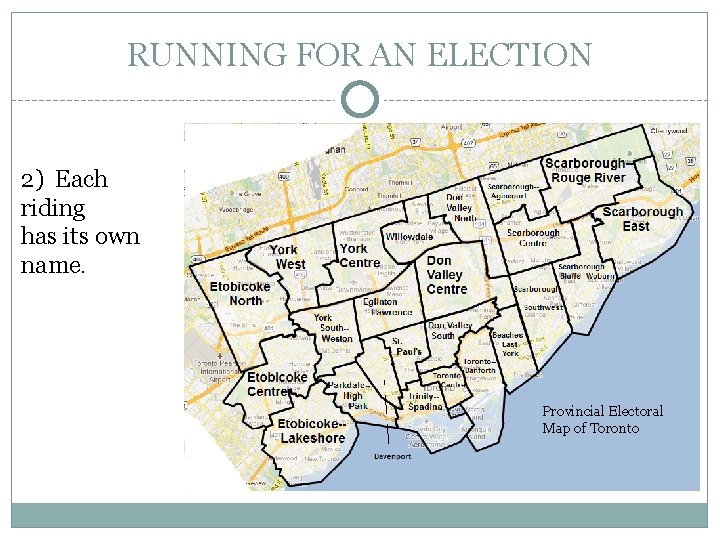
RUNNING FOR AN ELECTION 1) Ridings are geographical areas that are represented in government by an elected member of parliament or member of provincial parliament.
RUNNING FOR AN ELECTION 2) Each riding has its own name. Provincial Electoral Map of Toronto
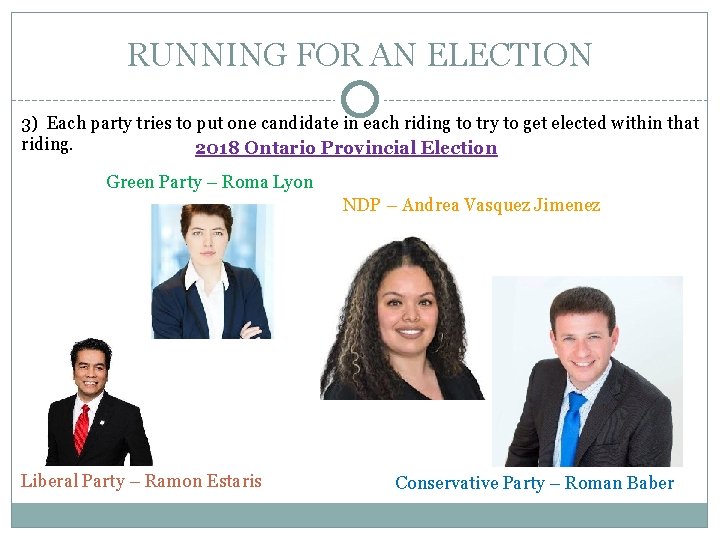
RUNNING FOR AN ELECTION 3) Each party tries to put one candidate in each riding to try to get elected within that riding. 2018 Ontario Provincial Election Green Party – Roma Lyon NDP – Andrea Vasquez Jimenez Liberal Party – Ramon Estaris Conservative Party – Roman Baber
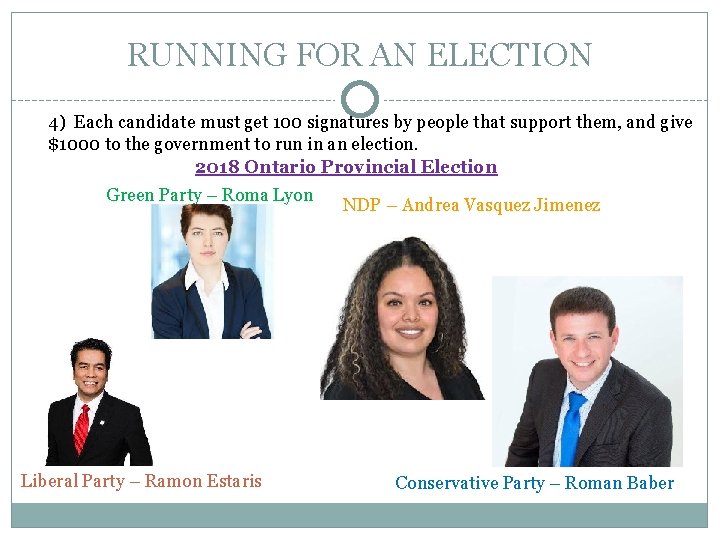
RUNNING FOR AN ELECTION 4) Each candidate must get 100 signatures by people that support them, and give $1000 to the government to run in an election. 2018 Ontario Provincial Election Green Party – Roma Lyon Liberal Party – Ramon Estaris NDP – Andrea Vasquez Jimenez Conservative Party – Roman Baber
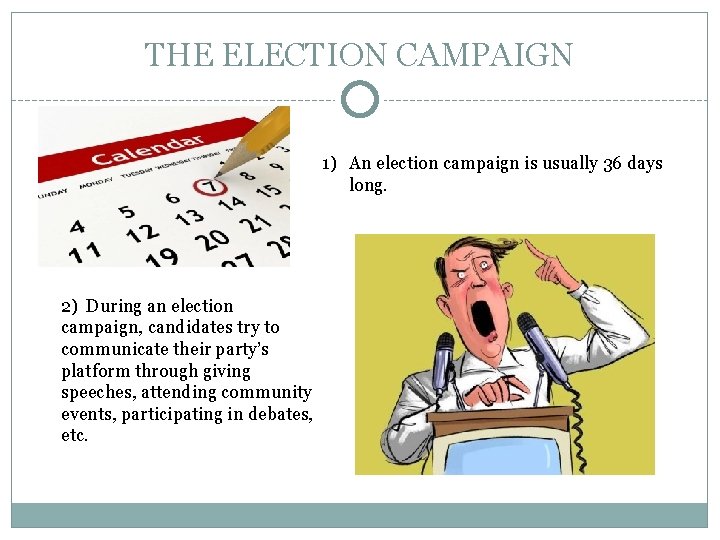
THE ELECTION CAMPAIGN 1) An election campaign is usually 36 days long. 2) During an election campaign, candidates try to communicate their party’s platform through giving speeches, attending community events, participating in debates, etc.
THE COST OF AN ELECTION CAMPAIGN 1) In 2011, the federal election cost taxpayers $290 million CAD (or $12 CAD/voter) 2) In 2015, the federal election cost taxpayers $443 million CAD (or $17 CAD/voter)
THE COST OF AN ELECTION CAMPAIGN 3) Political parties are allowed to raise as much money as they like, but there are rules about who can donate. The donation can only come from: o A Canadian citizen or permanent resident of Canada o A business or association doing business in Canada can no longer make donations. o A union with bargaining rights in Canada can no longer make donations.
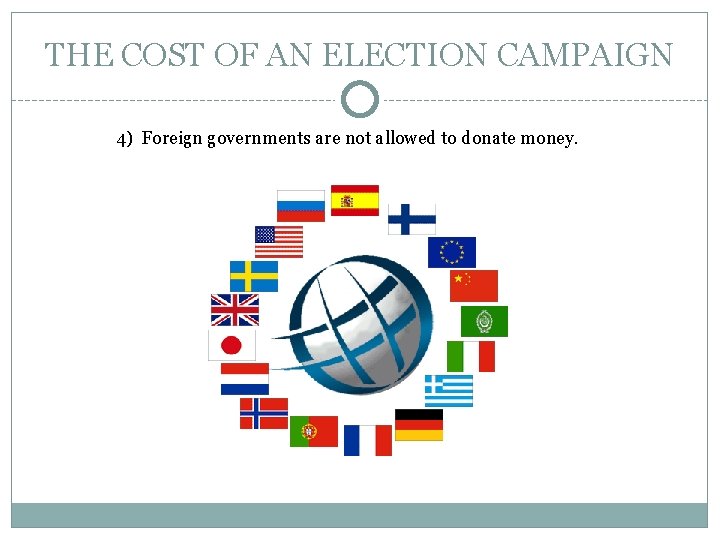
THE COST OF AN ELECTION CAMPAIGN 4) Foreign governments are not allowed to donate money.
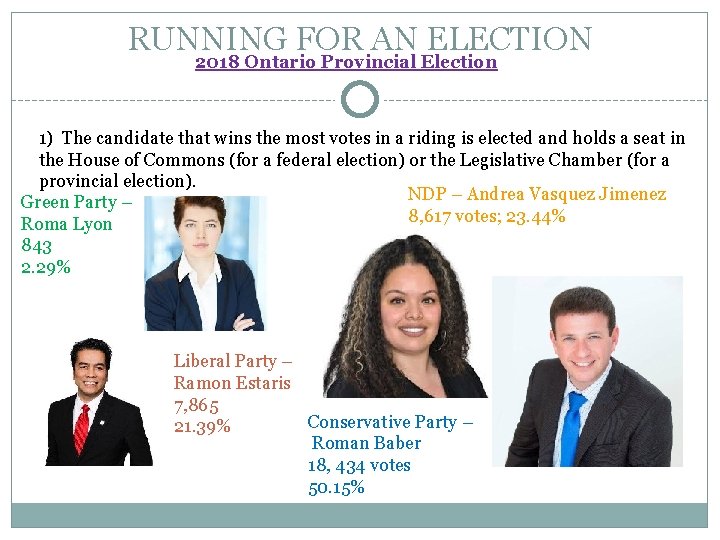
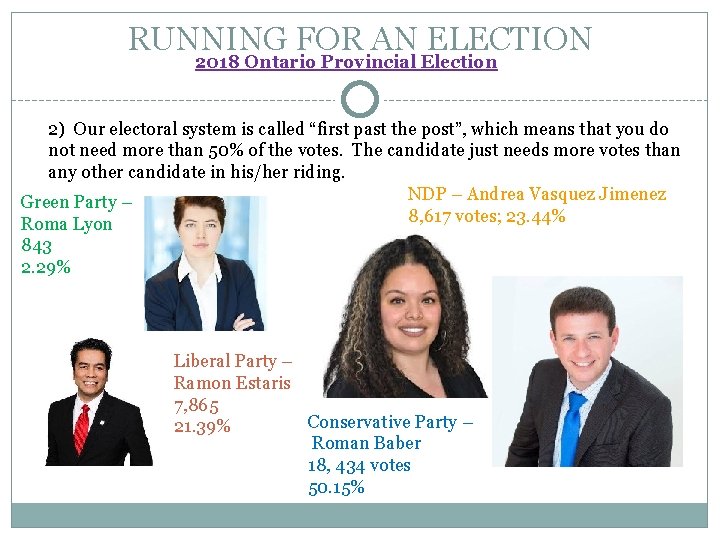
RUNNING FOR AN ELECTION 2018 Ontario Provincial Election 1) The candidate that wins the most votes in a riding is elected and holds a seat in the House of Commons (for a federal election) or the Legislative Chamber (for a provincial election). NDP – Andrea Vasquez Jimenez Green Party – 8, 617 votes; 23. 44% Roma Lyon 843 2. 29% Liberal Party – Ramon Estaris 7, 865 Conservative Party – 21. 39% Roman Baber 18, 434 votes 50. 15%
RUNNING FOR AN ELECTION 2018 Ontario Provincial Election 2) Our electoral system is called “first past the post”, which means that you do not need more than 50% of the votes. The candidate just needs more votes than any other candidate in his/her riding. NDP – Andrea Vasquez Jimenez Green Party – 8, 617 votes; 23. 44% Roma Lyon 843 2. 29% Liberal Party – Ramon Estaris 7, 865 Conservative Party – 21. 39% Roman Baber 18, 434 votes 50. 15%
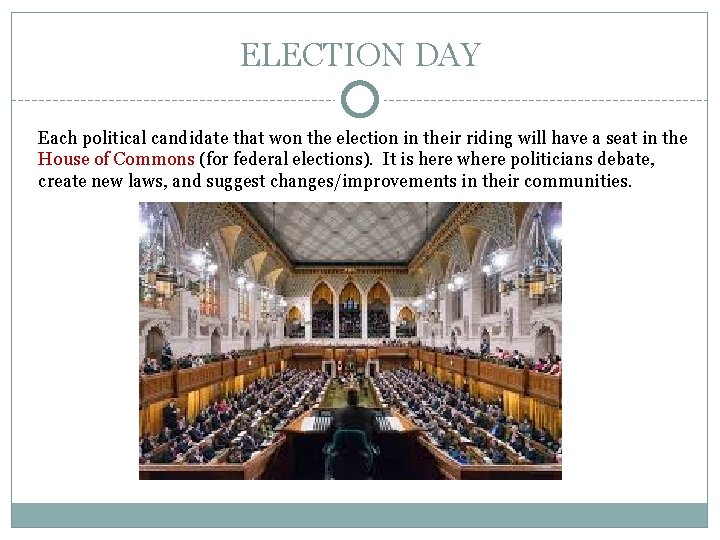
ELECTION DAY Each political candidate that won the election in their riding will have a seat in the House of Commons (for federal elections). It is here where politicians debate, create new laws, and suggest changes/improvements in their communities.
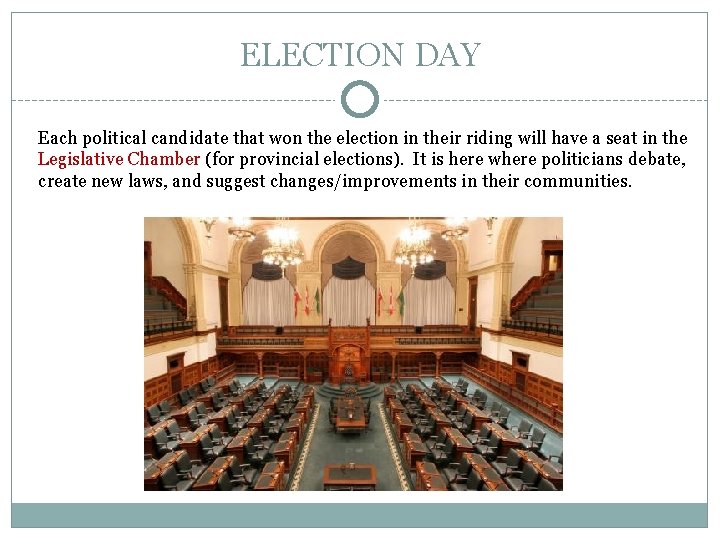
ELECTION DAY Each political candidate that won the election in their riding will have a seat in the Legislative Chamber (for provincial elections). It is here where politicians debate, create new laws, and suggest changes/improvements in their communities.
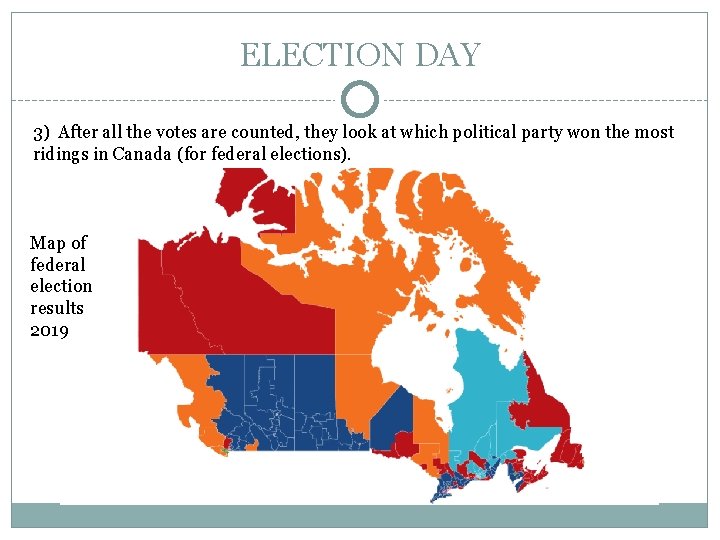
ELECTION DAY 3) After all the votes are counted, they look at which political party won the most ridings in Canada (for federal elections). Map of federal election results 2019
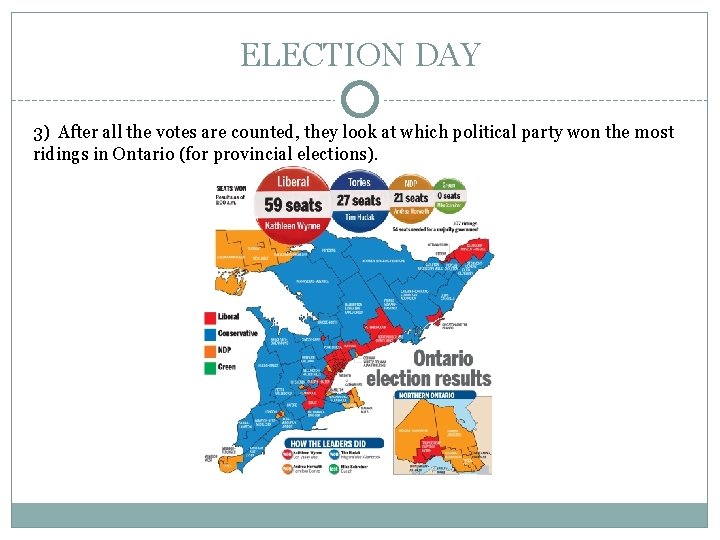
ELECTION DAY 3) After all the votes are counted, they look at which political party won the most ridings in Ontario (for provincial elections).
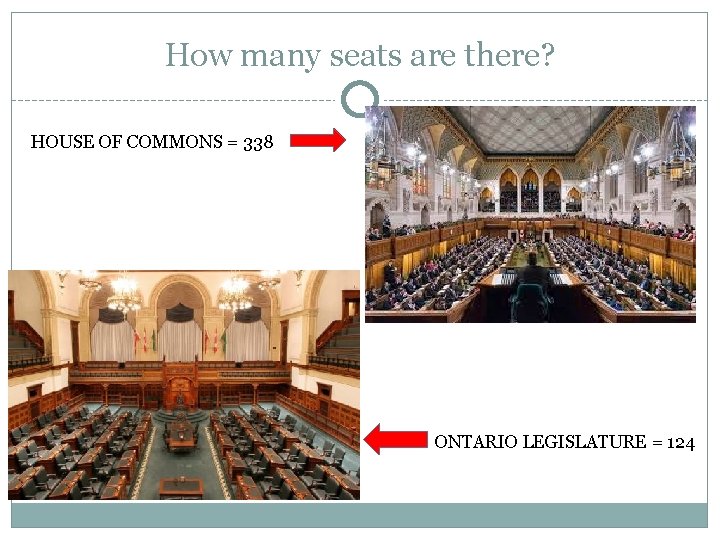
How many seats are there? HOUSE OF COMMONS = 338 ONTARIO LEGISLATURE = 124
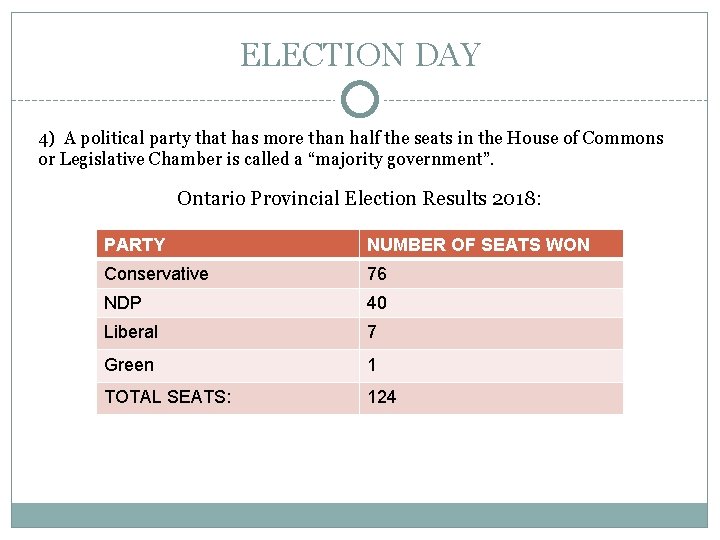
ELECTION DAY 4) A political party that has more than half the seats in the House of Commons or Legislative Chamber is called a “majority government”. Ontario Provincial Election Results 2018: PARTY NUMBER OF SEATS WON Conservative 76 NDP 40 Liberal 7 Green 1 TOTAL SEATS: 124
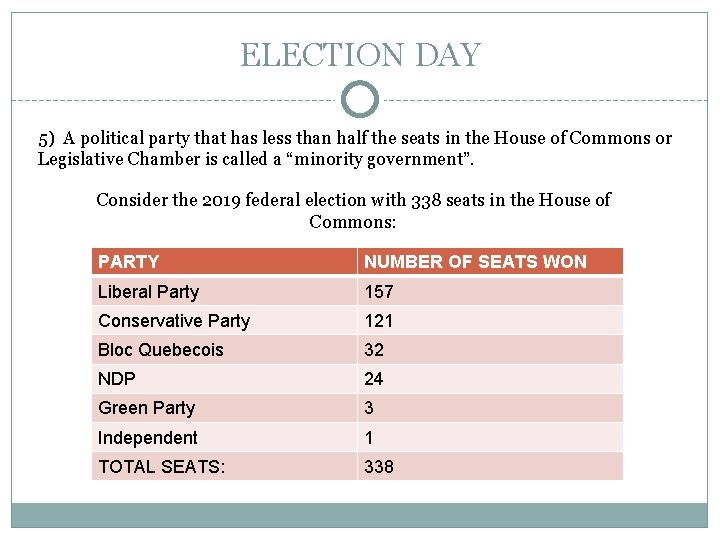
ELECTION DAY 5) A political party that has less than half the seats in the House of Commons or Legislative Chamber is called a “minority government”. Consider the 2019 federal election with 338 seats in the House of Commons: PARTY NUMBER OF SEATS WON Liberal Party 157 Conservative Party 121 Bloc Quebecois 32 NDP 24 Green Party 3 Independent 1 TOTAL SEATS: 338