
Elearning in LIS education satisfaction of parttime LIS

- Slides: 22
E-learning in LIS education: satisfaction of part-time LIS students with Omega Marko Tot, young researcher Faculty of Humanities and Social Sceiences, Zagreb, Croatia mtot@ffzg. hr
Summary n n n Introduction Research Conclusion
Introduction n E-learning n learning that is delivered, enabled or mediated by electronic technology, for the explicit purposes of training and/or education.
Introduction n University of Zagreb E-learning Strategy 2007 – 2010 n n the University of Zagreb supports and actively promotes e-learning and the application of ICT in teaching and learning at all levels of university education. e-learning is a legitimate and desirable way of learning and teaching at the University of Zagreb.
Introduction n n since the academic year 2000/2001 the opensource course management system Moodle has been used in the University of Zagreb. since the year 2004/2005 Omega, a customized version of Moodle is in use at the Faculty of Humanities and Social Sciences.
Research n Sample n part-time students of Library and Information Science of the Faculty of Humanities and Social Sciences in Zagreb n the research included part-time students who attended the Reference Service in Library course
Research n Sample n n 90 students were enrolled in the course 67 students completed the survey
Research n The aim of the research: n n to obtain a general overview of the part-time students’ satisfaction with Omega to establish to what degree this tool makes studying easier for students
Research n Hypothesis n n Omega met the students’ needs Omega helped making their study much easier.
Research n Methodology n anonymous survey questionnaire, consisting of 13 questions
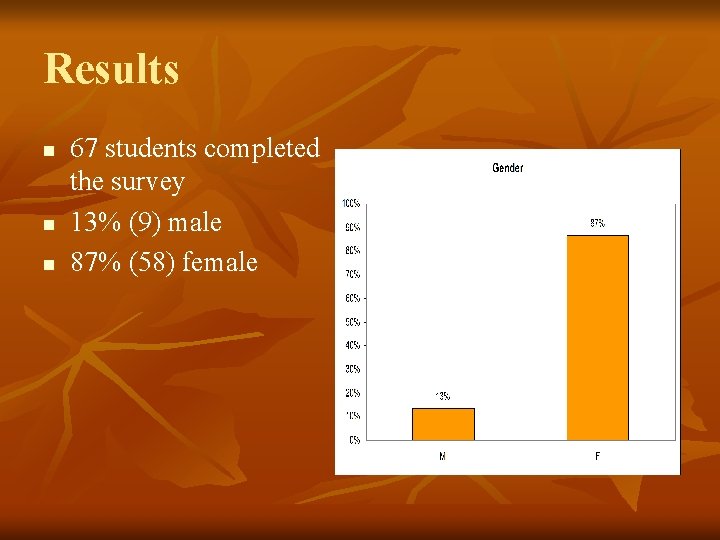
Results n n n 67 students completed the survey 13% (9) male 87% (58) female
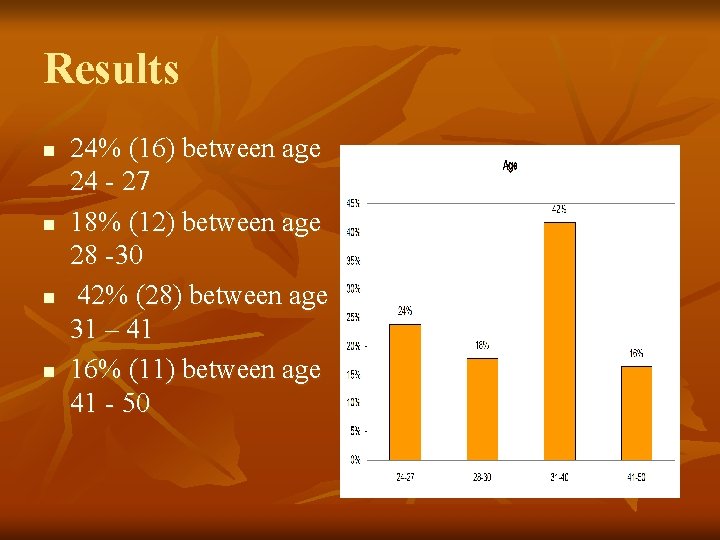
Results n n 24% (16) between age 24 - 27 18% (12) between age 28 -30 42% (28) between age 31 – 41 16% (11) between age 41 - 50
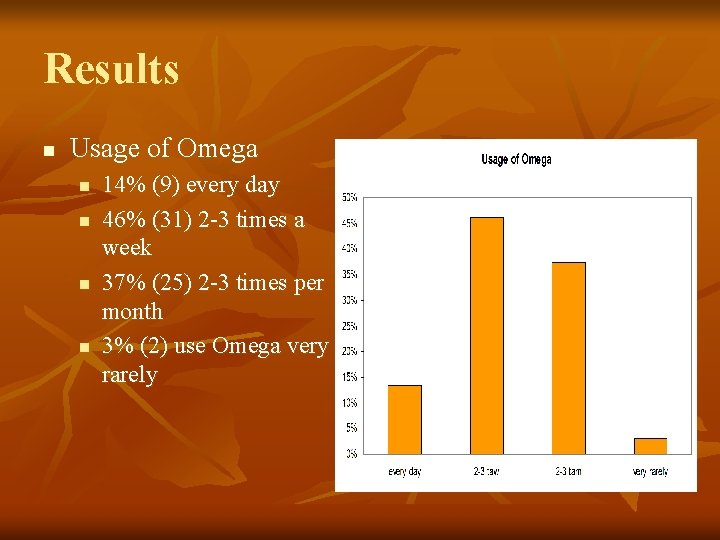
Results n Usage of Omega n n 14% (9) every day 46% (31) 2 -3 times a week 37% (25) 2 -3 times per month 3% (2) use Omega very rarely
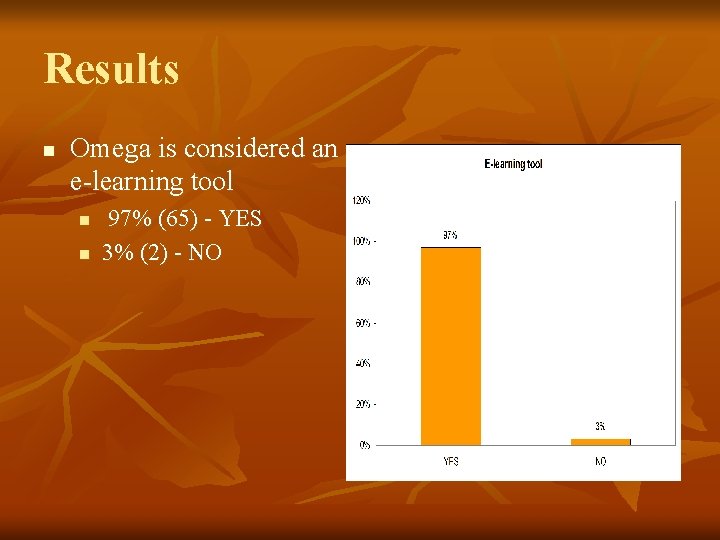
Results n Omega is considered an e-learning tool n n 97% (65) - YES 3% (2) - NO
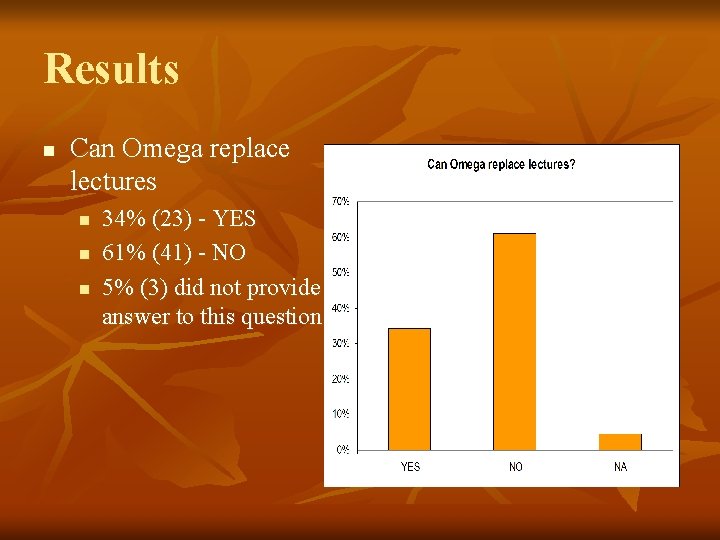
Results n Can Omega replace lectures n n n 34% (23) - YES 61% (41) - NO 5% (3) did not provide an answer to this question
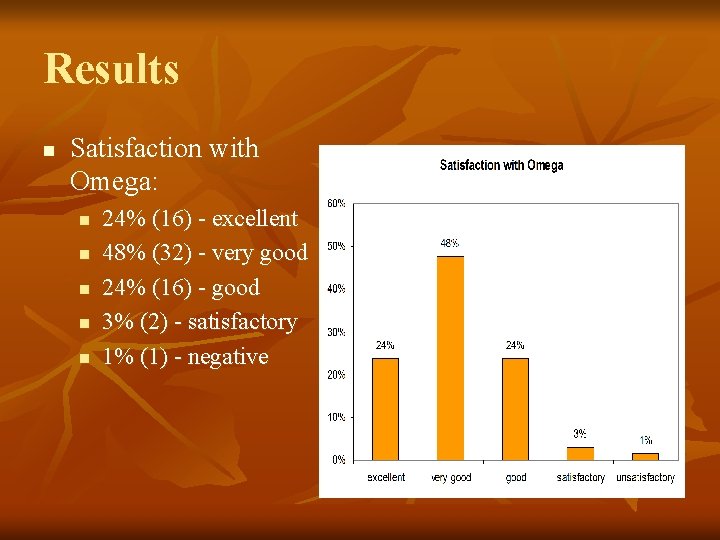
Results n Satisfaction with Omega: n n n 24% (16) - excellent 48% (32) - very good 24% (16) - good 3% (2) - satisfactory 1% (1) - negative
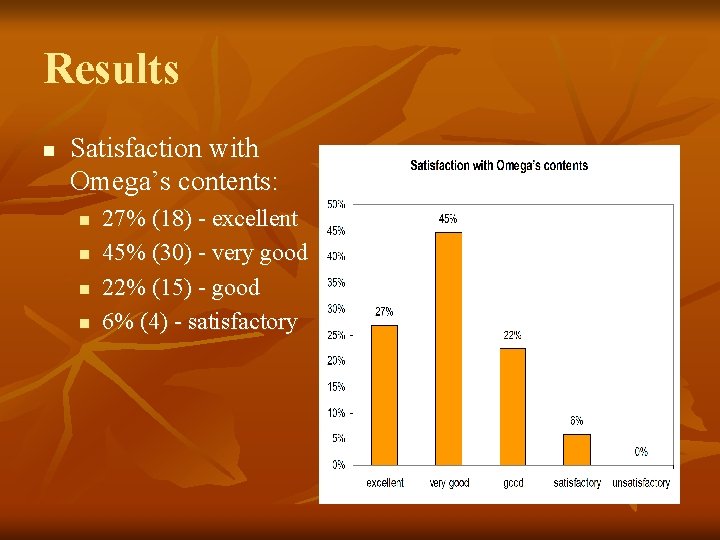
Results n Satisfaction with Omega’s contents: n n 27% (18) - excellent 45% (30) - very good 22% (15) - good 6% (4) - satisfactory
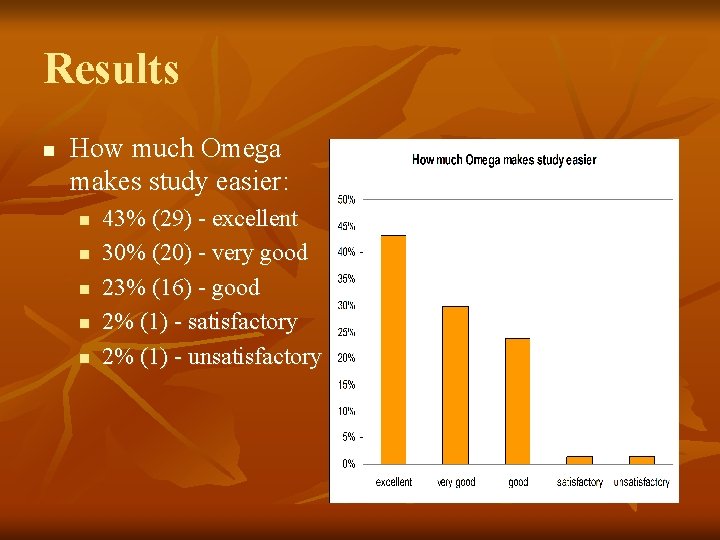
Results n How much Omega makes study easier: n n n 43% (29) - excellent 30% (20) - very good 23% (16) - good 2% (1) - satisfactory 2% (1) - unsatisfactory
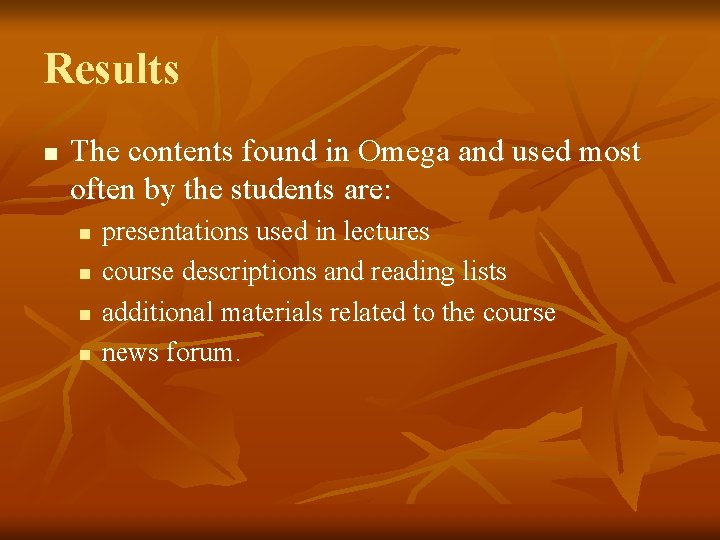
Results n The contents found in Omega and used most often by the students are: n n presentations used in lectures course descriptions and reading lists additional materials related to the course news forum.
Results n The contents in Omega used least often by the students are: n n communication with their fellow students communication with the teaching staff
Conclusion n e-learning has become integrated in LIS curriculum the students are satisfied with Omega, and Omega makes their studying easier e-learning has been accepted as a standard part of tuition
Thank you for your attention! Questions?