
ELEARNING IN EDUCATION AN OVERVIEW Raymond S Pastore









- Slides: 22
ELEARNING IN EDUCATION: AN OVERVIEW Raymond S. Pastore, Ph. D. Bloomsburg Univeristy Bloomsburg, PA SITE 2002 Thursday, March 21, 2002 Purpose: To give an overview of elearning and the implications for our schools.
Introduction http: //teacherworld. com http: //elearnerworld. com http: //webportfolio. com
Introduction Principles of Teaching http: //teacherworld. com/pot. html Educational Computing & Technology http: //teacherworld. com/ec. html Virtual Learning Communities http: //teacherworld. com/vlc. html
Topics • • • Definition of Elearning Advantages of Elearning The 21 st Century Model Best Practices Benchmarks Types of Delivery Disadvantages of Elearning in Schools Future Trends Resources
Elearning e. Learning Elearning elearning E-learning e-Learning E-learning e-learning
elearning (268, 000 hits) e-learning (905, 000 hits)
Definition of Elearning What is Elearning? The Internet Time Group http: //www. internettime. com/itime group/forum/faq. htm#what
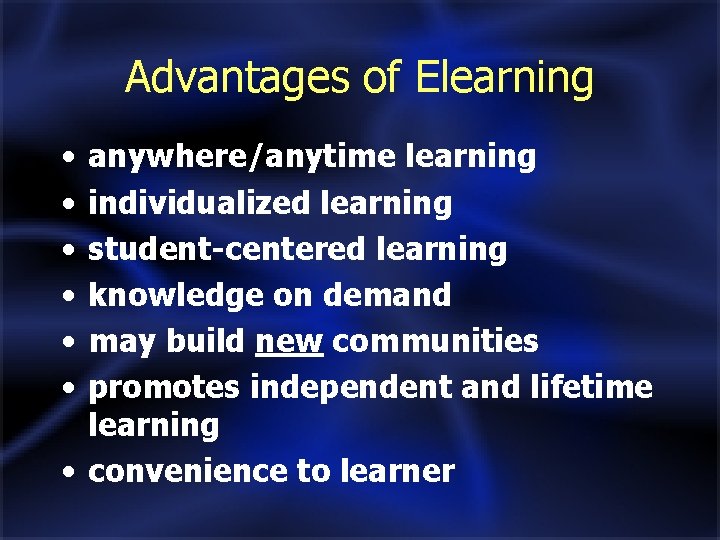
Advantages of Elearning • • • anywhere/anytime learning individualized learning student-centered learning knowledge on demand may build new communities promotes independent and lifetime learning • convenience to learner
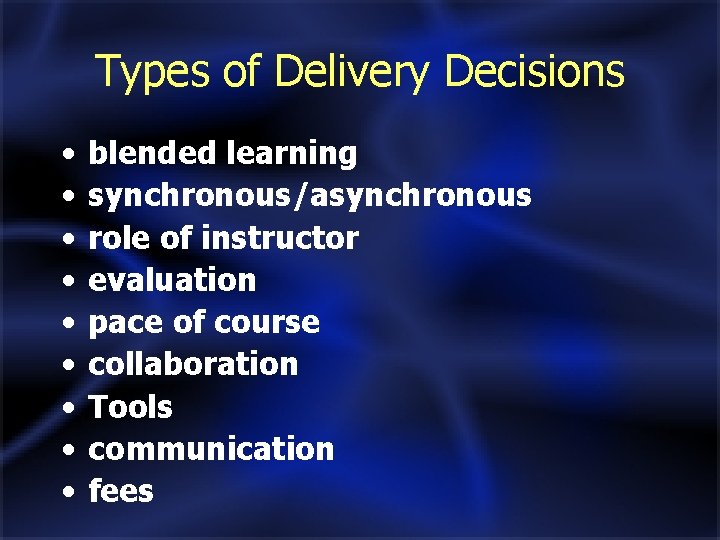
Types of Delivery Decisions • • • blended learning synchronous/asynchronous role of instructor evaluation pace of course collaboration Tools communication fees
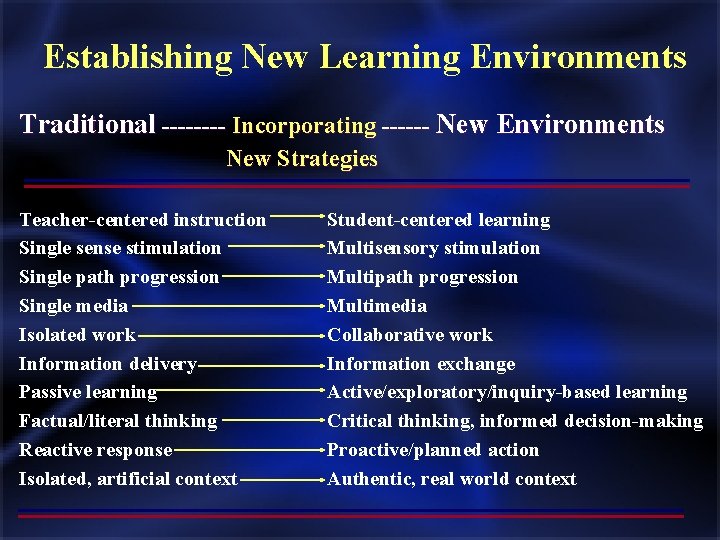
Establishing New Learning Environments Traditional ---- Incorporating ------ New Environments New Strategies Teacher-centered instruction Single sense stimulation Single path progression Single media Isolated work Information delivery Passive learning Factual/literal thinking Reactive response Isolated, artificial context Student-centered learning Multisensory stimulation Multipath progression Multimedia Collaborative work Information exchange Active/exploratory/inquiry-based learning Critical thinking, informed decision-making Proactive/planned action Authentic, real world context
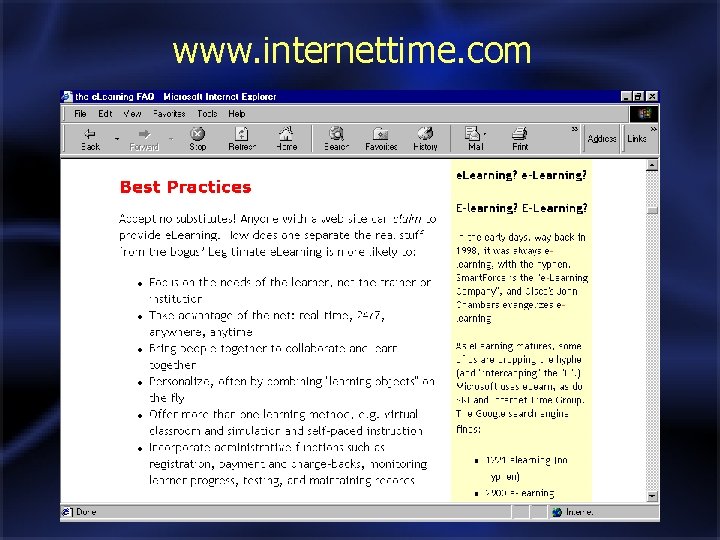
www. internettime. com
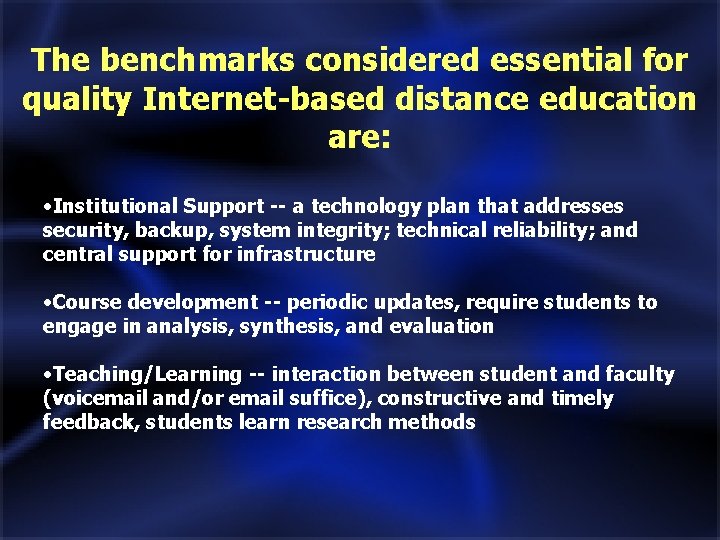
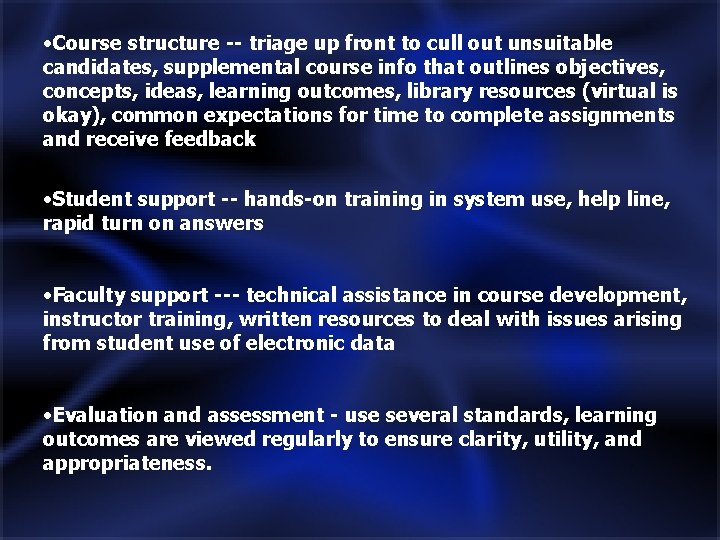
Benchmarks for Success in Internet-Based Distance Education A study of distance learning benchmarks at six colleges prepared by The Institute for Higher Education Policy for the NEA and Blackboard. April 2000.
The benchmarks considered essential for quality Internet-based distance education are: • Institutional Support -- a technology plan that addresses security, backup, system integrity; technical reliability; and central support for infrastructure • Course development -- periodic updates, require students to engage in analysis, synthesis, and evaluation • Teaching/Learning -- interaction between student and faculty (voicemail and/or email suffice), constructive and timely feedback, students learn research methods
• Course structure -- triage up front to cull out unsuitable candidates, supplemental course info that outlines objectives, concepts, ideas, learning outcomes, library resources (virtual is okay), common expectations for time to complete assignments and receive feedback • Student support -- hands-on training in system use, help line, rapid turn on answers • Faculty support --- technical assistance in course development, instructor training, written resources to deal with issues arising from student use of electronic data • Evaluation and assessment - use several standards, learning outcomes are viewed regularly to ensure clarity, utility, and appropriateness.
Disadvantages of Elearning • • motivation rate of completion face to face interaction communication
Disadvantages of Elearning Overcoming Obstacles to Elearning From ASTD http: //www. learningcircuits. org/2001/m ar 2001/elearn. html
Elearning in Public Schools • High Schools • Middle Schools • Elementary Schools Florida Virtual High School http: //www. flvs. net/
Future Trends • • • Continued Rapid Growth More Blended Learning Growth in k-12 Schools More Online Testing More Internet Integration More Internet Use
Future Trends Cisco' Government Affairs: Facts and Stats http: //www. cisco. com/warp/public/779 /govtaffs/facts. NStats/educationnew. htm l
Resources http: //teacherworld. com/elearning. html