
Elbow Joint Ginglymus or HingeJoint A freely moving
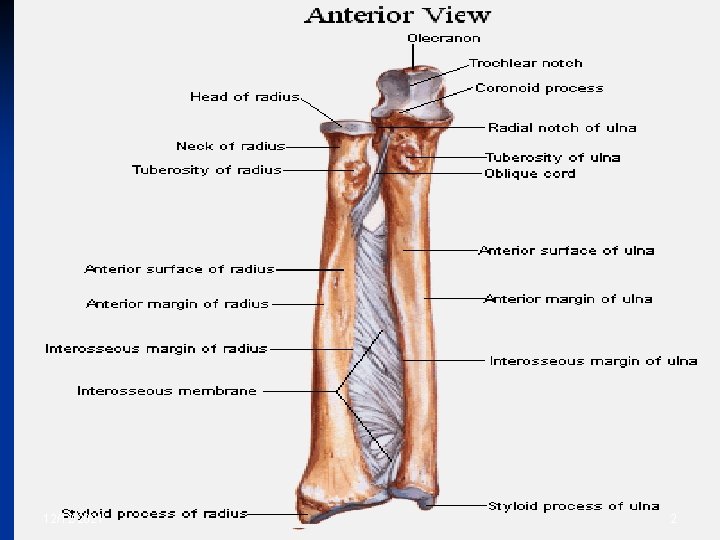
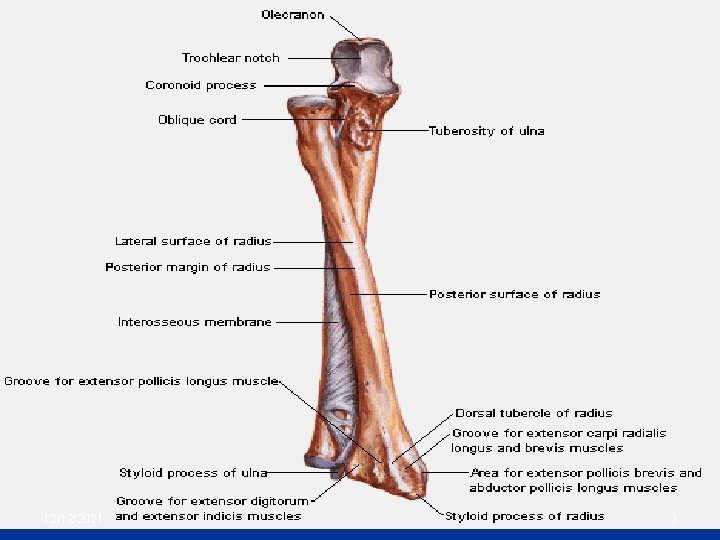
Elbow Joint Ginglymus or Hinge-Joint: A freely moving joint in which the bones are so articulated as to allow extensive movement in one plane. The trochlea: of the humerus is received into the semilunar notch of the ulna. The capitulum: of the humerus articulates with the fovea on the head of the radius. The articular surfaces: are kept close together by a capsule, which is thickened medially and laterally, and, to a less extent, in front and behind. 12/12/2021 1
12/12/2021 2
12/12/2021 3
12/12/2021 4
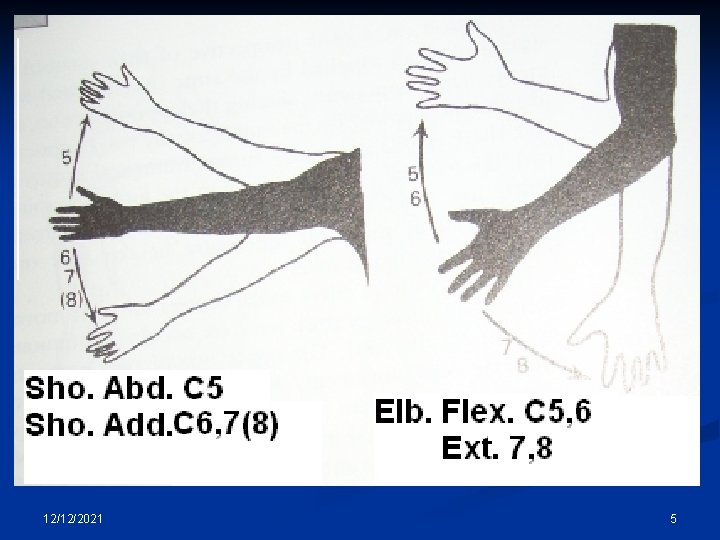
12/12/2021 5
Elbow Joint n Thickened portions are described as distinct ligaments: n The Anterior. n The Posterior. n The Ulnar Collateral. n The Radial Collateral. 12/12/2021 6

12/12/2021 7

12/12/2021 8
The Anterior Ligament n A broad and thin fibrous layer covering the anterior surface of the joint. Attached: n Above to the: n Front of the medial epicondyle and to n Front of the humerus immediately above the coronoid and radial fossæ 12/12/2021 9
The Anterior Ligament Below; to the: n Anterior surface of ulnar coronoid process and annular ligament, n Continuous on either side with the collateral ligaments. n Its superficial fibbers: pass obliquely from the medial epicondyle of the humerus to the annular ligament. n 12/12/2021 10
The Anterior Ligament n The middle fibbers: Vertical in direction, pass from the coronoid fossa upper part and become partly blended with the preceding, but are attached mainly to coronoid process anterior surface. n The deep or transverse: intersects these at right angles. This ligament is in relation, in front, with the Brachialis, except at its most lateral part. 12/12/2021 11

12/12/2021 12
- Slides: 12