
Elbow Dislocation Postero Lateral Instability Marc R Safran
Elbow Dislocation & Postero. Lateral Instability Marc R. Safran, MD Professor, Orthopaedic Surgery Chief, Division of Sports Medicine Stanford University 2019 Advanced Team Physician Course December 12, 2019 - Las Vegas, NV
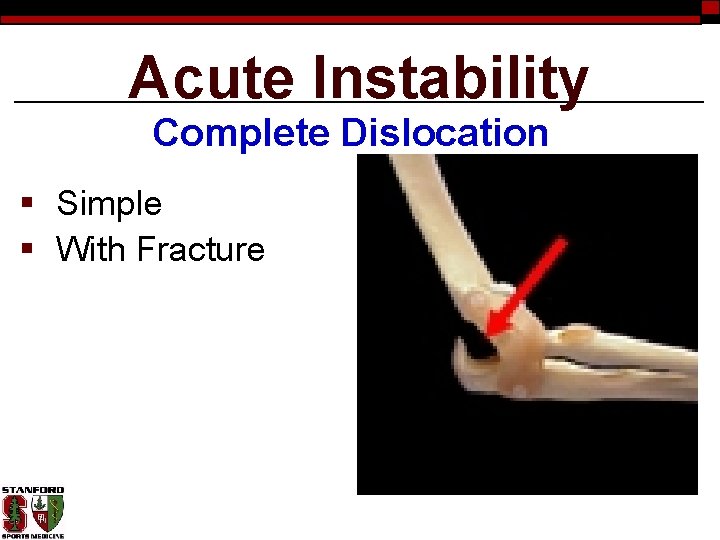
Acute Instability Complete Dislocation § Simple § With Fracture
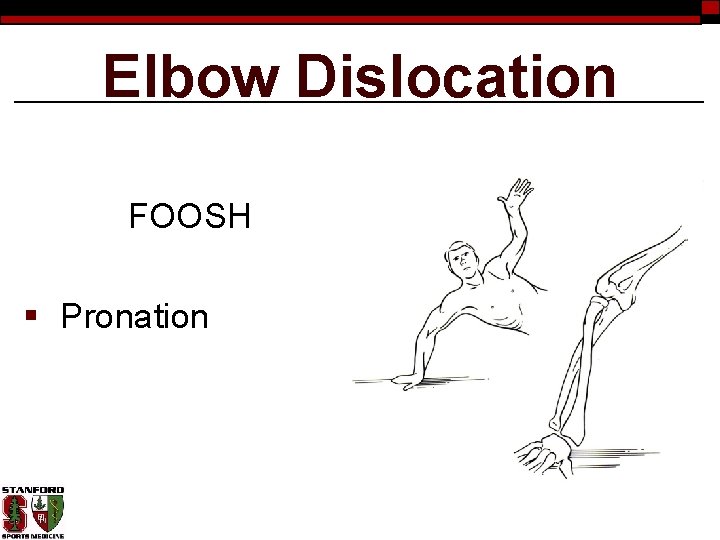
Elbow Dislocation FOOSH § Pronation
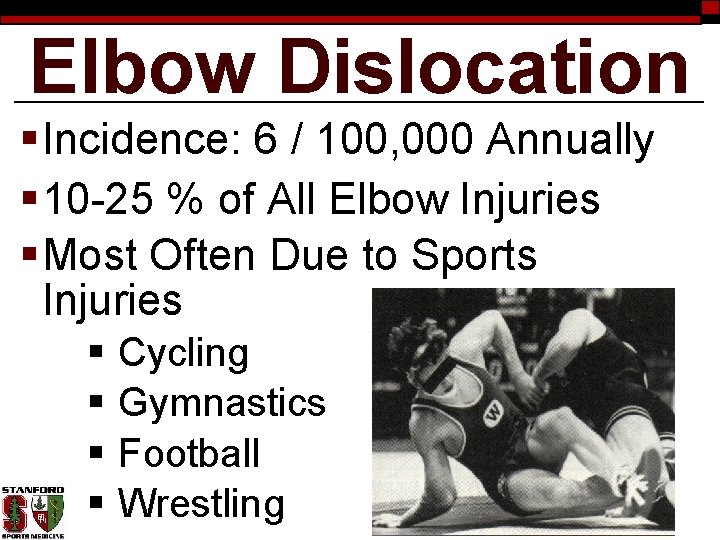
Elbow Dislocation § Incidence: 6 / 100, 000 Annually § 10 -25 % of All Elbow Injuries § Most Often Due to Sports Injuries § § Cycling Gymnastics Football Wrestling
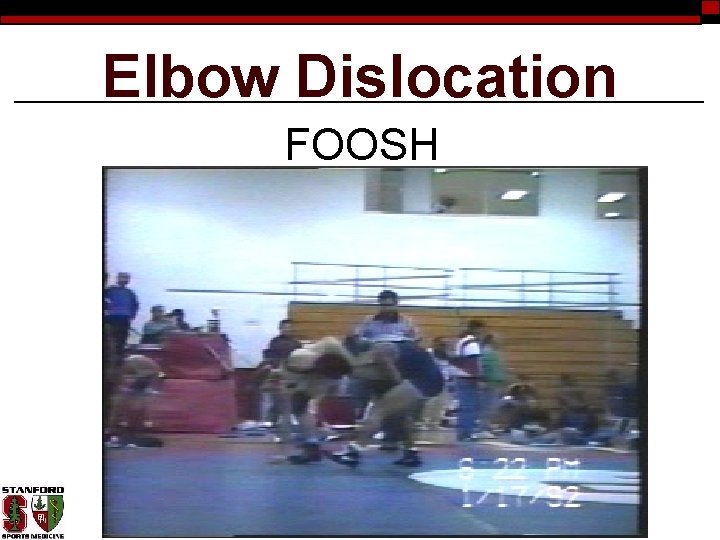
Elbow Dislocation FOOSH
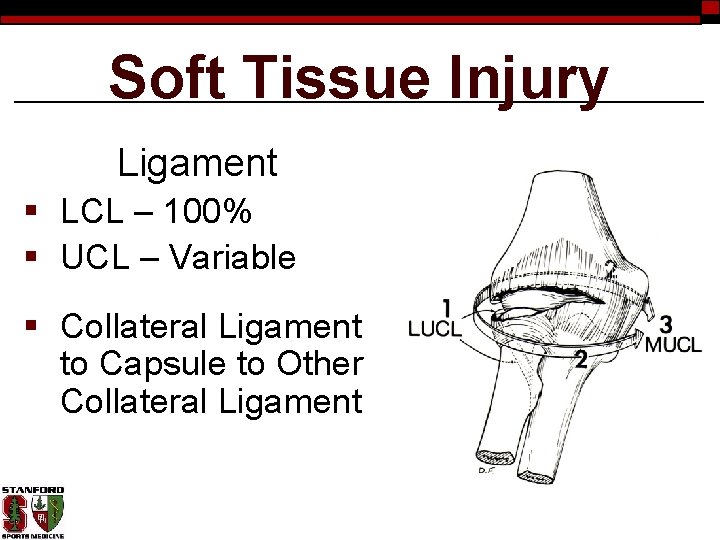
Soft Tissue Injury Ligament § LCL – 100% § UCL – Variable § Collateral Ligament to Capsule to Other Collateral Ligament
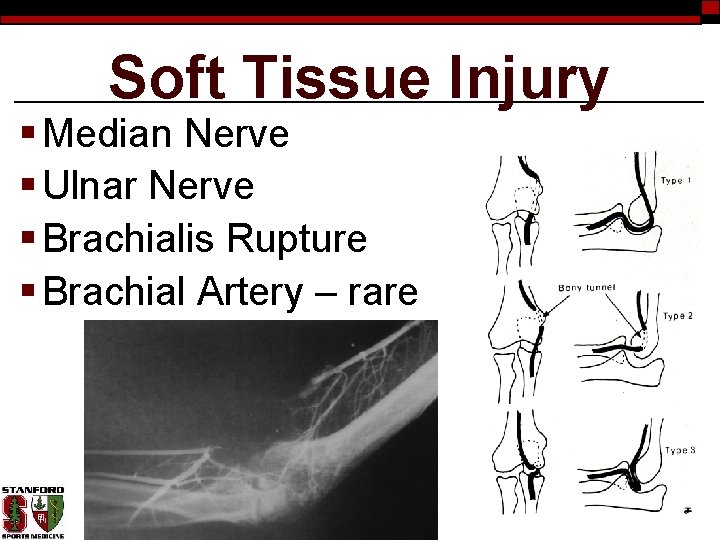
Soft Tissue Injury § Median Nerve § Ulnar Nerve § Brachialis Rupture § Brachial Artery – rare
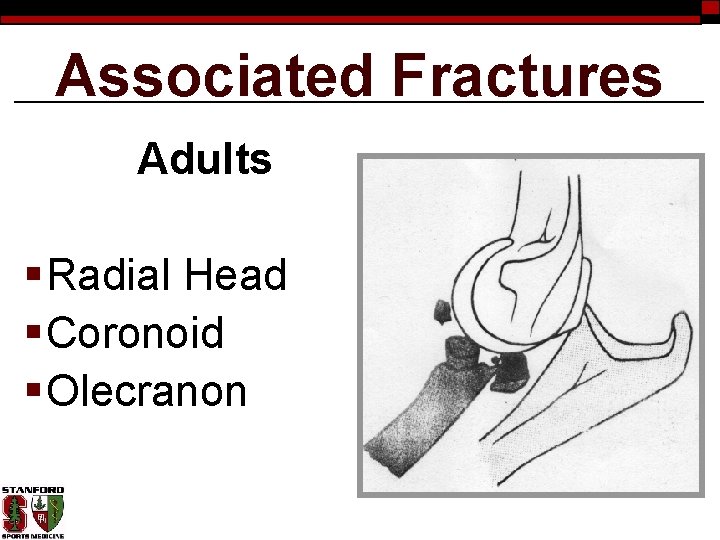
Associated Fractures Adults § Radial Head § Coronoid § Olecranon
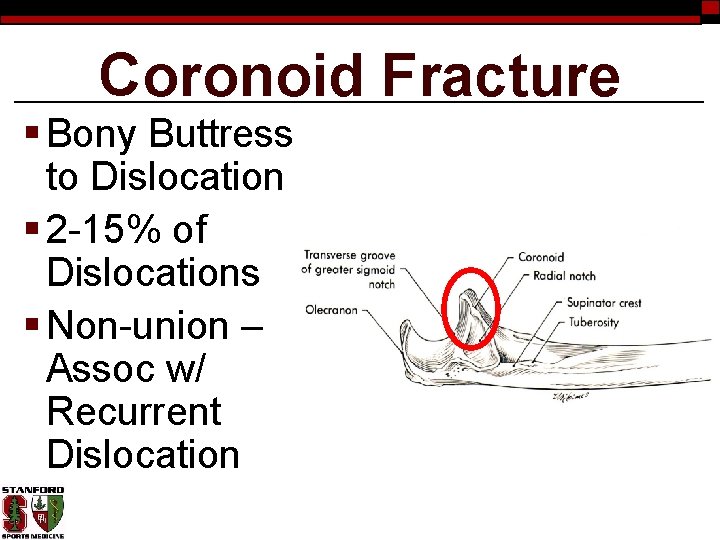
Coronoid Fracture § Bony Buttress to Dislocation § 2 -15% of Dislocations § Non-union – Assoc w/ Recurrent Dislocation
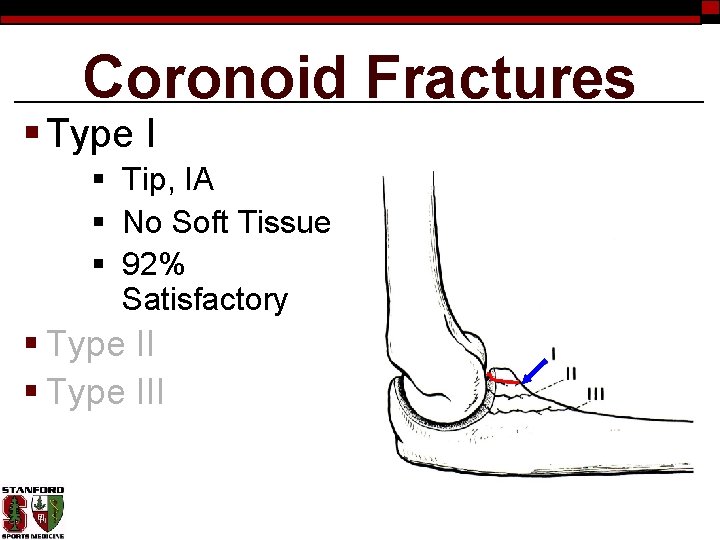
Coronoid Fractures § Type I § Tip, IA § No Soft Tissue § 92% Satisfactory § Type III
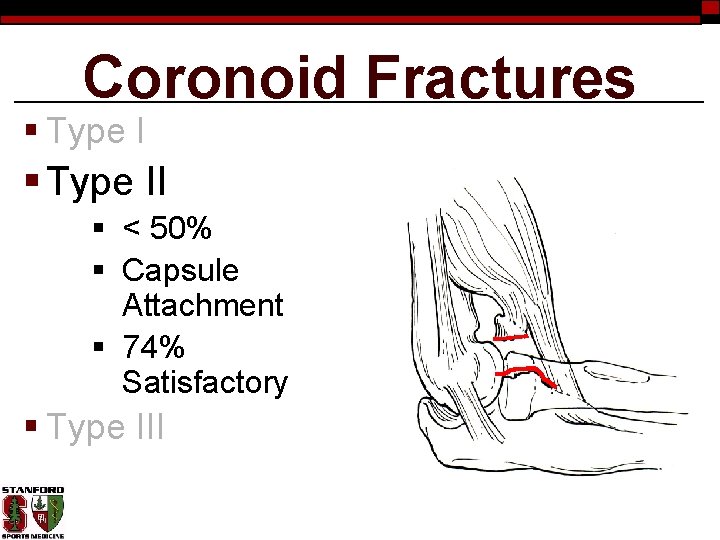
Coronoid Fractures § Type II § < 50% § Capsule Attachment § 74% Satisfactory § Type III
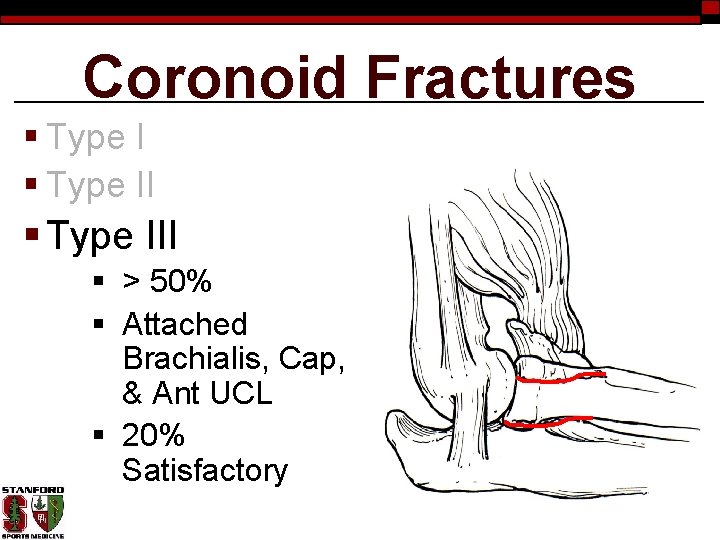
Coronoid Fractures § Type III § > 50% § Attached Brachialis, Cap, & Ant UCL § 20% Satisfactory
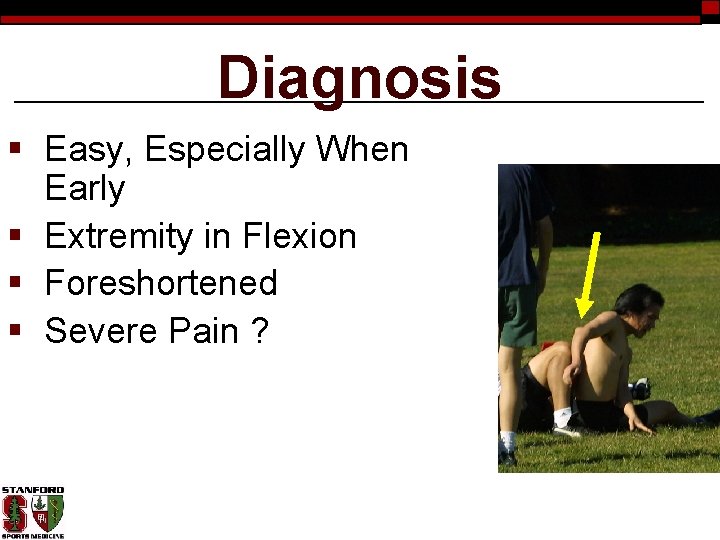
Diagnosis § Easy, Especially When Early § Extremity in Flexion § Foreshortened § Severe Pain ?
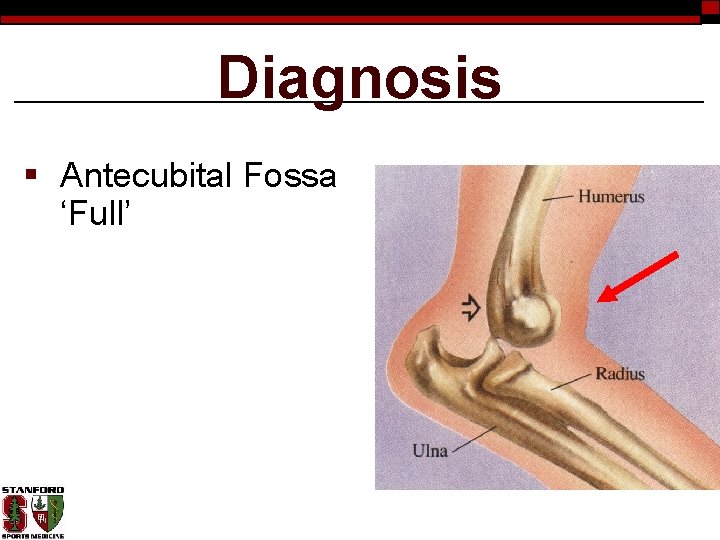
Diagnosis § Antecubital Fossa ‘Full’
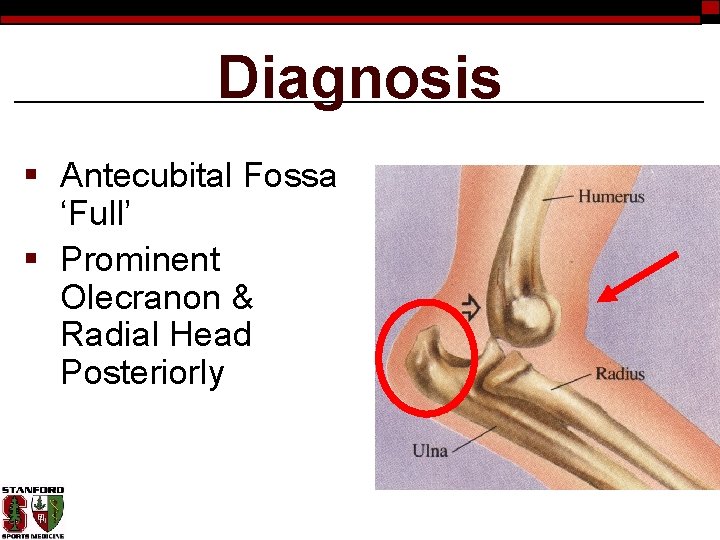
Diagnosis § Antecubital Fossa ‘Full’ § Prominent Olecranon & Radial Head Posteriorly
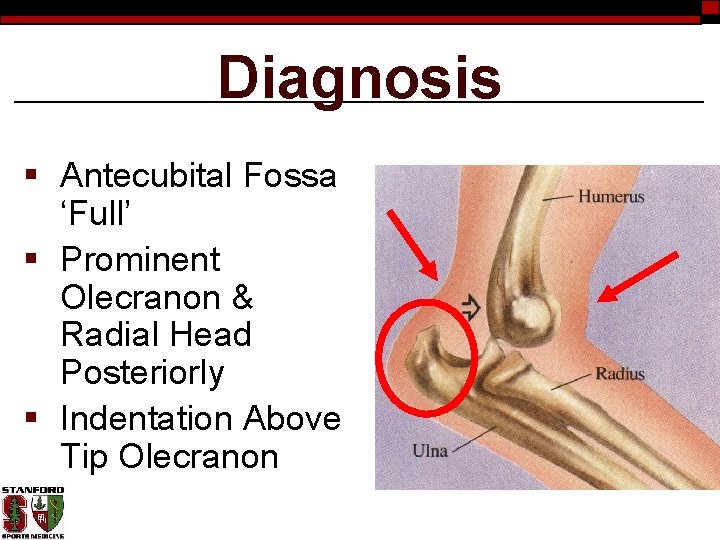
Diagnosis § Antecubital Fossa ‘Full’ § Prominent Olecranon & Radial Head Posteriorly § Indentation Above Tip Olecranon
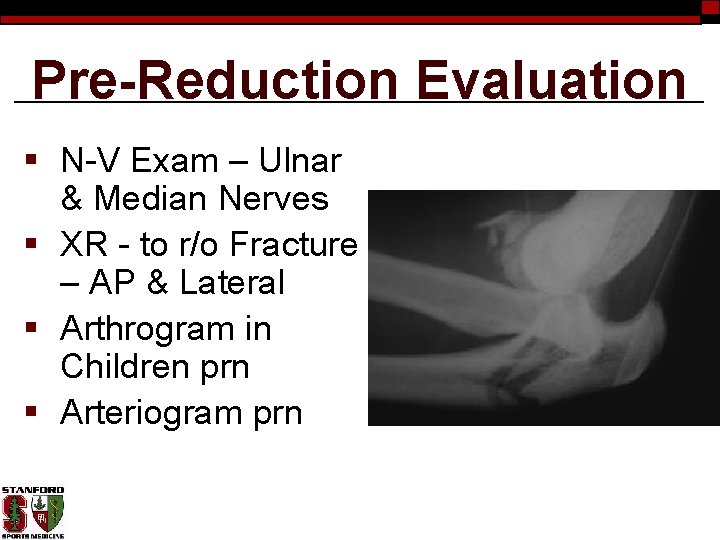
Pre-Reduction Evaluation § N-V Exam – Ulnar & Median Nerves § XR - to r/o Fracture – AP & Lateral § Arthrogram in Children prn § Arteriogram prn
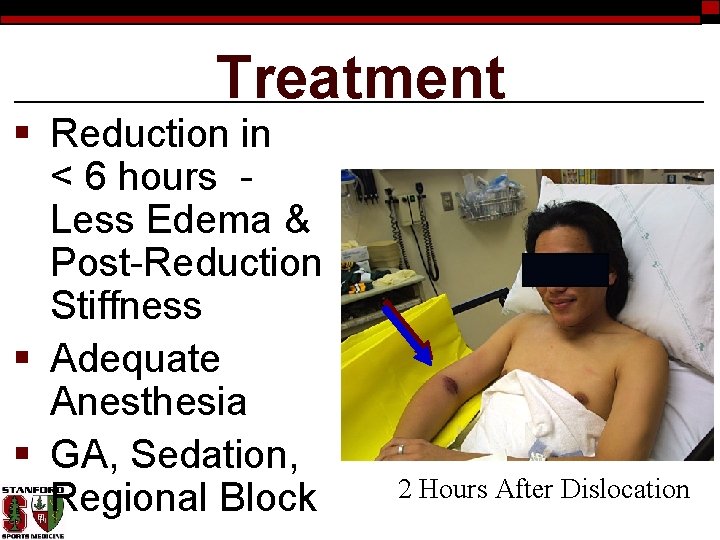
Treatment § Reduction in < 6 hours Less Edema & Post-Reduction Stiffness § Adequate Anesthesia § GA, Sedation, Regional Block 2 Hours After Dislocation
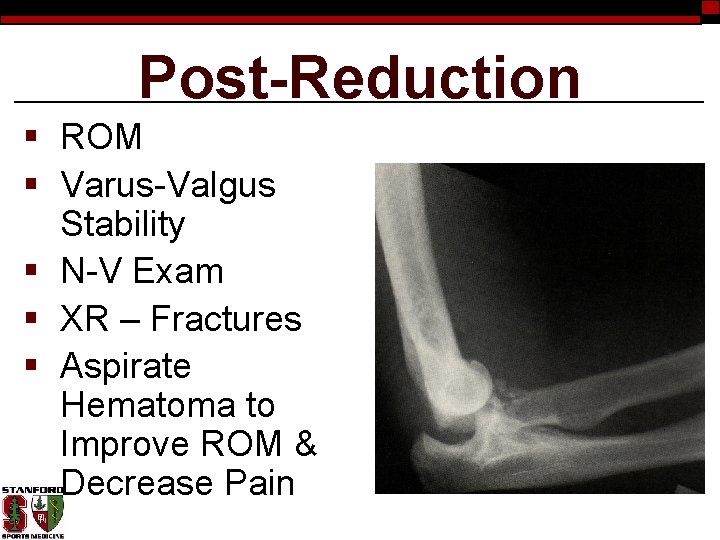
Post-Reduction § ROM § Varus-Valgus Stability § N-V Exam § XR – Fractures § Aspirate Hematoma to Improve ROM & Decrease Pain
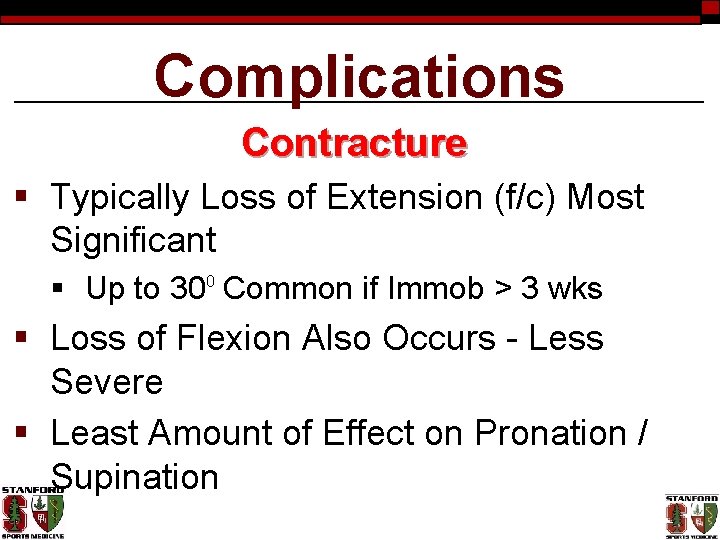
Complications Contracture § Typically Loss of Extension (f/c) Most Significant § Up to 300 Common if Immob > 3 wks § Loss of Flexion Also Occurs - Less Severe § Least Amount of Effect on Pronation / Supination
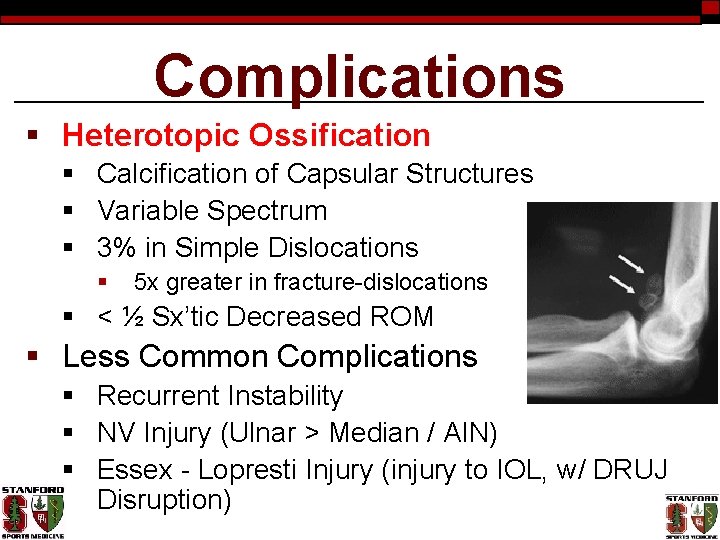
Complications § Heterotopic Ossification § Calcification of Capsular Structures § Variable Spectrum § 3% in Simple Dislocations § 5 x greater in fracture-dislocations § < ½ Sx’tic Decreased ROM § Less Common Complications § Recurrent Instability § NV Injury (Ulnar > Median / AIN) § Essex - Lopresti Injury (injury to IOL, w/ DRUJ Disruption)
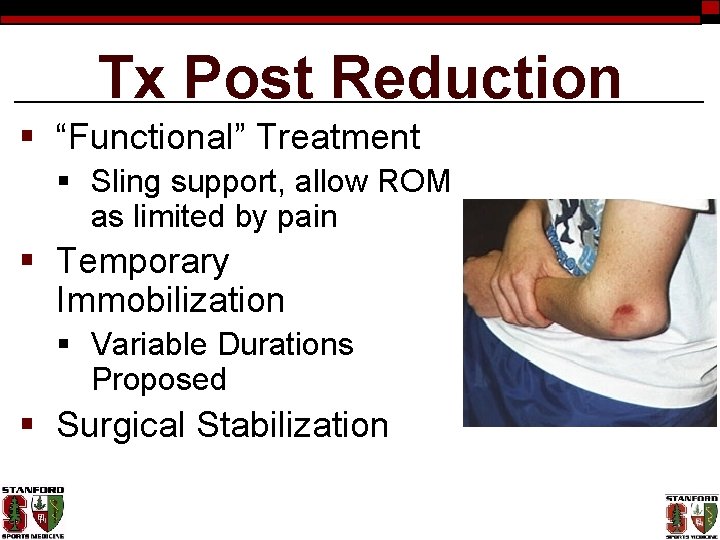
Tx Post Reduction § “Functional” Treatment § Sling support, allow ROM as limited by pain § Temporary Immobilization § Variable Durations Proposed § Surgical Stabilization
Non-op vs Surgery § Josefson, et al JBJS 1987 § Trend Towards More Loss of Extension in Surgery Group § No Stat Signif Diff in ROM, Grip Strength, Pain, Instability § No Re-Dislocation in Either Group
Elbow Dislocation Surgery § Surgical Indications (Rare) § Flexion > 600 Req’d to Maintain Reduction § Not Reduceable / Not Congruent Reduction § Incarcerated Soft Tissue / Cartilage § Recurrent Instability After Simple Dislocation § Occurs 1 -2% § Unstable Fracture - Dislocations
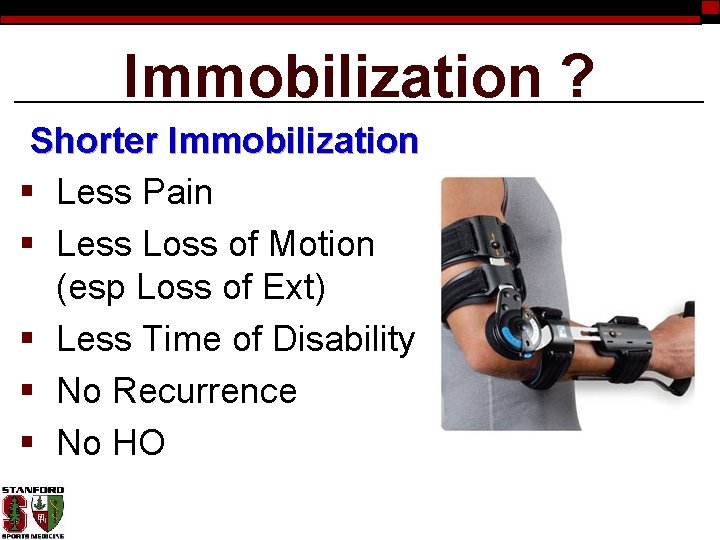
Immobilization ? Shorter Immobilization § Less Pain § Less Loss of Motion (esp Loss of Ext) § Less Time of Disability § No Recurrence § No HO
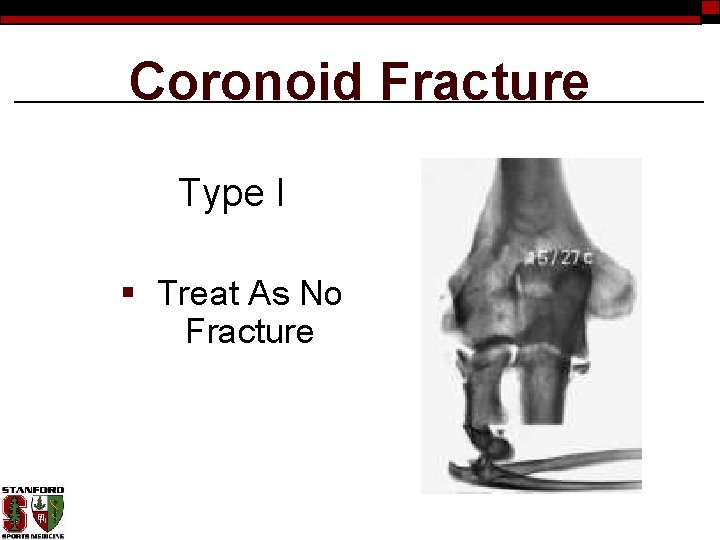
Coronoid Fracture Type I § Treat As No Fracture
Coronoid Fracture Type II & Stable § Immobilize 3 weeks
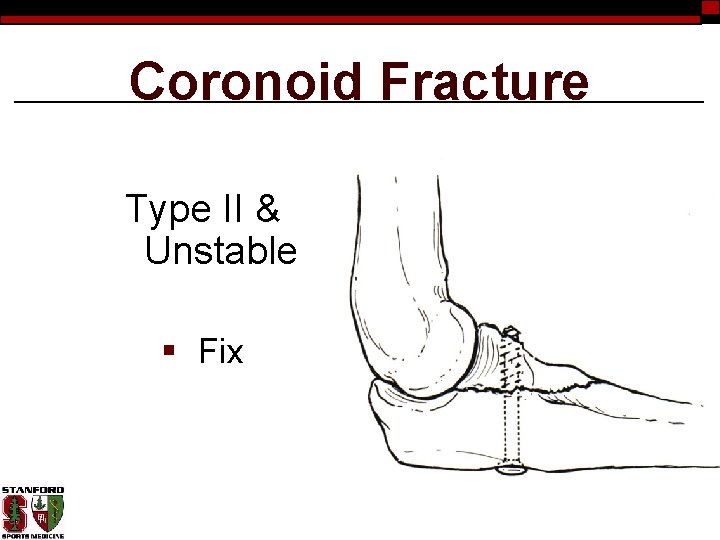
Coronoid Fracture Type II & Unstable § Fix
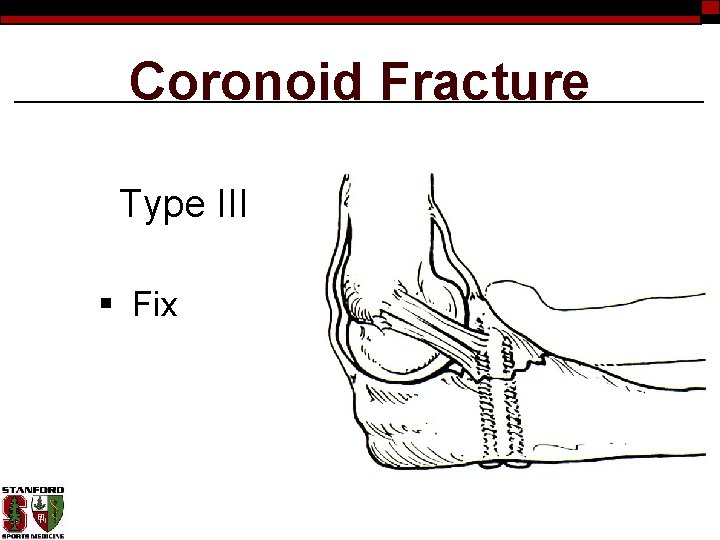
Coronoid Fracture Type III § Fix
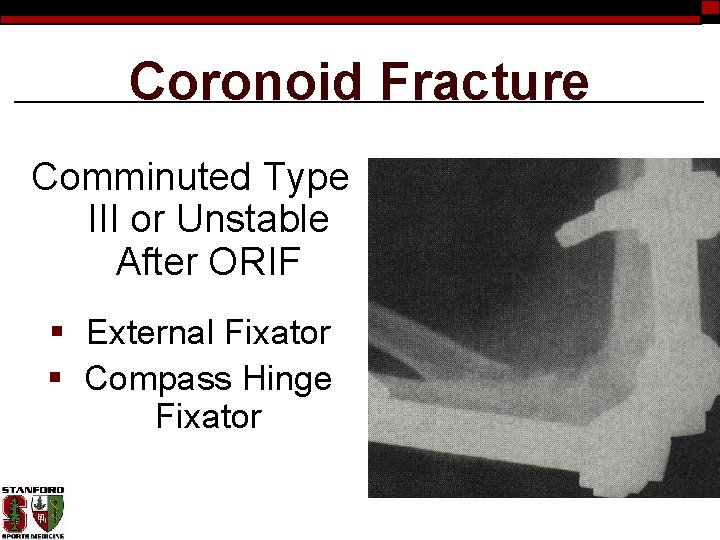
Coronoid Fracture Comminuted Type III or Unstable After ORIF § External Fixator § Compass Hinge Fixator
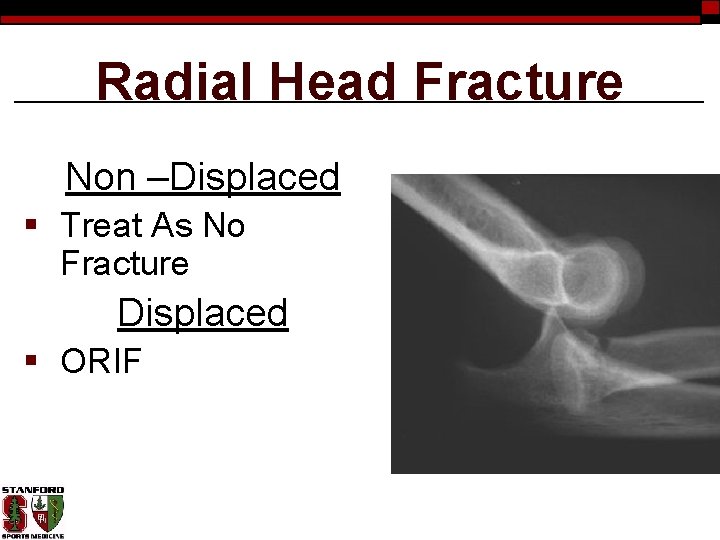
Radial Head Fracture Non –Displaced § Treat As No Fracture Displaced § ORIF
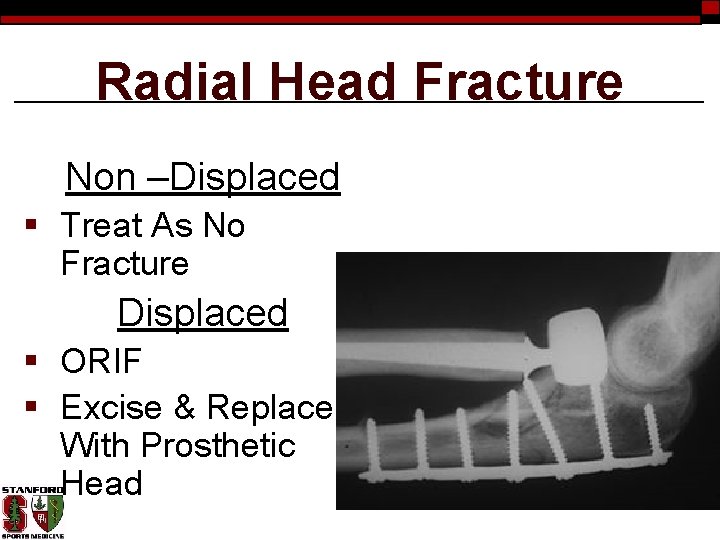
Radial Head Fracture Non –Displaced § Treat As No Fracture Displaced § ORIF § Excise & Replace With Prosthetic Head
Treatment - Unstable § Hinged Brace § Distractor § Primary Repair
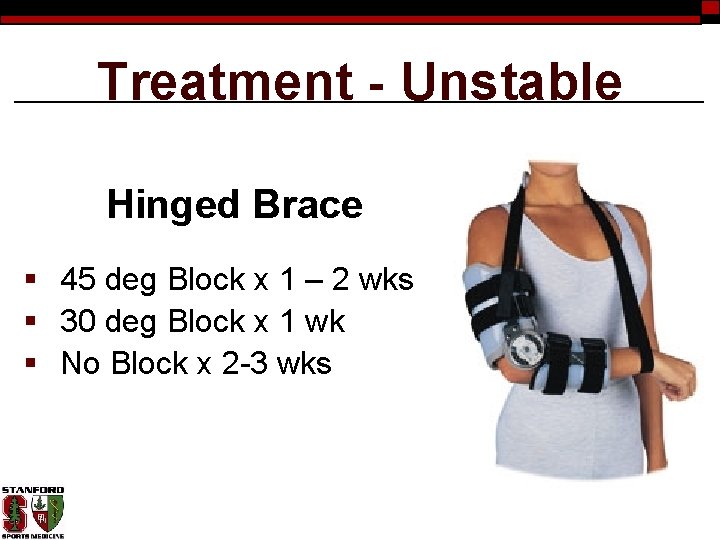
Treatment - Unstable Hinged Brace § 45 deg Block x 1 – 2 wks § 30 deg Block x 1 wk § No Block x 2 -3 wks
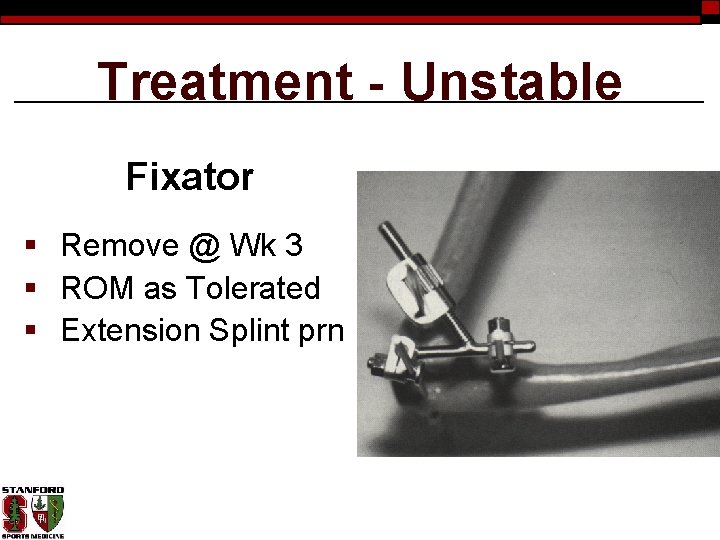
Treatment - Unstable Fixator § Remove @ Wk 3 § ROM as Tolerated § Extension Splint prn
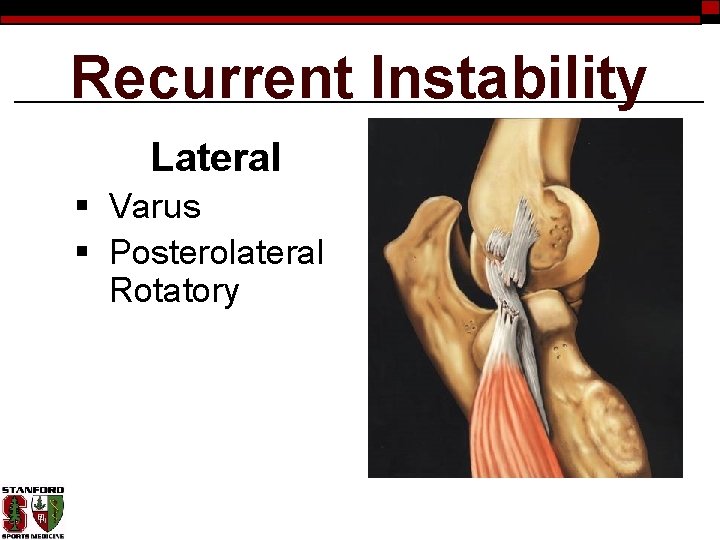
Recurrent Instability Lateral § Varus § Posterolateral Rotatory
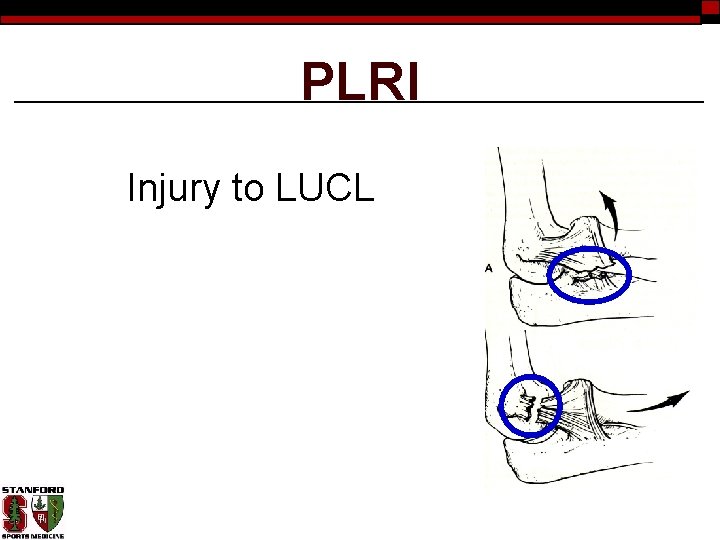
PLRI Injury to LUCL
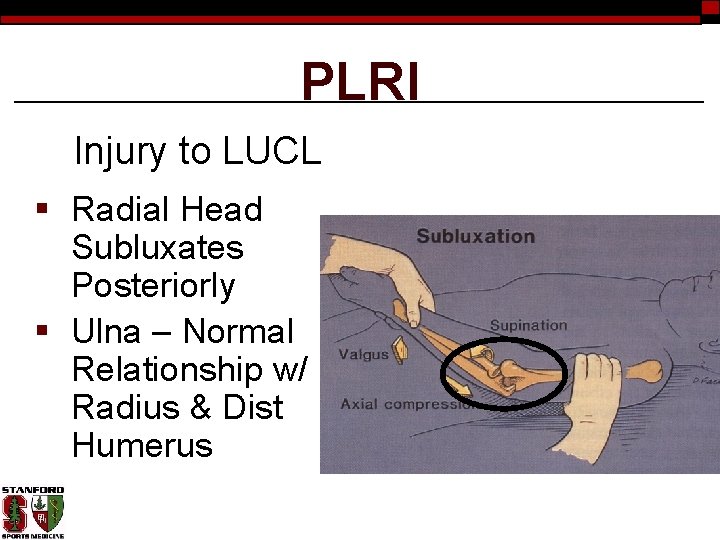
PLRI Injury to LUCL § Radial Head Subluxates Posteriorly § Ulna – Normal Relationship w/ Radius & Dist Humerus
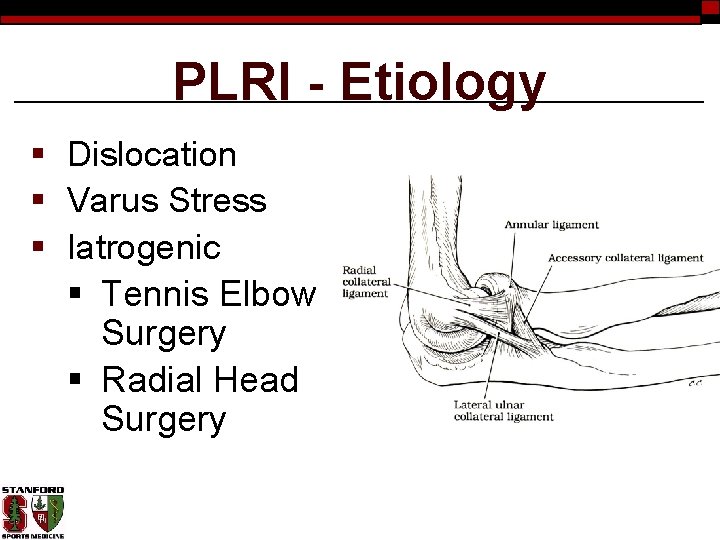
PLRI - Etiology § Dislocation § Varus Stress § Iatrogenic § Tennis Elbow Surgery § Radial Head Surgery
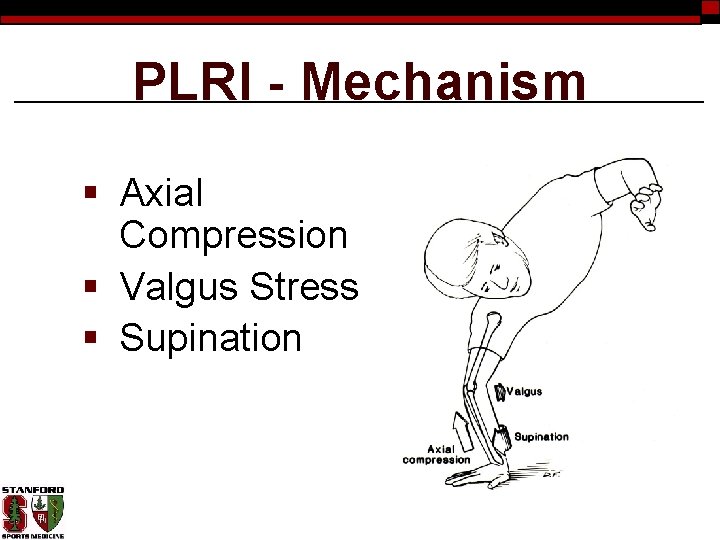
PLRI - Mechanism § Axial Compression § Valgus Stress § Supination
PLRI - Diagnosis High Degree of Suspicion
PLRI - History § § § Painful Clicking Snapping Clunking Locking Giving Way As Extend Elbow in Supination
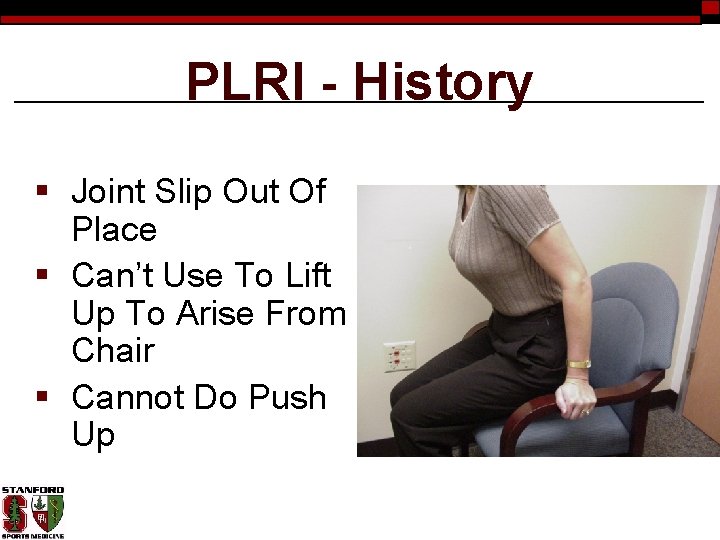
PLRI - History § Joint Slip Out Of Place § Can’t Use To Lift Up To Arise From Chair § Cannot Do Push Up
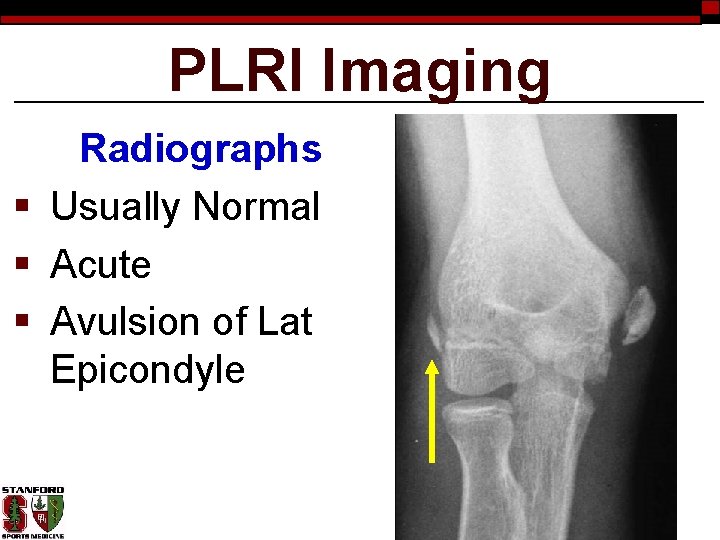
PLRI Imaging Radiographs § Usually Normal § Acute § Avulsion of Lat Epicondyle
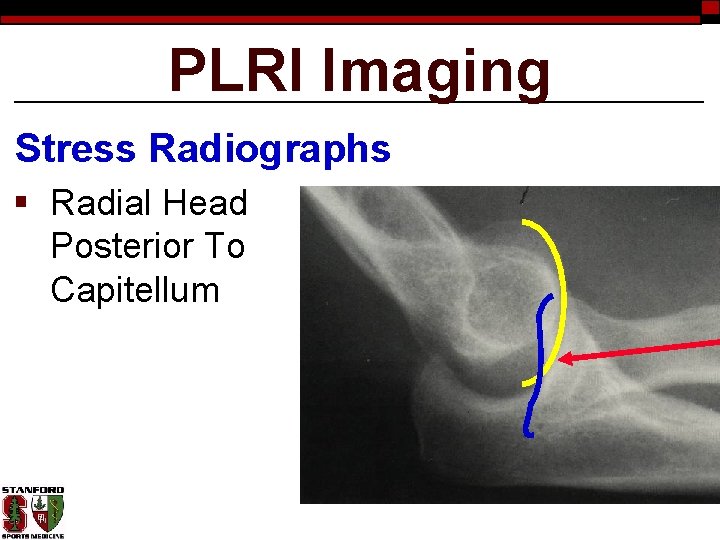
PLRI Imaging Stress Radiographs § Radial Head Posterior To Capitellum
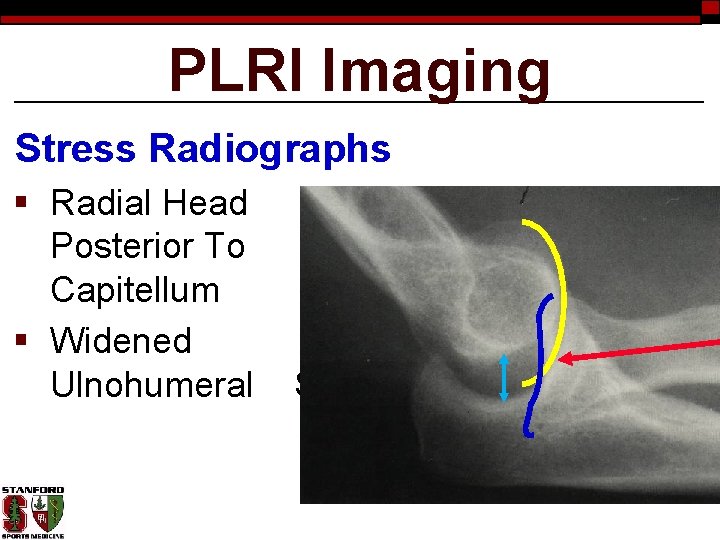
PLRI Imaging Stress Radiographs § Radial Head Posterior To Capitellum § Widened Ulnohumeral Space
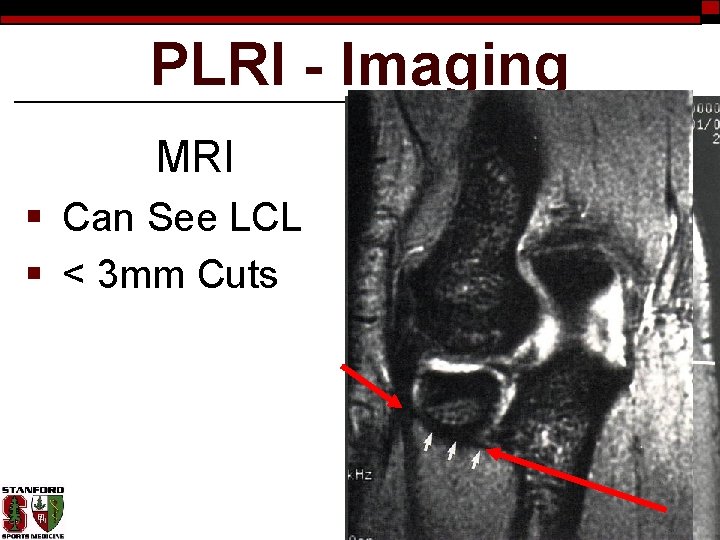
PLRI - Imaging MRI § Can See LCL § < 3 mm Cuts
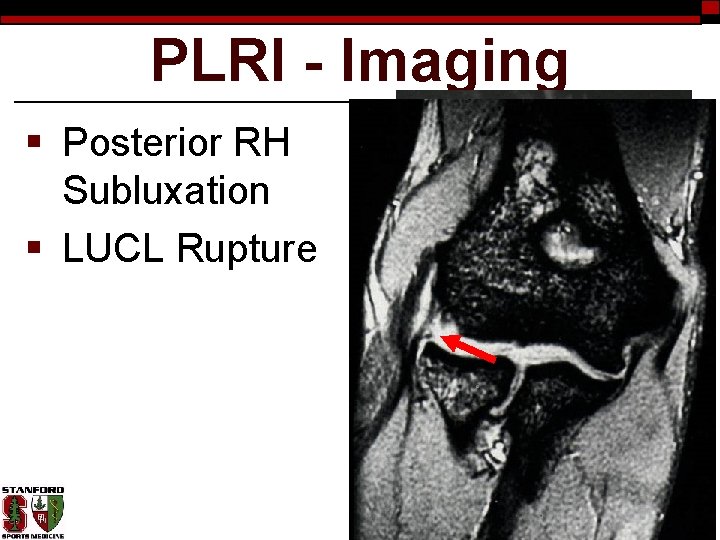
PLRI - Imaging § Posterior RH Subluxation § LUCL Rupture
Non-Op Treatment § None Proven § Activity Modification § Hinged Brace § Pronation § Extension Block
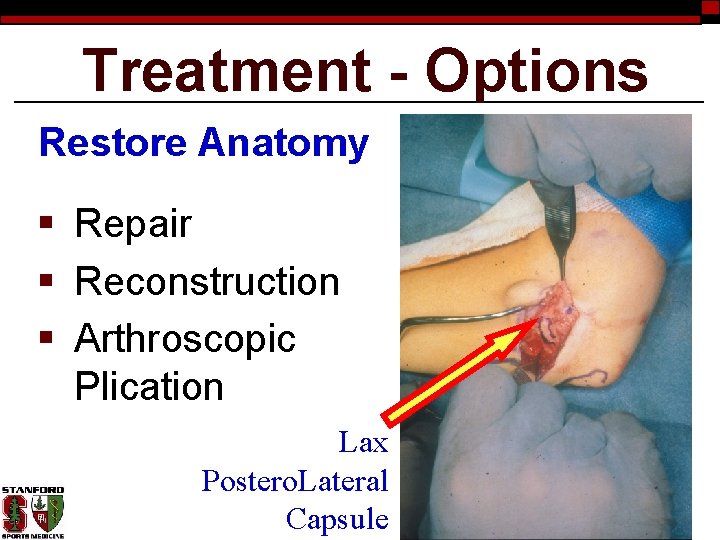
Treatment - Options Restore Anatomy § Repair § Reconstruction § Arthroscopic Plication Lax Postero. Lateral Capsule
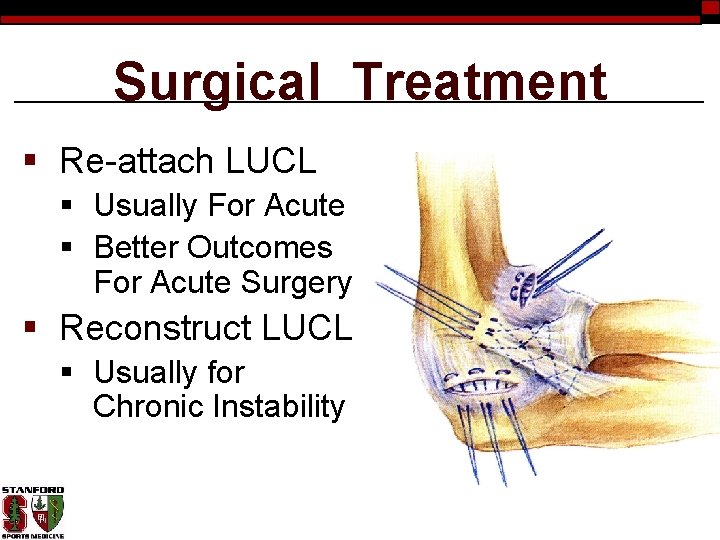
Surgical Treatment § Re-attach LUCL § Usually For Acute § Better Outcomes For Acute Surgery § Reconstruct LUCL § Usually for Chronic Instability
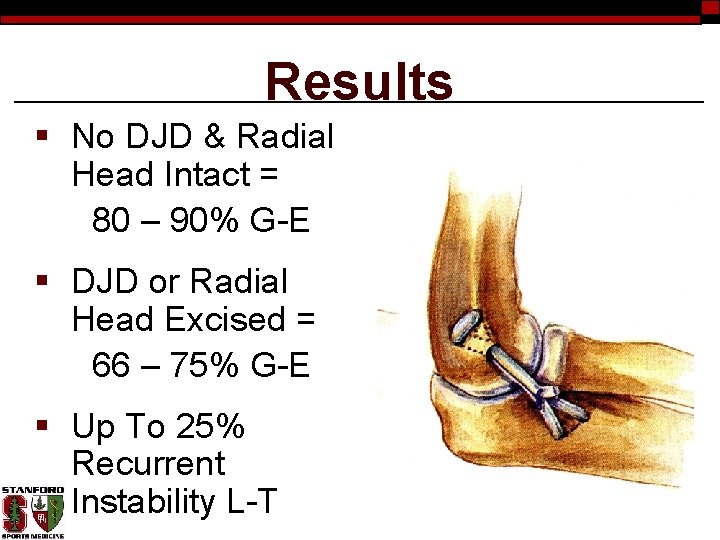
Results § No DJD & Radial Head Intact = 80 – 90% G-E § DJD or Radial Head Excised = 66 – 75% G-E § Up To 25% Recurrent Instability L-T
Summary Dislocations PLRI § NV Check After § High Index of Reduction Suspicion § If Stable, § Usually Reduce & Do Surgical Not Immobilize § Make Sure No Fracture

Thank You
- Slides: 54