
Elbow Anatomy Medial Epicondyle Lateral Epicondyle Trochlea and
Elbow Anatomy ® Medial Epicondyle ® Lateral Epicondyle ® Trochlea and Capitulum ® Olecranon Process ® Ulna and Radius ® Radial Head ® Interosseus Membrane
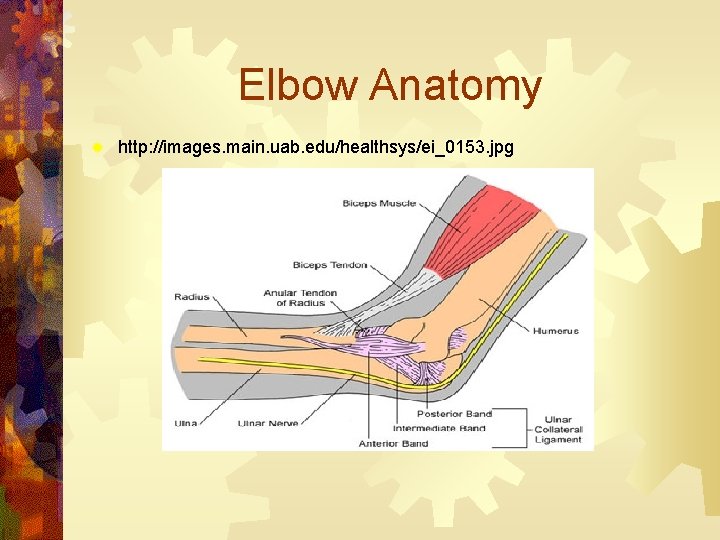
Elbow Anatomy ® http: //images. main. uab. edu/healthsys/ei_0153. jpg

Elbow Anatomy (2) ® Humeroulnar joint ® Hinge joint ® Trochlea of humerus ® Trochlear fossa of ulna ® Flexion (0 – 150) ® Extension (0)-some hyperextension(-5 to -15) ® Ligaments: Medial (ulnar) collateral (UCL) ® Lateral (radial) collateral (RCL) ®
Elbow Anatomy (3) ® Radioulnar ® Not joint part of elbow but associated with supination and pronation ® Supported by the annular ligament which binds the head of the radius to the radial notch of the ulna forming the joint ® Radius Rolls over the ulna
Muscular Anatomy ® Biceps (flexion w/ supination) ® Brachioradialis (flexion with arm neutral) ® Brachialis (flexion w/ pronation) ® Triceps (extension) ® Pronator Group (pronation) ® Supinator (supination)
Bursa, Blood and Nerve Supply ® Bursa- major one is olecranon bursa ® Blood supply ® Brachial artery Radial artery ® Ulnar artery ® ® Nerve supply ® Brachial plexus extends into the radial and ulna nerve***
Prevention of Injuries ® General muscular condition- FS 9 -1 ® Restrict pitching/ teach proper form ® Make sure equipment is proper (ie: racquet)- grip size, racquet weight ® Teach shoulder roll method of fallingexample volleyball players rolling after a dig
Contusions ® MOI: Direct contact ® HOPS Swelling, heat, discoloration or ecchymosis ® Limited range of motion ® ® TX ® Rule out fracture first ® Ice, wrap and pad area ® Avoid aggressive stretching and strengthening ® Watch for ectopic bone formation ® Ectopic = in a place other than normal
Olecranon Bursitis ® Olecranon bursa is largest in elbow ® MOI: fall on bent arm, leaning on elbow for long periods, infection ® HOPS ® Heat, ® Tx: redness, and rapid swelling ice, compression, pad area If associated with fever: refer Aspiration or draining may be needed
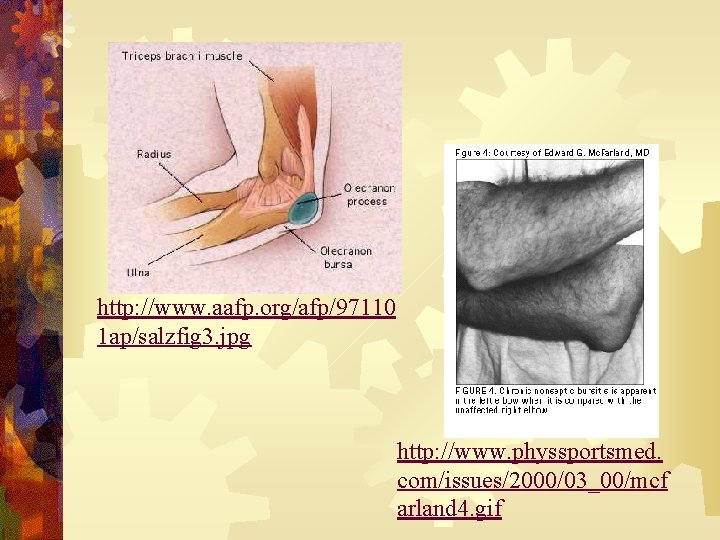
http: //www. aafp. org/afp/97110 1 ap/salzfig 3. jpg http: //www. physsportsmed. com/issues/2000/03_00/mcf arland 4. gif
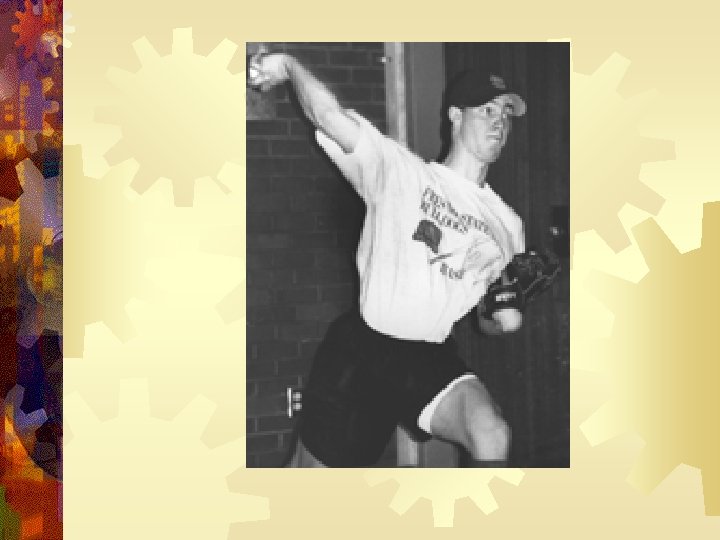
Elbow Sprains (1 – UCL) ® MOI: valgus force, repetitive stress ® HOPS: Pain over medial joint especially in cocking phase or acceleration phase of throwing ® Point tenderness over joint line ® + valgus stress test (increasing with degree 1 st 3 rd) ® ® Tx: rest, general strengthening of flexors/ pronators; Rule out ulnar nerve damage (numbness in little finger)
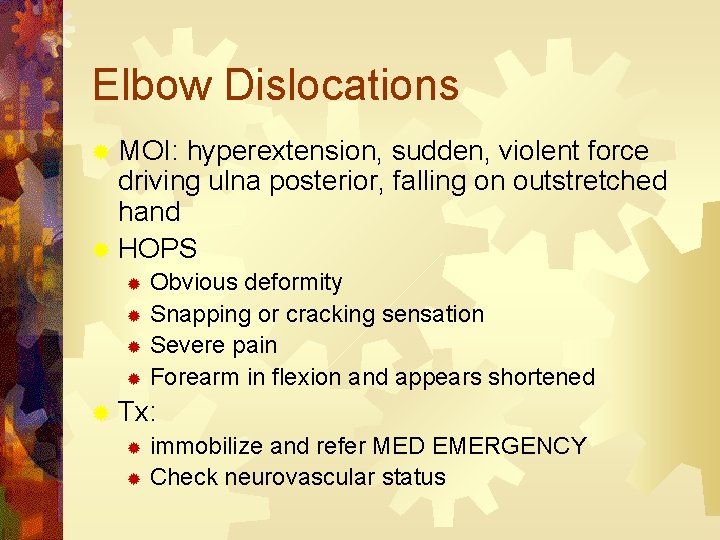
Elbow Dislocations ® MOI: hyperextension, sudden, violent force driving ulna posterior, falling on outstretched hand ® HOPS Obvious deformity ® Snapping or cracking sensation ® Severe pain ® Forearm in flexion and appears shortened ® ® Tx: ® immobilize and refer MED EMERGENCY ® Check neurovascular status
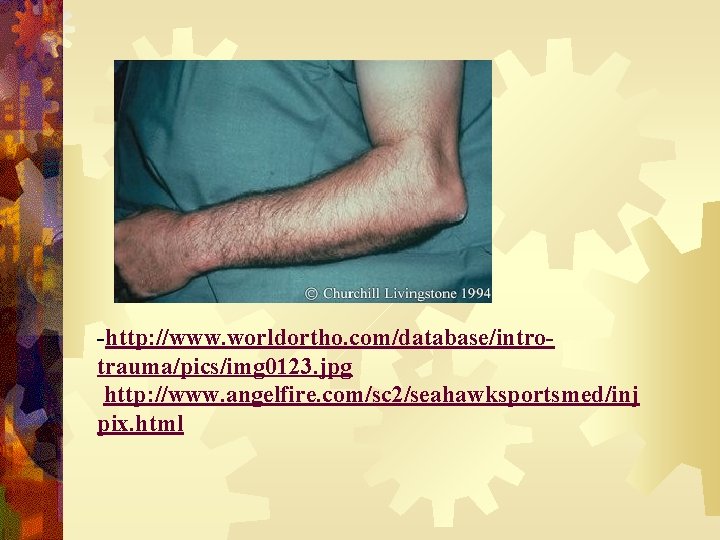
-http: //www. worldortho. com/database/introtrauma/pics/img 0123. jpg http: //www. angelfire. com/sc 2/seahawksportsmed/inj pix. html

Medial Epicondylitis ® “little league elbow, golfer’s elbow” ® MOI: repetitive tension or valgus forces on the arm ® HOPS-Box 9 -1 Swelling, ecchymosis over medial epicondyle ® Pain aggravated by pronation and resisted flexion of wrist ® Tingling and numbness in 4 th and 5 th fingers ® ® Tx: ® See Field Strategy 9. 3
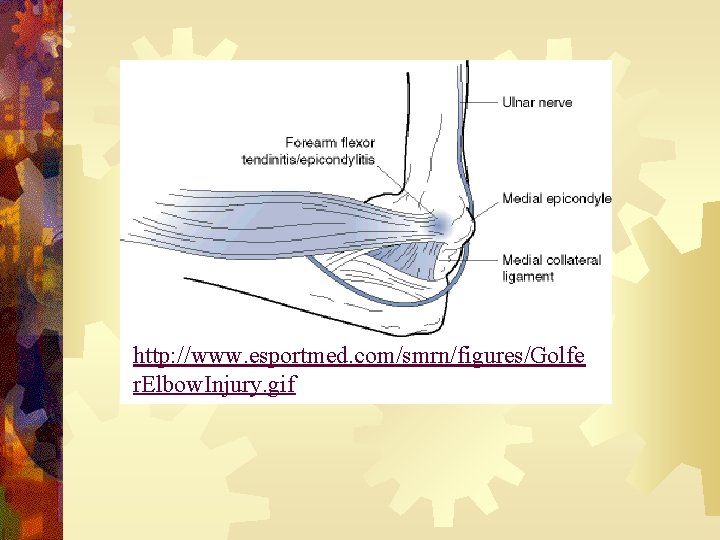
http: //www. esportmed. com/smrn/figures/Golfe r. Elbow. Injury. gif
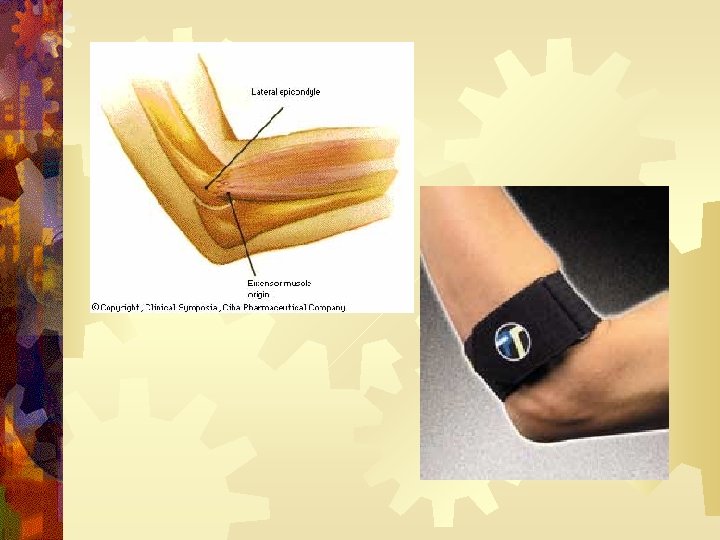
Lateral Epicondylitis ® “tennis elbow” ® Most common overuse injury in the adult elbow ® MOI: eccentric loading on wrist extensors during deceleration ® Precursor: too large tennis raquet, gripping racket too tightly, excessive string tension, faulty mechanics
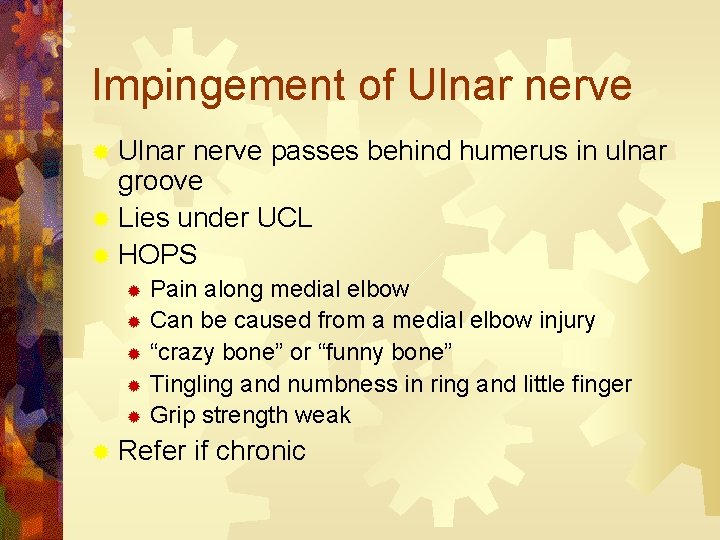
Lateral Epicondylitis (2) ® HOPS Pain over lateral epicondyle ® Pain with resisted wrist extension ® + tennis elbow test ® ® Tx RICE ® Increase strength, power, endurance of wrist extensors ® Counter force brace ®
Impingement of Ulnar nerve ® Ulnar nerve passes behind humerus in ulnar groove ® Lies under UCL ® HOPS Pain along medial elbow ® Can be caused from a medial elbow injury ® “crazy bone” or “funny bone” ® Tingling and numbness in ring and little finger ® Grip strength weak ® ® Refer if chronic
ROM testing ® See p 173 Fig 9 -23 ® Elbow flexion ® Elbow extension ® Wrist flexion and extension ® Pronation ® Supination
Stress Tests ® Valgus (UCL)/Varus (RCL) stress test – Positive Sign is laxity ® Tennis Elbow test-(Lateral Epicondylitis) - Positive Sign is increased pain ® Tinel’s sign (Ulnar nerve) – Numbness, Tinkling into Ulnar nerve region.
- Slides: 22