
Elasticity Microeconomics What is Marketing Principles of Marketing



- Slides: 29
Elasticity Microeconomics What is Marketing? Principles of Marketing
Elasticity How responsive or sensitive one thing is to a change in another thing
Factors that Affect Elasticity
Substitutes Price elasticity of demand is fundamentally about substitutes. If it’s easy to find a substitute product when the price of a product increases, the demand will be more elastic. If there are few or no alternatives, demand will be less elastic.
Necessities vs. Luxuries A necessity is something you absolutely must have, almost regardless of the price. A luxury is something that would be nice to have, but it’s not absolutely necessary. In general, the greater the necessity of the product, the less elastic, or more inelastic, the demand will be, because substitutes are limited. The more luxurious the product is, the more elastic demand will be.
Share of the Consumer’s Budget If a product takes up a large share of a consumer’s budget, even a small percentage increase in price may make it prohibitively expensive to many buyers. The larger the share of an item in one’s budget, the more price elastic demand is likely to be.
Short Run Versus Long Run Price elasticity of demand is usually lower in the short run, before consumers have much time to react, than in the long run, when they have greater opportunity to find substitute goods. Thus, demand is more price elastic in the long run than in the short run
Competitive Dynamics Goods that can only be produced by one supplier generally have inelastic demand, while products that exist in a competitive marketplace have elastic demand. This is because a competitive marketplace offers more options for the buyer.
Practice Question: How elastic is the demand for: • Blood pressure medicine • Diamond engagement rings
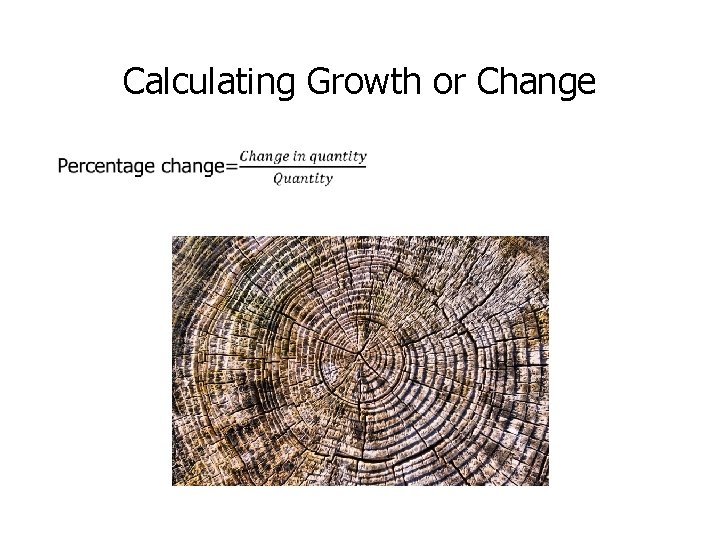
Calculating Growth or Change •
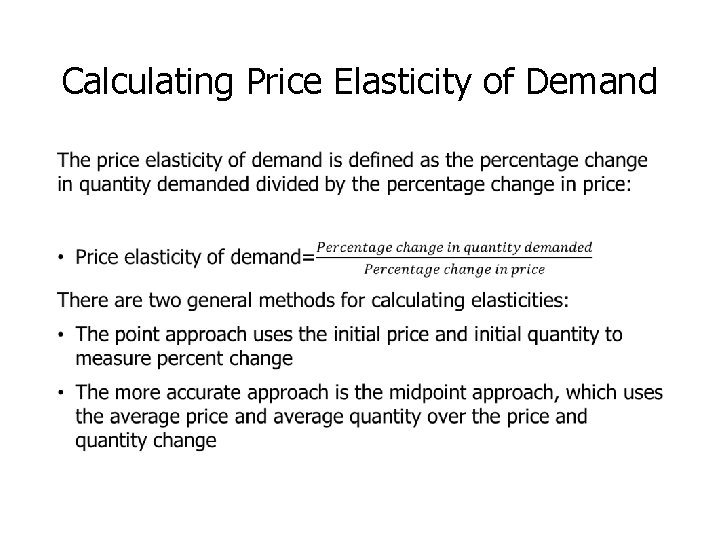
Calculating Price Elasticity of Demand •
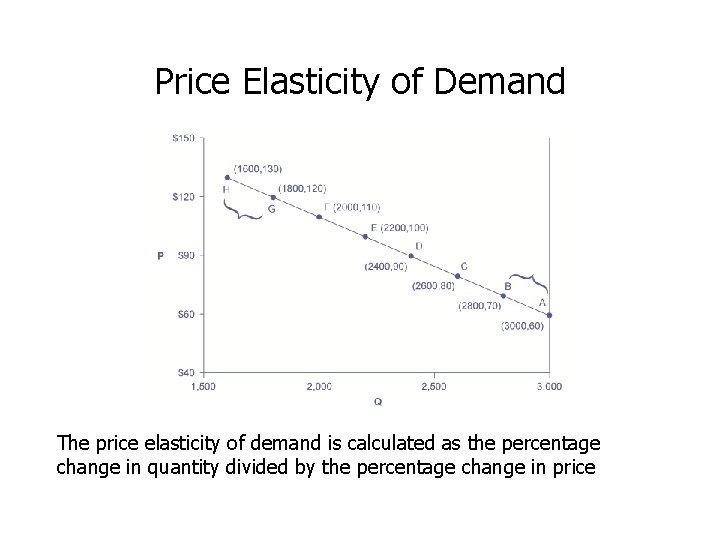
Price Elasticity of Demand The price elasticity of demand is calculated as the percentage change in quantity divided by the percentage change in price
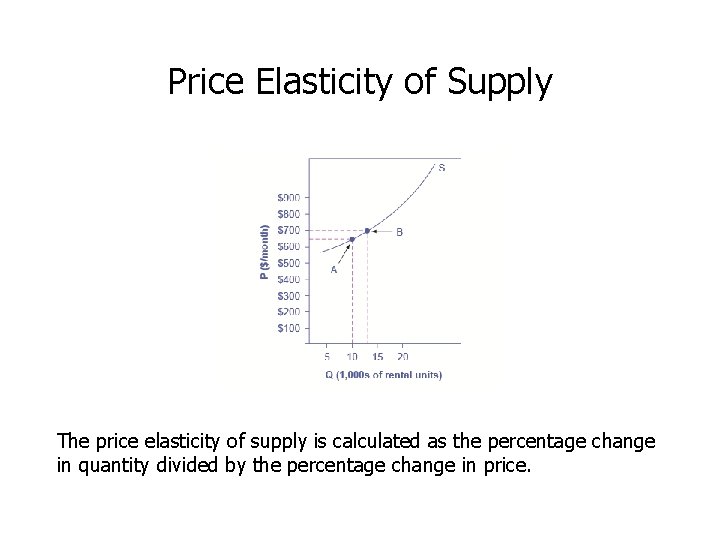
Price Elasticity of Supply The price elasticity of supply is calculated as the percentage change in quantity divided by the percentage change in price.
Elasticity Is Not Slope It’s a common mistake to confuse the slope of either the supply or demand curve with its elasticity. The slope is the rate of change in units along the curve, or the rise/run (change in y over the change in x)
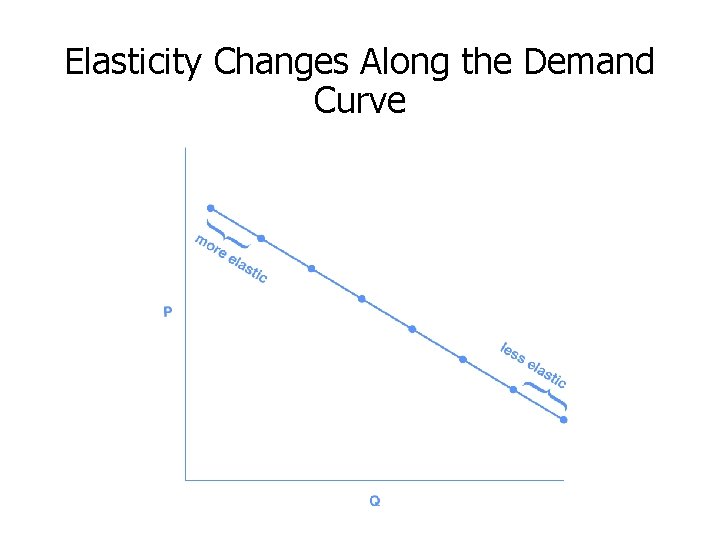
Elasticity Changes Along the Demand Curve
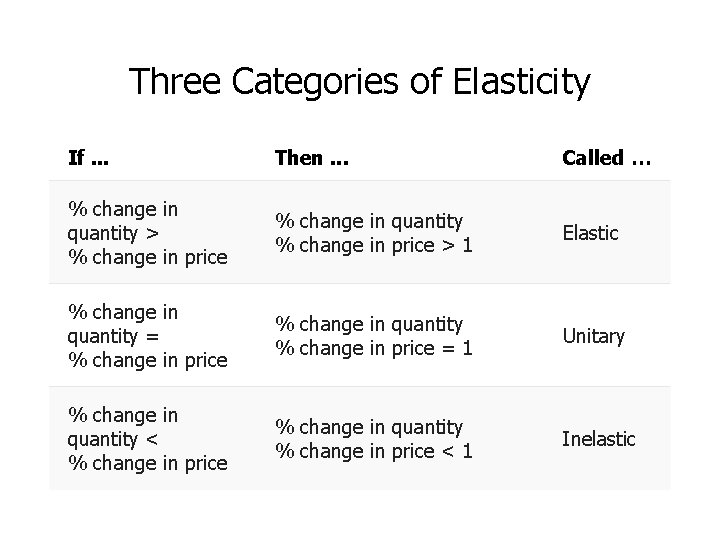
Three Categories of Elasticity If. . . Then. . . Called … % change in quantity > % change in price % change in quantity % change in price > 1 Elastic % change in quantity = % change in price % change in quantity % change in price = 1 Unitary % change in quantity < % change in price % change in quantity % change in price < 1 Inelastic
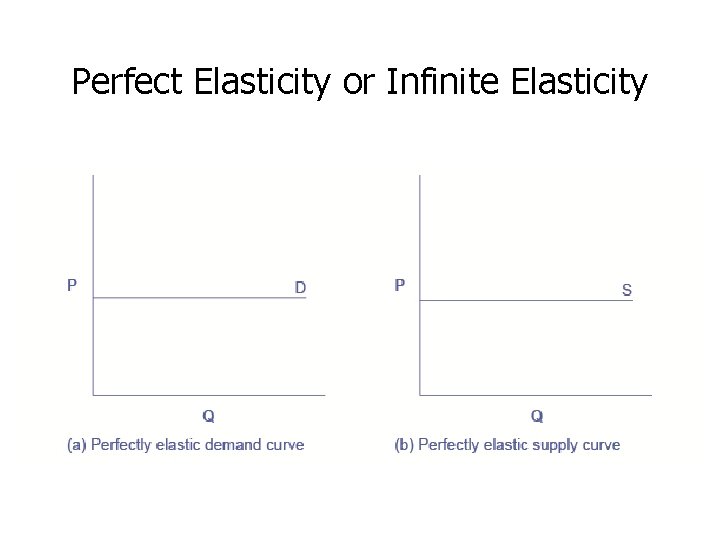
Perfect Elasticity or Infinite Elasticity
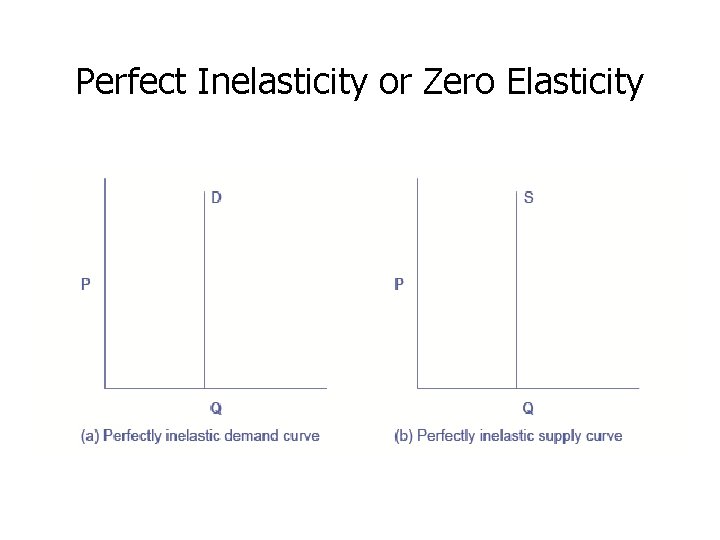
Perfect Inelasticity or Zero Elasticity
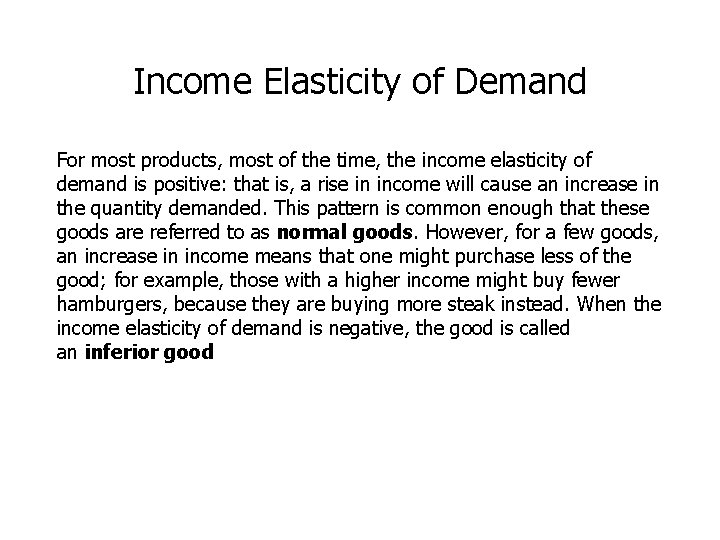
Income Elasticity of Demand For most products, most of the time, the income elasticity of demand is positive: that is, a rise in income will cause an increase in the quantity demanded. This pattern is common enough that these goods are referred to as normal goods. However, for a few goods, an increase in income means that one might purchase less of the good; for example, those with a higher income might buy fewer hamburgers, because they are buying more steak instead. When the income elasticity of demand is negative, the good is called an inferior good
Cross-Price Elasticity of Demand A change in the price of one good can shift the quantity demanded for another good. • For complements, like bread and peanut butter, then a drop in the price of one good will lead to an increase in the quantity demanded of the other good • if the two goods are substitutes, like plane tickets and train tickets, then a drop in the price of one good will cause people to substitute toward that good, and to reduce consumption of the other good
Wage Elasticity of Labor Supply In the labor market, for example, the wage elasticity of labor supply —that is, the percentage change in hours worked divided by the percentage change in wages—will determine the shape of the labor supply curve • In general wage elasticity of labor supply depends on age
Elasticity of Savings In markets for financial capital, the elasticity of savings—that is, the percentage change in the quantity of savings divided by the percentage change in interest rates—will describe the shape of the supply curve for financial capital • In the short run, the elasticity of savings with respect to the interest rate appears fairly inelastic
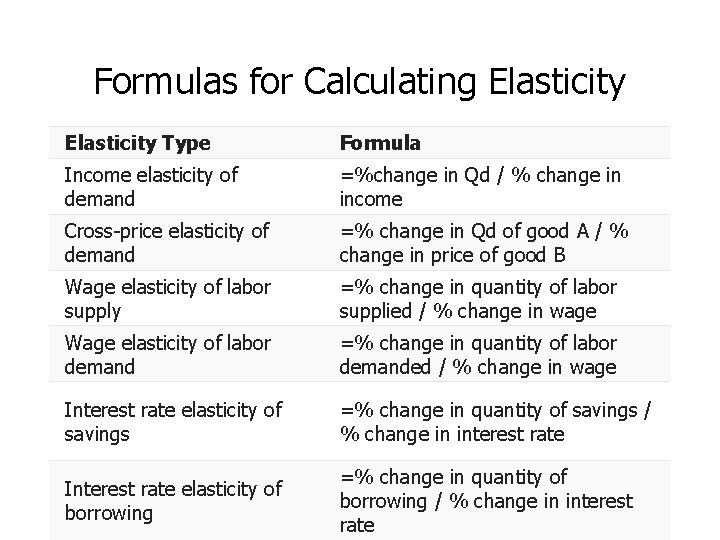
Formulas for Calculating Elasticity Type Formula Income elasticity of demand =%change in Qd / % change in income Cross-price elasticity of demand =% change in Qd of good A / % change in price of good B Wage elasticity of labor supply =% change in quantity of labor supplied / % change in wage Wage elasticity of labor demand =% change in quantity of labor demanded / % change in wage Interest rate elasticity of savings =% change in quantity of savings / % change in interest rate Interest rate elasticity of borrowing =% change in quantity of borrowing / % change in interest rate
Total Revenue The key consideration when thinking about maximizing revenue is the price elasticity of demand. Total revenue is the price of an item multiplied by the number of units sold: TR = P x Qd
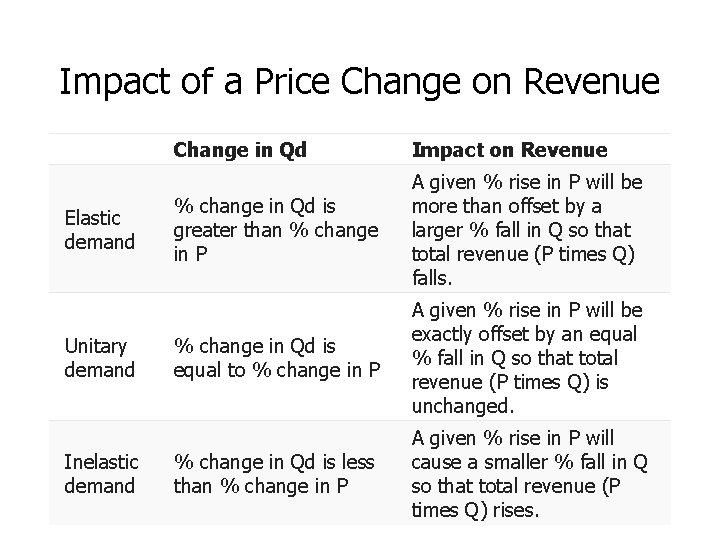
Impact of a Price Change on Revenue Elastic demand Unitary demand Inelastic demand Change in Qd Impact on Revenue % change in Qd is greater than % change in P A given % rise in P will be more than offset by a larger % fall in Q so that total revenue (P times Q) falls. % change in Qd is equal to % change in P A given % rise in P will be exactly offset by an equal % fall in Q so that total revenue (P times Q) is unchanged. % change in Qd is less than % change in P A given % rise in P will cause a smaller % fall in Q so that total revenue (P times Q) rises.
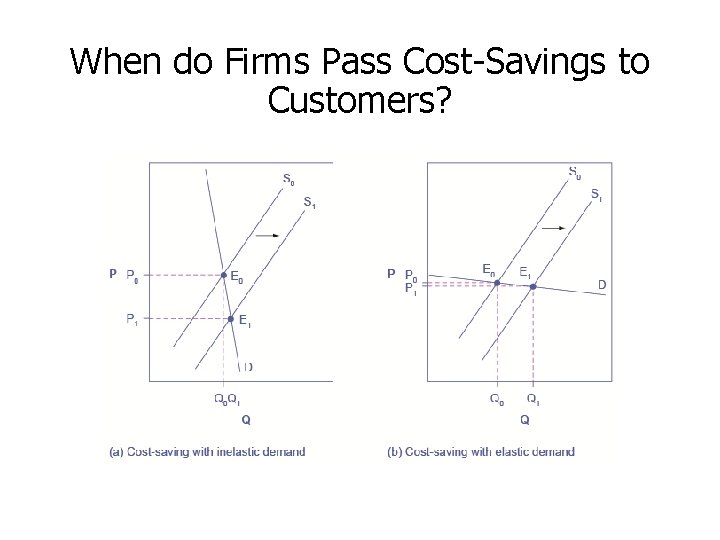
When do Firms Pass Cost-Savings to Customers?
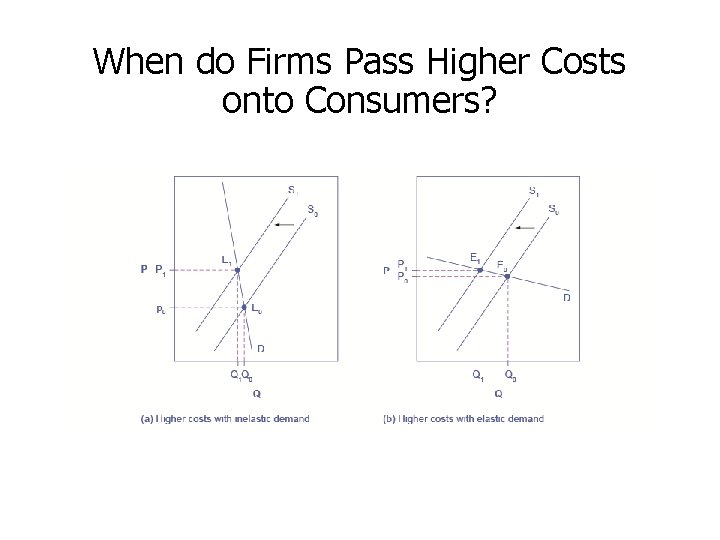
When do Firms Pass Higher Costs onto Consumers?
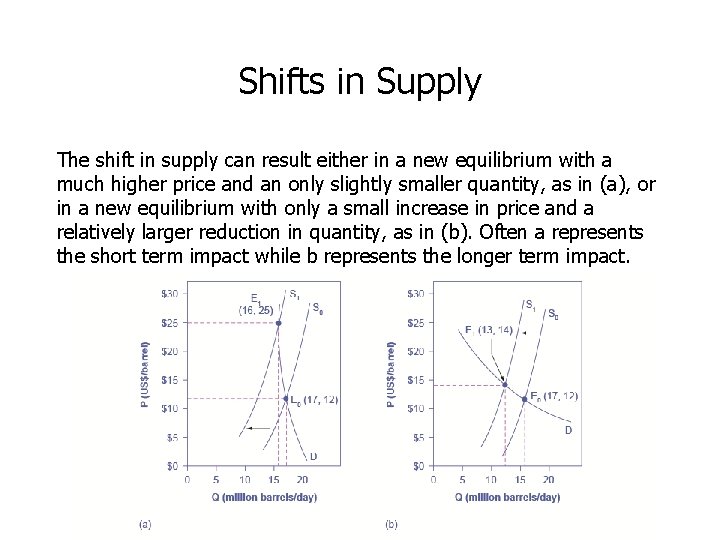
Shifts in Supply The shift in supply can result either in a new equilibrium with a much higher price and an only slightly smaller quantity, as in (a), or in a new equilibrium with only a small increase in price and a relatively larger reduction in quantity, as in (b). Often a represents the short term impact while b represents the longer term impact.
Quick Review • What is elasticity? • What are the price elasticity of demand price elasticity of supply? How are they calculated using the midpoint method? • What are other elasticities using common economic variables? How are they calculated? • How does a firm’s price elasticity of demand affect total revenue?