
Elastic waveequation migration for laterally varying isotropic and
- Slides: 35
Elastic wave-equation migration for laterally varying isotropic and HTI media Richard A. Bale and Gary F. Margrave
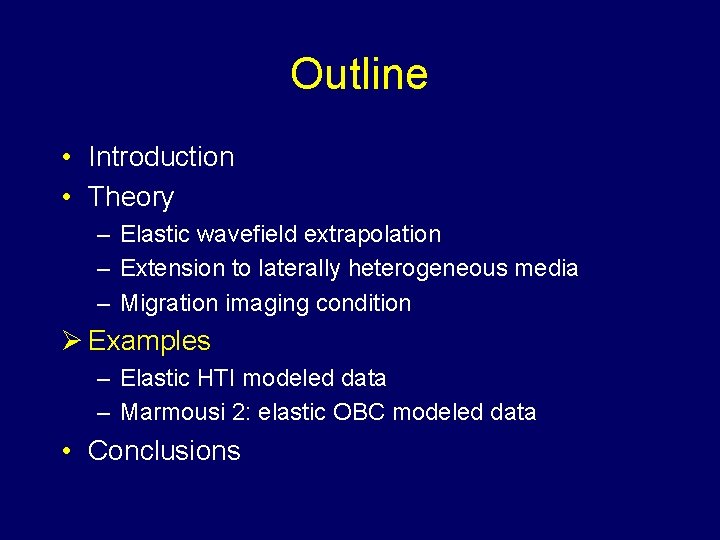
Outline Ø Introduction • Theory – Elastic wavefield extrapolation – Extension to laterally heterogeneous media – Migration imaging condition • Examples – Elastic HTI modeled data – Marmousi 2: elastic OBC modeled data • Conclusions
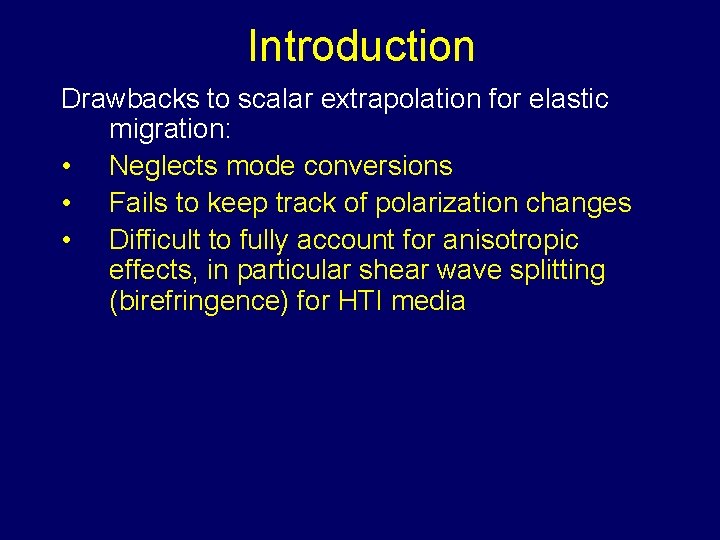
Introduction Drawbacks to scalar extrapolation for elastic migration: • Neglects mode conversions • Fails to keep track of polarization changes • Difficult to fully account for anisotropic effects, in particular shear wave splitting (birefringence) for HTI media
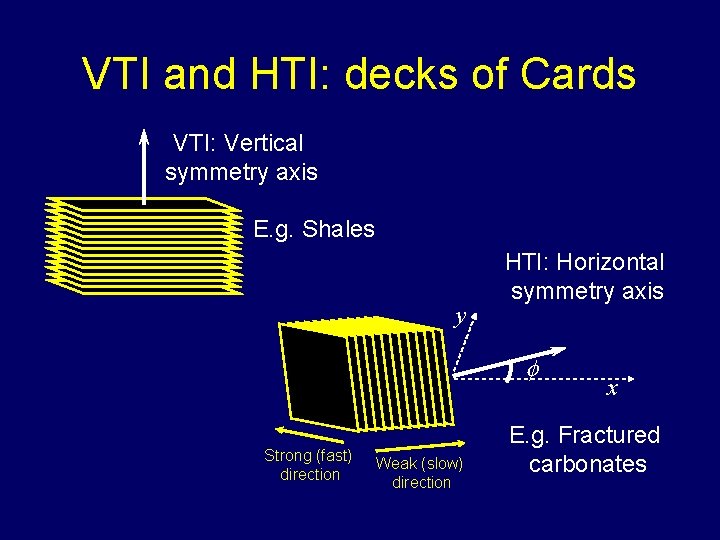
VTI and HTI: decks of Cards VTI: Vertical symmetry axis E. g. Shales y HTI: Horizontal symmetry axis f Strong (fast) direction Weak (slow) direction x E. g. Fractured carbonates
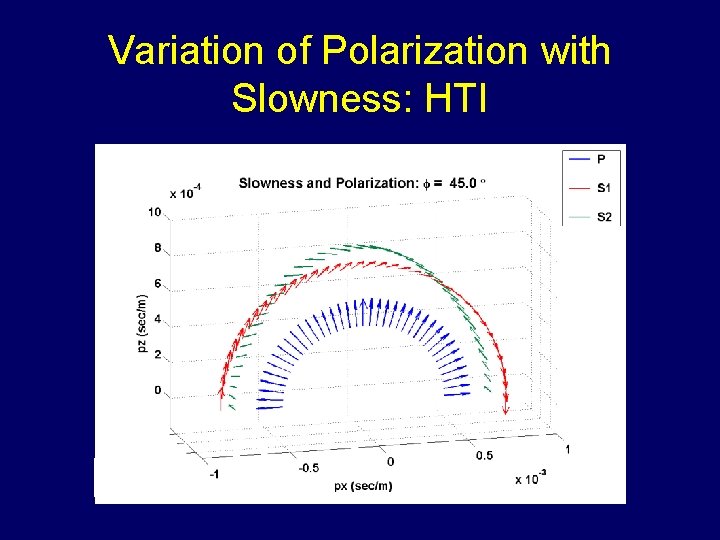
Variation of Polarization with Slowness: HTI
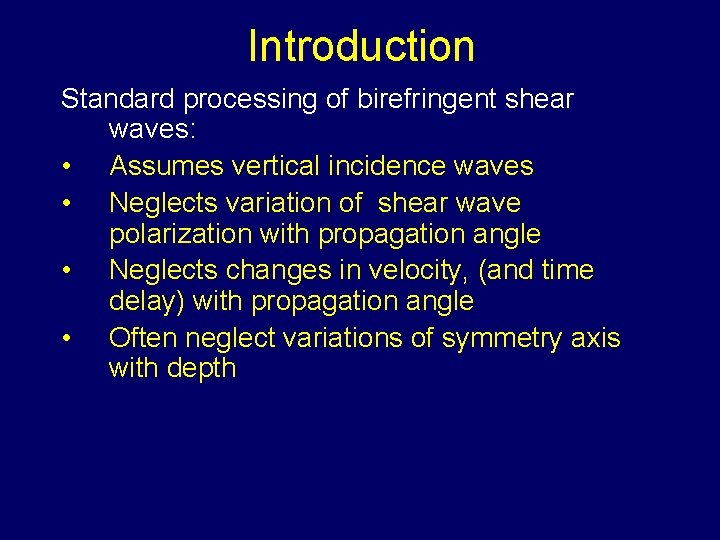
Introduction Standard processing of birefringent shear waves: • Assumes vertical incidence waves • Neglects variation of shear wave polarization with propagation angle • Neglects changes in velocity, (and time delay) with propagation angle • Often neglect variations of symmetry axis with depth
Outline • Introduction Ø Theory – Elastic wavefield extrapolation – Extension to laterally heterogeneous media – Migration imaging condition • Examples – Elastic HTI modeled data – Marmousi 2: elastic OBC modeled data • Conclusions
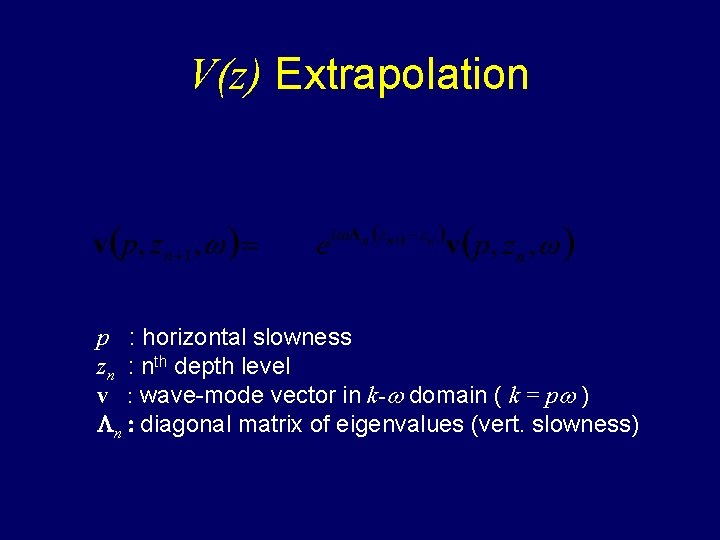
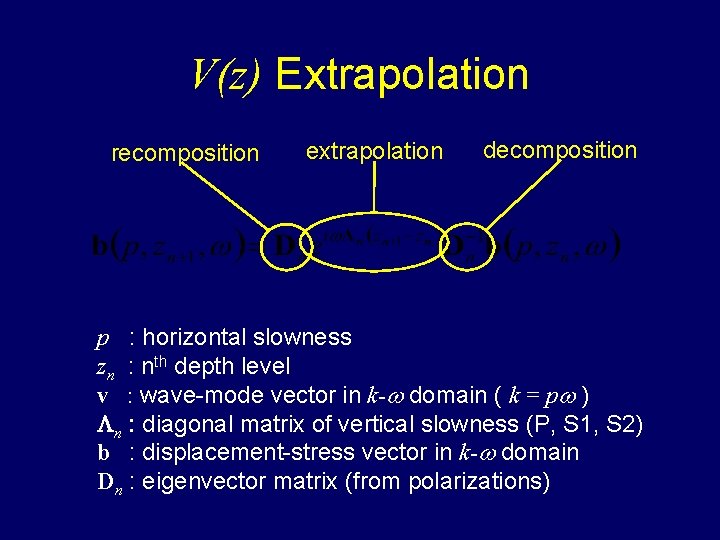
V(z) Extrapolation p : horizontal slowness zn : nth depth level v : wave-mode vector in k-w domain ( k = pw ) Ln : diagonal matrix of eigenvalues (vert. slowness)
V(z) Extrapolation recomposition extrapolation decomposition p : horizontal slowness zn : nth depth level v : wave-mode vector in k-w domain ( k = pw ) Ln : diagonal matrix of vertical slowness (P, S 1, S 2) b : displacement-stress vector in k-w domain Dn : eigenvector matrix (from polarizations)
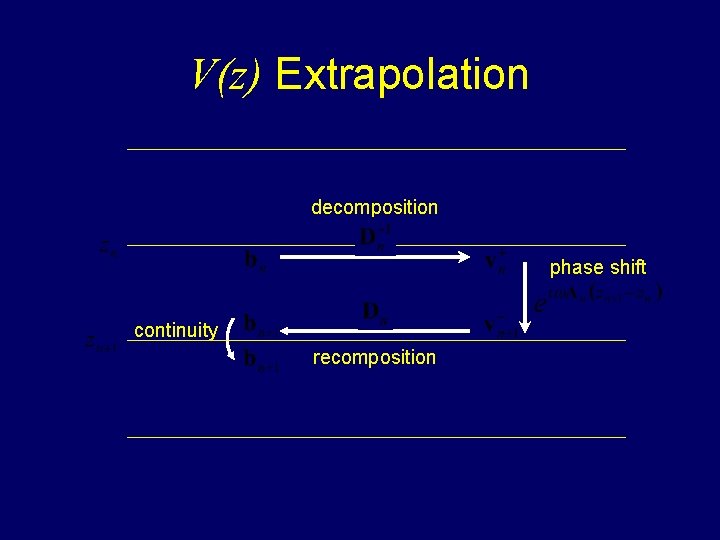
V(z) Extrapolation decomposition phase shift continuity recomposition
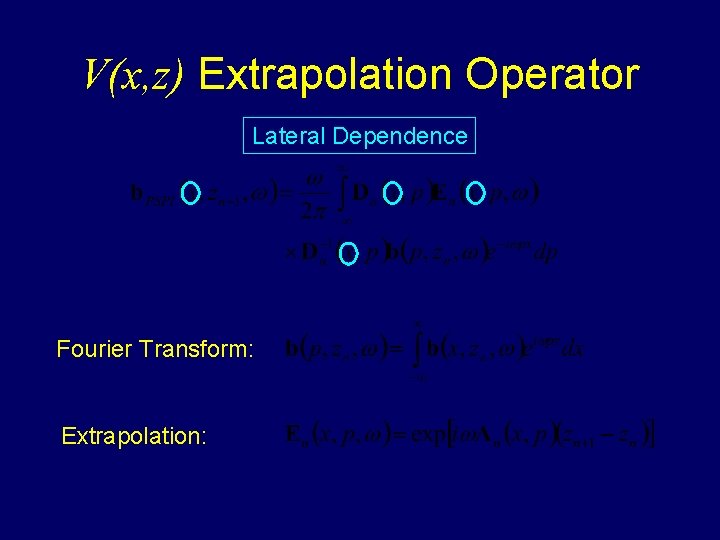
V(x, z) Extrapolation Operator Lateral Dependence Fourier Transform: Extrapolation:
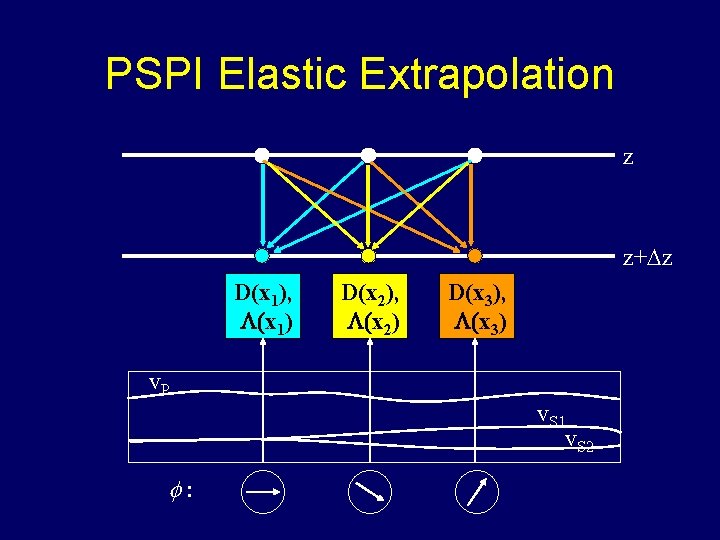
PSPI Elastic Extrapolation z z+Dz D(x 1), L(x 1) D(x 2), L(x 2) D(x 3), L(x 3) v. P v. S 1 v. S 2 f:
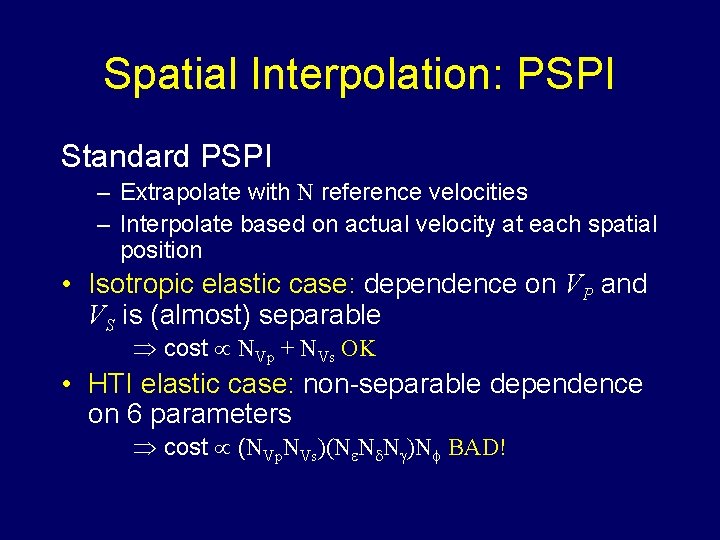
Spatial Interpolation: PSPI Standard PSPI – Extrapolate with N reference velocities – Interpolate based on actual velocity at each spatial position • Isotropic elastic case: dependence on VP and VS is (almost) separable cost NVp + NVs OK • HTI elastic case: non-separable dependence on 6 parameters cost (NVp. NVs)(Ne. Nd. Ng)Nf BAD!
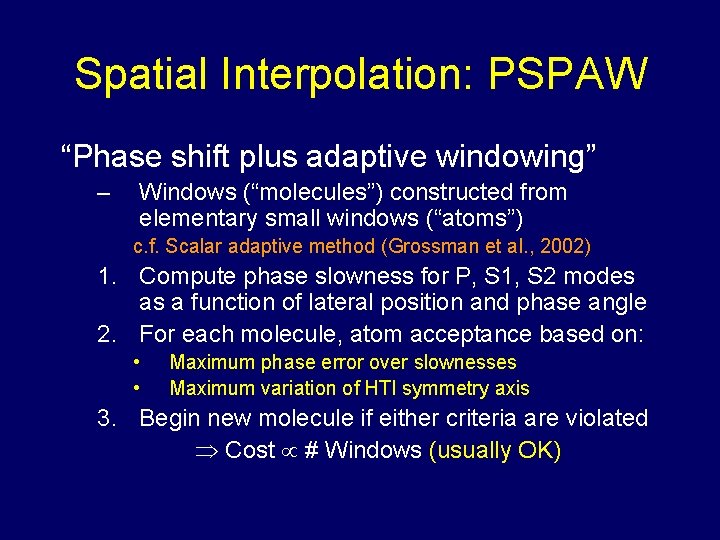
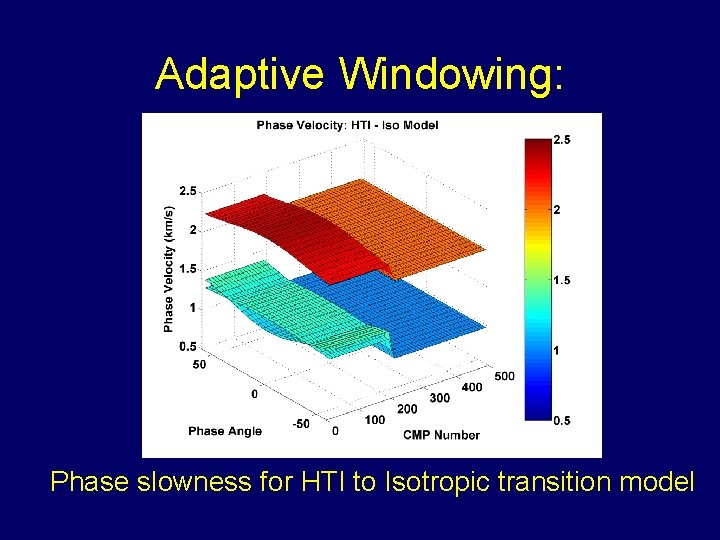
Spatial Interpolation: PSPAW “Phase shift plus adaptive windowing” – Windows (“molecules”) constructed from elementary small windows (“atoms”) c. f. Scalar adaptive method (Grossman et al. , 2002) 1. Compute phase slowness for P, S 1, S 2 modes as a function of lateral position and phase angle 2. For each molecule, atom acceptance based on: • • Maximum phase error over slownesses Maximum variation of HTI symmetry axis 3. Begin new molecule if either criteria are violated Cost # Windows (usually OK)
Adaptive Windowing: Phase slowness for HTI to Isotropic transition model
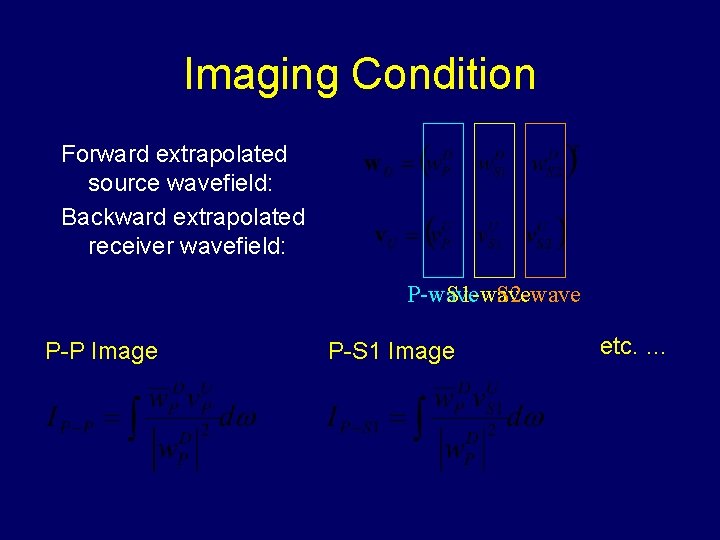
Imaging Condition Forward extrapolated source wavefield: Backward extrapolated receiver wavefield: P-wave S 1 -wave S 2 -wave P-P Image P-S 1 Image etc. …
Outline • Introduction • Theory – Elastic wavefield extrapolation – Extension to laterally heterogeneous media – Migration imaging condition Ø Examples – Elastic HTI modeled data – Marmousi 2: elastic OBC modeled data • Conclusions
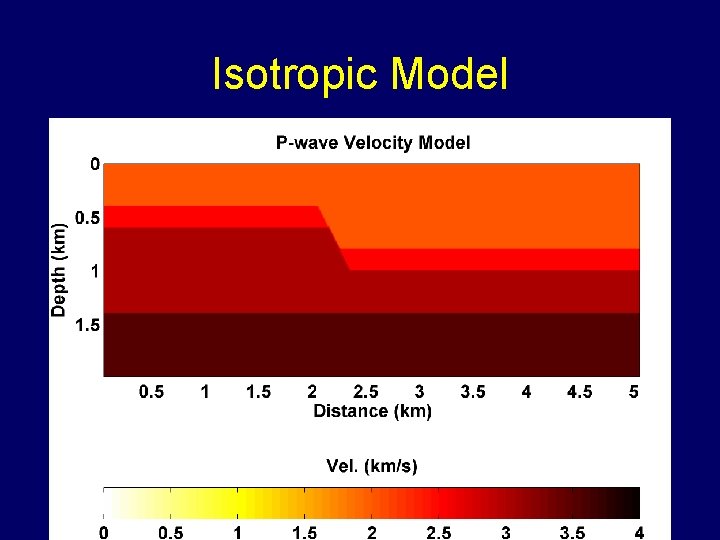
Isotropic Model
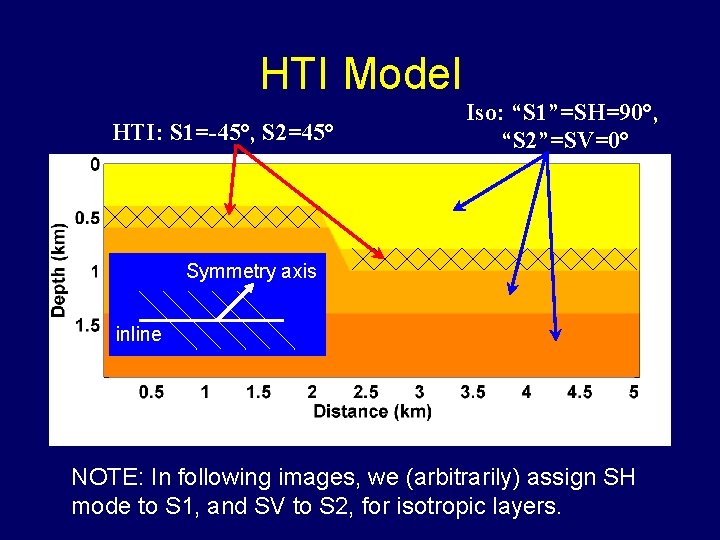
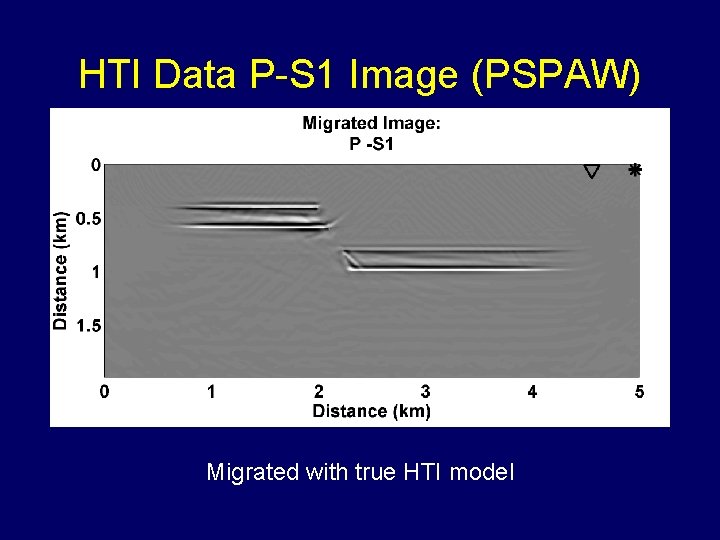
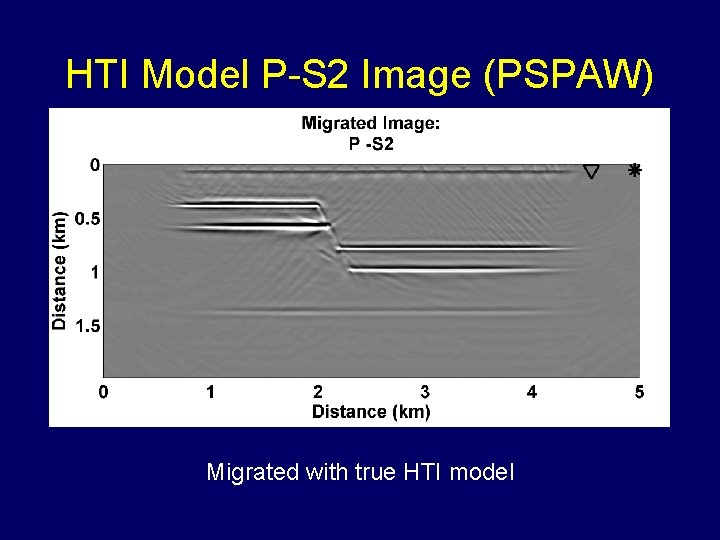
HTI Model HTI: S 1=-45°, S 2=45° Iso: “S 1”=SH=90°, “S 2”=SV=0° Symmetry axis inline NOTE: In following images, we (arbitrarily) assign SH mode to S 1, and SV to S 2, for isotropic layers.
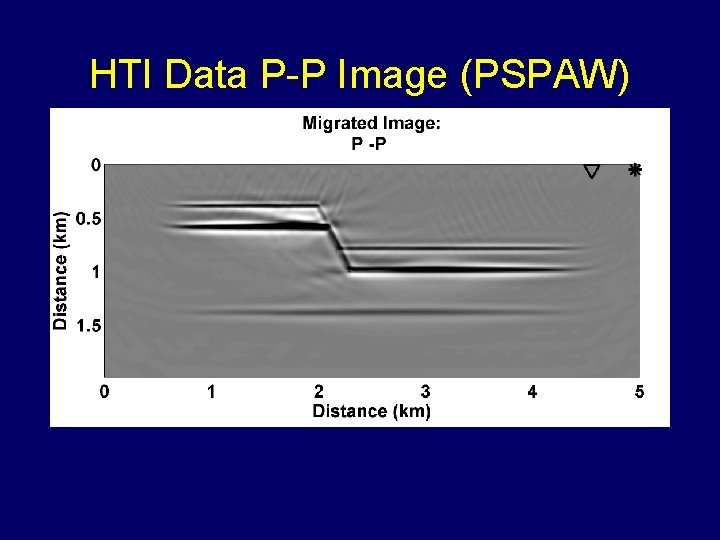
HTI Data P-P Image (PSPAW)
HTI Data P-S 1 Image (PSPAW) Migrated with true HTI model
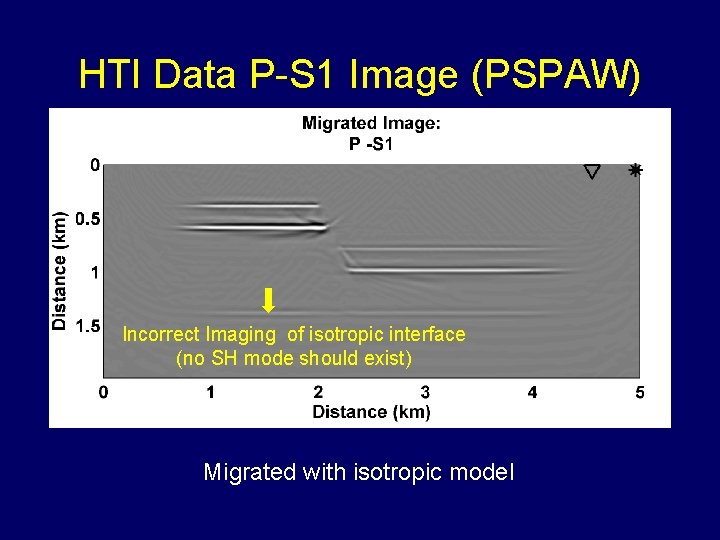
HTI Data P-S 1 Image (PSPAW) Incorrect Imaging of isotropic interface (no SH mode should exist) Migrated with isotropic model
HTI Model P-S 2 Image (PSPAW) Migrated with true HTI model
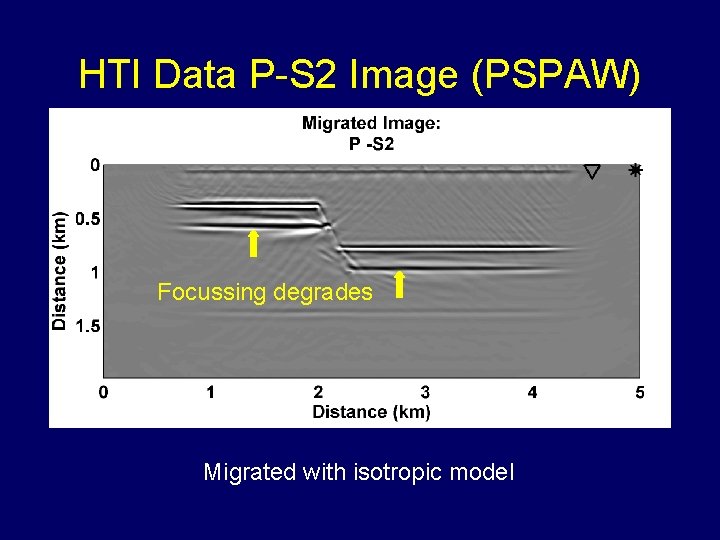
HTI Data P-S 2 Image (PSPAW) Focussing degrades Migrated with isotropic model
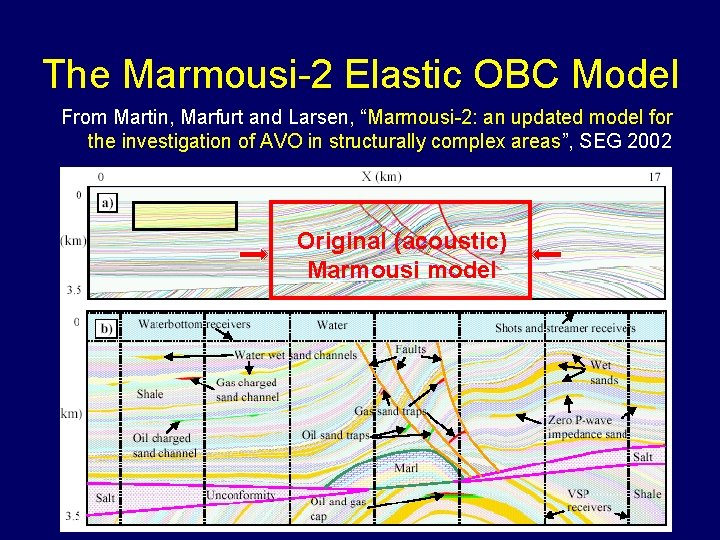
The Marmousi-2 Elastic OBC Model From Martin, Marfurt and Larsen, “Marmousi-2: an updated model for the investigation of AVO in structurally complex areas”, SEG 2002 Original (acoustic) Marmousi model
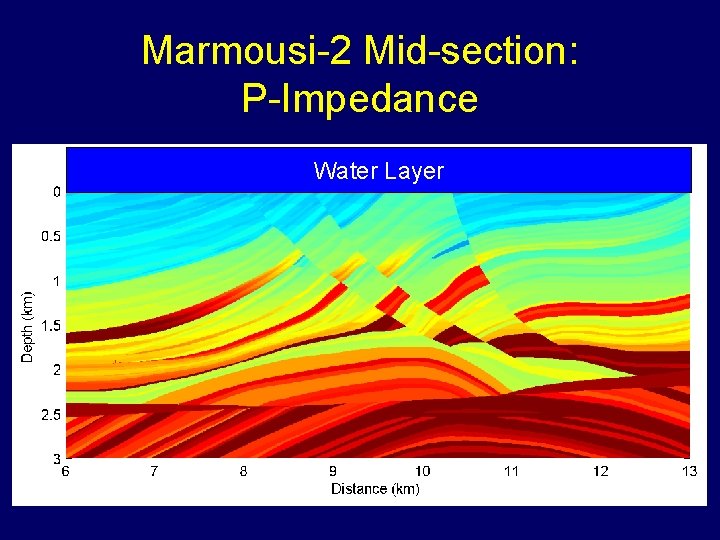
Marmousi-2 Mid-section: P-Impedance Water Layer
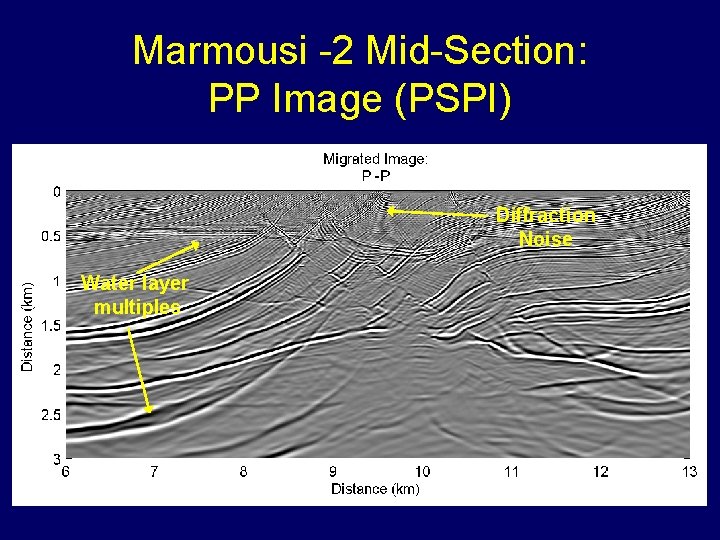
Marmousi -2 Mid-Section: PP Image (PSPI) Diffraction Noise Water layer multiples
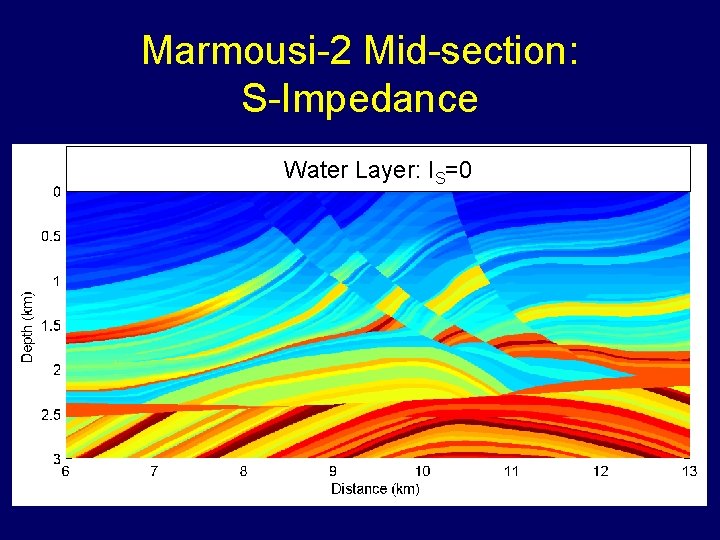
Marmousi-2 Mid-section: S-Impedance Water Layer: IS=0
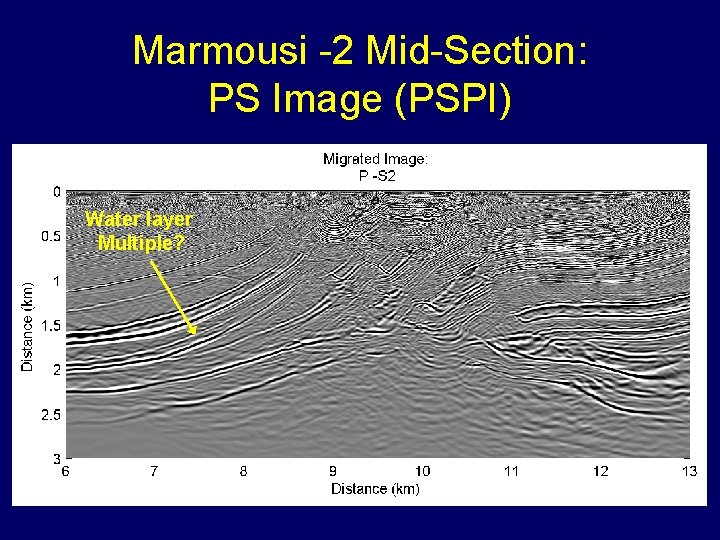
Marmousi -2 Mid-Section: PS Image (PSPI) Water layer Multiple?
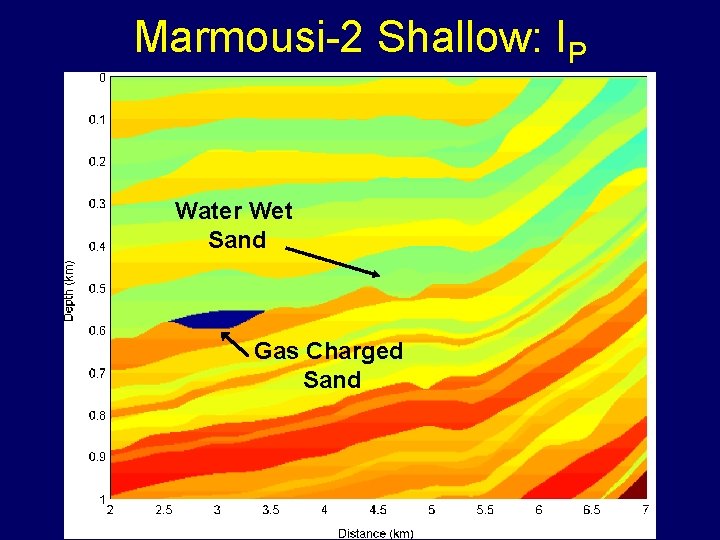
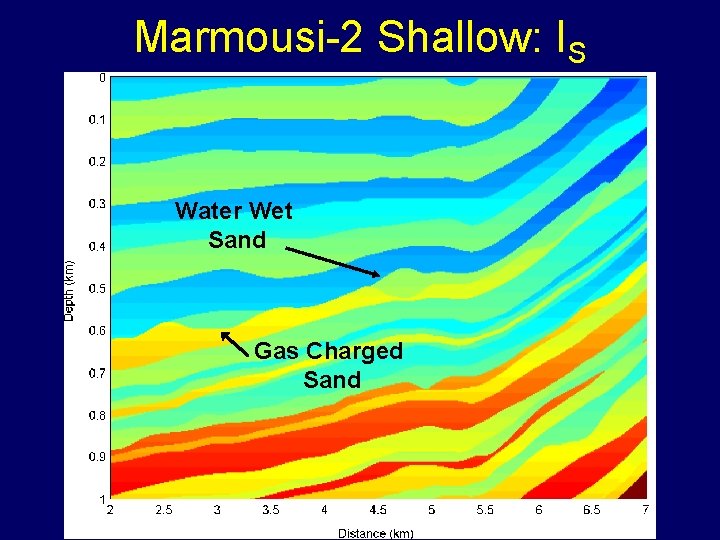
Marmousi-2 Shallow: IP Water Wet Sand Gas Charged Sand
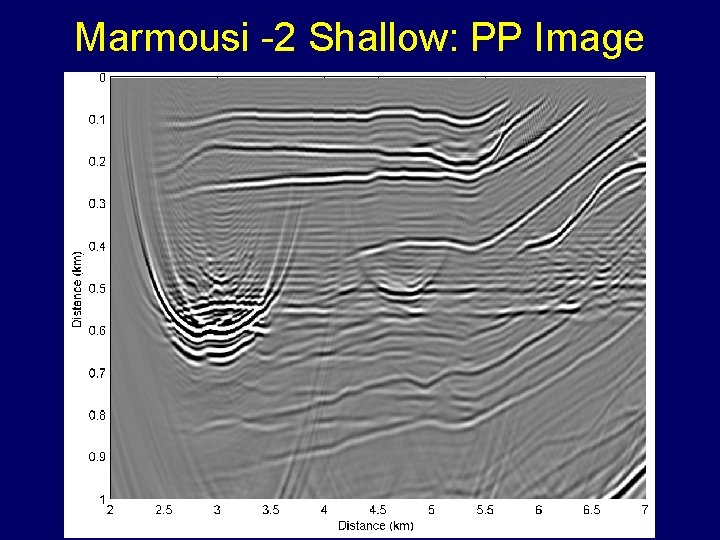
Marmousi -2 Shallow: PP Image
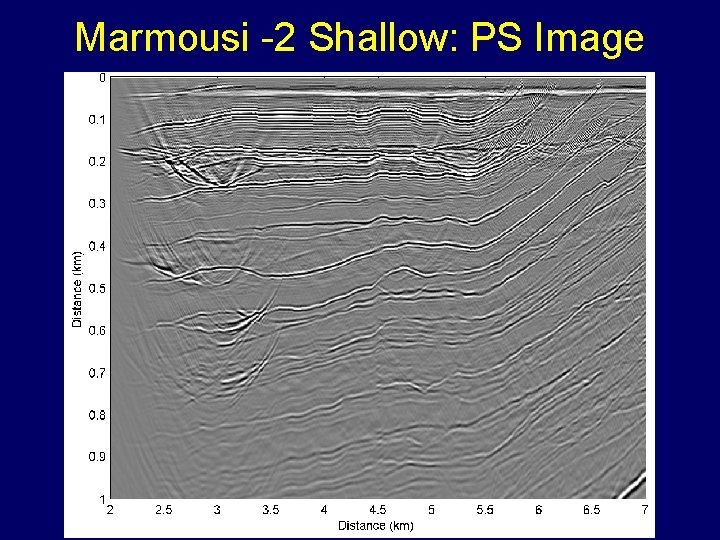
Marmousi -2 Shallow: PS Image
Marmousi-2 Shallow: IS Water Wet Sand Gas Charged Sand
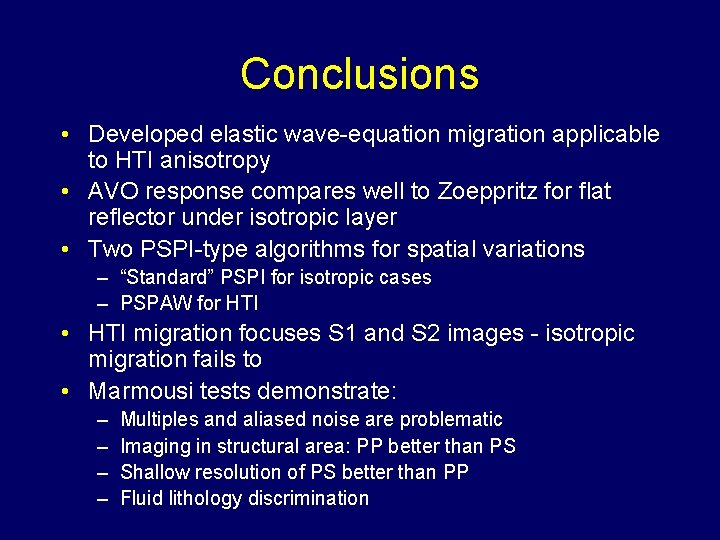
Conclusions • Developed elastic wave-equation migration applicable to HTI anisotropy • AVO response compares well to Zoeppritz for flat reflector under isotropic layer • Two PSPI-type algorithms for spatial variations – “Standard” PSPI for isotropic cases – PSPAW for HTI • HTI migration focuses S 1 and S 2 images - isotropic migration fails to • Marmousi tests demonstrate: – – Multiples and aliased noise are problematic Imaging in structural area: PP better than PS Shallow resolution of PS better than PP Fluid lithology discrimination
Acknowledgements • Sponsors of CREWES • Sponsors of POTSI: Pseudodifferential Operator Theory and Seismic Imaging – MITACS: Mathematics of Information Technology and Complex Systems – PIMS: Pacific Institute of the Mathematical Sciences – NSERC: Natural Sciences and Engineering Research Council of Canada • Allied Geophysical Laboratory, University of Houston for permission to use the Marmousi II data – Prof. Robert Wiley – Gary Martin (GX Technology) • Kevin Hall, CREWES